Queso Paipa
On ventilated wooden shelves called a zaranda, pale yellow cheeses settle into their slow transformation.
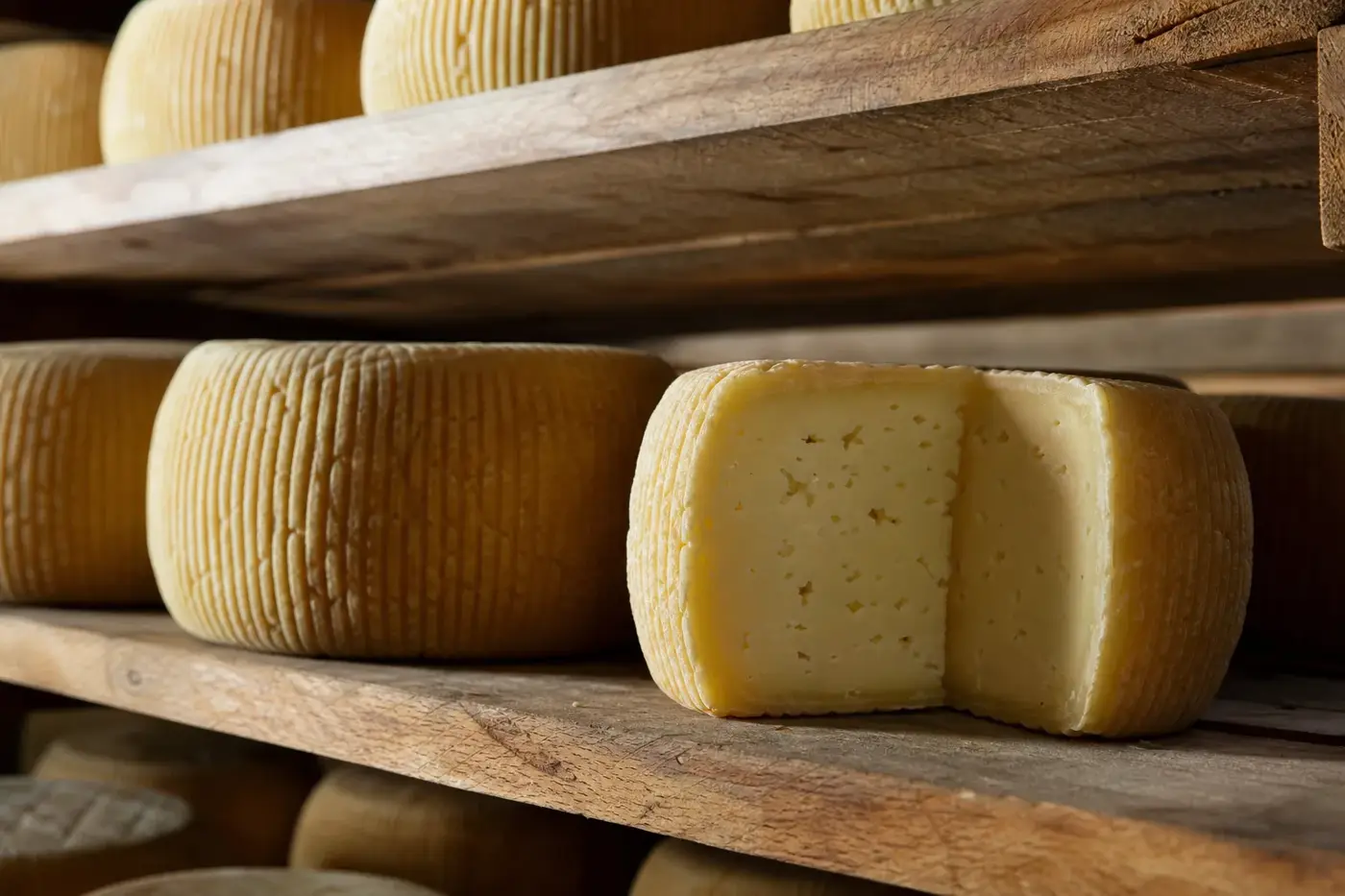
On ventilated wooden shelves called a zaranda, pale yellow cheeses settle into their slow transformation. Each is turned at least daily and stays for a minimum of three weeks under the production method recorded in Queso Paipa’s 2011 designation.[2] This is not a cheese you can hurry along by looking expectantly at it.
On your plate, that patience becomes a firm, tangy cheese. Worked curds and the cool dairy country of Paipa and neighbouring Sotaquirá in Boyacá, Colombia, shape its character. Behind the cow’s milk are highland grazing and family dairying, binding the cheese to its home.[1][3]
| What to know | The details |
|---|---|
| Familiar name | Queso Paipa.[1] |
| Registered name | QUESO PAIPA.[2] |
| Colombian authority | Superintendencia de Industria y Comercio, SIC.[1] |
| Protection record | Colombian denomination of origin declared by Resolution 70802, dated 6 December 2011; file 09148871.[1][2] |
| Current Colombian status | Not established here |
| Status in other jurisdictions | Not established here |
| Where it comes from | Paipa and Sotaquirá, Boyacá, Colombia.[2][5] |
| Milk | Cow’s milk; the 2011 production description specifies fresh raw milk.[2] |
| Pasteurised milk permitted under the designation | Not established here |
| Time to mature | Minimum three weeks in the 2011 resolution.[2] |
| What to expect | Semi-hard, dry-textured and pale yellow, with a corrugated rind and small irregular openings.[1] |
| Current consolidated specification and amendments | Not established here |
Two towns, one cheese country
Paipa lends the cheese its name, but Sotaquirá shares its origin. Both municipalities belong to Boyacá’s highland dairy country. Behind the piece you are about to taste lies a working landscape of grazing land, farming households and local cheesemakers.[3]
A field study undertaken during 2023 and 2024 brings that landscape into sharper focus. Researchers visited 24 milk-producing holdings, twelve in each municipality, using observation, surveys and interviews. They documented cattle grazing on fresh forage, animals adapted to the area and knowledge passed through families.[3]
Normande cattle and their crosses were prominent among the animals observed. This was a non-random sample, so it describes the participating holdings rather than every dairy in Boyacá. The detail brings you closer to the people: who tends the cattle, how milk reaches the cheesemaker and which skills remain within the household.[3]
Follow Paipa beyond the dairy and you find it in public life, too. Paipa’s municipal development plan places the cheese within a local network of agriculture, food production, gastronomy and tourism. Milk, cheesemaking and the town’s sense of itself are closely connected.[5]
A living tradition finds its way into print
In 1987, Colombia’s Servicio Nacional de Aprendizaje, SENA, published a training booklet devoted to making Queso Paipa. Its pages covered milk and curd handling, kneading, salting, moulding, pressing, maturation and conservation. This cheese had a place in print well before its denomination of origin.[4]
The booklet gives you a firm date in Paipa’s production history. It also captures the essential difference between this cheese and one sold fresh: the curd is worked and pressed, then given time to mature. The waiting is part of the making.[4]
Recognition brought fresh questions. Ethnographic research published in 2021 drew on fieldwork in Paipa and Sotaquirá to explore how producers and other local participants understood the denomination of origin. Quality, and the changes associated with recognition, did not mean precisely the same thing to everyone.[6]
The story is one of continuity, then, but also adjustment. A documented regional cheese existed before legal protection arrived. The designation became part of local conversations about production, identity and the direction cheesemaking should take next.[4][6]
What the protected name means for your cheese
Resolution 70802, dated 6 December 2011, declared Colombian denomination of origin protection for QUESO PAIPA through the SIC. Its administrative file is numbered 09148871. These are the legal details behind the name you see on the cheese.[1][2]
That geographical connection includes both Paipa and Sotaquirá. Paipa’s municipal development plan explains that the name applies to cheese produced and processed there according to the characteristics and requirements recorded in the resolution.[5]
Place and method belong together. The designation connects the cheese’s origin with specified cheesemaking characteristics, rather than simply putting a town’s name on a wrapper. When you buy, ask who made it, where it was produced and whether it is entitled to use the designation.[5][7]
A municipal measure adopted in 2023 states that producers using the designation’s seals need authorisation. Ask about the current authorisation requirements rather than relying on that measure alone.[7]
For the broader distinction between geographical protection and a cheese style, see protected names explained.
Before the shelves, the sleeves roll up
Before Paipa can mature, draining, working and pressing give it structure. SENA’s account takes you through milk preparation, curd handling, kneading, salting, moulding and pressing, then into maturation. These steps produce a different body from cheese sold soon after draining.[4]
The 2011 designation document records the production details below. They take you from milk to a cheese ready for its place on those wooden shelves.[2]
| Stage | How the 2011 resolution describes it |
|---|---|
| Coagulation | Rennet sets the milk into curd. |
| Cutting and draining | Fine cutting and stirring separate whey, the liquid released from the curd. |
| Working and salting | Kneading or milling works salt into the drained curd. |
| Moulding and pressing | Cloth-lined moulds and pressing bring the cheese together. |
| Maturation | Cheeses rest on ventilated wooden shelves called a zaranda, turned at least daily throughout the recorded three-week minimum. |
Rennet is the coagulating preparation that sets the milk. The resolution describes powdered, tablet and liquid forms, but does not specify a single animal or microbial source.[2] If you want to understand that distinction, turn to rennet explained.
The cheesemaker’s work does not end with making. SENA’s booklet also treats judging the finished product as part of the craft. After draining, working, pressing and maturation, the cheese must be ready for assessment.[4]
Take three questions to the cheese counter
Fresh raw cow’s milk begins the traditional process recorded in the 2011 resolution. Raw milk production also provides the setting for the recent field study of farms supplying Queso Paipa makers.[2][3] For the piece in front of you, though, ask for its own details.
Was the milk raw or pasteurised? Look at the product information, then ask about maturation separately. Milk treatment tells you what happened to the milk; age tells you how long that particular batch matured.
Try this: “Who made this cheese, which milk treatment did they use, and how long was this batch matured?” Keep the answers with the label, especially if you are sharing the cheese between households. The guide to raw, thermised and pasteurised cheese explains the terminology.
Let the rind introduce the cheese
A slight sheen, a corrugated rind and a pale yellow interior all feature in the SIC’s description of Queso Paipa. Cylinders are traditional, though the authority’s record also includes rectangular cheeses and smaller cylindrical formats. You have more than one shape to look out for.[1]
Inside, expect a semi-hard, dry texture without a sandy feel. Small, irregular openings may interrupt the paste, which is the cheesemaking word for the interior. The resolution connects mechanical cavities with the packing and pressing of the curd.[1][2]
Ask to see a cut surface as well as the whole cheese. A wedge reveals more about the body than the rind alone can tell you. It also gives you and the seller something useful to discuss: the texture and appearance of this particular batch.
Meet the tang, then linger over the aroma
Moderate acidity leads the official sensory description, followed by mild bitterness. For aroma, the SIC records a moderately to strongly rancid aromatic note as part of the characteristic profile.[1] That is a specific sensory description, rather than a general description of strength.
As you taste, pay attention to how the tang and bitterness sit together. Then consider the aroma alongside the dry, firm body. Each belongs to the authority’s description of Paipa, giving you several things to notice in a single piece.[1]
Let that savoury character guide your serving choices, adjusting the accompaniments to the cheese you have bought. Ask the cheesemonger about its producer and the batch’s maturity. Published information on flavour changes with age or between makers remains unestablished.
Make a little room for bread, fruit and guava
Start with the cheese alone. Then try a mouthful with one accompaniment and notice what shifts: sweetness, texture or perhaps a gentler finish. You do not need a formal tasting sheet, however tempting it is to give your afternoon snack an administrative department.
For a Colombian-style plate, put slices beside an arepa and a little guava paste, or bocadillo. Keep them separate at first so you can choose how much sweetness to set against the tang. These are serving suggestions, not documented local customs.
Plain bread and fresh fruit offer another straightforward place to begin. Add one contrasting flavour at a time. Give yourself a chance to taste the cheese before filling the plate with competing flavours.
- Bread: begin with a plain loaf or lightly toasted bread before trying strongly seasoned crackers.
- Fruit: try pear, apple or grapes, keeping them separate enough to compare.
- Guava paste: start with a small piece beside the cheese, rather than covering it.
- Drinks: water gives you the clearest comparison; unsweetened tea or coffee offers an alcohol-free alternative.
Go back to the cheese on its own, then try another mouthful with your chosen accompaniment. That small comparison helps you pin down what you enjoy, whether it is the sweetness, the texture or the finish.
Paipa’s public food culture has formal recognition, too. A municipal measure in 2023 established a gastronomic and cultural festival devoted to Queso Paipa.[7]
Find the maker behind your piece
Start with the maker’s name and production location. Colombia’s designation connects Queso Paipa to Paipa and Sotaquirá. Authorised use is a separate point to establish through the SIC.[5][7]
Then ask about maturation, milk treatment, ingredients and storage instructions. If you are buying a cut portion, request the relevant details from the original packaging. A handwritten cheese name can introduce your purchase, but it cannot tell you everything you need.
Keep the batch identification and date information until you have eaten the cheese. If your supplier later sends a notice, those details help identify the exact product. The guide to reading a cheese label helps you put the information in order.
Give Paipa a proper place in your fridge
Follow the maker’s storage and after-opening instructions first. In England, Northern Ireland and Wales, the Food Standards Agency advises refrigerating dairy products and keeping your home fridge at 5 °C (41 °F) or below. November 2026 is the reference date for this guidance here.[8]
Cut what you need, then return the cheese to refrigeration promptly. Keep the packaging information and follow its date and handling instructions. You should not assume that every piece of Paipa has the same life after opening.[8]
During preparation, the FSA advises keeping chilled food out of refrigeration for the shortest possible time, with a maximum of four hours. That limit belongs to its advice for those jurisdictions.[8] For more practical help, see storing cheese at home.
This page summarises published guidance from the official sources it cites. It is not medical advice. Guidance differs between countries and changes over time, so check the current source for where you live, and ask your doctor, midwife, pharmacist or dietitian about your own circumstances.
Find health guidance for your circumstances
In the United States, the CDC’s current guidance on cheese and Listeria is relevant to pregnant people, adults aged 65 or over and people with weakened immunity.[9] If that includes you, consult the agency’s guidance for the detail.
UK NHS pregnancy guidance distinguishes between cheese categories. It lists pasteurised semi-hard cheeses among those that can be eaten, alongside hard cheeses made from either pasteurised or unpasteurised milk.[10]
Consult the linked agency guidance for where you live. Discuss your own circumstances with your healthcare professional rather than treating cheese categories as personal advice.[9][10]
Choose Paipa when you want time on your side
Time is the key difference between Paipa and fresh Colombian cheese. The 2011 production description records pressing followed by ripening, though it does not provide an established comparison here with a specific fresh Colombian cheese.[2]
Choose Paipa when you want to explore a matured Boyacá cheese with a recorded tangy, dry-textured character. If your dish calls for a fresh Colombian cheese, establish the intended texture and preparation first. These are cheeses to choose for their particular qualities, not names to swap without thought.[1][4]
Questions people ask
Where does Queso Paipa come from?
Queso Paipa comes from Paipa and Sotaquirá in Boyacá, Colombia. Colombia declared a denomination of origin for the cheese in 2011, although its current status has not been verified.
What does Queso Paipa taste and look like?
It is pale yellow and firm, with a dry texture, a corrugated rind and sometimes small irregular openings. Its official sensory description includes moderate acidity, mild bitterness and a pronounced aroma.
Is Queso Paipa made from raw milk?
The 2011 production description specifies fresh raw cow’s milk. For a particular cheese, check the product information or ask the seller whether the milk was raw or pasteurised.
Is Queso Paipa suitable for vegetarians?
The 2011 resolution says rennet is used to set the milk, but does not specify a single animal or microbial source. Check the ingredients for the particular cheese.
Can I eat Queso Paipa during pregnancy?
The NHS lists pasteurised cheeses in the semi hard category among those that can be eaten, alongside hard cheeses made from pasteurised or unpasteurised milk. Check the current NHS pregnancy guidance and discuss your circumstances with a healthcare professional.
Sources
- Superintendencia de Industria y Comercio. Queso Paipa, undated denomination of origin record. Indexed text was consulted in November 2026; direct access to the official record was blocked. Official record.
- Superintendencia de Industria y Comercio. Resolución No. 0070802, 6 December 2011, file 09 148871. Original administrative document retrieved from an oriGIn-hosted copy. Resolution.
- Revista Mexicana de Ciencias Pecuarias. Paisaje cultural ganadero en el territorio protegido por la Denominación de Origen del queso Paipa, volume 16, 2025. Original field research conducted in 2023 and 2024. Research article.
- Servicio Nacional de Aprendizaje. Procesamiento de quesos madurados: Preparación de queso paipa, Cartilla No. 1, 1987. Bibliographic record and institutional description retrieved through Biblioteca Digital de Bogotá. Catalogue record.
- Alcaldía de Paipa. Plan de Desarrollo 2020-2023, section “Denominaciones de Origen”, printed page 195. Municipal plan.
- Universidad Nacional de Colombia, Maguaré. La reinvención del queso paipa en el marco de la denominación de origen: transformaciones materiales, construcciones de autenticidad y relaciones de poder, volume 35(2), pages 19 to 50, 2021. Abstract and bibliographic record retrieved. Research record.
- Concejo Municipal de Paipa. Acuerdo No. 002, 14 February 2023, establishing the cheese’s gastronomic and cultural festival; municipal posting recorded on 21 February 2023. Municipal instrument.
- Food Standards Agency. How to chill, freeze and defrost food safely, published 18 December 2017, live text checked November 2026; applies to England, Northern Ireland and Wales. Official guidance.
- US Centers for Disease Control and Prevention. Preventing Listeria Infection, 31 January 2025, live text checked November 2026. Official guidance.
- NHS. Foods to avoid in pregnancy, live text checked November 2026. Official guidance.
- Instituto Nacional de Vigilancia de Medicamentos y Alimentos, Invima. Alertas sanitarias e informes de seguridad, live portal checked November 2026. Used for the editorial recall check, subject to the limitation recorded below. Official alert portal.
Researched through Colombian administrative and institutional records, original field research and named national food-safety guidance, with editorial serving suggestions identified separately.
Last checked: November 2026
Last checked November 2026.
The editors suggest you read next
American Cheese: The Processed Slice Explained
Watch a slice of American cheese soften over your burger.