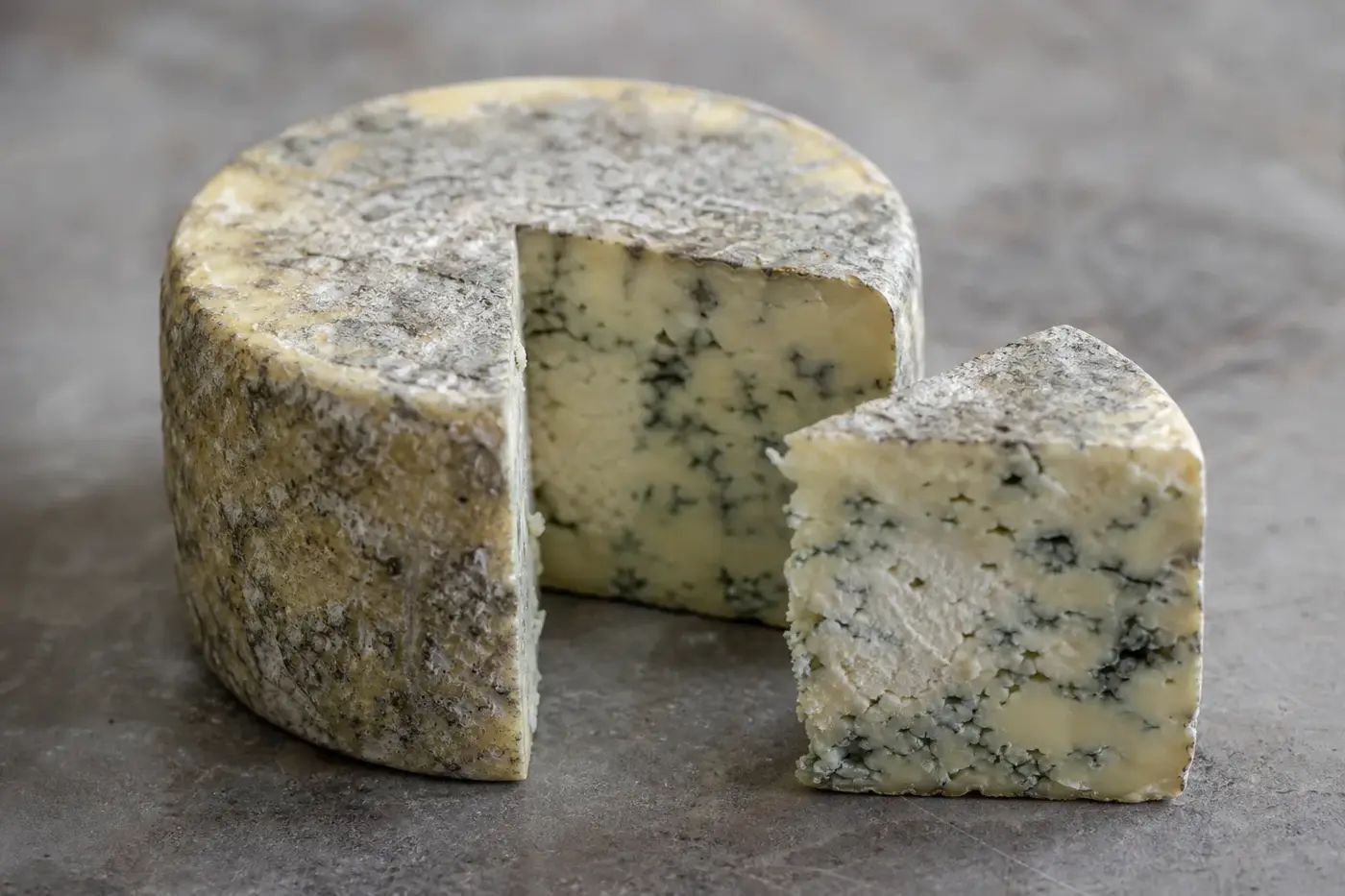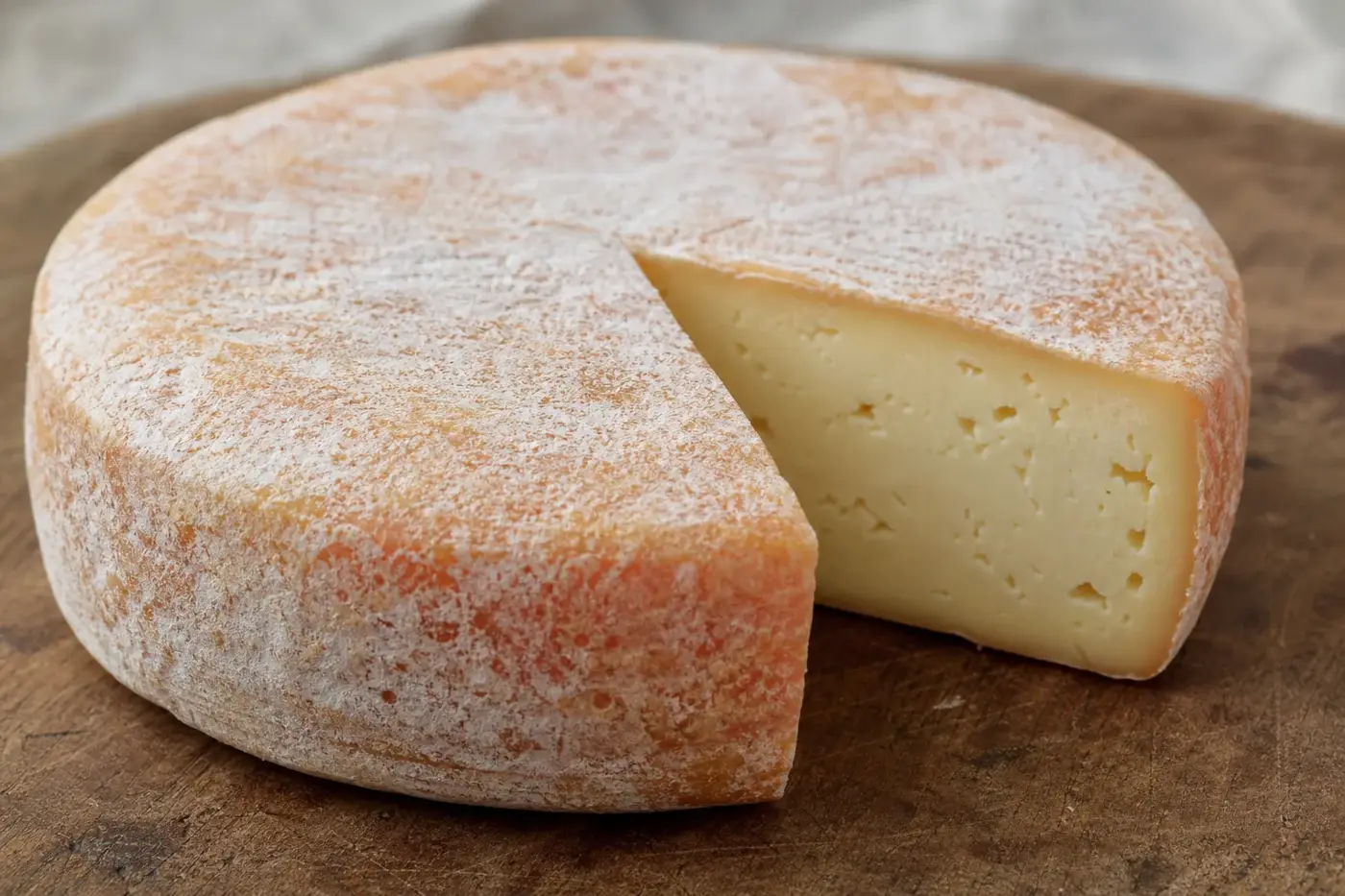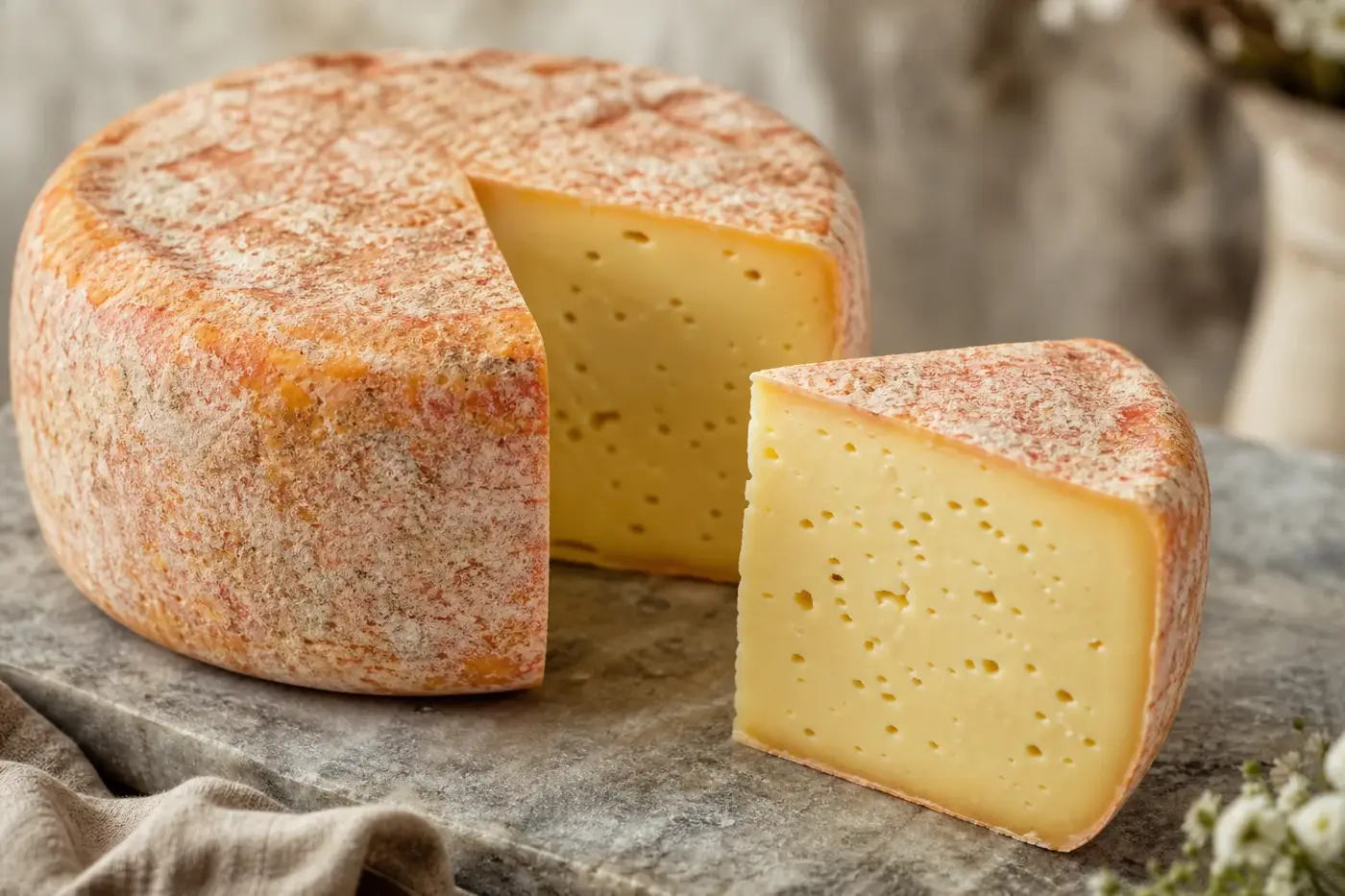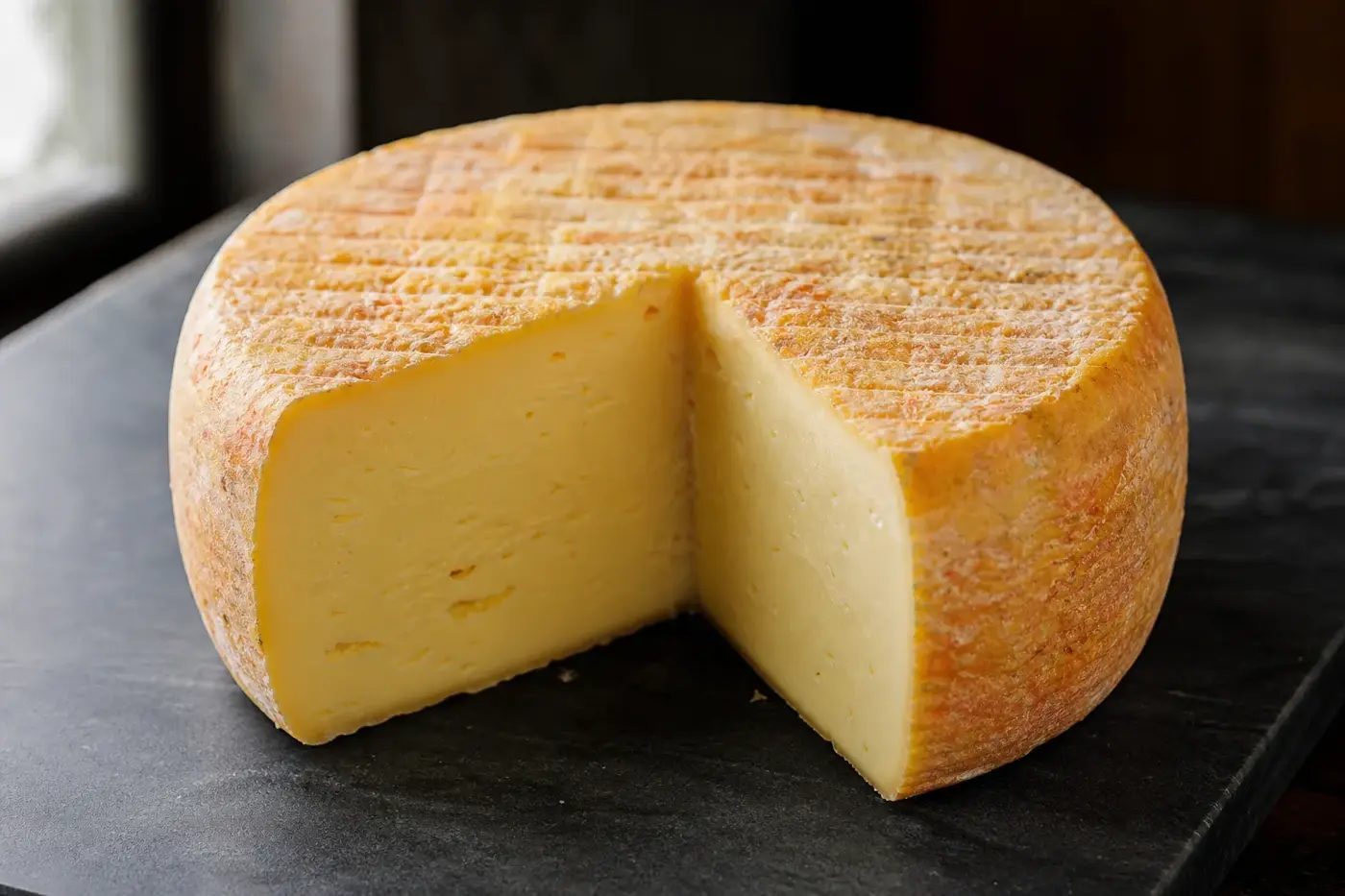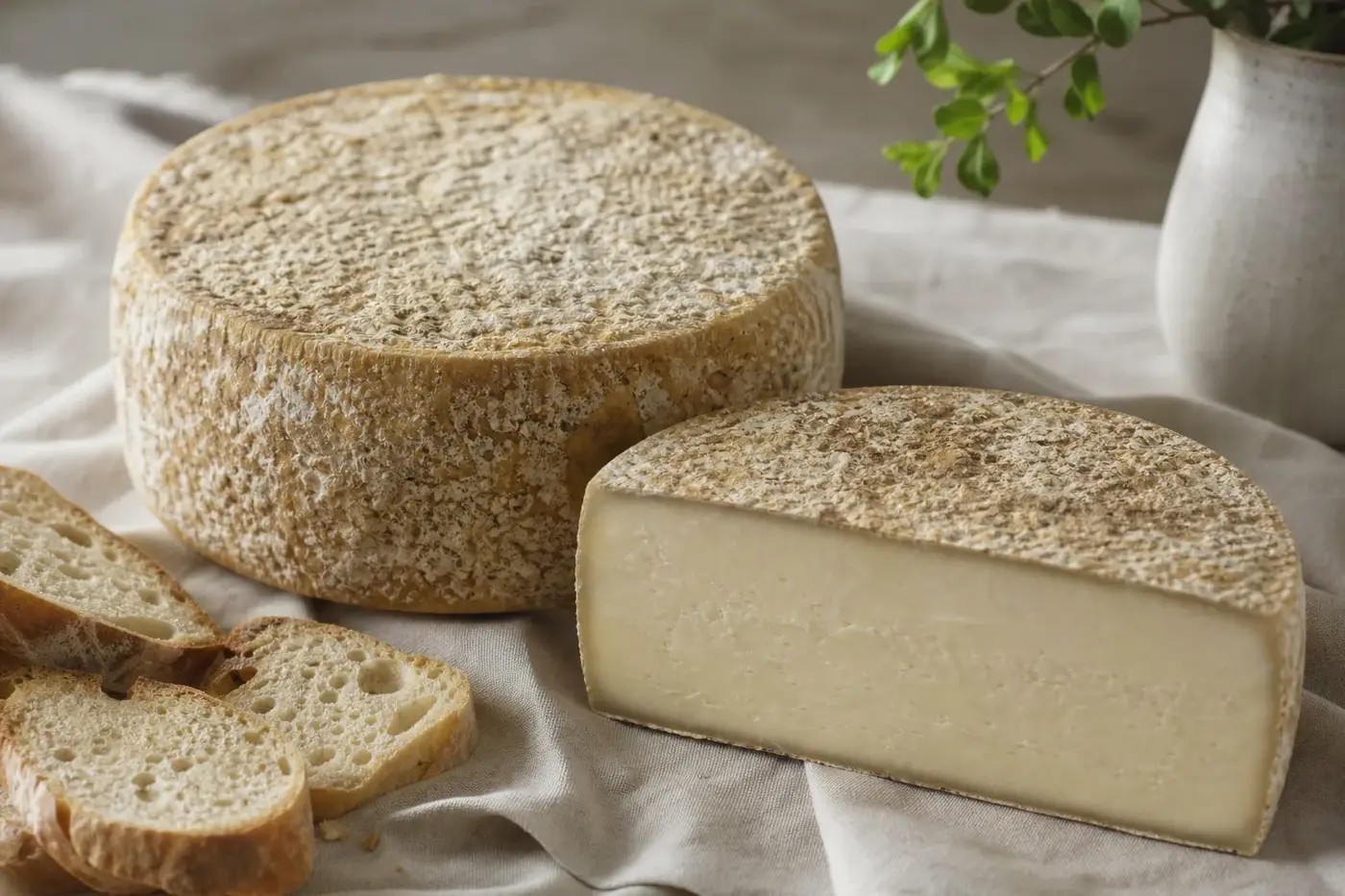
Your knife meets a firm centre, then the natural rind. Leave that edge on: beside the River Erne, outside Belturbet in County Cavan, Corleggy Cheeses makes this hard raw goats’ milk cheese with a surface it calls edible and flavoursome. The relatively mild young centre becomes firmer and more assertive with age. Where you cut, and when you eat, both shape the pleasure. [1][2][3]
| At a glance | Corleggy |
|---|---|
| The maker and its home | Corleggy Cheeses, outside Belturbet, County Cavan, Ireland. [2] |
| The milk | Raw goats’ milk. [1] |
| Protection status | Undetermined for the EU, Great Britain, Northern Ireland, Switzerland or the United States. |
| What you will find | Hard cheese with a natural rind. [1] |
| The maker’s declared rennet | Vegetarian rennet. [4] |
| Current portion listed by the maker | 400 g cut piece. [5] |
| Time spent maturing | Product-specific period uncertain. [1][2][4][5] |
| Rind on or off? | Natural and edible, according to the maker. [1] |
Meet the goats’ cheese with something to slice
Bring bread. Your spreading knife can have the afternoon off. Corleggy belongs to the hard cheese family: a firm, sliceable goats’ cheese, rather than a fresh one to spread. Give its rind the same attention as its centre, because both belong in the tasting. [1]
Bord Bia, Ireland’s food promotion body, describes a smooth, ivory-white interior, or paste, whose colour deepens slightly with age. Its profile records individual 400 g cheeses and larger 2.5 kg wheels, while the maker’s current listing offers a 400 g cut piece. Before ordering, ask which you are getting. A portion’s weight does not necessarily tell you the size of the whole cheese. [3][5]
For your first piece, ask for some rind attached. Taste the centre beside the outer edge to get a fuller introduction than a rindless sample offers. Ask about age as well as size: together, those details tell you more about the Corleggy coming home with you than weight alone.
A Cavan dairy on “Little Windy Hill”
At the cheese counter, one distinction helps: Corleggy is a cheese, while Corleggy Cheeses is the farmhouse dairy behind a wider range. Just outside Belturbet in County Cavan, it uses goats’ milk for Corleggy, cows’ milk for Drumlin and sheep’s milk for Creeny. Keep those three names in mind and you can find your way around the family. [2]
The business dates its establishment to 1985 and translates Corleggy as “Little Windy Hill”. Its production account puts handmaking and individual attention during maturation at the heart of the work, particularly care of the natural rind. These descriptions explain the dairy’s approach. They do not represent a separate production-method certification. [4][6]
Cavan is where the cheeses are made and matured, not simply a place printed on the label. The maker also describes farmers’ markets around Dublin as an important outlet. You get a sense of a rural dairy connected to the city markets through which its cheese reaches the table. [2][4]
Bord Bia places the farmhouse beside the River Erne, giving Corleggy a clear geographical home. At the counter, keep your eye on the named dairy, its milk supply and the particular cheese. Read those details together on the ticket or label, especially when several cheeses share the maker’s name. [3]
Follow the morning milk to the dairy
Corleggy begins with raw goats’ milk, stated plainly in both the maker’s product information and its current listing. “Raw” tells you about treatment. “Goats’ milk” tells you the animal species, and you need both details for the full picture. [1][5]
Corleggy Cheeses says it collects morning milk from three neighbouring farms for its goats’, sheep’s and cows’ milk cheeses. That account covers the range, rather than Corleggy alone. The dairy describes locally grazed animals and milk arriving for that day’s production. The daily milk supply sits at the heart of its cheesemaking story. [4]
For help untangling the treatment terms, turn to raw, thermised and pasteurised milk. When you ask a cheesemonger for Corleggy, keep the full description: raw goats’ milk cheese. “Irish goat cheese” is shorter, but leaves useful information behind.
The dairy also declares vegetarian rennet among its ingredients. Rennet sets milk into curd, the solid material from which cheese develops. Its source is a separate question from whether milk is raw or heat-treated. You can explore those sources in rennet explained. [4][7]
From morning milk to a firm wheel
Raw goats’ milk, vegetarian rennet and salt are the ingredients in the maker’s published information, which describes Corleggy as handmade. That gives you the starting materials and the broad method used to set the milk. [1][4]
To picture the transformation, follow three stages: setting, draining and forming. In the Irish National Dairy Council’s general explanation, rennet coagulation produces solid curd. Cutting separates that curd from whey, the liquid portion of milk. Removing more whey helps establish the finished texture. [7]
For a hard rennet-set cheese, this sequence brings the process into focus. Cutting opens the curd so liquid can escape; gathering and forming the solids creates a cheese ready to handle and mature. The National Dairy Council also explains that pressing brings curds together. Salt contributes flavour, texture and preservation. [7]
Then comes the outside, deserving a little attention of its own. Bord Bia records a brine-washed natural rind for Corleggy, with brine meaning a salt solution. That production treatment connects directly to the rind you meet beneath your knife and on your plate. [3]
For the broader journey, see how cheese is made. Setting and draining describe general cheesemaking principles. The maker’s ingredients and Bord Bia’s rind description supply the details recorded for Corleggy itself.
Keep the rind, and ask its age
Corleggy’s natural rind is more than a wrapper. The maker says it nurtures the surface through individual care, and describes the finished rind as edible and flavoursome. Leave some attached when you taste, or you miss part of the cheese’s character. [1][4]
The published maturation information does not give one clear period for this product. The maker’s listing describes the plain hard goats’ cheese at around two months, while other maker pages give a broader statement of at least three months. Treat the applicable maturation period as uncertain. Ask about the particular piece in front of you. [1][2][4][5]
Age still offers a useful steer on flavour. Bord Bia describes older Corleggy as harder and stronger, with earthier notes and a piquant finish. Asking about maturity helps you choose between a gentler introduction and something more pronounced. [3]
If two ages are available, try them side by side. Keep the accompaniments the same and begin with the younger piece. You will be comparing the cheeses, rather than everything else that has found its way onto the plate.
Get to know the centre and the edge
Rich yet mild is the maker’s description, with the rind singled out for flavour. Start with the paste alone, then try another piece with a little rind attached. Notice what the outside brings to the aroma, intensity and length of the finish. [1]
Bord Bia describes an aromatic younger cheese that becomes sharper and earthier as it ages. Alongside the maker’s account, these are published reference points for your plate, rather than a fromage.co.uk tasting note. Knowing the age helps you place those descriptions in context. [3]
You do not need an elaborate flavour vocabulary. Does the cheese cut cleanly, or resist the knife? Is your first impression gentle or pronounced, and does the finish linger after you swallow? There is no vocabulary exam at the end.
Jot down a few brief observations, adding the age if you know it. When you taste another piece later, those notes become much more useful. Keep what you notice connected to the cheese’s maturity.
Give Corleggy some space on your plate
Begin simply: Corleggy, plain bread or unsalted crackers, and one fresh accompaniment. Apple or pear gives you a useful starting point. Taste the cheese alone first, then add the fruit and decide whether the combination suits your chosen piece.
Cut modest portions that include paste and rind, leaving guests free to trim the rind if they prefer. Give the cheese space and a separate knife, rather than surrounding it with strongly flavoured accompaniments. Put chutney or preserves alongside, not over it. That leaves every mouthful your choice.
For an alcohol-free beginning, try sparkling water with the cheese and fruit. An unsweetened apple drink is another option. Keep your first pairing simple, then change one element at a time.
The same approach works for bread, crackers and preserves. It is easier to judge what you enjoy when each mouthful does not introduce several new flavours. Let the cheese hold your attention before adding more to the plate.
For broader guidance, explore cheese and wine pairing. Corleggy can take the centre of a small plate quite happily. You do not need an extensive board to make it worth lingering over.
A little care before you put it away
In Ireland, turn to the Food Safety Authority of Ireland’s current guidance on storing and serving food. Keep that guidance in mind when planning how to look after and serve your cheese. [8]
At purchase, check any after-opening instructions and keep the date information with the cheese. For wrapping choices and looking after cut surfaces, see how to store cheese at home.
General information only, not medical advice: follow the official guidance where you live.
Questions people ask
What milk is Corleggy made from?
Corleggy is made from raw goats’ milk. It is a hard cheese made by Corleggy Cheeses outside Belturbet in County Cavan.
Can you eat the rind on Corleggy?
Yes. The maker describes its natural rind as edible and flavoursome, while Bord Bia records it as washed with brine.
How does Corleggy change as it ages?
Bord Bia describes older Corleggy as harder and stronger in flavour, with earthier notes and a piquant finish. The applicable maturation period is not verified: the maker’s listing says around two months, while other maker pages say at least three months.
Is Corleggy made with vegetarian rennet?
Yes, the maker declares vegetarian rennet among its ingredients. The published ingredients also identify raw goats’ milk and salt.
How should I store Corleggy?
In Ireland, consult the Food Safety Authority of Ireland’s current guidance on storing and serving food. At purchase, check any instructions for after opening and keep the date information with the cheese.
Sources
[1] Corleggy Cheeses, Goats Cheese: “Corleggy”, undated product page, retrieved November 2026.
Read at corleggycheeses.ie
[2] Corleggy Cheeses, Food Markets, undated maker page, retrieved November 2026.
Read at corleggycheeses.ie
[3] Bord Bia, Corleggy Cheese, undated farmhouse cheese profile, retrieved November 2026.
Read at bordbia.ie
[4] Corleggy Cheeses, About Us, undated current maker account, retrieved November 2026.
Read at corleggycheeses.tenvito.com
[5] Corleggy Cheeses, Cheese for Nationwide Dispatch (Ireland & Northern Ireland Only), entry “Corleggy Hard Raw Goats Cheese 400g (Cut Piece)”, undated current product listing, retrieved November 2026.
Read at corleggycheeses.tenvito.com
[6] Corleggy Cheeses, Welcome to Corleggy Cheeses, undated current homepage, retrieved November 2026.
Read at corleggycheeses.tenvito.com
[7] National Dairy Council, How is cheese made?, 4 April 2022. Industry educational explanation.
Read at ndc.ie
[8] Food Safety Authority of Ireland, Storing food safely, undated consumer guidance, retrieved November 2026. The indexed page text was retrieved; direct opening returned an access error.
Read at fsai.ie
[9] Food Safety Authority of Ireland, Safe Food to Go, 2022, especially pages 6 and 10.
Read at fsai.ie
Researched from the maker’s product information, Bord Bia’s profile, an Irish dairy industry explanation and Irish official food handling guidance; serving suggestions are editorial recommendations, with no site tasting undertaken.
Last checked: November 2026
Last checked November 2026.
The editors suggest you read next