Bloomy-Rind Cheese: A Guide to Soft, White-Rind Styles
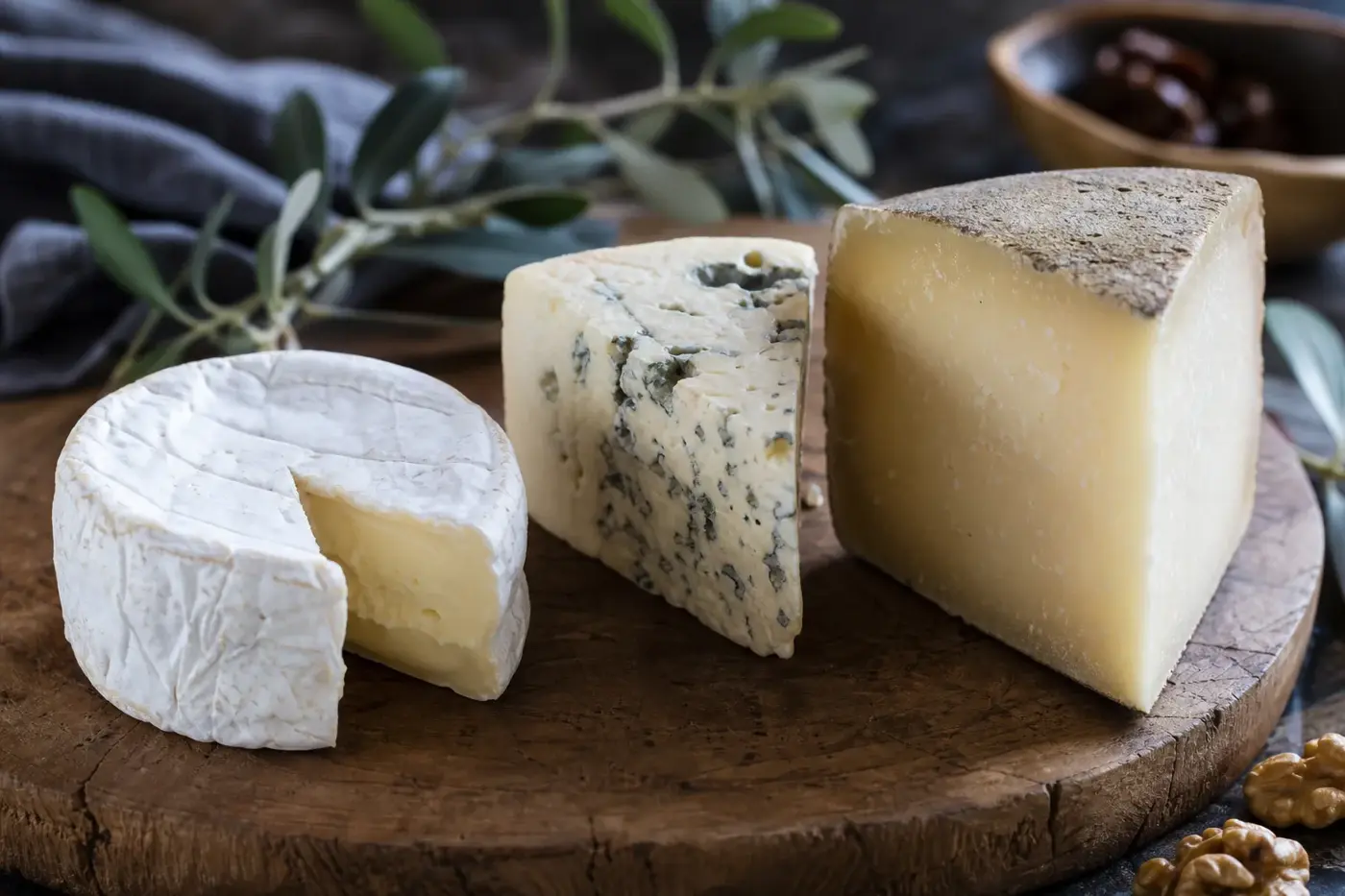
Your knife slips through the white rind and reveals a translucent ribbon around a pale, chalky heart.
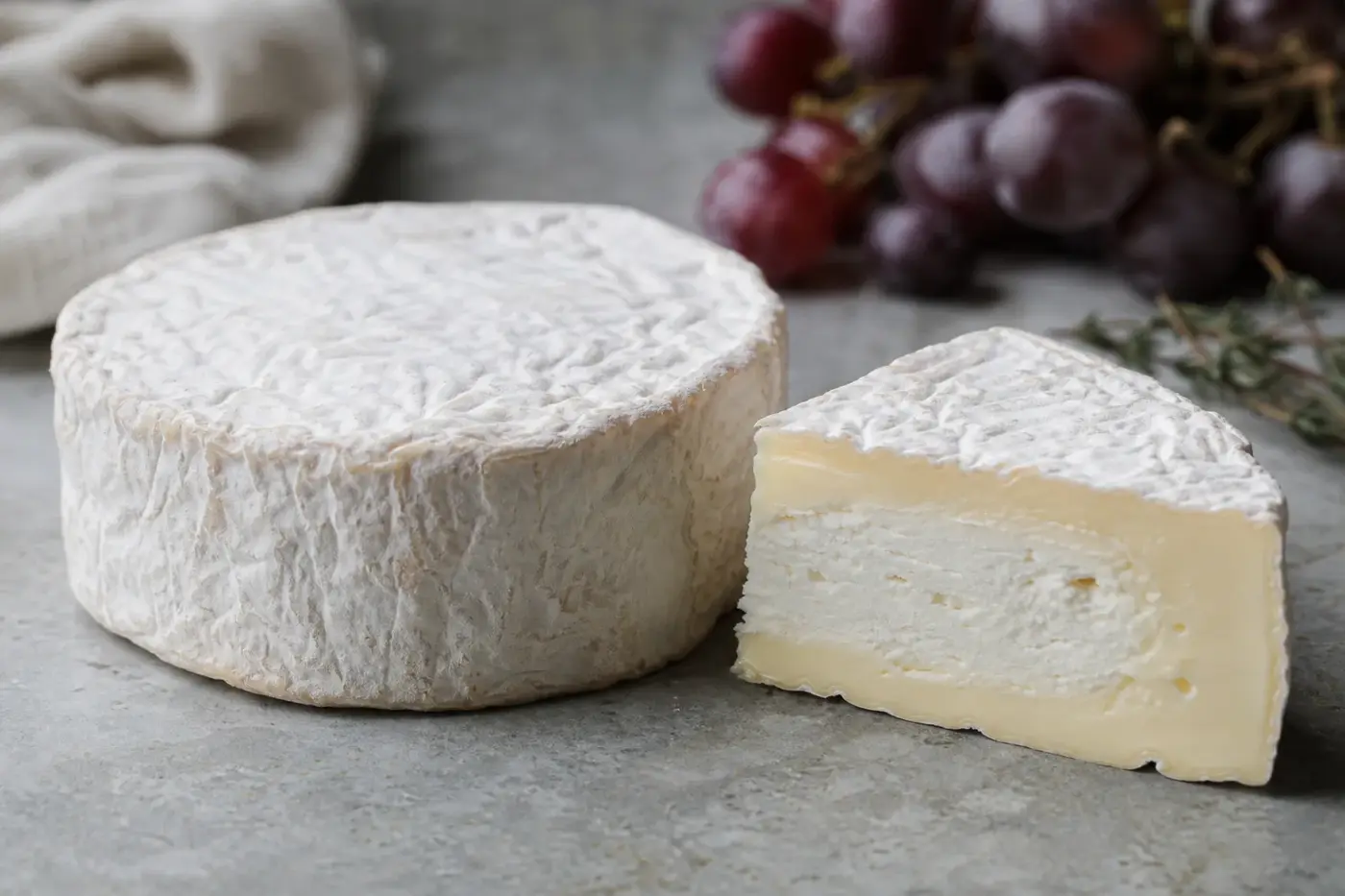
Your knife slips through the white rind and reveals a translucent ribbon around a pale, chalky heart. Here is ripening caught in the act. Living surface fungi turn young, acidic curd into softer, more aromatic cheese, working towards the centre. Choose the texture and maturity you enjoy, keep it chilled, and follow the official advice below for anyone at higher risk. [1,2]
Behind that lovely white bloom
That soft, usually white coat grows from selected surface moulds. Beneath it sits the paste, the cheesemaker's word for the cheese itself, and both ripen together. You will recognise Brie and Camembert here, but surface growth defines this family, not a particular milk, shape or recipe. [3,14]
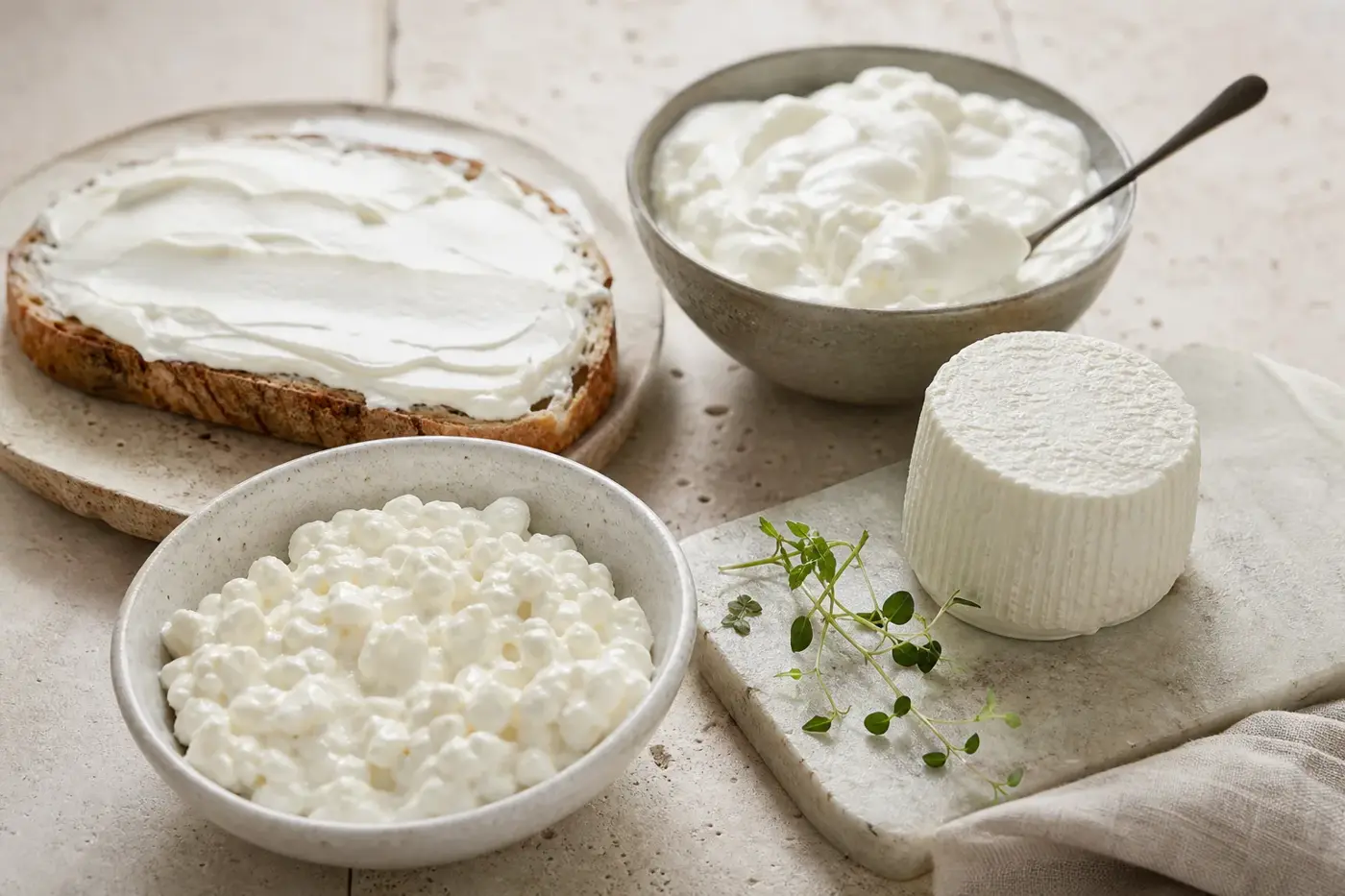
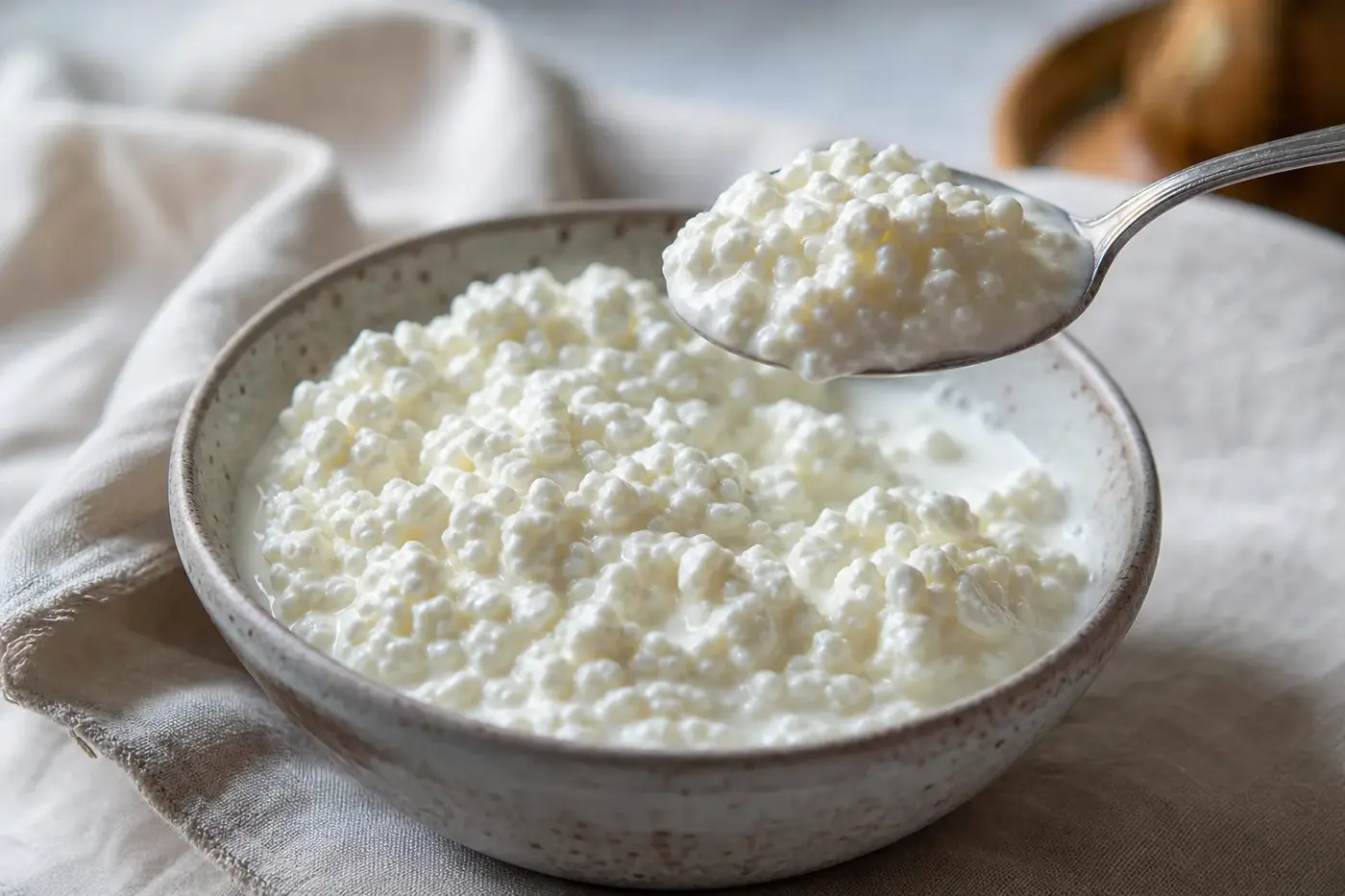
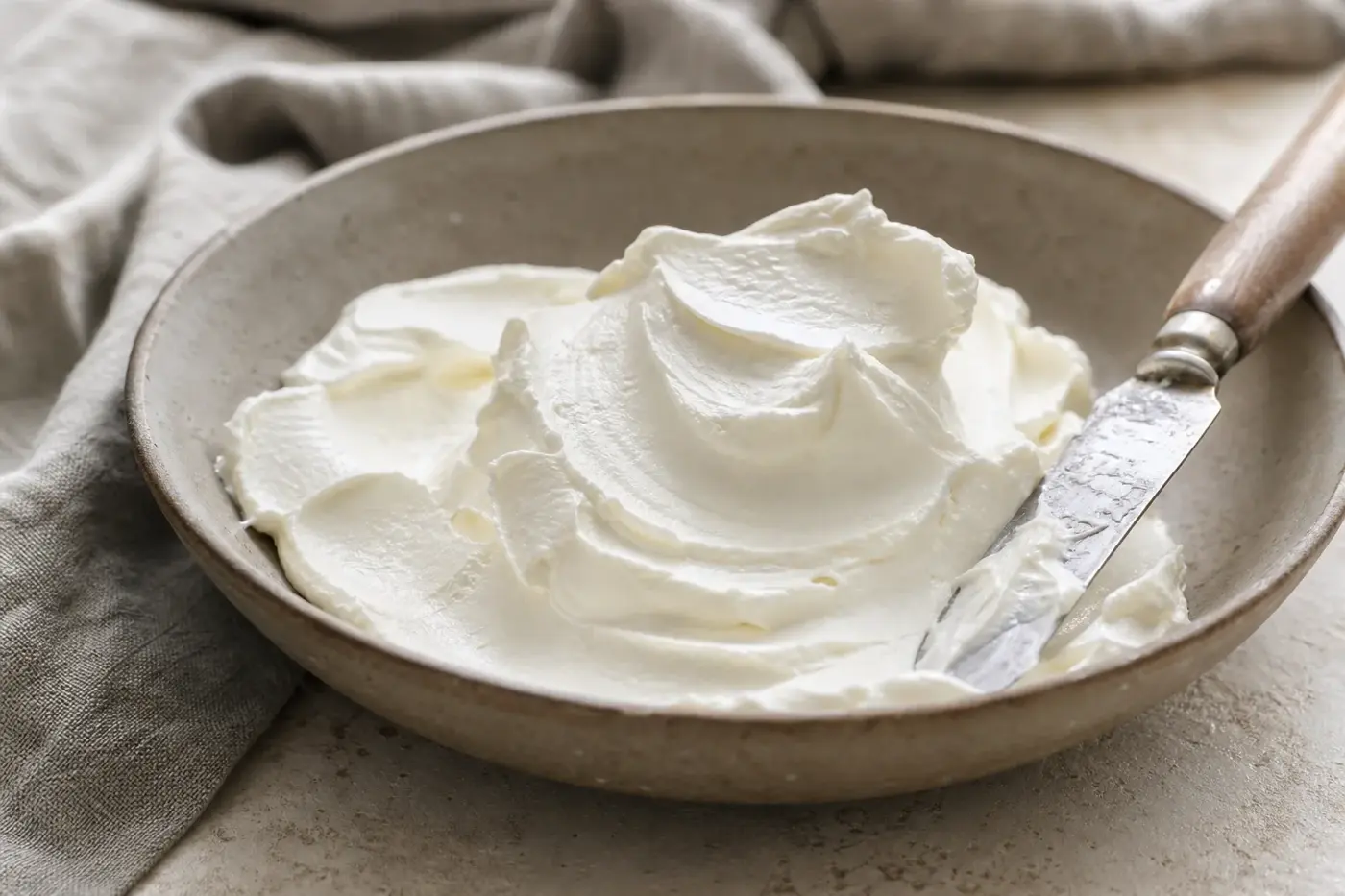
Fresh cheese skips this ripening stage. Washed-rind cheeses take another route: washing during maturation encourages a microbial community that often creates a moist, coloured rind. Some cheeses combine surface treatments, so colour alone will not tell you the whole story. Start with the maker's description and the guide to cheese styles. [3]
This page summarises published guidance from the official sources it cites. It is not medical advice. Guidance differs between countries and changes over time, so check the current source for where you live, and ask your doctor, midwife, pharmacist or dietitian about your own circumstances.
Milk, moulds and a cheesemaker's patient work
Long before the white coat appears, the way the milk sets helps shape your cheese. Cheesemakers use starter bacteria to develop acidity and coagulate the milk into curd. Rennet, an enzyme preparation, helps form the gel in many recipes. Acid development matters too, particularly in slowly set goat cheeses: its balance with rennet setting affects how the cheese holds together. [1,3]
The curd then goes into moulds to drain off whey, the liquid portion. Gentle ladling preserves a different structure from more extensive cutting, so the handling follows the recipe. Turning helps drainage and gives an even shape. Salt adds seasoning while influencing moisture and microbial growth. [3,5]
Surface cultures can arrive through the milk or be applied to the cheese itself. Ripening follows, with managed temperature and humidity, plus turning and monitoring as needed. In experimental Camembert-type cheeses, changing those conditions changes fungal growth and the rise in rind pH, a measure of acidity. [3,4]
A busy community beneath the white coat
Look closely at that rind. You are seeing a community, not one mould putting the finishing touches on an otherwise finished cheese. Yeasts and bacteria share the surface with fungi. Controlled Camembert-type experiments have brought several organisms together and measured their different contributions. [2]
One is Penicillium camemberti, a filamentous fungus associated with the white growth on Camembert-type cheeses. Its enzymes help break down proteins, a process called proteolysis, and fats, called lipolysis. These processes change the texture and provide material from which aroma compounds develop. [1,2]
Another important contributor is Geotrichum candidum, a ripening fungus often described as yeast-like. It helps use up lactate, reducing surface acidity, and supplies enzymes involved in ripening. For a glimpse of its handiwork, cheese producer Vermont Creamery describes a wrinkled Geotrichum rind on its aged cheeses. [15]
Follow the softness all the way in
That soft layer beneath the rind begins with a change in acidity. Early on, the paste may be firm and acidic. Surface organisms consume lactate and produce alkaline compounds, including ammonia, making the rind less acidic. Their enzyme activity and those acidity changes alter the protein network beneath it, softening the outside while the centre stays firmer. [1,2]
Your knife reveals the result: a translucent band around a paler, chalkier core. As ripening continues, softness travels further inward, the rind becomes more established and the aroma grows more pronounced. Research on Camembert-type cheese links fungal growth with increasing pH and protein breakdown. [2,4]
That inward journey explains why two slices from one wheel can offer different textures. It also gives you a useful question at the cheese counter: how mature is it? A firmer heart and a cheese softened throughout suit different tastes. Ask for the stage you want, not simply the oldest cheese. [2,4]
Find your way around Brie, Camembert, Coulommiers and goat cheeses
With Brie and Camembert, take a moment to read the whole name. In November 2026, the Great Britain register lists Brie de Meaux and Camembert de Normandie separately as registered PDOs, protected designations of origin. Those records concern those exact names, not every cheese sharing part of them. [6,7]
INAO, France's origin and quality institute, describes Brie de Meaux as a large, flat cylinder made exclusively from raw cows' milk. Its description of the fully ripened paste gives you plenty to anticipate. Think supple to slightly flowing, with cream, butter, hazelnut and sometimes woodland aromas. [5]
Choosing Coulommiers? Compare its label and cut face with the Brie or Camembert beside it. Ask the seller about milk treatment, dimensions, firmness and maturity. The familiar name starts the conversation; those details help you choose the particular cheese.
Soft goat cheeses offer more to explore. Some have a ripened white coating, which the NHS distinguishes from goats' cheese without that coating in its pregnancy guidance. Look for the milk species and the maker's description of the rind. Soft goat cheese is not automatically fresh cheese. [8]
Tell the seller what makes you happy
For a mild introduction, ask for a younger cheese with a firmer centre. For a more developed experience, choose one ripened further through. Do you want neat slices or paste soft enough to spoon? That tells the seller far more than “something ripe”, which leaves rather a lot to the imagination. [2,4]
Be just as specific about aroma. Ask about mushroom, fresh cream or stronger savoury notes, and look at the maker's description. Milk, recipe, surface organisms and maturation all shape what you taste. A white coat is not a promise of a mild flavour. [1,4,5]
Read the ripeness, but know a sniff's limits
A softer layer beneath the rind is normal surface ripening. Ammonia can develop during ripening too, as controlled experiments demonstrate. [2] But neither appearance nor smell reliably reveals harmful bacteria, so a sniff cannot tell you whether your cheese is safe. [13]
The FSA's food fact checker advises discarding soft cheese with unwanted mould. If growth differs from the maker's intended rind, throw the cheese away rather than trimming it. Follow any recall notice, and discard cheese past its use-by date. [12,13]
Choose for the occasion, then keep it cold
Buy for the moment you have in mind. Tell the seller when you plan to serve your cheese and how many people will eat it, then check the milk treatment, storage instructions and date. If you are buying a cut piece, ask for its identity and handling instructions.
Keep the original wrapper where suitable, close it around the cut cheese and follow the maker's rewrapping instructions. Protect it from raw foods and their juices. The FSA advises a home fridge between 0 and 5 °C in England, Wales and Northern Ireland. Follow any stricter instructions on the product. [10]
After opening, observe the label's limit and its use-by date, whichever comes first. You will find more detail in the guide to storing cheese at home. [10,12]
Serve a little, and get to know the rind
Put out a modest portion and leave the rest refrigerated. If you let that portion soften before eating, keep the time brief. FSA guidance for England, Wales and Northern Ireland says chilled food should spend the shortest possible time outside the fridge during preparation, with a maximum of four hours. [10]
The intended mould rind belongs to the cheese and can be eaten, subject to the official advice below. Remove packaging and any non-food coverings first. If the rind's flavour or texture is not for you, leave it on your plate. Cutting it off does not replace the precautions advised for higher-risk groups. [8,9,14]
Give your cheese some good company
Start with plain bread or unsalted crackers, so you can taste the cheese clearly. Try pear or apple with a mild example, or a tart fruit accompaniment alongside the savoury paste of a more mature cheese. Your cheese need not audition against the entire pantry. For an alcohol-free drink, choose water or an unsweetened apple drink.
Thin slices work in a sandwich; a suitable cheese can also go into a thoroughly cooked tart or toast topping. Follow a complete recipe for cooking and handling, because a softened centre does not establish that the cheese has been thoroughly heated. For guests covered by the advice below, cook it until steaming hot throughout. [8,11]
Pregnancy and higher-risk groups: know the UK advice
UK guidance, November 2026: the NHS advises pregnant people to avoid these soft cheeses unless they are cooked, whether the milk is pasteurised or unpasteurised. Cook them until steaming hot throughout. Examples include Brie, Camembert and chèvre. [8]
The NHS also advises infants and young children, people over 65, and people with a long-term medical condition or weakened immune system to avoid these mould-ripened soft cheeses uncooked. It says they can be used in cooked recipes because cooking kills Listeria. [9]
Pasteurisation treats the milk, but contamination can happen afterwards. The FSA explains that Listeria can grow at refrigeration temperatures, making careful storage and use-by dates essential. For thorough cooking, its guidance for England, Wales and Northern Ireland gives a centre temperature of 70 °C for two minutes, or an equivalent combination. [11,16]
Check the linked NHS and FSA sources for current advice where you live. Discuss your individual circumstances with your doctor, midwife, pharmacist or dietitian. For the wider handling questions, turn to our cheese food safety guide.
Questions people ask
Can you eat the white rind on Brie and Camembert?
The intended mould rind is part of the cheese and can be eaten. You can leave it on the plate if you do not enjoy its flavour or texture, but cutting it off does not replace the precautions advised for higher risk groups.
Can you eat bloomy rind cheese during pregnancy?
The NHS advises pregnant people to avoid these soft cheeses unless they are cooked until steaming hot throughout, whether the milk is pasteurised or unpasteurised. Check the NHS pregnancy guidance for current advice.
Why is my cheese soft around the edge but chalky in the middle?
Bloomy rind cheese ripens from the outside towards the centre. As ripening continues, the soft layer reaches further inward.
How should I store bloomy rind cheese?
Keep it chilled, protect it from raw foods and their juices, and follow the maker's rewrapping instructions. The FSA advises a home fridge temperature between 0 and 5 °C in England, Wales and Northern Ireland, or any stricter temperature stated on the product.
Can I cut unwanted mould off a soft cheese?
The FSA advises discarding soft cheese with unwanted mould rather than trimming it. It also advises discarding cheese past its use by date.
Sources
- BMC Genomics, “Metatranscriptome analysis of fungal strains Penicillium camemberti and Geotrichum candidum reveal cheese matrix breakdown and potential development of sensory properties of ripened Camembert-type cheese”, volume 15, article 235, 2014. Full text.
- Journal of Dairy Research, “Controlled production of Camembert-type cheeses. Part I: Microbiological and physicochemical evolutions”, volume 71, 2004. Research record and abstract.
- Applied and Environmental Microbiology, “The Composition of Camembert Cheese-Ripening Cultures Modulates both Mycelial Growth and Appearance”, 2012. Research article.
- Journal of Dairy Science, “Toward the integration of expert knowledge and instrumental data to control food processes: Application to Camembert-type cheese ripening”, 2011. Research article.
- Institut national de l'origine et de la qualité, “Brie de Meaux”, current product account, publication date not stated. Official product page.
- Department for Environment, Food & Rural Affairs, “Brie de Meaux”, Great Britain protected food name register entry, published 4 January 2021, current record checked November 2026. Register entry.
- Department for Environment, Food & Rural Affairs, “Camembert de Normandie”, Great Britain protected food name register entry, published 4 January 2021, current record checked November 2026. Register entry.
- NHS, “Foods to avoid in pregnancy”, current online guidance, checked November 2026. Official pregnancy guidance.
- NHS, “Dairy and alternatives in your diet”, current online guidance, checked November 2026. Official dairy guidance.
- Food Standards Agency, “How to chill, freeze and defrost food safely”, published 18 December 2017, current online text checked November 2026. Applies to England, Northern Ireland and Wales. Official chilling guidance.
- Food Standards Agency, “Cooking your food”, published 18 December 2017, current online text checked November 2026. Applies to England, Northern Ireland and Wales. Official cooking guidance.
- GOV.UK, “Understanding food labelling: Best before and use-by dates”, current online guidance, checked November 2026. Official date-label guidance.
- Food Standards Agency, “Home food fact checker”, updated 21 August 2026. Official household food safety guidance.
- Food Standards Agency, “Natural toxins factsheet”, publication FSA/0486/0302, 2002. Used only for its explanation of deliberately introduced cheese mould. Agency factsheet.
- Vermont Creamery, “Aged Cheese”, current maker's account, publication date not stated. Used for its description of a wrinkled Geotrichum rind. Maker's account.
- Food Standards Agency, “Listeria”, published 8 January 2018, current online text checked November 2026. Applies to England, Northern Ireland and Wales. Official Listeria guidance.
This desk-researched guide brings together experimental cheese-ripening research, official product and register records, and current UK public food safety guidance.
Last checked: November 2026
Last checked November 2026.
The editors suggest you read next
How to Tell Cheese Styles Apart: Milk, Rind, Texture and Method
Watch mozzarella curd being worked and stretched in hot water.