Croatian Cheese
Sage, thyme and immortelle grow beneath the sheep’s feet on Pag’s rocky pastures.
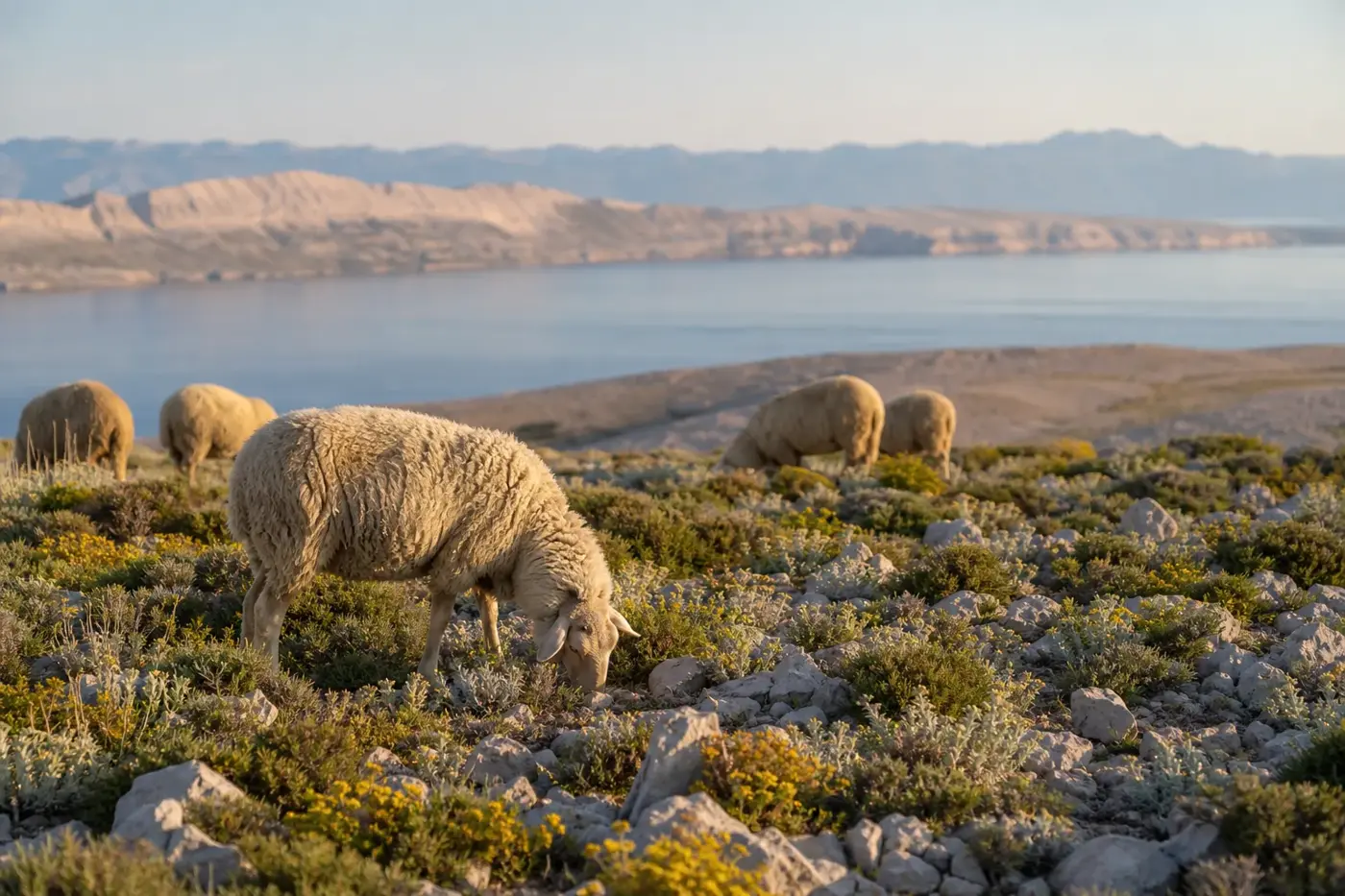
Sage, thyme and immortelle grow beneath the sheep’s feet on Pag’s rocky pastures. Cut into the island’s hard cheese and you meet slightly sweet sharpness and aromatic herb notes. The European Commission’s product document for Paški sir draws that connection between pasture and cheese, giving you a delicious place to begin. Beyond Pag lie Istrian sheep’s cheeses, Lika’s fresh, squeaky cheese and the inland traditions of cow’s milk: this is a country worth tasting by contrast. [1,2,3,4]
Your first taste of Croatian cheese
| What to look for | Where to begin |
|---|---|
| Where it comes from | Croatia, from Adriatic islands to inland dairy regions [1,2,3,4] |
| Milks you’ll encounter | Sheep’s, cow’s and goat’s milk [1,2,3,4,9] |
| A useful first tasting | Matured sheep’s cheese, fresh cow’s milk cheese and dried, smoked cheese [1,2,3,4] |
Make room for the contrasts
Pag’s pale stone and sparse vegetation help explain why sheep matter here. The official Paški sir document brings together the island’s native sheep, its pasture plants and its cheesemakers’ skills. Sage, thyme and immortelle all feature, but no single herb deserves the entire credit. Animal, feed and method work together. [1]
Follow those changing combinations across Croatia and your cheese plate becomes rather good company. Begin with ripened sheep’s cheese, move to unripened cow’s milk cheese, then try something shaped by hand and smoked. You are not looking for one national flavour. The pleasure lies in finding such different traditions so close together. [1,2,3,4]
Follow the milk from coast to countryside
Along the Adriatic, look first at the grazing land. The Istrian product document puts karst, terrain shaped by soluble rock such as limestone, at the heart of its production area. It describes shallow soils and sheep fed on pasture and hay, with permitted supplements. This protected area crosses the Croatian-Slovenian border and includes specified islands, among them Cres and Lošinj. [2]
Head inland to Lika and you meet quite another cheese. Lički škripavac uses cow’s milk and reaches you without maturation; its defined area covers most of Lika-Senj County and specified parts of Karlovac and Zadar counties. The official account traces its tradition to the livestock-farming communities of Lika and the neighbouring mountain ranges. Historically, long winters cut these settlements off. [3]
Farther north, fresh cheese is only the beginning. The Bjelovar-Bilogora specification describes low-lying grassy land and a strong household tradition of cooking with milk products. To make Bjelovarski kvargl, makers drain fresh cow’s milk cheese, season it, shape it, dry it and smoke it. What begins as an everyday ingredient becomes firm and concentrated. [4,6]
Goat’s milk brings a different rhythm to Istria. Kumparička’s visitor information centres on goat cheeses and grazing, linking spring to the start of milking and the return of fresh cheeses. Winter brings aged cheeses and preparations for kidding. At a farm or tasting, ask what has been made this season and what has been quietly maturing since an earlier one. [9]
Four cheeses to make space for
Paški sir: begin with Pag
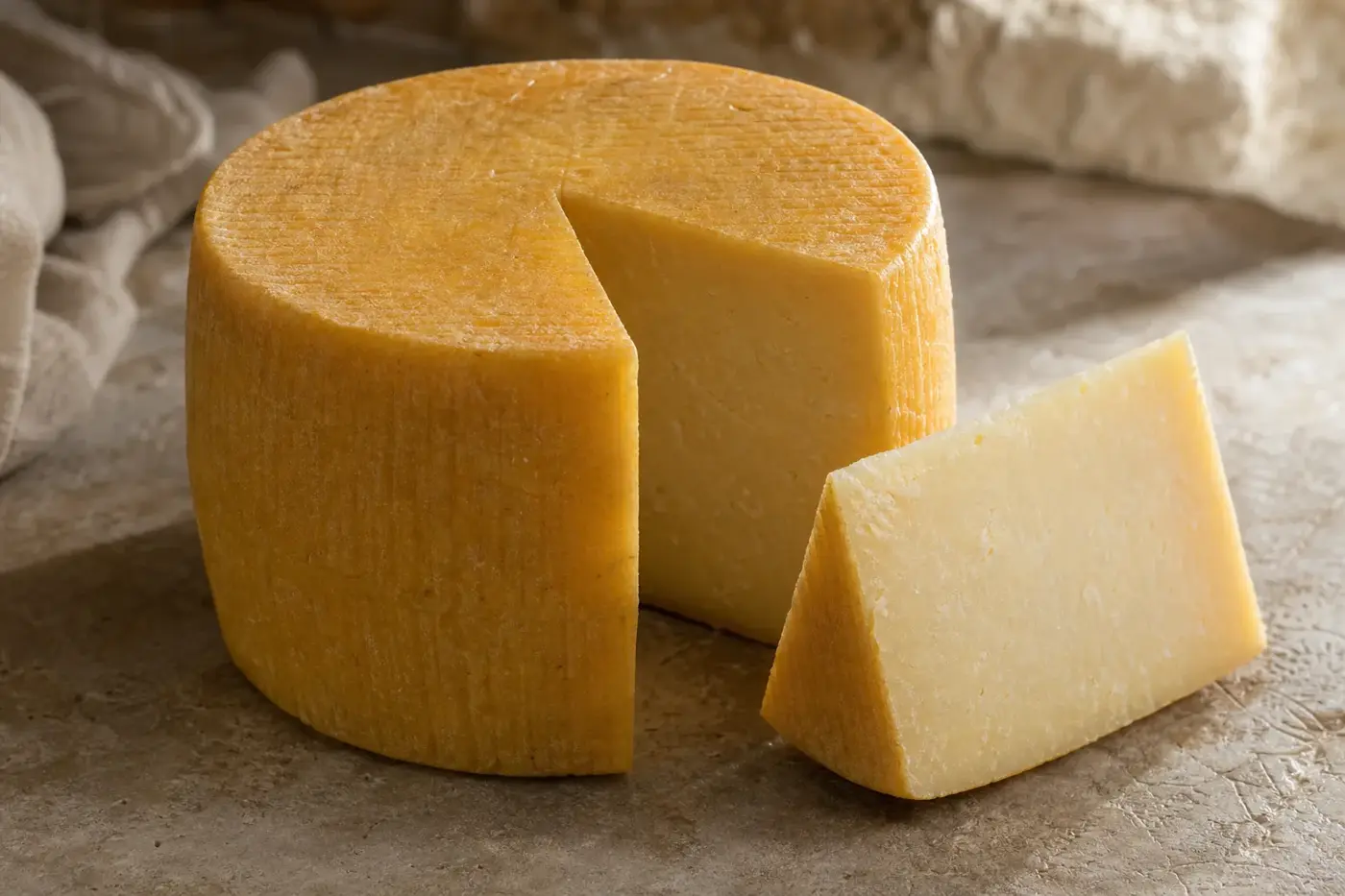
Cut into Paški sir and you’ll find the compact, pale-yellow interior with few holes described in its official document. Its taste is slightly sweet and sharp, with aromatic herb notes. Made from whole milk from Pag’s native sheep, it matures for at least 60 days, becoming firmer and sharper with age. Its defined production area covers Pag and the islets of Maun and Škrda. [1]
Istarski ovčji sir: let age guide you
With Istarski ovčji sir, pay attention to texture. It can be slightly elastic and sliceable or slightly crumbly; the EU document describes an ivory to straw-coloured interior, salty, spicy flavour and pronounced sheep’s milk aroma. This hard sheep’s milk cheese bears the Croatian form of the shared registered name Istarski ovčji sir / Istrski ovčji sir. [2,5]
The milk may be raw or pasteurised, from sheep of any breed reared within the defined area. When choosing a wheel, ask its age rather than stopping at its name. The specification allows it to be marketed after at least 60 days and no later than 12 months of ripening. [2]
Lički škripavac: a cheese you can hear
Lički škripavac squeaks as you chew. That soft-rubbery texture belongs to a milky-white, rindless cheese made from raw or pasteurised whole cow’s milk. Makers use rennet, the agent that sets milk into curd, together with a starter culture. Expect the milky-sweet, moderately salty taste described in the specification. [3,7]
Choose it for that youthful texture, rather than the sharpness you might seek in an aged cheese. Ask when it was made and how the producer describes the batch you’re buying. To get a better feel for those differences, try how to tell cheese styles apart.
Bjelovarski kvargl: meet the pointed cone
Bjelovarski kvargl’s pointed cone gives it away before you taste it. Makers mix drained fresh cow’s milk cheese with salt and paprika, sometimes garlic too, then shape it by hand, dry it and smoke it. The official description specifies individual cheeses of 60 to 110 g. Inside, you’ll find firm, dense, pinkish cheese with visible white grains. [4,6]
Taste for the mild acidity, paprika and smoke: each deserves your attention. The product document distinguishes kvargl from its relatives, turoš of Međimurje and prgica of the Varaždin area, particularly through its smoking and more pointed shape. If those neighbouring cheeses share your regional plate, give each the courtesy of its own name. Family resemblance is not the same as interchangeability. [4]
Let the names take you somewhere
A protected name gives you more than a geographical hint. It connects a cheese to a place and defining characteristics, set out in official EU product documents for these four names. PDO means protected designation of origin; PGI means protected geographical indication. For the wider distinction, turn to protected names explained. [1,2,3,4]
| Name to look for on the register | EU reference | Category in the official product document | Current EU status, November 2026 |
|---|---|---|---|
| Paški sir | PDO-HR-02397 | PDO | |
| Istarski ovčji sir / Istrski ovčji sir | PDO-HR+SI-02859 | PDO | Registered and in force [2,5] |
| Lički škripavac | PGI-HR-02600 | PGI | |
| Bjelovarski kvargl | PGI-HR-02382 | PGI |
Look beyond the broad description “Croatian” and those details become useful. Paški sir’s requirements connect milk production and cheesemaking to its island area, while Bjelovarski kvargl safeguards a particular hand-worked, dried and smoked product made in Bjelovar-Bilogora County. Lički škripavac joins a specified fresh cheese to a defined production territory. Each name tells you something precise about what is on your plate. [1,3,4]
Istarski ovčji sir / Istrski ovčji sir has a shared registration, so keep the Croatian and Slovenian names together when discussing it. Registration took effect on 30 December 2025 under Regulation (EU) 2025/2496. The regulation was adopted on 3 December and published on 10 December 2025. [5]
Pull up a chair at the Croatian table
Try sir i vrhnje, fresh cow’s milk cheese served with cream, beside a slice of matured sheep’s cheese. The contrast tells you plenty: Croatian cheese belongs at the everyday table, not just among named ripened wheels. On inland menus, look for štrukli to encounter cheese in a dish. [10]
Ask which cheese goes into the štrukli and how the kitchen prepares and serves it. You’ll learn more from the answer than from assuming every version is alike. Bring the same curiosity to a market tub of fresh cheese: who made it, which milk went into it and what is it intended for? Those answers help you distinguish cheese for the table from cheese suited to cooking.
For a sharing plate, let the differences carry the meal. Set out a matured sheep’s cheese, a fresh cow’s milk cheese and a small piece of smoked kvargl. Add plain bread, keeping olives, walnuts or fresh fruit separate. That gives everyone a chance to recognise the cheeses’ textures and seasonings before exploring the accompaniments.
Taste each cheese on its own first. With firmer sheep’s cheeses, notice the resistance of the paste, the strength of the aroma and how the finish develops; with kvargl, follow the balance of acidity, smoke and paprika. Water makes a straightforward alcohol-free drink for this comparison. Note the maker and maturity: those details tell you more than giving a whole country’s cheese a single score. [1,2,4]
Find the household ingenuity in every cheese
Bjelovarski kvargl began with a practical problem: fresh cow’s milk cheese did not keep for long. Drying and smoking gave it a longer life, a household response described in the official account. Local makers created a different, longer-keeping product, and the protection dossier places particular weight on knowledge passed between generations of small producers. At this regional scale, Croatian cheese history comes into focus. [4,6]
Lički škripavac brings you another household story. Its official narrative connects it with the needs of remote mountain settlements through snowy winters, rather than the making of aged cheese for distant trade. Put these accounts together and you see two different things a tradition can preserve. In one place, transformation through drying and smoke; in another, the character of fresh cheese. [3,4]
To follow those histories, look at what makers actually do. A regional name opens the conversation, but ask whose animals supplied the milk, how the curd was handled and what happened between making and eating. You can explore the broad principles in how cheese is made. The regional product documents show how particular practices and traditions give those principles a local character.
Plan your tasting around better questions
Pag: make time for different ages
Pag makes a rewarding first stop if you want to compare maturity within one named sheep’s cheese. Gligora’s visitor page advertises guided visits and tastings at its dairy in Kolan, including a production gallery and tasting room. Confirm the producer’s current arrangements directly before you travel. [8]
Ask whether you can taste Paški sir at more than one age. Then ask whether other cheeses on the board use different milk. That gives your visit a clear focus, since an island dairy’s cheeses may offer several routes into style, milk and maturation. Write down exact product names as well as the dairy’s name; “the lovely one” is a notoriously unreliable filing system.
Istrian farms: choose the milk that interests you
Kumparička’s website features goat cheese tastings, farm tours and pasture walks. A visit gives you an Istrian counterpoint to a tasting built around sheep’s milk. Confirm the date, booking requirements and likely cheeses directly with the farm. That matters especially if a particular fresh or aged cheese is your reason for going. [9]
At any Istrian farm, say what you hope to taste. Ask for Istarski ovčji sir by name, and ask who made it; if goat’s milk cheese is your interest, say so. These are complementary ways into the region, not interchangeable experiences: a goat farm visit differs from comparing Istarski ovčji sir, registered in the EU register of geographical indications. Knowing which appeals to you helps shape a satisfying visit. [5] [2,9]
Inland markets: start with a conversation
Begin planning with the market operator’s own information. Tržnice Zagreb maintains current notices for the city’s markets, so its official website is a practical starting point for arrangements. Ask the local tourist office or market operator which sellers carry regional cheeses. At the stall, confirm the producer and exact product. [11]
Keep four questions ready: what milk is this made from; is that milk raw or pasteurised; when was the cheese made; and how does the producer describe its current maturity? For a mixed tasting plate, ask which cheeses were made locally and which were selected from elsewhere. A stall or shop address tells you where you’re buying. It does not necessarily tell you where each cheese was made.
Before booking a farm visit, ask about accessibility, the language used for the tasting and whether your group needs a reservation. Before travelling with cheese, consult current official rules for your departure and destination countries and any countries you pass through. Check the requirements for a personal or commercial journey, as appropriate.
At the counter, how to read a cheese label helps you distinguish the product name, maker and other label information. Keep those details with your tasting notes. They turn a cheese you enjoyed into one you can find and recognise again.
Inside a dairy, ask permission before taking photographs or recording a producer’s explanation of their work.
Questions people ask
What Croatian cheeses should I try?
For a contrast, try a matured sheep’s cheese, a fresh cow’s milk cheese and a piece of smoked Bjelovarski kvargl. Paški sir and Istarski ovčji sir are sheep’s cheeses, while Lički škripavac is a fresh cow’s milk cheese.
What is Paški sir made from?
Paški sir is made from whole milk from Pag’s native sheep. It matures for at least 60 days and becomes firmer and sharper as it ages.
What does Lički škripavac taste like?
Lički škripavac has a milky sweet, moderately salty taste and a soft, rubbery texture. It is eaten without maturation and squeaks as you chew.
How is Bjelovarski kvargl made?
Makers drain fresh cow’s milk cheese and mix it with salt and paprika, sometimes adding garlic. They then shape it by hand, dry it and smoke it.
Is Istarski ovčji sir a protected cheese?
Yes. It shares the registered name Istarski ovčji sir / Istrski ovčji sir, whose EU registration took effect on 30 December 2025. Its protected area crosses the Croatian and Slovenian border and includes specified islands, such as Cres and Lošinj.
Sources
[1] European Commission. Single document “Paški sir”. Application publication 2019/C 225/05, Official Journal C 225, 5 July 2019, pages 33 to 37. Sections 3 to 5 cover composition, production area, sensory characteristics and the stated geographical link. Official publication.
[2] European Commission. Single document “Istarski ovčji sir / Istrski ovčji sir”. Application publication C/2025/4514, 11 August 2025. Sections 3 to 5 cover milk, maturation, sensory characteristics, feeding and geographical boundaries. Official publication.
[3] European Commission. Single document “Lički škripavac”. Application publication 2021/C 325/06, 13 August 2021. Sections 3 to 5 cover composition, texture, production area and the dossier’s historical account. Official publication.
[4] European Commission. Single document “Bjelovarski kvargl”. Application publication 2019/C 320/06, 24 September 2019. Sections 3 to 5 cover ingredients, hand production, form, sensory characteristics and regional context. Official publication.
[5] European Commission. Commission Implementing Regulation (EU) 2025/2496 of 3 December 2025 on the registration of the geographical indication Istarski ovčji sir / Istrski ovčji sir (PDO) in the Union register of geographical indications. Official Journal, 10 December 2025, Articles 1 and 2. Binding registration instrument.
[6] Udruga proizvođača sira “Bjelovarski kvargl”. Bjelovarski kvargl: specifikacija proizvoda. February 2019, published by the Croatian agriculture ministry. Sections 2 and 3 describe ingredients, hand shaping, drying, smoking and production territory. Product specification.
[7] Udruga malih sirara Ličko-senjske županije “Lički škripavac”. Lički škripavac: specifikacija. December 2020, published by the Croatian agriculture ministry. Section 2 describes milk, coagulation and finished cheese. Product specification.
[8] Gligora Cheese & Deli. Guided Tours. Undated visitor page carrying arrangements beginning in April 2026. Producer information, used for its own advertised visitor offer. Official visitor information.
[9] Stancija Kumparička. Farm-to-table experiences in Istria. Undated website, accessed November 2026. Producer information, used for its own advertised activities and seasonal account. Official farm website.
[11] Zagrebački holding, Tržnice Zagreb. Naslovnica. Current market operator website, including notices dated October 2026. Official market information.
This desk-researched draft brings together official product documents, a binding registration instrument and operators’ own visitor information, with unresolved publication checks recorded below.
Last checked: November 2026
Last checked November 2026.
The cheeses of Croatia
The editors suggest you read next
French Cheese: The Complete Guide
Picture Normandy’s pastures, then follow the milk towards the Loire’s goat dairies, the Jura’s shared cheesemaking traditions and the sheep country of the Pyrenees.