Crozier Blue
Slide a knife into Crozier Blue in summer and your wedge may gently yield.
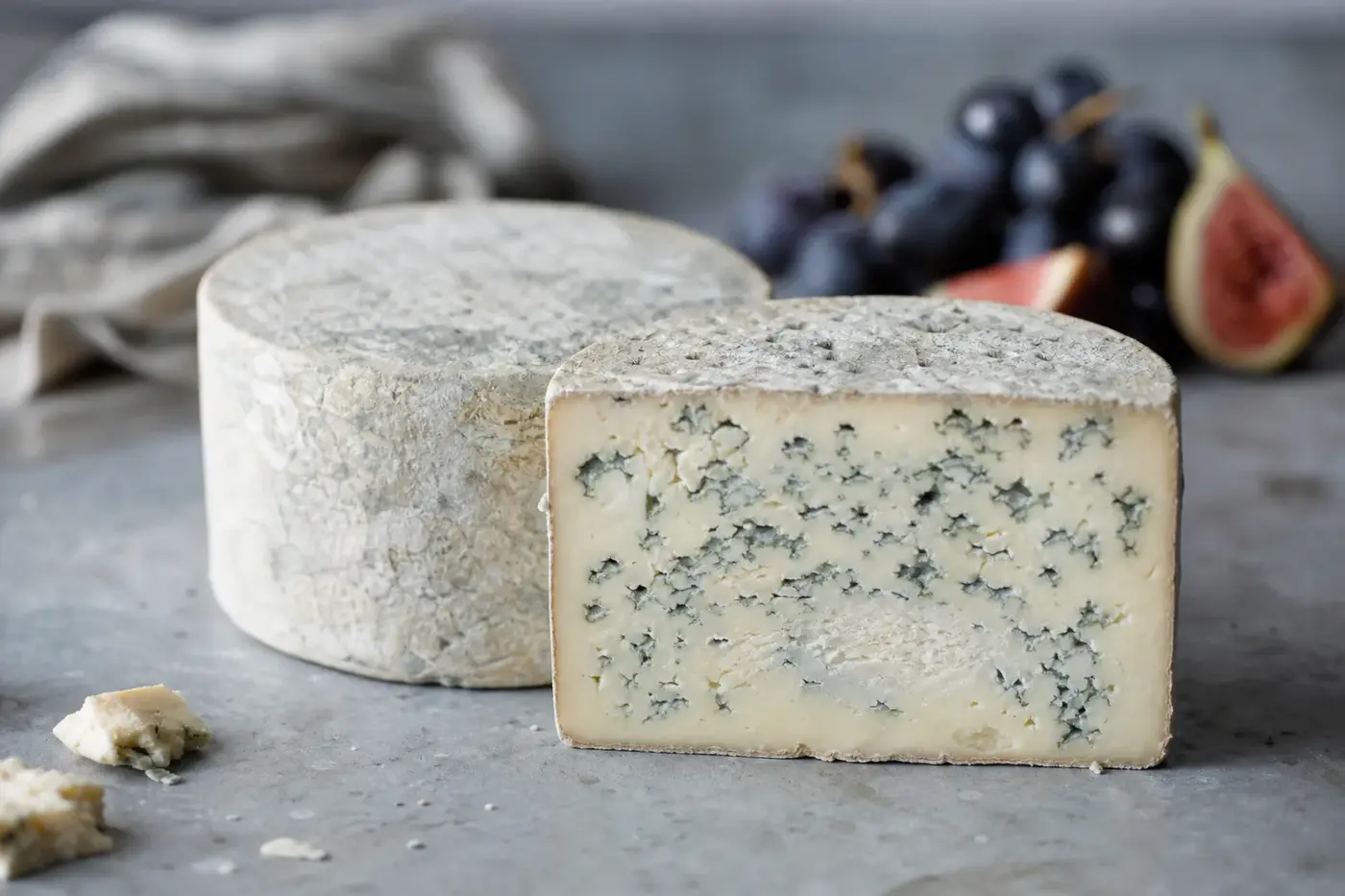
Slide a knife into Crozier Blue in summer and your wedge may gently yield. Come autumn or winter, its maker describes a texture that turns velvety and fudgy. This semi-soft, blue-veined sheep’s milk cheese from Cashel Farmhouse Cheesemakers in County Tipperary, Ireland, lets the season have a say in what lands on your plate. [1]
Get acquainted with your wedge
| What to know | The details |
|---|---|
| Name | Crozier Blue. [1] |
| Maker | Cashel Farmhouse Cheesemakers. [2] |
| Home | Beechmount, Fethard, County Tipperary, Ireland. [2] |
| Milk | Pasteurised sheep’s milk. [3] |
| Style | Semi-soft, blue-veined. [4] |
| Rind | Natural, grey to pale. [2] |
| Ready to leave the dairy | From three months, according to Bord Bia. [2] |
| Whole-wheel size | Published whole-wheel format: 1.4 kg. [3] |
| Crozier-specific curd handling and mould strain | Details not available here |
| Registered name, authority and register ID | Details not available here |
A Tipperary blue with its own character
Crozier shares its dairy with the cow’s milk Cashel Blue, but sheep’s milk gives it a character of its own. Bord Bia places the making, maturing, grading and selection at Beechmount Farm, near Cashel. That Irish address tells you more than where to send a letter: this cheese is made and brought to maturity at the Tipperary dairy. [2]
The maker’s work with sheep’s milk dates to 1993. Crozier and Cashel Blue share cheesemaking experience, not interchangeable milk or identical flavour. If you know the cow’s milk cheese, use it as a point of comparison, then give this Irish sheep’s milk blue your full attention. [6]
From Wicklow milk to a Tipperary wheel
Crozier begins with 100% Irish ewe’s milk, identified as pasteurised in the Irish farmhouse cheese industry’s published guide. Ewe simply means a female sheep. The dairy describes the milk as particularly dense and rich, linking that richness directly to the texture you find in the finished cheese. [1,3]
On 6 March 2024, the first sheep’s milk of the 2024 season reached the vat. The dairy’s account traces that year’s weekly supply to a Friesland flock on a farm in County Wicklow. It gives you a clear route to follow: milk from Wicklow, cheese made in Tipperary. [6]
A year earlier, that journey had stopped. On 5 April 2023, the maker announced it had stopped working with its existing sheep’s milk supplier and could not find an alternative for that year. Production of Crozier Blue and its other sheep’s milk cheese, Shepherd’s Store, was suspended, with a hoped-for restart in 2024. [5]
The following season’s account records the return: around 80 wheels a week, with release planned for late June 2024. Behind those figures sits a period of waiting. Milk reaching the dairy is only the beginning; making and maturation still have to happen before you can take home a wedge. [6]
The maker describes small batches and a seasonal rhythm, with young cheese from June to September and a later season character from October to March. Bord Bia lists availability throughout the year. With those different accounts in mind, ask your cheesemonger about the wheel being cut and what is available now, rather than choosing from a listing alone. [1,2]
Patient hands, one cheese at a time
Salting, turning, cutting, tasting: the dairy’s account of making its blue cheeses returns to these tasks again and again. Piercing happens slowly, one cheese at a time. Those deliberate punctures are associated with blue development, while regular handling and assessment continue as each cheese matures. [7]
The dairy’s illustrated production story takes you through turning during blueing, foil wrapping once blue development begins, and tasting each batch to decide its maturation. This is the story of Cashel Blue, so it offers a glimpse of the dairy’s working methods rather than a Crozier-specific recipe. Bord Bia gives Crozier’s release age separately, starting at three months. [2,8]
Once the cheese is made, maturation gives it time to develop. In the maker’s account of its blues, mould activity changes fats and proteins as the texture becomes increasingly yielding. Making the curd and ripening it are distinct stages, both shaping your mouthful; follow the journey through setting milk, handling curd and ripening in how cheese is made. [8]
There is more to see than blue
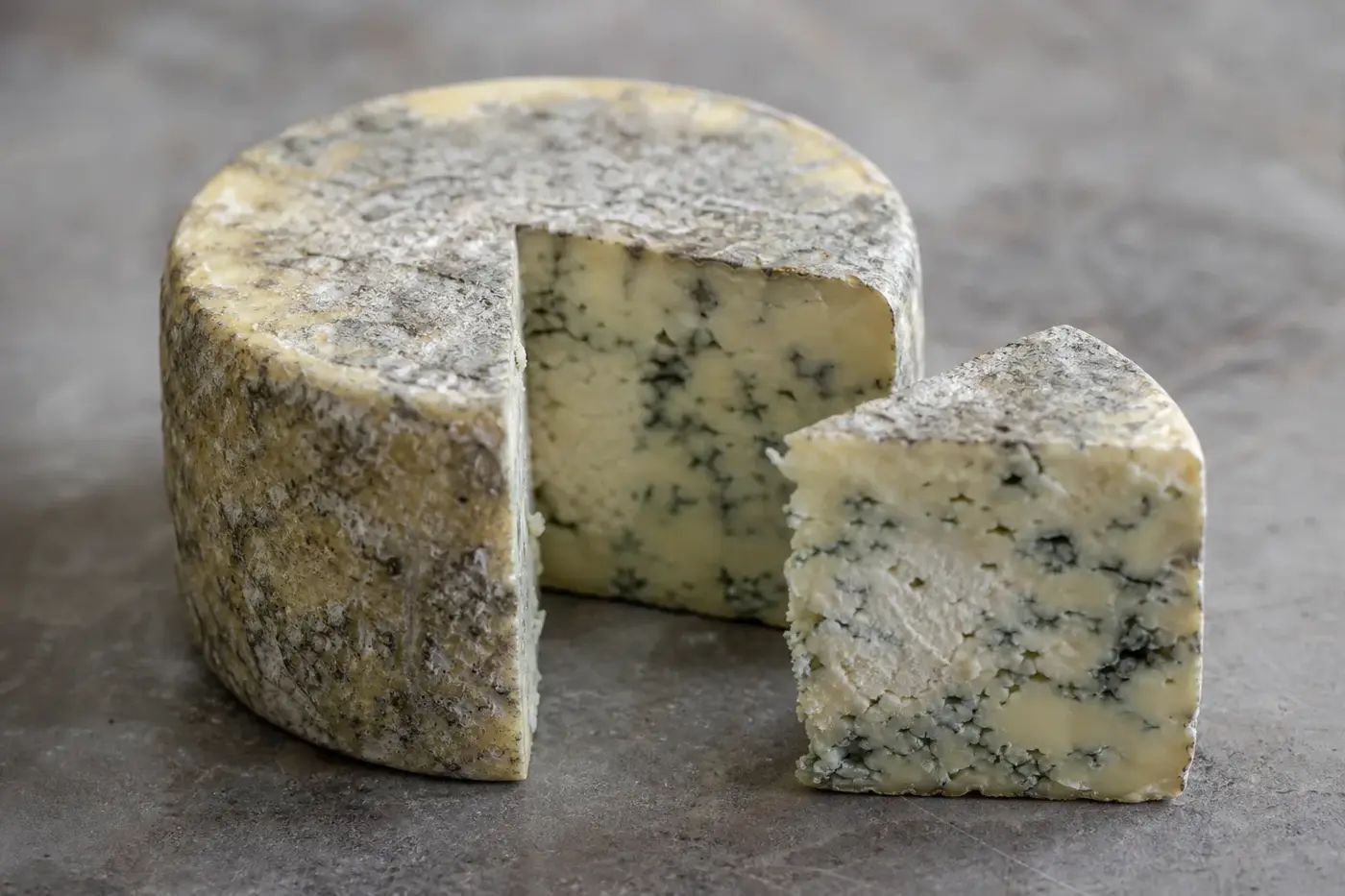
Beneath Crozier’s natural grey or pale rind, Bord Bia describes a pale white interior threaded with greyish-green mould. Towards the centre, its description notes a chalkier area too. The published farmhouse cheese guide lists a 1.4 kg whole wheel as well as smaller cut sections. [2,3]
Whether you are looking at a freshly cut wedge or a photograph, give the paste a moment of attention. That is the body of cheese inside the rind, and the blue veins need not steal every scene. Ask about the texture of the wheel being cut: the centre and softer areas may feel different, even within your piece. [2]
Find your favourite: tangy or fudgy
Do you prefer a little tang or a smoother mouthful? Bord Bia describes younger Crozier as more crumbly and acidic, developing a sweet blue flavour as it matures. Add the maker’s seasonal shift from gently soft in summer to velvety and fudgy later, and you have a useful starting point: younger for tang, more developed for smoother texture. [1,2]
Before you reach for anything sweet, taste a small piece on its own. Start with the aroma, then notice the balance of acidity, salt and blue flavour. Feel how the paste breaks down in your mouth, too; strength is only part of what this cheese has to offer.
Try a little pale paste, followed by a blue-veined section. Comparing the two gives you a more precise impression than simply deciding whether the cheese is “strong” or “not strong”.
Make a little space on your board
Start with a small wedge and keep more available if you want it. Plain bread or an unsalted cracker gives you a clear taste of the cheese before other flavours arrive.
Bord Bia suggests taking cheese out of the fridge up to an hour before serving. Aim for cool rather than fridge-cold, keeping it away from heat and direct sun. Follow Ireland’s Food Safety Authority guidance alongside that flavour advice: refrigerated food should stay between 0 °C and 5 °C, and food warmer than 5 °C for more than two hours should be discarded. [11,12]
Put out only what you expect to eat and leave the rest refrigerated. You can then compare a freshly cut piece with one that has warmed slightly, without repeatedly warming your whole purchase. On a mixed board, serve Crozier after a milder cheese so you can appreciate its blue flavour.
Try a slice of ripe pear, a few grapes or a little oat bread alongside. Keep chutney separate so you control the sweetness. Taste the cheese plain first, then add one accompaniment at a time; even a much-loved chutney need not chair the meeting.
For an alcohol free pairing, try still water or an unsweetened apple drink alongside the fruit. Treat these as starting points, not rules for your plate. Your own preferences should have the final say.
Look after tomorrow’s slice
The maker recommends keeping Cashel Blue and Crozier Blue refrigerated at 2 °C to 5 °C. Its quality guide is seven to ten days after first opening, after which its blues become stronger. Follow your pack’s storage instructions and date; for a freshly cut piece, ask your cheesemonger for written guidance. [7,11]
Get your cheese into the fridge promptly after purchase. Ireland’s Food Safety Authority advises refrigerating food that needs it as soon as possible and following label instructions. Protect ready-to-eat cheese from raw meat, fish and poultry, which the authority says belong on the bottom shelf, and return your cheese promptly after cutting a serving. [11]
Keep the details supplied with a counter-cut wedge: its name, purchase date and any storage or use-by instructions. If you divide it into smaller portions, keep that information with each one. A labelled container helps you identify the cheese once its wrapping has gone; see storing cheese at home for wrapping and fridge organisation.
Follow your cheese curiosity
- How to Tell Cheese Styles Apart: Milk, Rind, Texture and Method: discover where Crozier’s milk, texture and mould-ripened character fit.
- Raw Milk, Thermised and Pasteurised Cheese: take a closer look at the milk treatment listed for Crozier.
- How to Read a Cheese Label: make sense of the maker, milk details and storage instructions when you choose a cut piece.
General information only, not medical advice: follow the official guidance where you live.
Questions people ask
What milk is Crozier Blue made from?
Crozier Blue is made with 100% Irish ewe’s milk. The published farmhouse cheese guide identifies the milk as pasteurised.
What does Crozier Blue taste like?
Bord Bia describes younger Crozier as more crumbly and acidic, developing a sweet blue flavour as it matures. The maker says its texture is gently soft in summer and becomes velvety and fudgy later in the season.
Is Crozier Blue the same as Cashel Blue?
They share a dairy, but Crozier is made from sheep’s milk and Cashel Blue from cow’s milk. The maker dates its work with sheep’s milk to 1993.
How should Crozier Blue be served?
Bord Bia suggests taking cheese from the fridge up to an hour before serving. Try Crozier with plain bread or an unsalted cracker, or add ripe pear, grapes or oat bread.
How should Crozier Blue be stored?
The maker recommends keeping it in the fridge at 2 °C to 5 °C and gives a quality guide of seven to ten days after first opening. Follow the storage instructions and date on your pack, or ask your cheesemonger for written guidance for a freshly cut piece.
Sources
- Cashel Farmhouse Cheesemakers, More Cheese, undated website edition retrieved November 2026, Crozier Blue section.
- Bord Bia, Cashel Farmhouse Cheese, undated producer profile retrieved November 2026, overview and Crozier Blue entry.
- Irish Farmhouse Cheesemakers Association, Your Guide to Irish Farmhouse Cheese, undated booklet at the association’s published address, Crozier Blue entry.
- Irish Farmhouse Cheesemakers Association, Irish Cheeses 2020, 2020 catalogue, entry 114.
- Cashel Farmhouse Cheesemakers, 2023 Production Update, 5 April 2023.
- Cashel Farmhouse Cheesemakers, 2025 Maturing New Season Crozier Blue, displayed publication date 13 May 2024; article text concerns the 2024 season.
- Cashel Farmhouse Cheesemakers, Q & A, undated website edition retrieved November 2026, answers about hands-on production, storage and time to market.
- Cashel Farmhouse Cheesemakers, Our Story, undated website edition retrieved November 2026, production sequence and blue-mould explanation.
- Artisan Cheese Awards, Award Winners 2024, 2024 results, Crozier Blue row.
- Artisan Cheese Awards, Results 2026, 2026 results, Crozier Blue row.
- Food Safety Authority of Ireland, Storing food safely, undated consumer guidance retrieved November 2026.
- Bord Bia, Beer and cheese tasting notes, undated guidance, serving and refrigeration passage.
Researched through desk research, combining the maker’s seasonal accounts with Irish industry descriptions, competition records and official Irish storage guidance.
Last checked: November 2026
Last checked November 2026.
The editors suggest you read next