Cypriot Cheese
Mint scents the folded layers of halloumi.
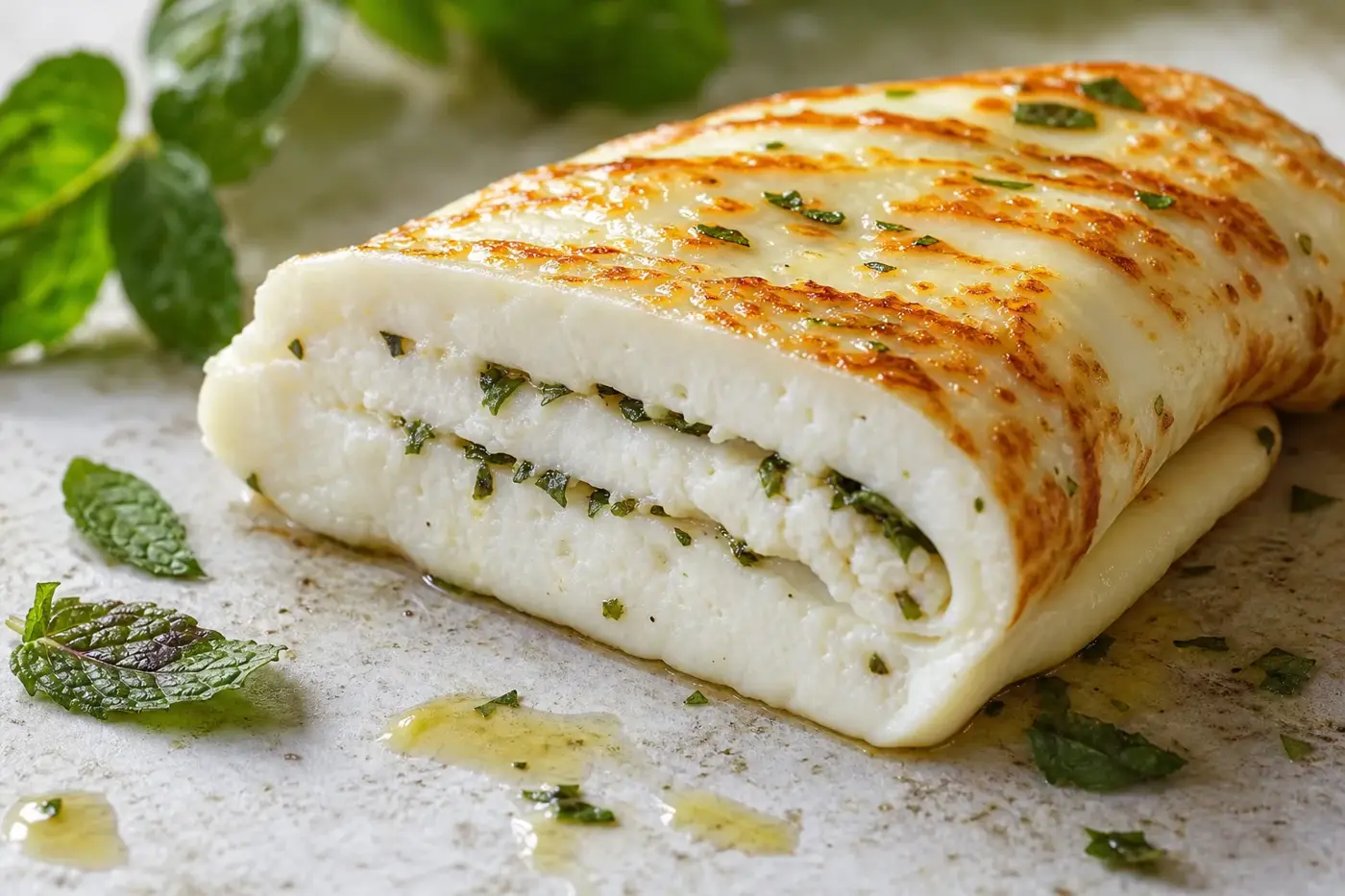
Mint scents the folded layers of halloumi. Nearby, soft anari rises from the whey left behind: two cheeses, quite different characters, from the same cheesemaking day. Follow their trail and you meet sheep, goats and a dairy heritage shared by Greek Cypriot and Turkish Cypriot communities through halloumi and hellim. Your familiar grilled slice is only the beginning, with local cheeses such as Halitzia Tillirias waiting beyond it.[1][2][6]
| Your first taste of Cypriot cheese | What to know |
|---|---|
| The milks behind it | Sheep, goat and cow.[3] |
| Styles to explore | Cooked-curd halloumi, fresh and dried whey cheeses, regional brined cheeses.[3][6][7] |
| Registered halloumi name | ‘Χαλλούμι’ (Halloumi)/‘Hellim’.[2] |
| EU registration | PDO, registered under Commission Implementing Regulation (EU) 2021/591; dossier PDO-CY-01243.[2][3] |
| Where halloumi is made | The island of Cyprus, as defined in the specification.[3] |
| Current transitional minimum sheep and goat milk share | Subject to national decrees during the transition.[5] |
| Agricultural authority | Republic of Cyprus Department of Agriculture.[11] |
| Protection information date | November 2026.[2][5][11] |
Follow the milk through the Cypriot seasons
Hot, dry summers give way to milder, wetter winters. Those seasons shape dairying in Cyprus. The halloumi registration connects the cheese to this landscape through local vegetation, adapted livestock and cheesemaking knowledge accumulated on the island.[2]
Sheep and goats sit at the heart of that story. The specification describes grazing when weather permits, alongside locally produced forage. Cow’s milk has an established place in mixed-milk halloumi too, although cows’ feeding system is described separately from that of grazing sheep and goats.[3]
Give the milk composition a moment of your attention at the cheese counter. A sheep-and-goat cheese and one containing cow’s milk can both belong to the island’s dairy tradition. There is no single blend to expect: each cheese and its production rules determine which combination is permitted.[3]
Halloumi and hellim: one cheese, a shared story
If you have wondered whether halloumi and hellim are different cheeses, you can put that question to rest. They are names for the same cheese, not separate styles. Halloumi is the familiar English rendering of the Greek χαλλούμι; hellim is its Turkish name. Both belong to the EU’s registered designation, reflecting the cheese’s place across Cyprus.[2][3]
Making it brought households together, too. The Department of Agriculture describes women pooling milk and making halloumi cooperatively, taking turns to meet different households’ needs. The Cyprus National Commission for UNESCO also records cooperative practices, alongside dairy foods’ ties to neighbourly visits and religious occasions.[1][7]
Shared heritage leaves plenty of room for local character. Regional variations remain part of the island’s dairy traditions. So do particular foods associated with Cheese Week and Easter.[1]
Into the whey, out comes the mint
Before that familiar folded piece reaches you, the milk has several stages to pass through. First comes rennet, the enzyme preparation that sets milk into curd. The curd is cut, drained and pressed into pieces, separating it from the liquid whey before its defining hot-whey cooking stage.[3][7]
In the Department of Agriculture’s account, anari is removed from the whey before the halloumi curd goes back in. After cooking, the cheese receives salt and fresh or dried mint. Folding creates the familiar doubled piece, often with mint tucked between its layers.[7]
The rules, though, allow more than that familiar fold. An approved 2023 amendment permits unfolded halloumi and makes the preliminary curd-reheating stage optional. Mint can be added before packaging as well as at folding. Salting can happen entirely in salted whey rather than requiring dry salting on the cheesemaking table.[3]
Enjoy the recognisable folded shape, but do not make it your only test. Shape alone cannot tell you whether halloumi meets its production rules.
The secret of halloumi’s staying power
Put halloumi over heat and its particular talent becomes clear: it stays in pieces. The official amendment document links that resistance to melting to cooking the cheese at about 90 °C during manufacture.[4]
For you, that means a browned slice rather than a flowing sauce. Fry or grill it to serve beside vegetables, bread or fruit. The Cypriot Department of Agriculture documents both cooking methods, as well as eating halloumi without further cooking.[6]
Choose it when structure matters as much as flavour. If your dish needs a melting layer of cheese, halloumi is simply the wrong cheese for the job. It has no intention of becoming your sauce.
Fresh or mature? Find your halloumi
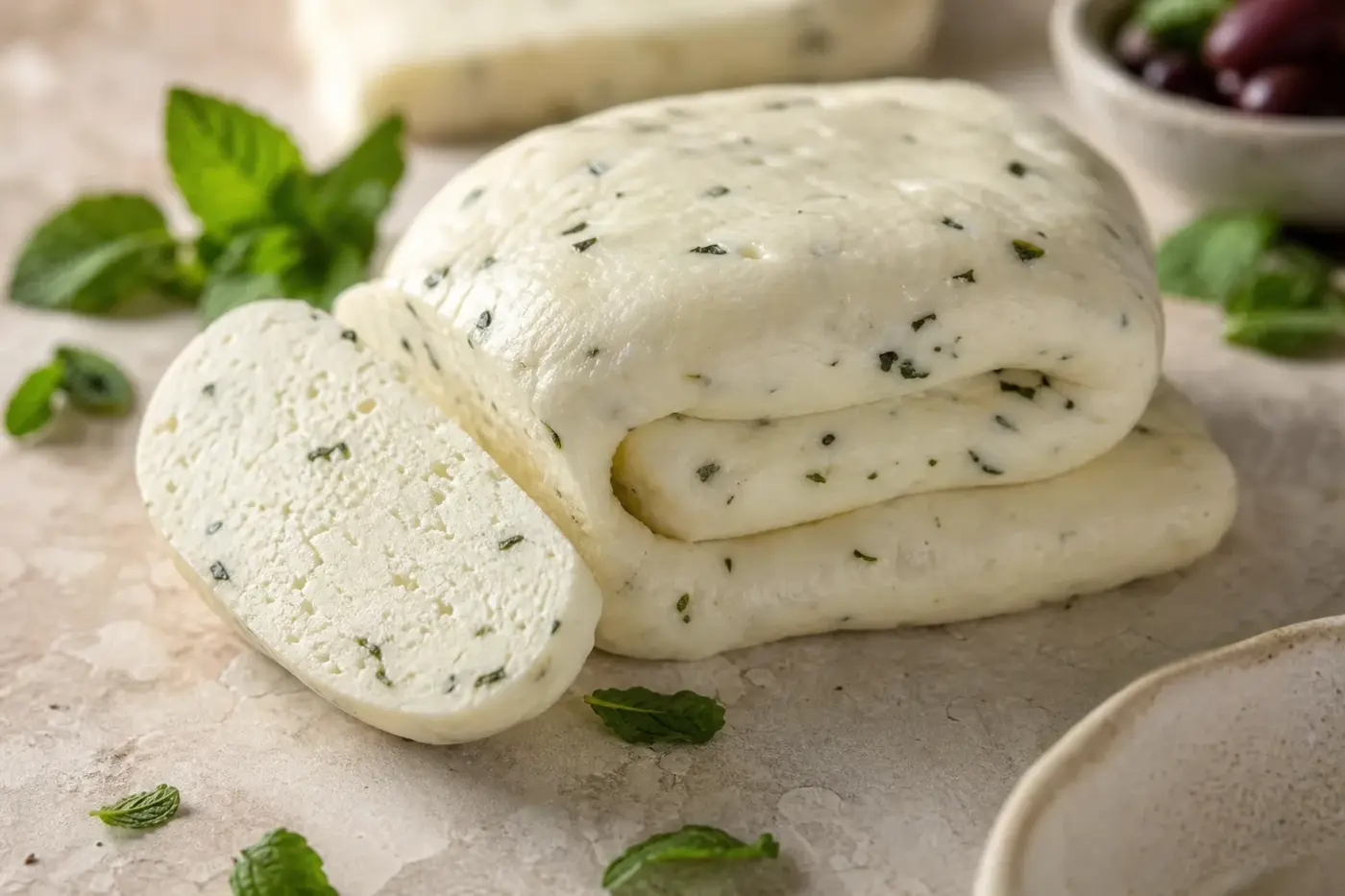
Fresh halloumi is elastic and compact, with milk and mint aromas, according to the specification. Mature halloumi is firmer and less elastic. Its aroma is more pronounced, its character pungent and salty.[3]
That mature character develops through at least 40 days of ripening in salted whey. This is part of production, not an instruction for storing your purchased cheese at home.[3]
Let your dish guide the choice. Fresh halloumi gives you the more elastic texture; mature halloumi brings a more forceful seasoning character. Taste before salting the accompanying food, especially with a mature cheese. This is a difference in character and use, not a quality contest.
What the Halloumi and Hellim PDO tells you
The EU registered the halloumi designation in 2021. Its protected designation of origin, or PDO, ties the cheese to a defined place and production specification. The geographical scope covers Cyprus, with arrangements for checking compliance across the island.[2]
The full specification permits sheep’s milk, goat’s milk or a mixture of the two, and allows cow’s milk too. Its stated rule requires the sheep and goat milk contribution, combined where both are used, to exceed the cow’s milk contribution.[3]
Transitional provisions affect how that rule applies. A Cypriot decision issued in July 2024 extended the transition by five years and referred interim milk proportions to national decrees.[5] During this transition, you cannot assume the full specification’s majority requirement describes every pack on sale.
The PDO permits both raw and pasteurised milk and specifies mint and salt among the ingredients.[3] Read your pack to establish which milk treatment was used. To untangle origin protection from cheese style, turn to protected names explained.
Meet anari, the vat’s second offering
Once the halloumi curd has been removed, the whey still has something to give. The Department of Agriculture describes heating it further, adding a little fresh milk and collecting anari as it rises to the surface. Rather than becoming halloumi’s cooked pieces, this cheese is lifted into draining containers.[7]
Fresh anari is mild and soft, in the Cyprus Tourism Organisation’s description.[8] It can be salted or unsalted. Before you decide where it belongs on your table, find out which you have.[6]
For breakfast or dessert, look to unsalted fresh anari. The Department of Agriculture records serving it with honey, carob syrup or epsima, a concentrated grape preparation, and using it in bourekia and anari pie.[6] Those pairings give you a useful starting point: choose unsalted anari for these sweet serving ideas.
Bring out the grater for dried anari
Salted, dried anari has a different role from its soft, unsalted counterpart. Draining and controlled drying make it firmer. Salting gives it a distinctly savoury purpose.[7]
The Cyprus Cheesemakers Association, an industry body, identifies dried salted anari as a cheese to grate over pasta. Its account puts fresh anari with sweet accompaniments and in pastry fillings.[9]
Think about what you want your cheese to do. Soft fresh anari works as a spoonable accompaniment or filling; dried salted anari supplies grated seasoning. For your grater, look for both “salted” and “dried”, because “anari” alone settles neither question. Add it gradually over pasta and taste before reaching for more salt.
Beyond halloumi, a regional cheese trail
White, irregular pieces resembling pebbles: Halitzia Tillirias looks quite different from folded halloumi. Its specification describes holes and a relatively crumbly texture. Made from goat’s milk, it matures in whey brine for at least 40 days.[10]
Expect slightly sour freshness, a lemon-like aroma and gentle saltiness, as described in the same specification. Its defined area comprises Kato Pyrgos Tillyrias, Pigenia, Pachyammos, Pano Pyrgos Tillyrias and Mosfili.[10] For your first serving, try the Department of Agriculture’s suggestion: olive oil and oregano, with bread or in salads.[6]
There are more names to take to your cheesemonger. The island’s documented traditions include Pafos cheese, Akanthou cheese and cheese made for flaounes, the Easter pastries. Cyprus’s national intangible heritage inventory records kefalotyri manufacture too.[1][7] Ask about regional production and let your conversation travel beyond halloumi.
Find each cheese a place at your table
Start with the role you need filled: a slice for grilling, a soft accompaniment or a grated finish. These combinations come from Cypriot agricultural and industry sources. Consider them useful places to begin, rather than a reason to buy everything at once.[6][9]
| Your cheese | Bring it to the table | What to look for |
|---|---|---|
| Halloumi | Grill or fry; serve with bread and vegetables | A product suited to that preparation |
| Halloumi | Serve with watermelon | Fresh or mature, whichever you prefer |
| Halloumi | Add pieces to trahanas soup | Taste its saltiness before seasoning |
| Fresh anari | Serve with honey or carob syrup | Unsalted |
| Dried anari | Grate over pasta | Salted and dried |
| Halitzia Tillirias | Dress with olive oil and oregano | Brined pieces |
For a contemporary meal, let one of these uses guide your plate. You do not need to assemble the whole cheese counter, however persuasive it looks. A grilled cheese course, pasta finished with grated anari or a soft anari dessert each gives your chosen cheese a clear purpose.
Read the label, choose with confidence
First decide whether you want to grill, grate or serve your cheese soft. Then read the particular product’s name, milk species, treatment, ingredients and storage directions. Those details tell you more than appearance alone.
For an EU PDO halloumi, look for the registered designation and PDO identification. Check whether it is fresh or mature. An unfolded piece need not be dismissed just because the folded form looks more familiar.[2][3]
Milk species and pasteurisation answer different questions. “Goat’s milk” tells you the animal, not the milk treatment. If the treatment is unclear, ask the seller rather than guessing from the name or appearance. For help with those details, see milk treatments and reading a cheese label.
This page summarises published guidance from the official sources it cites. It is not medical advice. Guidance differs between countries and changes over time, so check the current source for where you live, and ask your doctor, midwife, pharmacist or dietitian about your own circumstances.
Once home, let the storage label lead
Follow your product’s storage instructions, including the directions after opening. The Food Standards Agency’s November 2026 guidance recommends a home fridge between 0 and 5 °C and keeping dairy products refrigerated in England, Wales and Northern Ireland.[12]
The same guidance advises keeping preparation time outside refrigeration as short as possible. Take out only what you need for preparation. Return the remaining cheese promptly to the fridge.[12]
Maturing cheese in salted whey is a production method, not a substitute for the storage conditions on its packaging. Keep those two things distinct when you bring your cheese home. For packaging, fridge organisation and handling after opening, continue with storing cheese at home.
Questions people ask
Are halloumi and hellim the same cheese?
Yes. Halloumi is the English rendering of the Greek name, while hellim is its Turkish name.
Why does halloumi hold its shape when heated?
An official amendment document links its resistance to melting to cooking the cheese at about 90 °C during manufacture. Halloumi can therefore stay in distinct pieces when fried or grilled.
What milk is halloumi made from?
The PDO specification allows sheep’s milk, goat’s milk or a mixture of the two, and also permits cow’s milk. Its full rule requires the combined sheep and goat milk contribution to exceed the cow’s milk contribution, but transitional provisions affect how that rule applies.
What is anari and how is it made?
Anari is a cheese made from the whey left after halloumi curd has been removed. The whey is heated further with a little fresh milk, and the anari is collected as it rises to the surface.
What is the difference between fresh and mature halloumi?
Fresh halloumi is elastic and compact, with milk and mint aromas. Mature halloumi ripens in salted whey for at least 40 days and is firmer, less elastic, more pungent and salty.
Sources
- Cyprus National Commission for UNESCO. Dairy culture of Cyprus: traditional practices, manufacturing techniques and customary life. National inventory entry, inscribed 2019.
- European Commission. Commission Implementing Regulation (EU) 2021/591, registering ‘Χαλλούμι’ (Halloumi)/‘Hellim’ (PDO). Official Journal, 13 April 2021.
- European Commission. Publication of an approved standard amendment to a product specification, Χαλλούμι / Halloumi / Hellim, PDO-CY-01243-AM03. Notice 2023/C 165/07, 10 May 2023, including the amended single document. )
- European Commission. Publication of an approved standard amendment to a product specification, Halloumi/Hellim, PDO-CY-01243-AM02. Notice 2023/C 53/04, 13 February 2023. )
- Cyprus authorities. Decision of the Cyprus authorities to extend the transitional period for compliance with the product specification, Χαλλούμι / Halloumi / Hellim (PDO). Decision issued 8 July 2024; applies from 10 July 2024; published as C/2024/5681 on 20 September 2024.
- Republic of Cyprus Department of Agriculture. Gastronomical Map of Cyprus. Second edition, revised, PIO 92/2025, 2025. Entries for halloumi, anari, trahanas and Halitzia Tillirias.
- Republic of Cyprus Department of Agriculture. Gastronomy in Cyprus. PIO 41/2022, 2022. Dairy history, halloumi and anari production, and regional cheese entries.
- Cyprus Tourism Organisation. Food from the heart of Cyprus. 2013 edition, introductory cheese descriptions.
- Cyprus Cheesemakers Association. Anari. Undated industry account, retrieved November 2026.
- Republic of Cyprus Department of Agriculture. Χαλίτζια Τηλλυρίας/Halitzia Tillirias: product specification. Greek-language document, revision date not stated in the retrieved text; sections 2 and 3.
- Republic of Cyprus Department of Agriculture. Quality products: products with designations of origin and geographical indications. Official listings, retrieved November 2026.
- Food Standards Agency. How to chill, freeze and defrost food safely. Published 18 December 2017; live guidance retrieved November 2026, applying to England, Northern Ireland and Wales.
- Food Standards Agency. Alerts. Live official alert index, retrieved November 2026 for the editorial recall check.
This desk-researched article brings together EU legal documents, Cypriot agricultural and heritage records, attributed industry information and official household storage guidance.
Last checked: November 2026
Last checked November 2026.
The cheeses of Cyprus
The editors suggest you read next

French Cheese: The Complete Guide
Picture Normandy’s pastures, then follow the milk towards the Loire’s goat dairies, the Jura’s shared cheesemaking traditions and the sheep country of the Pyrenees.


