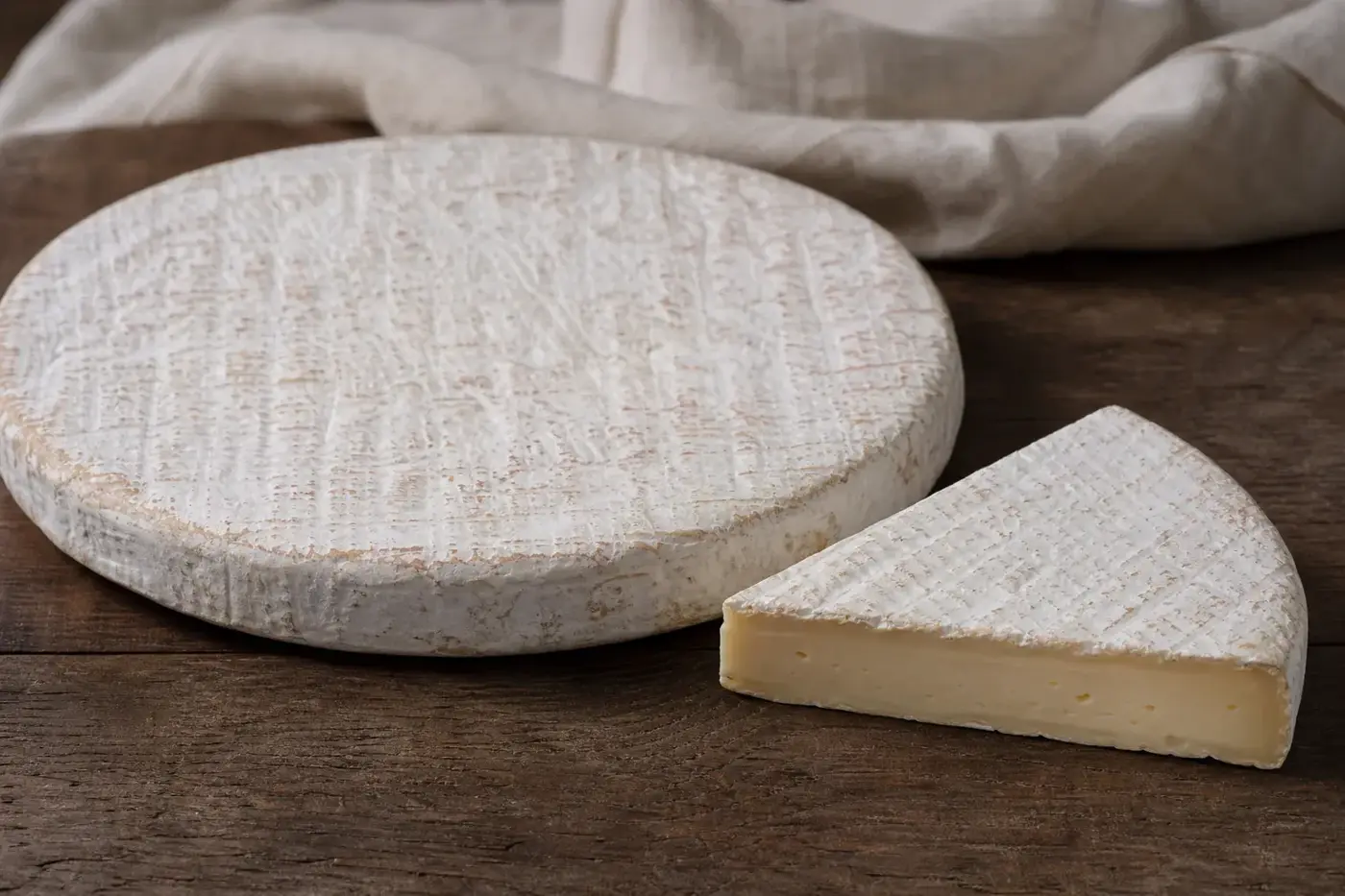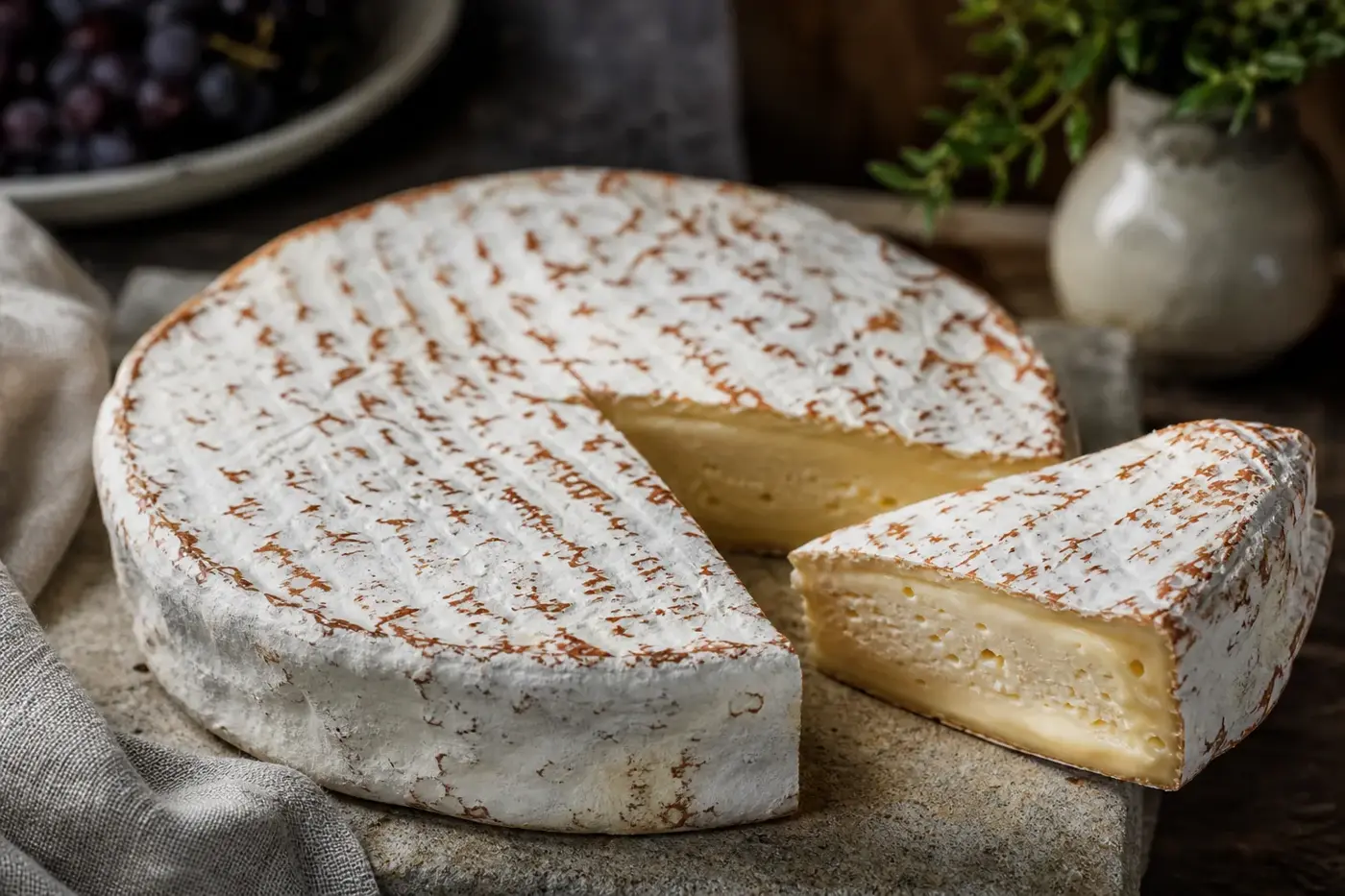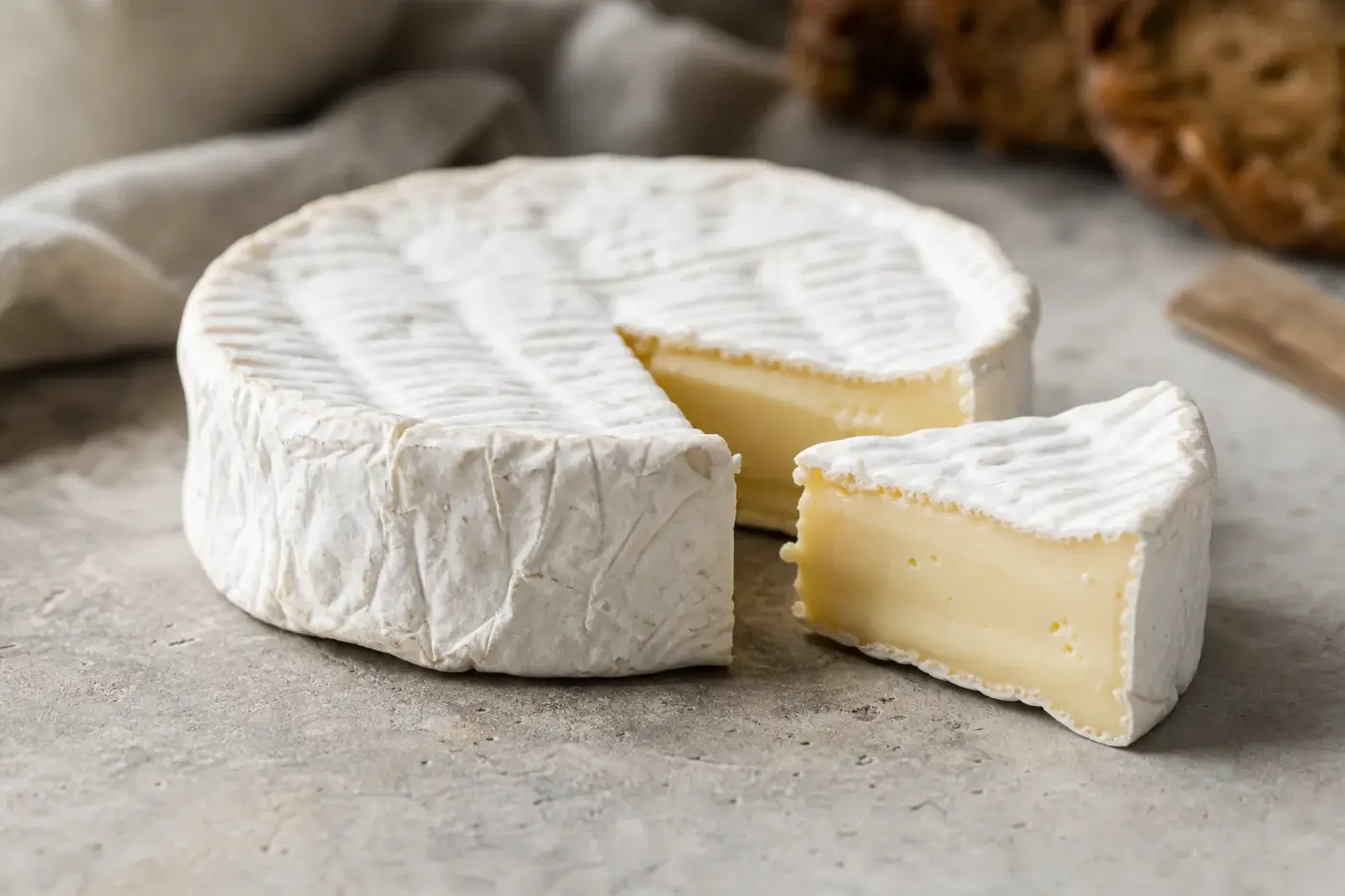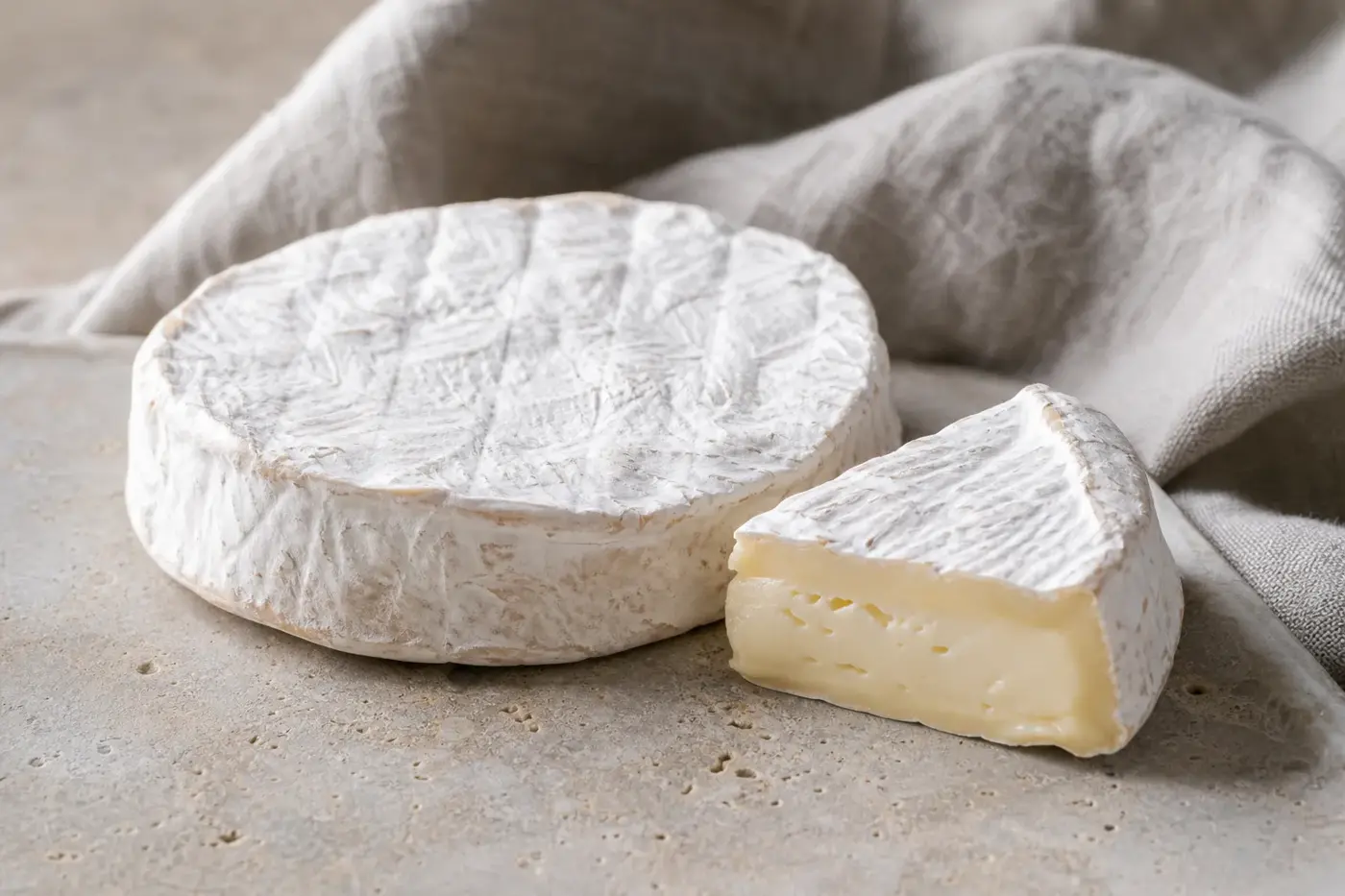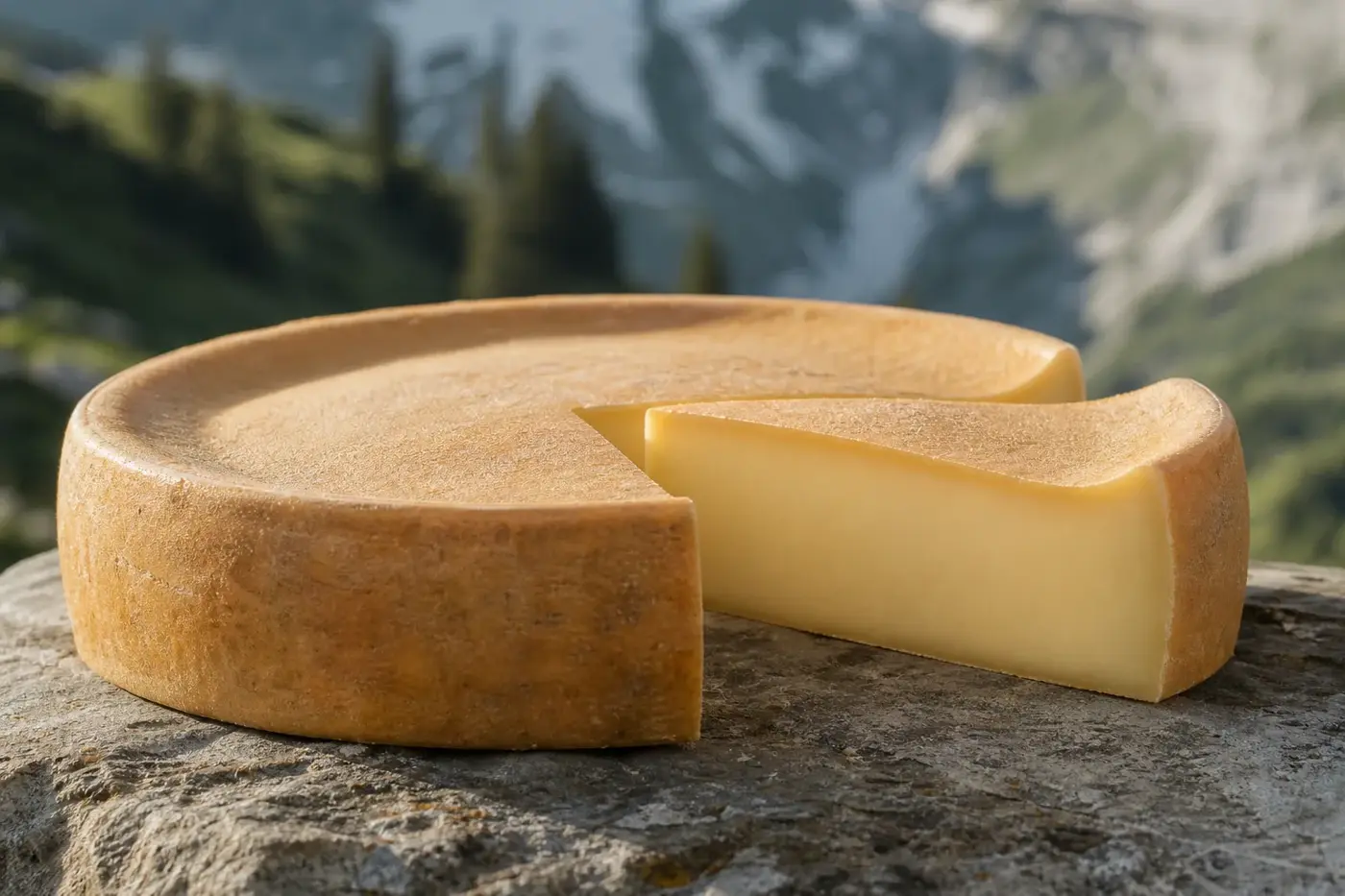
Follow the curve of a Beaufort wheel with your eye. All 20 to 70 kg of it draws inwards at the sides, shaped by a traditional wooden mould. Cut through the rind and you find supple, pale cheese, with a fruity character that shifts with season and maturation.[1][2]
Here is Savoie’s mountain cheesemaking in substantial form: raw, whole cow’s milk, its curd cooked and pressed into a broad wheel. The curve gets your attention first. The cheese beneath it gives you a reason to linger.[1][2]
| Meet Beaufort | What to know |
|---|---|
| Familiar and registered name | Beaufort.[3] |
| Registration authorities | European Commission, EU PDO; Defra, Great Britain PDO. Register identifier: not supplied.[2][3] |
| Protection status | EU: registered PDO. Great Britain: registered PDO, UK scheme registration dated 31 December 2020. Status date: November 2026.[2][3] Northern Ireland, Switzerland and the United States: status not supplied. |
| Pregnancy guidance | Guidance not supplied. Dated links to the applicable official advice needed before publication. |
| Production specification | France: specification approved by the arrêté of 4 April 2025, published on 6 April 2025.[1][4] |
| Where it must be made | High mountain districts of Savoie and adjoining sectors in Haute-Savoie.[1] |
| Milk | Raw, whole cow’s milk from Tarine, also called Tarentaise, and Abondance cattle.[1][2] |
| Coagulant | Rennet, traditionally prepared using calf stomach material; supplementary commercial rennet permitted within specification limits.[1] |
| Wheel size | 20 to 70 kg; diameter 35 to 75 cm; height at the side 11 to 16 cm.[1] |
| Minimum maturation | Five months from manufacture.[1] |
| A characteristic age | INAO describes seven to twelve months as a particularly characteristic stage.[2] |
Follow the cheese into Savoie’s mountains
To get to know Beaufort, start with its mountain home. The legally defined area takes in the Beaufortain, Tarentaise, Maurienne and part of the Val d’Arly, plus adjoining territory in Haute-Savoie. Milk production, cheesemaking and maturation must all remain within that boundary.[1]
That makes “Savoie” and “Beaufort” rather different clues. Savoie names a wider place; Beaufort names a cheese bound to a particular geography and production specification. You can trace that connection from the milk through the vat to the wheel’s care in the cellar.[1]
INAO places this territory between the northern and southern Alps. Sufficient rainfall supports dairy pastures rich in varied alpine vegetation, while summer grazing and winter feeding shape the milk’s seasonal character. Cheesemaker and cellar worker carry those differences through to the cheese you taste.[2][5]
How cooperation gave Beaufort a future
A substantial mountain cheese has a useful quality: it keeps. Beaufort’s producers’ association explains that cooking and pressing reduce water while developing flavour. You can enjoy the result long after the milk was produced.[5]
Keeping the cheese was one thing. Keeping its production alive took cooperation. The association describes a decline around the beginning of the 1960s, followed by cooperatives bringing manufacture, maturation and marketing together throughout the year. Smaller milk producers gained a place in Beaufort’s revival.[6]
French AOC recognition arrived in 1968. Defra records the original EU registration as 21 June 1996, separately from the later Great Britain scheme entry.[3][6]
If the initials have you pausing, AOC is the French designation. AOP is the French abbreviation for the European protected designation of origin, or PDO. The guide to protected names helps you untangle the terminology.
Get to know that unmistakable curve
Beaufort’s concave side begins with a wooden hoop. Its inward-projecting profile shapes the talon, the French cheesemaking term for this part of the wheel, before maturation starts. That finished curve is the mould’s lasting signature.[1][5]
The specification calls for a rubbed, clean, firm rind, uniformly yellow to brown. Beneath it, the paste, meaning the cheese’s interior, is ivory to pale yellow, supple and smooth. A few small openings or fine horizontal fissures are allowed, so you need not expect an entirely closed interior.[1]
With a wedge in front of you, take a look from the side as well as above. The curved outer edge makes the connection between wooden mould and finished wheel wonderfully clear. It is a small detail worth noticing before you reach for the knife.
Two breeds and a year of changing milk
Only Tarine and Abondance cattle supply Beaufort’s milk. Tarine is the local name for Tarentaise, not a third breed hoping to join the proceedings. Their whole milk goes into cheesemaking raw, without skimming.[1][2]
The producers’ association describes a farming year of grass during grazing and hay in winter. That changing feed gives you a good reason to ask about production season at the cheese counter. The milk does not begin with quite the same character all year.[6]
“Cooked cheese” does not mean pasteurised milk. It describes heating the curd, the coagulated portion separated from liquid whey, during manufacture. Pasteurising milk before cheesemaking is a different stage.[1][5] You can explore the distinction in raw, thermised and pasteurised milk.
Into the copper vat, then the wooden hoop
Copper, linen and wood each have a part in making Beaufort. The producers’ association describes the process; the designation specification sets its numerical limits. Follow those stages and you can see how milk becomes such a substantial wheel.[1][5]
First, rennet turns the milk into a gel, which the cheesemaker cuts into small curd grains. Traditional rennet preparation also supplies lactic starter cultures, the microorganisms involved in acidification. Cutting, stirring and heating help the grains release whey.[5]
The curd cooks at 53 to 56 °C (127 to 133 °F). Once the grains reach the required condition, the cheesemaker gathers them in linen and places the mass inside the wooden hoop. Pressing takes at least fifteen hours, with turning along the way.[1]
Next comes brine, followed by more surface salting during maturation. Regular rubbing and turning develop and maintain the natural rind. Together, these stages give you Beaufort’s closely knit interior and carefully worked surface.[1][5]
Give the cellar its time
Beaufort must mature for at least five months from manufacture, at 6 to 12 °C (43 to 54 °F). During that time, the specification requires a bacterial surface coating called morge. Continuing rind care supports its development.[1]
Five months is the legal starting point, rather than the only age to look for. INAO identifies seven to twelve months as particularly characteristic: the bite begins firmly, then yields, with a subtle, fruity aroma. With greater age, it describes increasing strength in both paste and aromatic character.[2]
Choose for the experience you enjoy. You might want something supple and restrained, or a more developed wheel. The largest number of months is not obliged to be your favourite.
Beaufort, été or chalet d’alpage? Read the label
These names describe different production conditions within the same designation. The two additional expressions have defined requirements in the French specification. Once you know the distinction, you can ask a more useful question at the counter.[1]
| Name on the cheese | What it tells you |
|---|---|
| Beaufort | The designation’s underlying requirements apply. The producers’ association commonly uses the unqualified name for November to May production.[6] |
| Beaufort été | Made from June to October inclusive, including cheeses made with milk from alpine pastures.[1] |
| Beaufort chalet d’alpage | Made from June to October inclusive, traditionally twice daily in an alpine chalet above 1,500 metres, using no more than one herd’s milk production in that chalet.[1] |
Think season, then setting. Été means summer. Chalet d’alpage adds requirements covering the mountain workshop, altitude, herd and twice-daily manufacture.[1]
Ask when your cheese was made as well as how long it has matured. Production season tells you about the milk and conditions at manufacture; maturation describes what develops afterwards. A summer-made wheel can reach your cheese counter well beyond summer.[1][6]
Slow down for that fruity first bite
Subtlety comes first in INAO’s description of Beaufort. It singles out a fruity aroma rather than sheer intensity. As you eat, the texture begins firmly before becoming softer and more yielding.[2]
“Fruity” describes a tasting impression, not an added ingredient. You do not have to identify a prescribed list of fruits to enjoy it. Give aroma, flavour and texture a moment each.
Does that first impression stay gentle, or does it build? Does your slice bend readily, and how does it change as you chew? Those simple questions tell you more than trying to reproduce somebody else’s tasting notes.
The producers’ association links differences between Beauforts to the cows’ feeding, while INAO describes further development with age.[2][6] Knowing production season and maturation gives you a useful starting point when comparing wheels.
Let the cheesemonger help you choose
Begin with three questions: which production category is it, when was it made, and how long has it matured? Then ask the cheesemonger why they chose that wheel. You will learn more than you would by simply requesting the oldest piece.
The producers’ association recommends eight to twelve months for yielding texture and developed aroma without excessive force. It also recognises that you might prefer a younger or more mature example. Your taste buds are entitled to decline the committee’s recommendation.[7]
If samples are offered, try pieces side by side. Tell the seller what appeals in plain language: “more supple”, “gentler aroma” or “a stronger finish”. That gives them something useful to work with.
When you find a piece you love, keep a note. Include the seller’s maturation information alongside what you enjoyed about it. You will have a better chance of finding a similar character next time.
This page summarises published guidance from the official sources it cites. It is not medical advice. Guidance differs between countries and changes over time, so check the current source for where you live, and ask your doctor, midwife, pharmacist or dietitian about your own circumstances.
Bring it home and store it well
Keep your piece in its original cheese packaging, as the producers’ association recommends. Follow the product’s storage instructions and any directions given when it was cut. The advice supplied with your particular piece matters.[7]
For readers following Food Standards Agency guidance in England, Northern Ireland and Wales, the recommended domestic fridge temperature is between 0 and 5 °C (32 to 41 °F). The agency advises refrigerating dairy products and following storage instructions and date labels.[8]
Buy an amount that suits your planned meals. Keep the label or counter information with the wrapped cheese, so its identity and handling instructions stay together. You can find more on wrapping and household organisation in the guide to storing cheese at home.
A slice first, then bread and company
Try a small portion on its own to begin with. A plain slice lets you get to know the cheese before bread or other accompaniments arrive. Give that first impression a little room.
Then bring out the bread. The producers’ association suggests melon, pineapple, blueberry preserve and red fruits alongside Beaufort.[7] Bread and one fruit accompaniment give you a simple first tasting without crowding the cheese.
For an alcohol-free pairing, put water beside your plate. If you are cooking, the association recommends Beaufort for omelettes, gratins, pasta and fondue.[7] Taste your piece before settling on a dish, and let its intensity guide how prominently you use it.
Make room for Comté and Abondance
For a revealing comparison, put Beaufort alongside Comté. Both use raw cow’s milk and cooked, pressed curds; Beaufort has that distinctive concave side.[1] Ask the cheesemonger to record each piece’s age, then explore firmness, suppleness, aroma and length of finish.
Abondance makes another particularly interesting companion. INAO describes its concave side and raw cow’s milk too, but its curd is semi-cooked and pressed. Its territory lies in the mountains of Haute-Savoie.[10]
INAO’s Abondance tasting description includes hazelnut, slight bitterness and fruit notes of apricot and pineapple.[10] Set those beside Beaufort’s subtler, fruity account, then make your own notes. Let the individual wheels lead you, rather than arranging their names into a hierarchy.
Questions people ask
What is Beaufort and where is it made?
Beaufort is a cooked, pressed cheese made from raw, whole cow’s milk. Its designated area includes the Beaufortain, Tarentaise, Maurienne and part of the Val d’Arly, together with adjoining territory in Haute-Savoie. Milk production, cheesemaking and maturation must all take place within that area.
What is the difference between Beaufort été and chalet d’alpage?
Both are made from June to October inclusive. Beaufort chalet d’alpage must also be made traditionally twice daily in an alpine chalet above 1,500 metres, using no more than one herd’s milk production in that chalet.
What milk and rennet are used to make Beaufort?
Beaufort is made from raw, whole milk from Tarine and Abondance cattle. Its rennet is traditionally prepared using calf stomach material, although supplementary commercial rennet is permitted within specification limits.
How long is Beaufort matured and what does it taste like?
Beaufort must mature for at least five months. INAO describes seven to twelve months as a particularly characteristic stage, with a subtle, fruity aroma and a bite that starts firm and then yields. Greater age brings increasing strength in the cheese and its aroma.
How should I store Beaufort at home?
The producers’ association recommends leaving it wrapped in its original cheese packaging. Follow the product’s storage instructions and any directions given when it was cut. For readers in England, Northern Ireland and Wales, the Food Standards Agency recommends a domestic fridge temperature between 0 and 5 °C and advises refrigerating dairy products and following storage instructions and date labels.
Sources
[1] INAO and Ministère de l’Agriculture et de la Souveraineté alimentaire. Cahier des charges de l’appellation d’origine protégée « Beaufort ». Bulletin officiel no. 2025-15, 10 April 2025. Official specification.
[2] INAO. Beaufort. Official product profile, current page retrieved November 2026. Product profile.
[3] Defra. Beaufort. Great Britain protected food name register, published 4 January 2021; retrieved November 2026. Register entry.
[4] République française. Arrêté du 4 avril 2025 relatif à la modification du cahier des charges de l’appellation d’origine protégée « Beaufort ». JORF, 6 April 2025. Official publication.
[5] Syndicat de Défense du Fromage Beaufort. Savoir faire ancestral. Undated industry account, retrieved November 2026. Manufacturing account.
[6] Syndicat de Défense du Fromage Beaufort. Dossier de presse. 2024 edition, particularly the history and production sections. An industry publication representing Beaufort producers. Press dossier.
[7] Syndicat de Défense du Fromage Beaufort. Place à la dégustation. Undated industry serving recommendations, retrieved November 2026. Serving and accompaniment suggestions.
[8] Food Standards Agency. How to chill, freeze and defrost food safely. Published 18 December 2017; retrieved November 2026. Applies to England, Northern Ireland and Wales. Official refrigeration guidance.
[9] Food Standards Agency. Food safety in a heatwave: advice for consumers. Current guidance retrieved November 2026. Official hot-weather guidance.
[10] INAO. Abondance. Official product profile, current page retrieved November 2026. Product profile.
This desk-researched article brings together the designation specification, official product and registration records, attributed producer-association accounts and jurisdiction-specific food storage guidance.
Last checked: November 2026
Last checked November 2026.
The editors suggest you read next