English Pecorino
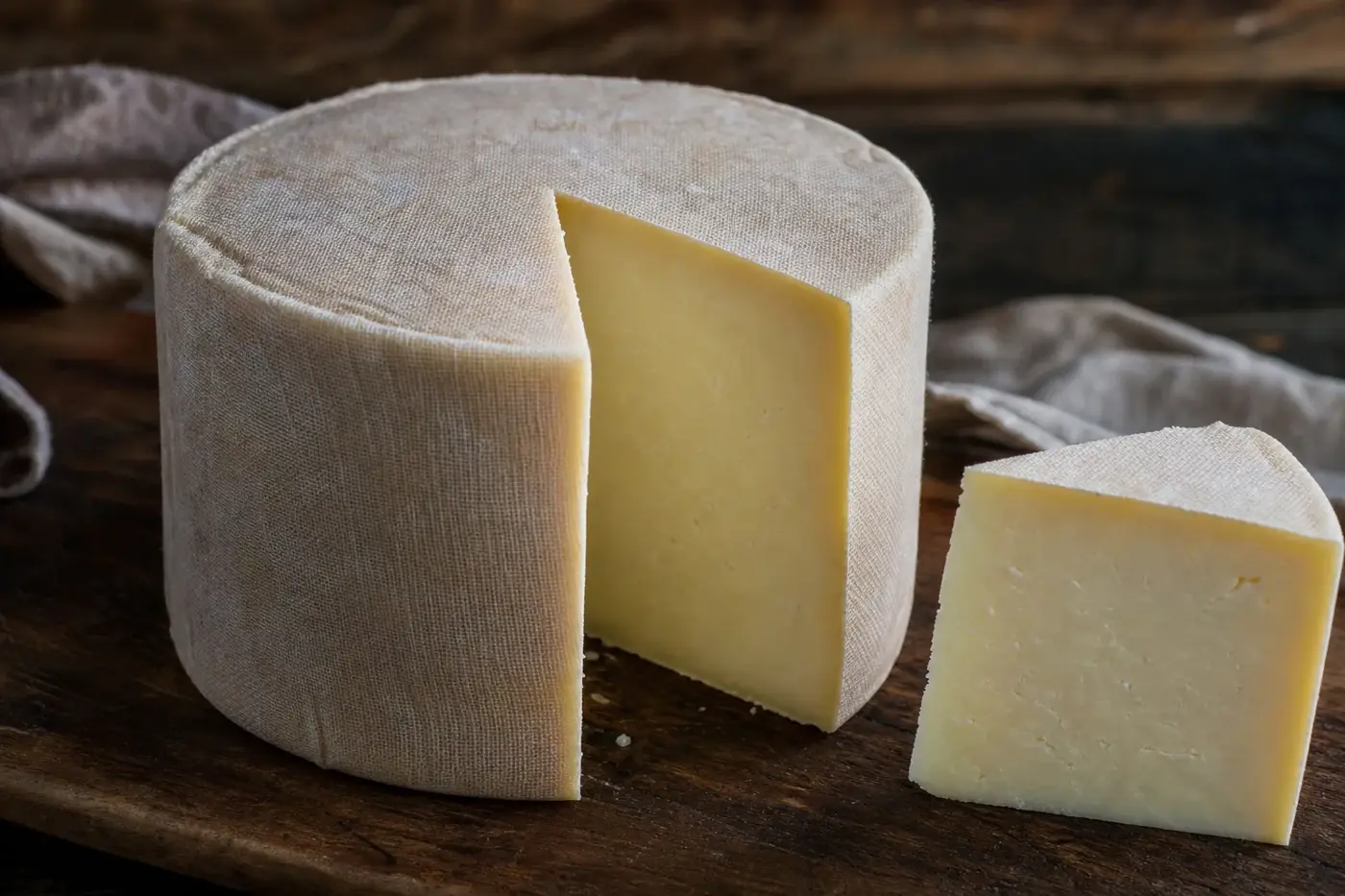
Before your knife reaches the cheese, that rind catches your eye: ochre-brown, with pale ridges reaching towards the centre.
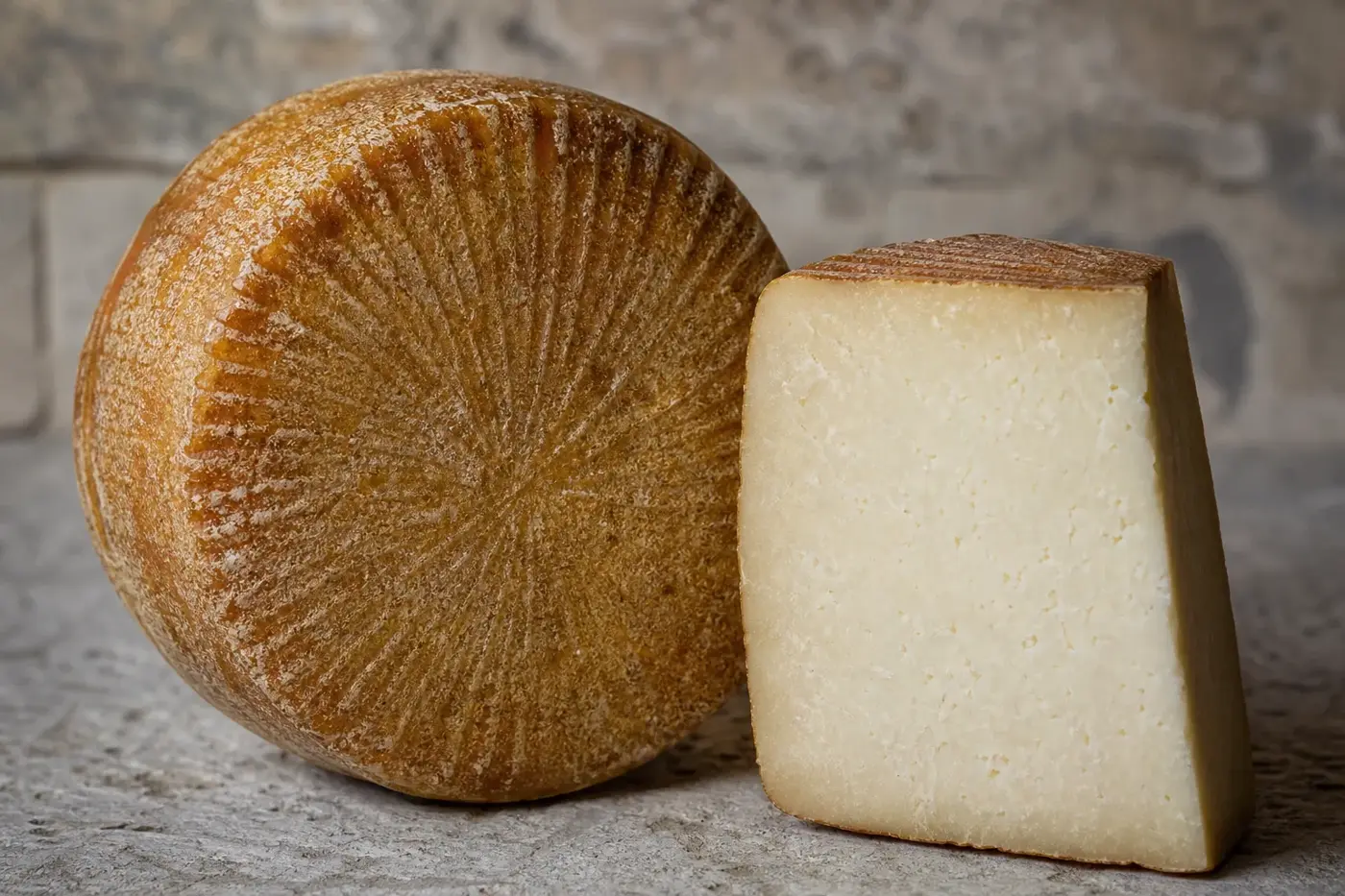
Before your knife reaches the cheese, that rind catches your eye: ochre-brown, with pale ridges reaching towards the centre. White Lake Cheese’s photographs reveal an ivory interior beneath it. [4] The maker describes sweetness and nuttiness, followed by a deeper savoury finish in this firm Somerset interpretation of Italy’s sheep’s milk tradition. Leave room for it on your cheeseboard, and resist eating the kitchen’s share. [1]
| What you want to know | The detail |
|---|---|
| Name to look for | English Pecorino |
| Maker’s product name | The English Pecorino [1] |
| Who makes it, and where | White Lake Cheese, Bagborough Farm, Pylle, Somerset, England [2] |
| Milk treatment | Sheep’s milk, thermised and unpasteurised, according to the maker [1] |
| Rennet | Vegetarian rennet, according to the maker [1] |
| Style and rind | Hard in the maker’s introduction; semi-hard and brine-washed in its technical information [1] |
| Confirmed maturation period | Information unavailable |
| Registered name, authority and register ID | Information unavailable |
| Protection status, Great Britain | Information unavailable |
| Protection status, EU and Northern Ireland | Information unavailable |
| Legal minimum ageing | Information unavailable |
Meet Somerset’s take on Pecorino
English Pecorino wears its two influences in its name. Italy provides the inspiration through its sheep’s milk cheesemaking tradition; Somerset provides the maker and production setting. You have somewhere to begin your comparison, not a promise of the same recipe or an identical cheese. [1,2]
Look for the full name when you choose your piece. White Lake’s Christmas collection lists The English Pecorino and The English Pecorino Fresco separately. If you are ordering a selection, or hunting down something you tasted elsewhere, the wrapper is worth your attention. [3]
For your first encounter, choose the standard English Pecorino and set the accompaniments aside. Feel how its texture changes as you chew, then follow the sweetness and savouriness. That first mouthful can tell you plenty without having to decide which other cheese it resembles.
Visit the Somerset dairy behind the wheel
White Lake dates its beginnings to 2004, on a family farm whose cheesemaking roots reach back to the 1930s. You will find the dairy at Bagborough Farm near Glastonbury; its postal address is Pylle, near Shepton Mallet. This is English Pecorino’s working Somerset home, with an Italian tradition supplying the inspiration. [2]
The maker describes a small-batch operation with room to experiment. Its wider range uses goat’s, sheep’s and cow’s milk, with its own French Alpine goat herd supplying some of that milk. Those are the goats, though: the sheep supplying English Pecorino are not identified. [2]
That variety gives you a feel for the dairy’s approach. White Lake’s published account emphasises developing different cheeses under one roof. In its Christmas selection, English Pecorino appears alongside fresh cheeses, blues and other styles, another glimpse of that appetite for experimentation. [2,3]
Keep place and recipe as separate questions when you choose your cheese. Somerset tells you where it is made; the style description suggests what might arrive on your plate. Both help, but neither tells you everything.
Read the sheep’s milk label with confidence
White Lake declares thermised, unpasteurised sheep’s milk. Read those words together rather than letting either stand for the whole story. When you are serving a particular piece, look at its current wrapper. [1]
If you would like to untangle the treatments, turn to raw, thermised and pasteurised cheese. It gives you the background to that declaration, so you can read it with more confidence.
| What you might want to ask | Information available here |
|---|---|
| Supplying sheep farm | Information unavailable |
| Sheep breed | Information unavailable |
| Named starter cultures | Information unavailable |
| Exact rennet preparation | Information unavailable |
| Pressing method | Information unavailable |
| Initial salting method | Information unavailable |
At the cheese counter, make your question specific. Ask “Which milk treatment is declared?” or “What does the current label say about rennet?” rather than simply asking whether the cheese is traditional. You want an answer about this named product, ideally with its wrapper or the maker’s information to hand.
Discover what brine and time contribute
White Lake identifies brine washing as the rind treatment. Its account gives maturation two jobs: developing flavour and retaining moisture. There is more to follow here than a cheese simply becoming stronger. [1]
A peer-reviewed review describes ripening as the work of enzymes and microorganisms. Proteins and fats break down, while residual milk sugars and other compounds are metabolised. Together, these processes help give a ripened cheese its characteristic texture and flavour. [6]
You may come across two useful words: proteolysis means the breakdown of proteins, and lipolysis means the breakdown of fats. Further reactions involving amino acids and fatty acids help produce aroma compounds. Enzymes can come from milk, residual coagulant and microorganisms, with the balance varying between cheese varieties. [6]
Think of ageing as time for all those processes to unfold. When you compare cheeses of different ages, give moisture and texture as much attention as flavour. “Stronger” is a small word for such a busy piece of cheese.
For the basic journey from coagulated milk to separated curd and whey, read how cheese is made. You will find the general framework there. The details above bring you back to the production information available for English Pecorino.
Look closely at that patterned rind
In White Lake’s product photographs, the round wheel has a strongly patterned surface. The rind appears ochre-brown with yellow areas and a network of pale ridges. Across the top, those markings radiate towards the centre, giving your eye a route to follow. [4]
The cut photograph takes you inside to the paste, the cheesemaking term for the interior. It looks pale ivory to light straw and close-textured, with a few small openings rather than large holes. The wedges have defined edges, while the sliced surface shows slight unevenness. [4]
Use those photographs as a visual reference when you are trying to recognise the cheese. Once you have a real piece in front of you, look at the rind and centre separately. The outer surface and exposed cut face each have something different to show you.
Taste your way from sweet to savoury
Firm but yielding: that is how White Lake describes the texture. Its flavour notes pick out sweetness, nuttiness and umami, the savoury quality of the finish. Treat those as a starting point, not a tasting exam. [1]
Begin with a small piece from the centre and chew slowly. Does sweetness arrive first, and does savouriness linger? Notice whether the texture feels smooth, slightly granular, resilient or crumbly. Write down what you find, without trying to make every mouthful agree with someone else’s description.
Give aroma and taste their own notes. Smell a freshly cut piece before you eat it, then record what becomes apparent as you chew. Let this cheese show you its own character rather than borrowing an aroma description from another sheep’s milk cheese.
Plain bread and water are useful companions for this exercise. Save fruit, drinks and chutney until afterwards. You can then separate your impression of the cheese itself from the pleasures of a combination.
Invite an Italian pecorino to the board
For a useful comparison, choose a named Italian product. Italian pecorino is not one single cheese: Latterie di Sardegna’s technical sheet for its Pecorino Romano, for example, lists sheep’s milk, salt, lamb’s rennet and bacterial cultures. It specifies at least five months’ ageing for table cheese and at least eight months for the grated presentation. [8]
You already have one clear difference to explore. That Italian product lists lamb’s rennet, while White Lake declares vegetarian rennet for English Pecorino. [1,8] Taste them side by side, giving each the same attention:
- How easily can you cut or break the piece?
- How does its texture change as you chew?
- Where do salt, sweetness and acidity sit in the overall impression?
- How long does the finish stay with you?
Let your answers guide where each cheese goes next. You might prefer one on bread and another over pasta, which is a perfectly useful conclusion. Note each sample’s maker, product and stated age beside your tasting notes, so you can return to a specific comparison.
Find its place on your plate
White Lake suggests English Pecorino for cheeseboards, sandwiches and finishing dishes. You need not assign it a single role. Start simply, then see which use you enjoy most. [1]
Serve a modest portion and leave the rest refrigerated. For November 2026, the Food Standards Agency advice cited here is to keep chilled food out of the fridge for the shortest possible time during preparation in England, Wales and Northern Ireland. Its recommended fridge range is 0 to 5 °C (32 to 41 °F); follow the product’s storage instructions. [7]
Try these simple ways to serve it:
- Bread and pear: start with plain bread and a slice of fresh pear, keeping the accompaniment uncomplicated.
- Apple or chutney: taste apple and a small spoonful of chutney separately to find your preferred balance of sweetness and acidity.
- Roasted vegetables: shave a little over the finished dish, then taste before adding more.
- Sandwiches: use thin slices and a restrained filling, so you can still pick out the cheese.
For drinks, let water be your reference point. Try unsweetened tea or an alcohol-free apple drink with a second piece. Take a bite of cheese alone, sip, then return to the cheese and decide whether you enjoy the change.
In the kitchen, try a small amount before replacing another cheese throughout a dish. Grate or shave a little over one portion, taste, then adjust the remaining seasoning. A small trial lets you decide what you think before committing the whole dish.
Keep your cheese well, wrapper and all
White Lake recommends refrigerating a cut portion in its original packaging, or using foil. Keep that wrapper with your cheese. It carries the product identity, batch information and storage directions. [1]
The Food Standards Agency advises following packaging instructions and date labels, and using a thermometer to check your fridge temperature. Its cited guidance applies to England, Wales and Northern Ireland. Give those practical details your attention whenever you store the cheese. [7]
Make cutting and rewrapping one task: take what you need, cover the remaining piece and return it to refrigeration. For more help with wrapping and organising different styles, see storing cheese at home.
White Lake declares vegetarian rennet. If vegetarian suitability matters to you, read the current product label and ask the maker about any unclear declaration. [1] For the differences between coagulant types, turn to rennet explained.
General information only, not medical advice: follow the official guidance where you live.
Questions people ask
Where is English Pecorino made?
White Lake Cheese makes it at Bagborough Farm in Pylle, Somerset. It takes inspiration from Italy’s sheep’s milk cheesemaking tradition.
Is English Pecorino made with pasteurised milk?
White Lake declares thermised, unpasteurised sheep’s milk. Check the current wrapper for the piece you are serving.
Is English Pecorino suitable for vegetarians?
White Lake declares vegetarian rennet for English Pecorino. Check the current label and ask the maker about any unclear declaration.
What does English Pecorino taste like?
White Lake describes sweetness and nuttiness, followed by an umami finish. The maker describes the texture as firm but yielding.
How should I store English Pecorino?
White Lake recommends refrigerating a cut portion in its original packaging or using foil. The Food Standards Agency advises following packaging instructions and date labels and checking fridge temperature with a thermometer; see its current guidance for England, Wales and Northern Ireland.
Sources
- White Lake Cheese. The English Pecorino. Undated product page, including description, product information and care instructions; accessed November 2026. Product page. Primary evidence for the maker’s product declarations and tasting descriptions.
- White Lake Cheese. Introduction to Your Cheese, “Our story”. Undated company account; accessed November 2026. Maker’s account. Primary evidence for the dairy’s location and its account of its history and operation.
- White Lake Cheese. The Full Monty Christmas Cheese Box. Undated product listing; accessed November 2026. Product listing. Lists English Pecorino and English Pecorino Fresco separately.
- White Lake Cheese. Pecorino_cut_2.jpg and Pecorino_2.jpg. Undated photographs linked from the product page; accessed November 2026. Cut cheese photograph and whole cheese photograph. Visual evidence only; reproduction permission remains to be obtained.
- White Lake Cheese. Englsih_Pecorino_Packaged.jpg. Undated packaging photograph linked from the product page; accessed November 2026. Packaging photograph. Used for the maturation discrepancy recorded below.
- International Journal of Dairy Technology. Biochemistry of cheese ripening. Volume 57, issues 2 to 3, pages 127 to 144, 2004. Publisher’s abstract and bibliographic record. A review of ripening mechanisms, not a study of English Pecorino.
- Food Standards Agency. How to chill, freeze and defrost food safely. Published 18 December 2017; accessed November 2026. Official guidance. Applies to England, Northern Ireland and Wales.
- Latterie di Sardegna. Technical Sheet Pecorino Romano 2021. 2021. Producer’s technical sheet. Retrieved text supplies the ingredients and ageing declarations for that producer’s product.
- Food Standards Agency. Alerts. Live alert index; accessed November 2026. Official alert index. Recall-check limitations are recorded in the evidence log.
Researched from the maker’s published information and photographs, official food handling guidance, a peer-reviewed ripening review and an Italian producer’s technical sheet.
Last checked: November 2026
Last checked November 2026.
The editors suggest you read next
West Country Farmhouse Cheddar Cheese
Large pieces of curd turn and stack under the cheesemaker’s hands.