Stilton
Cut into a cylinder of Blue Stilton and pale paste opens beneath your knife, threaded with blue-green mould.
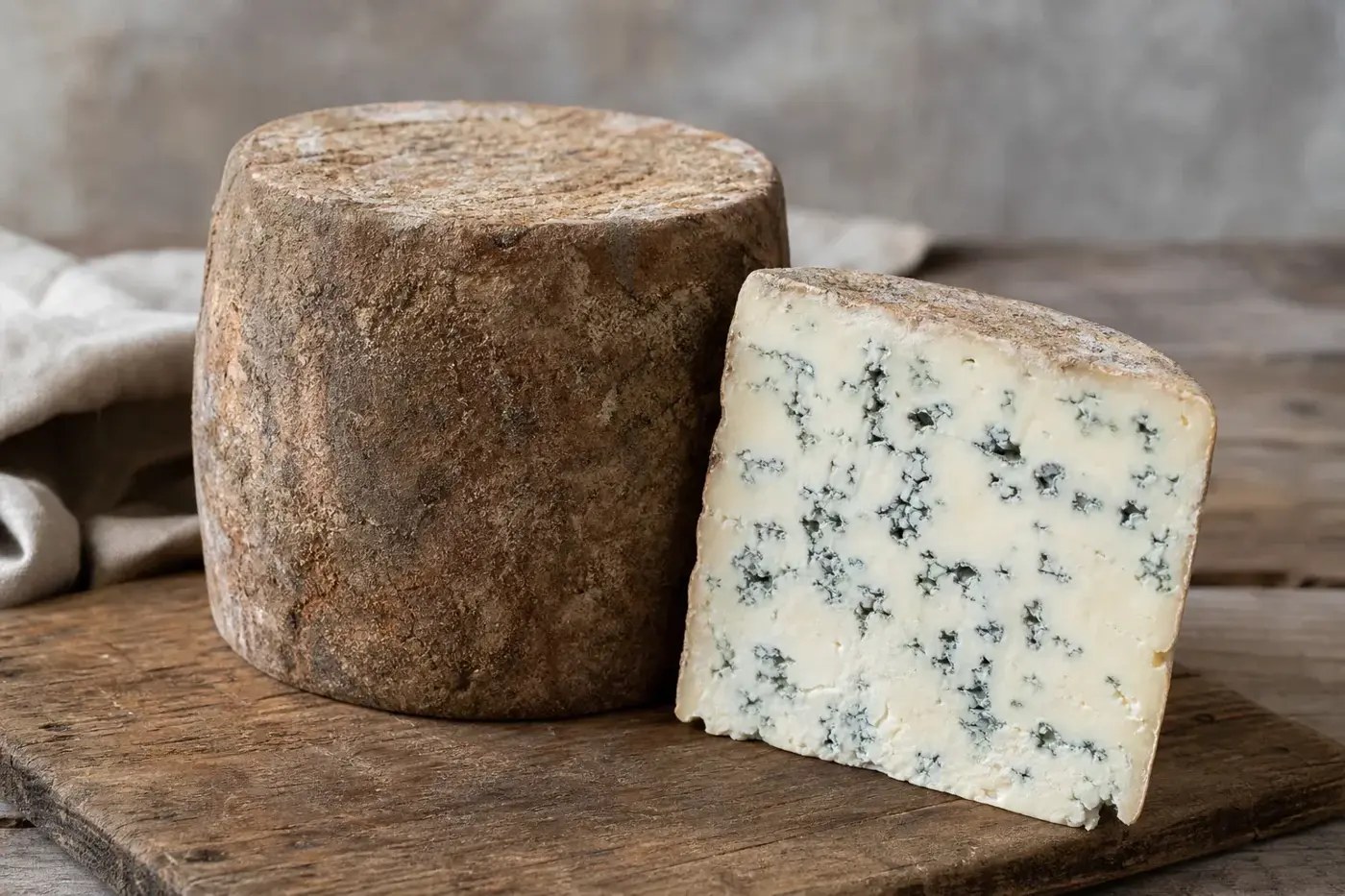
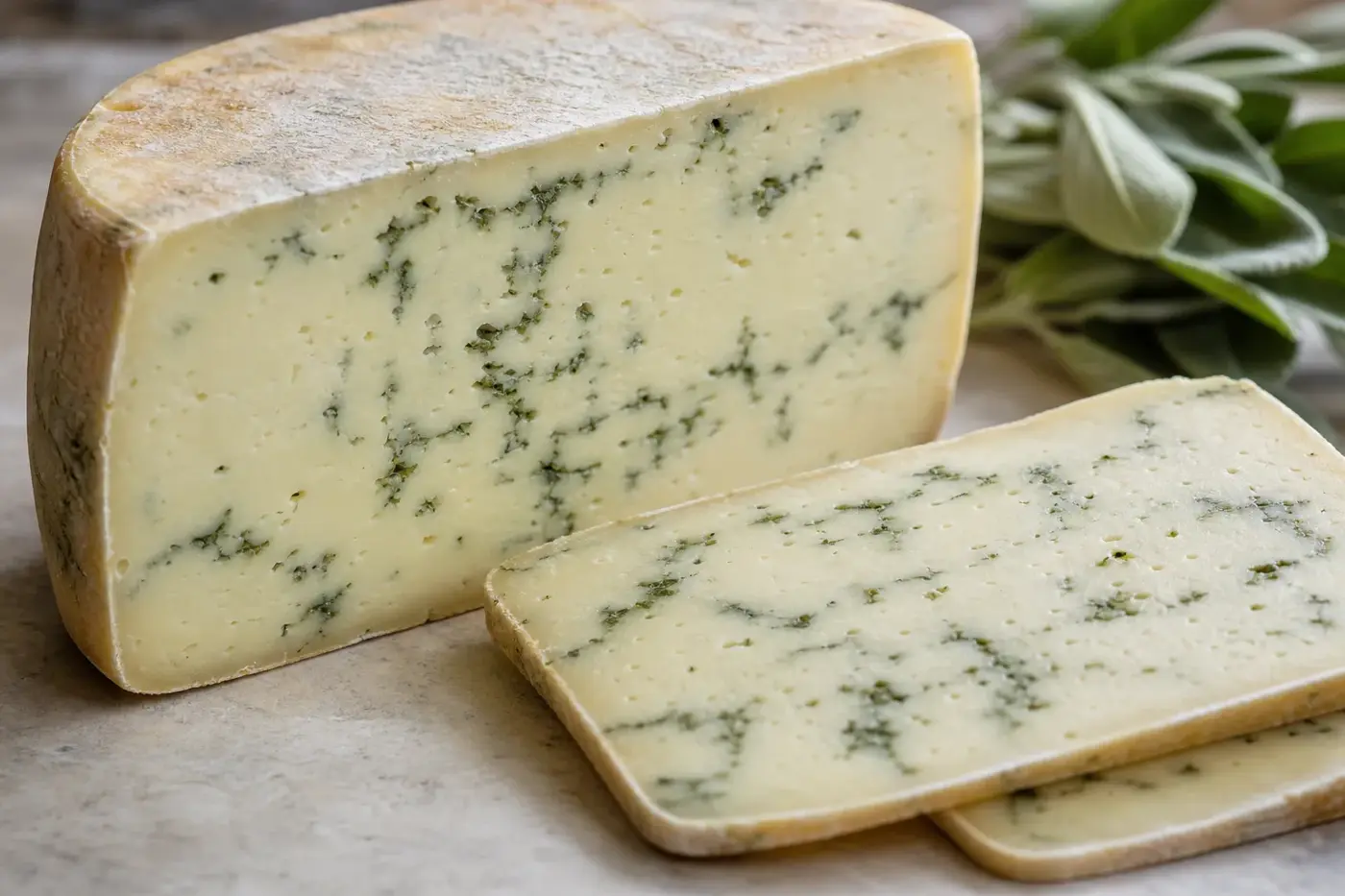
Cut into a cylinder of Blue Stilton and pale paste opens beneath your knife, threaded with blue-green mould. The veins branch from the centre, under a slightly wrinkled natural rind.[3] Beside it, White Stilton offers a different pleasure: a clean, moist crumble, sold young and without the blue culture.[3,5]
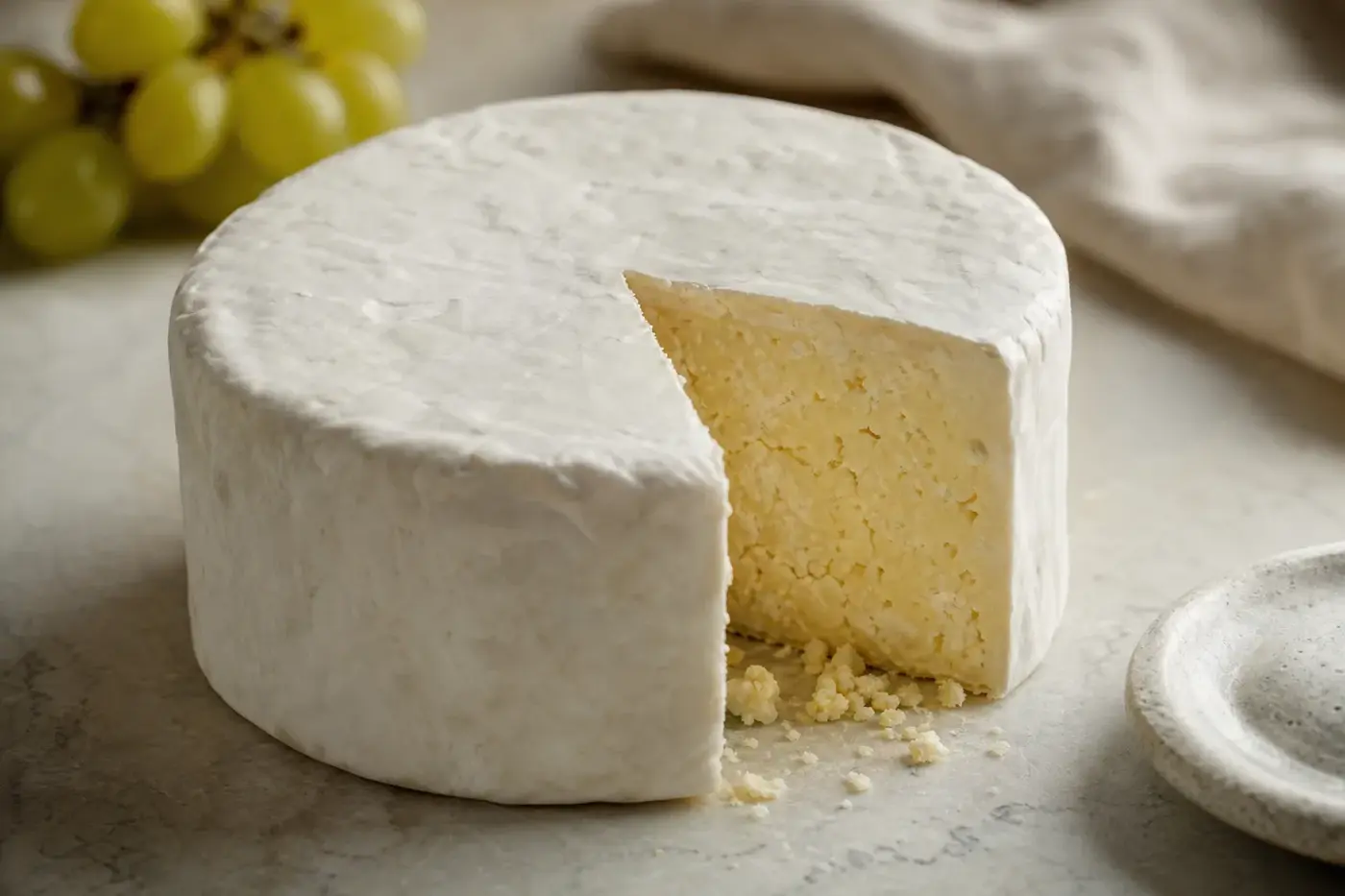
Both begin with pasteurised cows' milk, unpressed curd and cylindrical moulds. Those are their shared East Midlands foundations. Added mould culture and longer ripening send the blue down its own, rather more dramatic path.[3,4]
Get acquainted with blue and white
- The familiar name: Stilton.[1,2]
- Registered names in Great Britain: Stilton Blue Cheese; Stilton White Cheese.[1,2]
- The authority: Department for Environment, Food & Rural Affairs, UK GI register.[1,2]
- Great Britain status, November 2026: Both registered PDOs.[1,2]
- Its home: Derbyshire, Leicestershire and Nottinghamshire.[3]
- The milk: Pasteurised cows' milk.[3]
- Permitted coagulant: Animal or non-animal rennet.[3]
- Ripening culture: Penicillium roqueforti for Blue Stilton; none added to White Stilton.[3,5]
- Legal minimum ageing: No single fixed minimum stated in the published specification.[3]
- When it usually leaves the dairy: Blue, about nine weeks in the association's production account; White, about seven days in the specification.[3,4]
Three counties, one closely guarded name
Stilton Blue Cheese and Stilton White Cheese each have their own entry on the Great Britain register as Protected Designations of Origin, or PDOs. Both records give 21 June 1996 as the original EU registration date. Registration under the UK scheme followed on 31 December 2020 at 23:00.[1,2]
For cheesemaking, the specification draws a firm boundary around Derbyshire, Leicestershire and Nottinghamshire. Milk normally comes from those counties, although specified surrounding counties may supply it during shortages.[3]
A similar cheese made elsewhere does not meet these production rules. Here, place and method belong together.[3] If you want to untangle a geographical name from a cheese style, explore the protected names guide.
Pull up at the Bell Inn
Picture the village of Stilton as a coaching stop, with cheese reaching travellers through the Bell Inn. The Stilton Cheesemakers' Association tells this story, crediting the inn with carrying the name beyond the village and bringing the cheese to the London market.[6]
Its account also recognises early cheesemaking around the village, giving Stilton a part in production as well as trade. From there, it traces expansion into Leicestershire and Nottinghamshire.[6] You get a recipe that evolved, rather than a tidy tale of one moment of invention.
Read the blue veins
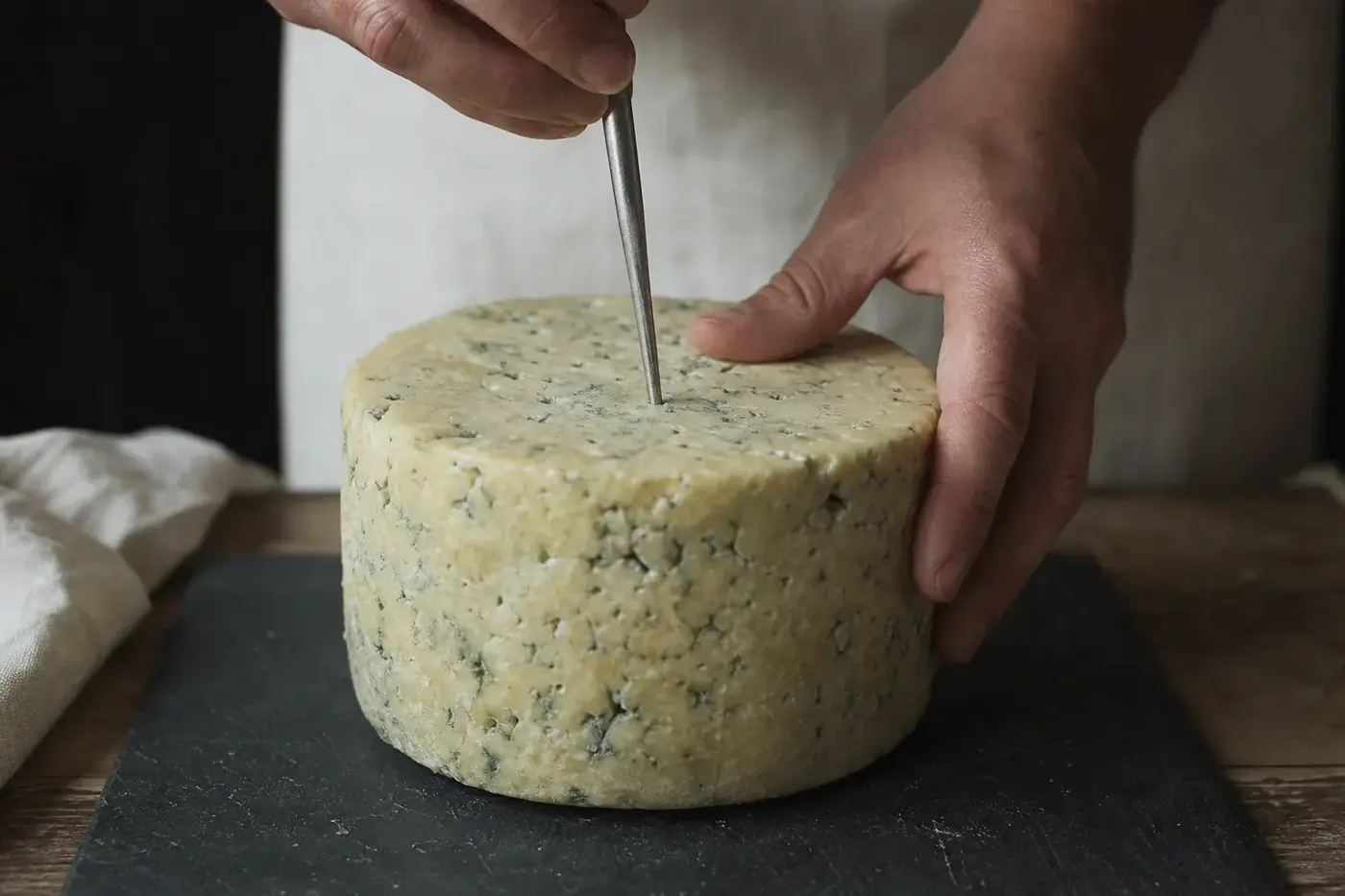
Look at Blue Stilton and notice the spaces between the veins. Its open interior holds blue-green mould radiating from the centre through pale paste. The cylindrical shape and slightly wrinkled natural rind also belong to the specification.[3]
You are not looking for an evenly blue slice. This is pale cheese threaded with mould, not a solid blue mass. When a round opens, that branching pattern is the sight to look for.
Give White Stilton the floor
White Stilton skips both the added blue culture and Blue Stilton's extended ripening. The specification describes a fresh acidic flavour, a moist crumbling texture and a smooth white exterior.[3] Clawson Farms suggests taking that fresh, zesty character into pasta and salads, or mixing it with fruit for cheesecake.[5]
Start with plain White Stilton if you want to get to know the cheese itself. Choose a fruit blend when you fancy that particular combination, and read the added ingredients. One white slice need not taste like another.
Step inside the make room
Starter cultures begin by acidifying the milk, then rennet sets it into curd. Cutting and draining release whey, the liquid portion. In the association's account, the curd drains overnight before milling breaks it into smaller pieces, ready for cylindrical hoops.[4]
Salt goes into the milled curd before moulding.[3] The rounds drain and are turned regularly to distribute moisture evenly. After five or six days, the cheesemaker removes the hoops and smooths the surface to seal it.[4]
That careful rubbing closes the outside. Later, piercing opens routes for air into the blue cheese.[4] You can follow the wider sequence in how cheese is made, or turn to rennet explained for the different coagulants.
The needles let the blue breathe
Those piercing needles do not inject blue colouring. Clawson Farms adds Penicillium roqueforti to the milk in the vat. Air entering through the later piercings lets that culture develop the marbling you see when you cut the cheese.[5]
The association's current production account puts the first piercing after about five weeks in the ripening store, following the initial hoop stage. A second follows a week later.[4]
At about nine weeks, each round gets its own assessment. Smell, taste, appearance and texture all help determine whether it meets the Stilton standard.[4] The individual cheese has to be ready; the calendar does not get the final word.
Find the maturity that suits you
Older Stilton is not simply younger Stilton with the volume turned up. The association's labelling guidance describes standard Blue Stilton as open-textured, with a tangy finish. Mature versions have a softer, more mellow finish; vintage cheese brings a drier mouthfeel and a stronger, more complex taste.[8]
Ask for the character you enjoy, rather than age alone. Colston Bassett describes its own Stilton as sweet and salty, with lingering mellow complexity and velvety veining.[9]
Smell your cut piece before tasting it. Notice how the paste breaks, how the blue character builds and what stays after you swallow. You do not have to reproduce a maker's tasting words to have enjoyed your cheese correctly.
Meet Stilton's neighbours
Stichelton uses raw milk, described by its maker as pumped directly from the farm's milking parlour.[10] Stilton requires pasteurised milk.[3] However strong the family resemblance, the names remain separate: buy it, and name it on a menu, as Stichelton.
Shropshire Blue is another distinct cheese. Colston Bassett makes both it and Stilton, describing its Shropshire Blue as milder, sweeter and more delicate, with a peppery blue tang.[9]
That comparison concerns the dairy's own cheeses, and gives you a useful starting point when choosing between them. In the kitchen, follow the particular cheese's flavour and texture. Then name the cheese you actually used.
Have a word with your cheesemonger
Begin with how you want to eat it. Perhaps you need a crumbly blue to scatter over a dish, a mellower piece for the board, or young White Stilton for a fresh contrast. Ask who made it and how that particular cheese is eating, then say whether you prefer a dry, assertive finish or a softer texture.[8,9]
If you want a vegetarian cheese, read the product's declaration. The specification permits both animal and non-animal rennet.[3] The name alone cannot make that choice for you.
Keep the wrapper for its producer details, storage instructions and date. The cheese label guide helps you distinguish the food's name from the other wording on the pack.
Keep it cool, serve what you need
Wrap opened Stilton in foil or cling film, then put it in an airtight box in the fridge, as the association recommends.[8] Follow the pack's storage and date instructions. For England, Wales and Northern Ireland, the Food Standards Agency advises a home fridge temperature between 0 and 5 °C (32 to 41 °F).[12]
Take out just the portion you need, rather than displaying the whole piece. Return the remaining cheese promptly. If you are taking chilled food out of the fridge for a picnic, follow the Food Standards Agency's current guidance for England, Wales and Northern Ireland.[13]
For a fuller routine, turn to storing cheese at home.
Give the first bite some breathing room
Give your first mouthful a simple setting: plain bread or an unseasoned cracker. Then add one accompaniment at a time. Try sliced pear with Blue Stilton, or apple and a few pecans with White Stilton.
The association's recipe collection also brings White Stilton together with apple, pear and pecan in a crumble.[11] You can explore those combinations without asking your first bite to host the entire cheeseboard.
For an alcohol-free tasting, begin with still water alongside either cheese. That leaves your first mouthful free of a drink's sweetness or acidity. Taste the cheese again with its accompaniment, and decide whether you prefer contrast or a quieter setting.
Take both Stiltons into the kitchen
Blue Stilton can bring concentrated savouriness without becoming a thick blanket of cheese. Colston Bassett suggests crumbling it over salads, melting it onto burgers, or adding it to tarts and quiches.[9] The association's recipes include Stilton broccoli soup, mushroom risotto and stuffed mushrooms, useful directions for a stronger piece.[11]
White Stilton takes you somewhere fresher. Clawson Farms recommends salads, pasta and cheesecakes for its young, zesty character.[5]
Before choosing your dish, taste a little of each form plain. The blue offers developed savouriness. The white brings fresh acidity and a crumbly body.[3,5]
General information only, not medical advice: follow the official guidance where you live.
Questions people ask
Where can Stilton be made?
The specification places cheesemaking in Derbyshire, Leicestershire and Nottinghamshire. Milk normally comes from those counties, although specified surrounding counties may supply it during shortages.
What is the difference between Blue and White Stilton?
Blue Stilton contains a blue mould culture and is typically released after about nine weeks. White Stilton has no added blue culture and is typically released after about seven days, with a fresh acidic flavour and moist, crumbly texture.
Is Stilton vegetarian?
The specification permits both animal and non-animal rennet. Check the product's declaration if you have a vegetarian preference.
How should I store Stilton?
The Stilton Cheesemakers' Association recommends wrapping opened Stilton in foil or cling film and keeping it in an airtight box in the fridge. Follow the pack's storage and date instructions, and check the Food Standards Agency's guidance for England, Wales and Northern Ireland, which advises a home fridge temperature between 0 and 5 °C.
What can I make with Stilton?
Blue Stilton can be crumbled over salads, melted onto burgers or added to tarts and quiches. White Stilton is recommended for pasta, salads and cheesecakes.
Sources
[1] Department for Environment, Food & Rural Affairs. Stilton Blue Cheese. UK protected food and drink names register, published 4 January 2021; live record checked November 2026.
[2] Department for Environment, Food & Rural Affairs. Stilton White Cheese. UK protected food and drink names register, published 4 January 2021; live record checked November 2026.
[3] Department for Environment, Food & Rural Affairs. Product specification: “Stilton Cheese”. Undated specification linked from both current GOV.UK records, sections 4.2 to 4.5; checked November 2026.
[4] Stilton Cheesemakers' Association. Making Stilton. Undated live production account, checked November 2026. An industry association's account of its members' production.
[5] Clawson Farms. FAQs. Undated live producer guidance, checked November 2026. Production, tasting and serving descriptions are the producer's own.
[6] Stilton Cheesemakers' Association. The Stilton Story. Undated live historical account, checked November 2026. Cited as the association's interpretation.
[7] Stilton Village Website. Stilton Cheese. Undated local history page reproducing historical testimony; checked November 2026.
[8] Stilton Cheesemakers' Association. Good Labelling Practice for Stilton® Cheese. Revised December 2023, sections “Cheese Descriptors” and “Storage and Serving Ideas”; checked November 2026.
[9] Colston Bassett Dairy. Colston Bassett Dairy. Undated live producer website, sections on Stilton, Shropshire Blue and cooking; checked November 2026. Tasting descriptions are the dairy's own.
[10] Stichelton Dairy. The Milk. Undated producer account, retrieved November 2026.
[11] Stilton Cheesemakers' Association. Stilton Recipes. Undated live recipe index, checked November 2026. Commercially interested industry source, used for documented culinary applications.
[12] Food Standards Agency. How to chill, freeze and defrost food safely. Published 18 December 2017; current text checked November 2026. Applies to England, Northern Ireland and Wales.
[13] Food Standards Agency. Keeping food safe on a picnic. Published 11 January 2018; current text checked November 2026. Applies to England, Northern Ireland and Wales.
This desk-researched article brings together official registration records and specifications, attributed producer accounts, published historical testimony and official consumer handling guidance.
Last checked: November 2026
Last checked November 2026.
The editors suggest you read next
West Country Farmhouse Cheddar Cheese
Large pieces of curd turn and stack under the cheesemaker’s hands.