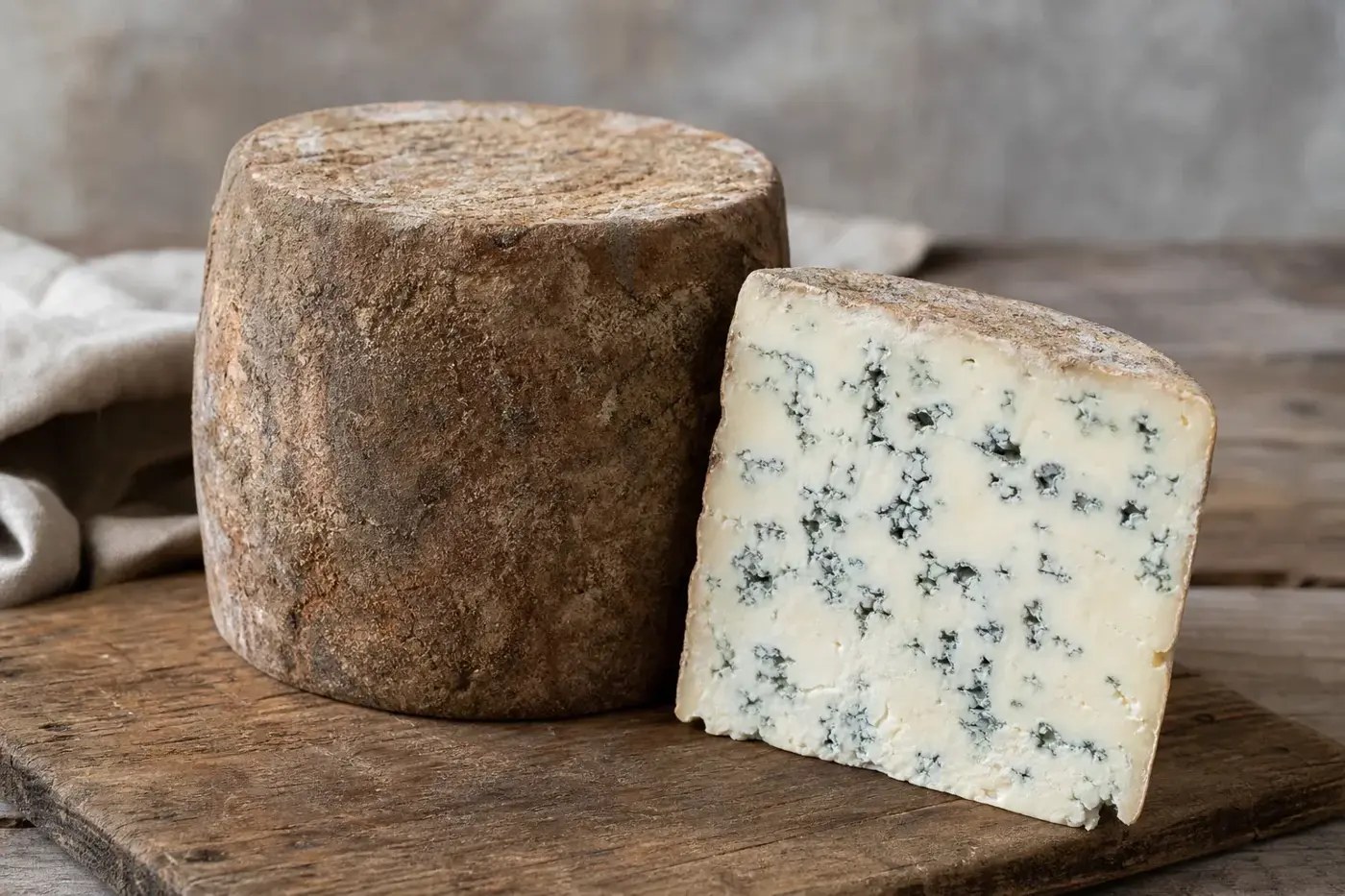
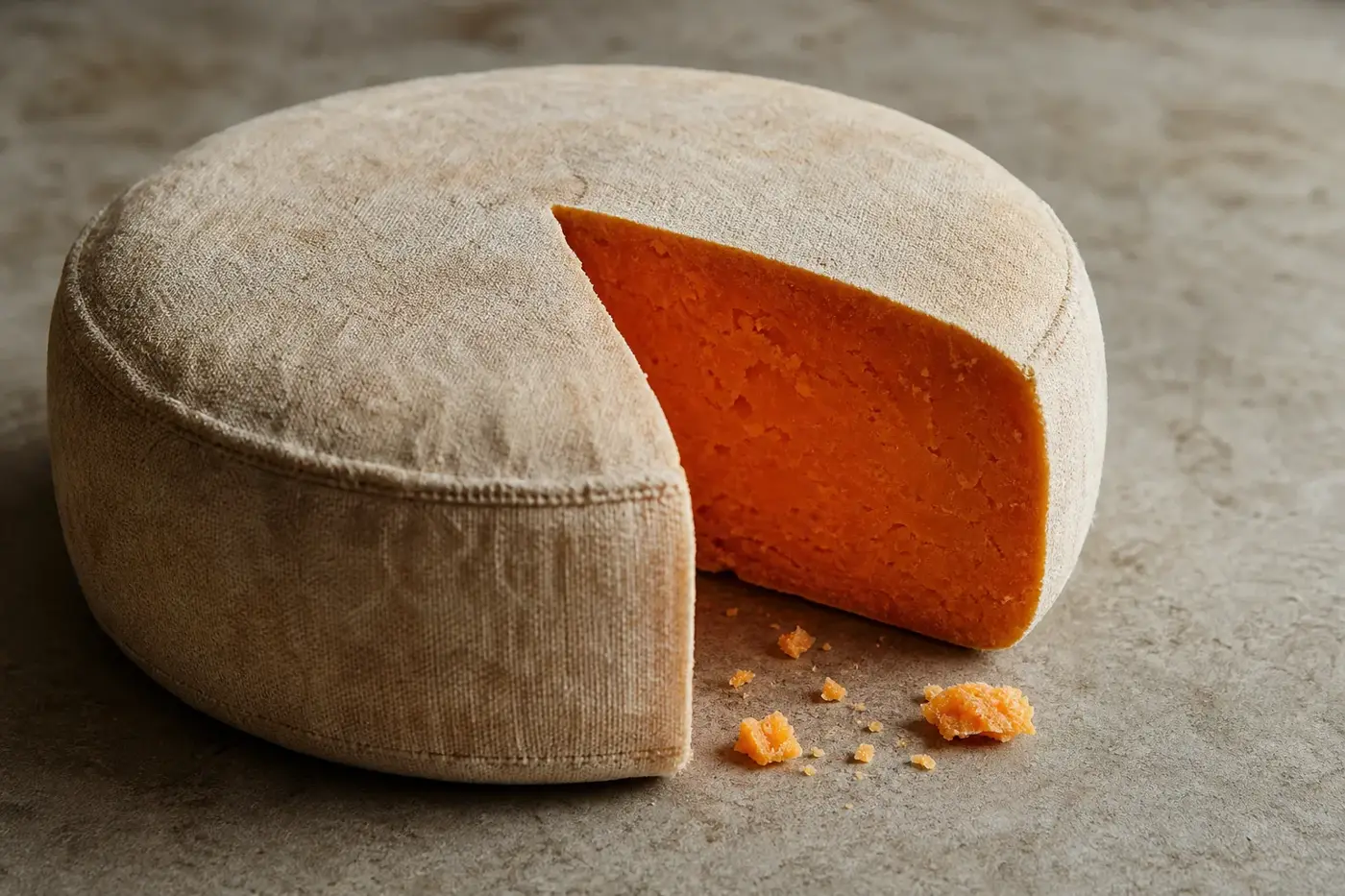
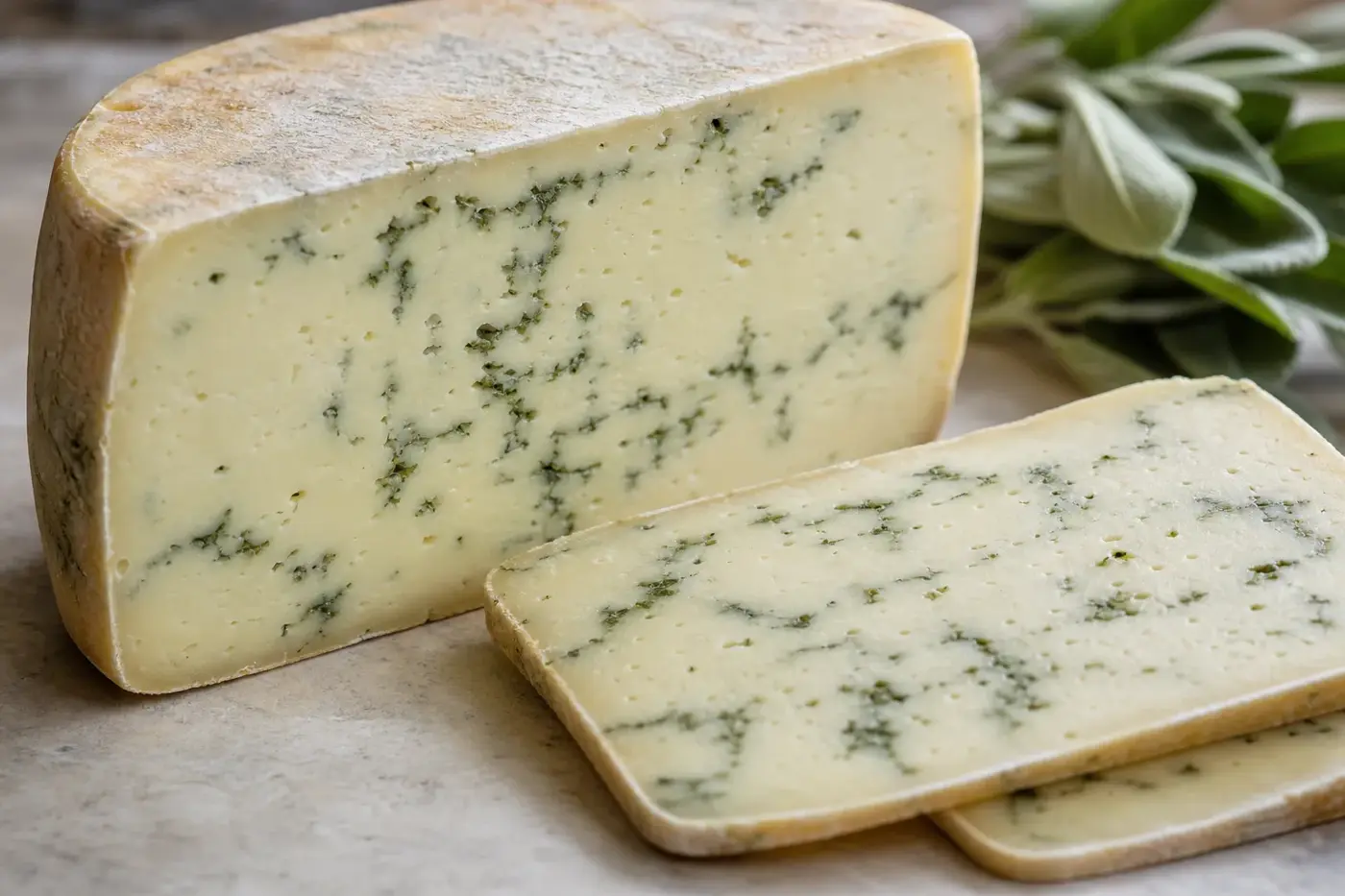
White Stilton (Stilton White Cheese)
Put your knife to White Stilton and watch it crumble.
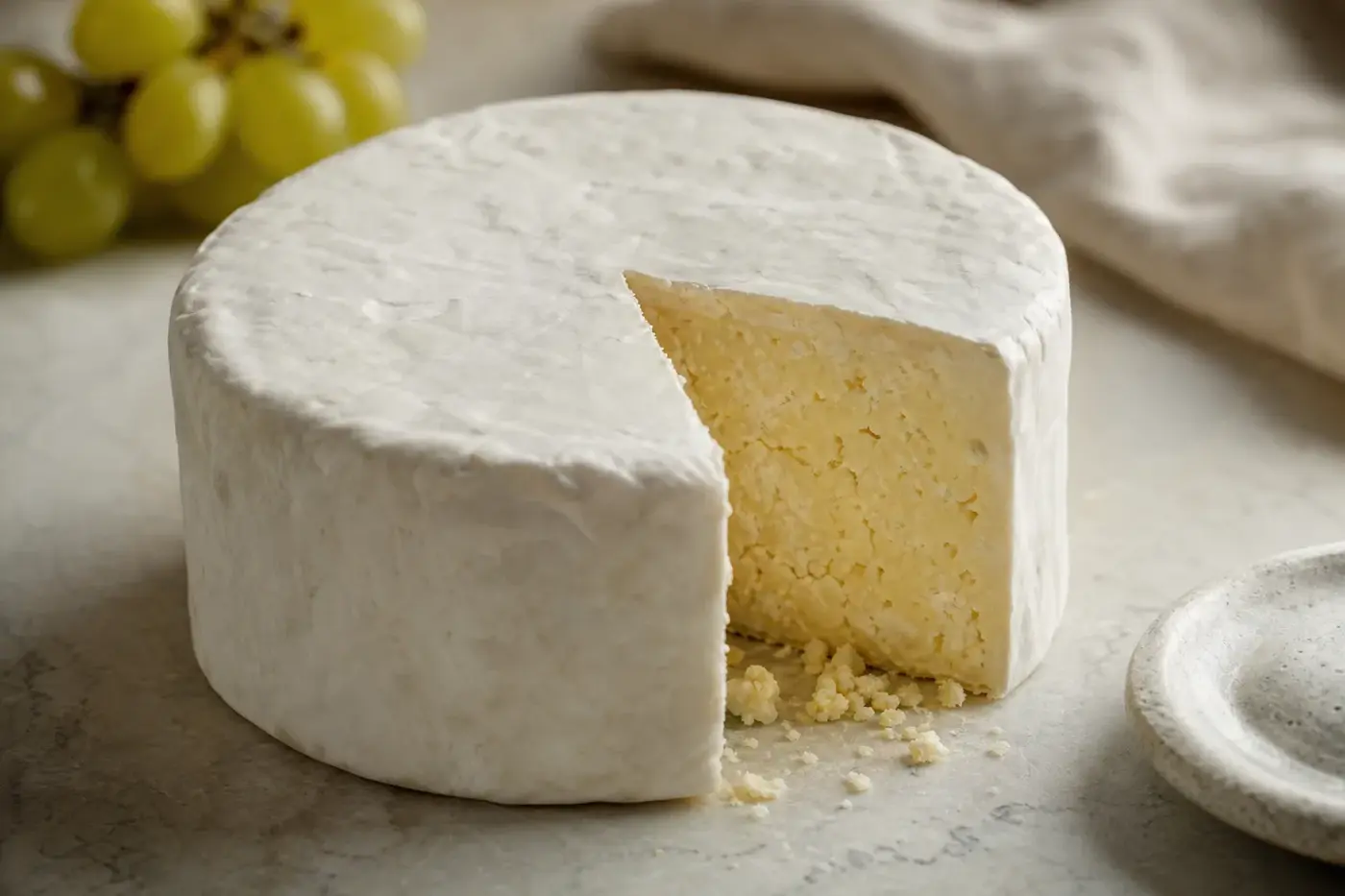
Put your knife to White Stilton and watch it crumble. Take a piece: fresh, soft, gently tangy, with none of its famous relative’s blue mould. Cropwell Bishop celebrates the fresh taste and soft crumble; Clawson Farms picks out that gentle tang. The quieter member of the family deserves your attention, not just an introduction to its more famous relation. [3][4]
| Your quick introduction | What to know |
|---|---|
| Familiar name | White Stilton. [3] |
| Registered name | Stilton White Cheese. [1] |
| Registration authority | Department for Environment, Food & Rural Affairs, UK geographical indication register. [1] |
| Great Britain status | Registered PDO, November 2026; UK scheme registration dated 31 December 2020 at 23:00. [1] |
| Original EU registration | 21 June 1996, as recorded by Defra. [1] |
| Where it is made | Leicestershire, Derbyshire and Nottinghamshire. [2] |
| Milk | Full-cream pasteurised cows’ milk. [2] |
| Permitted coagulant | Animal or non-animal rennet. [2] |
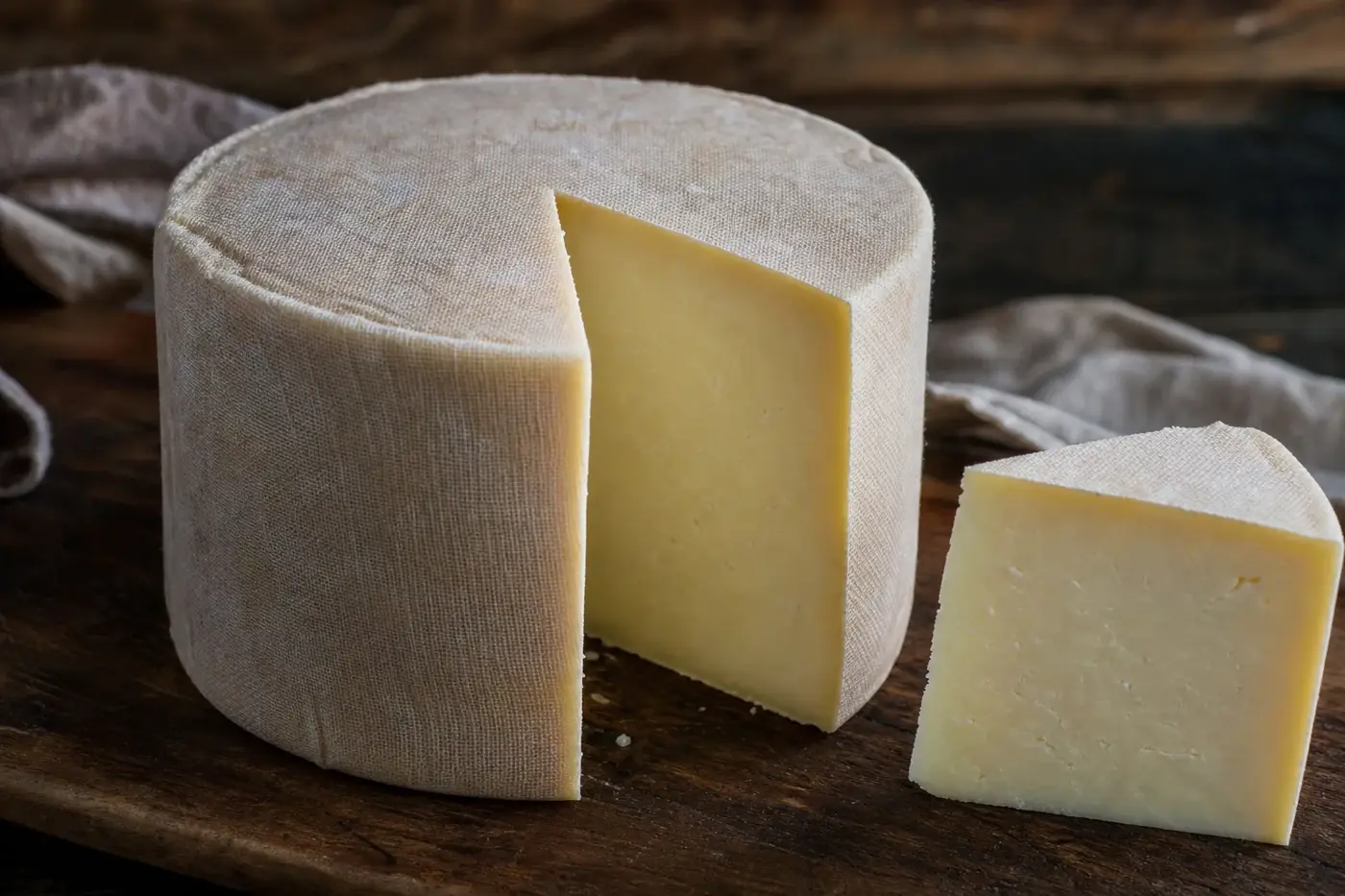
| Shape and surface | Cylindrical and unpressed, with its own smooth, moist white coat. [2] |
| Minimum ageing | No separate numerical minimum; the method describes readiness after about seven days. [2] |
| Minimum fat | 48% milk fat in the dry matter, not 48 g fat per 100 g cheese. [2] |
Follow that crumble to a creamy finish
The first crumble is only half the pleasure. Cropwell Bishop describes White Stilton as crumbly yet soft, with a smooth texture. The Stilton Cheesemakers’ Association takes the mouthful further: the cheese breaks down readily, leaving a creamy finish. These are the maker’s and industry association’s tasting descriptions. [3][5]
You might see irregular pieces falling beneath your knife and brace yourself for dryness. Not necessarily. Try a small piece without bread or fruit, noticing how it breaks, how it feels as you chew and how much tang lingers after swallowing.
Clawson calls its plain White Stilton gently tangy and versatile in the kitchen. Start there if you want to get acquainted with the cheese itself. Fruit, ginger and citrus additions bring sweetness, aroma and texture of their own, and can rather take over the conversation. [4][6]
Give your nose a turn, too. Smell a freshly cut piece before tasting, then repeat with a fruit blend and note the impressions separately. Lemon, berries or ginger belong to the blend’s fragrance, rather than to the underlying cheese.
Get to know the white, not a milder blue
White Stilton is young, but it is no understudy to Blue Stilton. Clawson describes its white cheese as relatively young and made without blue mould. Its blue has salty, savoury notes and a creamy texture, so choose the white for its own character, not as a supposedly milder blue. [4]
You can also find it a place among British territorial cheeses, those associated with regional traditions and names. Put plain White Stilton beside another crumbly cheese for a revealing tasting. Compare acidity, moisture and the way the curd breaks, rather than giving every prize to the loudest flavour.
The protected name has two clear registration dates. Defra records the original EU registration on 21 June 1996 and entry into the UK scheme on 31 December 2020. Those dates tell the legal story, distinct from the much older development of Stilton cheesemaking. [1]
Find its home in three counties
Leicestershire, Derbyshire and Nottinghamshire are White Stilton’s production area. Its milk can travel further during shortages: the specification permits supplies from Cambridgeshire, Northamptonshire, Warwickshire, Staffordshire, Greater Manchester, Cheshire, Yorkshire and Lincolnshire. Where your cheese is made and where its milk may come from are different questions. [2]
PDO means Protected Designation of Origin. Defra explains that the UK scheme protects registered names in Great Britain, while the EU scheme operates in the EU and Northern Ireland. Producers using a registered name must follow its specification and meet the scheme’s verification requirements. This is shared protection, not one dairy’s brand. [7]
That makes the name useful when you are choosing cheese, but it cannot tell you everything. Read it alongside the maker’s details and food description, especially when comparing plain White Stilton with a blend. The named dairy identifies the supplier, the ingredients reveal what is included, and the description tells you what food you are buying.
Want to untangle geographical indications from commercial brands? See protected names explained. It is particularly helpful when a familiar cheese name appears within the name of a prepared food.
From milk to a white-coated drum
Before you have a drum, you have curd and whey. Curd is the coagulated milk material that becomes cheese; whey is the liquid it releases. The association’s account of Stilton production describes starter cultures developing acidity, a milk-clotting agent, overnight draining and regular turning in moulds. [8]
For White Stilton, the specification requires pasteurisation, followed by starter and coagulant. The curd is cut, milled into small pieces, salted and placed in cylindrical moulds. Draining and turning follow; once its surface is sealed, the cheese is wrapped and chilled, ready after about seven days. [2]
Then comes the hands-on business of “rubbing up”. That is the association’s term for smoothing the outside after removing the hoop, the cylindrical mould supporting the young cheese. Draining and this careful handling create the familiar drum. Nobody cuts it from a larger block. [8]
If you would like to follow the transformation more closely, explore how cheese is made. Coagulation and whey drainage help explain why one cheese develops an open, crumbly body while another becomes dense.
Why the blue veins never appear
White Stilton has no blue veins because it is made without Penicillium roqueforti, the mould used for Blue Stilton. Clawson explains that blue production introduces the mould during cheesemaking. Later, piercing admits air into the cheese, allowing that mould to develop inside. [4]
The association’s Blue Stilton account continues through controlled ripening, piercing and individual grading. Its example takes about nine weeks from milk to sale. That is the blue cheese’s timetable, not a schedule to apply to White Stilton, which has its own method and readiness. [8]
You can taste the distinction with plain versions of both cheeses. Start with the white, then try the blue, noting crumble, impression of salt, tang and finish separately. Save fruit blends for another tasting, since their additions make the cheese’s own character harder to distinguish.
You need not declare a winner. The useful discovery is what suits your occasion: fresher, gently tangy White Stilton or its relative’s savoury blue notes. [4]
Plain or fruity? Make room for both
Fruit-blended White Stilton takes you somewhere different from the plain cheese. Clawson’s published range includes apricot, blueberries, cranberries, lemon, and mango with ginger. Its descriptions show how much those additions can shape the finished product’s character. [6]
Think about where you want to serve it. Plain White Stilton lets you decide how sweet a salad, tart or cheeseboard accompaniment should be. A fruit blend gives you a ready-made combination for biscuits or a place alongside dessert. Neither needs to impersonate the other.
The association publishes labelling guidance for foods containing Stilton and for White Stilton blends. This is industry guidance, not legislation, and helps explain how the products are presented. When you choose a blend, look for wording that identifies the additions and check how much White Stilton it contains. [5]
The distinction matters: a White Stilton blend contains the protected cheese. Its added ingredients do not acquire that geographical designation by association. For the other details on the pack, how to read a cheese label explains which information answers which questions.
Invite another British crumble to the table
Wensleydale makes an illuminating neighbour on your tasting plate, with its documented combination of crumble and mild flavour. The Yorkshire Wensleydale specification describes a firm, crumbly cheese with a slightly sweet, honeyed aftertaste and a lactic, slightly acidic aroma. It also records a fuller flavour developing with age. [9]
| Cheese on your plate | Flavour described | Texture described |
|---|---|---|
| Plain White Stilton, maker descriptions | Fresh-tasting; gently tangy. [3][6] | Soft and crumbly. [3] |
| Yorkshire Wensleydale, specification | Mild, slightly sweet; honeyed aftertaste. [9] | Firm, crumbly and flaky. [9] |
If you bring Cheshire or Lancashire into the tasting, ask your cheesemonger for the exact maker and variety, then record both. Identifiable cheeses at known maturities give you a more informative comparison. A broad regional name does not describe one uniform product.
Give your tasting a practical purpose. If you want cheese to scatter over a dish, see how readily each sample breaks into pieces. For bread, consider moisture and finish; for a recipe substitution, try a small amount before committing the whole dish.
Bring it home and keep it chilled
First, decide whether you want plain cheese or a fruit blend. Then check the maker, pack condition, date marking and storage instructions. If the retailer offers you a taste, say yes, especially when choosing between a gentle plain cheese and a strongly flavoured blend.
At home, follow the pack’s storage instructions. Food Standards Agency consumer guidance for England, Northern Ireland and Wales, November 2026, recommends a fridge between 0 and 5 °C (32 to 41 °F). It also recommends refrigerating dairy products and following packaging instructions. [10]
When you are ready to serve, keep things simple. Follow these steps:
- Cut the portion you expect to eat and return the rest to refrigeration.
- Use a clean plate and a separate serving utensil.
- Serve your portion, following FSA guidance on keeping chilled food refrigerated. [10]
- Follow the product’s instructions after opening. White Stilton products do not all have the same shelf life. [10]
Need help with wrapping or finding the right place in the fridge? See how to store cheese at home.
Let White Stilton have the plate
Start with a board that lets you pay attention: plain White Stilton, fresh pear or apple, and plain bread or an oatcake. Keep the fruit separate at first. You can then adjust the sweetness of each mouthful, rather than having it fixed throughout the cheese.
Keep your drinks comparison straightforward, too. Water or unsweetened tea does the job.
In the kitchen, Clawson suggests plain White Stilton for quiches, tarts, salads and cheesecakes. You can leave recognisable crumbles over a salad or incorporate the cheese into a filling. If setting and texture matter to the finished dish, start with a recipe designed for this cheese. [6]
Look beyond the name to the ingredients
A familiar name is the beginning of an ingredient check, not permission to skip it. Cropwell Bishop lists pasteurised cows’ milk, salt, vegetarian rennet and dairy cultures in its published White Stilton information. Those ingredients describe that maker’s own product. [3]
If you need vegetarian suitability, look for an explicit declaration on the product or ask the maker which coagulant it uses. Give fruit blends their own check, because additions change the formulation. [3][4]
Whatever your dietary requirement, read the individual product’s ingredients. Its advisory statements matter, too.
General information only, not medical advice: follow the official guidance where you live.
Questions people ask
What is the difference between White Stilton and Blue Stilton?
White Stilton is made without Penicillium roqueforti, the mould used for Blue Stilton. Clawson describes its White Stilton as relatively young and gently tangy, while its Blue Stilton has salty, savoury notes.
Is White Stilton suitable for vegetarians?
The specification permits either animal or non animal rennet, so suitability depends on the product. Cropwell Bishop lists vegetarian rennet in its White Stilton. Check the product’s declaration or ask the maker which coagulant is used.
How long does White Stilton take to mature?
The specification gives no separate numerical minimum ageing period. Its method describes the cheese as ready after about seven days.
How should I store White Stilton?
Follow the storage and after opening instructions on the pack. The Food Standards Agency recommends refrigerating dairy products and keeping the fridge between 0 and 5 °C in England, Northern Ireland and Wales.
What can I make with White Stilton?
Clawson suggests using plain White Stilton in quiches, tarts, salads and cheesecakes. It can be crumbled over a salad or incorporated into a filling.
Sources
- Department for Environment, Food & Rural Affairs. Stilton White Cheese, UK protected food and drink names register, published 2021, live entry retrieved November 2026. Register entry.
- Department for Environment, Food & Rural Affairs. Product specification: “Stilton Cheese”, undated version linked from the White Stilton register entry, sections 4.2, 4.3 and 4.5. Product specification.
- Cropwell Bishop Creamery. Product Information: White Stilton Cheese, undated published product sheet, retrieved November 2026. Historical product declaration, not treated as a current pack specification. Product sheet.
- Clawson Farms. FAQs, undated live version, retrieved November 2026. Maker’s explanations of rennet, pasteurisation and white versus blue production. FAQs.
- Stilton Cheesemakers’ Association. Good Labelling Practice for Stilton Cheese, version 2.0, file hosted in its December 2023 directory. Industry guidance and sensory descriptions. Guidance.
- Clawson Farms. Our Cheese, undated live version, retrieved November 2026. Maker’s descriptions, blend examples, serving suggestions and cooking uses. Cheese descriptions.
- Department for Environment, Food & Rural Affairs. Protected geographical food and drink names: UK GI schemes, updated 8 March 2024, retrieved November 2026. Scheme guidance.
- Stilton Cheesemakers’ Association. Making Stilton, undated live version, retrieved November 2026. Blue Stilton production account. Production account.
- Department for Environment, Food & Rural Affairs. Product specification: Yorkshire Wensleydale, undated version linked from the UK register, section 4.2. Specification.
- Food Standards Agency. How to chill, freeze and defrost food safely, published 18 December 2017, live version retrieved November 2026; applies to England, Northern Ireland and Wales. Consumer guidance.
This piece was researched from official register records, product specifications, food safety guidance and attributed maker and industry publications.
Last checked: November 2026
Last checked November 2026.
The editors suggest you read next
West Country Farmhouse Cheddar Cheese
Large pieces of curd turn and stack under the cheesemaker’s hands.