English Cheese
At Hunts Court Farm in Gloucestershire, perry meets cheese rind, and your nose gets the first invitation.
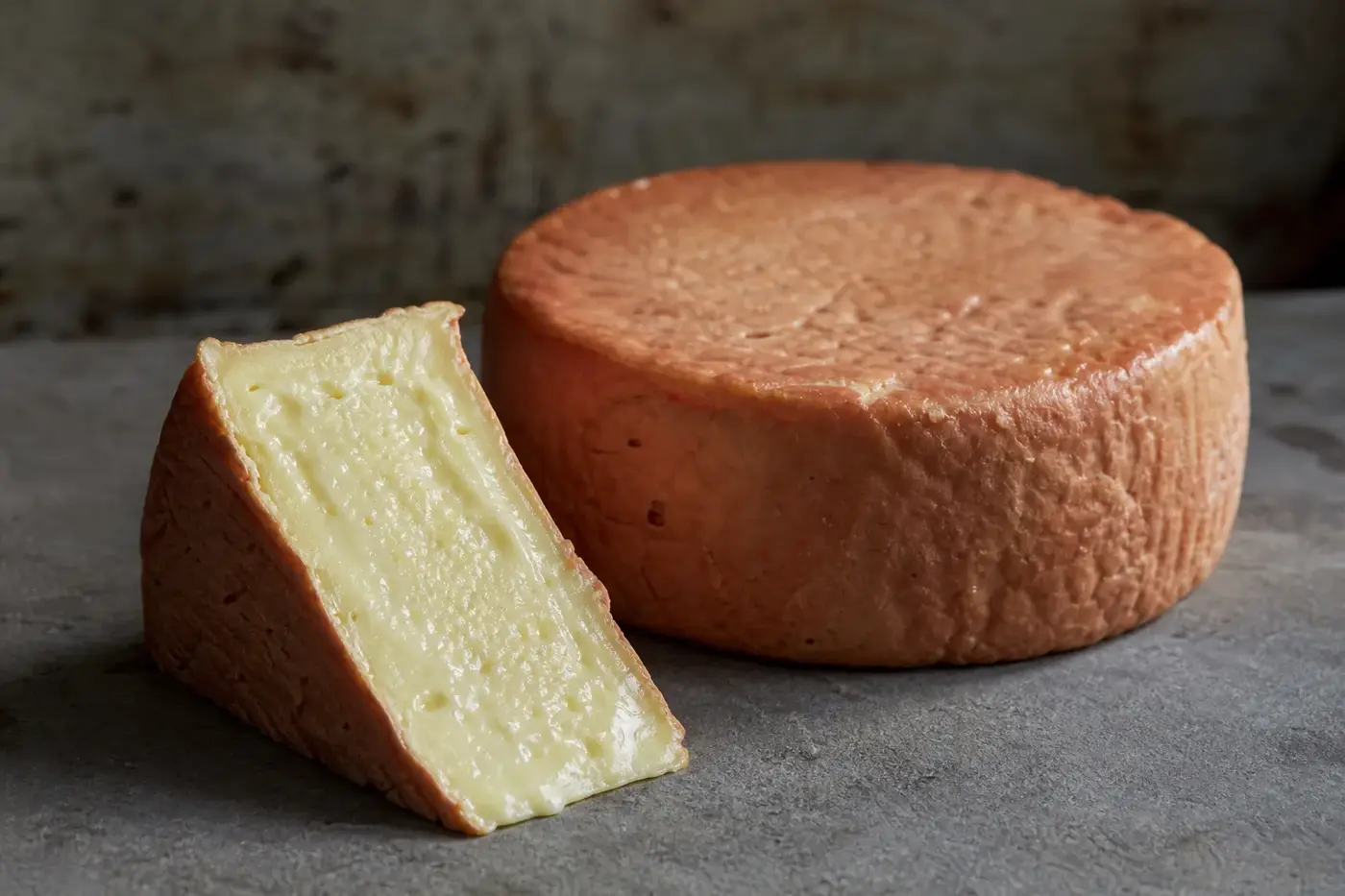
At Hunts Court Farm in Gloucestershire, perry meets cheese rind, and your nose gets the first invitation. The fermented pear drink encourages Stinking Bishop's powerful smell and brown-pink surface, yet its maker describes the cheese beneath as surprisingly mellow. It is quite an entrance for a cheese with a gentler side. Follow that contrast into an English repertoire stretching from Somerset Cheddar and Leicestershire blues to raw-milk Sparkenhoe Blue, fresh goat's cheeses and washed rinds. [4, 7, 9, 12]
| Your bearings | What to look for |
|---|---|
| Where you're exploring | England within the wider British cheese tradition. [1] |
| Styles to get you started | Cheddar, Cheshire, Lancashire, Wensleydale, Double Gloucester and Red Leicester. [1] |
| Protected names worth knowing | West Country Farmhouse Cheddar Cheese and Stilton Blue Cheese, registered PDOs in Great Britain, November 2026. [3, 5, 16] |
| Milk behind the cheese | Cow's milk in Cheddar and Stilton; goat's milk in Perroche and Ragstone. [4, 6, 11] |
Look beyond the county on the label
A county name can tell you more about a cheese's style than its birthplace. England shares its cheese history with Scotland and Wales: recipes travelled, and large creameries began making cheeses far from the counties on their labels. The Society of Dairy Technology records Cheshire production outside Cheshire, and Double Gloucester and Leicester production across Britain. [1]
English and British, then, are not interchangeable descriptions. At the counter, ask what style you're looking at and where that particular cheese was made. Find the maker and production location, then taste the differences for yourself. The regional name starts the conversation; the individual cheese gives you something more personal to discover. [1]
Follow the journey from farm dairy to revival
Picture Cheshire cheese travelling to London by sea. English Heritage records that trade alongside Somerset Cheddar's expansion beyond local markets, while Nantwich Museum documents the long tradition of farm cheesemaking around the town. These cheeses belonged to farms and pastures, but they also had distant customers to reach. Trade helped shape their identities as surely as the places they came from. [2, 18]
Factories changed the balance. During the nineteenth century, factory-made American Cheddar put pressure on English producers, prompting efforts to improve West Country farmhouse cheese's consistency, according to English Heritage. The Second World War brought efficiency drives and rationing that altered recipes. Wensleydale, its account records, became harder and more acidic. [2]
Revival has meant both recovering old ways and finding new directions. At Sparkenhoe Farm in Leicestershire, the maker dates its return to raw-milk Red Leicester to 2005, using an old recipe and milk from its own herd. Its later blue cheese tells a different story. Here is an established dairy taking familiar skills into another style. [7, 9]
You can explore that revival with two pieces on a plate. Put a clothbound territorial cheese beside another maker's version, or a familiar blue beside a newer farmhouse blue. Notice what each maker has kept or changed, then look for those decisions in the texture. You'll learn more than you would by simply collecting celebrated names.
Get to know six territorial favourites
Cheddar: start in Somerset, then follow the method. The West Country Farmhouse Cheddar specification describes a firm, slightly open cheese with a rounded flavour and a hint of sharpness. Look for those qualities as you taste, rather than expecting strength to do all the work. There's more of the story in Cheddar. [4]
Cheshire: a crumble needn't mean a dry mouthful. English Heritage describes traditional Cheshire as juicy, while Nantwich Museum roots the style in local farm cheesemaking history. Watch how your piece breaks, then notice the moisture as you eat it. Crumbly and succulent are perfectly happy in the same bite. [2, 18]
Lancashire: ask which Lancashire is on offer. This north-western tradition includes Creamy, Tasty and Crumbly Lancashire, taking you from a softer, cohesive body to a younger, more friable cheese. One crumbly example cannot speak for the whole family. Compare them and you'll feel just how differently cheeses sharing a regional name can behave. [1]
Wensleydale: begin in the Yorkshire Dales, but keep an open mind about texture. English Heritage contrasts today's harder, more acidic wartime-derived style with the fuller-textured cheese made before the war, and records modern makers returning to older methods. The familiar crumbly image tells only part of that history. Ask whether you're choosing a fresh, crumbly cheese or a clothbound interpretation. [2]
Double Gloucester: give this Gloucestershire tradition a moment before bringing in other flavours. Its close, smooth body offers a firmer counterpoint to northern crumbly cheeses, rather than breaking sharply. Try a plain example before choosing one with added ingredients. You'll get a clearer sense of the underlying cheese without another flavour leading the conversation. [1]
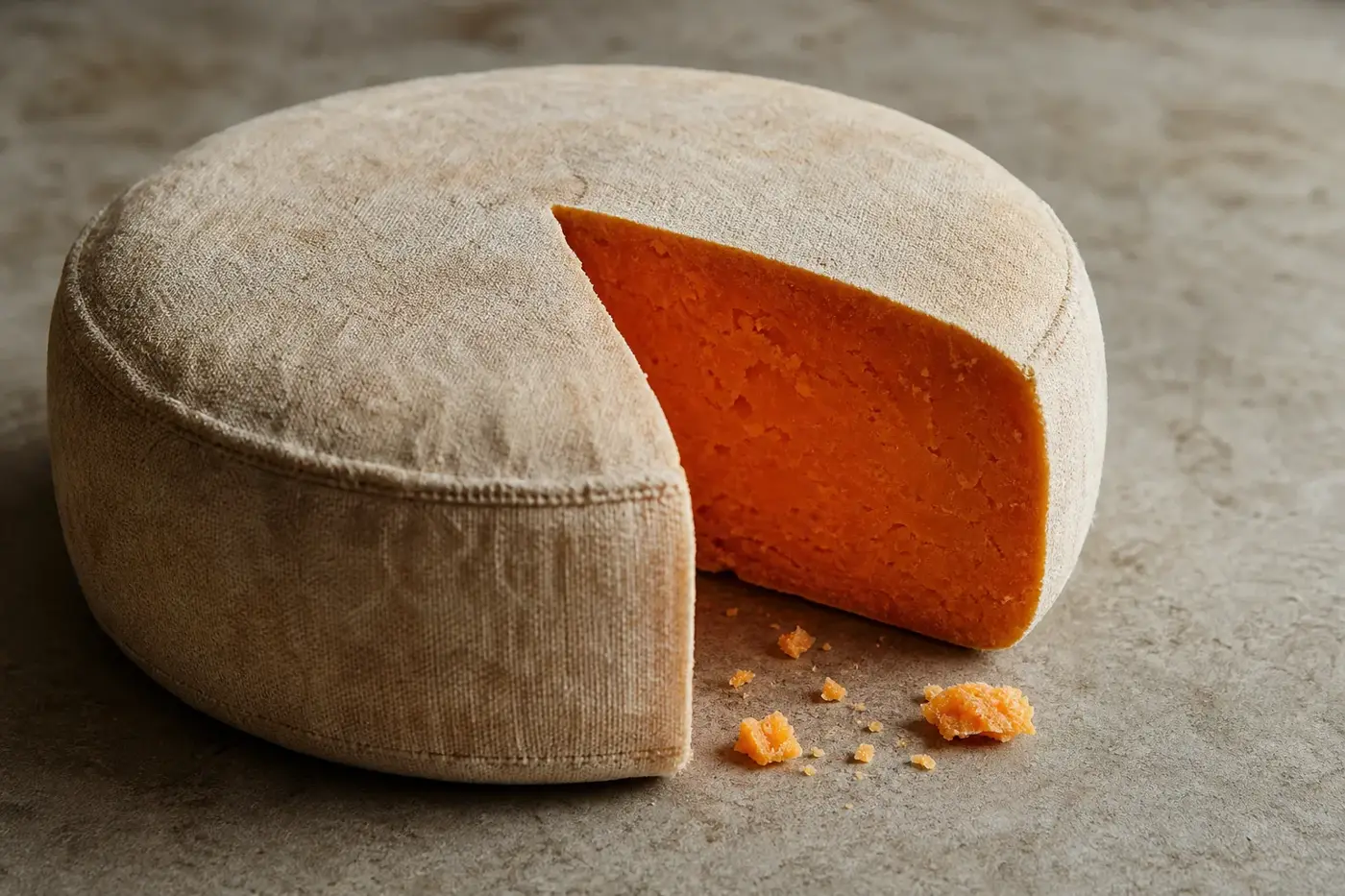
Red Leicester: Sparkenhoe's clothbound, raw-milk example gives you another body and flavour to explore. The maker describes it as mellow, with sweet and citrus notes; annatto supplies its deep orange-red colour. It matures for six months. Enjoy that colour, then compare the texture and finish with Cheddar: those differences deserve just as much attention. [7, 8]
Make room for two very different blues
Blue Stilton belongs to the East Midlands. Its specification requires production in Leicestershire, Derbyshire or Nottinghamshire from pasteurised cow's milk. The curd is not pressed, and the cheese develops its own coat. Expect younger Blue Stilton to be slightly crumbly, with sharpness against a milky background; softer textures develop in the mature category. [6]
Put Sparkenhoe Blue beside it and give yourself time to compare. Made with raw milk at the Leicestershire dairy, it has a dense texture, mellow blue flavour and savoury finish, according to its maker. Notice how each cheese holds together, crumbles and delivers its blue flavour. Asking which feels more cohesive or forceful gets you further than treating English blue as a single taste. [7, 9]
Follow the perry wash, then find a gentler bite
Stinking Bishop brings Gloucestershire's cheese and orchard traditions together with considerable presence. Its maker began production at Hunts Court Farm in 1994, using pasteurised cow's milk and vegetarian rennet. The perry wash encourages the surface bacteria behind that powerful smell and brown-pink rind. Underneath, the maker describes a surprisingly mellow cheese, so let your taste buds have their say too. [12]
For a gentler opening, turn to goat's milk. Neal's Yard Creamery, which moved to Herefordshire in 1996, makes fresh and mould-ripened cheeses. Its Perroche is a fresh, pasteurised goat's cheese, described by the creamery as delicate and lemony, with a moist, light texture. You could begin a selection here and build your contrasts around it. [10, 11]
Ragstone, from the same creamery, takes you from fresh into ripened cheese. This matured goat's milk log has a creamy-white mould rind, a smooth texture, and savoury, lactic and lemony flavours, according to the creamery. Taste it beside Perroche to explore what ripening brings while keeping milk species and maker constant. Both use cardoon, or thistle, rennet. [11]
Discover what the maker brings to the milk
Milk begins the story; the maker's decisions shape the cheese you eat. Starter cultures produce acidity, while rennet, a milk-clotting enzyme preparation, helps form curd. Those curds are the solids separated from liquid whey. Ask about milk and method at the counter: you'll get a fuller picture than a strength label can give you. [4]
Follow the curd and those decisions become easier to understand. Cheddar is stacked, milled and pressed; Stilton's unpressed curd drains in cylindrical moulds and receives the blue mould Penicillium roqueforti. Each follows a distinct path through the dairy. You aren't simply tasting the difference between a younger cheese and an older one. [4, 6]
Pay attention to the surface, too: Ragstone develops a mould rind, while Stinking Bishop is washed in perry. Maturation then changes texture and flavour. Stilton's specification says the time required depends on season, milk composition, cheese size, storage temperature and individual methods. Choose a texture you enjoy, rather than assuming the oldest cheese must be the best. [6, 11, 12]
If you'd like to follow the whole sequence, visit how cheese is made. Then turn to rennet explained for animal, microbial and fermentation-produced coagulants.
Give the protected name your full attention
Cheddar is a widely made style; West Country Farmhouse Cheddar Cheese is a specific registered name. In Great Britain, the latter is a PDO, meaning Protected Designation of Origin. Its specification restricts production to Dorset, Somerset, Devon and Cornwall. It permits pasteurised or unpasteurised cow's milk and requires at least nine months' maturation. [3, 4, 16]
Stilton Blue Cheese is the other registered example here, also a PDO in Great Britain. Both register entries show UK scheme registration on 31 December 2020. The UK GI schemes cover Great Britain, while Northern Ireland uses the EU schemes. Protection belongs to the registered name and its applicable rules, not every cheese associated with a county. [3, 5, 16]
At the counter, read the full name rather than relying on a familiar word in large print. Look for the producer, milk treatment and rennet declaration on the particular cheese you're buying. To untangle a style, a geographical designation and a maker's product, turn to protected names explained.
Build a board worth lingering over
Choose contrasts: a fresh cheese, a crumbly territorial, a firmer mature cheese, a blue and a washed rind. Five different styles give you more to explore than several cheeses chosen only for increasing strength. Use the makers' descriptions above to pick your examples, then jot down what you find. Your notebook needn't qualify for a cheese diploma.
- Begin with Perroche or another fresh English goat's cheese. Taste it alone before adding bread, paying attention to moisture and acidity.
- Move to Cheshire or Wensleydale. Notice how it breaks, then whether that first impression changes as you chew.
- Bring in mature Cheddar or clothbound Red Leicester. Compare firmness and finish with the previous cheese, keeping intensity separate from quality.
- Taste Blue Stilton or Sparkenhoe Blue. Have plain bread and water beside your board before moving to the final cheese.
- Finish with Stinking Bishop. Compare the rind's aroma with the flavour of the paste, the cheese beneath the surface.
Make a plan at the counter, take care at home
Tell your cheesemonger when you plan to eat the cheese, how many styles you'd like and whether you need vegetarian rennet. Ask for the maker's name and, where possible, a comparison of two examples. Keep each cheese's product information, especially when pieces are cut and rewrapped. Those details describe that particular cheese, not its entire regional family.
At home, follow the label's refrigeration and opening instructions. The Food Standards Agency's guidance for England, Wales and Northern Ireland recommends a fridge between 0 and 5 °C (32 to 41 °F). Protect ready-to-eat cheese from raw-food contamination and retain its use-by information. For more practical help, see how to store cheese at home. [14, 15]
Serve only what you intend to eat and keep the rest refrigerated. FSA guidance for England, Wales and Northern Ireland, November 2026, says chilled food should spend the shortest possible time outside the fridge, with a maximum of four hours. Follow the full FSA guidance when serving and handling food. [15]
Let bread, fruit and a glass join the table
Give your cheese a little space before adding anything else. Try plain bread with fresh and soft cheeses, apple with Cheddar, and pear with your blue or washed-rind selection. Stinking Bishop's maker specifically suggests crusty bread and pear dishes. Keep chutney to one side so you can taste the cheese before another strong flavour arrives. [12]
For a drink, try English ale or dry cider with firm cheeses, or dry white wine with fresh goat's cheese. These are starting points for adults of legal drinking age, served in small amounts. Offer water, apple juice or pear juice alongside alcoholic drinks.
People who are pregnant, driving, taking medicines that interact with alcohol or recovering from alcohol dependence should not drink. See the NHS pregnancy guidance and ask a healthcare professional about individual circumstances.
This page summarises published guidance from the official sources it cites. It is not medical advice. Guidance differs between countries and changes over time, so check the current source for where you live, and ask your doctor, midwife, pharmacist or dietitian about your own circumstances.
Ask the right questions about milk, rennet and health
Pasteurisation and vegetarian suitability answer different questions. Stinking Bishop, for instance, uses pasteurised milk and vegetarian rennet. Check both declarations, and ask the maker which coagulant is used in your particular cheese. The Cheddar specification permits animal or vegetable rennet; for vegetarian choices, also check for possible lard on clothbound West Country farmhouse Cheddar. [4, 12]
UK pregnancy guidance, November 2026: the NHS lists hard cheeses such as Cheddar, whether pasteurised or unpasteurised, among foods that can be eaten during pregnancy. It advises avoiding specified soft cheeses unless cooked until steaming hot. Follow the current NHS guidance for the full categories and exceptions. [13]
Newborn babies, older people and people with weakened immunity are also at greater risk of serious listeriosis, according to the NHS. Its prevention advice includes keeping chilled ready-to-eat foods cold, following label instructions and observing use-by dates. If you or someone you're serving falls into those groups, consult its listeriosis guidance and discuss individual circumstances with your healthcare professional. [14]
Keep your curiosity at the cheese counter
- How to Tell Cheese Styles Apart: Milk, Rind, Texture and Method: put words to the differences you notice across your selection.
- Cheese and Wine Pairing: The Complete Guide: explore further wine matches and alcohol-free alternatives.
Questions people ask
Does a county cheese have to be made in the county it is named after?
Not necessarily. The Society of Dairy Technology records Cheshire production outside Cheshire, and Double Gloucester and Leicester production across Britain.
Where is Blue Stilton made?
Its specification requires it to be made in Leicestershire, Derbyshire or Nottinghamshire from pasteurised cow’s milk. The curd is not pressed, and the cheese develops its own coat.
What makes West Country Farmhouse Cheddar Cheese different from Cheddar?
Cheddar is a widely made style, while West Country Farmhouse Cheddar Cheese is a registered PDO in Great Britain. Its specification limits production to Dorset, Somerset, Devon and Cornwall and requires at least nine months of maturation.
Which English cheeses use vegetarian rennet?
Stinking Bishop uses vegetarian rennet. Perroche and Ragstone both use cardoon, or thistle, rennet.
How should I store and serve English cheese?
The Food Standards Agency recommends a fridge temperature between 0 and 5 °C and says chilled food should spend the shortest possible time outside the fridge, with a maximum of four hours. See the Food Standards Agency’s full guidance on chilling food safely.
Sources
-
Society of Dairy Technology, The Evolution of the British Cheese Industry, first edition, November 2018. Historical synthesis and industry account, including regional cheeses and production outside their original counties. Document.
-
English Heritage, The History of Cheese Making in England, undated web article, retrieved November 2026. Historical interpretation covering Cheshire trade, industrial Cheddar, wartime Wensleydale and farmhouse revival. Article.
-
Department for Environment, Food & Rural Affairs, West Country Farmhouse Cheddar Cheese, official UK GI register entry, published 2021, current entry retrieved November 2026. Register entry.
-
Department for Environment, Food & Rural Affairs, Protected food name: West Country Farmhouse Cheddar, product specification, undated document currently linked from the UK register. Sections 4.2, 4.3, 4.5 and 4.6. Specification.
-
Department for Environment, Food & Rural Affairs, Stilton Blue Cheese, official UK GI register entry, published 2021, current entry retrieved November 2026. Register entry.
-
Department for Environment, Food & Rural Affairs, Product specification: Stilton Cheese, undated document currently linked from the UK register. Sections 4.2, 4.3 and 4.5. Specification.
-
Leicestershire Handmade Cheese Co., Sparkenhoe Cheese Dairy, undated maker's account, retrieved November 2026. Commercial primary source for its own production history. Maker's account.
-
Leicestershire Handmade Cheese Co., Sparkenhoe Red Leicester, undated product description, retrieved November 2026. Commercial primary source for declared production and tasting notes. Product description.
-
Leicestershire Handmade Cheese Co., Sparkenhoe Blue, undated product description, retrieved November 2026. Commercial primary source for declared milk treatment and tasting notes. Product description.
-
Neal's Yard Creamery, Welcome to Neal's Yard Creamery, undated website, retrieved November 2026. Commercial primary source for its location, relocation date and product range. Creamery website.
-
Neal's Yard Creamery, Cheeses & Yoghurts, undated product information, retrieved November 2026. Perroche and Ragstone entries. Commercial primary source for milk treatment, coagulant and attributed sensory descriptions. Product information.
-
Charles Martell & Son, Frequently Asked Questions, undated maker's account, retrieved November 2026. Commercial primary source for Stinking Bishop's origin, production, sensory description and suggested accompaniments. Maker's account.
-
NHS, Foods to avoid in pregnancy, current web guidance retrieved November 2026. Section “Cheese, milk and other dairy”. Official guidance.
-
NHS, Listeriosis, page last reviewed 10 November 2023, current guidance retrieved November 2026. Sections “Risks of listeriosis” and “How to avoid listeriosis”. Official guidance.
-
Food Standards Agency, How to chill, freeze and defrost food safely, published 18 December 2017, current GOV.UK version retrieved November 2026. Applies to England, Northern Ireland and Wales. Official guidance.
-
Department for Environment, Food & Rural Affairs, Protected geographical food and drink names: UK GI schemes, updated 8 March 2024, current version retrieved November 2026. Official guidance.
-
Food Standards Agency, Alerts, live recall and allergy-alert index, retrieved November 2026. Editorial recall-check source. Official alerts.
-
Nantwich Museum, Cheese and Dairy Industry, undated collection description, retrieved November 2026. Museum collection.
This desk-researched piece brings together official specifications, public guidance, museum interpretation, industry history and attributed makers' accounts.
Last checked: November 2026
Last checked November 2026.
The cheeses of England
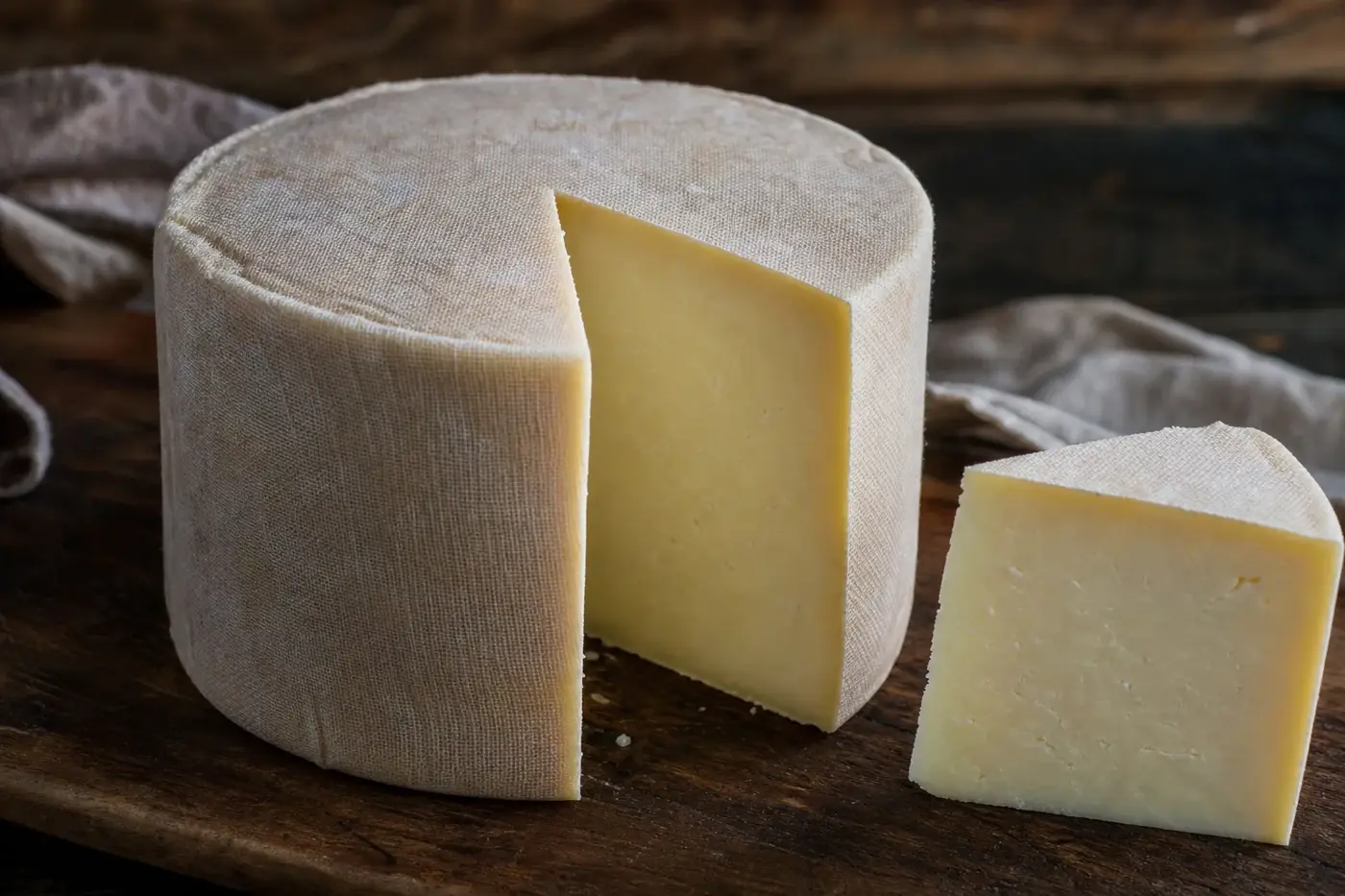
West Country Farmhouse Cheddar Cheese
Large pieces of curd turn and stack under the cheesemaker’s hands.
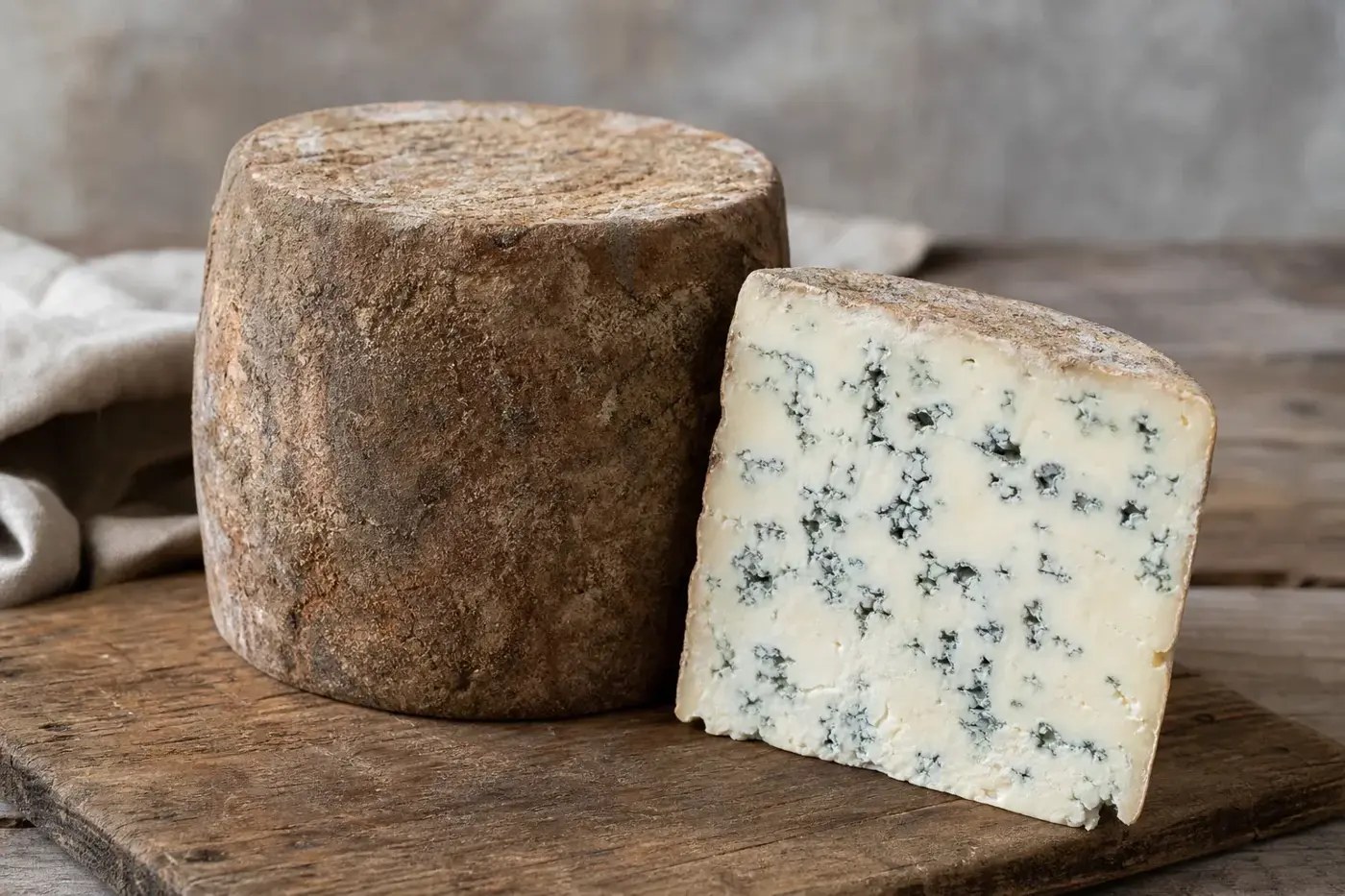
Stilton
Cut into a cylinder of Blue Stilton and pale paste opens beneath your knife, threaded with blue-green mould.
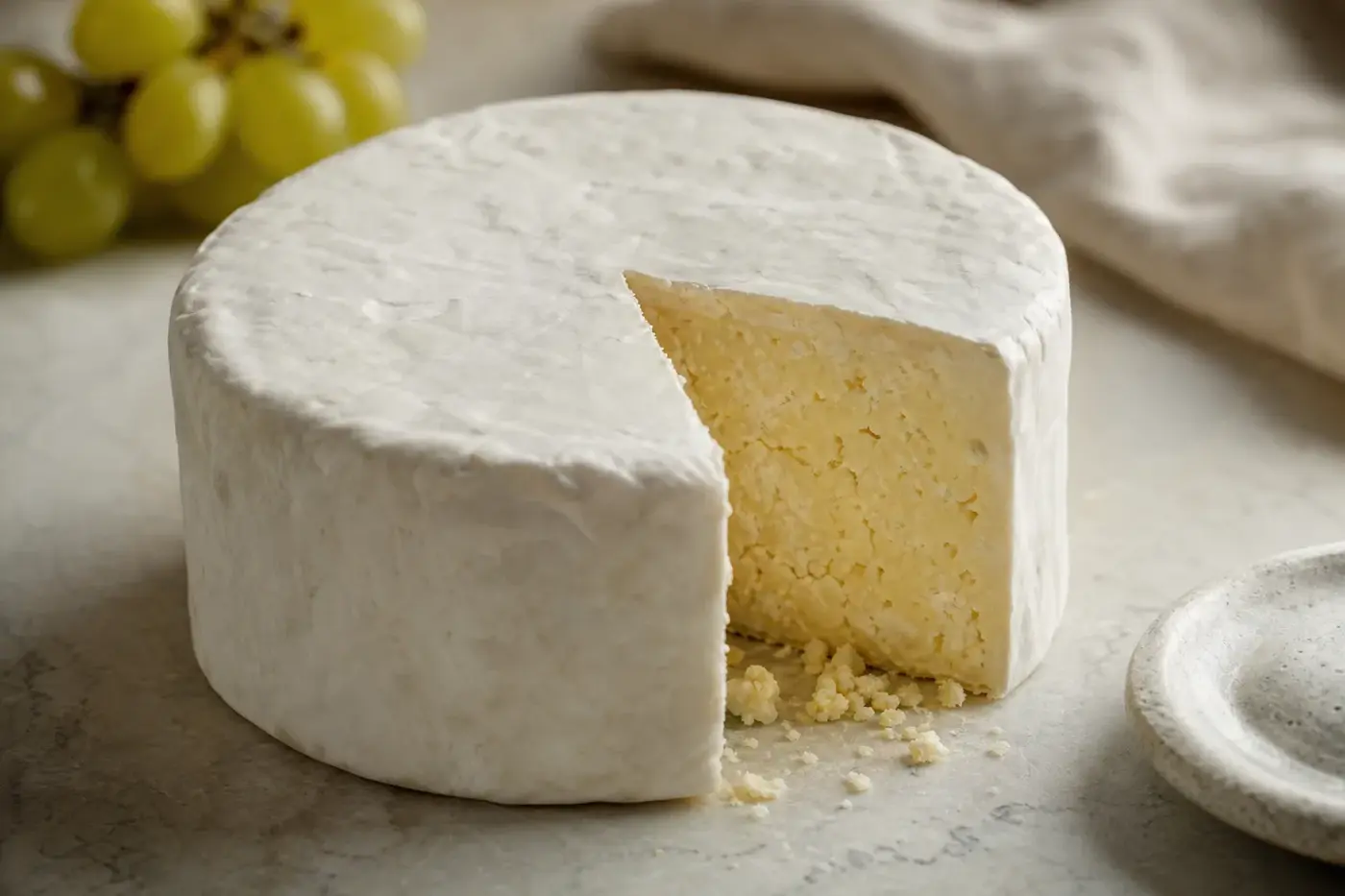
White Stilton (Stilton White Cheese)
Put your knife to White Stilton and watch it crumble.
Red Leicester
Beneath the muslin at Sparkenhoe, six months of waiting leads to an orange interior.
Sage Derby
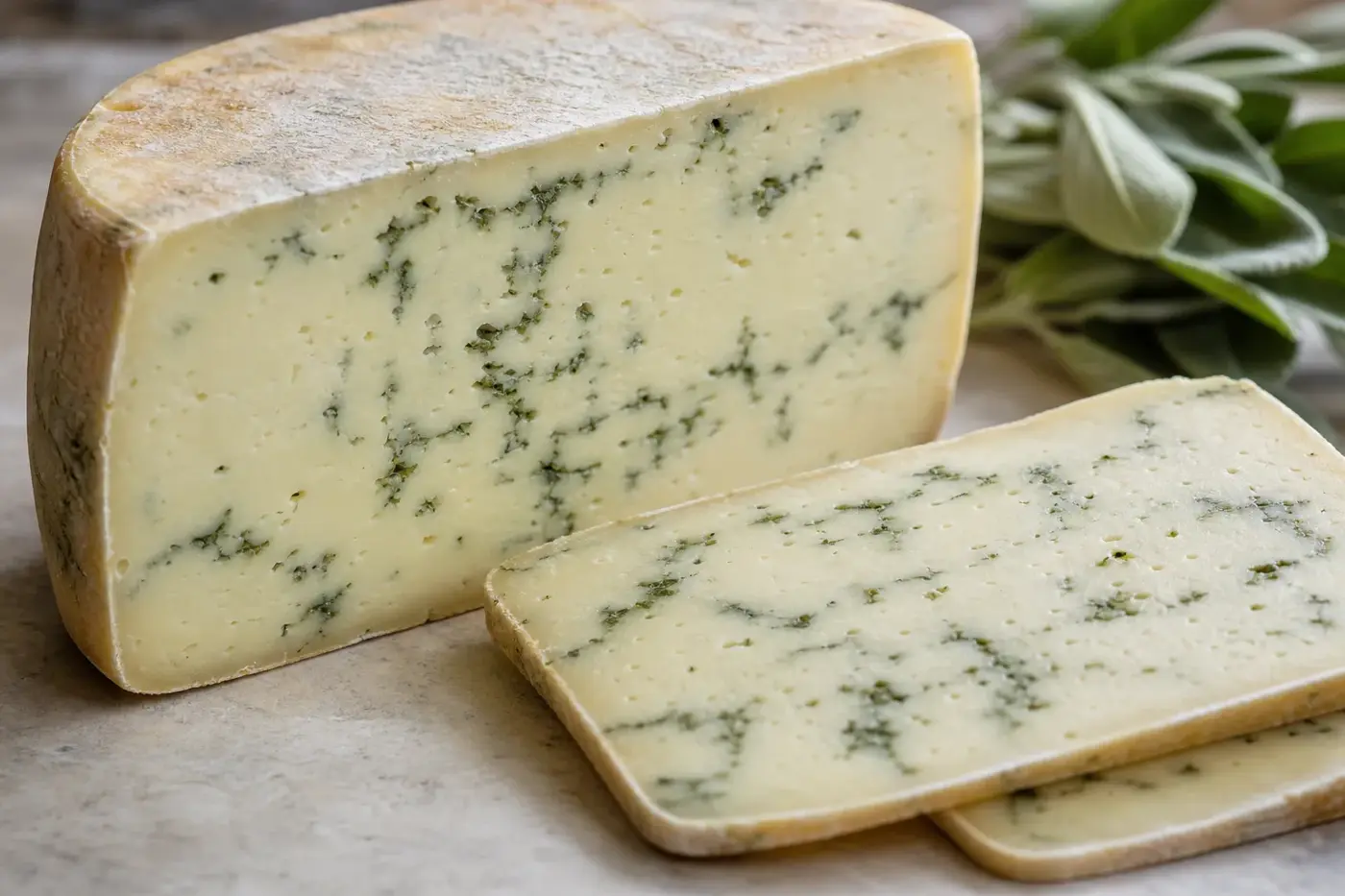
Cut into Sage Derby and green seams appear against the pale cheese.
Double Gloucester
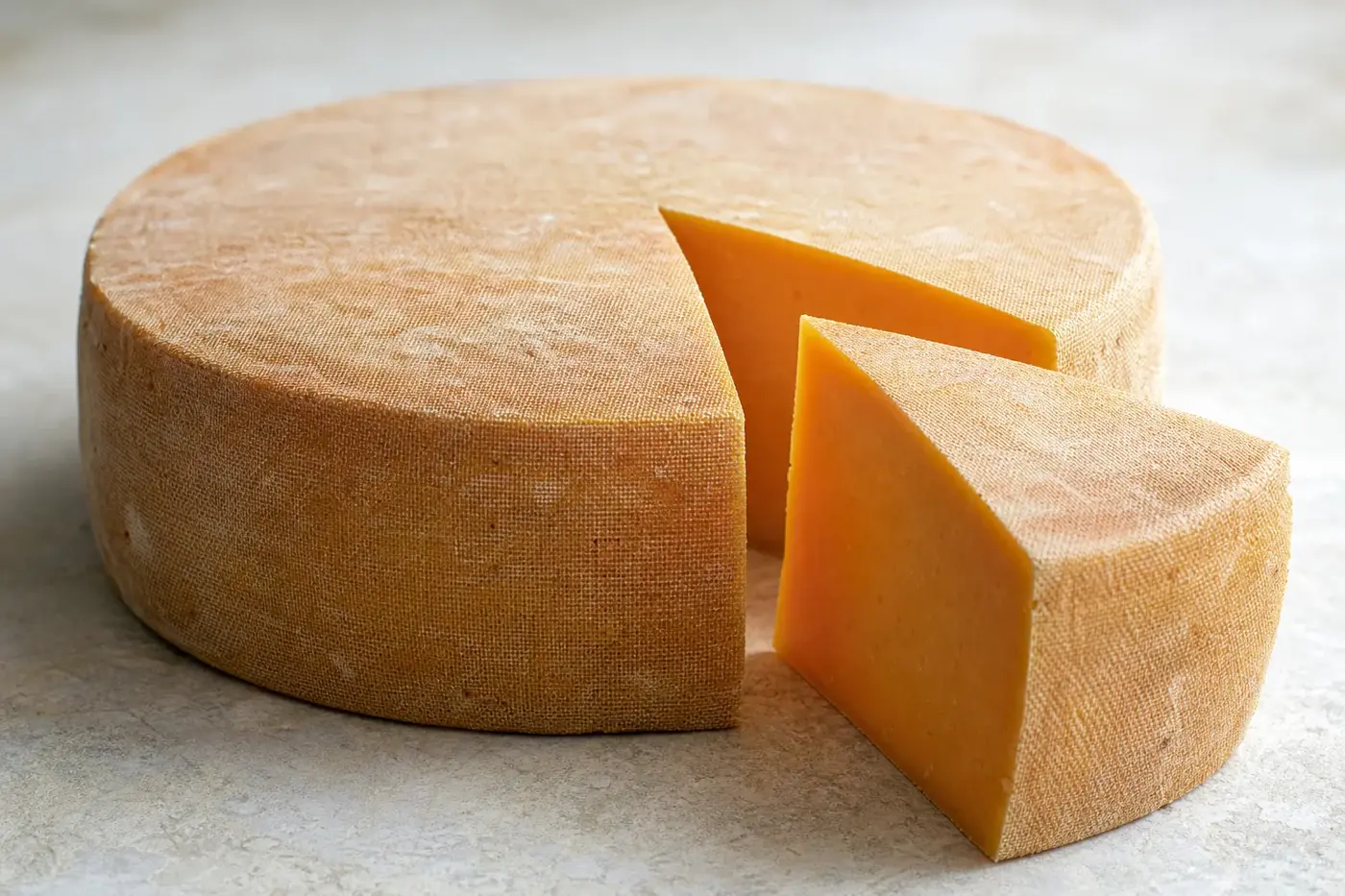
Cut into a broad wheel of Double Gloucester and the orange interior comes into view.
Single Gloucester
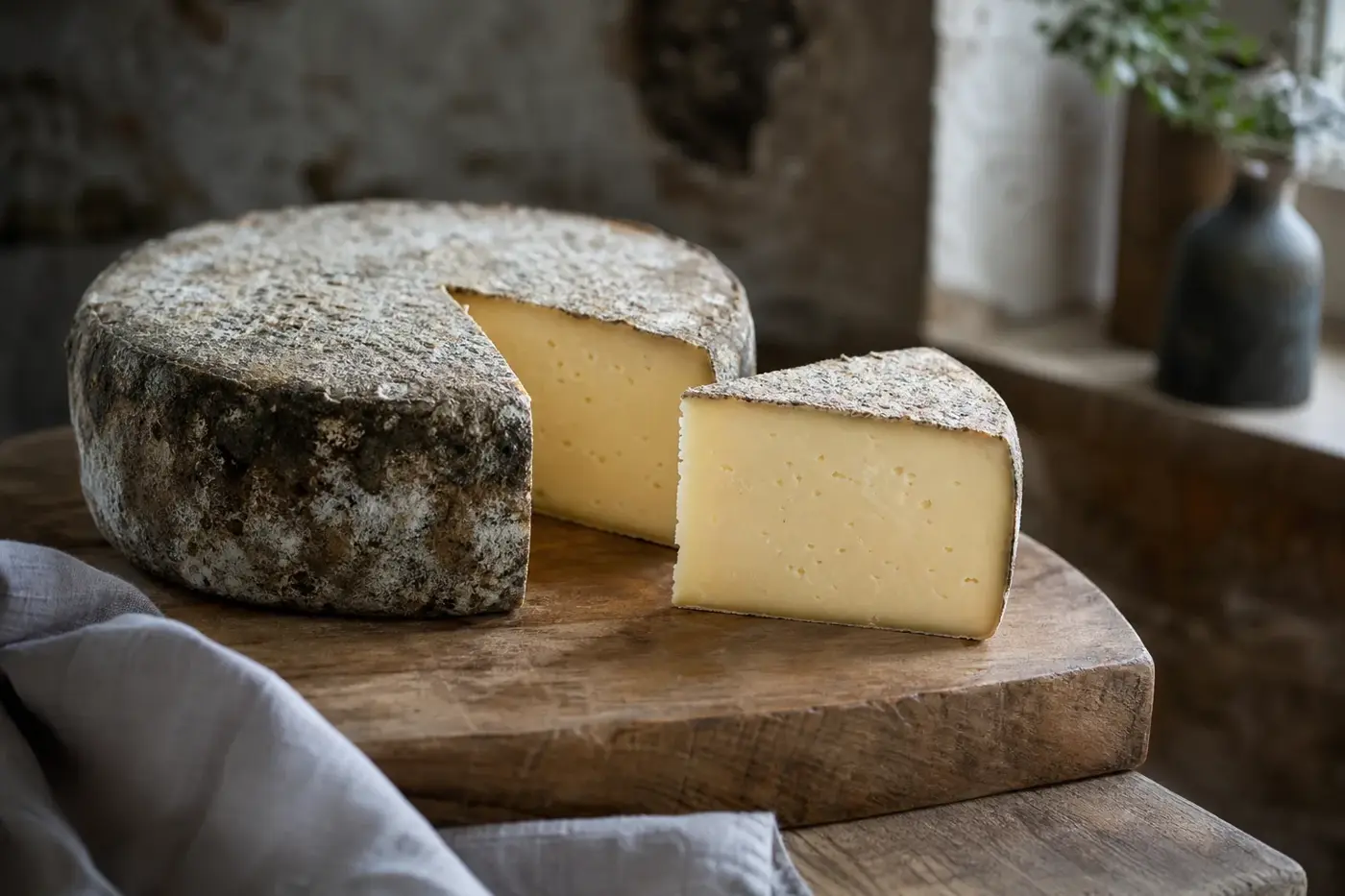
Three cows and a bull.
Lincolnshire Poacher
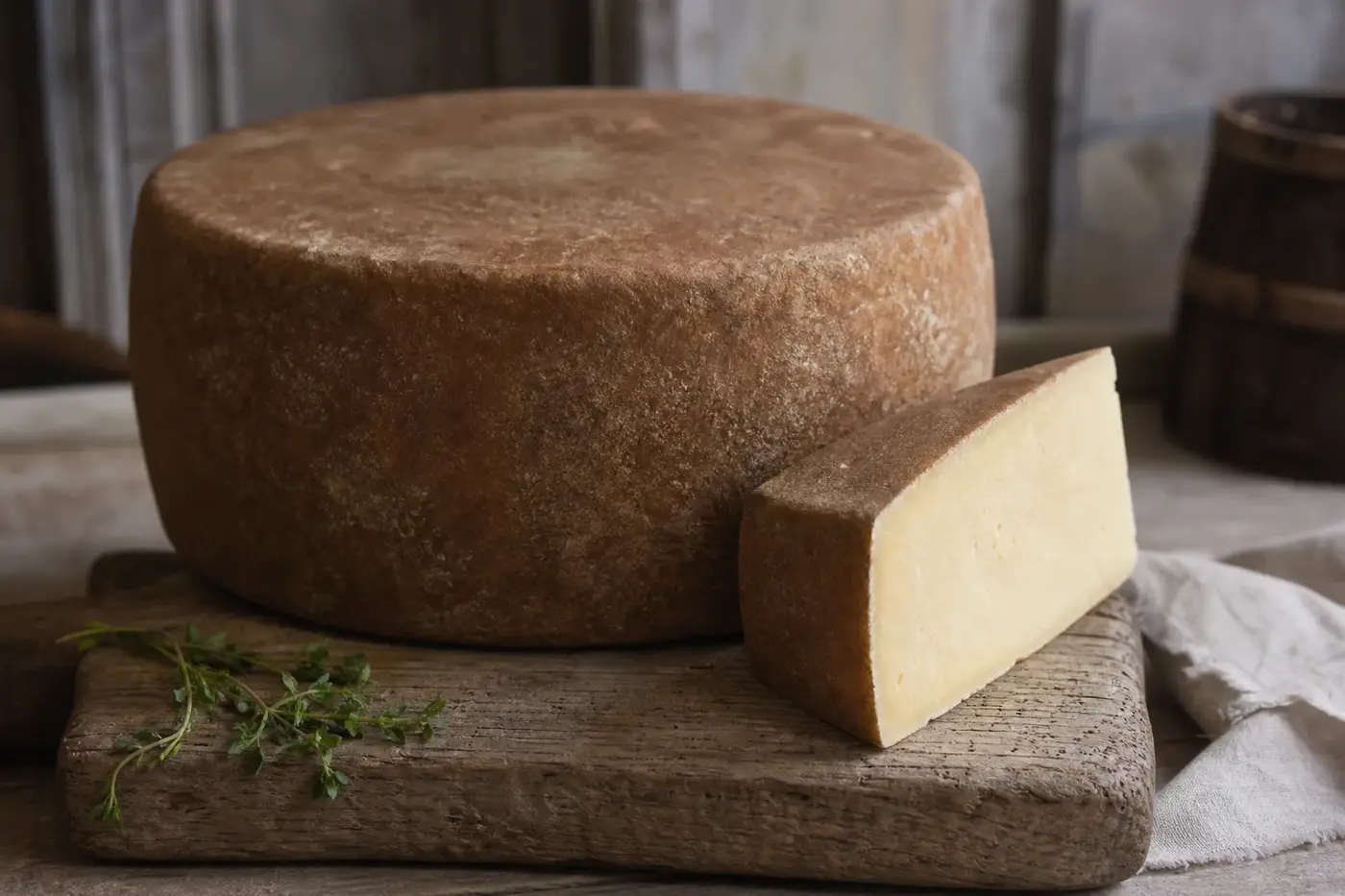
Before you cut the first piece, take in the whole Lincolnshire Poacher: approximately 20 kg of hard cheese, its pale yellow heart tucked beneath a brown exterior.
Wensleydale
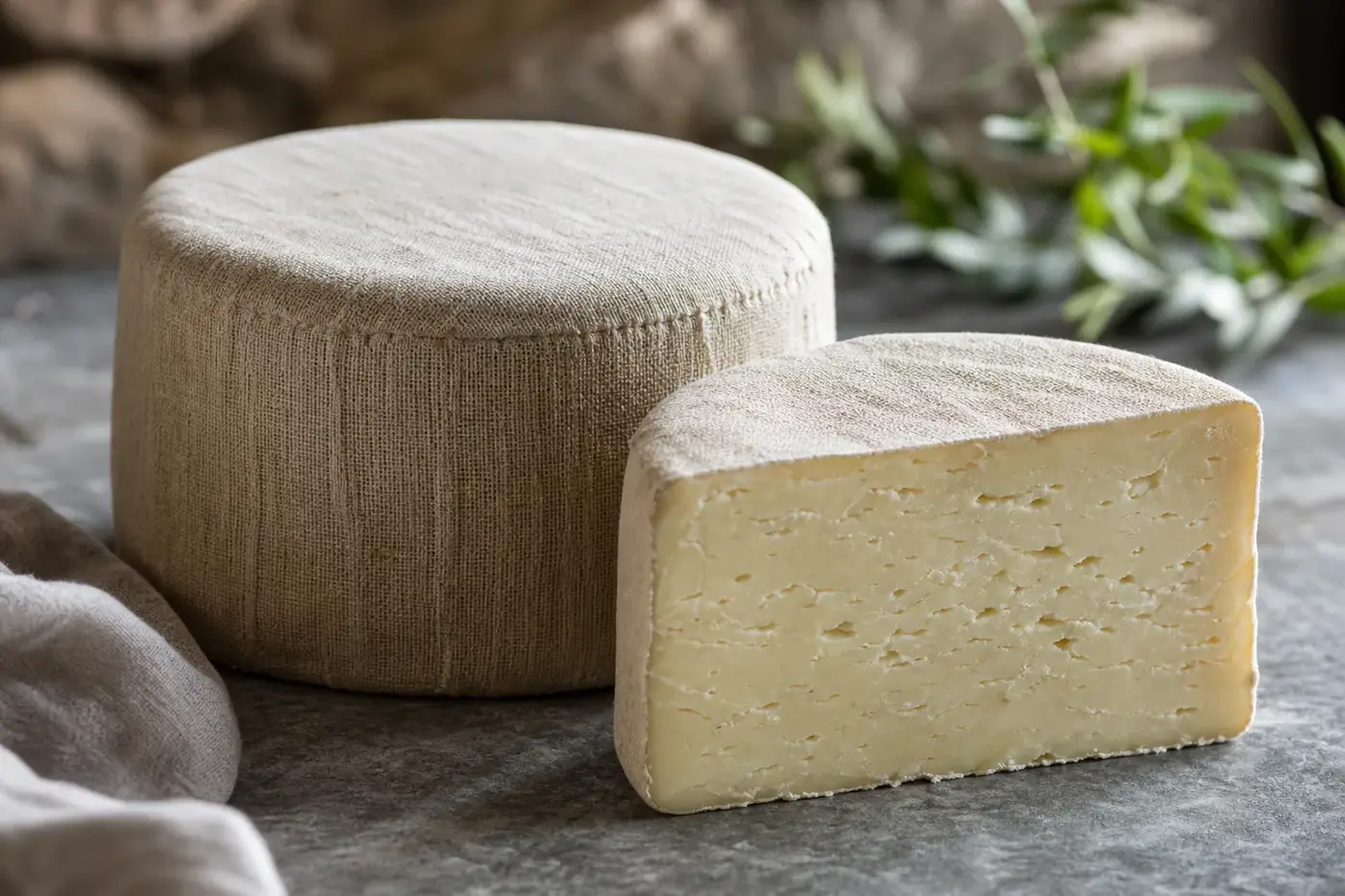
Break a piece of pale ivory Wensleydale and watch the moist flakes part beneath your fingers.
- Cheshire
- Stinking Bishop
- Cornish Yarg
- Stichelton
- Beenleigh Blue
- Dorset Blue Vinny
- Swaledale Cheese
- Swaledale Ewes' Cheese
- Tunworth
- Baron Bigod
- Staffordshire Cheese
- Dovedale Cheese
- Bath Soft Cheese
- Exmoor Blue Cheese
- Buxton Blue
- Pevensey Blue
- Rollright
- Ashcombe
- Barkham Blue
- Bath Blue
- Cornish Kern
- Devon Blue
- Dorstone
- Driftwood
- English Pecorino
- Eve
- Flower Marie
- Golden Cross
- Golden Saye
- Harbourne Blue
- Heckfield
- Little She
- Maida Vale
- Merry Wyfe
- Ogleshield
- Old Winchester
- Pavé Cobble
- Rachel
- Ragstone
- Renegade Monk
- Sharpham Brie
- Sharpham Cremet
- Sharpham Elmhirst
- Sharpham Rustic
- Sheep Rustler
- Solstice
- Spenwood
- St Cera
- St Jude
- Ticklemore
- Tor
- Waterloo
- White Nancy
- Wigmore
- Winslade
- Wyfe of Bath
- Yarlington
The editors suggest you read next

French Cheese: The Complete Guide
Picture Normandy’s pastures, then follow the milk towards the Loire’s goat dairies, the Jura’s shared cheesemaking traditions and the sheep country of the Pyrenees.


