FrieslandCampina
Picture your burger, its slice of Gouda tucked neatly inside.
Picture your burger, its slice of Gouda tucked neatly inside. Behind that modest slice sits a story reaching back to a farmer cooperative in 1898, where Frico traces its beginnings. Today, the cheese brand belongs to FrieslandCampina, a Dutch dairy group whose farmer owners supply the milk at the heart of the business. [1][2][3]
Follow that milk and you reach branded cheese packs, catering kitchens and food manufacturers. You also enter a company making drinks, ingredients and specialised nutrition. Cheese has a substantial role here, but it has to share the fridge. [1][2][3]
| Get to know the business | The detail |
|---|---|
| Operating company | Koninklijke FrieslandCampina N.V., presented as Royal FrieslandCampina N.V. in its English reports. [1][4] |
| Ultimate owner | Zuivelcoöperatie FrieslandCampina U.A., which wholly owns the operating company. [1] |
| Headquarters | Amersfoort, the Netherlands. [5] |
| Ownership model | Farmer cooperative ownership. [1] |
| Member countries | The Netherlands, Belgium, Germany and France, reported in the first half of 2026. [1] |
| Cheese brand | Frico, listed in FrieslandCampina’s brand portfolio. [3] |
| Ownership reference date | November 2026; the supporting documents are the 2026 half-year report and 2025 cooperative accounts. [1][4] |
Meet the farmers behind the business
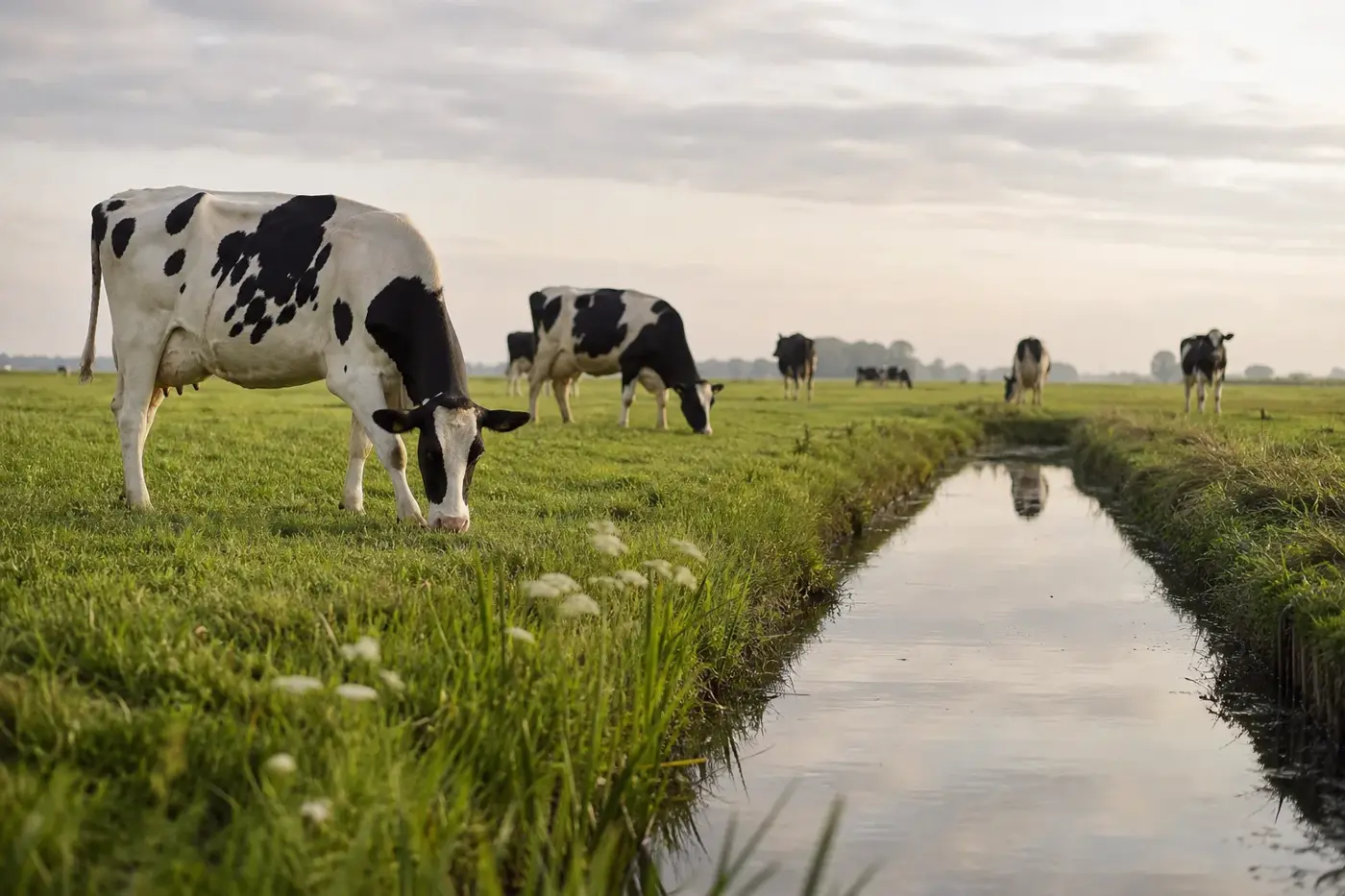
FrieslandCampina’s dairy farmers have two roles: they supply the milk and collectively own the business. Their cooperative, Zuivelcoöperatie FrieslandCampina U.A., holds their membership. The operating company runs the commercial dairy business, which the farmers collectively own and supervise through the cooperative. [1][4]
That connection reaches beyond the paperwork. The cooperative’s accounts describe an agreement under which the operating company takes the member milk offered through the cooperative. Farmers supply it; the business processes and markets it. Finding productive outlets for that milk is therefore central to FrieslandCampina’s purpose. [4]
Farmers have a formal voice, too. Following the Milcobel merger, two additional cooperative districts were created, with elected dairy farmers forming district councils. Together, those councils form the Members’ Council. Each district’s voting weight depends on the milk supplied, according to the merger announcement. [5]
If you follow company announcements, this distinction is worth keeping handy. Cooperative member decisions concern farmer ownership; operating company initiatives concern products, factories or markets. Both belong to FrieslandCampina, but they involve different parts of the organisation and different decisions. [1][5]
Follow the milk home to the farm
At 31 December 2025, most cooperative farms were in the Netherlands. Of 8,781 member dairy farms, 8,143 were Dutch, 536 were in Germany and 102 were in Belgium. Together, they represented 13,972 member dairy farmers. Farms and individual members are different counts, so keep those two figures separate. [4]
Then the map grew. The Milcobel merger took effect on 1 January 2026, bringing approximately 1,250 additional member dairy farmers. There is no latest total and country breakdown here. The subsequent half-year report describes membership across the Netherlands, Belgium, Germany and France. [1][2]
Those countries show you where the cooperative’s agricultural roots lie, not everywhere its products travel. FrieslandCampina describes Frico alone as present in more than 90 countries. Ownership, milk supply, manufacturing and sales each have their own geography. [3]
A cheese sold far from the Netherlands can therefore belong to the same branded business. That does not make its buyer, distributor or retailer a member of the farmer cooperative.
The 2008 merger that brought two businesses together
Friesland Foods and Campina came together at the end of 2008 to form FrieslandCampina. The group’s 2009 annual report dates the merger steps to 30 and 31 December 2008. Before that came the European Commission’s conditional clearance on 17 December 2008. Approval and completion were separate moments. [6][7]
Cheese helped shape those competition conditions. The Commission investigated overlapping dairy activities and required, among other measures, the disposal of a Dutch cheese factory. FrieslandCampina’s subsequent report records the transfer of the Bleskensgraaf cheese activities to DeltaMilk on 1 December 2009. [6][7]
The business has kept changing. Its 2026 reporting divides activities serving its markets into business groups including Professional, Retail & Americas, Ingredients and Specialised Nutrition. Your cheese reaches customers through this wider organisation, rather than a single, self-contained cheese business. [1]
Milcobel brought another structural shift. FrieslandCampina’s 2025 results confirm the merger became effective on 1 January 2026, while its 2026 half-year report describes integration already under way. First came member approval, then the effective merger. After that came the work of bringing operations together. [1][2][5]
A different cheese job for burgers and pizza
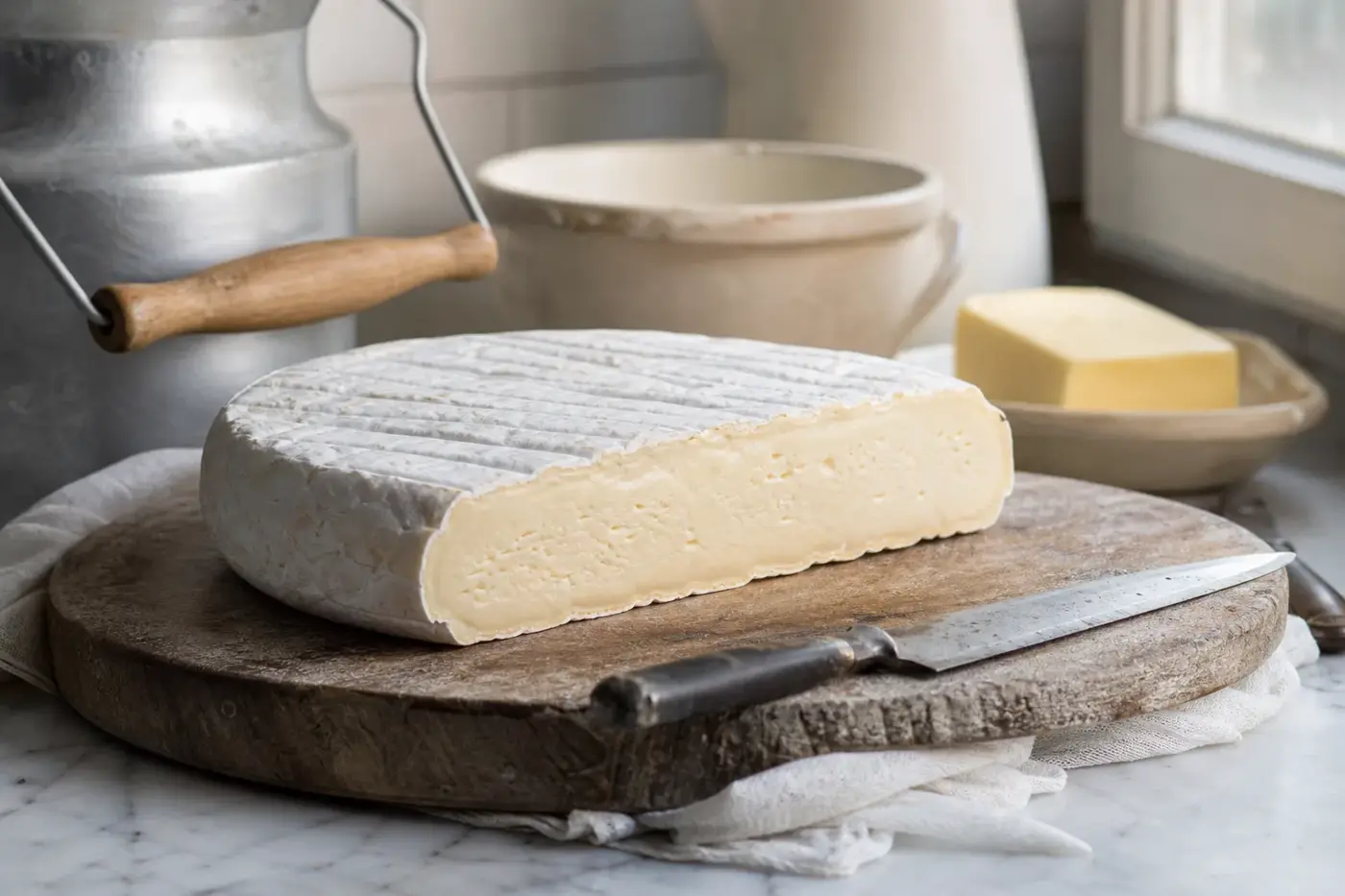
Gouda in your burger has a different job from cheese on your pizza. FrieslandCampina’s professional range includes naturally ripened and foil-ripened Gouda, Edam and cheeses developed for particular food applications. Its examples include rindless Gouda Gold for burgers and ready meals, and Royal Hollandia products for pizza. [8]
Here, a familiar cheese name is only the beginning. You might judge a piece of cheese differently from a caterer needing dependable slices or a manufacturer specifying grating, melting, colour or stretch. FrieslandCampina organises its professional range around those practical needs as well as cheese styles. [8]
For the background to the style itself, see Gouda. This range tells you another part of the story: how a dairy group turns cheese styles into products for several routes to market. Not every cheese is being auditioned for your cheeseboard.
There is no single “FrieslandCampina cheese” flavour or texture. The published portfolio covers different maturation approaches, formats and uses. To understand a particular cheese, look to its product specification. That tells you more than the group name. [8]
Frico and Friso: familiar names, different stories
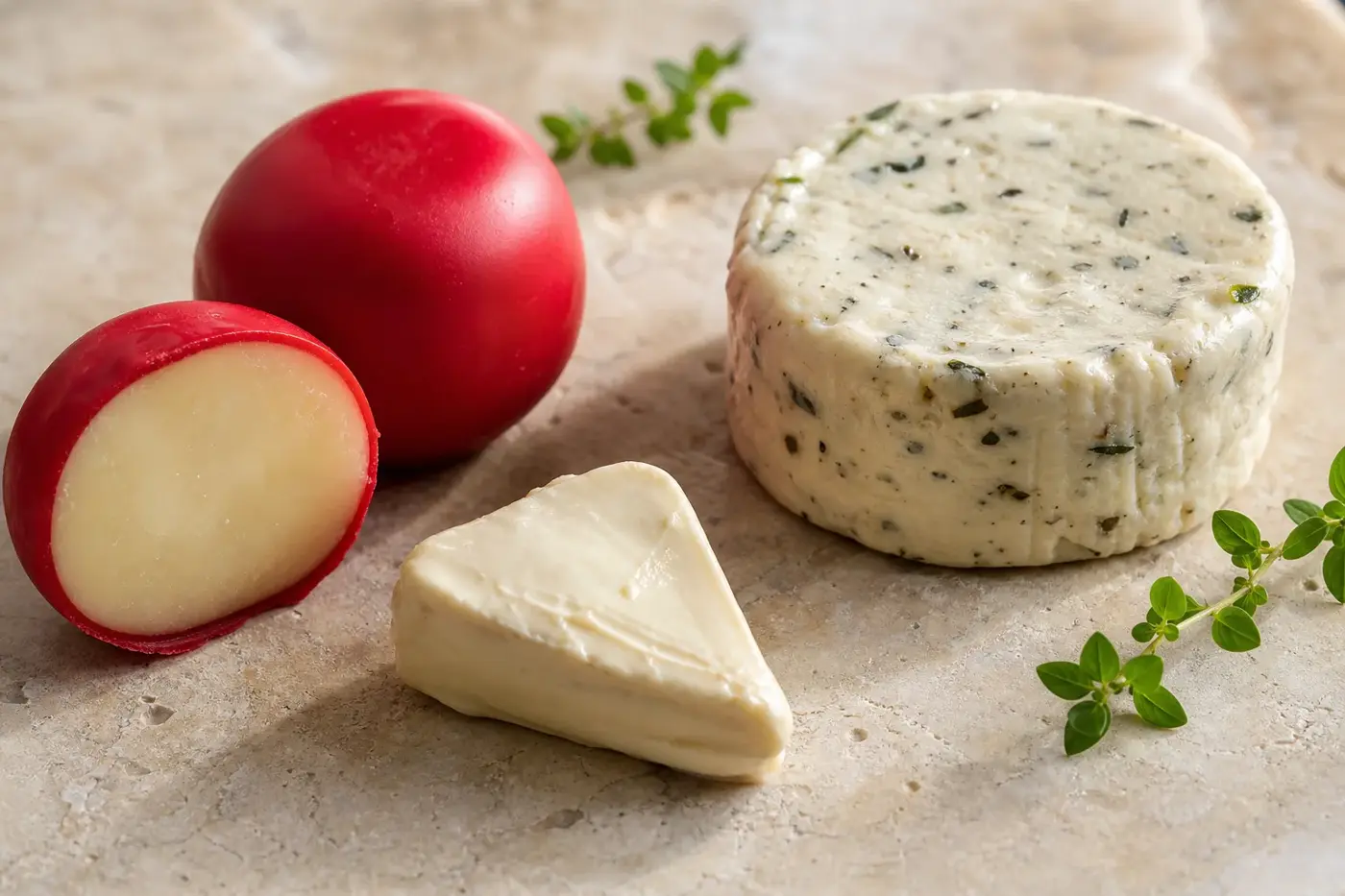
Frico is a cheese brand, not another name for FrieslandCampina or one particular cheese. Its company brand page lists Gouda, Edam, Chevrette and Beech Wood in the selection. This is also where you find the account tracing Frico’s cooperative beginnings to 1898. [3]
Friso takes you into a different part of the business. In FrieslandCampina’s 2026 reporting, it belongs to infant nutrition, while cheese reaches buyers through retail, professional and other commercial channels. A shared owner connects products with distinctly different purposes and customers. [1]
Sometimes the name you see belongs to the customer instead. FrieslandCampina describes Retail & Americas as supplying cheese and other dairy products through private labels and its own brands, alongside its cheese specialist Velder. The group can therefore be involved without FrieslandCampina being the most prominent name on your cheese packaging. [1]
From the milk collection to the finished cheese
Collect the milk, make the cheese, mature or otherwise prepare it, then supply the customer. That is the broad journey through the business. FrieslandCampina describes its activities as covering the production chain together with member farmers. Its professional portfolio shows you how finished cheeses suit different uses. [1][8]
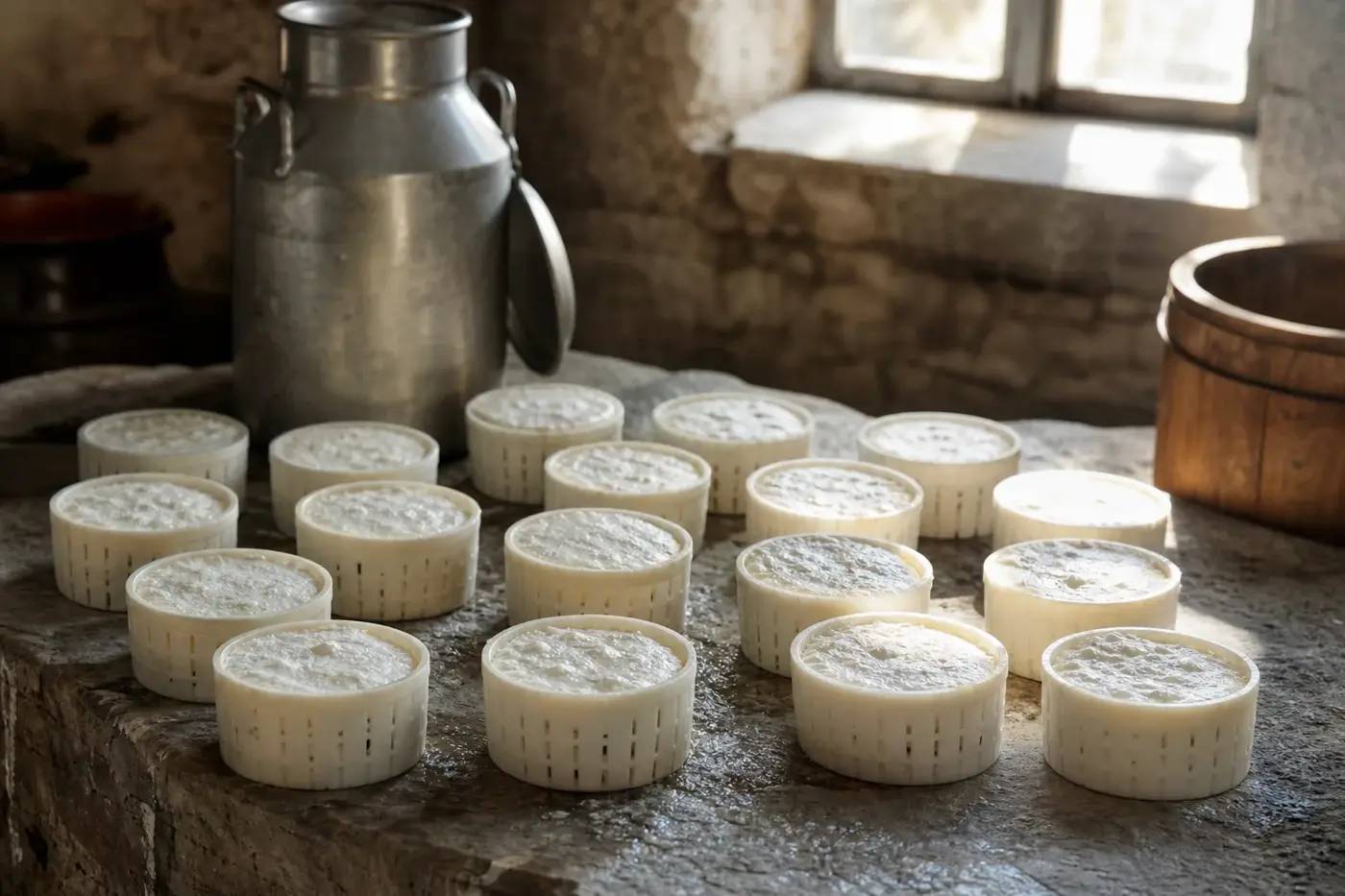
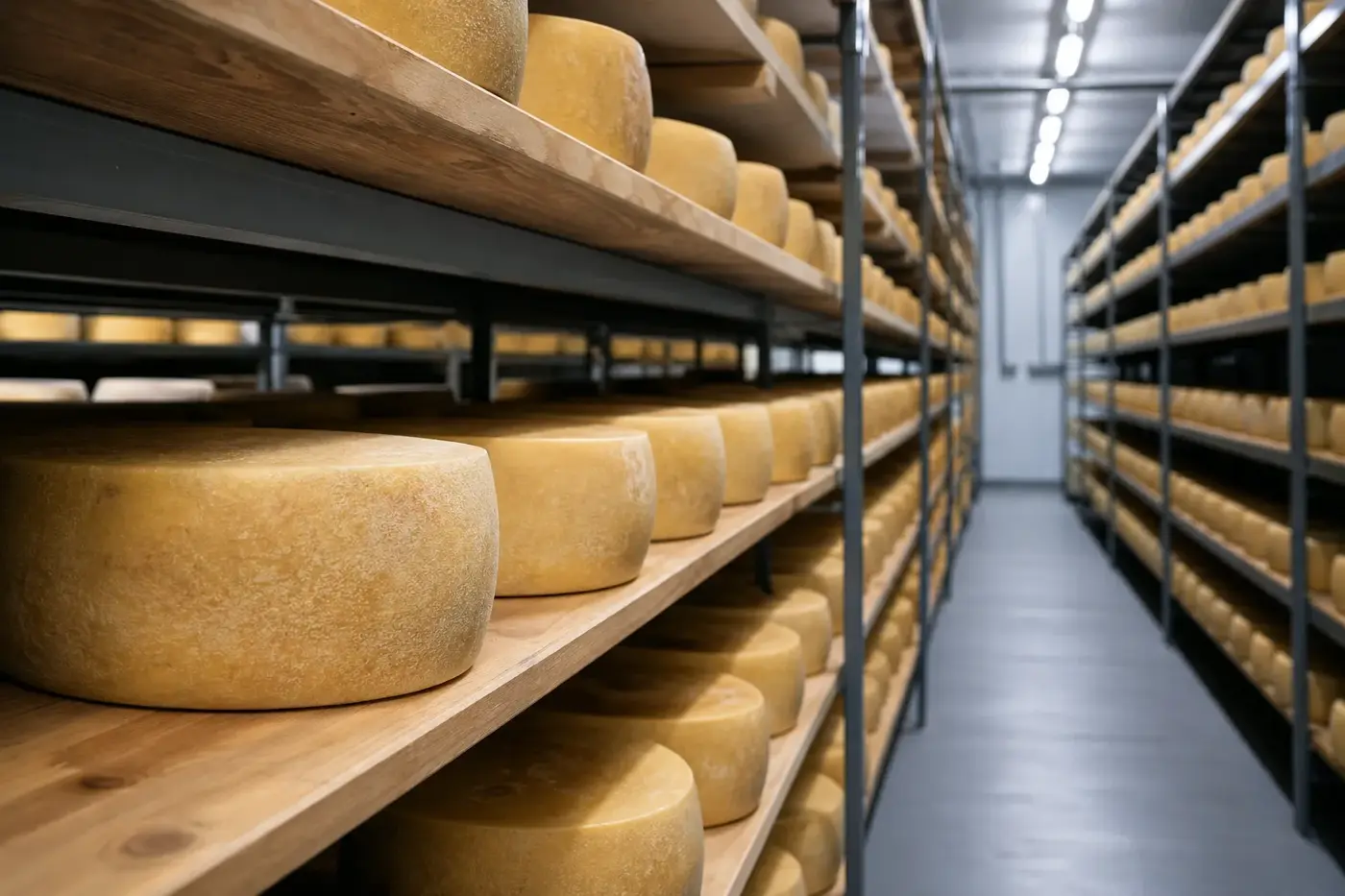
Within that journey comes the separation of milk into curd and whey. The curd becomes cheese; whey is the liquid fraction. The curd is formed and salted, and subsequent ripening develops the cheese’s characteristics. [9]
FrieslandCampina’s milk-processing explanation gives you this introductory account, rather than a recipe or a method for a particular factory. Its commercial range then makes maturation choices visible. Naturally ripened and foil-ripened Gouda appear as distinct approaches. They are not interchangeable descriptions of everything the group supplies. [8][9]
Distribution takes those products to retailers, catering businesses and industrial users. For more on curd formation and what follows, read how cheese is made. The practical thread is simple: member milk enters the business, and cheeses meeting different customer specifications leave it. [1][8]
Buying in Britain? Start with the pack
Pilgrim Foodservice’s catalogue offers you a British example: a Frico Edam ball with the Netherlands identified as its origin. That is a British foodservice listing, not evidence of a nationwide supermarket range. The catalogue also advises customers to check the actual packaging, because product information can change. [10]
Start with three questions when choosing a cheese. Which brand is it? What is the cheese called, and what does this pack say about origin? Ask the same questions whether you buy through a wholesaler or choose a retailer’s own label.
A British sales listing and a Dutch origin statement describe different stages of the same journey. There is no contradiction. Likewise, a seller’s or distributor’s address identifies a business, while an origin statement identifies where the cheese was made.
Use the actual pack, supported by the manufacturer’s current information, to settle those details. The guide to reading a cheese label helps you distinguish the product name, business information and origin wording.
Reading the welfare and environmental figures
Cow lifespan gives you a specific result to set beside FrieslandCampina’s ambition. Its 2030 objective is for 90% of member farms to exceed its 2018 reference average for cow lifespan. In 2025, 77% did so, compared with 78% in 2024. The company attributes the year’s shorter average lifespan mainly to bluetongue. [11]
Longevity is one welfare indicator, not the whole picture. It gives you something measurable to examine. Other welfare questions need measures and evidence of their own.
| What to look at | The ambition | Where things stand |
|---|---|---|
| Farms exceeding the 2018 cow-lifespan reference | 90% by 2030 | 77% in 2025; 78% in 2024. [11] |
| Current environmental reduction targets and corresponding progress | No figure available here | No corresponding progress figure available here. The company’s environmental commitments cannot yet be assessed. |
How environmental figures are calculated matters, too. The 2025 report says information on emissions from individual farms becomes available after publication. Reported dairy emissions therefore combine conversion factors from the previous annual report with current-year milk volumes. [11]
Keep that timing in mind as you read the figures. A useful assessment brings together a stated target, its baseline, the reporting boundary and a result calculated on the same basis. Company-wide reporting, a farm programme and a claim about an individual cheese each need evidence at their own level.
FrieslandCampina and Arla: compare like with like
Arla gives you a useful dated comparison. Both groups run farmer-owned dairy businesses and publish calendar-year accounts. Their reported revenues show the scale of their whole dairy operations, including activities beyond cheese. [2][12]
| Dairy group | Reporting year | Revenue across the group |
|---|---|---|
| FrieslandCampina | 2025 | 13.4 billion euros. [2] |
| Arla Foods | 2025 | 15.1 billion euros. [12] |
The milk totals need a little more care. FrieslandCampina recorded 9.268 billion kilograms supplied by members in 2025. Arla reported 14.3 billion kilograms of standardised milk, including owner milk and other milk. Those two totals do not allow a straightforward comparison. [4][12]
Cheese production needs its own equivalent measure. Revenue from drinks, ingredients and other dairy categories cannot tell you cheese output. Keep three questions separate: how big is the whole group, how much member milk does it receive, and how much finished cheese does it make?
Questions people ask
Who owns FrieslandCampina?
The operating company is wholly owned by Zuivelcoöperatie FrieslandCampina U.A. Dairy farmers collectively own and supervise the company through their membership of the cooperative.
Is Frico the same company as FrieslandCampina?
Frico is a cheese brand in FrieslandCampina’s portfolio, not another name for the company. Its selection includes Gouda, Edam, Chevrette and Beech Wood.
Where is FrieslandCampina based?
Its headquarters are in Amersfoort in the Netherlands. Its cooperative had members in the Netherlands, Belgium, Germany and France in the first half of 2026.
What happened when FrieslandCampina merged with Milcobel?
The merger took effect on 1 January 2026 and brought approximately 1,250 additional member dairy farmers. Two additional cooperative districts were created, with elected farmers forming district councils.
What kinds of cheese does FrieslandCampina make?
Its professional range includes naturally ripened and foil ripened Gouda, Edam and cheeses developed for particular food applications. Examples include rindless Gouda Gold for burgers and ready meals, and Royal Hollandia products for pizza.
Sources
[1] Royal FrieslandCampina N.V., Half-year Report Royal FrieslandCampina N.V. 2026, 2026. Sections on business groups, member milk and company profile.
Read at frieslandcampina.com
[2] FrieslandCampina, FrieslandCampina reports good 2025 results, 18 February 2026.
Read at frieslandcampina.com
[3] FrieslandCampina, Frico, undated corporate brand profile, retrieved November 2026.
Read at frieslandcampina.com
[4] Zuivelcoöperatie FrieslandCampina U.A., Jaarverslag Zuivelcoöperatie FrieslandCampina U.A. 2025, 2026. Cooperative figures, consolidated accounts and subsidiary information.
Read at frieslandcampina.com
[5] FrieslandCampina, Green light for FrieslandCampina and Milcobel merger, 16 December 2025.
Read at frieslandcampina.com
[6] Royal FrieslandCampina N.V., Annual report 2009, 2010. Merger process and conditions, including the Bleskensgraaf disposal.
Read at frieslandcampina.com
[7] European Commission, Case No COMP/M.5046, Friesland Foods/Campina, decision of 17 December 2008, public version.
Read at ec.europa.eu
[8] FrieslandCampina Professional, Cheese, undated product overview, retrieved November 2026.
Read at frieslandcampinaprofessional.com
[9] FrieslandCampina, From milk to dairy product: what is made from milk?, undated, retrieved November 2026.
Read at frieslandcampina.com
[10] Pilgrim Foodservice, Edam Ball Cheese, product Z3307, undated catalogue entry, retrieved November 2026.
Read at pilgrimfoods.co.uk
[11] Royal FrieslandCampina N.V., Annual Report Royal FrieslandCampina N.V. 2025, 2026. Animal welfare section and farm-emissions methodology note.
Read at frieslandcampina.com
[12] Arla Foods, Annual Report 2025, 2026. Performance overview and milk-volume definition.
Read at arla.com
This desk-researched article compares company accounts, contemporary merger records, published product information and a British distributor’s own catalogue.
Last checked: November 2026
Last checked November 2026.
The editors suggest you read next
Who Makes the World's Cheese? The Big Dairy Groups
You pick up Galbani at the cheese counter, then pause over Kerrygold.