Galotyri
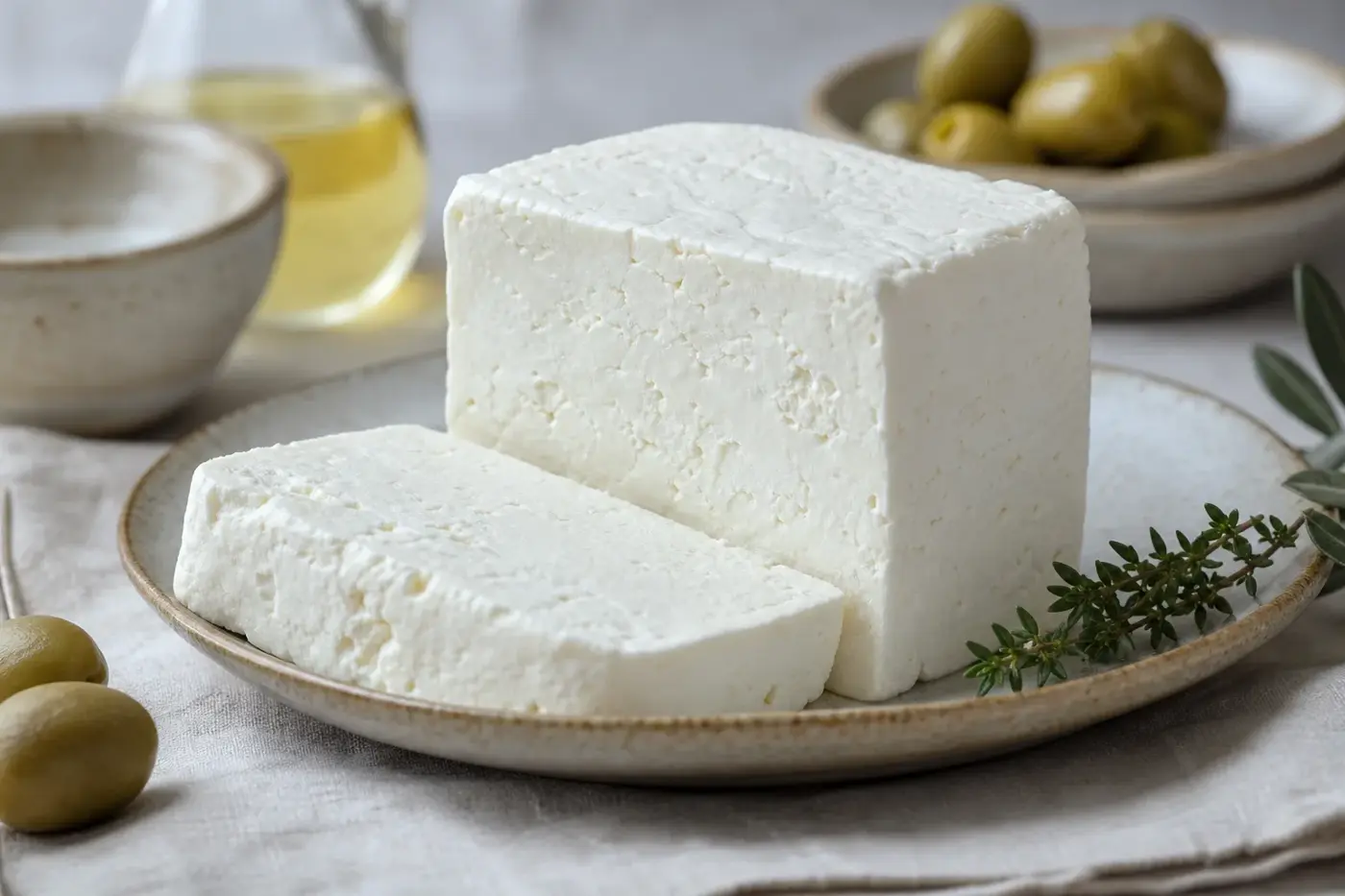
Lift your spoon and a soft, white mouthful of Galotyri comes with it.
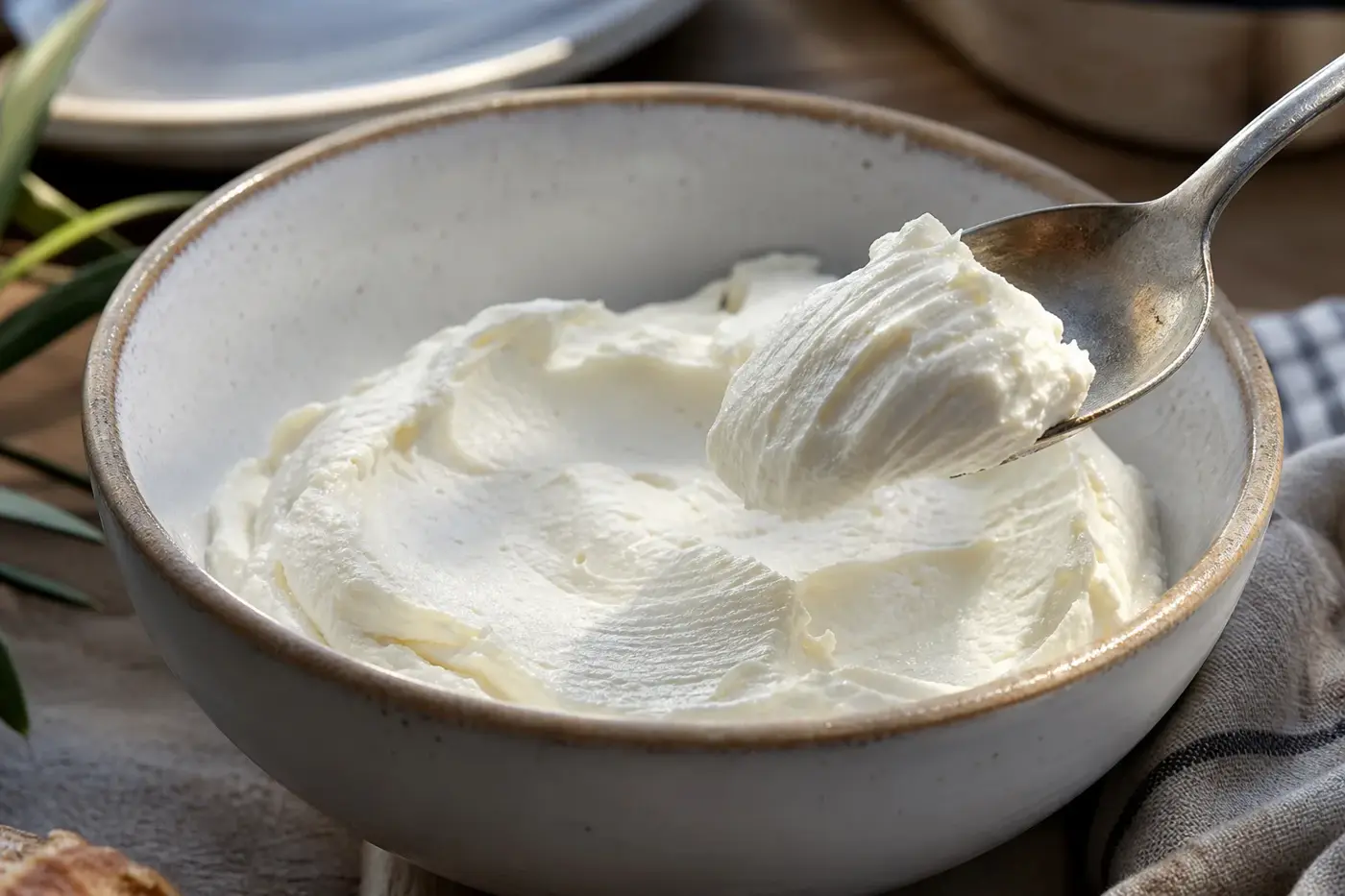
Lift your spoon and a soft, white mouthful of Galotyri comes with it. Any plans for neat slices can quietly retire. Rindless and pleasantly acidic, this sheep's or goats' milk cheese belongs to the pastoral life of Epirus and Thessaly, where cloth or skin bags and wooden casks held milk added from successive milkings. Today, its name has protected designation of origin (PDO) status in the EU and is also registered under Great Britain's GI scheme. [1,2,3,5]
Your first spoonful: Galotyri at a glance
| What to know | The detail |
|---|---|
| The registered name | Γαλοτύρι / Galotyri. [3] |
| The EU record | European Commission, eAmbrosia record EUGI00000013250. [8] |
| Protection in the EU | PDO, registered by Regulation (EC) No 1107/96 in 1996. [5] |
| Protection in Great Britain | PDO; registered, 31 December 2020. [3] |
| Where it comes from | Epirus and Thessaly, Greece. [1,2] |
| The milk | Sheep's, goats' or a mixture; no fixed proportions. [1,2] |
| What meets your spoon | White, rindless, spreadable, without holes. [2] |
| Composition limits | Moisture: maximum 75% of the cheese; fat in dry matter: minimum 40%. [2] |
| Maturation for raw milk cheese | At least two months below 8 °C under the Greek specification. [2] |
Follow the flocks into Epirus and Thessaly
Galotyri takes you into the sheep and goat country of northwestern and central mainland Greece. Its specification names Epirus and Thessaly as the production area and requires milk from those regions. The connection begins with the animals, traditionally reared there, adapted to local conditions and fed on the area's vegetation. [1,2]
Think flocks, grazing and the daily business of preserving milk, rather than great firm wheels. The University of Thessaly's LACTIMED report places regional dairying within a mixture of pastoral and more intensive farming systems. It describes Galotyri gathered in cloth or skin bags and wooden casks, with fresh additions from later milkings. [4]
Those containers give you a useful clue to the cheese. Its identity comes from soured milk and maturation, not a carefully moulded shape. [4]
Get to know the milk behind your spoonful
Galotyri can use sheep's milk, goats' milk or both. There is no compulsory sheep's milk majority and no maximum goat's milk percentage, but cow's milk is excluded. The Greek decision permits whole milk, raw or pasteurised, while its production description includes heating the milk to boiling. [1,2]
The milk's home matters as much as the animal it comes from. The specification links its character to local breeds and the vegetation they eat. [1]
Ask your cheesemonger for the milk blend and the producer's name. That gives you a starting point for returning to a favourite maker or exploring another blend. A protected name identifies the style, not a promise that every tub tastes identical; for milk treatment differences, see raw milk, thermised and pasteurised cheese.
Let acidity take its time
Acidity does the leading work here. The published PDO method starts with heated milk, then allows acidity to develop before drainage and maturation. Rennet, an enzyme preparation that helps milk coagulate, is optional; the Greek decision also permits starter bacteria, cultures used to guide fermentation. [1,2]
After an initial rest, salt goes in. The milk is stirred intermittently as it becomes more acidic. The soured mixture then moves into containers and gradually loses moisture during maturation. [1,2]
The traditional account describes bags or barrels filled over successive milkings, then closed and moved into cool storage. Maturation must happen within the defined area. Place remains part of the process right through to this stage. [1,2,4]
For raw milk Galotyri, Article 3 of the Greek decision requires at least two months of maturation below 8 °C. The English summary attached to the EU register gives 8 °C and uses the term untreated milk. That two month minimum applies specifically to this milk condition, not to every Galotyri. [1,2]
Meet the refreshing tang on your spoon
Picture that soft spoonful again: pure white, without rind or holes. The Greek specification describes Galotyri as spreadable, with a pleasantly acidic, refreshing flavour and aroma. You are tasting its tang, not the flavour of a developed rind. [2,4]
The composition figures deserve a moment of explanation. Moisture may make up a maximum of 75% of the whole cheese, while fat must account for at least 40% of its dry matter. Dry matter is what remains when the water is removed. [2]
These are permitted composition limits, not nutrition figures for your particular cheese. For those, turn to the label on the one you have chosen. [2]
Give two tubs a proper tasting
Different flocks, optional rennet or cultures, developing acidity and gradual drainage all help shape the finished cheese. The production account allows differences in consistency between batches while keeping a recognisable style. The LACTIMED report also treats acid development and natural drainage as separate stages. [1,2,4]
If you taste two Galotyris, give texture and flavour their own moments. Is one smoother or firmer? Is the acidity gentler or more pronounced?
You will learn more that way than by making the word creamy do every job at once. Note the maker, milk blend and purchase date. Your next cheese will then have a clear point of comparison.
Galotyri, Feta or Manouri? Choose for your plate
Similar looks can conceal very different cheeses. Galotyri, Feta and Manouri start with different materials and develop different structures. Here is what you can expect on your plate; the Feta guide explores that cheese's own production and protection rules. [2,4]
| Cheese | What makes it different | What to expect |
|---|---|---|
| Galotyri | Acidified milk cheese | Soft and spreadable. [1,4] |
| Feta | Curd cheese matured in brine | Firm enough to cut or crumble. [4] |
| Manouri | Whey cheese enriched with milk or cream | Soft but cohesive; usually cylindrical. [2] |
Manouri's specification describes a sweet, pleasant flavour, a contrast to Galotyri's acidity. Think spoonfuls of Galotyri, pieces or crumbles of Feta, and Manouri's cohesive texture. Choose for the role you want the cheese to play, rather than swapping one for another by weight alone. [2,4]
Give that tang some good company
Start with bread and a spoonful of cheese on its own. Taste the acidity before building your plate, then look for contrasting textures rather than piling on more sharp ingredients. These suggestions draw on the spreadable texture and tart character described in the specification and the LACTIMED report. [1,4]
- Spread it on toast. Keep plain bread alongside so you can return to the cheese itself.
- Spoon it beside cucumber, ripe tomatoes or roasted peppers. Add olive oil and herbs before deciding whether it needs lemon or vinegar.
- Put a small spoonful alongside cooked beans or lentils. Keep it as an accompaniment rather than stirring away all its texture.
- Try it beside roasted aubergine or courgettes. Use bread to gather the vegetables and cheese together.
Serve a small portion and refrigerate the rest, following the storage guidance below. Taste before adding salt, especially when olives or other salty accompaniments are already sharing your table.
Buying Galotyri: know what the PDO promises
The protected name ties Galotyri to its specified Greek regions and method. EU registration came through Commission Regulation (EC) No 1107/96, adopted on 12 June 1996 and published on 21 June 1996. Great Britain's register separately records PDO registration on 31 December 2020; these are distinct territorial records. [3,5]
Look for the registered name, PDO identification, producer or packer, and clear storage instructions. If you are buying from an open container, ask to see the original packaging. Pay particular attention to milk treatment, date marking and instructions after opening. [1,2]
The official specification also provides for production and control information on the pack. For a practical checklist, read how to read a cheese label. To separate origin protection from branding, see protected names explained. [1,2]
Keep your label and mind the fridge
Let the packaging guide your storage temperature and what happens after opening, including any shorter limit once the seal is broken. Keep the label with the cheese so you have the date and batch details to hand. Buy an amount you expect to finish within those instructions, rather than relying on a general shelf life for Galotyri. [6]
For England, Wales and Northern Ireland, the Food Standards Agency advises keeping your home fridge at 5 °C or below and following the pack's storage instructions. Take out a portion to serve rather than leaving the whole container on the table. [6]
Need more practical storage guidance? See how to store cheese at home.
This page summarises published guidance from the official sources it cites. It is not medical advice. Guidance differs between countries and changes over time, so check the current source for where you live, and ask your doctor, midwife, pharmacist or dietitian about your own circumstances.
Before your first taste: milk treatment and safety
Check whether your cheese is made with pasteurised milk. If the label is unclear, ask the seller or producer. For pregnancy in the UK, consult the NHS guidance on foods to avoid in pregnancy (November 2026), and read its full cheese categories and exceptions. [7]
If you have questions about pregnancy or another personal food safety concern, ask your doctor, midwife or dietitian. Use the current official advice where you live, consulting the NHS guidance directly for its full categories and exceptions where applicable. [7]
Questions people ask
Where does Galotyri come from?
Galotyri comes from Epirus and Thessaly in Greece. Its specification requires the milk to come from those regions.
What milk is used to make Galotyri?
It can be made from sheep's milk, goats' milk or a mixture of the two, with no fixed proportions. Cow's milk is excluded.
What does Galotyri taste like?
Galotyri has a pleasantly acidic, refreshing flavour and aroma. It is white, rindless and soft enough to spread or spoon.
How long is Galotyri matured?
Under the Greek specification, raw milk Galotyri must mature for at least two months below 8 °C. That minimum applies specifically to raw milk Galotyri, not to every Galotyri.
How should I store Galotyri?
For England, Wales and Northern Ireland, the Food Standards Agency advises keeping a home fridge at 5 °C or below and following the pack's storage instructions. Consult its guidance and check the pack for any shorter limit after opening.
Sources
-
Greek Ministry of Agriculture, European Commission register attachment. Galotyri cheese PDO: summary of the specifications laid down in Ministerial Decision 313031/11.1.94. Historical registration dossier, undated English summary, two pages. Official register attachment.
-
Hellenic Republic, Ministry of Agriculture. Ministerial Decision 313031: recognition of the protected designation of origin of Galotyri cheese. Government Gazette, Series B, No 8, 11 January 1994, printed pages 60 to 61, Articles 1 to 5. Manouri comparison: Decision 313028 in the same issue, printed pages 55 to 56. Official Greek gazette scan.
-
Department for Environment, Food & Rural Affairs. Γαλοτύρι / Galotyri. Great Britain protected food names register, published 4 January 2021; live entry checked November 2026. Register entry.
-
University of Thessaly and Mediterranean Agronomic Institute of Montpellier, LACTIMED. Developing the typical dairy products of Thessaly: diagnosis and local strategy. January 2014. Regional farming discussion and Appendix 1, particularly the Galotyri account on printed pages 73 to 74. Research report.
-
European Commission. Commission Regulation (EC) No 1107/96 of 12 June 1996. Official Journal L 148, 21 June 1996, registration regulation and annex, Greek edition supplied by the Greek agriculture ministry. Official Journal scan.
-
Food Standards Agency. How to chill, freeze and defrost food safely. Published 18 December 2017; current online text checked November 2026. Applies to England, Northern Ireland and Wales. Official storage guidance.
-
NHS. Foods to avoid in pregnancy. Current online guidance, cheese, milk and other dairy section, checked November 2026. Official pregnancy guidance.
-
European Commission. eAmbrosia geographical indications register: record EUGI00000013250. Record address retrieved November 2026; the application returned no readable status text during this research session. Official record.
Researched through official registration documents, the Greek production decision, a university regional study and UK public guidance; serving ideas are editorial suggestions.
Last checked: November 2026
Last checked November 2026.
The editors suggest you read next