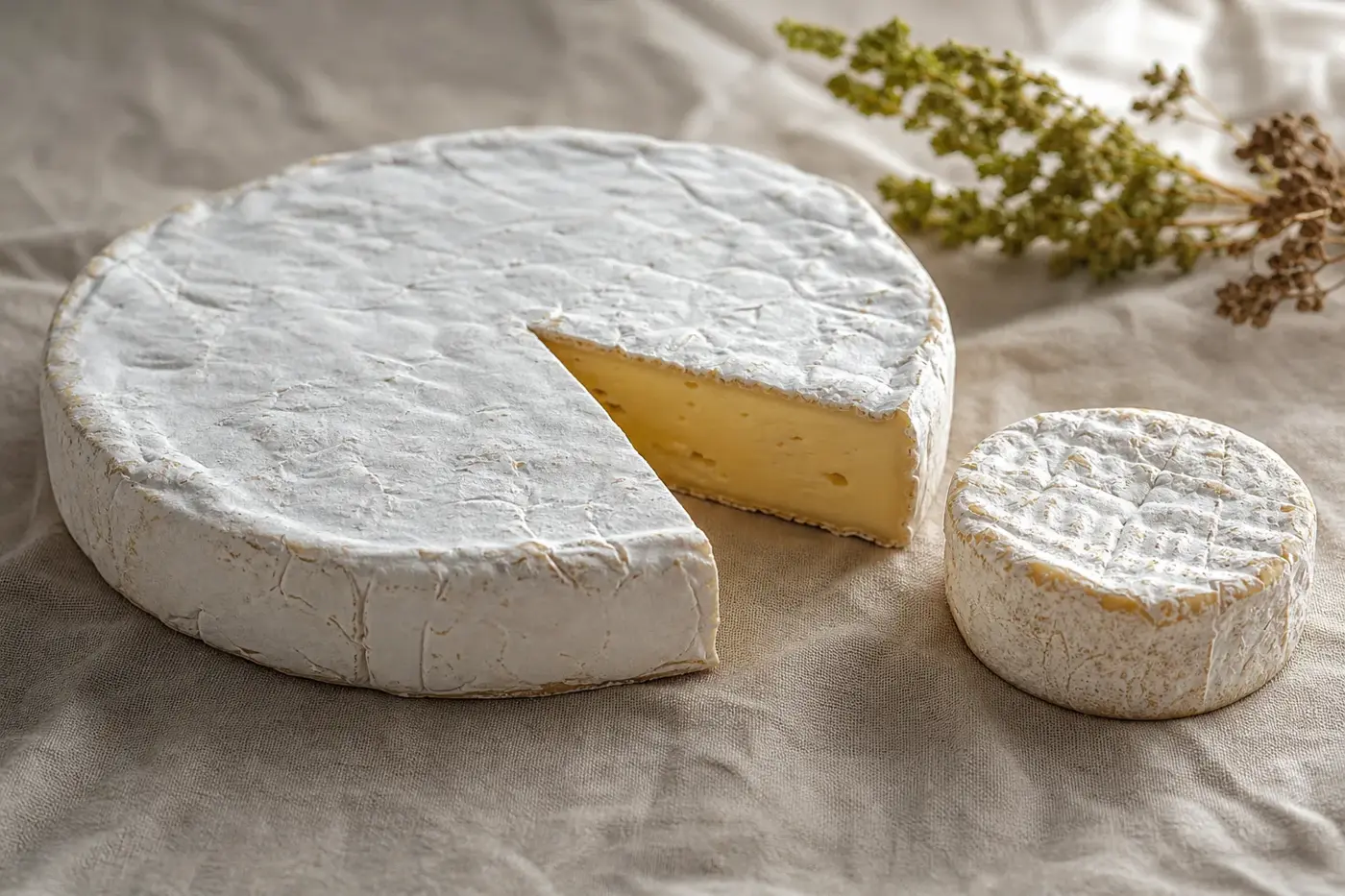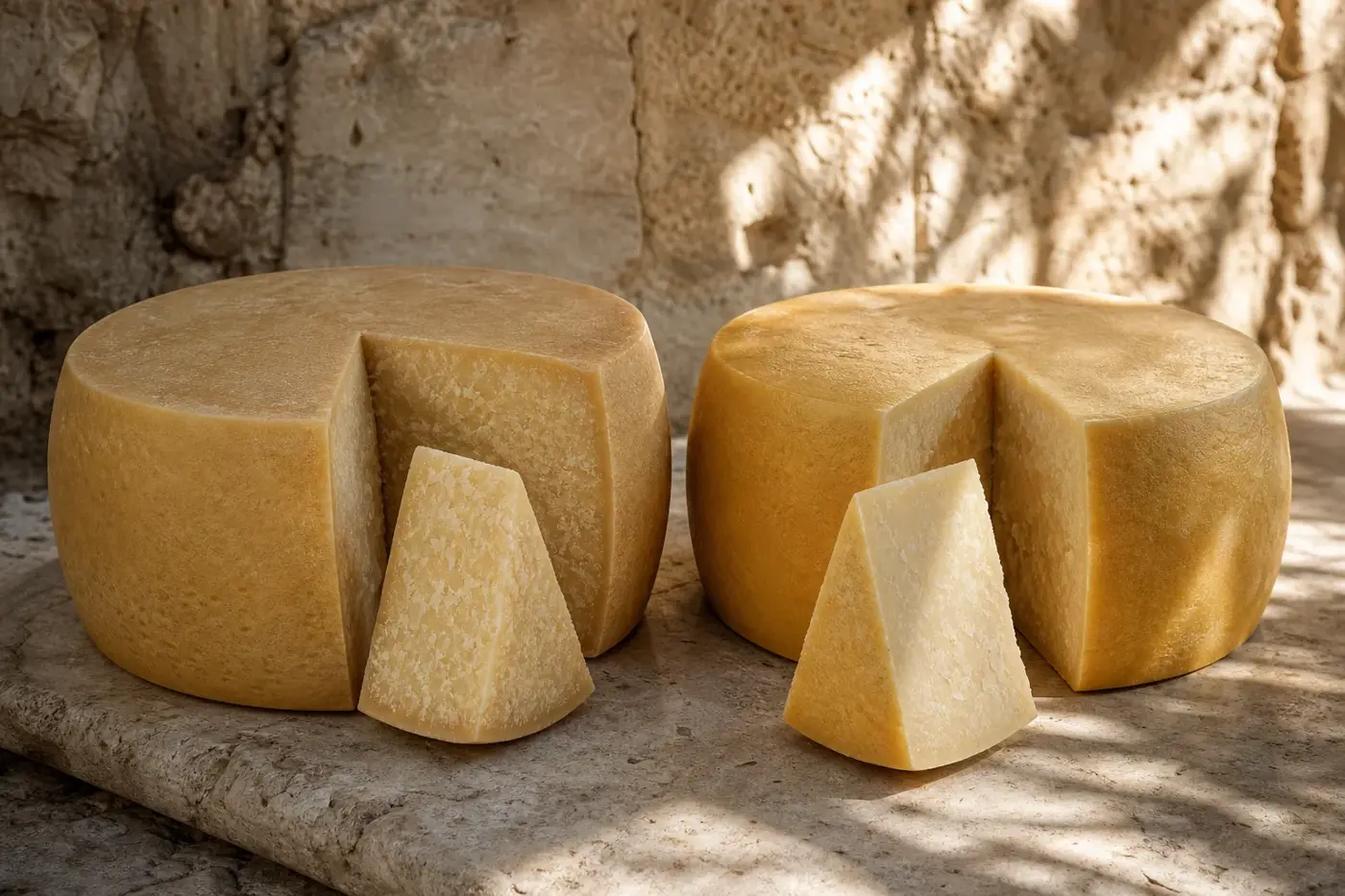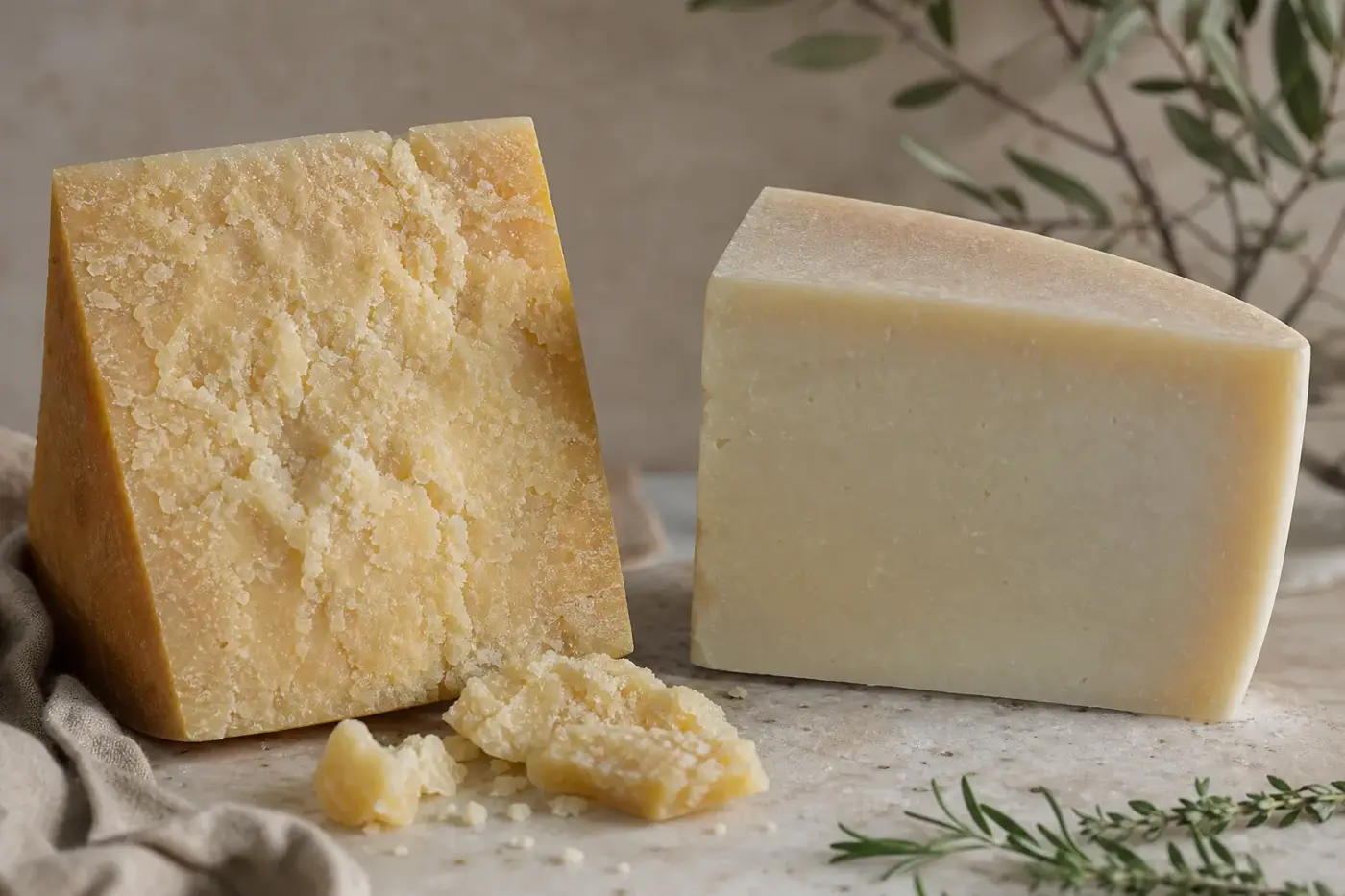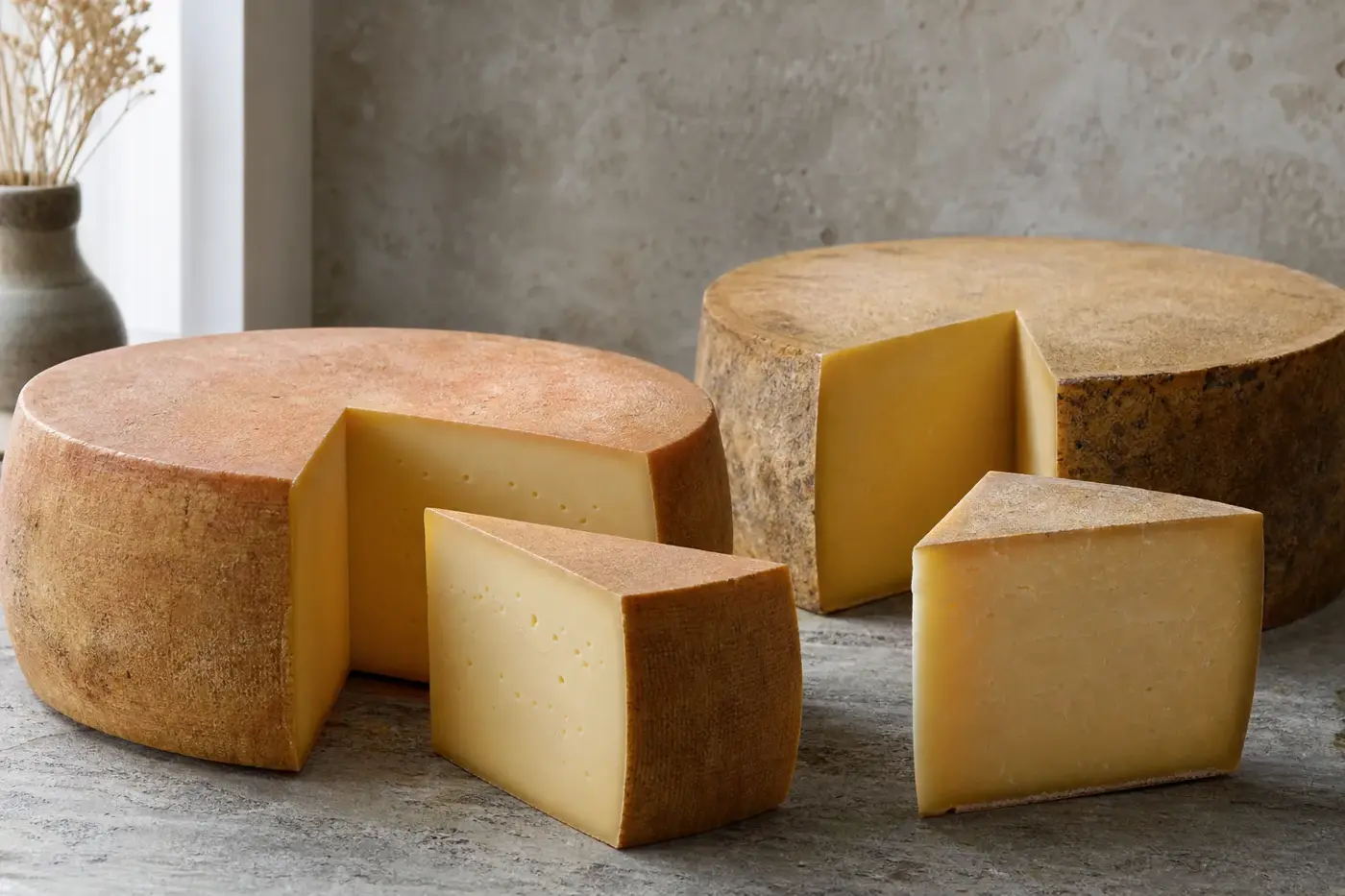
A wheel turns. A brush passes over the rind with salt water. In a Gruyère cellar, patient work continues long after the cheese leaves the vat, helping shape the flavour that eventually reaches your plate.[6]
Across the border, Comté begins in the village dairies of France’s Jura massif before its own substantial spell of maturation.[2] These neighbouring mountain traditions have much in common. Put their cheeses side by side, though, and you have an excellent excuse to linger.
One belongs to western Switzerland, the other to the French Jura. Both are firm, raw cow’s milk cheeses made from cooked, pressed curd, equally at home on your cheeseboard or in dinner.[1][2][3] Often, the most useful difference is the age and character of your wedge, not simply its name.
Get to know your two wedges
Here, you are comparing Swiss Le Gruyère AOP with French Comté AOP. AOP is the French abbreviation for protected designation of origin, or PDO: it ties a product to a defined place and production specification. The Swiss and French records cited here provide the November 2026 reference point.[1][2]
| A little background | Le Gruyère AOP | Comté AOP |
|---|---|---|
| Where it comes from | Defined area of western Switzerland.[3] | Defined area of the French Jura massif.[2] |
| The milk in the vat | Raw cow’s milk.[3][4] | Raw cow’s milk.[5] |
| Specified cattle breeds | No breed detail given here. | Montbéliarde, French Simmental, or certified crosses between them.[5] |
| Cheese family | Cooked, pressed.[3] | Cooked, pressed.[5] |
| Minimum cellar time | Five months.[6] | 120 days under the specification published in January 2026.[5] |
| Ages you might find at the counter | Classic: six to nine months. Réserve: from ten months, as described by the interprofession.[6] | Maturation can extend to 18 months or longer, according to INAO.[2] |
You can explore each cheese in Le Gruyère and Comté. If you are choosing between them today, begin with what you fancy eating.
Follow the cheese back to the mountains
Gruyère’s Swiss home reaches well beyond the town that lends the cheese its familiar name. Its specification includes Fribourg, Vaud, Neuchâtel and Jura, defined parts of Berne, and specifically listed dairies and milk collection areas elsewhere. “Western Switzerland” gets you into the neighbourhood; the specification draws the precise boundary.[3]
Comté belongs to the French Jura massif, where village dairies called fruitières bring milk together for cheesemaking. INAO describes a landscape of plains and plateaux with pronounced seasons. The dairies’ work, followed by maturation, helps explain why two pieces of Comté can offer you noticeably different experiences.[2][7]
Gruyère appears in Switzerland’s federal AOP register, while INAO identifies Comté as an AOP cheese in France under the European designation system.[1][2] Each record belongs to its own jurisdiction. When you buy, look for the full designation and origin, not just a familiar name; protected cheese names explains the distinction.
Meet the cows behind the cheese
Before you have a wheel, you need a dairy herd to feed. Forage connects both cheeses to their farming landscapes, although the detailed rules differ. Gruyère’s specification requires at least 70% of the dairy cattle’s ration, calculated as dry matter, to come from the farm’s own forage area.[3]
That specification also prohibits preparing and feeding silage, subject to its stated provisions.[3] These are precise farming requirements. They tell you more than a general promise about mountain milk.
For Comté, the specified cattle are Montbéliarde and French Simmental, including certified crosses between them. Its French specification sets separate requirements for the whole dairy herd and for milk producing cows.[5] To compare those with Gruyère’s feeding and forage rules in detail, turn to the relevant passages in each specification.
Grazing and hay sit at the heart of Comté’s production system, according to its interprofessional body. It also says fermented feeds are excluded.[8] Season, available feed and the milk arriving at the dairy are meaningfully connected.
Do not expect either cheese to taste identical throughout the year. Comté’s interprofessional body names season, geographical origin, cheesemaking and maturation as influences on the finished cheese.[7] Ask about the maker, production season and maturation history alongside age: your wedge has more than one story to tell.
From the warm vat to the patient cellar
“Cooked” might make you pause when the milk is raw. Here, it means heating the curd during cheesemaking, not cooking the finished cheese. Curd is the coagulated milk solids; whey is the liquid that separates from them.[3][5]
Both cheeses begin with raw milk. “Cooked curd” and “raw milk” describe different stages of the same cheese, so there is no contradiction on the label.[3][5]
For Comté, the current specification sets a curd and whey heating range of 53 to 57 °C, with stirring required after heating. The curds are then formed and pressed.[5] These are controlled cheesemaking steps, not temperatures for you to follow at the hob.
Gruyère’s interprofession describes newly formed wheels being pressed, then given a salt bath before cellar maturation. Regular turning and brushing with salt water continue as the wheels mature.[6] Finishing a wheel is clearly no invitation to put your feet up.
That surface care helps develop the rind. The interprofession calls its protective surface layer a morge, or smear.[6] It is a useful reminder that much of cheesemaking happens through repeated handling, long after the vat.
For Comté, INAO identifies maturation as a substantial stage after production at the fruitière.[2] You can find its specific rind care requirements in the current specification. The specialist responsible for maturing cheese is an affineur.
Take a closer look at the cut face
Both cheeses mature as wheels before reaching you in cut portions.[2][6] If you want the full detail on permitted dimensions, rinds, interiors and textures, turn to their specifications.
Comté’s specification describes an ivory to yellow paste, the cheesemaking word for the interior. Small openings are allowed, reaching the size of a small cherry.[5] A few holes tell you less than the overall condition and character of the piece.
A deeper yellow is not a dependable guide to maturity, either. Comté’s interprofessional body connects seasonal differences with changes in the cows’ diet, while maturation changes flavour and texture.[7] Ask about production season and age rather than leaving the decision to colour.
There is more to taste than “creamy” and “nutty”
“Gruyère is creamy, Comté is nutty” sounds convenient. It is also far too tidy for cheeses with this much overlap. Gruyère’s interprofession describes Classic, aged six to nine months, as soft and refined in taste, while Réserve, from ten months, is fuller in flavour and more aromatic.[6]
Those industry tasting descriptions give you a useful starting point for finding the character you enjoy. They are prompts, not instructions. Your taste buds are under no obligation to recite the brochure.
Comté’s interprofessional body offers a broader flavour vocabulary. Younger cheese can have a lactic character and notes of milk caramel; a fruity example might suggest citrus, walnuts or hazelnuts.[9] Try those descriptions as prompts, then pay attention to what you taste.
Longer maturation can change texture as well as the balance of flavours. Comté’s published guidance stresses the combined influence of milk season, origin, manufacture and maturation. It also rejects the idea that older automatically means better.[7][9]
For your cheeseboard, choose the character you enjoy. For cooking, consider how much of that character you want in the finished dish. A quieter cheese can support mushrooms or leeks; a more assertive one can take the lead.
Think of this as choosing for your meal, not ranking the two designations. The best fit depends on what you want the cheese to do.
Give your wedge a job in the kitchen
Both interprofessional bodies publish recipes using their cheeses, reflecting their established places in the kitchen.[10][11] Those published uses are the starting point for the advice below. Begin with your dish, then choose your wedge.
Fondue: either cheese can supply the cheese component in a recipe written for it. If you substitute, match the original ingredient’s maturity and texture as closely as possible. Follow the recipe’s instructions for liquid and heat.
Gratins: grate either cheese to distribute it across the surface. Choose a more aromatic wedge when you want a pronounced cheese flavour. A gentler one can simply accompany the vegetables or potatoes.
Sandwiches: flexible, even slices make filling your bread straightforward. If your wedge breaks rather than slicing neatly, grate it instead.
Sauces: choose a flavour you want throughout the whole sauce, not merely an intensity you enjoy in a small bite. Grating helps you add the cheese progressively.
Age matters in all four uses. A more mature cheese may bring a more pronounced flavour and shift the balance of your dish. Ask your cheesemonger about that particular wedge’s texture and cooking behaviour: designation alone cannot tell you which melts better.
Make a cheese swap that suits dinner
For an everyday gratin or toasted sandwich, start with the same weight of replacement cheese. Match a relatively gentle example with another gentle example. The name alone will not tell you whether they are a good match.
Taste before adding more seasoning. If your replacement is more forceful, consider how it sits with the other ingredients. Changing the cheese can change the emphasis of the whole dish.
For fondue and other preparations centred on cheese, use a recipe naming the cheese you have wherever possible.[10][11] Swapping is easier when cheese is one component of dinner. It takes more care when its melting behaviour determines the entire dish.
Taste them together, then talk to your cheesemonger
Keep the accompaniments simple when you compare the cheeses. Plain bread, apple or pear, and a few walnuts give you a suggested starting point. Taste each cheese alone, then add one accompaniment at a time; water gives you an alcohol-free drink alongside.
Choose contrasting ages if you want to explore maturation. Pick similar ages if you would rather focus on differences between the cheeses. Comté’s published guidance also encourages you to look beyond age to season, dairy work and cellar treatment.[7][9]
At the counter, ask three questions: how old is it, what is this particular wheel like, and would you recommend it for my dish? Request a taste where available. With packaged cheese, use the origin, designation and any stated maturation information to narrow your choice.
Care for your cheese and check the rennet
Refrigerate both cheeses and follow the pack’s storage instructions. The UK Food Standards Agency advises keeping your home fridge at 5 °C or below.[12] Consult its current guidance and storing cheese at home for more detail.
Rewrap cut cheese carefully after use. Keep the label so you have its identity and instructions to hand. Buy a quantity that suits your planned meals, rather than relying on a general shelf-life estimate.
If you are vegetarian, check the coagulant, the ingredient that sets the milk. Comté’s specification identifies bovine rennet, which is animal derived and unsuitable for vegetarians.[5] For a particular Gruyère product, ask the producer or cheesemonger for confirmation; animal and other rennets explains how to interpret the answer.
General information only, not medical advice: follow the official guidance where you live.
Questions people ask
What is the difference between Gruyère and Comté?
Le Gruyère AOP comes from a defined area of western Switzerland, while Comté AOP comes from the French Jura massif. Both are firm, raw cow’s milk cheeses made from cooked, pressed curd.
Are Gruyère and Comté made with raw milk?
Yes, both begin with raw cow’s milk. The term cooked curd refers to heating the curd during cheesemaking, not to cooking the finished cheese.
How long are Gruyère and Comté aged?
Gruyère must mature for at least five months, while Comté must mature for at least 120 days. Gruyère Classic is aged for six to nine months, Réserve from ten months, and Comté maturation can extend to 18 months or longer.
Can I substitute Gruyère for Comté?
For a gratin or toasted sandwich, start with the same weight and try to match the character of the original cheese. For fondue, use a recipe naming the cheese you have wherever possible.
Are Gruyère and Comté vegetarian?
Comté’s specification identifies bovine rennet, which is animal derived and unsuitable for vegetarians. For a particular Gruyère product, ask the producer or cheesemonger to confirm the coagulant.
Sources
- Swiss Federal Office for Agriculture, AOP / IGP, appellations d’origine et indications géographiques, Gruyère register entry, current online record, accessed November 2026.
- Institut national de l’origine et de la qualité, Comté, current product and designation record, including links to the specification amendment published in January 2026, accessed November 2026.
- Swiss Federal Office for Agriculture, Cahier des charges Gruyère, registration decision of 6 July 2001, amended by decisions through 14 December 2015; official register-linked edition, accessed November 2026.
- Swiss PDO-PGI Association, Le Gruyère AOP, current industry association product description, accessed November 2026.
- French Ministry of Agriculture, Cahier des charges de l’appellation d’origine protégée « Comté », text approved on 19 November 2025 and published in the official bulletin of 8 January 2026, accessed November 2026.
- Interprofession du Gruyère, The production of Gruyère AOP, undated industry production and maturation account, accessed November 2026.
- Comité Interprofessionnel de Gestion du Comté, Questions de goût, undated industry explanation of flavour variation, accessed November 2026.
- Comité Interprofessionnel de Gestion du Comté, Un cahier des charges exigeant, current industry explanation of production requirements, accessed November 2026.
- Comité Interprofessionnel de Gestion du Comté, Le Comté, plus il est vieux, meilleur il est ?, undated industry guidance on maturation and flavour, accessed November 2026.
- Interprofession du Gruyère, Recipes, current industry recipe collection, accessed November 2026.
- Comité Interprofessionnel de Gestion du Comté, Recettes, current industry recipe collection, accessed November 2026.
- Food Standards Agency, How to chill, freeze and defrost food safely, current GOV.UK publication landing page, accessed November 2026.
Researched through official designation documents and attributed industry guidance, with practical recommendations presented as desk-research synthesis rather than tested cooking or recorded tasting.
Last checked: November 2026
Last checked November 2026.
The editors suggest you read next
Cheddar vs Gouda: Taste, Texture and How to Use Each
Bite into a long-aged Gouda and, beneath your teeth, something crunches.