Handkäse and Harzer
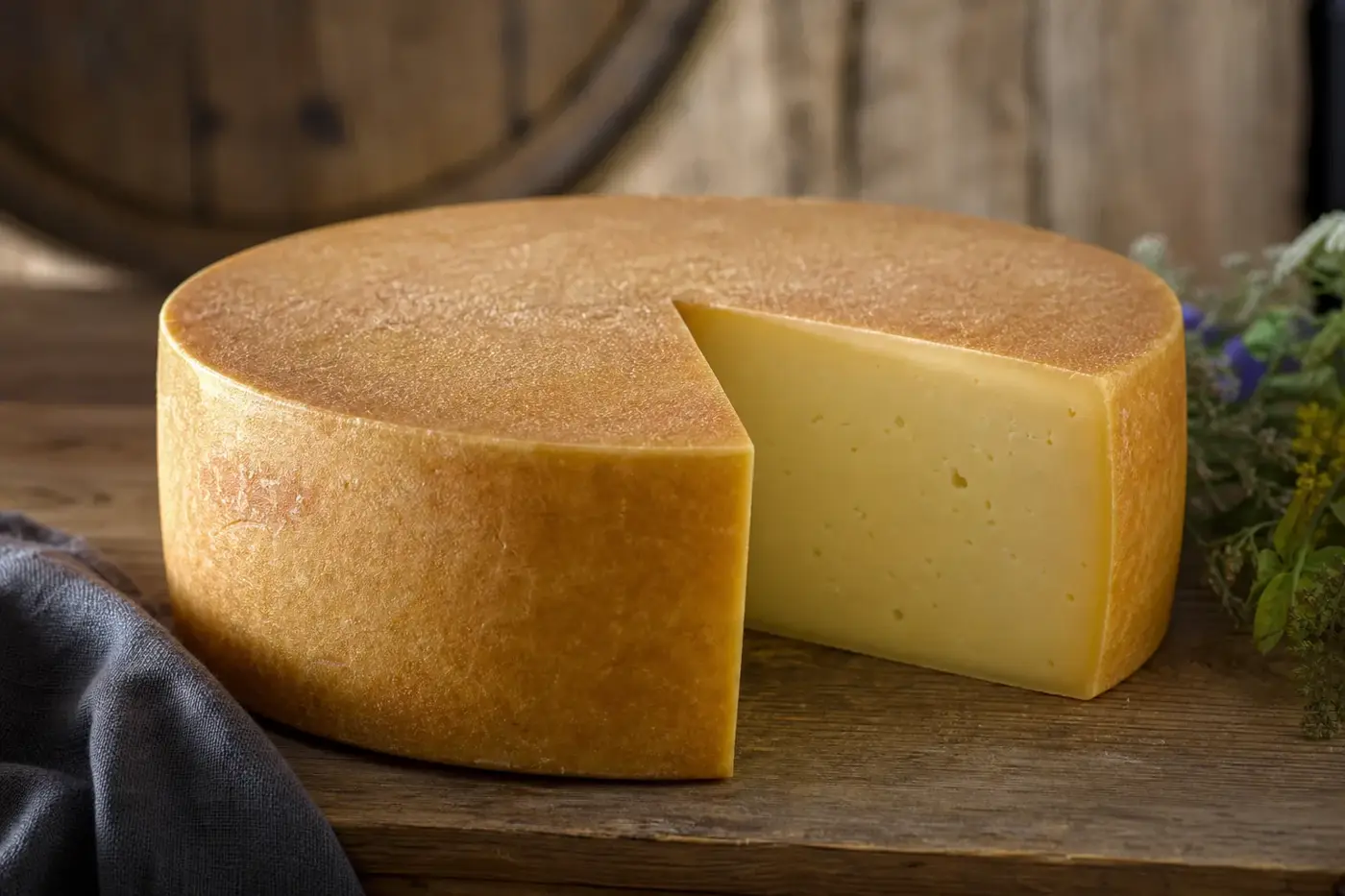
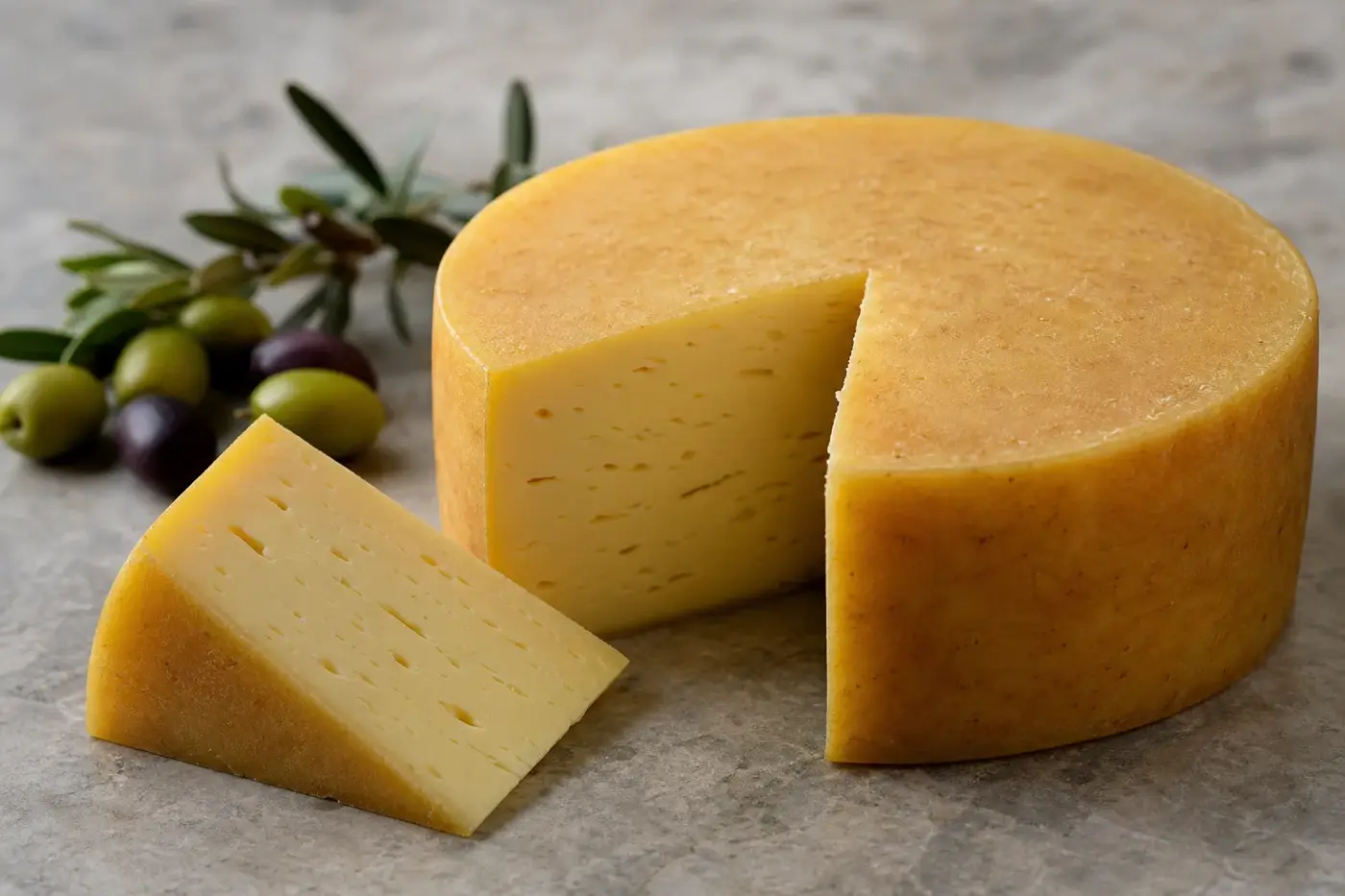
Your knife cuts through a fully mature Handkäse or Harzer, revealing a yellow, slightly translucent interior.
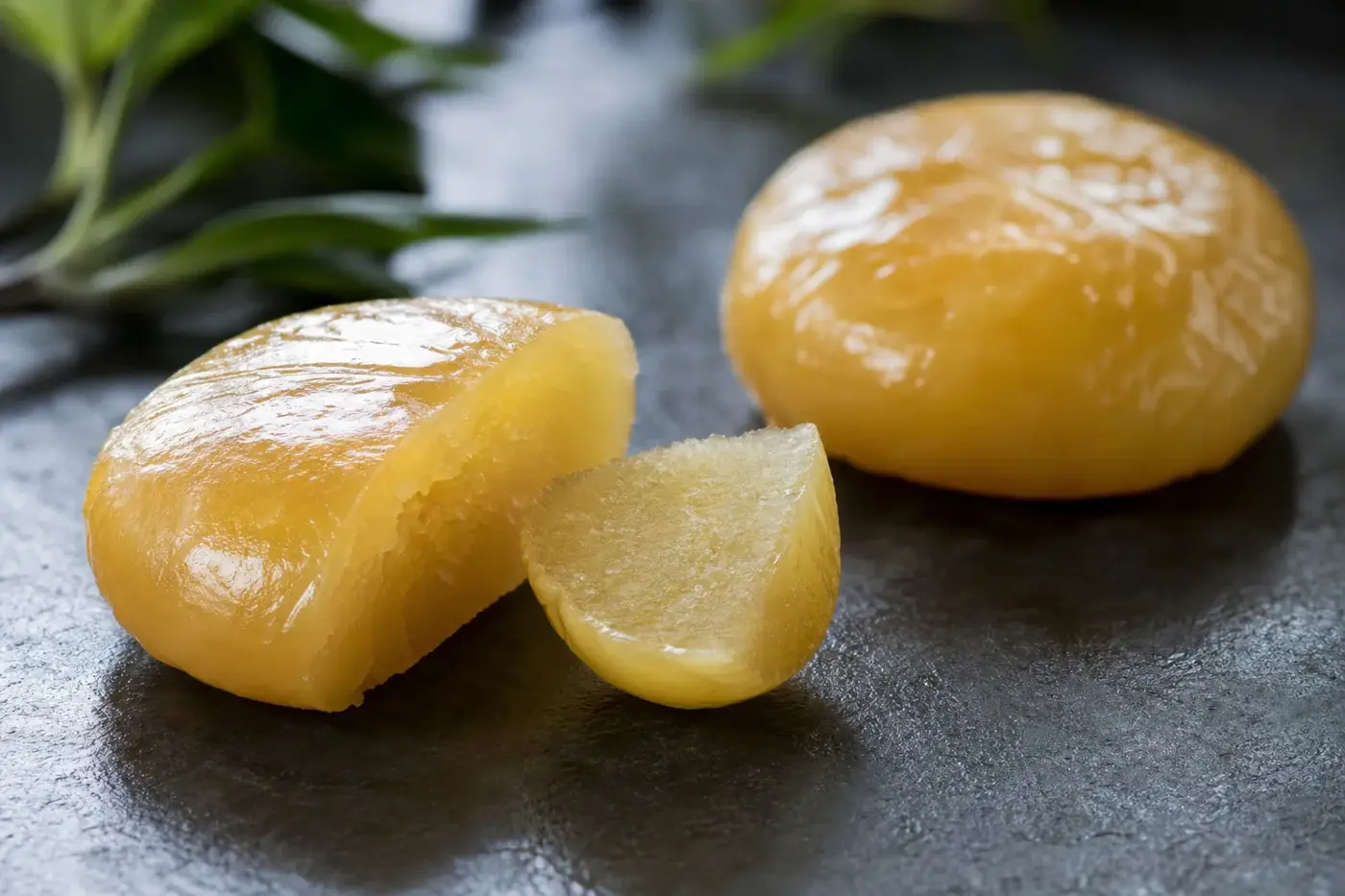
Your knife cuts through a fully mature Handkäse or Harzer, revealing a yellow, slightly translucent interior. Then the pungent aroma arrives. It is quite a transformation for a cheese that began as lean, acid-set curd, ripening from its surface towards its centre.[4,5,7]
Both cheeses belong to Germany’s sour milk tradition, but their names take you to different places. Handkäse is particularly associated with Hesse. Harzer takes its name from the Harz region.[4,5,7]
| What to look for | Your guide |
|---|---|
| Cheese family | German sour milk cheeses made from acid-set curd.[4,6] |
| German standard | Milchproduktqualitätsverordnung (MilchPQV), § 33 and Annex 4, section B; November 2026.[1] |
| Exact EU registered name | Hessischer Handkäse or Hessischer Handkäs.[2] |
| EU registration | PGI entered by Regulation (EU) No 784/2010.[2] |
| Great Britain | Hessischer Handkäse / Hessischer Handkäs, registered PGI; November 2026.[3] |
| EU register ID | Not supplied here. |
| Regional roots | Hesse for Hessischer Handkäse; Harz for Harzer’s historical association.[4,5] |
| Shapes you will find | Small rounds or short cylinders; Harzer also comes in rolls of individual cheeses.[4,5,7] |
| How they ripen | From surface towards centre, leaving a shrinking white core.[4,7] |
Meet two small cheeses with plenty to say
The story begins with skimmed milk and lactic acid bacteria. The bacteria sour the milk until it sets, then the solid curd is separated from the liquid whey. This acidified curd, called Sauermilchquark, is the starting material for both cheeses.[4,6]
You will find the family described as Sauermilchkäse, or sour milk cheese. The Bavarian food competence centre KErn highlights its small formats, sour aroma and surface ripening. These are small cheeses with little interest in going unnoticed.[4,6]
Their methods overlap, but German standards distinguish them by ripening. Harzer Käse uses yellow or red smear bacteria, the microorganisms behind its coloured surface. Handkäse can follow that route or ripen with Camembert mould, so a white surface means different things depending on the named product. Start with the name before deciding what the appearance tells you.[1]
Follow the names to Hesse and the Harz
Handkäse means “hand cheese”, recalling the small rounds once shaped between the palms. The Hesse dairy industry association, Landesvereinigung Milch Hessen, identifies the Hüttenberger Land as a centre of the tradition. That simple name keeps the maker’s hands in the picture.[5,6]
Harzer’s historical home is the Harz, the upland region named in KErn’s account. A historical association, though, is not necessarily today’s production address. Harzinger, for example, gives its manufacturing location as the Breitunger Käserei in Wohlmirstedt. If the location matters to you, turn to the producer’s information rather than relying on the cheese’s name.[4,8]
From lean curd to a characterful cheese
Skimmed milk, lactic cultures and time get things moving. Harzinger’s technical description follows the milk as it sets and the whey drains away. The resulting sour milk curd is mixed with ripening cultures, ripening salts and, in some products, caraway. It is then shaped into small cheeses ready to ripen.[7]
For Hessischer Handkäse, the Hesse dairy association specifies acidification without added rennet. Rennet is the enzyme preparation used to set many other cheeses. Making the fresh curd is one stage; developing its surface and stronger aroma through ripening is quite another.[6]
You can follow the wider sequence of setting, draining and ripening in how cheese is made. Here, the pleasure is in seeing how much character emerges from such a lean beginning. That mild curd has a considerable journey ahead.[4,6]
Get to know the golden surface
Look at smear-ripened Harzer and, according to the German standard, you should find a smooth surface ranging from golden yellow to reddish brown. Inside, it is supple but firm. Its flavour runs from mildly piquant to piquant.[1]
Mould-ripened Handkäse follows a different specification. You get an even covering of Camembert mould, with a character described as mild-aromatic to lightly piquant. That surface is your first useful clue to the cheese beneath.[1]
The regional dairy association gives a particularly vivid picture of Hessischer Handkäse: a sticky exterior, an intense smell and a mildly piquant flavour. Put it beside a plain slice of bread and you have a straightforward way to appreciate those qualities.[5]
Expect small discs of Handkäse, with small rounds or cylinders across the wider sour milk family. Harzer Roller is the familiar roll presentation. Shape helps you recognise them, but surface culture and ripeness tell you more about how they will eat. Give those details a moment before choosing.[4,5,7]
Read the white core before your first bite
Cut through the middle and you can see the cheese’s progress. Harzinger describes young examples as mild, with a white, quark-like centre. As ripening advances, that white core shrinks.[7]
A more mature cheese becomes uniformly golden yellow and slightly translucent inside. Its smell and flavour grow stronger too. You can see the difference before you taste it.[7]
Surface cultures work progressively towards the centre, so a remaining white core is an expected stage, not automatically a fault. Choose a larger core for the maker’s milder eating style, or a more evenly ripened interior for fuller aroma. Follow the pack’s storage instructions throughout: ripeness is not a substitute for proper storage.[4,7,10]
When place matters, look for “Hessischer”
Hessischer Handkäse or Hessischer Handkäs entered the EU’s protected geographical indication scheme through Regulation (EU) No 784/2010. The Hesse dairy association explains the regional connection as manufacture in Hesse. If that is what you want, look for the precise Hessischer wording.[2,5]
Great Britain’s official register separately lists Hessischer Handkäse / Hessischer Handkäs as a registered PGI in November 2026. The listed UK scheme registration date is 31 December 2020. This is a protected regional name, not simply a broader cheese style. You can explore the distinction in protected names explained.[3]
Bring on the onions: Handkäse mit Musik
Handkäse mit Musik brings the cheese together with an onion marinade. Hessen Tourismus describes vinegar, oil and water mixed with chopped raw onions, salt, pepper and caraway, then spooned over the cheese. Bread and butter are its suggested accompaniment.[9]
The dressing gives you a sharp, onion-led contrast to the ripened cheese. Adjust the balance to your taste. Even devoted onion lovers can let the cheese finish a sentence.[9]
The ingredients are clearer than the history of the “music”. Hessen Tourismus repeats an explanation linking the name to digestive noises attributed to the raw onions. Treat that as a recorded explanation, rather than an established origin.[9]
For either cheese, start with rye or mixed-grain bread, a little caraway and onions served separately. Taste the cheese before adding dressing, so you can notice the difference between its mild centre and more developed outer part. Harzer can share these accompaniments, with as much or as little onion as you like.[7]
Hessen Tourismus records Apfelwein, the local apple wine, as a traditional accompaniment to Handkäse. If you prefer, alcohol free cider or beer, or sparkling water, can accompany either cheese.[9]
Choose your cheese and keep its instructions
Start with the name, then look at the ingredients, storage temperature, date mark and instructions after opening. Seek out caraway if you enjoy it, and compare the stated surface treatment with the cheese in front of you. For a first purchase, ask the cheesemonger which product is mild and which is more fully ripened.[10,11]
Keep the label after opening so you have those instructions close to hand. The storage directions and date mark remain useful once the cheese is out of its packaging.[10,11]
For home storage, UK Food Standards Agency guidance covering England, Wales and Northern Ireland recommends a fridge between 0 and 5 °C (32 to 41 °F), alongside the pack’s directions. Harzinger specifically recommends keeping its cheese cool in its original breathable packaging. Follow the producer’s instructions for the particular product you buy.[7,10]
The same FSA guidance says chilled food should spend the shortest possible time out of refrigeration during preparation, with a maximum of four hours. Put out only what you intend to serve. UK official date guidance distinguishes best before, which concerns quality, from use by, which concerns safety: do not eat food after a use-by date.[10,11]
Use the changing core to choose your eating style, not to replace date and storage checks. Keep those decisions separate. For more handling advice, turn to how to store cheese at home and how to read a cheese label.[10,11]
A lean beginning, with protein to match
These cheeses start lean because they are made from skimmed milk. Fat is not removed from a finished cheese. When you compare labels, remember that fat in dry matter and fat per 100 g of the whole food use different bases. The figures are not equivalent.[4]
Harzinger gives a representative producer example of less than 1 g fat and 30 g protein per 100 g of its cheese. A 30 g portion therefore contains less than 0.3 g fat and 9 g protein. Those figures describe that producer’s published example; use the pack for the particular cheese and recipe you are considering.[8]
Butter, oil and marinade change the nutritional picture of your finished plate. For a comparison, start with the cheeses’ own panels, then consider their accompaniments separately. At the table, the appeal is the contrast: a small, lean round with a developed surface, bread alongside it, and the sharpness of onions.[8,9]
General information only, not medical advice: follow the official guidance where you live.
Questions people ask
What is the difference between Handkäse and Harzer?
Both are German sour milk cheeses made from acidified curd. Harzer ripens with yellow or red smear bacteria, while Handkäse can also be ripened with Camembert mould.
What does the white centre in Handkäse or Harzer mean?
A white, quark like centre is an expected stage in a young cheese and shrinks as the cheese ripens. A more mature cheese is uniformly golden yellow and slightly translucent inside, with a stronger smell and flavour.
Is Hessischer Handkäse a protected name?
Hessischer Handkäse or Hessischer Handkäs entered the EU protected geographical indication scheme through Regulation (EU) No 784/2010. Great Britain also lists the name as a registered PGI, with a registration date of 31 December 2020.
How is Handkäse mit Musik served?
The cheese is topped with a marinade of vinegar, oil, water, chopped raw onions, salt, pepper and caraway. Hessen Tourismus suggests bread and butter alongside it and records apple wine as a traditional accompaniment.
How should Handkäse and Harzer be stored?
The UK Food Standards Agency recommends a fridge between 0 and 5 °C, alongside the pack’s storage directions. Its guidance covers England, Wales and Northern Ireland, and says chilled food should spend the shortest possible time out of refrigeration during preparation, with a maximum of four hours.
Sources
- Federal Ministry of Justice and Federal Office of Justice: Verordnung über Qualitätsanforderungen an Milchprodukte (Milchproduktqualitätsverordnung, MilchPQV), 24 November 2025, amended 21 May 2026, effective from 14 June 2026. Sections 29, 31 and 33; Annex 4, section B. Official consolidated text.
- European Commission: Commission Regulation (EU) No 784/2010 of 3 September 2010 entering a name in the register of protected designations of origin and protected geographical indications (Hessischer Handkäse or Hessischer Handkäs (PGI)), 2010. Official legal text.
- Department for Environment, Food & Rural Affairs: Hessischer Handkäse / Hessischer Handkäs, protected food name register entry, published 2021, retrieved November 2026. Great Britain register entry.
- Kompetenzzentrum für Ernährung, KErn: Milch, Käse & Co., second edition, section “Sauermilchkäse”, p. 66, undated edition retrieved November 2026. Official educational compendium. Its references to the former Käseverordnung are historical; current legal statements above use source 1.
- Landesvereinigung Milch Hessen: Hessischer Handkäse g.g.A., undated industry account, retrieved November 2026. Regional dairy association account.
- Landesvereinigung Milch Hessen: Hessischer Handkäse, information leaflet, undated, retrieved November 2026. Industry information leaflet.
- Harzinger: HARZINGER ABC, sections on curd formation, manufacture, storage and ripeness, undated producer account, retrieved November 2026. Producer’s technical descriptions.
- Harzinger: Unser Käse, manufacture and nutritional information, undated producer account, retrieved November 2026. Producer’s manufacturing and nutrition statements.
- Hessen Tourismus: Handkäs mit Musik, undated regional tourism account and serving preparation, retrieved November 2026. Regional serving tradition.
- Food Standards Agency: How to chill, freeze and defrost food safely, published 18 December 2017, live guidance retrieved November 2026. Applies to England, Northern Ireland and Wales. Official household refrigeration guidance.
- GOV.UK: Understanding food labelling: Best before and use-by dates, live guidance retrieved November 2026. Official date-mark guidance.
- Food Standards Agency: Alerts, live recall and allergy alert index, retrieved November 2026 for the editorial recall check. Official alerts index.
Researched through official German legislation, the EU registration act, Great Britain’s register, public food education material, attributed regional and producer accounts, and official household food guidance.
Last checked: November 2026
Last checked November 2026.
The editors suggest you read next
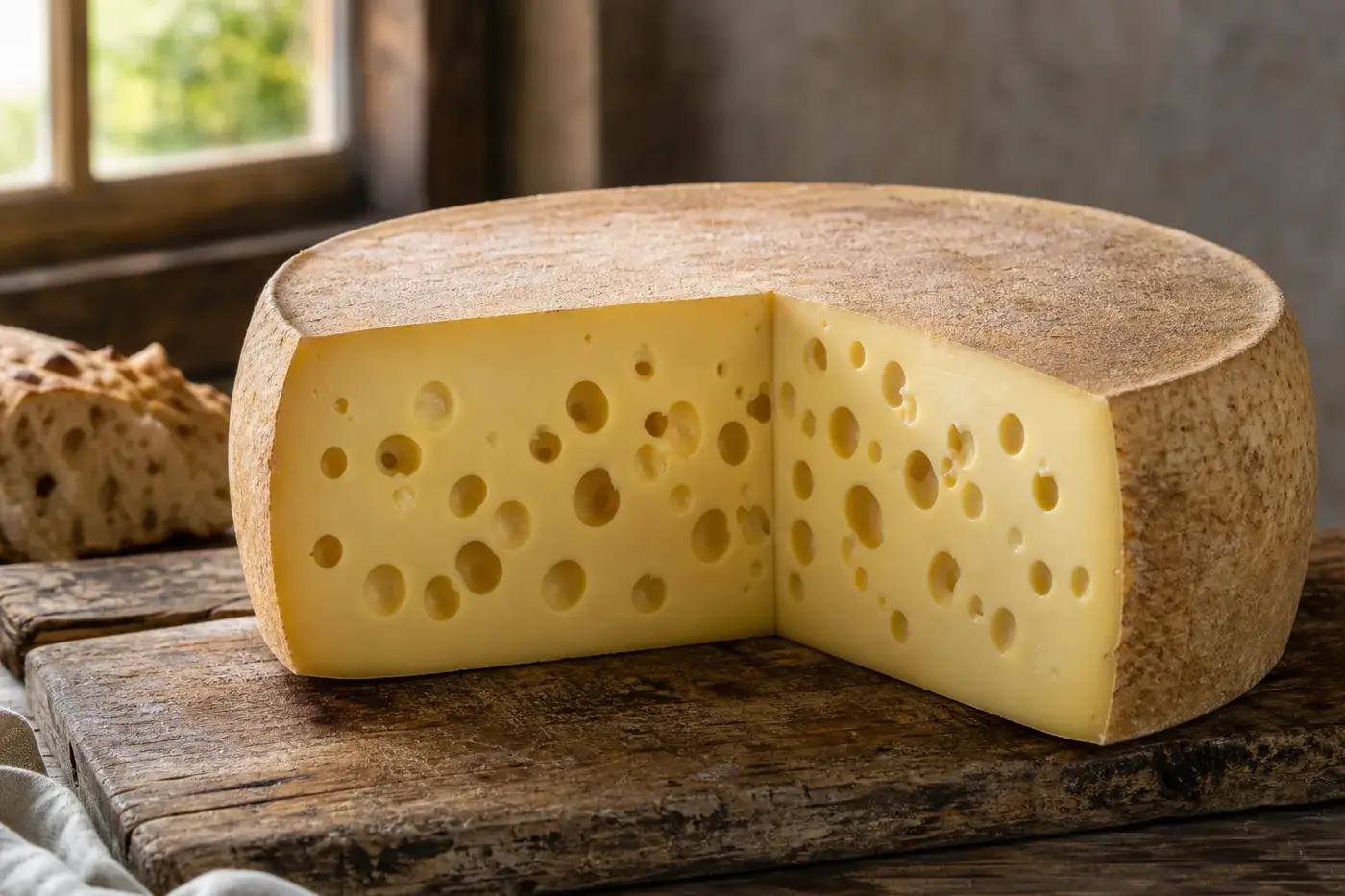
Allgäuer Emmentaler
Two Swiss dairymen arrive in Weiler in 1821, carrying cheesemaking knowledge into the western Allgäu.