How to Build a Cheeseboard: Portions, Styles and Arrangement
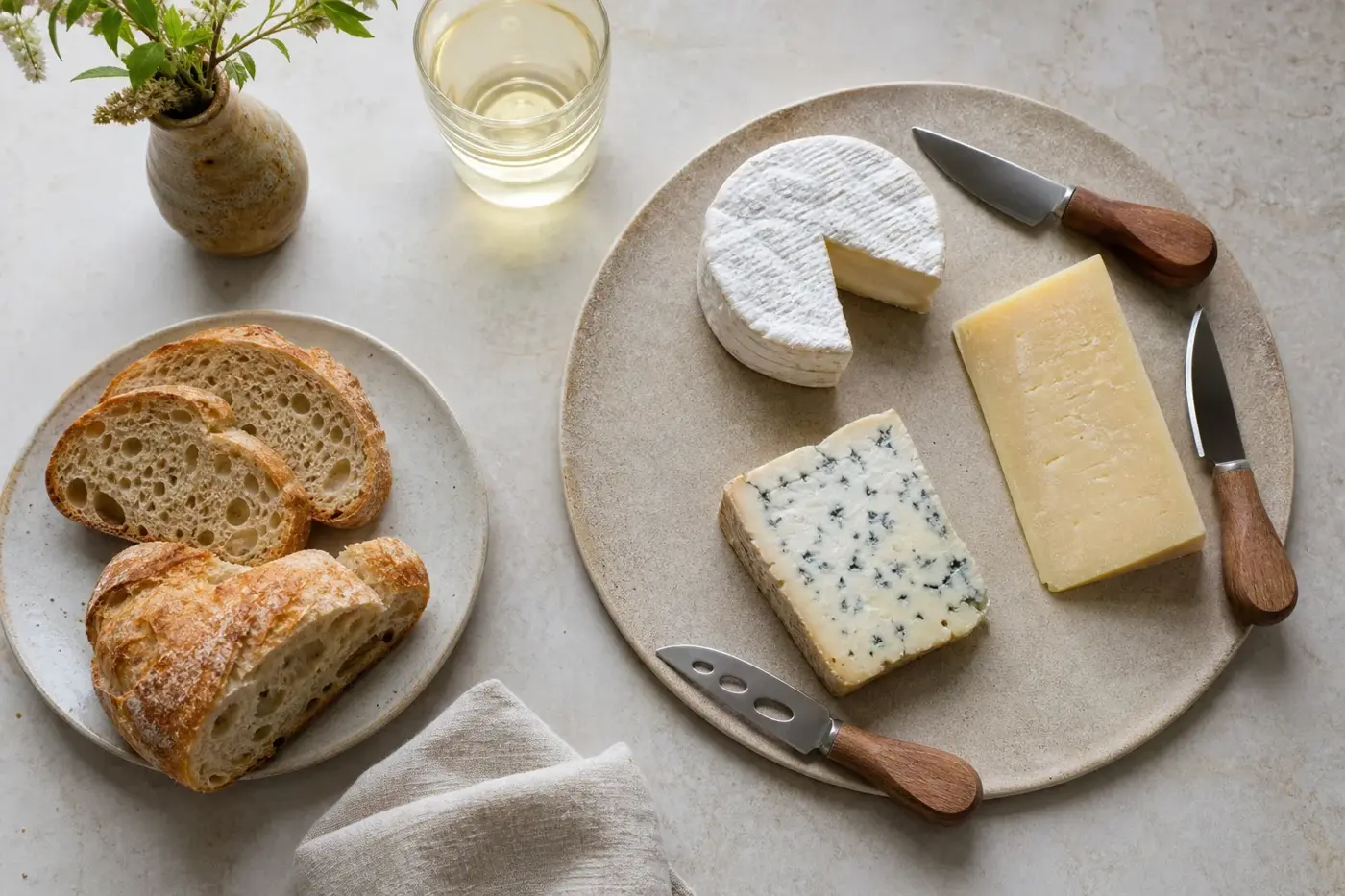
The blue cheese yields to your knife.
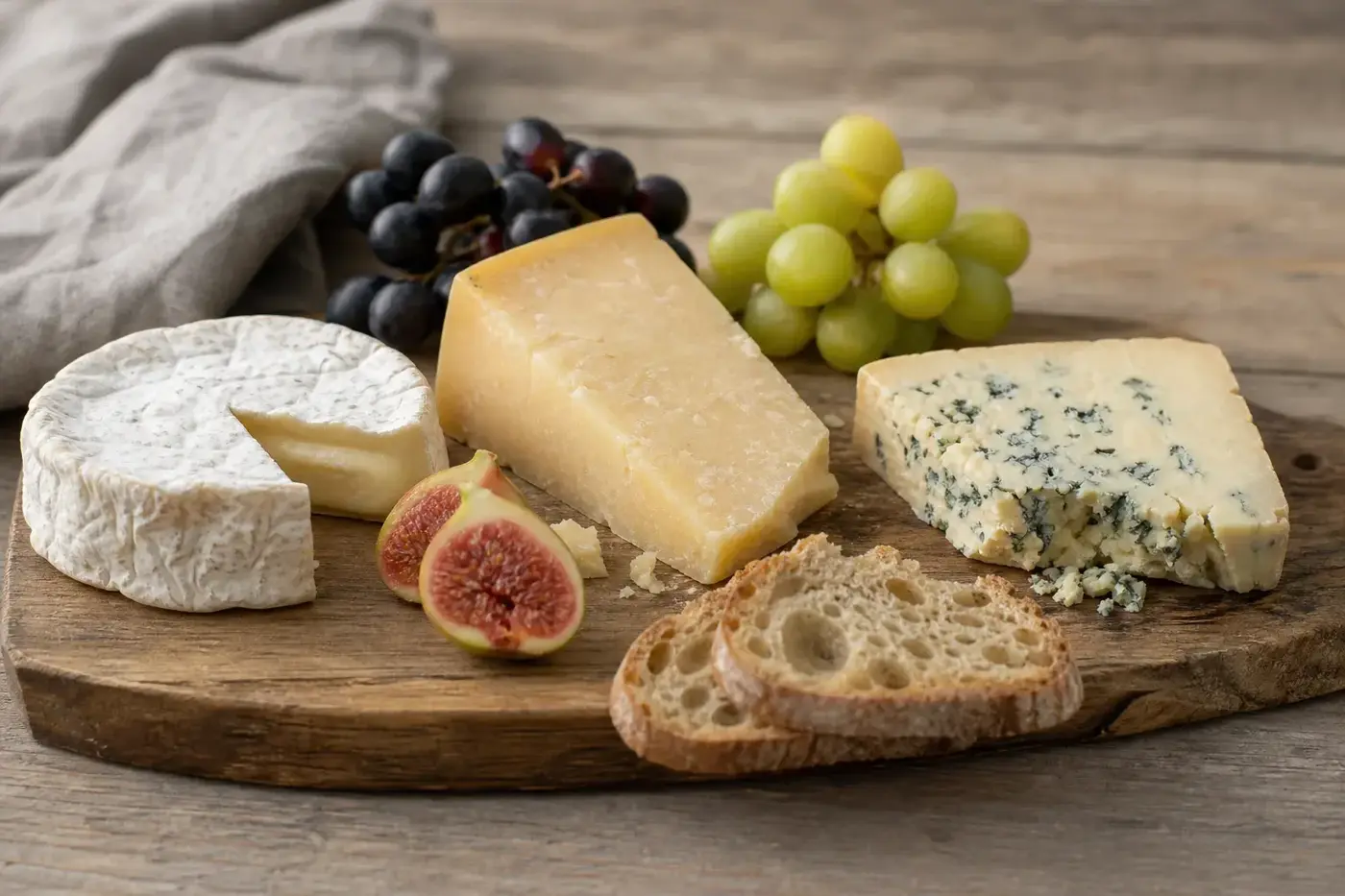
The blue cheese yields to your knife. You reach towards something delicate with the same blade, then pause. Paxton & Whitfield recommends separate knives for hard, soft and blue cheeses, so the blue doesn’t travel where it isn’t wanted.[2] It has quite enough personality without taking over its neighbours.
That small detail captures the spirit of a good cheeseboard: three or four contrasting cheeses, with room to cut, taste and enjoy them. Allow about 80 g per person for a small course, around 100 g for a substantial course, or 150 to 200 g when cheese is supper.[1][2] Above all, make the board fit the people around it.
Start with your guests’ appetites
Is cheese following a meal, or is it the meal? Answer that first, then multiply by the number of people eating it. These flexible shopping estimates draw on published cheesemonger guidance, with occasions separated to make planning easier. Adjust them to your guests’ appetites.[1][2]
| What you’re serving | Cheese per person | When it fits |
|---|---|---|
| A small course after a meal | About 80 g | When you’re serving several other courses |
| A substantial cheese course | About 100 g | When you want a fuller selection to explore |
| A cheese centred meal | About 150 to 200 g | When cheese, bread and accompaniments are supper |
Paxton & Whitfield recommends 80 g after a main meal and 150 to 200 g for a cheese supper. Its separate assembly guide gives 80 to 100 g per person.[1][2] These are a cheese retailer’s serving suggestions, not an official dietary standard.
Choose the lower allowance after a substantial meal, or when cheese shares the table with several other dishes. Head towards the upper end when it replaces dinner and your guests particularly enjoy cheese. Ask about appetite rather than assuming everyone wants the same amount.
There’s one easy trap: that weight covers all your cheeses combined. Four cheeses at 100 g per person means 100 g altogether, divided between those four choices. Buying a full allowance of each cheese leaves you with rather more cheese than the plan intended.
Eight guests? Get your shopping list ready
For eight people enjoying a substantial cheese course, allow 100 g each. The calculation is reassuringly simple:
8 people × 100 g = 800 g of cheese in total.
This suggested split gives more weight to the familiar middle of your selection. Fresh and blue cheeses get smaller portions.
| What each cheese brings | Suggested quantity |
|---|---|
| Fresh, spreadable cheese | 150 g |
| Supple semi-hard cheese | 250 g |
| Mature hard cheese | 250 g |
| Blue cheese | 150 g |
| Total for eight people | 800 g |
These individual quantities are an illustrative shopping plan, calculated from the total allowance. Make the split suit your group. If only two people want blue cheese, buy a smaller piece and give the difference to another cheese.
For those same eight guests, a small course comes to 640 g altogether. A cheese centred supper needs 1.2 to 1.6 kg, using the published 150 to 200 g guide.[1] Round sensibly to the pieces available: this is supper, not a practical exam in weighing cheese.
Before shopping, note your total weight, the styles you want and any guest requirements. Ask for pieces reasonably close to those weights. Before another cheese catches your eye, decide how you would use anything left afterwards.
Give every cheese a reason to be there
Start with three cheeses. Add a fourth if it brings something distinctly different, rather than simply making the board bigger. Paxton & Whitfield suggests three or four, with contrasts in style, texture and flavour.[1]
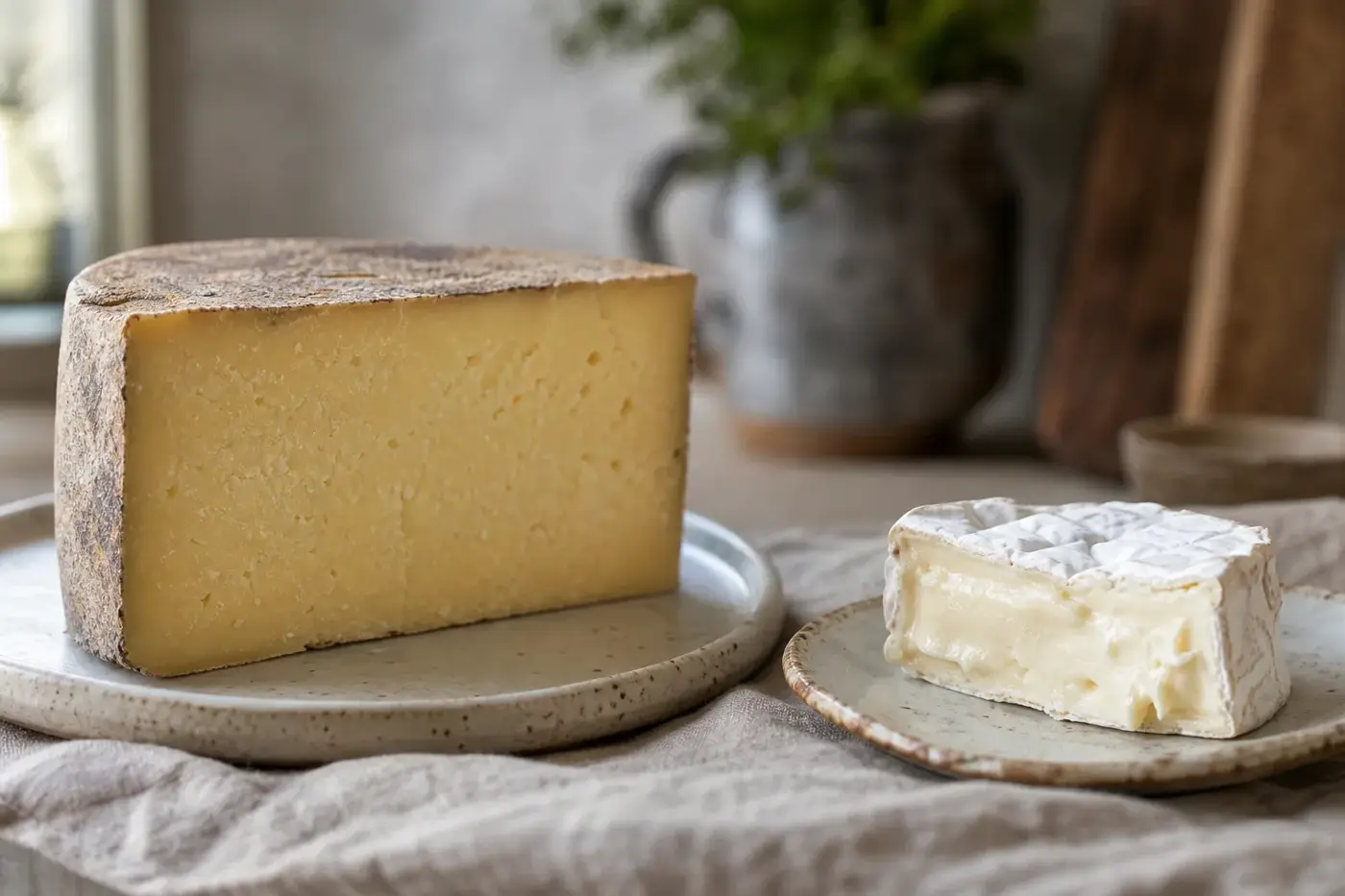
Texture gives you a useful brief at the cheese counter: one cheese that spreads, one that slices and one that breaks or crumbles. Then consider what might add another dimension. Perhaps a blue, a different milk species or a particularly mature cheese.
Within those styles, explore the milk type. Ask your cheesemonger for cow’s, goat’s or sheep’s milk options, then choose according to the individual cheese and what your guests enjoy. Keep milk allergy requirements separate from this stylistic choice.
For help recognising those differences, see how to tell cheese styles apart. Take a short list of roles to the counter, rather than a set of names you refuse to budge from. Leave yourself room to find something that fits.

Taste your way from fresh to blue
A four-cheese board can take you through changes in texture as well as strength. Try this progression as your starting point:
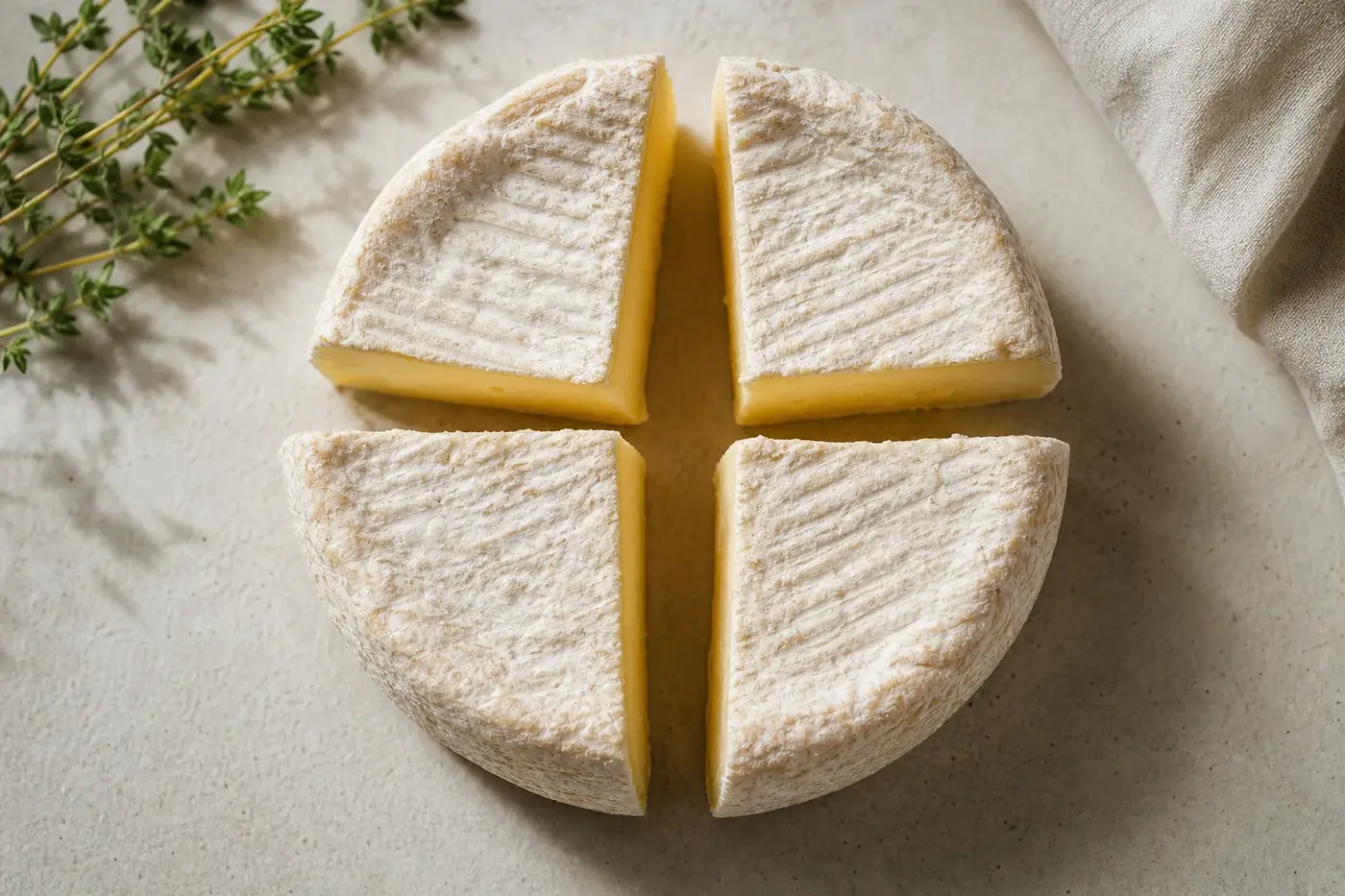
- Fresh and spreadable: begin gently, using a small dish if the cheese needs one.
- Supple and sliceable: choose a semi-hard cheese that offers a clear change in texture.
- Firm and mature: ask for a hard cheese with a more pronounced finish.
- Blue: pick an individual cheese whose strength suits your group, and offer it last.
Treat this as a suggested tasting sequence, not a fixed combination. Ask the seller whether the actual cheeses would taste better in another order.
If your guests dislike blue, give its place to something they want to eat. For a smaller board, leave out the semi-hard choice and keep the fresh, mature and blue roles. You want a selection worth exploring, not a vacancy filled.
Make room to cut, not just admire
Put down your cheeses and utensils before bread, crackers or fruit enter the picture. Those open spaces have a job: they let hands and knives move comfortably. Resist the urge to fill every gap.
Build your board in this order:
- Give each cheese an approach. Leave space around its cut face instead of packing pieces tightly together.
- Give soft cheese its own spot. A small plate or dish can make serving easier.
- Put utensils beside their cheese. Keep handles accessible and blades inside the serving area.
- Bring in the little bowls. Preserves and other wet accompaniments need their own bowls and spoons.
- Picture the view from every seat. Move anything that makes someone reach across another cheese.
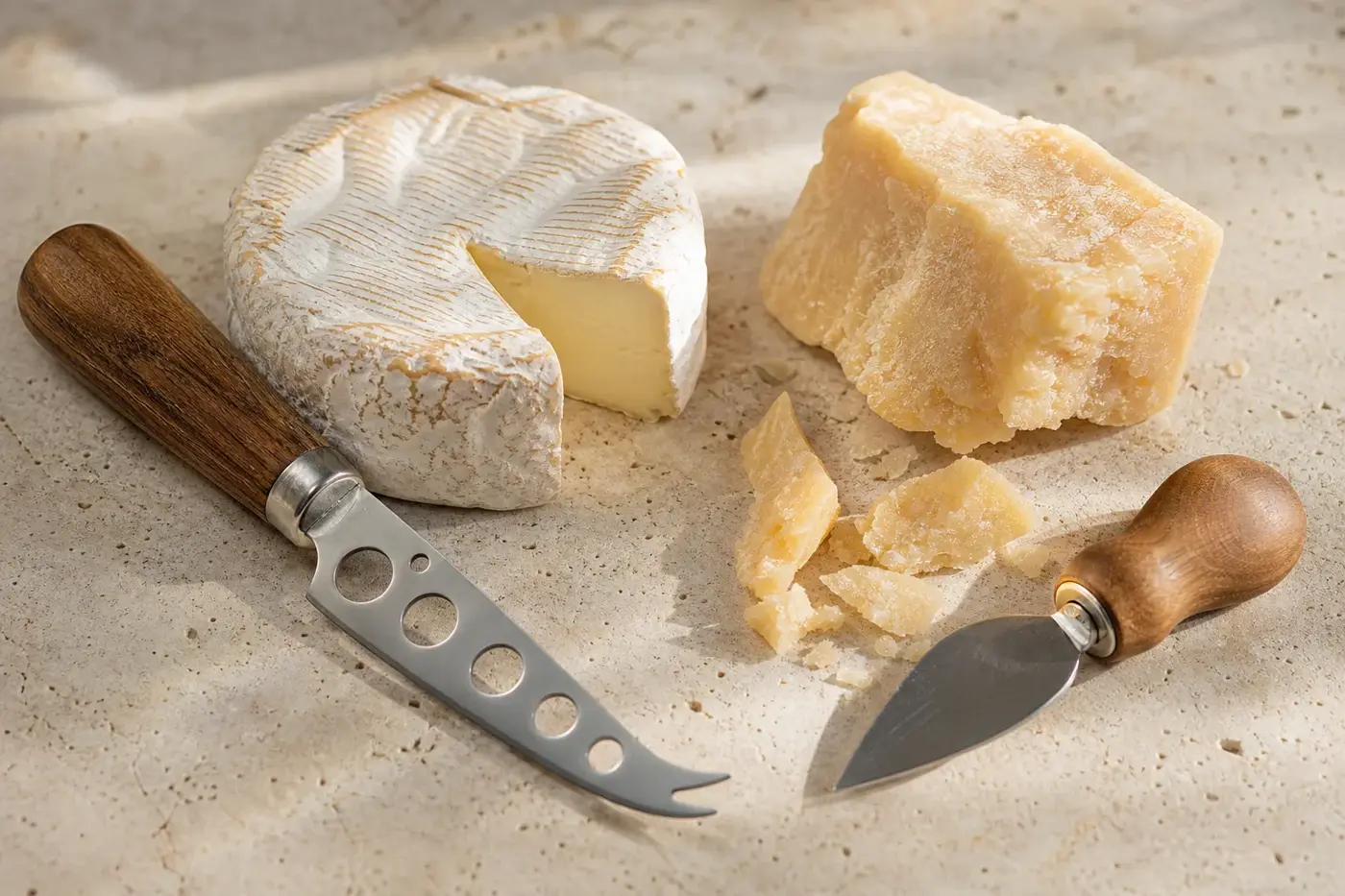
Follow Paxton & Whitfield’s advice on separate knives for hard, soft and blue cheeses, especially to keep blue away from delicate choices.[2] If you have enough utensils, a knife for each cheese keeps things straightforward.
For guests with allergies, separate knives on a shared board are not enough by themselves. Follow the preparation and separation advice below.[5]
Make one initial cut to show guests where to begin, then leave the rest as a larger piece. Choose tools that make serving comfortable. Offer the tasting progression above, but let everyone follow their own appetite.
Choose accompaniments that let the cheese shine
Plain bread, one cracker, fresh fruit and one preserve give you a focused starting combination. Paxton & Whitfield advises against overloading the board and suggests limiting the number of biscuits and preserves.[1] Give the cheese room to hold your attention.
Put bread in a separate basket, where guests can reach it without stretching over the cheese. Choose crackers you would happily taste alongside every cheese on the board. If you want strongly seasoned crackers, serve them separately and keep a plain option available.
Apple or pear slices, or a small bunch of grapes on a side plate, give fruit a simple place at the table. Prepare only what you expect to serve. The FSA advises washing fresh fruit and vegetables before serving.[8]
Spoon a little chutney, fruit preserve or honey into a bowl, not over the cheese. That leaves your guests free to taste the cheese alone first. They can add an accompaniment when they wish.
Nuts, olives and pickles are optional extras. Include them because your group wants them, not because an empty corner is bothering you. An unoccupied patch of board is not a cry for help.
Talk to your guests before you shop
A good shopping list begins with knowing what your guests need. The FSA advises finding out what someone can and cannot eat, checking ingredients, keeping allergens separate and retaining packaging so you can answer questions accurately.[5]
Find a vegetarian cheese that fits
Ask the maker or seller to confirm each cheese’s vegetarian suitability, including its rennet. These are the enzymes used to help set milk. Technical guidance describes animal rennet alongside plant and microbial alternatives.[7]
Make the question about the actual product you’re buying, rather than relying on a general description of its style. For a fuller explanation of the different coagulants, see rennet explained.
Make a separate plan for milk allergy
Milk allergy and lactose intolerance call for different planning. Cambridge University Hospitals explains that milk allergy concerns milk proteins, while lactose intolerance concerns digestion of milk sugar. It also identifies similarities between proteins in cow’s, goat’s, sheep’s and buffalo milk.[6]
Agree suitable food directly with your guest if they have milk allergy. Lactose free dairy is not suitable. Cheese made from another animal’s milk is not a safe substitute either.[6]
The FSA advises cleaning work surfaces, equipment and hands, keeping allergens separate and checking every accompaniment. Taking cheese off a plate afterwards does not remove allergen traces.[5]
Prepare your guest’s agreed food separately and keep it away from the communal board. For more on the distinction, see cheese allergy versus lactose intolerance.
Choose pregnancy options together
UK NHS guidance from November 2026 lists pasteurised or unpasteurised hard cheeses, pasteurised semi-hard cheeses and specified pasteurised soft cheeses among its suitable choices during pregnancy.[4] Discuss the selection with your guest.
The NHS says not to eat soft cheeses made with unpasteurised milk, soft cheeses with a white coating on the outside, or soft blue cheeses unless cooked until steaming hot all the way through.[4]
Use the current NHS pregnancy guidance, with November 2026 as the reference date here, to assess each product. Agree the selection with your guest before serving.
Keep it chilled and bring out smaller batches
Get your board, bowls and bread ready first. Add the cheese close to serving and note when it leaves the fridge. For a long gathering, bring out smaller quantities rather than keeping everything on display throughout.
The FSA’s home chilling guidance for England, Northern Ireland and Wales, dated here to November 2026, recommends a fridge between 0 and 5 °C. It says to follow packaging instructions and keep chilled food outside the fridge for the shortest possible time during preparation. When serving, do not leave it out for more than four hours.[3]
Follow the FSA’s current advice on serving time and whether food can return to the fridge or must be discarded. Look at the product’s storage instructions, opening guidance and use by date too.[3]
For detailed help, see how to store cheese at home and cheese food safety. Make your storage decisions while preparing, rather than leaving them until you have a board to clear.
Give tomorrow’s cheese something to do
If you already intend to keep some cheese, set it aside before serving. It needn’t make a trip around the communal board first. Keep it refrigerated according to its instructions.[3]
Cheese handled and stored appropriately can go into sandwiches, onto toast, into a vegetable tart or, grated, into a cooked dish. Let the cheese you actually have guide the choice. Keep the original packaging so its instructions remain to hand.
Follow the product’s instructions for storage and suitability for freezing.[3] If you turn cheese into a cooked dish, the FSA advises eating refrigerated cooked leftovers within 48 hours or freezing them.[3]
General information only, not medical advice: follow the official guidance where you live.
Questions people ask
How much cheese should I buy per person?
Allow about 80 g per person for a small course, around 100 g for a substantial course, or 150 to 200 g when cheese is supper. That weight covers all the cheeses combined, not each cheese separately.
How many cheeses should be on a cheeseboard?
Paxton & Whitfield suggests three or four cheeses with contrasting styles, textures and flavours. The page suggests starting with one that spreads, one that slices and one that breaks or crumbles.
How can I cater for a guest with a milk allergy?
Cambridge University Hospitals explains that milk allergy concerns milk proteins, and that lactose free dairy or cheese made from another animal’s milk is not a safe substitute. The FSA advises checking ingredients, cleaning surfaces, equipment and hands, and keeping allergens separate. See the FSA’s allergen guidance and agree suitable food directly with the guest.
Which cheeses can I serve during pregnancy?
The NHS lists hard cheeses, whether pasteurised or unpasteurised, and certain pasteurised cheeses among its suitable choices. It says not to eat soft cheeses made with unpasteurised milk, soft cheeses with a white coating, or soft blue cheeses unless cooked until steaming hot all the way through. Check each product against the current NHS pregnancy guidance.
How long can cheese stay out of the fridge?
The FSA says chilled food should be kept outside the fridge for the shortest possible time during preparation and not left out for more than four hours when serving. See the current FSA home chilling guidance for its advice on whether food can go back into the fridge or must be discarded.
Sources
[1] Paxton & Whitfield. Perfect Cheeseboard. Undated online edition, retrieved November 2026. Commercial cheesemonger guidance on quantities, selection and accompaniments. Source.
[2] Paxton & Whitfield. Assembling the Perfect Cheese Board, Top 5 Tips. 9 October 2019, retrieved November 2026. Commercial cheesemonger guidance on portions and separate utensils. Source.
[3] Food Standards Agency. How to chill, freeze and defrost food safely. Published 18 December 2017, online edition retrieved November 2026. Applies to England, Northern Ireland and Wales. Source.
[4] NHS. Foods to avoid in pregnancy. Online edition retrieved November 2026, section “Cheese, milk and other dairy”. Source.
[5] Food Standards Agency. Eating in and preparing an allergy-safe meal. Online PDF edition retrieved November 2026; publication date not verified. Source.
[6] Cambridge University Hospitals NHS Foundation Trust. Milk allergy. Online patient information edition retrieved November 2026; revision date not verified. Sections on milk proteins, lactose intolerance and related animal milks. Source.
[7] American Academy of Microbiology. FAQ: Microbes Make the Cheese. Online report record retrieved November 2026; edition date not verified. Retrieved extract describes calf, plant and microbial rennets. Source.
[8] Food Standards Agency. Food safety for community cooking and food banks. Online edition retrieved November 2026; revision date not verified. Section “Food hygiene when cooking for your community or donating food”. Source.
This piece combines desk research from published cheesemonger guidance with official food safety and NHS advice; the shopping split and layout are editorial planning suggestions.
Last checked: November 2026
Last checked November 2026.
The editors suggest you read next