How to Serve Cheese: The Complete Guide
The first bite is straight from the fridge.
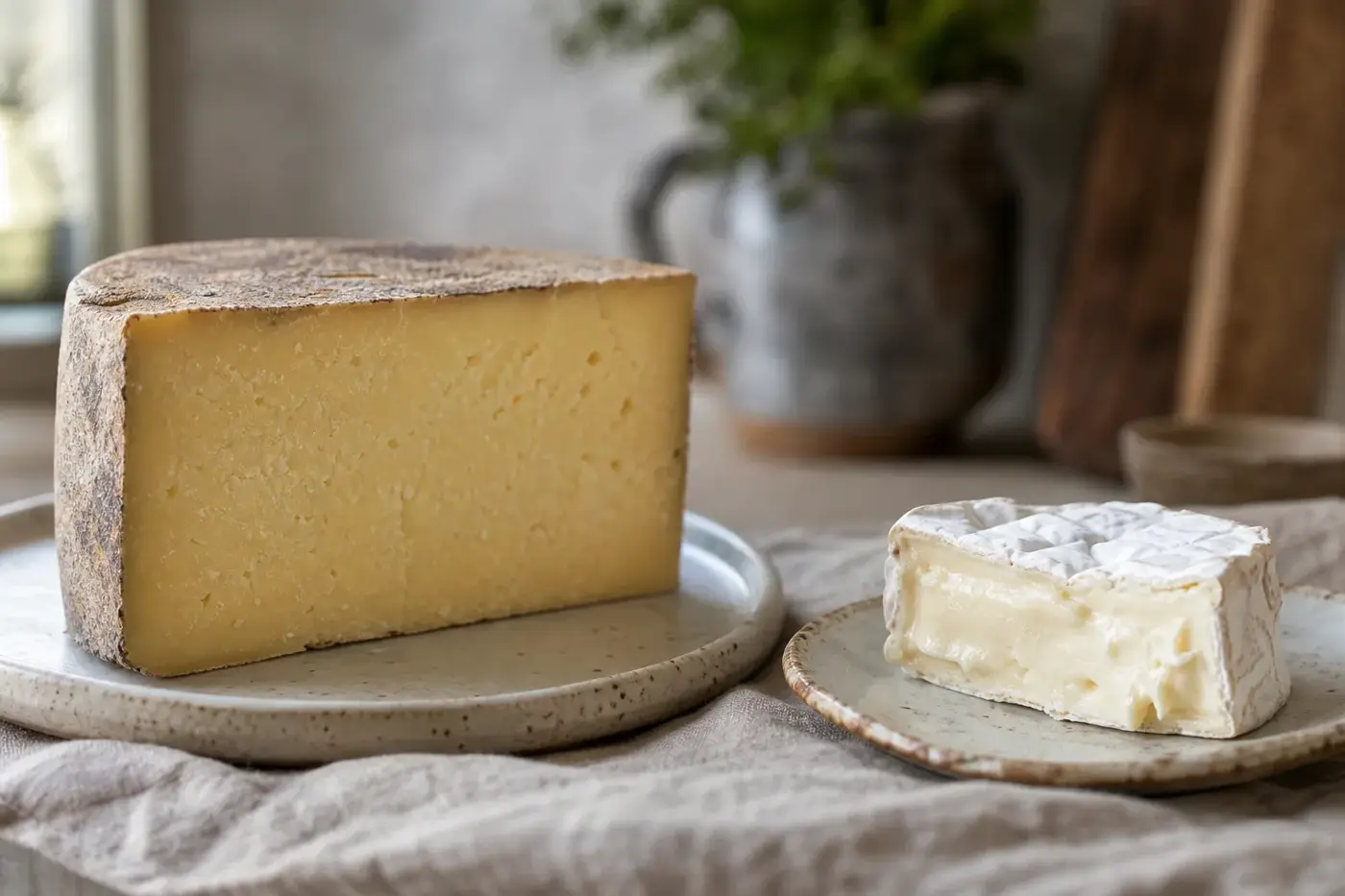
The first bite is straight from the fridge. You get a rubbery texture and barely a whisper of flavour. Cold can do that, as the Academy of Cheese notes. Give your cheese room on the plate and a thoughtful place in the meal, and its texture and flavour have a chance to shine. [1,7]
Choose for the occasion, go gently with accompaniments and taste from mild to strong. Prepare only what you expect to eat, keeping the rest safely chilled. A good cheese board needs attention, not an entourage. [1,2,7]
Five small steps to a welcoming board
Whether you are making a snack, lunch or something for a table of guests, the routine is reassuringly simple. Let the occasion guide the quantity and variety.
- Choose: decide whether cheese is a small course or the meal, then ask about guests' dietary requirements.
- Prepare: read the labels, set aside your serving portion and keep the reserve refrigerated.
- Present: give every cheese space for cutting, its own utensil and a clearly written name.
- Serve: suggest a gentle tasting order, with plain bread and water within reach.
- Clear: return suitable leftovers promptly to chilled storage, following the label and the time limits below. [2,4,7,8]
Put out plates and napkins before you bring in the cheese. That first slice is much more inviting when nobody has to hunt for a knife or somewhere to put it.
Choose cheeses with something different to say
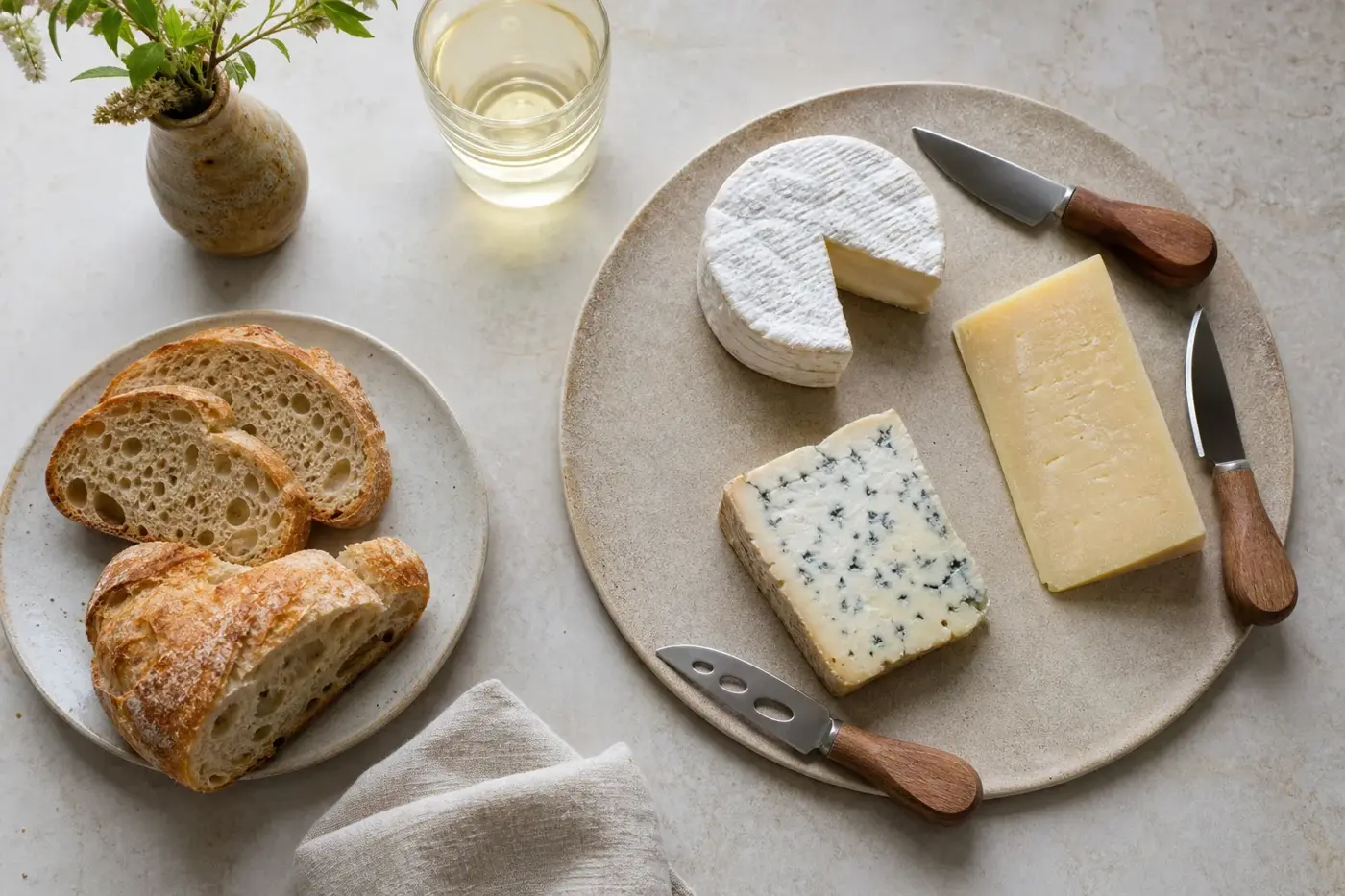
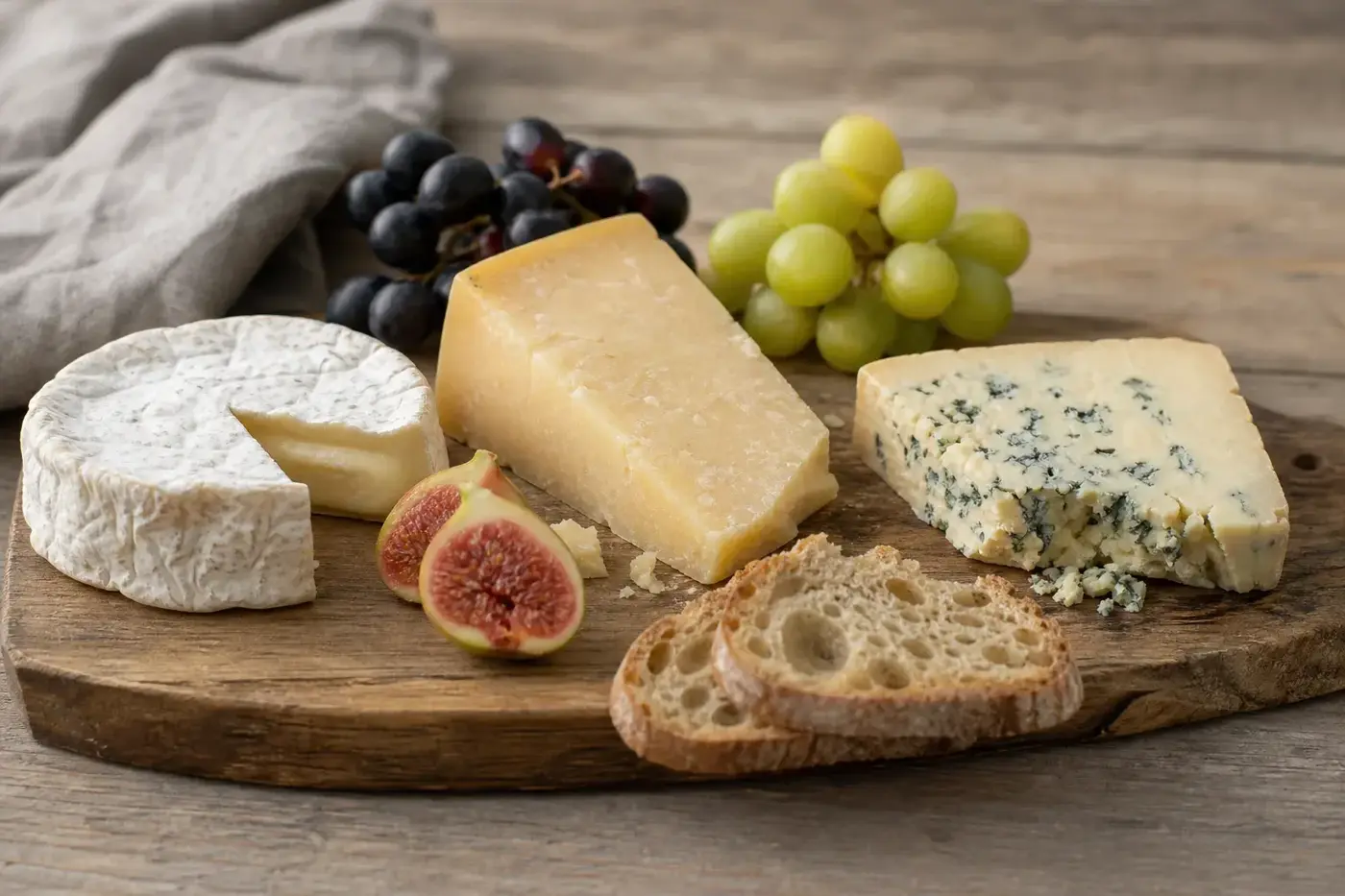
Something hard, something soft, something blue: the Academy of Cheese suggests this as a useful starting combination. Your guests should have the final say, though. A blue cheese adds little if nobody wants it. [1]
Give each cheese a reason to be there. Put something yielding beside something firm or crumbly, and a quiet flavour beside a more assertive one. Three noticeably different cheeses offer clear choices; several similar wedges can make choosing harder rather than more interesting.
If you would like help spotting those differences, explore the guide to cheese styles before choosing. For an informal snack, follow your appetite. One cheese may be plenty; a small comparison might be more fun.
Lose the chill, keep an eye on the clock
Think about texture rather than chasing one perfect serving temperature. The Academy of Cheese advises taking cheese out of the fridge before tasting, because cold can dull its flavour or make it rubbery. [7]
Warming does not turn up every flavour, however. In a study of seven Cheddar cheeses, a trained panel tasted samples at 5 °C, 12 °C and 21 °C. Sourness increased with temperature, but most measured flavour attributes did not change significantly. [3]
Before serving, cut a small piece, smell it and taste it without bread or chutney. Can you pick out the aroma? Is the interior firm, supple or yielding? This small tasting tells you more than giving every cheese the same warming time.
Keep food safety in view throughout. The UK FSA's advice for England, Wales and Northern Ireland is to keep chilled food out for the shortest time possible, with a maximum of four hours during preparation. Count preparation and display together, and bring out smaller portions rather than your whole supply. [4,5]
Plan your portions and leave room to cut
Start with the people, not the size of your board. How many actually want cheese, and how substantial is the rest of the meal? Divide your planned serving into equal imagined shares, checking that everyone gets a taste of the selection, or enough for lunch.
Weighing the total helps you repeat a successful amount next time. It is rather nicer than discovering that your final guest has inherited a lonely rind.
Leave space around each piece. The American Cheese Society recommends room for slicing, with bread or plain crackers on a separate plate. Position the cheeses first, then check that a knife can reach each one. [2]
Add only the accompaniments that fit comfortably. If fruit or preserves crowd the cutting area, give them a separate bowl.
Make every slice a fair share
You want the last guest to get as good a piece as the first. Nobody should be left with all the rind while someone else enjoys the centre. The Academy of Cheese recommends following the lines of the cheesemonger's cut, including a proportion of rind where appropriate. [1]
At home, these simple cuts make sharing easier:
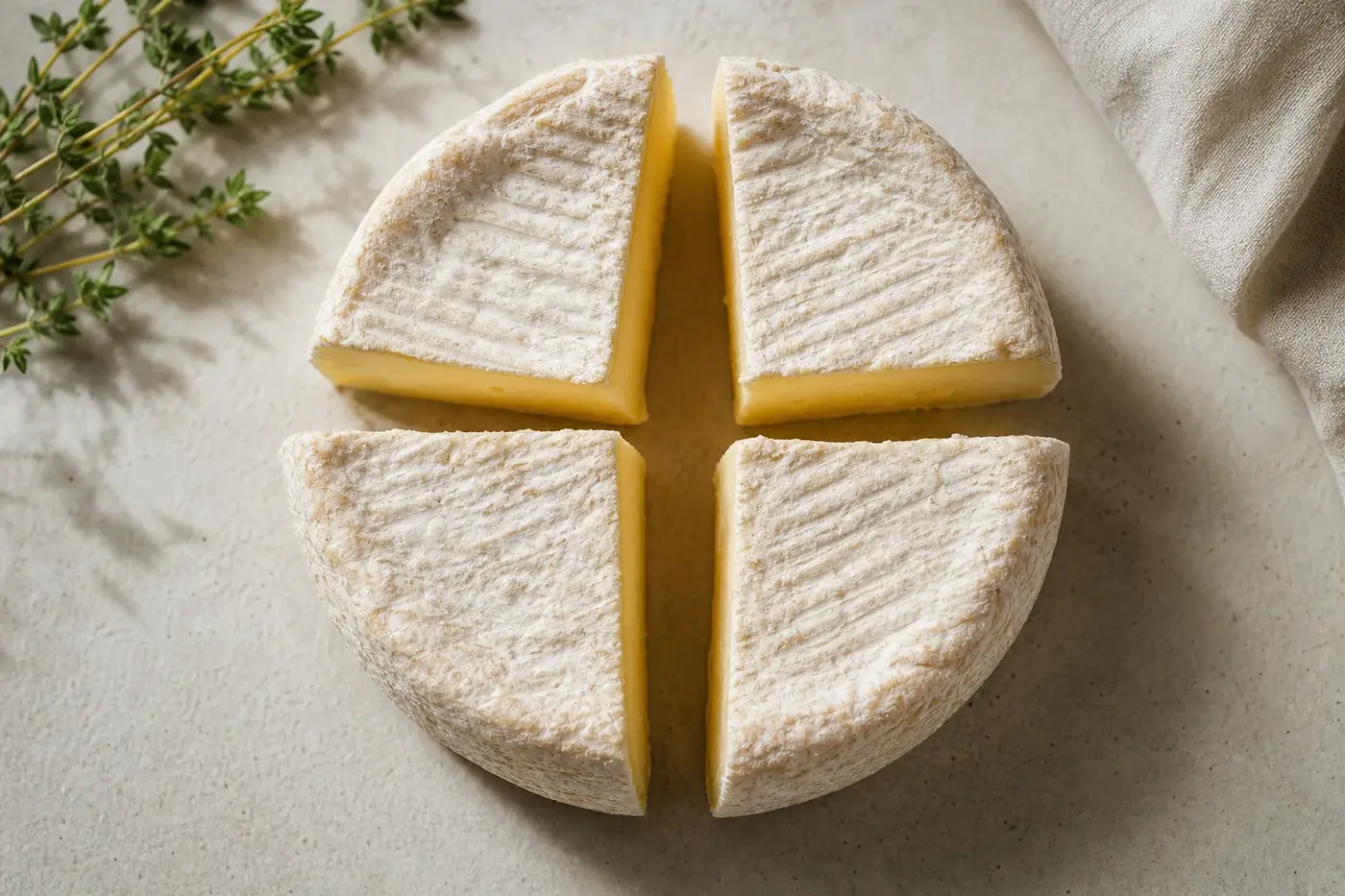
- Round or square cheeses: cut wedges towards the centre, giving each portion some edge and some middle.
- Triangular wedges: cut along their length rather than taking the pointed end.
- Logs: cut across into discs.
- Rectangular blocks: cut even slices across the piece.
Make the first cut yourself and leave it as a guide. Before offering any outer coating, read the product instructions. Wax, plastic and cloth come off; they are not part of the serving. [1,7]
A knife for every cheese, without the specialist kit
You do not need a drawer full of specialist equipment. Ordinary kitchen knives are perfectly acceptable, says the Academy of Cheese. Pick tools that feel comfortable and easy to control. [1]
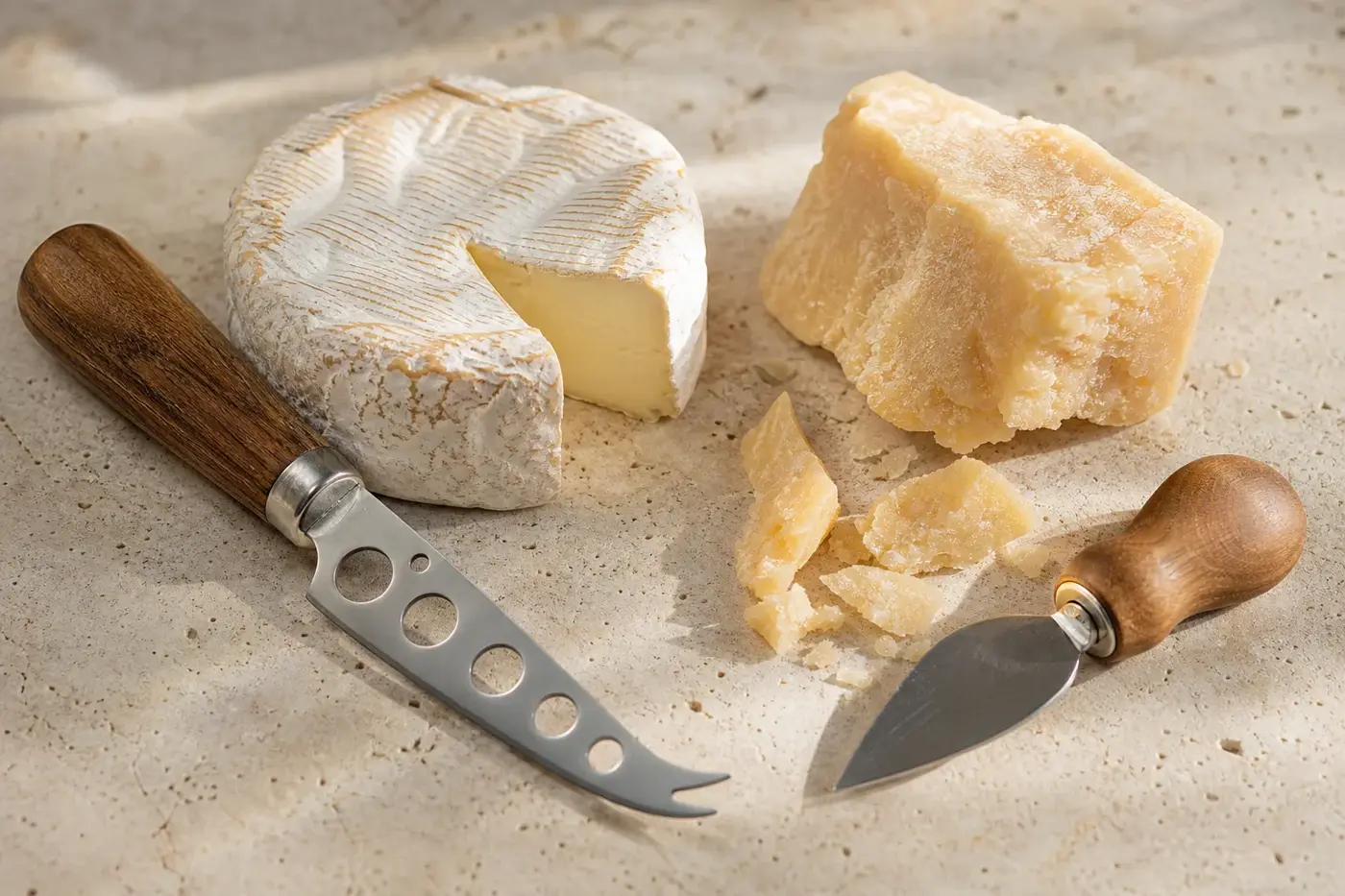
Use a sharp kitchen knife for firm cheese and a small spreader for soft cheese. To break pieces from a very hard wedge, choose a short, sturdy knife.
Give each cheese its own knife, as the American Cheese Society recommends, and each preserve bowl its own spoon. For a guest with an allergy, use separately cleaned equipment and a separate serving arrangement, following the FSA precautions below. [2,8]
Begin quietly, finish with the bold flavours
Start with the gentlest cheese and finish with the flavour that lingers longest. A powerful cheese can overwhelm everything that follows, which is why the Academy of Cheese recommends this order. Ask your cheesemonger to help you find the starting point for your selection. [7]
Offer a small taste of each cheese alone before suggesting an accompaniment. Follow the Academy's tasting approach: chew slowly, breathe through your nose and sip water between cheeses. Once your guests have explored the board, let them return to whichever cheese or combination they love most. [7]
Give accompaniments a supporting role
Plain bread, one fresh fruit and one preserve make a useful beginning. Add nuts in their own bowl if appropriate for your guests. The American Cheese Society suggests apples, pears and figs, alongside nuts and condiments; you can choose from that range without giving the entire cupboard an invitation. [2]
Keep strongly flavoured crackers and sharp pickles optional. Put preserves beside the cheese, not over it, so you can taste the cheese first and decide how much sweetness or acidity you want. A small serving spoon makes sharing easier than passing a sticky jar around the table.
Wash fruit before serving, following FSA food hygiene advice. Keep ingredient packets available for the bread, crackers, preserves and nuts, as well as the cheese. [5,8]
Pour a drink that lets the cheese shine
Before you chase elaborate pairings, think about intensity. The American Cheese Society recommends balancing cheese and wine so neither dominates. The Brewers Association's CraftBeer.com gives the same starting principle for beer. [2,9]
Treat these suggestions as places to begin tasting, not rules you must obey. You are giving both the cheese and the drink a chance to show what they offer.
| Cheese style | Drink to try | What you are looking for |
|---|---|---|
| Delicate fresh cheese | Light white wine, or lightly brewed tea | Enough lightness to let delicate flavours through |
| Firm, savoury cheese | Malt-led beer, or black tea | A fuller-flavoured drink to compare |
| Soft cheese | Cider, or an apple-based alcohol-free drink | A fruity contrast |
| Strong blue cheese | Sweet wine, or a little pear juice with water alongside | Sweetness beside that intensity |
With tea, start with a light brew and taste before making it stronger. Keep still or sparkling water available throughout. For more on wine, explore cheese and wine pairing.
Alcoholic pairings are for adults of legal drinking age. Offer small servings and give alcohol-free choices just as much thought. The NHS advises avoiding alcohol during pregnancy; guests who are driving, avoiding alcohol during recovery or taking medicines that interact with it should also choose alcohol-free drinks. [10]
Choose the moment that suits your meal
Cheese can open dinner, follow the main course or take the place of dessert. If you serve it before dinner, keep the selection and quantity limited. As the American Cheese Society points out, cheese can be filling. [2]
For a meal centred on cheese, offer plentiful bread and a separate salad. Give people enough space to build their own plates.
After a substantial dinner, offer a smaller selection and ask who wants some before cutting. If appetites vary, start modestly and keep reserves chilled. That is easier to manage than a magnificent board nobody finishes.
Keep reserves chilled and clear in good time
Begin with your fridge. For England, Wales and Northern Ireland, the FSA recommends 0 to 5 °C and following the storage instructions on dairy packaging. Use a fridge thermometer and keep cheese protected from raw foods. [4]
For more detail on wrapping and storage, turn to storing cheese at home. A properly chilled reserve makes serving smaller portions much easier to manage.
For buffet-style service, the FSA says chilled food should stay out no longer than four hours, or two hours in extremely hot weather. Its guidance says to discard food that has reached 8 °C or above after four hours unless refrigerated within that period. Clear earlier rather than aiming for the limit: briefly chilling the board does not restart the clock. [5]
Refrigerate suitable remaining pieces promptly in clean wrapping or containers, keeping the label. The NHS advises using opened ready to eat food within two days unless the packaging says otherwise, and following use by dates. If you are uncertain about a cheese's storage history, discard it; for unexpected mould, consult mould on cheese. [11]
Make room for every guest's needs
Ask what your guests can eat before you choose the cheese. For England, Wales and Northern Ireland, the FSA advises checking ingredients, keeping allergens separate and thoroughly cleaning surfaces and equipment. Simply removing an offending food from a plate is not enough. [8]
Prepare an agreed separate serving before handling the shared board, and retain all ingredient information. The distinction between cheese allergy and lactose intolerance matters here. Ask your guest to confirm suitable products rather than choosing a substitute for them. [8]
UK NHS pregnancy guidance from November 2026 says white-rind mould-ripened soft cheeses and soft blue-veined cheeses must be thoroughly cooked until steaming hot, whether pasteurised or unpasteurised. It lists hard cheeses, including those made with unpasteurised milk, and specified pasteurised soft cheeses among its permitted choices. These restrictions address the risk from listeria, so consult the current NHS list with your guest before choosing. [10]
The NHS also publishes cheese precautions for infants, young children, people over 65 and those with a long-term condition or weakened immunity. Discuss suitable choices with your guest beforehand. Follow that advice and any individual clinical guidance. [12]
Let one lovely cheese have the whole plate
One carefully chosen cheese can be a complete serving. Ask your cheesemonger for a piece in good condition for the day you plan to eat it. Give it a plate or board, a suitable knife, bread and one accompaniment.
Introduce it by name and tell your guests why you chose it. You do not need a crowded board to give people something worth noticing.
For a focused comparison, try the first bite alone, the second with bread and the third with the accompaniment. Let your guests decide which they prefer. The interest is in the cheese, its flavour and texture, not the number of things arranged around it.
A few small fixes before you serve
- Everything still fridge-cold? Taste a small piece before serving, staying within the official time limits above. [7]
- Every gap filled? Leave room for cutting and move bread or fruit to another plate. [2]
- The strongest cheese comes first? Suggest a gentler starting point and offer water between tastes. [7]
- The whole supply is out? Serve a manageable amount and keep the reserve chilled. [4,5]
- Toppings are hiding the cheese? Put accompaniments alongside it so your guests can choose.
General information only, not medical advice: follow the official guidance where you live.
Questions people ask
What cheeses should I put on a cheese board?
The Academy of Cheese suggests hard, soft and blue cheeses as a starting combination. Choose with your guests in mind, and aim for contrasting textures and flavours.
Should cheese be served straight from the fridge?
The Academy of Cheese advises bringing cheese out before tasting because cold can dull flavour or make its texture rubbery. The FSA advises keeping chilled food out for the shortest time possible, with a maximum of four hours during preparation.
In what order should I taste cheeses?
Start with the gentlest cheese and finish with the flavour that lingers longest. The Academy of Cheese also suggests chewing slowly, breathing through your nose and sipping water between cheeses.
How should I store cheese left over from a board?
Refrigerate suitable remaining pieces promptly in clean wrapping or containers, and keep the label. The NHS advises using opened ready to eat food within two days unless the packaging says otherwise, and following use by dates.
Which cheeses can I eat during pregnancy?
The NHS lists hard cheeses and specified pasteurised soft cheeses among its permitted choices. It advises that soft cheeses ripened with white mould and soft blue cheeses must be thoroughly cooked until steaming hot, whether pasteurised or unpasteurised. Check the current NHS pregnancy guidance for its full list.
Sources
- Academy of Cheese. Presenting and Serving cheese. Undated online edition, accessed November 2026. Specialist guidance on selection, cutting, rind distribution and ordinary kitchen knives.
- American Cheese Society. Tips for Cheese Lovers. Undated online edition, accessed November 2026. Serving, presentation, accompaniments, meal timing and pairing principles.
- Journal of Sensory Studies. Impact of serving temperature on trained panel perception of Cheddar cheese flavor attributes. Published 23 May 2005. DOI: 10.1111/j.1745-459X.2005.00013.x. Publisher's abstract accessed November 2026.
- Food Standards Agency. How to chill, freeze and defrost food safely. Published 18 December 2017, current online text accessed November 2026. Applies to England, Northern Ireland and Wales.
- Food Standards Agency. Providing food at community and charity events. Current online edition accessed November 2026. Food hygiene and chilled buffet guidance.
- Food Standards Agency. Food allergy and intolerance advice for consumers. Updated 7 August 2026. Jurisdiction and publication record checked November 2026.
- Academy of Cheese. How to taste Cheese Guide. Undated online edition, accessed November 2026. Preparation, texture, tasting method and progression.
- Food Standards Agency. Eating in and preparing an allergy-safe meal. Undated official PDF edition, accessed November 2026. Guest consultation, ingredients, separation and cleaning.
- Brewers Association, CraftBeer.com. Craft Beer & Cheese Interactions Guidelines. Published 1 June 2016, accessed November 2026. Matching intensity and flavour relationships.
- NHS. Foods to avoid in pregnancy. Reviewed 15 June 2026, accessed November 2026. Cheese categories, cooking exceptions, listeria and alcohol.
- NHS. Listeriosis. Reviewed 10 November 2023, current online text accessed November 2026. Refrigeration, opened foods, use-by dates and higher-risk groups.
- NHS. Dairy and alternatives in your diet. Reviewed 11 December 2023, current online text accessed November 2026. Cheese precautions for specified higher-risk groups.
Research combined official UK food safety and NHS guidance, specialist cheese education and a primary sensory study, with practical serving suggestions identified as editorial recommendations.
Last checked: November 2026
Last checked November 2026.
The editors suggest you read next
How to Build a Cheeseboard: Portions, Styles and Arrangement
The blue cheese yields to your knife.