Lithuanian Cheese
Look at the folds on a Lithuanian curd cheese.
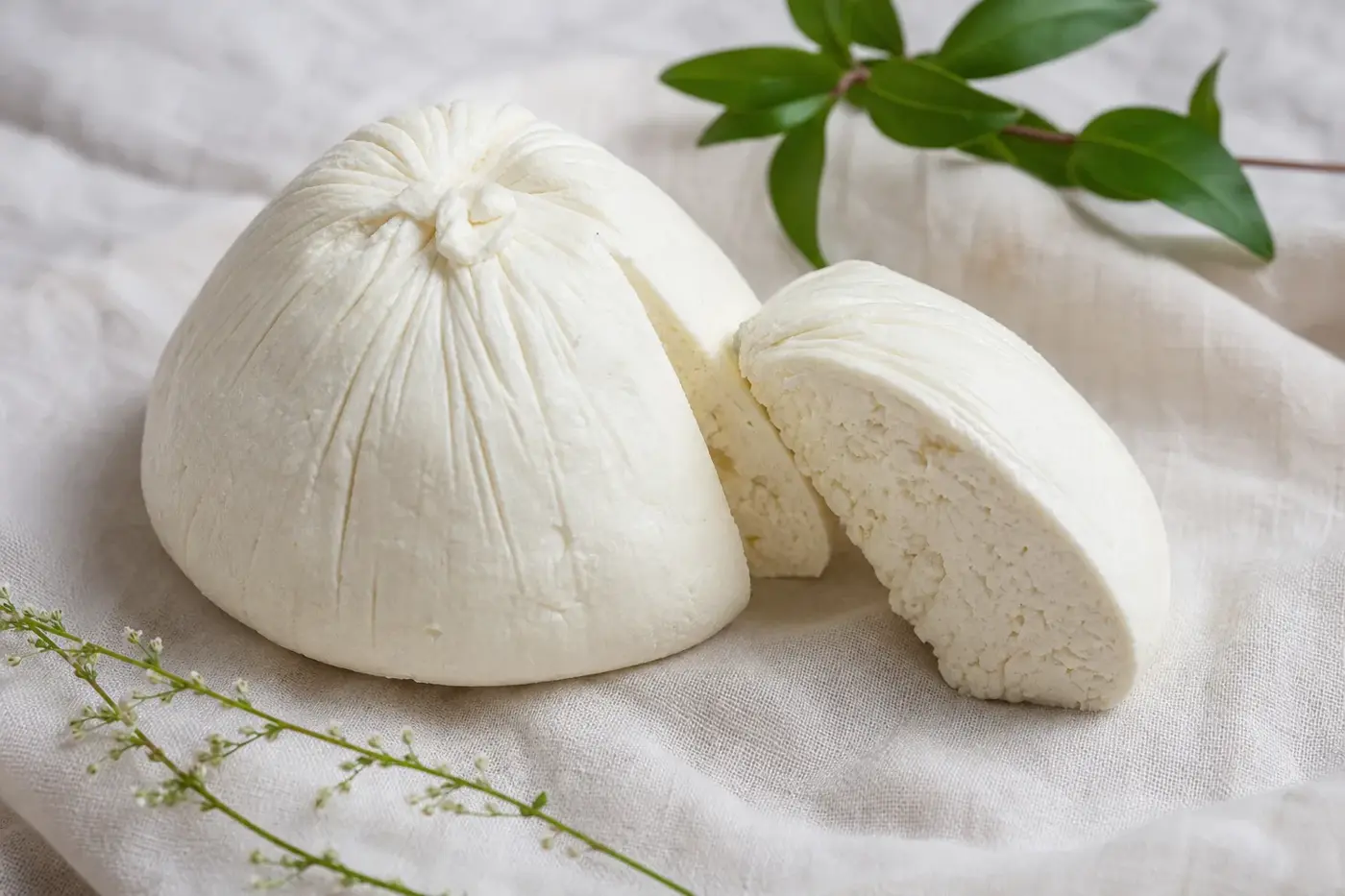
Look at the folds on a Lithuanian curd cheese. You may even spot the impression of a knot, left where soft curd was gathered in a cloth bag, drained and pressed into a rounded triangle. White and tangy, it sits quite differently beside elastic Liliputas and a brittle piece of long-matured Džiugas. Here are three ways into Lithuania’s dairy traditions, and a good reason not to stop at one piece.[2][3][4]
| Get your Lithuanian cheese bearings | What to know |
|---|---|
| Milk behind the three featured cheeses | Cow’s milk.[2][3][4] |
| Styles to explore | Unripened pressed curd, small cellar-matured semi-hard cheese and long-matured hard cheese.[2][3][4] |
| Protected names to look for | Lietuviškas varškės sūris, Liliputas and Džiugas, listed as protected geographical indications by Lithuania’s agriculture ministry and the Great Britain register.[1][5] |
| Lithuania’s food control authority | Valstybinė maisto ir veterinarijos tarnyba, the State Food and Veterinary Service.[6] |
| Reference date | November 2026.[1][5] |
Let the cloth folds tell their story
That cloth bag does more than keep the curd together. The cheesemaker fills a triangular woven bag, ties its broad end and presses it, leaving rounded edges and distinctive folds. Under the registered name Lietuviškas varškės sūris, you will find fresh, smoked, baked and dried versions.[2]
A fresh white piece and a browned, seasoned baked one share a tradition, but offer rather different pleasures. Caraway, garlic and mint all appear as seasonings in the specification. Plain cheese has just as much claim to the name.[2]
For your first tasting, choose different methods rather than three similar-looking pieces. Fresh curd cheese, Liliputas and an age-labelled Džiugas lead you from acid-set curd through supple matured cheese to hard cheese that breaks into fragments. Taste each plainly first, before the accompaniments join in.[2][3][4]
Find your way from the uplands to the Nemunas
Cow’s milk connects these three registered cheeses. Their places pull them apart: Lietuviškas varškės sūris belongs to Lithuania as a whole, while Džiugas comes from a much smaller area around Telšiai, in the Samogitian Uplands of north-western Lithuania. For Liliputas, follow the river Nemunas to Belvederis, in Jurbarkas district.[2][3][4]
Picture upland dairying around Telšiai, then a riverbank settlement where cellars became central to one particular cheese. The specifications give weight to cheesemaking knowledge, curd handling and maturation. What reaches your plate owes something to people and buildings, as well as milk.[3][4]
Džiugas has its own milk requirement. Its documentation identifies grazing-season cow’s milk.[4] That detail belongs to Džiugas, not to Lithuanian dairy products as a whole.
Beyond the registered names, your choice of milk widens. Varėna’s official visitor information describes tastings at Sūrininkai Dargužiuose, with fresh and aged cheeses made from cow’s, goat’s and sheep’s milk.[7] Cow’s milk runs through the signature cheeses here, but smaller producers give you other milk species to explore.
Make room for three distinct cheeses
Lietuviškas varškės sūris: get to know the curd
Soured milk starts this cheese on its way, not rennet. Lactic acid bacteria sour pasteurised cow’s milk and cause coagulation, turning the liquid into curd. Rennet, a preparation used to coagulate milk, plays no part; whey, the liquid that separates from the curd, drains away before shaping and pressing.[2]
The specification describes a characteristic lactic-acid flavour. A fresh piece can crumble beneath your knife, while smoking, baking or drying changes its surface and consistency. Whatever the treatment, that triangle remains a useful clue to its identity.[2]
Start with a plain version and give yourself a chance to know the cheese itself. Then try a caraway-seasoned piece and notice how the seeds change its aroma. Ask whether your piece is fresh, baked, smoked or dried, too: “curd cheese” tells you only part of the story.
Liliputas: follow a small cheese into the cellar
Small dimensions are part of Liliputas’s identity. This cylindrical, semi-hard cheese comes from Belvederis and uses pasteurised cow’s milk. Its amended EU document specifies cylinders 5 to 15 cm high and 7 to 8.5 cm across, weighing 250 to 700 g.[3]
The cheese is enzyme-set, wrapped in woven cotton cloth during pressing and matured for 20 to 30 days. Its specified cellar conditions are 10 to 14 °C and 85 to 94% humidity. Naturally occurring Penicillium pallidum helps mature the surface, then is washed away before the protective coating is applied.[3]
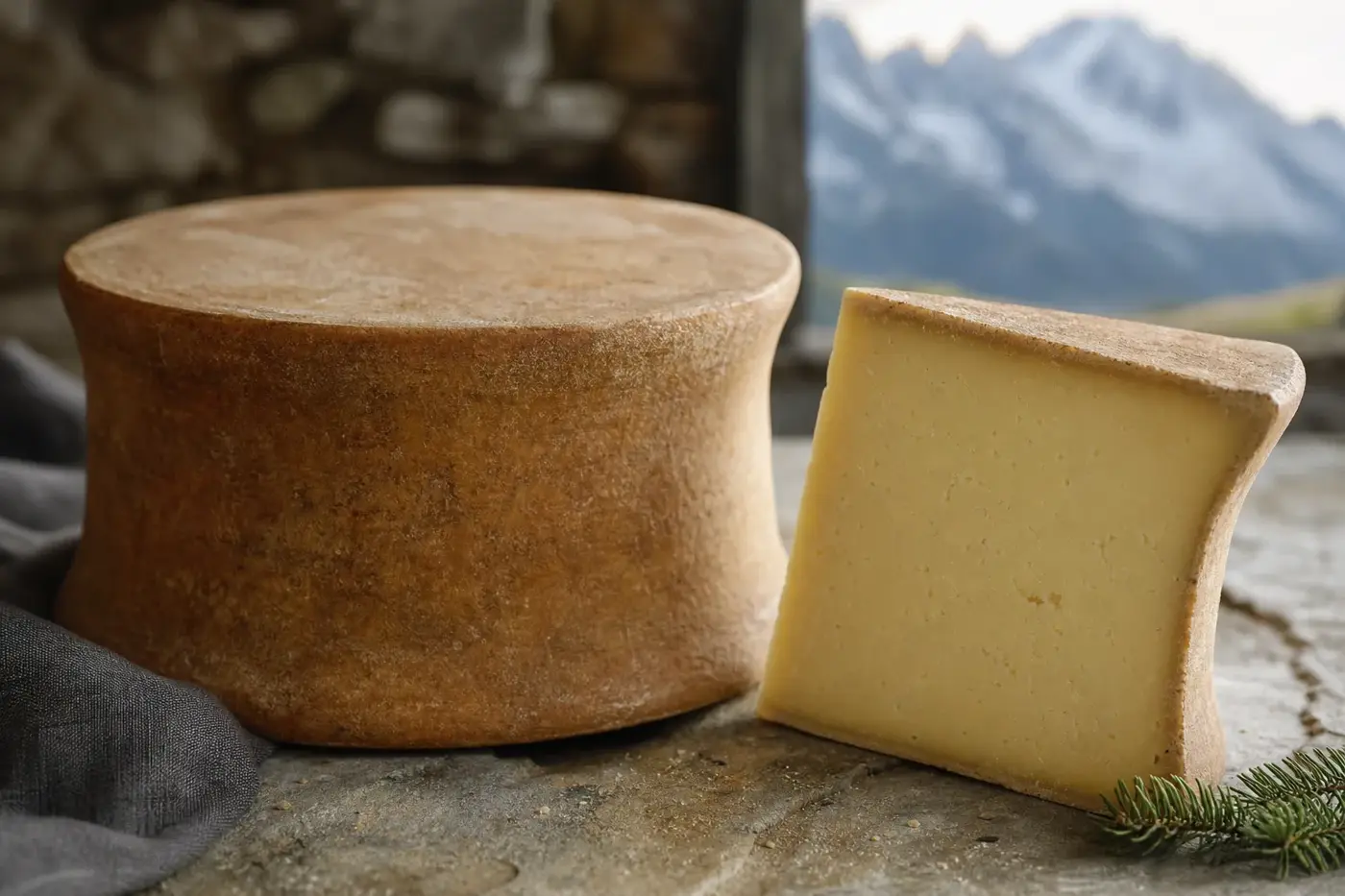
Slice into it and you will find a firm, elastic paste. The same document describes a fresh, lactic flavour, with possible sharpness and saltiness. On your first tasting plate, Liliputas gives you a useful middle stop between crumbly fresh curd and hard Džiugas.[3]
Džiugas: break a piece and linger
Džiugas breaks rather than bends. This hard cheese uses pasteurised cow’s milk and a microbial milk-coagulating enzyme. Its production area is precisely defined as Telšiai City civil parish, within Samogitia.[4]
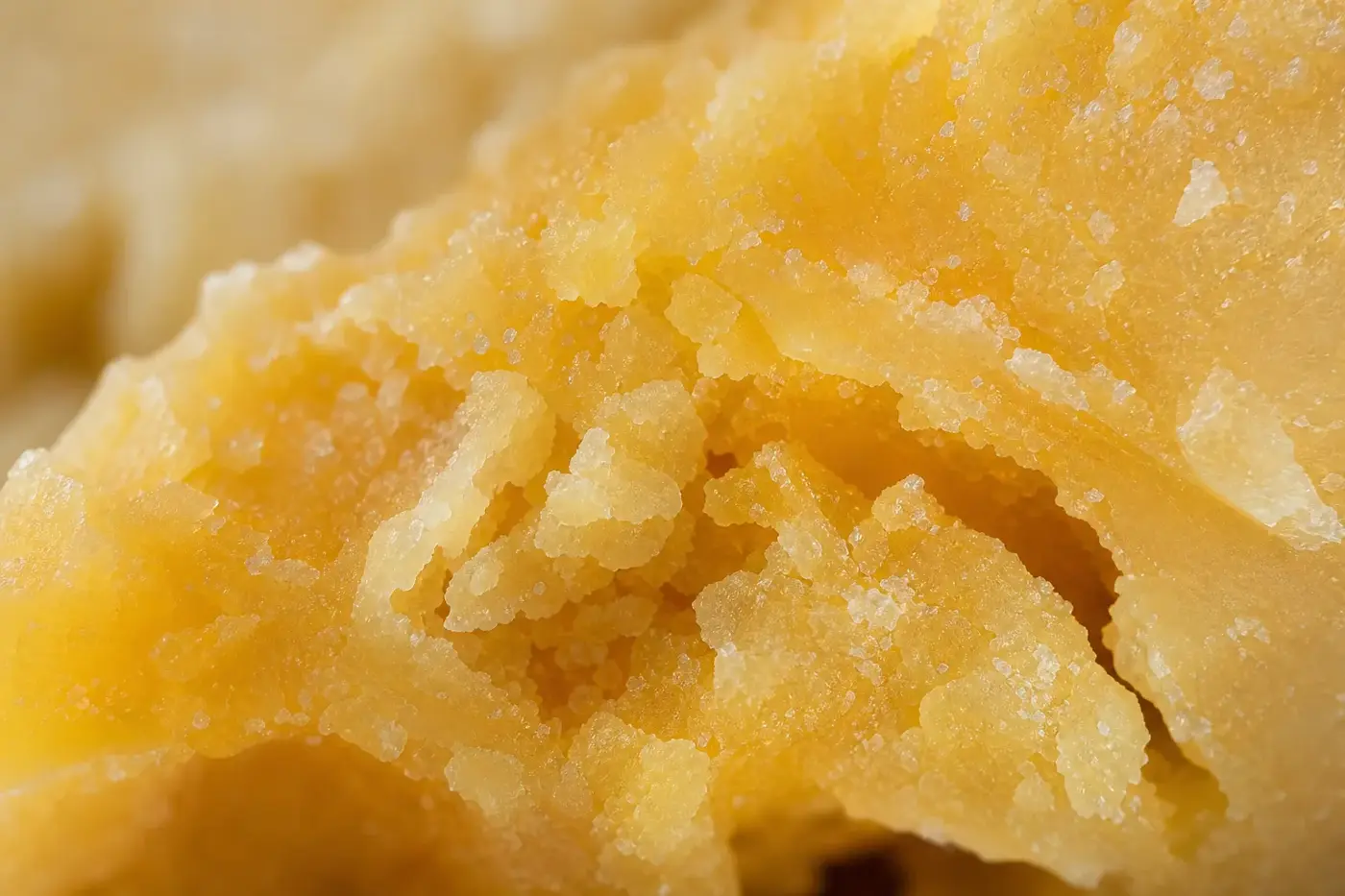
The official description gives you a sweet yet sharp taste, subtle fruity aftertastes and a hard paste that breaks readily. Visible calcium salt and tyrosine crystals belong in the picture too. When choosing your piece, look for the age printed on the pack.[4]
Treat different ages as different expressions of Džiugas, not a contest in which the oldest automatically gets the trophy. Feel the resistance as you break a piece, look at the spread of crystals and notice how long the finish lasts. You will learn more that way than by calling every aged hard cheese “strong”.
Know the names behind the protection
Džiugas, Lietuviškas varškės sūris and Liliputas are PGIs, protected geographical indications, in the EU and Great Britain. Lithuania’s agriculture ministry lists all three among its registered EU names. The separate Great Britain register also records each as registered.[1][5]
The EU dossier identifiers below belong to the exact registered names. They help you distinguish those names from generic descriptions and a producer’s own branding.
| Name to look for | EU dossier identifier | EU category | Great Britain status |
|---|---|---|---|
| Džiugas | PGI-LT-02372.[4] | PGI, ministry-listed.[1] | Registered PGI.[5] |
| Lietuviškas varškės sūris | LT-PGI-0005-0853.[2] | PGI, ministry-listed.[1] | Registered PGI.[5] |
| Liliputas | PGI-LT-00868; 2022 amendment: AM02.[3] | PGI, ministry-listed.[1] | Registered PGI.[5] |
Status reference date: November 2026. The Great Britain register records registration on 31 December 2020 for all three names.[5]
Each name draws its own geographical boundary: Lithuania for the curd cheese, the defined Telšiai area for Džiugas and Belvederis for Liliputas.[2][3][4] Read the name alongside its specification. Their shared PGI designation protects three distinct cheeses, not one common recipe.
To untangle origin-linked schemes from traditional specialities, turn to protected cheese names. The entries here establish protection in the stated jurisdictions. Rights elsewhere need separate consideration.
Look beyond the best-known trio
Dargužiai offers you a glimpse of Lithuania’s wider cheese selection. Its tasting programme describes smaller-scale cheesemaking across several milk species, with fresh and aged styles to try.[7] The registered names are a starting point, not the whole selection.
At a cheese counter, ask four questions: which animal supplied the milk, how was the cheese set, has it matured, and has it been smoked or otherwise treated? Those answers tell you far more than “local”. For a closer look at the differences, try the guide to recognising cheese styles.
One name calls for a little distinction. Lithuanian tourism material includes obuolių sūris, usually translated as apple cheese, among the country’s food specialities.[8] It is a fruit preparation, so give it a separate place from dairy cheese as you explore a market or menu.
Pull up a chair and start simply
Fresh curd cheese needs no crowd of accompaniments. Lithuania’s national tourism agency describes serving it with tomatoes, salad leaves or cucumber.[8] Make that your first plate, leaving some cheese plain before trying it alongside the vegetables.
Sweet accompaniments have a place in organised tastings too. Džiugas House publishes combinations involving honey, nuts, grapes, pears and jam.[9] Put them beside the cheese rather than on top, so you can compare a plain bite with a paired one.
Cheese belongs to village hospitality as well. Varėna’s visitor authority records Whitsun as Dargužiai’s principal village celebration, when households prepared their best cheese for guests.[10] It is a vivid local picture, rooted in one village rather than a custom to assume at every Lithuanian celebration.
For an exploratory plate at home, try fresh curd cheese with cucumber, sliced Liliputas and small broken pieces of Džiugas. Offer bread and one sweet accompaniment separately. Give each texture space: the crumble, the elastic slice and the brittle fragment all reward your attention.
Step into the dairy’s history
In 1921, an agricultural school teaching dairying opened at Belvederis. The cheese dairy followed in 1928, and in 1958 it began making the small cheeses subsequently known as Liliputas.[3] Follow those dates and you find teaching, cellar conditions and handwork closely bound together.
Household curd cheesemaking has its place alongside that specialised dairy story. The curd cheese documentation describes milk being soured, drained and pressed, then given further forms through drying, smoking or baking.[2] Here, too, you meet the cloth bag.
Telšiai adds another chapter: industrial cheesemaking. Experimental hard-cheese production in a new plant during the late Soviet period became part of the background to Džiugas.[4]
| Date | A moment to remember |
|---|---|
| 1921 | An agricultural school teaching dairying was established at Belvederis.[3] |
| 1928 | The Belvederis cheese dairy was built.[3] |
| 1958 | Production began there of small cheeses subsequently known as Liliputas.[3] |
| 1985 | Experimental production began in Telšiai of the hard cheese that formed the basis for Džiugas.[4] |
Today, named cheeses with formal specifications sit alongside smaller producers making varied fresh and matured cheeses.[1][7] You need both for the fuller picture. Lithuania’s dairy traditions have room for the household cloth bag, the specialised cellar and the modern maturation programme, without asking any one to represent everything.
Plan your next cheese stop
Vilnius markets: Go Vilnius names Halės Market and Benedikto Market among the places to find Lithuanian food specialities.[11] Start there, then consult the individual trader’s current information before making a special journey.
Specialist cheese shops: Džiugas House publishes a cheese-tasting programme at locations including Telšiai and Vilnius.[9] It offers a focused way to compare one cheese at different maturation ages. Consult the official booking page for the format, language, accessibility and arrangements that suit your visit.
Dargužiai: Varėna’s visitor authority lists a cheese shop and tasting experience at Sūrininkai Dargužiuose.[7] The information describes a warm-season operation. Confirm arrangements in advance, particularly if you are planning an autumn or winter journey.
Before visiting any dairy, ask what your appointment includes: production areas, a shop or a tasting room. Confirm accessibility and booking conditions directly. Finding a dairy’s cheese on sale locally does not mean you can walk into its cheesemaking rooms.
Choose a piece worth coming back to
In Lithuania, first distinguish loose curd from shaped curd cheese. Then look for smoking, baking, drying or seasoning; with Džiugas, compare the stated maturation, and with Liliputas, look for the complete name and producer details.[2][3][4] Settle those basics before turning your thoughts to accompaniments or serving.
In the UK, begin with a Lithuanian or Baltic specialist food retailer. Ask for the exact cheese name rather than a broad substitute. Look on the packet for the maker, country of production and stated age; Reading a cheese label helps you separate those details from branding.
If you are travelling from Lithuania to Great Britain, consult current GOV.UK personal-import guidance before buying cheese to bring home. Look at any transit-country requirements too.[12] Buying from a retailer within Britain and carrying food across its border involve different requirements.
Keep a short tasting note: name, maker, treatment, age, texture and your preferred accompaniment. Next time, change one thing, perhaps plain curd cheese for caraway-seasoned, or one age of Džiugas for another. Each piece builds on the last, until you know not just which cheeses you enjoy, but why.
Questions people ask
What are the main Lithuanian cheeses?
Lietuviškas varškės sūris is an unripened pressed curd cheese, while Liliputas is a small matured cheese with an elastic paste. Džiugas is a hard cheese that breaks readily and can have visible crystals.
Is Lithuanian curd cheese made with rennet?
Lietuviškas varškės sūris is made without rennet. Lactic acid bacteria sour pasteurised cow’s milk and cause it to set into curd.
Is Lithuanian apple cheese made from milk?
Obuolių sūris, usually translated as apple cheese, is a fruit preparation. Lithuanian tourism material lists it among the country’s food specialities.
Are Lithuanian cheese names protected?
Džiugas, Lietuviškas varškės sūris and Liliputas are protected geographical indications in the EU and Great Britain. The Great Britain register records all three names as registered on 31 December 2020.
Where can I taste cheese in Lithuania?
Džiugas House offers tastings at locations including Telšiai and Vilnius. Varėna’s visitor authority also lists a cheese shop and tasting experience at Sūrininkai Dargužiuose, with arrangements to confirm in advance.
Sources
[1] Lithuanian Ministry of Agriculture. Sąjungos geografinių nuorodų registre įregistruoti lietuviškų maisto produktų pavadinimai. Current ministry listing retrieved November 2026.
[2] Lithuanian Ministry of Agriculture. Lietuviškas varškės sūris: product specification, amended document dated 28 February 2017, dossier LT-PGI-0005-0853-28.01.2011.
[3] European Commission. Publication of the amended single document following the approval of a minor amendment: Liliputas. 2022/C 182/06, Official Journal C 182, 4 May 2022, pages 25 to 28.
[4] European Commission. Commission Implementing Decision of 16 January 2019: Džiugas, annexed single document, dossier PGI-LT-02372. Supplemented by the Lithuanian ministry’s updated single document linked with its 2023 amendment materials.
[5] Department for Environment, Food & Rural Affairs. Protected geographical food and drink names, Lithuania-filtered register; individual Džiugas and Liliputas entries also retrieved. Current records, November 2026.
[6] State Food and Veterinary Service, Lithuania. Kodėl „Feta“ negali būti pagaminta Lietuvoje, o „Liliputas“, Italijoje? 26 August 2026.
[7] Varėna tourism information service. Sūrininkai Dargužiuose, educational programme and café/shop listings. Undated current listings retrieved November 2026.
[8] Lithuania Travel. Lithuanian products. Undated current national tourism page retrieved November 2026.
[9] Džiugas House. Sūrio DŽIUGAS degustacijos and DŽIUGAS: draugijos sūris. Operator’s programme and accompaniment suggestions, retrieved November 2026. Commercial operator describing its own services.
[10] Varėna tourism information service. Dargužiai. Undated local cultural account retrieved November 2026.
[11] Go Vilnius. Delicious Souvenirs from Vilnius. Undated official city tourism page retrieved November 2026.
[12] UK Government. Bringing food into Great Britain: Overview. Current official guidance retrieved November 2026.
This desk-researched article brings together official cheese documents, government register records and national and local visitor information; it includes no site tasting or visit.
Last checked: November 2026
Last checked November 2026.
The cheeses of Lithuania
The editors suggest you read next
French Cheese: The Complete Guide
Picture Normandy’s pastures, then follow the milk towards the Loire’s goat dairies, the Jura’s shared cheesemaking traditions and the sheep country of the Pyrenees.