Mâconnais
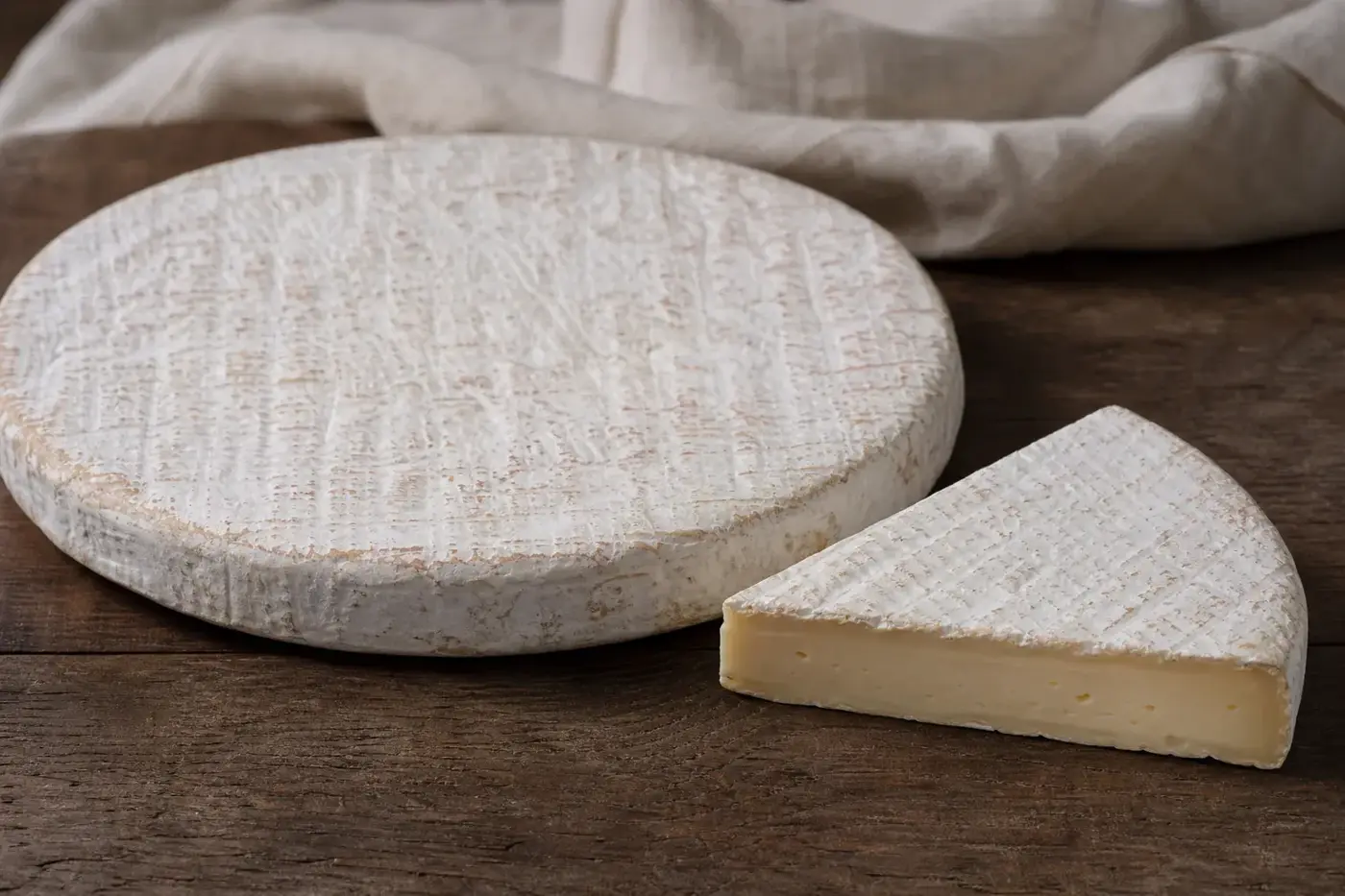
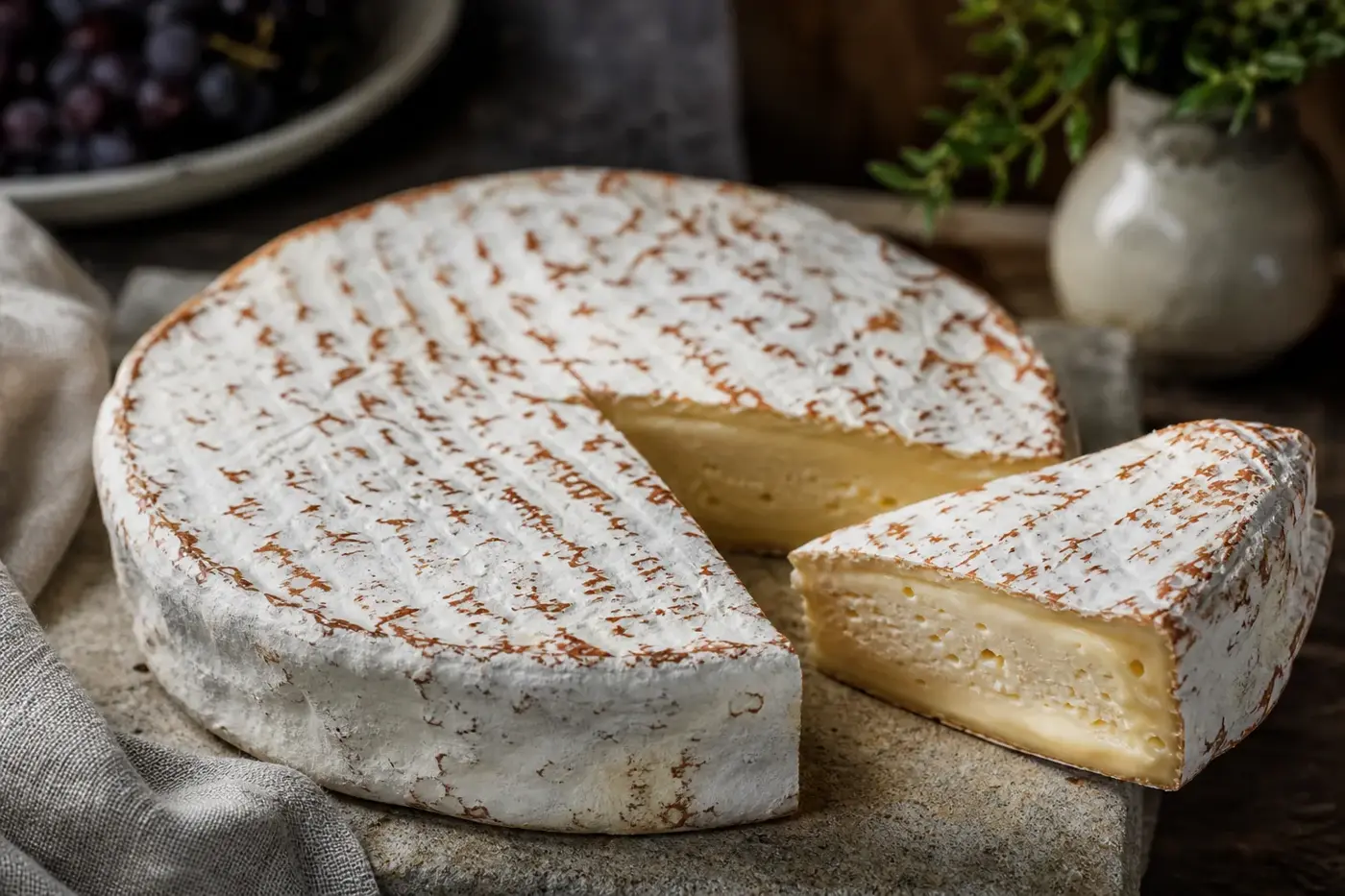
Cut through that little cone of Mâconnais and you meet a pale, fine-textured centre beneath a natural rind.
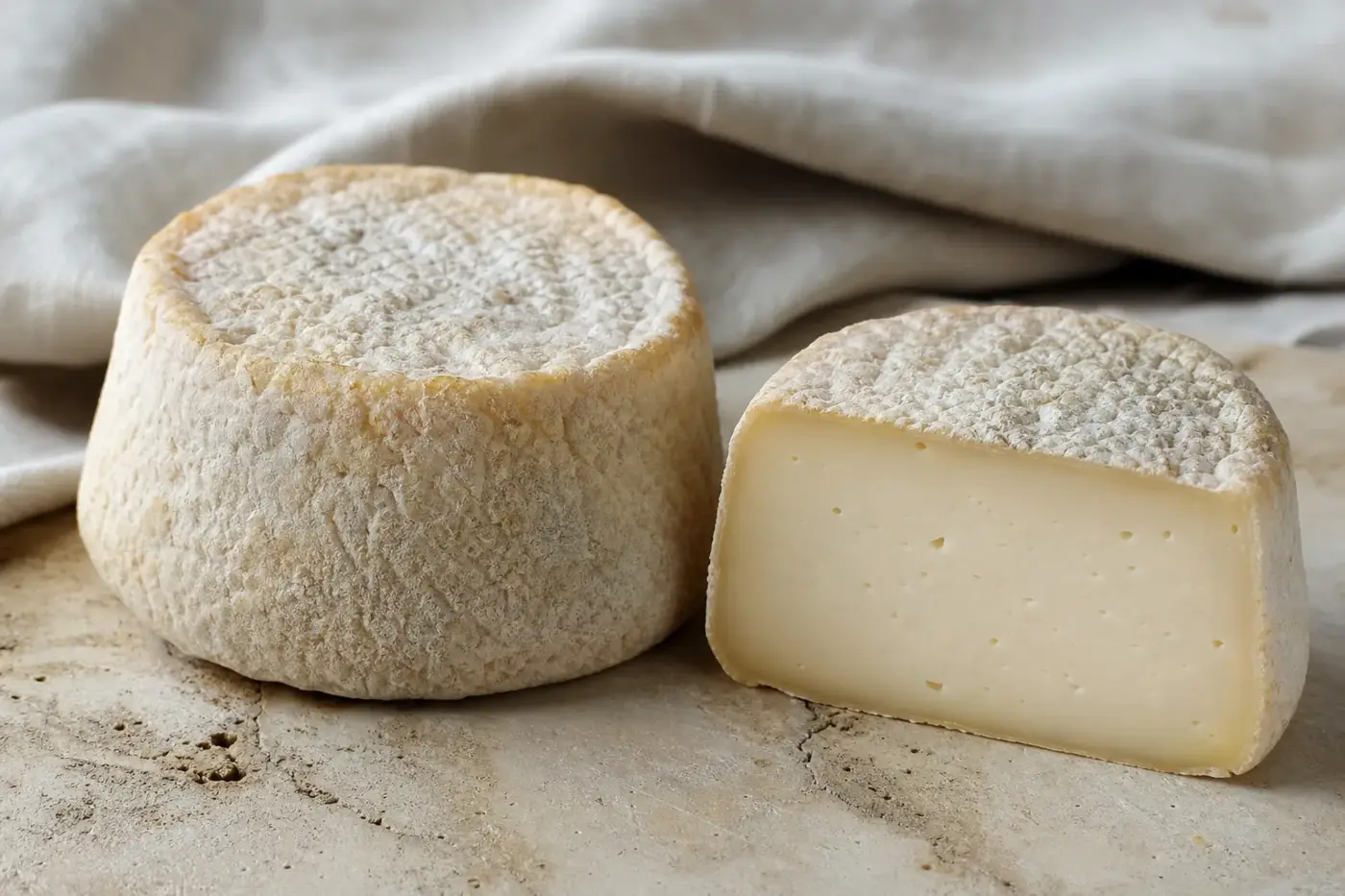
Cut through that little cone of Mâconnais and you meet a pale, fine-textured centre beneath a natural rind. Its shape tells a story: nobody turned the curd. This raw goat’s milk cheese comes from the vineyard country of southern Burgundy, taking its truncated shape from its mould and its interior from slow, lactic coagulation. The rind develops as it ages. [1][2]
| What you might want to know | The detail |
|---|---|
| Familiar and registered name | Mâconnais. [3][4] |
| Where it comes from | France: southern Saône-et-Loire and Cenves in the Rhône department, within the legally listed production area. [2] |
| EU protection | Protected Designation of Origin, AOP in French; registered under Commission Regulation (EU) No 698/2010. [3] |
| EU register identifier | Unspecified here. Published application file identifier: FR-PDO-0005-0553-28.08.2006. [4] |
| Great Britain | Registered PDO; UK scheme registration dated 31 December 2020 at 23:00. Position at November 2026. [5] |
| Northern Ireland | Status unspecified here. |
| Switzerland | Status unspecified here. |
| United States | Status unspecified here. |
| Milk | Whole, raw goat’s milk. [2] |
| Minimum maturation | Ten days after removal from the mould. [2] |
| Weight | 50 to 65 g at minimum maturation; at least 30 g with prolonged maturation. [2] |
| Composition | At least 45% dry matter in the whole cheese and at least 45% fat in dry matter. [4] |
| UK pregnancy guidance | NHS guidance on unpasteurised and mould-ripened soft cheeses, November 2026. [7] |
Follow the goats around the vineyards
Picture the landscape in layers. The geographical account published with Mâconnais’s EU application describes meadows in damp valley bottoms, cereals on fertile lower slopes and vines on stonier ground. Higher up, and on less favourably exposed sites, you find dry grassland and woodland. [4]
The goats fitted around the edges of this landscape. They grazed valley meadows and dry slopes, browsing hedges and small wooded patches. Here is where the cheese’s connection with wine begins: in how people used the land, long before you pour a glass. [4]
INAO, France’s appellation authority, describes goat keeping as historically complementary to vineyard work. It also records the traditional chazère, a suspended cheese cage in which these small cheeses dried in moving air. Wine trading routes helped spread their reputation beyond the vineyards, although this published history gives no founding date. [1]
That small format belongs to everyday vineyard life. Think food for a vineyard snack, not a grand wheel reduced to pocket size. The producers’ defence syndicate still presents Mâconnais this way, with regional wines alongside. [6]
A little cone with a precise address
“Burgundy” puts you in the right broad landscape, but the legal boundary is more exact. Milk production, cheesemaking and maturation must all happen within the appellation’s defined area. This covers the named communes in southern Saône-et-Loire and Cenves in the neighbouring Rhône department, as listed in the specification. [2]
Protection arrived in distinct steps. French AOC recognition came with the decree of 7 September 2006, followed by approval of the specification through the decree of 28 June 2010. EU registration followed under Regulation No 698/2010, adopted on 4 August and published on 5 August 2010, entering into force on the twentieth day following publication. [2][3]
Great Britain has a separate register entry. It records Mâconnais as a registered PDO, with registration under that scheme on 31 December 2020. [5]
You can find pale paste and natural rind on other small lactic goat’s cheeses. Mâconnais has a more particular identity: a truncated cone, made without turning, tied to a defined place and method. A similar cheese made outside that specification is not Mâconnais under the applicable PDO rules; for the wider terminology, see protected names explained. [2][3]
Meet the herd behind your cheese
The specification calls for milk from Alpine goats, Poitevine goats or crosses between those two breeds. The breed transition period ended on 1 January 2015. Permanent confinement is prohibited, and the animals must have at least 120 days each year of grazing and/or feeding freshly cut green forage. [2]
It is worth pausing over that last detail when you picture the herd. Those days can mean goats grazing, or fresh grass brought to them. The rule does not mean every goat spends every qualifying day outdoors. [2]
Grass is central to the feeding system. Forage must come from the geographical area and may be grazed grass, freshly cut grass or hay; fermented forage is prohibited, while supplementary feeds have separate controls. That gives you more detail than a broad label such as “pasture-fed”: it tells you where the forage comes from and how the goats may receive it. [4]
Let the curd take its time
Mâconnais takes shape slowly. Acidification does most of the work of forming its lactic curd, helped by a small addition of rennet, the milk-coagulating preparation. The solid curd then goes into draining moulds, where whey, the liquid portion, can escape. [2][9]
The protected method gives each stage its allotted time. Here is the journey from milk to little cone.
| The stage | What needs to happen |
|---|---|
| Coagulation | Eighteen to twenty-four hours after adding rennet. |
| Moulding | By hand, without cutting or pre-draining the curd. |
| The mould | Internal diameters: 66 mm at the top, 47 mm at the bottom. External height: 78 mm. |
| Draining and salting | At least twenty-four hours before unmoulding; dry salting. |
| Maturation | At least ten days after unmoulding, through successive draining, drying and ripening phases. |
These requirements come from the Mâconnais specification. The measurements describe the mould, not the finished cheese. You can leave the ruler in the drawer when lunch arrives. [9]
Because nobody turns the cheese, it keeps its truncated-cone form. INAO also identifies salting on one face as characteristic of Mâconnais. That outline records how the curd was handled; it is not simply there to look handsome. [1]
If this little mould has made you curious, there is a wider story to follow. Explore the broader journey in how cheese is made.
Get acquainted with the changing rind
Inside, you should find the fine, homogeneous, cream-white paste described in the specification. Outside, the rind may be barely formed or lightly bloomed, with ivory, beige or bluish colouring. Geotrichum provides its principal surface covering, and blue Penicillium patches may develop as the cheese matures. [9]
The producers’ syndicate shows this progression with a young white cheese at approximately twelve days. Its examples have scattered blue marks at fifteen days and a more extensively blue surface at three weeks. Treat these as possible stages, rather than a colour chart every cheese must follow to a timetable. [6]
At the counter, ask whether the cheese is younger and paler or has matured further. You will give the seller something more useful than “the oldest one, please”. It is also a good opening for a conversation about the condition of that individual cheese.
The natural rind is part of Mâconnais, but ask about the rind and condition of your particular example before eating it. Expected ripening flora and unwanted spoilage need different treatment. If an unfamiliar change appears after purchase, follow official handling advice; mould on cheese covers the general principles.
Taste from butter through to hay
Begin with a young cheese and you may find the lactic and buttery notes described by INAO. Maturation brings hazelnut and hay aromas, while the producers’ syndicate describes woodland and mushroom notes in more mature examples. These published descriptions offer a range to explore, not a tasting exam you need to pass. [1][6]
Texture changes along the way. A younger paste can be softer; a more mature cheese can become firmer as it loses moisture. Ask about the cheese in front of you, then choose the texture and aromas that appeal.
If you compare examples, keep the accompaniments simple and your notes in everyday language. How noticeable is the acidity? How readily does the paste yield when you cut it, and does the rind smell different from the centre?
These questions help you notice each cheese without expecting identical answers. Youth and maturity offer different pleasures, and neither stage is automatically a fault. Older need not mean better for you: let your taste and the occasion guide you.
Choose your cone and give it a cool home
Start with the full name, then ask who made or matured the cheese. Tell the cheesemonger whether you fancy something younger and paler or further matured, with a more developed rind. If you are new to Mâconnais, ask them to talk you through the available examples rather than choosing by colour alone.
Read the date and storage instructions before buying. This is particularly useful if you are shopping several days before you plan to serve it. Keep that information with the cheese at home, somewhere you can find it easily.
For UK home handling, NHS guidance advises refrigeration at 5 °C or below, keeping raw and ready-to-eat foods separate, and observing use-by dates. Follow the label’s storage instructions. Use opened food within two days unless the packaging says otherwise. [8]
Keep the cheese covered, following the seller’s wrapping advice alongside the label instructions. Your domestic fridge offers chilled storage, not a cheesemaker’s controlled maturation conditions. For fuller practical advice, see how to store cheese at home.
Bring a portion to the table
Take out only what you plan to serve, shortly before eating. Leave the rest refrigerated. Let the serving portion lose its refrigerator chill while you prepare bread and plates, rather than putting it out hours ahead.
The UK Food Standards Agency advises eating ready-to-eat foods shortly after refrigeration, within four hours, or within two hours on a very warm day. Keep them out of direct sunlight. Those are outer handling limits, not suggested warming times. [10]
For your first taste, cut through the little cone so your portion includes both rind and centre. Try a little on its own. There is time for bread and accompaniments with the next bite.
Add bread, fruit and a glass from Burgundy
Plain bread is a useful starting point. Taste the cheese alone, then notice what changes when you add an accompaniment. Follow with a few slices of pear or apple; if you offer chutney or honey, put a small amount on the side so you can decide whether sweetness improves the match.
For a regional pairing, the producers’ syndicate recommends a white Chardonnay from the Mâconnais or a Mâcon red. [6] Start by trying the white with a younger cheese. Look for freshness that suits the cheese’s acidity, rather than choosing on weight or intensity alone.
If you prefer an alcohol-free option, try still or sparkling water, followed by a bite of fresh apple. This keeps the comparison straightforward. It also leaves you room to notice how the cheese’s aromas change.
Alcoholic pairings are for adults of legal drinking age, in small servings. People who are pregnant, driving, taking medicines that interact with alcohol, or recovering from alcohol dependence should not drink. Consult the relevant NHS guidance and a healthcare professional about your individual circumstances. [7]
Take extra care with raw milk and rind
Mâconnais is made with raw milk, and its natural surface flora belong to its specified appearance. [4][9] If you are pregnant or more susceptible to foodborne illness, consult the relevant national guidance before choosing it.
In the UK, the NHS advises pregnant people not to eat mould ripened soft cheeses with a white coating on the outside, such as chèvre, unless cooked until steaming hot. Read its advice on other unpasteurised and soft cheeses too. [7]
The NHS identifies pregnant people, newborn babies, people with weakened immunity and older people among those at greater risk of serious listeriosis. The FSA includes raw-milk products and soft mould-ripened cheeses among foods associated with listeria risk. [8][10]
Use the sources relevant to your country and circumstances. When you need individual guidance, ask your healthcare professional.
General information only, not medical advice: follow the official guidance where you live.
Questions people ask
Where does Mâconnais cheese come from?
Mâconnais comes from a defined area in southern Saône et Loire and Cenves in the Rhône department of France. Milk production, cheesemaking and maturation must all take place within that area.
What milk is Mâconnais made from?
Mâconnais is made from whole, raw goat’s milk. The milk comes from Alpine goats, Poitevine goats or crosses between the two breeds.
What does Mâconnais taste like?
According to INAO, young Mâconnais has lactic and buttery notes, with hazelnut and hay aromas developing as it matures. The producers’ syndicate also describes woodland and mushroom notes in more mature examples.
Why does Mâconnais sometimes have blue patches?
Blue Penicillium patches may develop on the natural rind as the cheese matures. The producers’ syndicate shows examples with scattered blue marks at around fifteen days and a more extensively blue surface at three weeks, though these changes do not follow a fixed timetable.
Can you eat Mâconnais during pregnancy?
The NHS advises pregnant people not to eat mould ripened soft cheeses with a white coating on the outside, such as chèvre, unless cooked until steaming hot. Check the NHS guidance for its advice on other unpasteurised and soft cheeses, and ask a healthcare professional about individual circumstances.
Sources
[1] Institut national de l’origine et de la qualité. Mâconnais. Undated product account, retrieved November 2026. Product identity, sensory descriptions and attributed historical account.
[2] République française, Légifrance. Décret n° 2010-724 du 28 juin 2010 relatif à l’appellation d’origine contrôlée « Mâconnais », Articles 1 and 2 and annexed specification, sections 3 and 5. Consolidated text retrieved November 2026.
[3] European Commission. Commission Regulation (EU) No 698/2010 of 4 August 2010 entering a name in the register of protected designations of origin and protected geographical indications (Mâconnais (PDO)). Official Journal L 203, 5 August 2010, pages 3 to 4.
[4] European Commission. Publication d’une demande au titre de l’article 6, paragraphe 2, du règlement (CE) no 510/2006 du Conseil relatif à la protection des indications géographiques et des appellations d’origine des produits agricoles et des denrées alimentaires. Mâconnais single document, 2009/C 308/13, 18 December 2009, sections 3 to 5.
[5] Department for Environment, Food & Rural Affairs. Mâconnais. Protected food and drink names register, published 4 January 2021, retrieved November 2026.
[6] Syndicat de défense du fromage Mâconnais. AOP Mâconnais. Undated producers’ website, retrieved November 2026. Sensory descriptions, illustrated maturation stages and regional wine recommendations are the syndicate’s own.
[7] NHS. Foods to avoid in pregnancy. Current page retrieved November 2026, dairy and alcohol guidance.
[8] NHS. Listeriosis. Reviewed 10 November 2023, retrieved November 2026. Risk groups and domestic handling advice.
[9] Institut national de l’origine et de la qualité and Syndicat de défense du fromage Mâconnais. Cahier des charges de l’appellation d’origine protégée « Mâconnais ». Version approved 4 June 2008, sections 2 and 5.3; production details cross-checked against the specification annexed to the 2010 decree.
[10] Food Standards Agency. Listeria. Official consumer guidance, PDF retrieved November 2026, sections on risk foods and reducing risk at home.
Researched from official French and EU documents, the Great Britain register, UK public health guidance and the producers’ syndicate’s attributed descriptions.
Last checked: November 2026
Last checked November 2026.
The editors suggest you read next