Monte Veronese
Take a bite of young Monte Veronese: yoghurt, fresh butter and fresh grass might greet you.
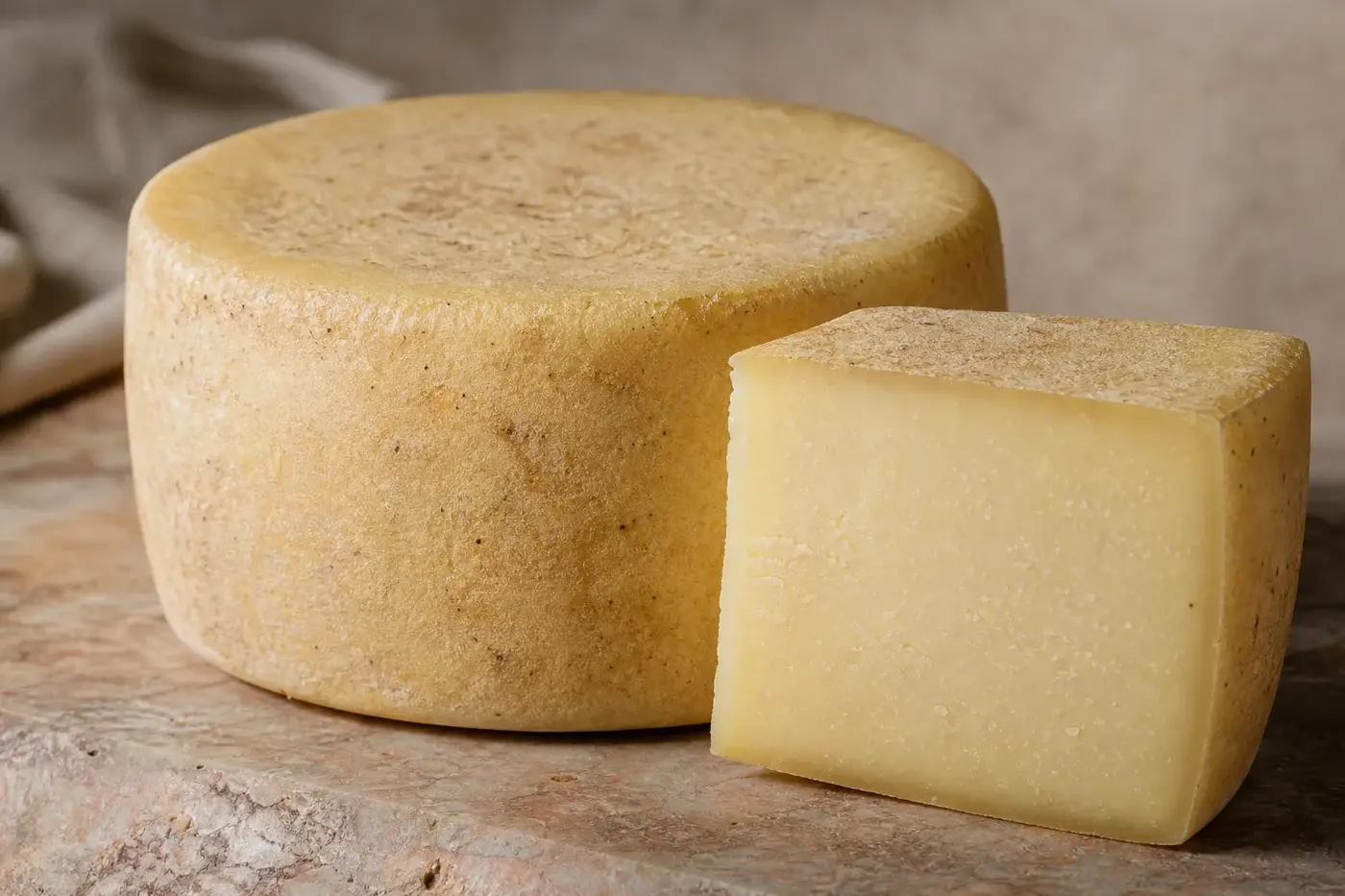
Take a bite of young Monte Veronese: yoghurt, fresh butter and fresh grass might greet you. Give its d’allevo style longer to mature and the texture becomes hard and slightly granular, with hay, sage and hazelnuts taking their turn. Those are the consortium’s tasting notes, carrying you towards the pastures and dairying country north of Verona, including Lessinia and Monte Baldo. [1, 4, 5, 6]
Your first choice starts with the milk. A latte intero uses whole cow’s milk and comes to the table young. D’allevo begins with partially skimmed cow’s milk, then matures towards a firmer texture and a more pronounced flavour. There is no need to declare lifelong allegiance to either. [1, 4]
| What to know | The useful detail |
|---|---|
| Familiar and registered name | Monte Veronese. [2, 3] |
| Where it comes from | Northern province of Verona, Veneto, Italy. [1] |
| Protected designation | Denominazione di origine protetta, DOP, the Italian term for protected designation of origin, PDO. [2] |
| EU registration instrument | Commission Regulation (EC) No 1107/96, Annex, Italian cheeses. [2] |
| EU register identifier | Unspecified here. |
| Great Britain status, November 2026 | Registered PDO; UK scheme registration dated 31 December 2020 at 23:00. [3] |
| Milk | Cow’s milk: whole for a latte intero; partially skimmed for d’allevo. [1] |
| Milk treatment | Ask about treatment for your individual product; permitted treatments under the current specification are unspecified here. |
| Coagulant | Calf rennet specified for both styles. [1] |
| Minimum maturation | A latte intero: 25 days. D’allevo: 90 days for table cheese; six months for grating cheese. [1] |
| Minimum fat in dry matter | A latte intero: 44%; d’allevo: 30%. [1] |
Follow the pastures towards Verona and Lake Garda
Picture livestock farming, seasonal mountain grazing and milk production, rather than one picturesque summit. The consortium places Monte Veronese in Lessinia, Monte Baldo and the adjoining Veronese foothills. You are looking at a working pastoral region, not a single mountain or village. [4]
The legal boundary takes you beyond the uplands, too. Article 2 of the specification lists whole municipalities and parts of others, tracing a detailed southern boundary. Bosco Chiesanuova, Erbezzo and Ferrara di Monte Baldo sit within it, alongside lower ground towards Verona and Lake Garda. [1]
Both the milk and the cheesemaking must come from this defined area. At the counter, “made near Verona” therefore only gets you so far. Ask for the registered name and the producer, not just a broad regional connection. [1]
A dairying story with deep roots and firm dates
The modern designation gives you some clear milestones. Italy recognised it by decree dated 9 April 1993, published on 21 August 1993. European registration followed under Regulation (EC) No 1107/96 in 1996, establishing the formal designation and its production rules. [1, 2]
The consortium takes the story much further back, describing local cheesemaking before the year 1000. It connects the name with the Veronese dialect word monta, meaning a milking. Slow Food presents the proposed connection with milk from several milkings as a probable explanation. [4, 7]
That proposed etymology sits separately from the regional dairying tradition and the modern production rules. You can enjoy all three strands without tying them into one tidy origin story. History need not arrive as neatly wrapped as your cheese.
Read the name, then take a look at the wheel
Monte Veronese entered the EU register as a geographical name in 1996. That name is reserved for cheese meeting defined requirements for origin and production. The specification covers two styles from the same area, each with its own milk preparation, manufacture and maturation requirements. [1, 2]
A protected geographical name is not simply a brand. For that broader distinction, see protected names explained. It helps you understand what the name promises before you choose a maker. [1, 2]
The wheel offers another clue. The original specification requires a particular mark when the cheese is released for consumption: the illustrated design combines Monte Veronese with an eagle above a ladder motif. Ask to see the wheel’s identification and accompanying label, especially if you are buying a cut portion. [1]
Monte Veronese also has a separate PDO registration in Great Britain. Defra’s entry records its status and UK scheme registration date; protection statements belong within their particular jurisdiction. At the counter, a description giving the name, style, maker and age is your most useful guide. [3]
“Monte Veronese d’allevo, twelve months” tells you considerably more than “Italian mountain cheese”. Those extra words give you something useful to choose by.
Step into the dairy, where the styles part company
Both styles start with cow’s milk from one or two consecutive milkings. Calf rennet turns it into curd, the solid material separated from liquid whey. The curd is cut into grains the size of rice, heated, drained and salted, either dry or in brine. [1]
Both cheeses are pasta semicotta, meaning the curd is partly cooked during manufacture. But d’allevo is not simply the same cheese given a longer stay on a shelf. Alongside its partially skimmed milk, it has its own manufacturing requirements, including a higher heating temperature. [1]
The specification sets 43 to 45 °C for a latte intero and 46 to 48 °C for d’allevo. Milk preparation and milk treatment are separate questions, though. “Whole” and “partially skimmed” tell you about fat removal, not heat treatment. [1]
Ask whether your particular cheese uses raw, thermised or pasteurised milk. You can explore the differences in milk treatments.
Meet the two styles side by side
These production figures come from the specification published by Italy’s agriculture ministry and the Veneto regional authority. They give you a practical outline of each style, from the milk to the finished wheel. [1]
| What to compare | A latte intero | D’allevo |
|---|---|---|
| Milk preparation | Whole cow’s milk | Partially skimmed cow’s milk |
| Minimum maturation | 25 days | 90 days for table use; six months for grating |
| Wheel weight | 7 to 10 kg | 6 to 9 kg |
| Wheel diameter | 25 to 35 cm | 25 to 35 cm |
| Wheel height | 7 to 11 cm | 6 to 10 cm |
Dimensions and weight can vary with production conditions and maturation, as the specification allows. Keep one other distinction in mind: the percentages in the fact box measure fat in dry matter, not grams of fat per 100 g of cheese. [1]
Taste your way from fresh butter to hazelnuts
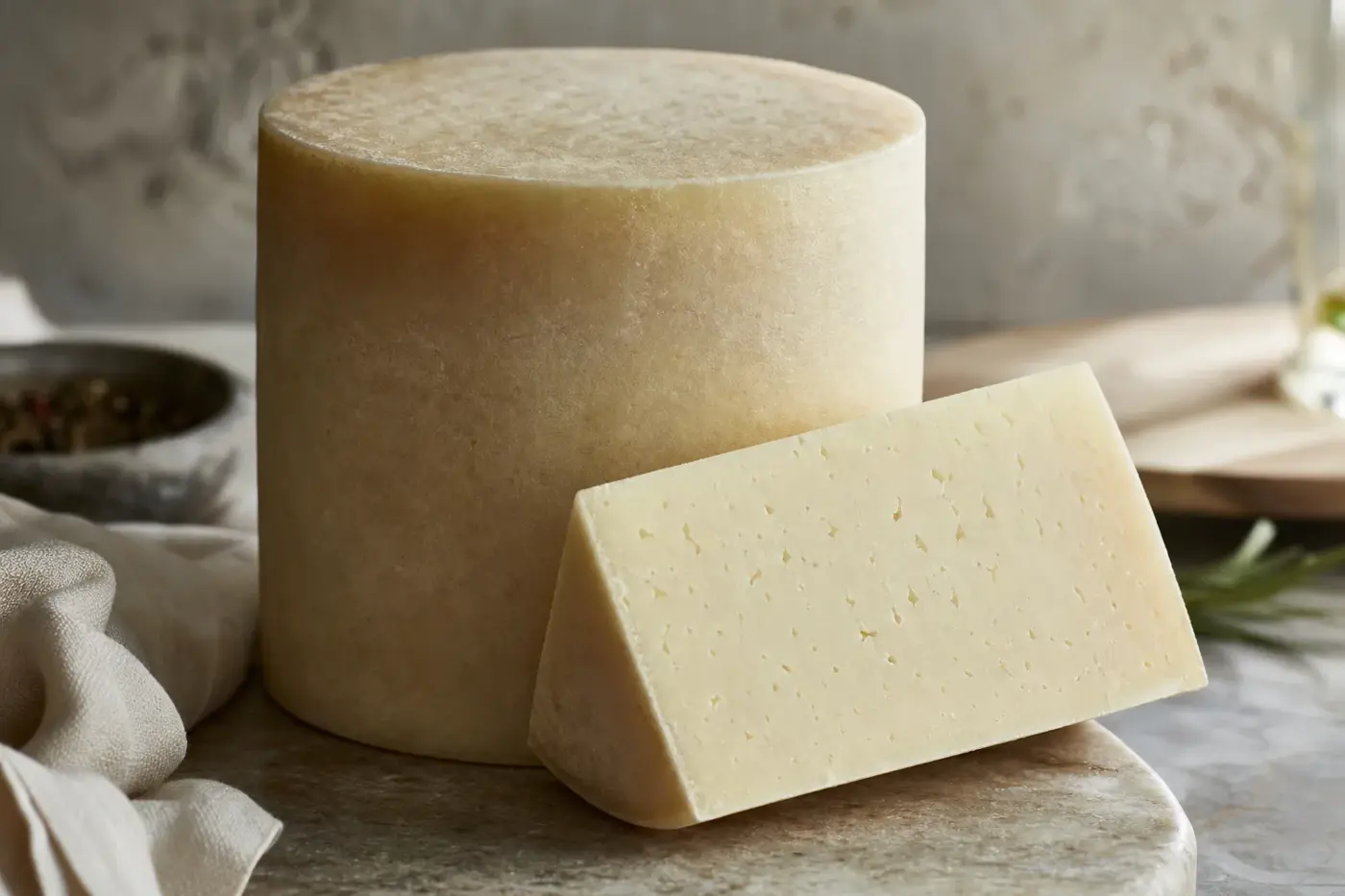
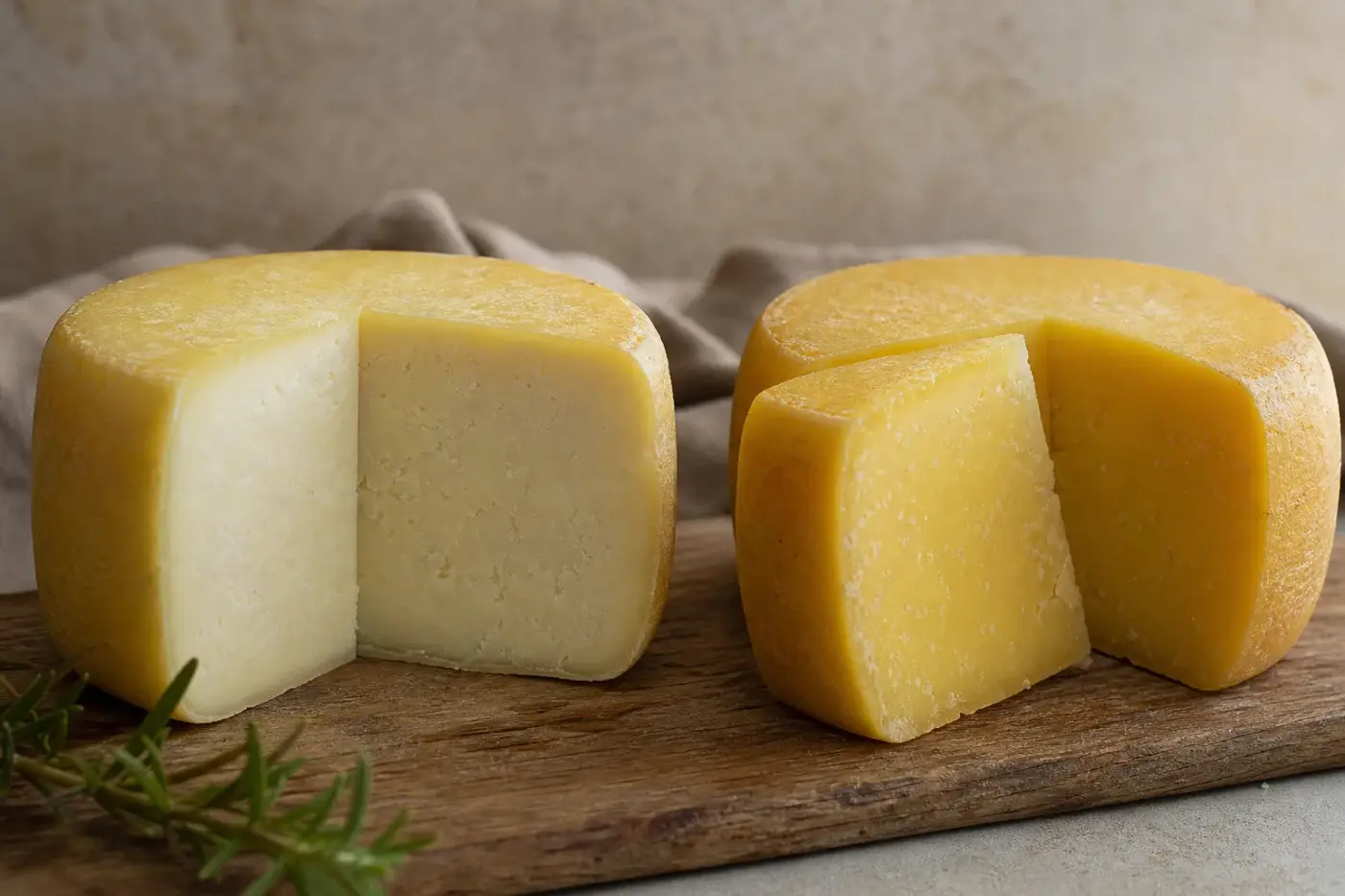
A latte intero makes a gentle introduction. The consortium describes a thin, elastic rind, straw in colour, around a white to pale yellow paste, or interior. You can expect its typical notes of yoghurt, fresh butter and sometimes fresh grass, with sweetness meeting a slight acidity reminiscent of yoghurt. [5]
Before you taste, look at the cut face. Those small openings in the paste are called eyes, and they belong to the style. The specification describes fine, distributed eyes in a latte intero and scattered eyes, normally around 2 to 3 mm, in d’allevo. [1]
The pattern varies from wheel to wheel, so the cut surface gives you a useful comparison rather than a fixed template. D’allevo’s texture changes markedly, too. The consortium describes some elasticity at three months, becoming hard and slightly granular with longer maturation. [1, 6]
Its published tasting notes lead you through melted butter, hay, sage and hazelnuts. A lightly piquant character develops over time, while colour varies with production period and maturation. For its rind characteristics under the current specification, seek further detail when choosing your cheese. [6]
The regional tourism authority calls d’allevo mezzano from 90 days and vecchio from a year. Those are useful signposts, but ask for the actual age as well. The specification’s operative minimums remain 90 days for table cheese and six months for grating. [1, 9]
The consortium describes d’allevo matured for a year, two years or longer. Choose the texture and intensity you enjoy. The oldest wheel is not automatically entitled to your affection. [4, 6]
Di malga: follow the milk into the mountains
Between May and October, cows grazing in mountain pastures supply milk for a particular d’allevo. The consortium calls cheese made exclusively from this milk di malga. The name points you towards its seasonal mountain dairying setting. [4]
Slow Food’s Presidium supports that production tradition. Its account describes participating dairies and mountain operations keeping mountain pasture milk distinct. An “M” for malga is branded on the wheel’s side beside the DOP identification. [7]
The aim is to help maintain both the cheese and its associated pastoral activity. If you are choosing di malga, ask about the pasture milk, production season and identifying mark. Those details tell you more about the milk supply and production arrangement than a mountain illustration on a wrapper. [7]
The consortium places di malga within d’allevo. Treat this as a consortium description, not a legal definition. For an alpeggio designation, you will need the applicable binding conditions rather than this description alone. [4, 7]
Taste them together, then take them into the kitchen
Start with a young a latte intero and a d’allevo whose age is stated. Taste the younger cheese first, without accompaniments. Notice how much resistance the paste offers, how the eyes are distributed and how long the flavour stays with you.
For a starting point without alcohol, put plain bread and water alongside. Afterwards, try pear slices for freshness or walnuts for a firmer textural contrast. Think of these as serving suggestions, rather than a formal tasting record.
When you turn to the kitchen, a latte intero has plenty to offer. The consortium recommends it for sandwiches, salads, preparations in the style of fondue, and pizza. Choose it when you want the cheese to sit within a dish rather than deliver its strongest seasoning. [5]
D’allevo takes you in another direction. The consortium suggests vegetable gratins and shavings with polenta. For examples matured from a year onwards, it recommends grating over pasta or using in risotto. [6]
Add a little, taste, then adjust before reaching for more salt. Keep the texture distinction in mind: a latte intero for slices and softer eating, mature d’allevo for shavings or a grated finish. Those uses follow the contrasting textures described by the consortium. [5, 6]
Choose your piece, then give it a good home
At the counter, establish four things: style, age, maker and milk treatment. For di malga, add pasture milk and production season to your questions. Keep the label or the seller’s written details with your portion, especially if several cheeses will share a board.
Freshness is part of a latte intero’s appeal. The consortium recommends enjoying it within 60 days of production to appreciate that fresh character. That clock starts at manufacture, not when you bring your piece home, and it is a quality recommendation rather than a storage instruction. [5, 8]
Follow the pack’s date and instructions after opening. For household storage in England, Wales and Northern Ireland, the Food Standards Agency advice cited here, as of November 2026, is to keep your home fridge at 5 °C (41 °F) or below and follow food storage instructions. [8]
Put out a modest portion and replenish it as needed, rather than serving the whole purchase at once. For wrapping and everyday fridge organisation, see storing cheese at home. For the information that should accompany a cut portion, turn to reading a cheese label.
General information only, not medical advice: follow the official guidance where you live.
Questions people ask
What is the difference between a latte intero and d’allevo?
A latte intero uses whole cow’s milk and matures for at least 25 days. D’allevo uses partially skimmed cow’s milk and matures for at least 90 days for table use or six months for grating.
Where is Monte Veronese made?
It comes from a defined area in the northern province of Verona, including Lessinia, Monte Baldo and adjoining foothills. Both the milk’s origin and the cheese’s manufacture must be within that area.
What does Monte Veronese taste like?
The consortium describes young a latte intero as having notes of yoghurt, fresh butter and sometimes fresh grass. Longer matured d’allevo can be hard and slightly granular, with notes of hay, sage and hazelnuts.
Is Monte Veronese made with raw or pasteurised milk?
The page does not verify the permitted treatments under the current specification or the treatment used for an individual product. Ask whether the particular cheese uses raw, thermised or pasteurised milk.
Does Monte Veronese contain animal rennet?
The specification states that both styles use calf rennet. It coagulates the milk into curd.
Sources
-
Italian Government; MASAF; Regione del Veneto. Riconoscimento della denominazione di origine del formaggio «Monte Veronese», DPCM 9 April 1993, published in Gazzetta Ufficiale, Serie generale No 196, 21 August 1993, Articles 1 to 4 and Annex A. Three-page specification currently linked by the ministry and regional authority. Regional specification.
-
European Commission. Commission Regulation (EC) No 1107/96 of 12 June 1996, Official Journal L 148, 21 June 1996, Articles 1 and 2 and Annex, Italian cheeses. Official text.
-
Department for Environment, Food & Rural Affairs. Monte Veronese, protected food name register entry, published 4 January 2021; live entry checked November 2026. GB register entry.
-
Consorzio per la tutela del formaggio Monte Veronese. Il Monte Veronese DOP, undated live overview, checked November 2026. Industry body’s account of geography, history and principal types. Consortium overview.
-
Consorzio per la tutela del formaggio Monte Veronese. Monte Veronese DOP “Latte Intero”, undated live product-style account, checked November 2026. Sensory descriptions and culinary suggestions are the consortium’s. A latte intero account.
-
Consorzio per la tutela del formaggio Monte Veronese. Monte Veronese DOP “d’Allevo”, undated live product-style account, checked November 2026. Sensory descriptions and culinary suggestions are the consortium’s. D’allevo account.
-
Fondazione Slow Food. Monte Veronese DOP d’allevo di malga, undated live Presidium record, checked November 2026. Primary source for the Presidium’s purpose and described identification practice. Presidium record.
-
Food Standards Agency. How to chill, freeze and defrost food safely, published 18 December 2017, live guidance checked November 2026; applies to England, Northern Ireland and Wales. Official guidance.
-
Regione del Veneto tourism service. Formaggio Monte Veronese DOP, dated 9 September 2025. Regional descriptions of maturation terminology. Regional account.
This desk-researched article compares the officially published specification with government records, attributed consortium descriptions and official household storage guidance.
Last checked: November 2026
Last checked November 2026.
The editors suggest you read next
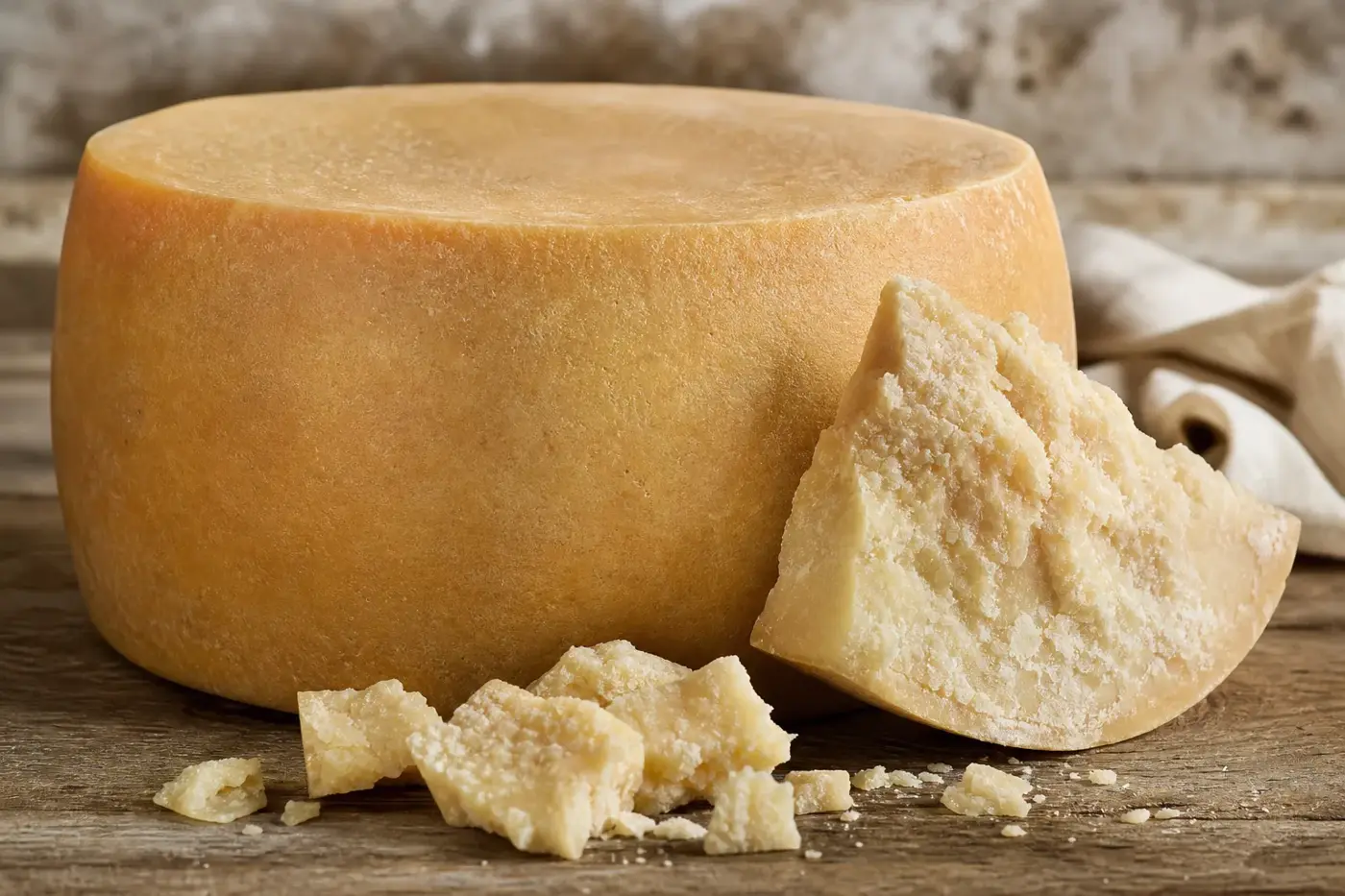
Parmigiano Reggiano
Break into a wheel of Parmigiano Reggiano and flakes fall away, revealing a finely granular cheese, pale straw to straw in colour.