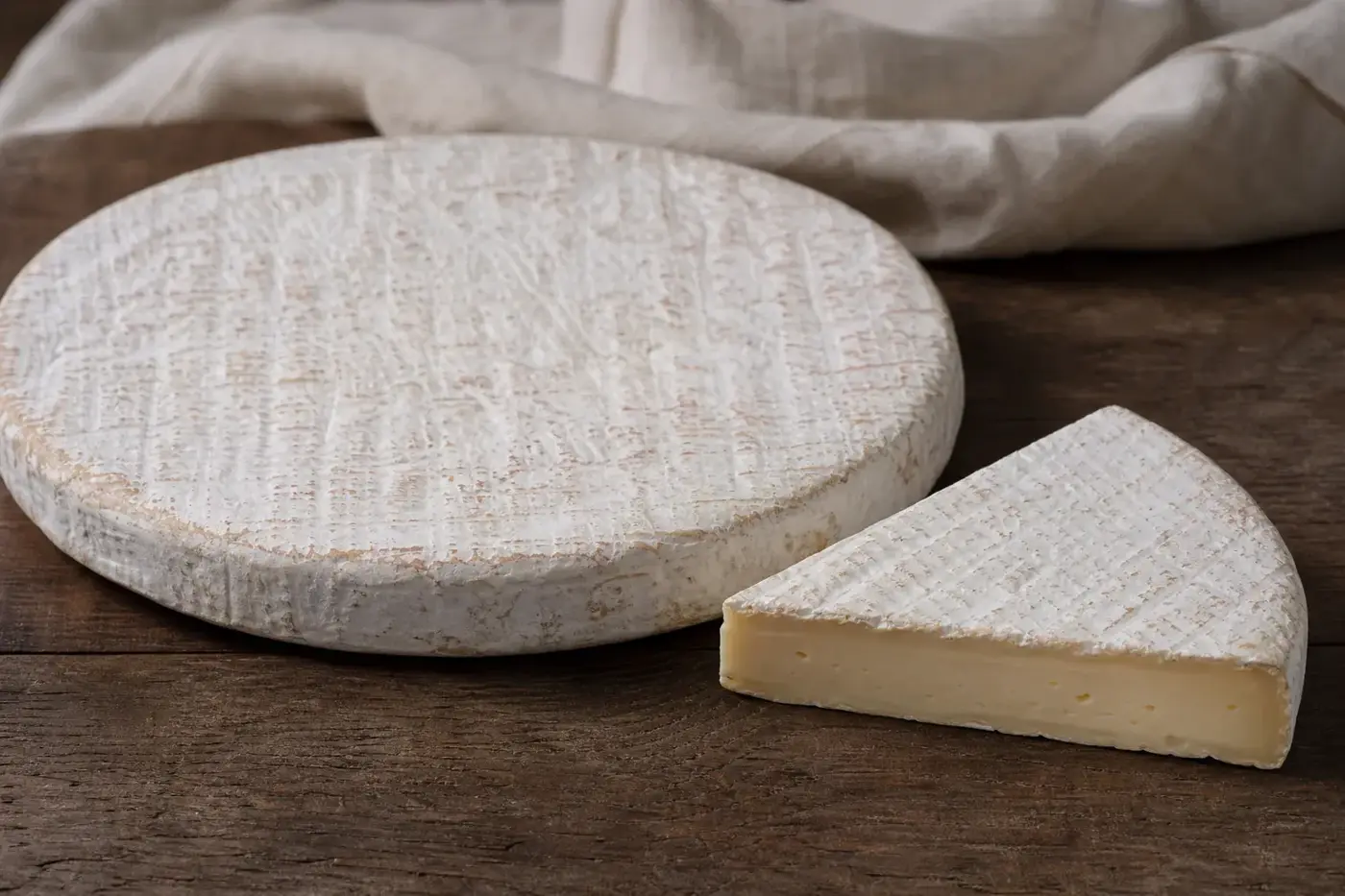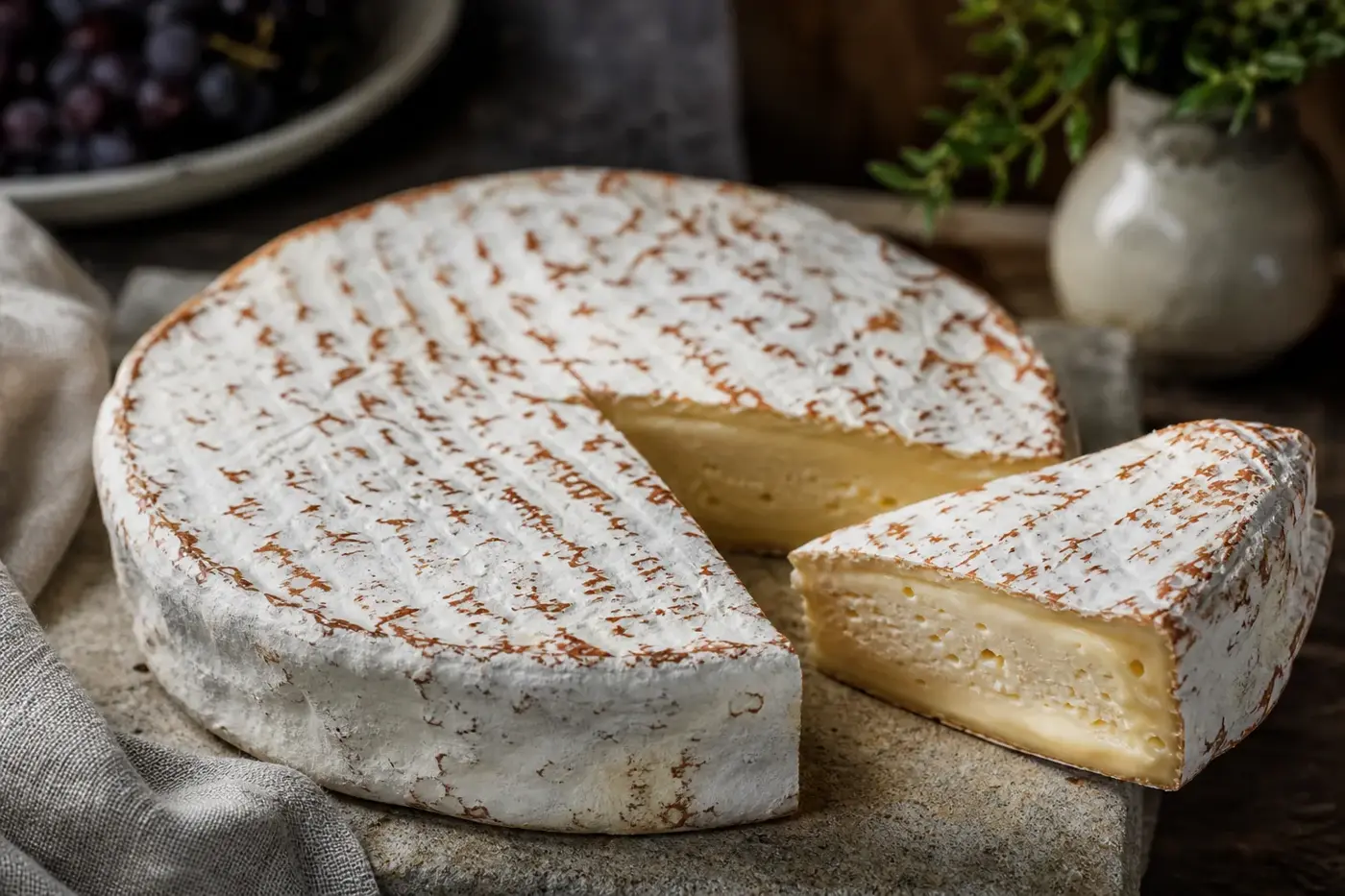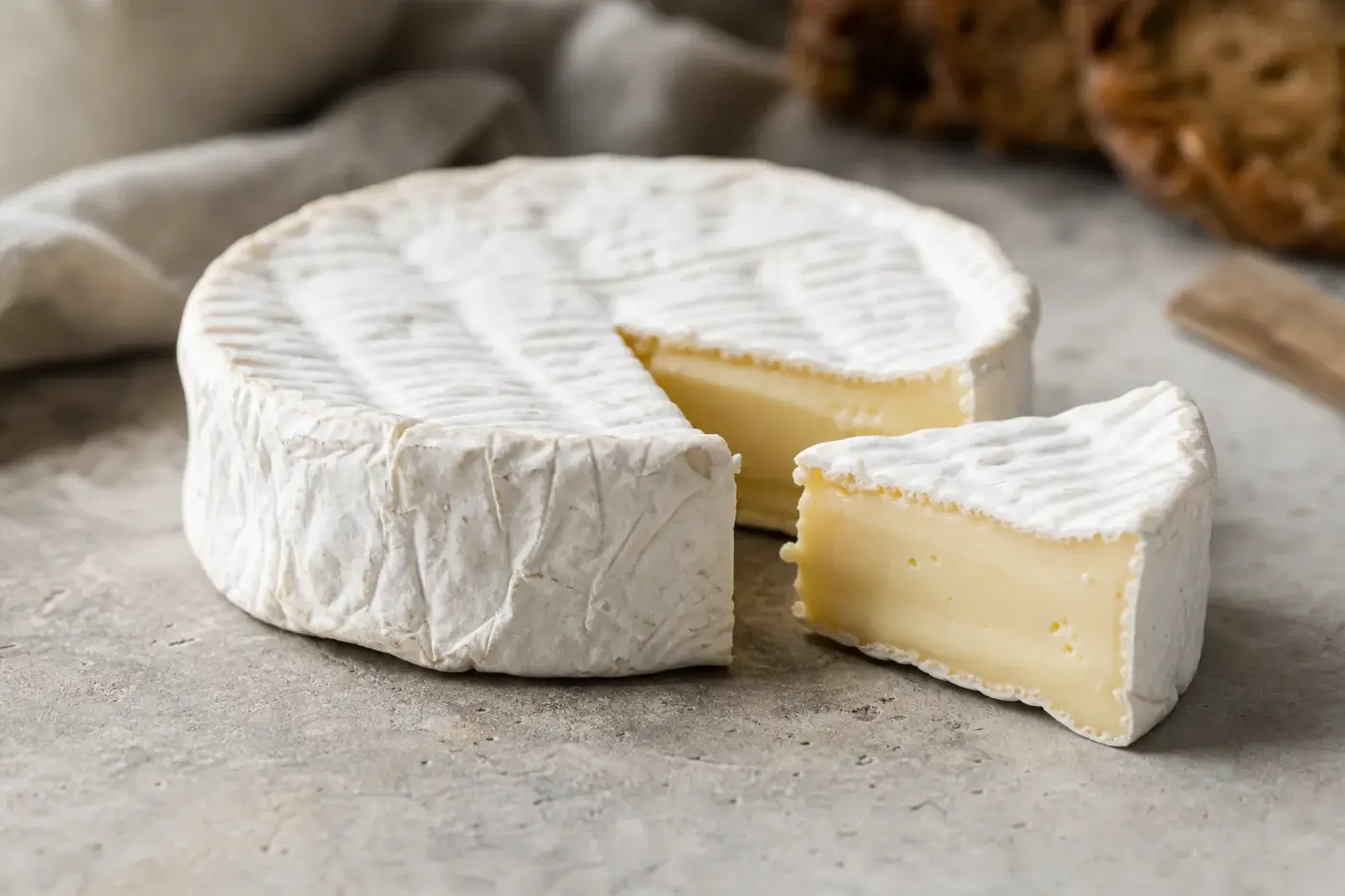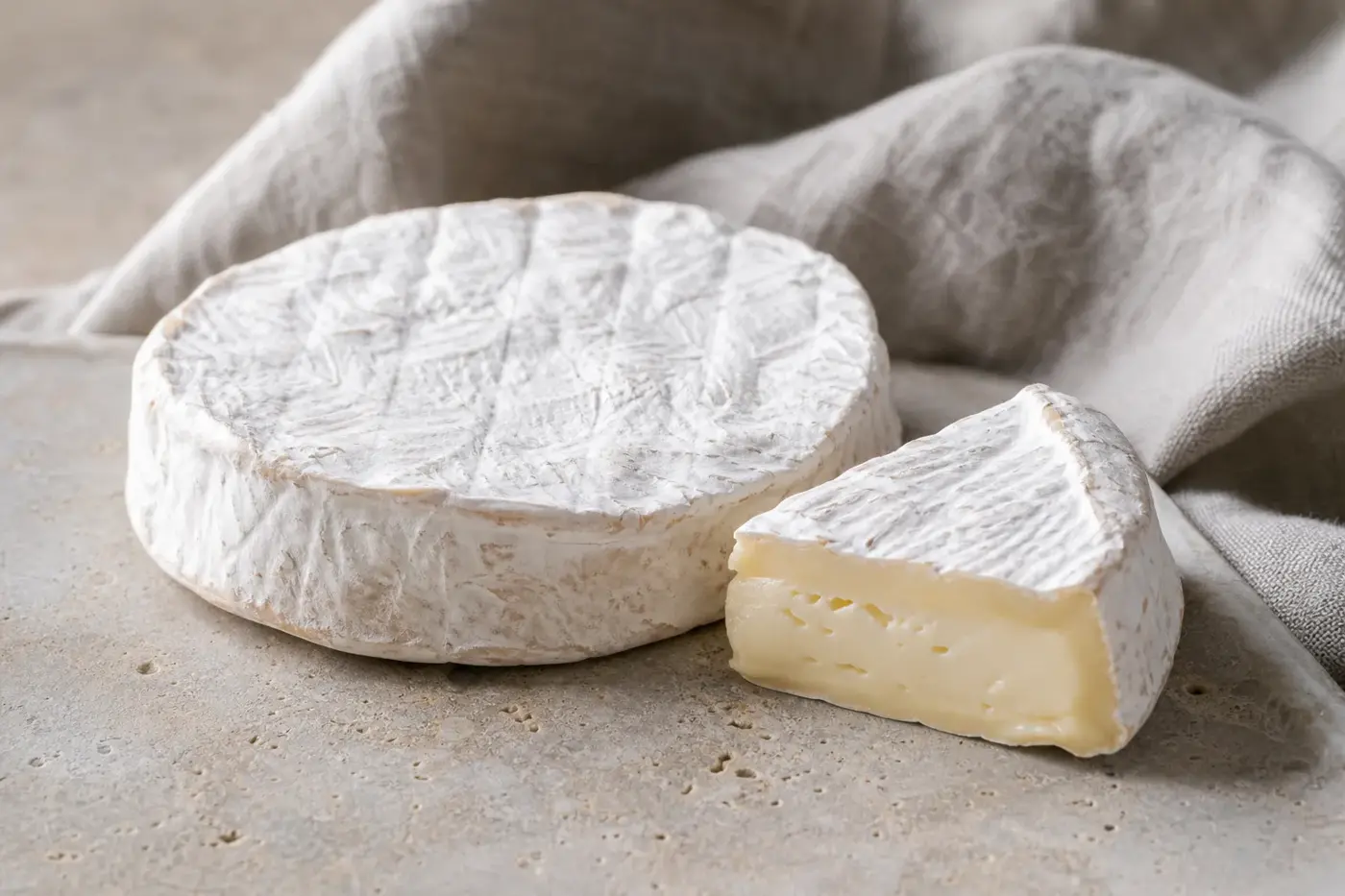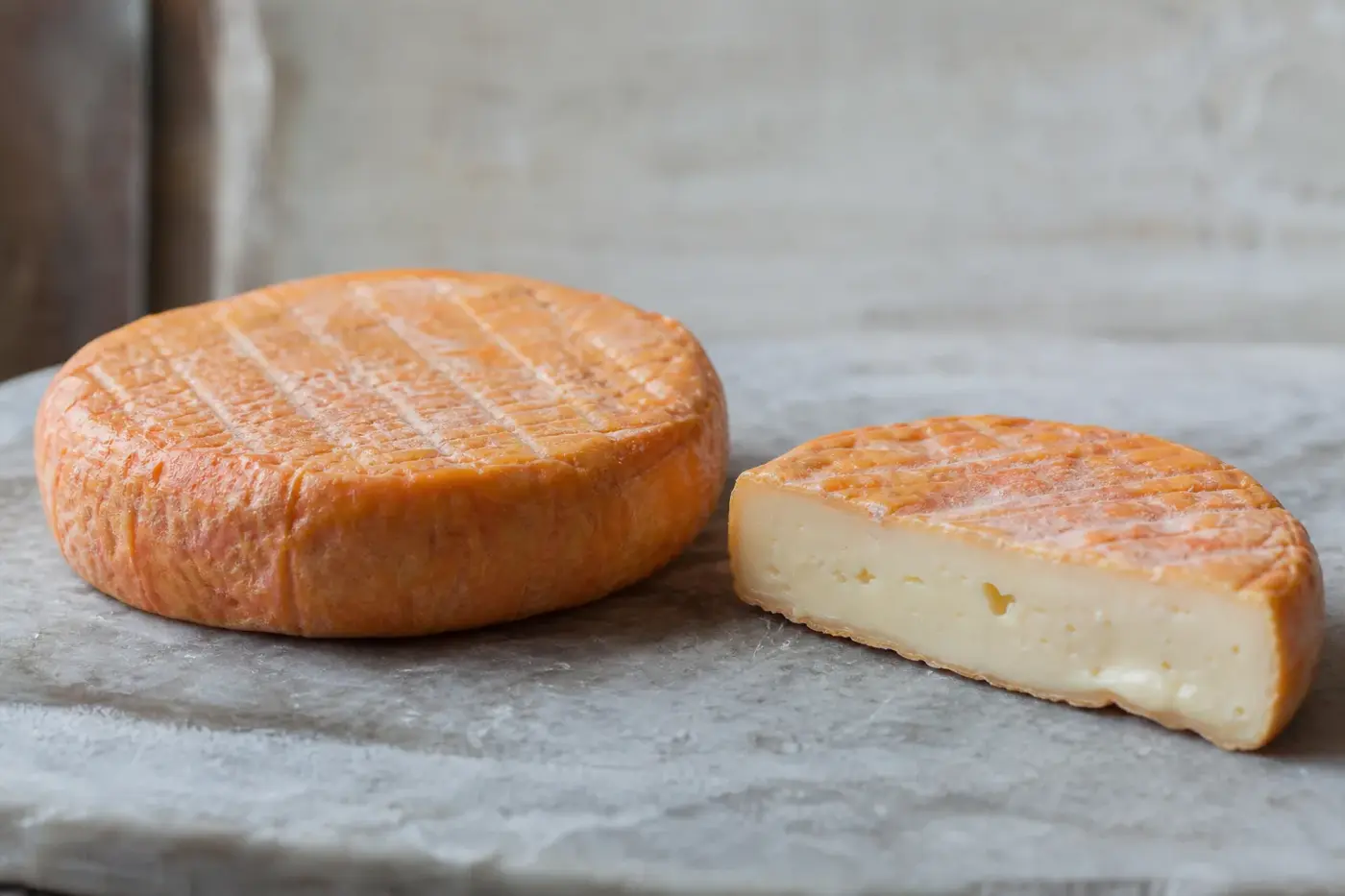
You notice the orange rind first. Then comes the smell, making an entrance that the gentler paste beneath may not quite live up to. Moist ripening and repeated washing shape this French cow’s milk cheese, which belongs to both sides of the Vosges mountains: Munster in Alsace, Géromé in Lorraine, their names united under an EU protected designation of origin (PDO). [1,4,5,6]
Your Munster essentials, at a glance
| What you want to know | The details |
|---|---|
| Registered EU name | Munster ou Munster-Géromé [2,4] |
| Authority and register ID | European Commission; eAmbrosia ID: Not verified [4] |
| EU protection | PDO, listed by INAO; checked November 2026 [1] |
| EU specification approval | Commission Implementing Regulation (EU) 2021/140 [4] |
| Great Britain protection | Registered PDO since 31 December 2020; checked November 2026 [3] |
| Milk | Cow’s milk; raw or pasteurised; farmhouse: raw [2] |
| Coagulant | Calf rennet [2] |
| Rind and paste | Washed rind; ivory to light beige paste [2,5] |
| Production area | Specified places in seven departments in and around the Vosges [1,2] |
| Legal minimum maturation | 14 or 21 days according to format [2] |
| Allergen | Milk [2] |
Follow two names into the Vosges
Munster and Géromé lead you to places, not different recipes. INAO connects Munster with the Alsatian town and Géromé with Gérardmer, whose name takes that form in Lorraine dialect. A label reading Munster-Géromé gives you the same designation as Munster: the French cheese, not the Irish province. [1]
The production area stretches well beyond one valley. It covers specified places in Bas-Rhin, Haut-Rhin, Vosges, Meurthe-et-Moselle, Moselle, Haute-Saône and Territoire de Belfort: Alsace and Lorraine, plus territory farther south. For the exact boundary, follow the specification rather than a broad sweep across the map. [1,2]
You will also meet two abbreviations. PDO is the English equivalent of the French AOP, appellation d’origine protégée, while the GB register separately records Munster or Munster-Géromé. To untangle protecting an origin from owning a brand, explore protected names explained. [3]
Meet the monks, farmers and patient ripeners
Follow Munster’s history and you find milk, grass and fresh cheeses passing between farms and ripeners. INAO links that distinctive rind to the production area’s humid conditions and local skill in maturing cheese. What happens after moulding matters just as much as the initial make. [1]
The interprofessional body traces the cheese’s origins to monastic foundations around the margins of the Vosges in the seventh and eighth centuries. Its account credits monks with cheesemaking knowledge. That is the industry’s origin story; the more securely documented modern identity rests on the defined production area and specification. [7,2]
Let the curd take its time
There is no pressing here. Munster’s curd drains under its own weight, after calf rennet, the enzyme preparation, has set the milk. The maker cuts the coagulated milk, transfers it to cylindrical moulds and leaves it to drain for at least 15 hours before salting. [2]
Choose farmhouse Munster and the milk must be raw. Dairy production can use raw or pasteurised milk, and thermisation is permitted before storage. Your cheese’s own label is the place to find the treatment used. [2]
These distinctions describe the cheese; they do not put it on a simple ladder of quality. Ask who made it and who matured it. For more on the treatments, explore raw milk, thermised and pasteurised cheese.
Discover the busy life of an orange rind
Washing Munster is about ripening, not simply keeping the outside clean. The interprofession describes regular rubbing and washing as the surface moves from ivory-orange to orange-red and the paste becomes more supple. The ripener tends a living surface whose development changes the cheese underneath. [6]
Moisture and salt help determine which organisms flourish there. A 2014 study combined sequencing with laboratory cultures to investigate cheese rind communities, showing that changes in moisture and washing could alter their microbial makeup. In the laboratory, fungi raised the curd medium’s pH, reducing acidity and helping some bacteria grow. [9]
Those washed-rind communities were also enriched in metabolic pathways associated with volatile sulphur compounds and other strong aromas. That helps explain the smell rising from a damp, actively tended rind. Your nose is getting an introduction to a rather busy community. [9]
Munster’s surface is not, though, the work of one orange bacterium. A 2024 study photographed 33 PDO Munster cheeses during storage and linked colour analysis with microbial profiling. More heterogeneous rinds were associated with greater microbial diversity, revealing an ecosystem that varies between cheeses and across a single rind. [8]
Find your size, then ask about texture
The French specification sets out six size bands within three format categories. In the table, the diameters refer to the inside of the mould, rather than the finished cheese. [2]
| Weight (g) | Inside mould diameter (cm) | Maximum height (cm) | Minimum ripening time (days) |
|---|---|---|---|
| 120 to 170 | 7.5 to 8 | 4 | 14 |
| 200 to 280 | 10 to 11 | 4 | 14 |
| 280 to 340 | 11 to 12 | 4 | 14 |
| 450 to 600 | 14 to 16 | 4 | 21 |
| 700 to 1,000 | 16.5 to 19 | 4 | 21 |
| 1,000 to 1,750 | 16.5 to 19 | 7 | 21 |
As Munster ripens, its paste becomes supple, sometimes with a distinct centre still remaining, according to the interprofession. Ask what the texture is like now, rather than simply how old the cheese is. A legal minimum tells you when maturation can end, not whether tonight’s cheese will have the consistency you fancy. [6]
Give the gentler side a chance
Munster’s smell and flavour tell rather different stories. The interprofession describes a powerful, slightly ammoniacal aroma, followed by a mild, lightly salted paste. Its tasting notes move through lactic, vegetal, woody and faintly yeasty characters, with hay, ripe fruit and nuts among the examples. [5]
For your first taste, try a little paste alone, then another piece with some rind. Notice the aroma before you bite, the texture in your mouth and the flavour afterwards. The published profile offers a starting point; tasting the two parts lets you discover their differences for yourself. [5]
Make room for caraway, if you fancy it
Caraway, Carum carvi, can be added before or during moulding under the specification. It is an option, not a promise of seeds in every wheel. [2]
The interprofession calls it cumin des prés, literally meadow cumin, and notes its presence in the Vosges. That French name could lead you to the wrong spice jar. This is caraway, not what English speakers usually buy as cumin. [5]
Try a little caraway beside plain Munster. You and your fellow tasters can meet the cheese first, then add seeds to a later mouthful. If you would rather have them running through the paste, check the ingredients.
Bring potatoes, bread and something to sip
Start simply and give the cheese your attention. These suggestions take their cue from the interprofession’s description of a pungent rind and a gentler, lightly salted paste. Choose something that contrasts with the cheese, or an accompaniment that echoes it. [5]
| What to serve | What it brings to your plate |
|---|---|
| Plain boiled potatoes | A quiet, substantial base that keeps the cheese at the centre of each mouthful. |
| Crusty bread | A contrast with the supple paste; start with an unadorned loaf. |
| Dry Alsace white wine | An aromatic dry example meets the expressive rind without adding sweetness. |
| Beer | A malt-led example brings a bread-like accompaniment; begin without pronounced bitterness. |
| Alcohol-free beer or water | Alcohol-free beer offers another bread-like direction; water keeps your attention on the cheese. |
Alcohol pairings are for adults of legal drinking age, in small servings. The NHS advises avoiding alcohol during pregnancy. [10] If you are driving, taking medicines that interact with alcohol or recovering from alcohol dependence, choose an alcohol-free option and consult current NHS advice.
Tell your cheesemonger what you like
Let texture guide you alongside smell. Read the designation and milk treatment, then tell the cheesemonger whether you fancy a firmer centre or a more yielding paste. Ask about maturity, caraway, and whether the dairy and ripener are identified: together, these details tell you more than aroma alone. [2,5,6]
Keep the packaging until you have finished the cheese. Its storage instructions, date and batch information matter if there is a recall. Match official recall notices to your actual product and batch, and follow the notice if your cheese is affected. [13,14]
Give your Munster a good home
For UK readers, NHS guidance is to keep chilled ready-to-eat foods at 5 °C or below and follow the label’s storage instructions. Eat, cook or freeze food by its use-by date. Once opened, use it within two days unless the packaging says otherwise. [11]
Put out only the portion you expect to eat. For chilling and handling food in the UK, turn to the NHS and Food Standards Agency guidance. [11,12]
For wrapping and finding its place in the fridge, see how to store cheese at home. If a change in your cheese concerns you, consult the mould on cheese guide. Smell alone cannot reliably tell you whether a soft cheese is safe.
This page summarises published guidance from the official sources it cites. It is not medical advice. Guidance differs between countries and changes over time, so check the current source for where you live, and ask your doctor, midwife, pharmacist or dietitian about your own circumstances.
Find the UK advice for pregnancy and higher-risk groups
UK pregnancy advice distinguishes between cheese categories and how they are prepared. When deciding what to eat, consult the current NHS guidance, reviewed in June 2026. [10]
The NHS identifies pregnant people, newborn babies, older people and people with weakened immunity as groups at greater risk of serious listeriosis. Read its current pregnancy advice and listeriosis guidance for your circumstances. Ask your clinician about choosing a particular Munster. [10,11]
Questions people ask
What does Munster taste like?
Munster has a powerful, slightly ammoniacal smell, but its paste is mild and lightly salted. Its flavours can suggest hay, ripe fruit and nuts.
Is Munster made with raw milk?
Farmhouse Munster must be made with raw milk. Dairy production may use raw or pasteurised milk, so check the product label.
What rennet is used to make Munster?
Munster is made with calf rennet. This sets the milk before the curd is cut and placed in moulds.
How long is Munster matured?
The legal minimum is 14 or 21 days, depending on the cheese's format. The minimum does not tell you what consistency the cheese will have.
Can I eat Munster during pregnancy?
The NHS distinguishes between cheese categories and how they are prepared in its pregnancy advice. Consult its current pregnancy advice and listeriosis guidance, and ask your clinician about a particular Munster.
Sources
- Institut national de l’origine et de la qualité (INAO). Munster, official product record, geographical area and regulatory document index, current page retrieved November 2026. Official product record.
- French Ministry of Agriculture and INAO. Cahier des charges de l’appellation d’origine « Munster » ou « Munster-Géromé », specification published with the notice of European Commission approval, Bulletin officiel, February 2021. Official specification PDF.
- Department for Environment, Food & Rural Affairs. Munster / Munster-Géromé, Great Britain protected food names register, published 4 January 2021, current entry retrieved November 2026. GB register entry.
- European Commission. Commission Implementing Regulation (EU) 2021/140 of 1 February 2021 approving a non-minor amendment to the specification for a name entered in the register of protected designations of origin and protected geographical indications: Munster ou Munster-Géromé (PDO), Official Journal L 43, 8 February 2021. Official legal text.
- Syndicat interprofessionnel du Fromage Munster. Le Munster, étonnant & subtil, undated industry description, retrieved November 2026. Published sensory description. This organisation represents the appellation’s industry.
- Syndicat interprofessionnel du Fromage Munster. Terroir & savoir-faire, undated industry explanation, retrieved November 2026. Production and maturation account.
- Syndicat interprofessionnel du Fromage Munster. Notre histoire, undated industry account, retrieved November 2026. Published origin narrative.
- Université de Lorraine and collaborating research institutions. Deciphering Rind Color Heterogeneity of Smear-Ripened Munster Cheese and Its Association with Microbiota, Foods, 13(14), 2233, 2024. DOI: 10.3390/foods13142233. PubMed record, abstract and figure descriptions.
- Harvard University and collaborating researchers. Cheese rind communities provide tractable systems for in situ and in vitro studies of microbial diversity, Cell, 158(2), 422 to 433, 2014. Open research paper.
- NHS. Foods to avoid in pregnancy, reviewed 15 June 2026. Official pregnancy guidance.
- NHS. Listeriosis, current guidance retrieved November 2026. Official listeriosis guidance.
- Food Standards Agency. How to chill, freeze and defrost food safely, guidance publication page, published 18 December 2017, retrieved November 2026; stated coverage: England, Northern Ireland and Wales. Official guidance publication.
- French government, RappelConso. Munster recall search results, including notices dated October 2026, retrieved November 2026. Official recall search.
- Food Standards Agency. Alerts, current official recall and allergy alert index, retrieved November 2026. Official alerts index.
This desk-researched article brings together the official specification, national register records, attributed industry descriptions, original microbiology research and UK public health guidance.
Last checked: November 2026
Last checked November 2026.
The editors suggest you read next