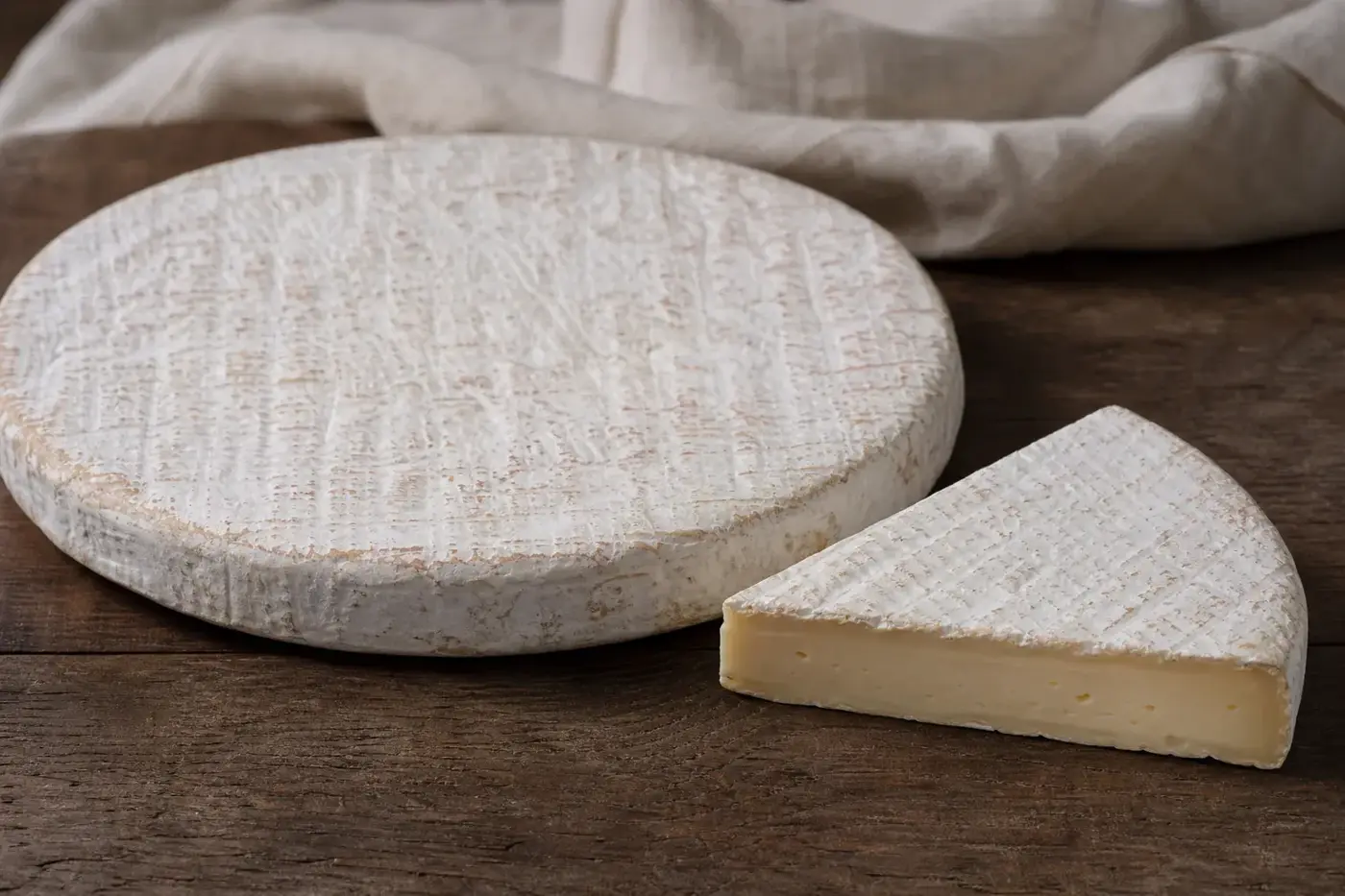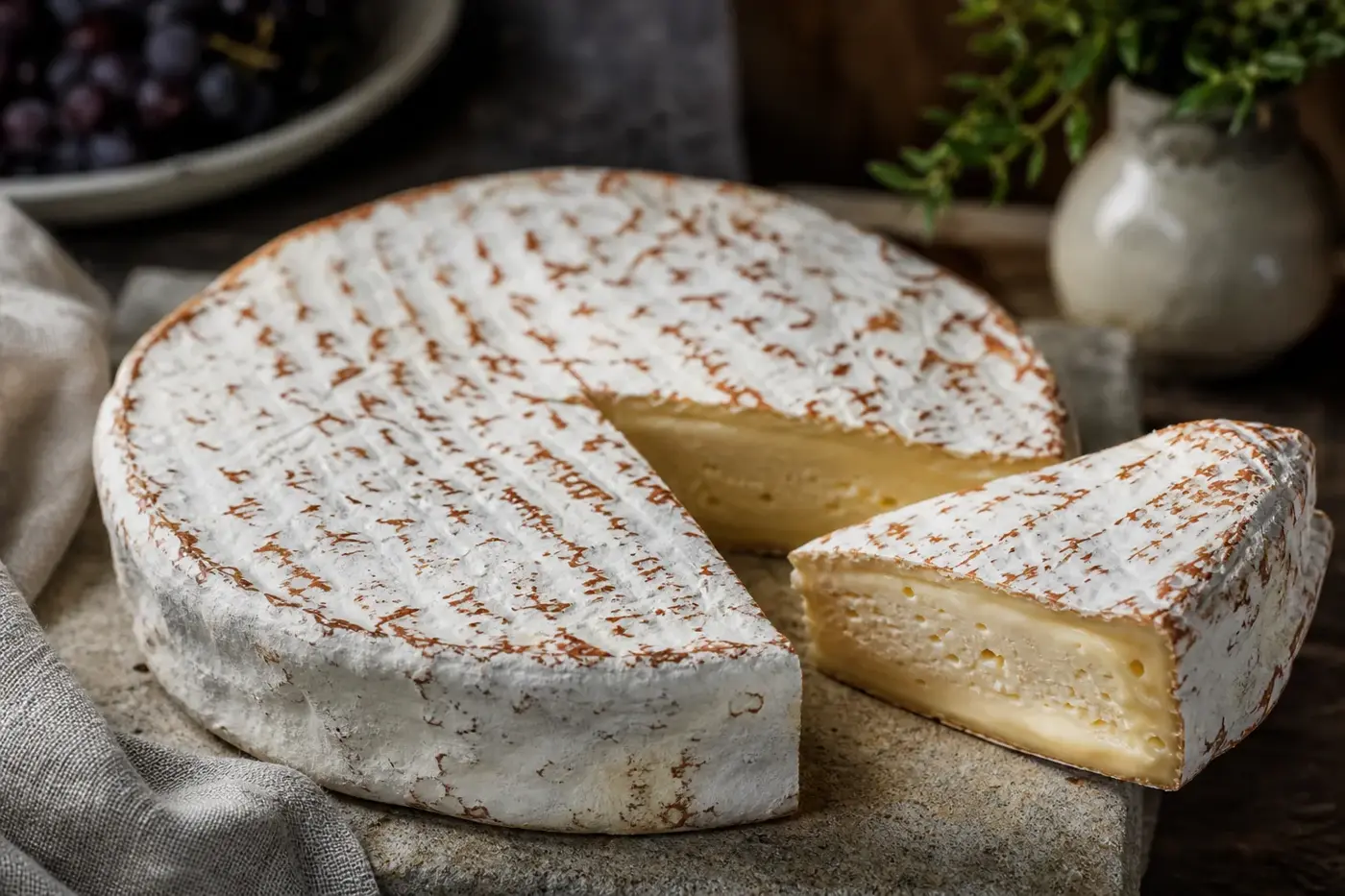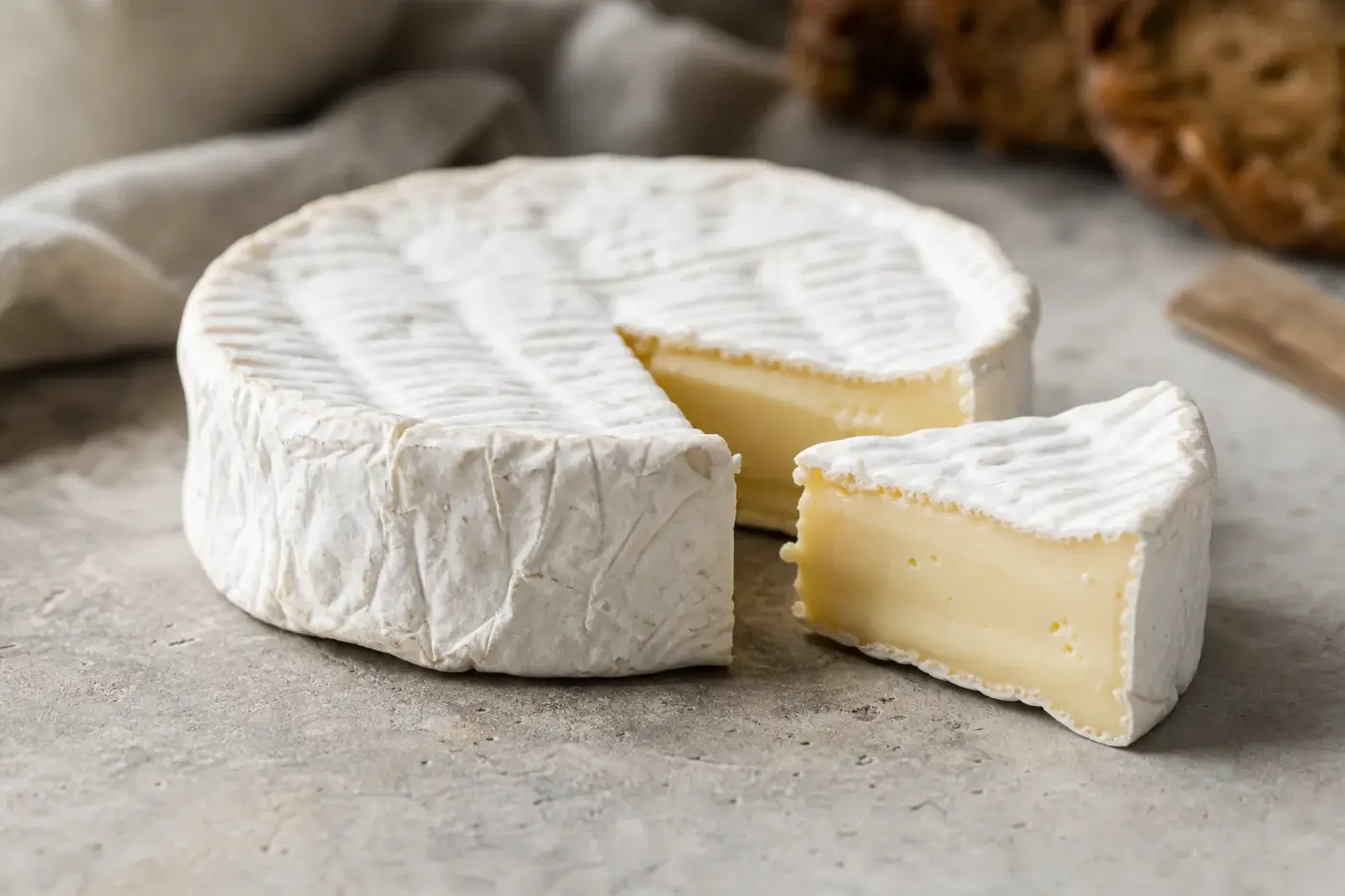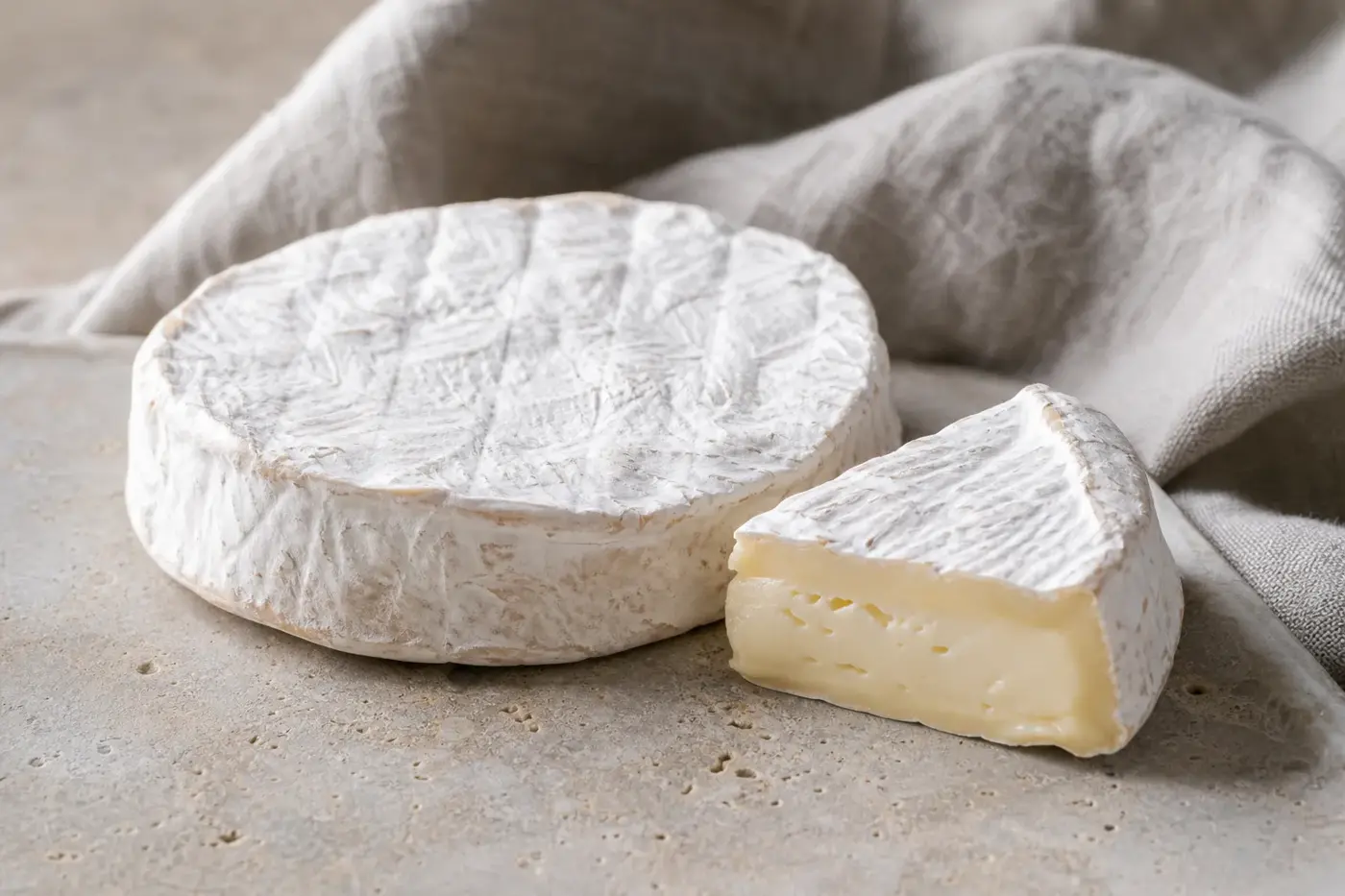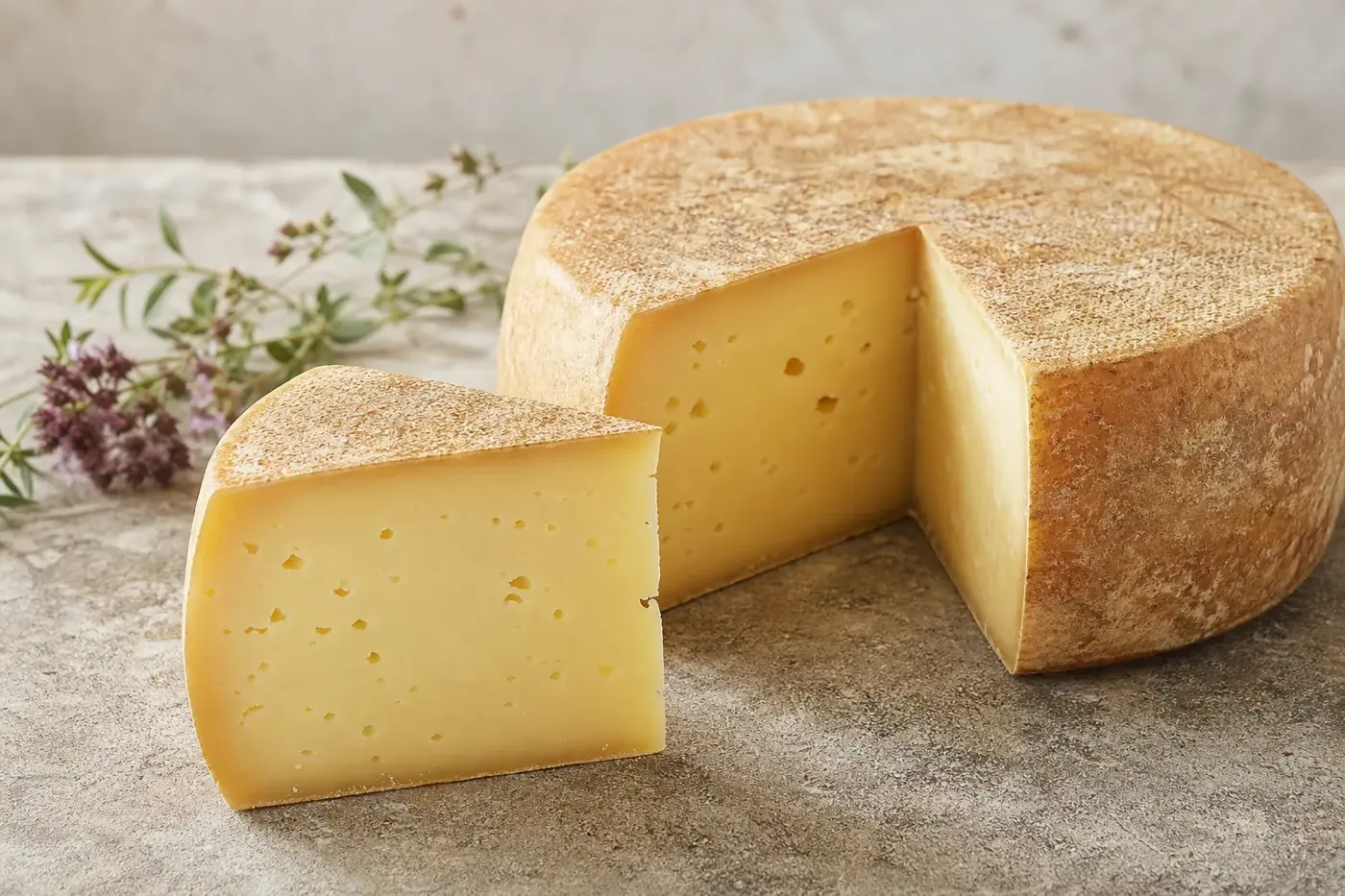
First comes the firm bite. Then the paste yields, bringing the flowers, fruit and hazelnut that INAO describes. Beneath its natural rind, Ossau-Iraty carries sheep’s milk from Béarn and the French Basque Country, shaped by local flocks, seasonal grazing and months of maturation. Its protected designation of origin (PDO) covers production in the western French Pyrenees and their foothills, with recognition in the EU and Great Britain.[1,3]
Your first look at Ossau-Iraty
| What to look for | The details |
|---|---|
| Familiar and registered name | Ossau-Iraty.[1,3] |
| Registration authorities | European Commission; UK Department for Environment, Food & Rural Affairs.[1,3] |
| Protection, November 2026 | EU: PDO; Great Britain: registered PDO, UK registration 31 December 2020.[1,3] |
| Where it is made | Parts of Pyrénées-Atlantiques and adjoining Hautes-Pyrénées, France.[2,4] |
| Milk and treatment | Sheep’s milk only; raw for farmhouse production, heat treatment permitted for dairy production.[2,4] |
| How the milk sets | Rennet.[2] |
| Ripened wheel weights | Small: 1.8 to 3.3 kg; large: 3.8 to 6 kg.[2] |
| Minimum maturation | Small wheels: 80 days; large wheels: 120 days.[2,8] |
| Rind and interior | Natural rind; ivory to amber-cream paste, sometimes with small openings.[2] |
| Governing French specification | Decree No 2015-1225 of 2 October 2015 and associated specification.[2,15] |
Follow the name into the mountains
Two landscapes meet in the name Ossau-Iraty: Béarn’s Ossau valley and the Iraty forest in the Basque mountains. The producers’ syndicate describes a meeting of neighbouring pastoral traditions. The legal production area reaches beyond those landmarks, through mountain and foothill communities across much of Pyrénées-Atlantiques and adjoining Hautes-Pyrénées. Milk production, cheesemaking and maturation must all take place there.[4,5]
Your slice has a long history behind it. INAO traces sheep’s milk cheesemaking in the western Pyrenees back to the Middle Ages. French recognition came in 1980, followed by European registration in 1996. The modern appellation gives that regional practice a shared rulebook.[1,3,5]
At the counter, look for Ossau-Iraty itself, rather than simply “Pyrenean sheep’s cheese”. A mountain on the wrapper may set the mood, but it cannot do the registered name’s job. Neither can a regional address. If the terminology leaves you wondering, the guide to protected names untangles it.[3,11]
Meet the flocks behind your slice
Three local breeds supply the milk: Basco-béarnaise, Manech tête noire and Manech tête rousse. The specification connects them with the wet climate, grass and hay of the Basque and Béarnais hills. These sheep belong to the cheese’s identity just as much as the mountains do.[4,6]
Grazing and forage underpin the feeding rules, which limit supplementary concentrates. Then the calendar brings a pause: milking and cheesemaking are prohibited during September and October. Here, seasonality is part of the rulebook, not merely a pleasing detail on the label.[4,6]
Many breeders practise transhumance, moving their flocks seasonally to mountain pasture. INAO records that some also make cheese on these summer grazing grounds, known as estives. For farmhouse estive cheese, milking and making must happen at the same mountain site, using raw milk. It is a distinctive beginning, though not one shared by every wheel.[1,2,7]
From milk to wheel, one careful stage at a time
The making begins with rennet, the preparation that coagulates milk into a gel. Cutting that gel produces curds, the solid pieces that will become cheese, while liquid whey is released around them. Ossau-Iraty belongs to the pressed, uncooked family. The syndicate describes cutting, stirring, moulding, pressing and salting, followed by maturation.[8]
“Uncooked” might have you imagining cold milk throughout. Not quite: coagulation is permitted at 28 to 35 °C, with subsequent curd operations at no more than 44 °C. Those limits distinguish it from the higher temperatures used to cook curds in the cooked, pressed family. For the wider picture, follow how cheese is made.[2,8]
Pressing draws the curds together into a wheel as whey drains away. Salt comes next, either dry or in brine. During affinage, or controlled maturation, the wheels are turned and brushed. The syndicate describes drier brushing in the Basque Country and moister rind care in Béarn, helping explain differences in appearance and flavour.[8,9]
Small wheels need at least 80 days of maturation; large wheels need at least 120 days. Beyond those minimums, the maker decides how far each cheese should go. Ask for its actual age and the maker’s name. Two wheels made to the same specification may be at quite different stages of development.[8,9]
Farmhouse or dairy? Get to know your piece
Find fermier on the label and you have farmhouse Ossau-Iraty, made with raw milk from the producer’s own flock. Dairy production can draw on milk from several flocks. Heat treatment is permitted for non-farmhouse cheese, so the protected name alone does not tell you how the milk was treated.[1,2]
Read the label or ask whether your piece is raw, thermised or pasteurised. Thermisation differs from pasteurisation; the milk treatment guide explains how. Farmhouse and dairy describe production, but neither tells you everything about the cheese in front of you. Leave room for its age, condition and the flavours you enjoy.[1,2]
Look closer, then take a bite
A whole wheel is cylindrical, with straight or slightly convex sides. The natural rind ranges from yellow-orange to grey. Inside, the paste moves from ivory white towards amber-cream as it matures, sometimes with small openings. A few holes are entirely in character.[2,4]
INAO describes a firm paste that yields in your mouth, restrained saltiness and a balance of fat and tang. Then you have those floral, fruity and hazelnut aromas to explore. Ask your cheesemonger what stands out in the wheel being cut. It gives your first mouthful something to look for, without turning pleasure into homework.[1]
Taste what age and place can bring
Start with age: how does a younger wheel compare with a more mature one? Then ask about making methods and ripening conditions. The syndicate links both to differences between cheeses. That gives you a richer conversation than simply choosing between “mild” and “strong”.[9,10]
In its tasting account, the syndicate describes some Basque farmhouse cheeses as firm, dry to slightly granular, with almond, hazelnut, hay or fern notes. A sheep’s milk character lingers. Its Béarnais examples can be softer and more yielding, with stronger animal or damp woodland aromas. Use these descriptions as prompts for questions, not a rigid flavour map for every slice.[10]
Find a favourite you can ask for again
Begin with the registered name, then look for the producer and any named affineur, the person or business responsible for maturation. Keep those details with your purchase. Next time, you can ask for the cheese you loved, rather than offer the cheesemonger the gripping clue “quite strong”.
The syndicate explains that identification marks distinguish dairy and farmhouse wheels, with an additional mark for farmhouse estive production. If a small portion leaves you guessing, ask to see the original wheel’s label. The guide to reading cheese labels takes you through the other useful details.[11]
Look for a coherent natural rind and a sound, firm paste that matches the cheese’s expected appearance. Ask about a visibly dried cut face, and choose a freshly cut piece when practical. Tell the cheesemonger what you have in mind: eating it plain, adding preserves or cooking. A little direction makes the choice easier.[2]
Make room for bread and cherries
The producers recommend serving Ossau-Iraty at room temperature. Bring out only what you intend to eat and leave the rest refrigerated. For England, Wales and Northern Ireland, the Food Standards Agency advises keeping chilled food out for the shortest possible time, with a maximum of four hours during preparation. Follow the storage instructions supplied with your cheese.[12,13]
Let the first mouthful stand on its own. Then try bread and a little black cherry preserve. Keep the preserve alongside rather than spreading it over every slice. You can then taste the savoury paste both with and without the sweet fruit.
If you would like wine, ask a cheesemonger or wine merchant for a regional pairing suited to your piece’s age, texture and intensity. For an alcohol-free accompaniment, choose water and let the cheese and cherries provide the contrast. Wine suggestions are for adults of legal drinking age, in small servings. The cheese and wine pairing guide explores the principles.
Take a little into the kitchen
Ossau-Iraty need not stay on the cheeseboard. The producers’ recipe collection includes tarts and small savoury dishes.[16] For a simple serving, shave a little over warm vegetables or add thin slices to bread. Give it space to remain recognisable, rather than surrounding it with several strongly flavoured ingredients.
Choose your piece with the dish in mind. A cheese you find particularly expressive may give you most pleasure served plainly; another may suit cooking. Taste before adding extra salt. For a reproducible dish, move from these serving suggestions to a complete recipe with handling and cooking instructions.
Keep the next slice in good condition
Follow the label and keep Ossau-Iraty refrigerated. For England, Wales and Northern Ireland, the Food Standards Agency’s domestic guidance recommends a fridge temperature of 0 to 5 °C (32 °F to 41 °F). Use a fridge thermometer. The control dial alone cannot tell you the temperature.[13]
The producers recommend protecting cut cheese with food film or a damp cloth.[12] At home, retain the cheesemonger’s suitable wrapping or use food-safe film, covering the cut surface before returning it to the fridge. Follow any instructions about use after opening. The date on an unopened pack does not replace them.[13,14]
A dry cut edge signals lost quality, while the established rind colour is part of the cheese’s normal appearance.[2] Unexpected changes need different treatment. If unusual mould, wet breakdown or a changed smell causes concern, do not serve the cheese; discard it. The FSA stresses that appearance and smell cannot establish the safety of food carrying a use-by date.[14]
Under the FSA’s published advice, use-by dates concern safety; best-before dates concern quality. Do not eat cheese after its use-by date, even if it seems unchanged. If it is recalled, follow the notice for that product and batch. Keep the wrapper or receipt so you have the identifying details.[14,17]
General information only, not medical advice: follow the official guidance where you live.
Questions people ask
Where is Ossau-Iraty made?
Ossau-Iraty is made in parts of Pyrénées-Atlantiques and adjoining Hautes-Pyrénées in France. Milk production, cheesemaking and maturation must all take place within the defined area.
Is Ossau-Iraty made from raw milk?
Farmhouse Ossau-Iraty, labelled fermier, is made with raw milk from the producer’s own flock. Heat treatment is permitted for dairy production, so the protected name alone does not tell you how the milk was treated.
What does Ossau-Iraty taste like?
INAO describes it as firm but yielding in the mouth, with restrained saltiness and a balance of fat and tang. Its aromas include flowers, fruit and hazelnut.
How long is Ossau-Iraty matured?
Small wheels mature for at least 80 days, while large wheels mature for at least 120 days. Beyond those minimums, the maker decides how far to take each cheese.
How should Ossau-Iraty be stored?
The page says to follow the label and keep the cheese refrigerated. For England, Wales and Northern Ireland, the Food Standards Agency recommends a fridge temperature of 0 to 5 °C. See the agency’s domestic guidance for more information.
Sources
- Institut national de l’origine et de la qualité. Ossau-Iraty, current product profile, undated. Product identity, farmhouse production, regional context and attributed sensory description. Official product profile.
- Syndicat de défense de l’AOP Ossau-Iraty, hosting the specification. Cahier des charges de l’appellation d’origine « Ossau-Iraty », homologated by Decree No 2015-1225 of 2 October 2015, published in the agriculture ministry’s Bulletin officiel No 2015-41. Specification PDF.
- Department for Environment, Food & Rural Affairs. Ossau-Iraty, UK protected food names register, published 4 January 2021, current entry retrieved November 2026. Register entry.
- French Ministry of Agriculture. Cahier des charges de l’appellation d’origine « Ossau-Iraty », associated with notice AGRT1504237V, Bulletin officiel No 10-2015. Earlier official edition, used only for provisions corroborated by source 2. Official specification PDF.
- Syndicat de défense de l’AOP Ossau-Iraty. Histoire de l’Ossau-Iraty, undated. Industry account of the appellation’s development. History.
- Syndicat de défense de l’AOP Ossau-Iraty. Les Brebis, undated. Breeds, feeding and seasonality.
- Syndicat de défense de l’AOP Ossau-Iraty. La transhumance des brebis, undated. Transhumance.
- Syndicat de défense de l’AOP Ossau-Iraty. Les étapes de fabrication du fromage, undated. Making and minimum maturation.
- Syndicat de défense de l’AOP Ossau-Iraty. Comment est affiné le fromage ?, undated. Maturation and rind care.
- Syndicat de défense de l’AOP Ossau-Iraty. Goûts, saveurs et accords, undated. Commercially interested industry source; tasting descriptions are attributed to the syndicate. Sensory accounts.
- Syndicat de défense de l’AOP Ossau-Iraty. Reconnaître l’Ossau-Iraty, undated. Identification and labels.
- Syndicat de défense de l’AOP Ossau-Iraty. Dossier de presse, undated, Annex 3, practical conservation and serving guidance. Refrigeration advice in the article follows the FSA rather than the dossier’s alternative suggestion of a cool cupboard. Press dossier PDF.
- Food Standards Agency. How to chill, freeze and defrost food safely, published 18 December 2017, current text retrieved November 2026. Applies to England, Northern Ireland and Wales. Official guidance.
- UK Government and Food Standards Agency. Understanding food labelling: Best before and use-by dates, current undated text; Home food fact checker, updated August 2026. Date-label guidance and food fact checker.
- French Government, Légifrance. Décret n° 2015-1225 du 2 octobre 2015 relatif à l’appellation d’origine protégée « Ossau-Iraty », published 4 October 2015. Official decree.
- Syndicat de défense de l’AOP Ossau-Iraty. Les Astuces, undated recipe and serving collection. Recipe collection.
- RappelConso. OSSAU IRATY PUR BREBIS ARAMITS, notice 2026-03-0054, version 1, 5 March 2026; Food Standards Agency, current alerts portal. Batch-specific French notice and FSA alerts.
Researched from official product and register records, published specifications, the producers’ syndicate’s technical and sensory accounts, and official consumer food guidance.
Last checked: November 2026
Last checked November 2026.
The editors suggest you read next