Pecorino di Filiano
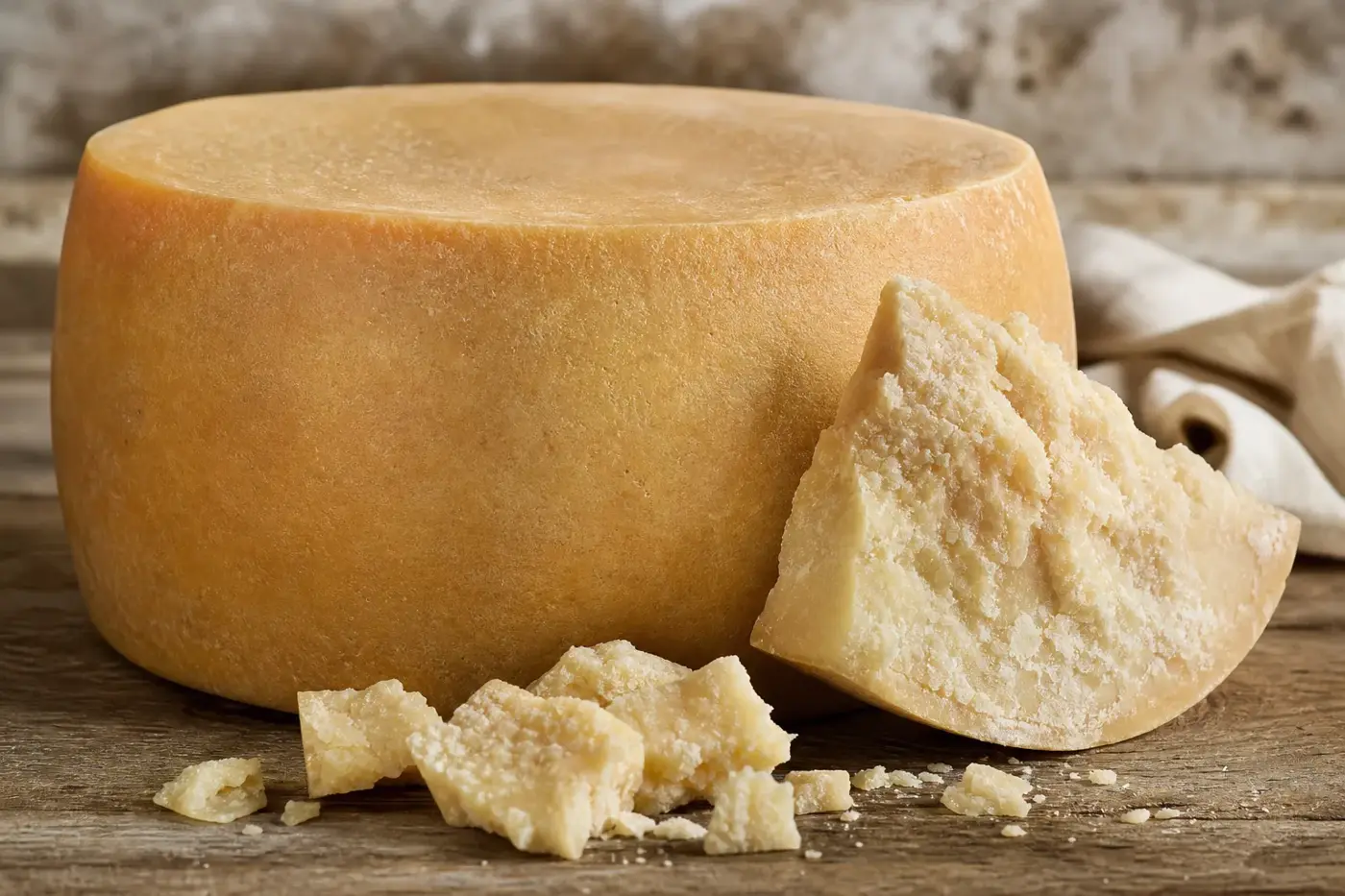
Look closely at a wheel of Pecorino di Filiano: the basket has left its signature in the rind.
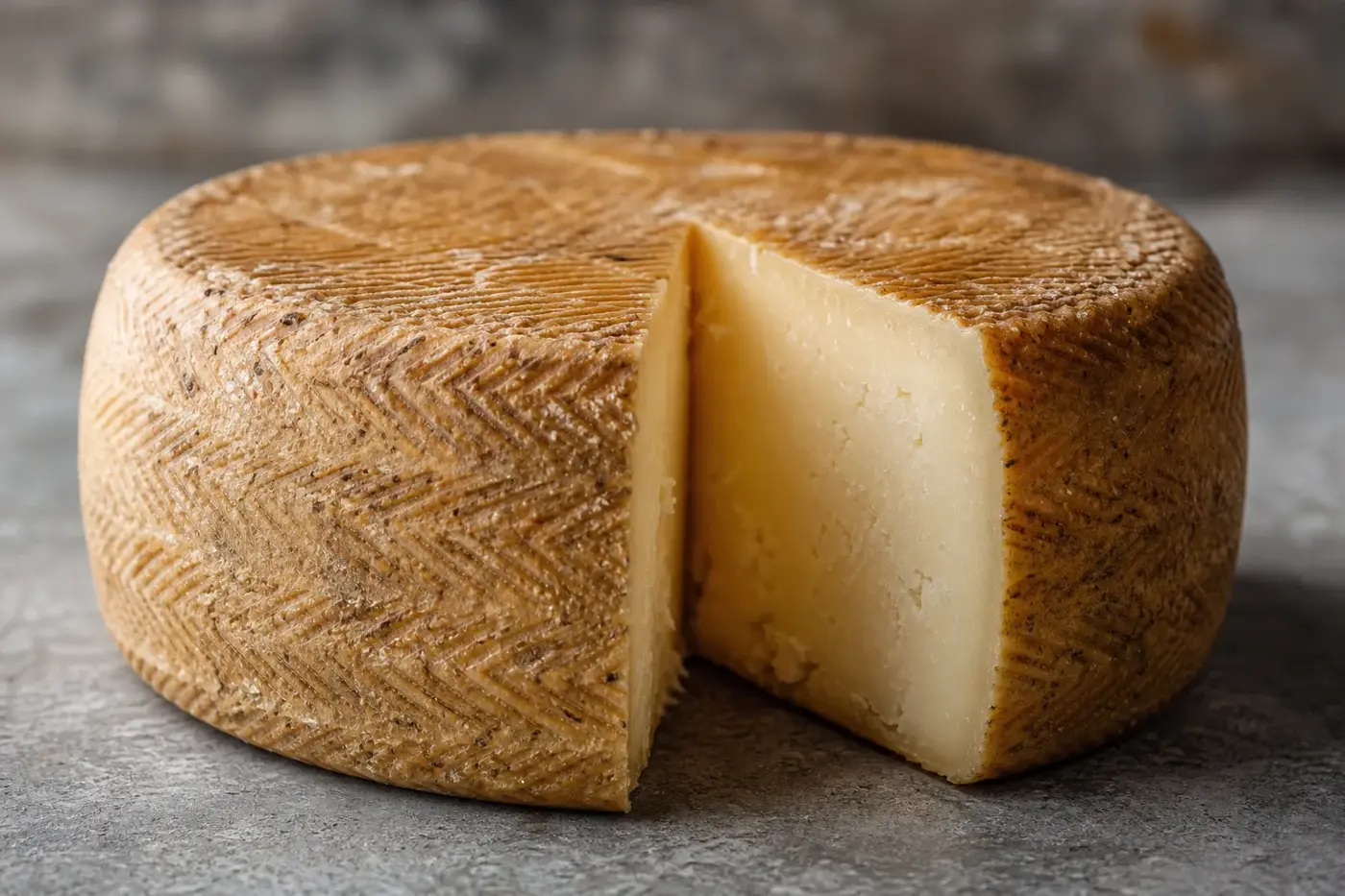
Look closely at a wheel of Pecorino di Filiano: the basket has left its signature in the rind. Inside sits a compact cheese whose pungency gathers strength with age. Follow it back to the milk and you reach the pastures around Filiano, where the volcanic country of Monte Vulture meets Basilicata’s north-western Apennines. Raw whole sheep’s milk, basket moulds and a long maturation give you plenty to explore.[1][2]
Get acquainted with Pecorino di Filiano
| What to know | The detail |
|---|---|
| Familiar name | Pecorino di Filiano.[1][3] |
| Registered name | Pecorino di Filiano.[3] |
| Applicable EU registration instrument | Not recorded here. |
| EU register | European Commission, eAmbrosia; PDO-IT-0279, record EUGI00000013624.[3] |
| EU status | Registered PDO; registration date 15 December 2007. Status as at November 2026.[3] |
| Great Britain status | Registered PDO; UK scheme entry 31 December 2020. Status as at November 2026.[4] |
| Northern Ireland status | Not recorded here. |
| Switzerland status | Not recorded here. |
| United States status | Not recorded here. |
| Production area | Thirty legally delimited municipalities in Potenza province, Basilicata, Italy.[1] |
| Milk | Raw whole sheep’s milk.[1] |
| Coagulant in the published specification | Kid or lamb rennet paste.[1] |
| Minimum maturation | 180 days.[1] |
| Typical maturation | Not recorded here. |
| Pregnancy guidance | Not recorded here. |
| Wheel | 2.5 to 5 kg; diameter 15 to 30 cm; height 8 to 18 cm.[1] |
| Minimum fat | 30% fat in dry matter.[1] |
| Production season | Year-round.[1] |
Follow the pastures beyond Filiano
Filiano gives you the name, but you need a bigger map for the cheese. Its protected territory covers the entire administrative area of 30 municipalities in Potenza province, in southern Italy’s Basilicata region. Among them are Atella, Avigliano, Melfi, Potenza and Rionero in Vulture. The specification follows an Apennine belt from Monte Vulture towards Monte Li Foy and Montagna Grande di Muro Lucano.[1]
Those pastures do more than look the part. The registration account names rye-grass, clover, fescues, wild oats, thyme and wild fennel, linking the strongest milk production to spring and early summer. Milk production, cheesemaking and maturation must all take place within the defined area. This cheese cannot borrow the landscape’s name and then head off elsewhere.[2]
Walk the old routes with the flocks
To follow this cheese’s history, you have to keep pace with the sheep. The historical account submitted with the PDO application describes flocks travelling between the Ofanto plain and higher ground in the Vitalba valley. Pastoral routes, milk processing and wool all belong to that story, alongside the organisation of sheep-farming estates under the Doria family.[2]
Cheese was part of a working pastoral economy, bound up with grazing, seasonal movement and wool production. The application records another local turning point: Filiano became administratively independent of Avigliano in 1952. The cheese’s EU registration followed much later, in 2007.[2][3]
Find out what the protected name promises
PDO stands for protected designation of origin, or DOP in Italian. For Pecorino di Filiano, it ties the name to a defined territory and sets requirements for feed, milk, coagulant, cheesemaking, maturation and the finished cheese. Records for milk producers, cheesemakers and maturers provide the required traceability.[1]
You will find the name in the EU register and, separately, in Great Britain’s own scheme. Both statuses are recorded here as at November 2026.[3][4] If you want to untangle a regional designation from a cheese style, start with protected names explained.
Meet the sheep behind your cheese
The starting point is whole, raw sheep’s milk. The permitted sheep are Gentile di Puglia, Gentile di Lucania, Leccese, Comisana and Sarda, or their crosses. Milk can come from one or two milkings, but processing must begin within 24 hours of the first.[1]
The feeding rules keep those sheep connected to the surrounding land. Their diet is principally grazing, fresh forage and hay produced in the area. Supplements are limited to locally produced cereal grains and legumes, while silage is prohibited.[1]
The consortium’s description also highlights the relationship between local forage and raw milk.[5] If you would like a clearer picture of what the milk terms mean, turn to raw, thermised and pasteurised milk.
Watch the wooden tool and the basket at work
The making starts with milk warmed to 36 to 40 °C. Kid or lamb rennet paste, made using animals raised in the production area, sets it into curd. Rennet is the coagulant: it turns milk into the solid curd that separates from liquid whey.[1]
Next comes energetic work with a wooden tool traditionally called a scuopolo or ruotalo. The curd is broken into rice-sized grains, then rests briefly beneath the whey. It goes into fuscelle, either rush baskets or food-suitable moulds reproducing their pattern. Hand pressing pushes out whey and leaves the wheel with its distinctive basket-marked surface.[1]
A hot whey bath follows, at no more than 90 °C and for a maximum of 15 minutes. The wheels are then salted directly or immersed in saturated brine. Both methods are permitted, with dry salting adjusted to the wheel’s size.[1]
Let the caves and ripening rooms take over
Pecorino di Filiano needs at least 180 days of maturation. Traditional tuff caves provide one setting, though suitable cheese-ripening premises are permitted too. In either case, the specification requires 12 to 14 °C and relative humidity of 70 to 85%.[1]
From the twentieth day, the rind may be rubbed with extra virgin olive oil produced in Basilicata and wine vinegar. This treatment is optional, but it helps explain the changing exterior you see. The specification links the darker rind of older wheels to maturation and surface treatment.[1]
Look for the basket’s signature, then cut inside
On a younger cheese, look for a golden yellow rind. On a more mature, treated wheel, that colour can deepen towards dark brown, with the rush-basket pattern remaining a characteristic feature. Wheels are cylindrical, with flat faces and straight or slightly convex sides. The specification’s broad size range allows for considerable variation.[1][2]
Cut a piece and you find compact paste dotted with small, irregularly distributed holes, known as eyes. Its colour runs from white to straw yellow, the latter associated with greater maturity. CREA, Italy’s agricultural research council, describes older examples as more granular and friable, with an unctuous quality.[2][6]
Taste the difference a little age makes
This cheese becomes more assertive as it matures. CREA identifies sheep’s milk and grassy aromas, with toasted hazelnut joining them in well-matured examples. It also describes increasing savouriness and slight pungency as maturation progresses.[6]
The specification follows a similar path. Flavour begins sweet and delicate, becomes slightly pungent at the minimum maturation period, then grows more pronounced with further ageing.[1] The wheel you choose makes a difference to what reaches your plate.
Ask about the age and taste of the actual wheel rather than assuming every piece has the same force. Salt seasoning, milk-derived aroma and the sharper sensation called piccante are separate qualities. Your cheesemonger can help you explore those differences. Simply asking for the oldest piece is not quite a tasting strategy, tempting though it may be.[1][6]
Make a little room on your plate
The specification recognises Pecorino di Filiano as both a table cheese and a grating cheese.[1] Try a small piece alone first, then bring in plain bread and a fresh pear or fig. Keeping things simple gives you room to notice the milk aroma and the pungency that develops with age.
For a fuller plate, try cooked beans, roasted vegetables or a little honey. Taste before deciding how much sweetness you want beside the cheese. Water makes a useful alcohol-free accompaniment, particularly when you are comparing younger and older pieces.
In the kitchen, grate it over pasta with greens, stir it into a vegetable filling or scatter it over baked vegetables. Add the cheese before making your final salt adjustment, so that particular piece guides the seasoning. With a strongly pungent wheel, use a lighter hand.
Choose a good piece and care for it at home
At the counter, look for the full name Pecorino di Filiano and the producer’s details. Qualifying wheels must carry a certification brand, and the specification’s labelling provisions describe the protected name and identifying mark.[1][2] Ask to see the wheel’s identification and find out how long it has matured.
Tell your cheesemonger what you have planned for it. For slices, ask for a suitable texture; for grating, look for the firmer, more friable character you want. Keep the wrapping or label so the maker’s storage instructions and date stay to hand. You can find more help in how to read a cheese label.
For home storage, the FSA’s guidance for England, Wales and Northern Ireland, as at November 2026, advises a fridge at 0 to 5 °C (32 to 41 °F). Keep dairy products refrigerated and follow pack instructions.[7] Cover your cut piece in a clean food container and follow any instructions from the cheesemonger.
To take off the fridge chill, bring out only what you intend to serve shortly before eating. The FSA advises keeping preparation time outside refrigeration as short as possible, with a maximum of four hours. In hotter than usual weather, it advises discarding perishables left out for more than two hours.[7][8] Find fuller guidance in storing cheese at home.
Get to know Filiano’s place in the pecorino family
Pecorino names a family of cheeses; the place name tells you which member you have. Filiano brings together raw whole sheep’s milk, its Basilicata production area, basket-patterned moulding and at least 180 days of maturation.[1] Those details give it an identity, rather than simply describing a style.
Pecorino Romano belongs to a different territory. Its official regional description places production in Sardinia, Lazio and the province of Grosseto, and distinguishes table use from grating use.[9] A family resemblance does not make the cheeses interchangeable in origin.
The differences can begin before a wheel takes shape. CREA describes Pecorino di Farindola, in Abruzzo, as using pig rennet; Filiano’s published specification requires kid or lamb rennet.[6] Sheep’s milk connects them, but their origins, techniques and identities remain distinct.
Another firm sheep’s milk cheese may do the same practical job in your dish. Taste it first, then adjust the quantity or seasoning. You are choosing for the food in front of you, not just matching a name.
General information only, not medical advice: follow the official guidance where you live.
Questions people ask
Where is Pecorino di Filiano made?
It is made in a protected area covering 30 municipalities in Potenza province, Basilicata. Milk production, cheesemaking and maturation must all take place within that area.
What milk and rennet are used in Pecorino di Filiano?
It is made from raw whole sheep’s milk. The specification requires kid or lamb rennet paste made using animals raised in the production area.
How long is Pecorino di Filiano matured?
It must mature for at least 180 days. Traditional tuff caves and suitable cheese ripening premises are both permitted.
What does Pecorino di Filiano taste like?
The specification describes it as initially sweet and delicate, becoming slightly pungent at the minimum maturation period and more pronounced with further ageing. CREA also describes sheep’s milk and grassy aromas, with toasted hazelnut in well matured examples.
How can I eat Pecorino di Filiano?
The specification recognises it as both a table cheese and a grating cheese. The page suggests trying it with plain bread and a fresh pear or fig, or grating it over pasta with greens.
Sources
- Ministero dell’agricoltura, della sovranità alimentare e delle foreste (MASAF). Disciplinare di produzione della Denominazione di Origine Protetta “Pecorino di Filiano”. Undated official ministry-hosted edition, retrieved November 2026; articles 1 to 8 and Annex A. Production specification.
- European Commission. Publication of an application pursuant to Article 6(2) of Council Regulation (EC) No 510/2006: “Pecorino di Filiano”. Official Journal C 85, 19 April 2007, pages 9 to 11, notice 2007/C 85/03. Historical application summary, including production requirements and the applicant’s account of the geographical link. Official Journal document.
- European Commission, eAmbrosia. Pecorino di Filiano. Live register record, file PDO-IT-0279, record EUGI00000013624, checked November 2026. EU register entry.
- Department for Environment, Food & Rural Affairs. Pecorino di Filiano. Great Britain protected food names register, published 4 January 2021; live entry checked November 2026. Great Britain register entry.
- Consorzio per la Tutela del Pecorino di Filiano D.O.P. Il Pecorino di Filiano and related introductory material on the consortium’s website. Undated, checked November 2026. Producer industry body’s account, used with attribution. Consortium website.
- CREA, CREA Futuro. Formaggio/5: La tipicità inizia dal caglio. 2026 web edition, checked November 2026; sections on Pecorino di Filiano, sensory characteristics, Pecorino di Farindola and the Coagulum Lucanum project. CREA article.
- Food Standards Agency. How to chill, freeze and defrost food safely. Published 18 December 2017; current web text checked November 2026. Applies to England, Northern Ireland and Wales. Official chilling guidance.
- Food Standards Agency. Food safety in a heatwave, advice for consumers. Published 27 June 2024; current web text checked November 2026. Applies to England, Northern Ireland and Wales. Official hot-weather guidance.
- Regione Toscana. I Prodotti Toscani DOP-IGP: Pecorino Romano. Undated regional government product record, retrieved November 2026. Regional product record.
Researched through official designation records, the ministry’s production specification, published agricultural research communication and national food safety guidance, with culinary suggestions identified as editorial recommendations.
Last checked: November 2026
Last checked November 2026.
The editors suggest you read next
Parmigiano Reggiano
Break into a wheel of Parmigiano Reggiano and flakes fall away, revealing a finely granular cheese, pale straw to straw in colour.