Picón Bejes-Tresviso
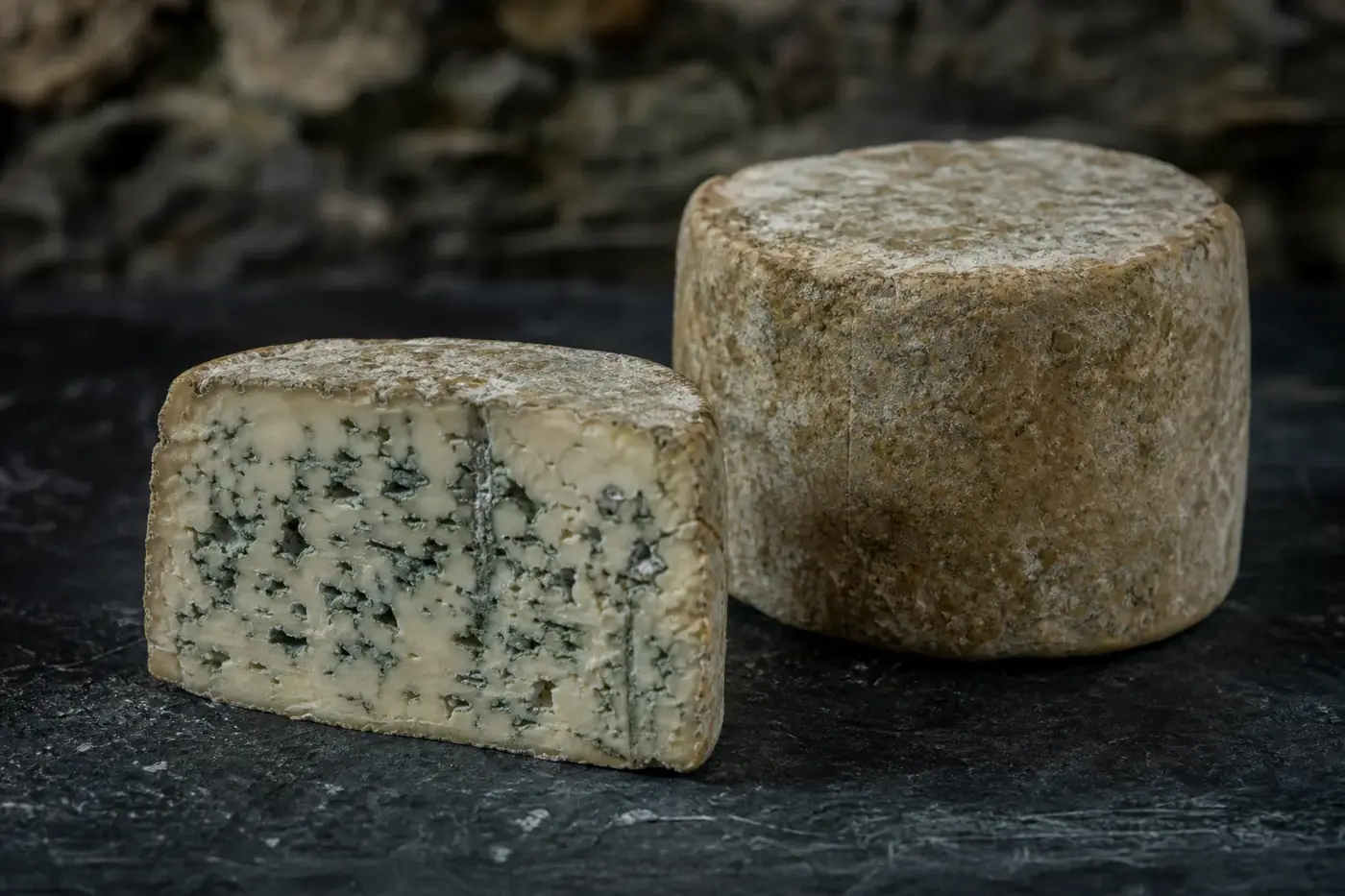
Your knife slips through a thin grey rind, yellow-green in places, into pale paste threaded with blue-green veins.
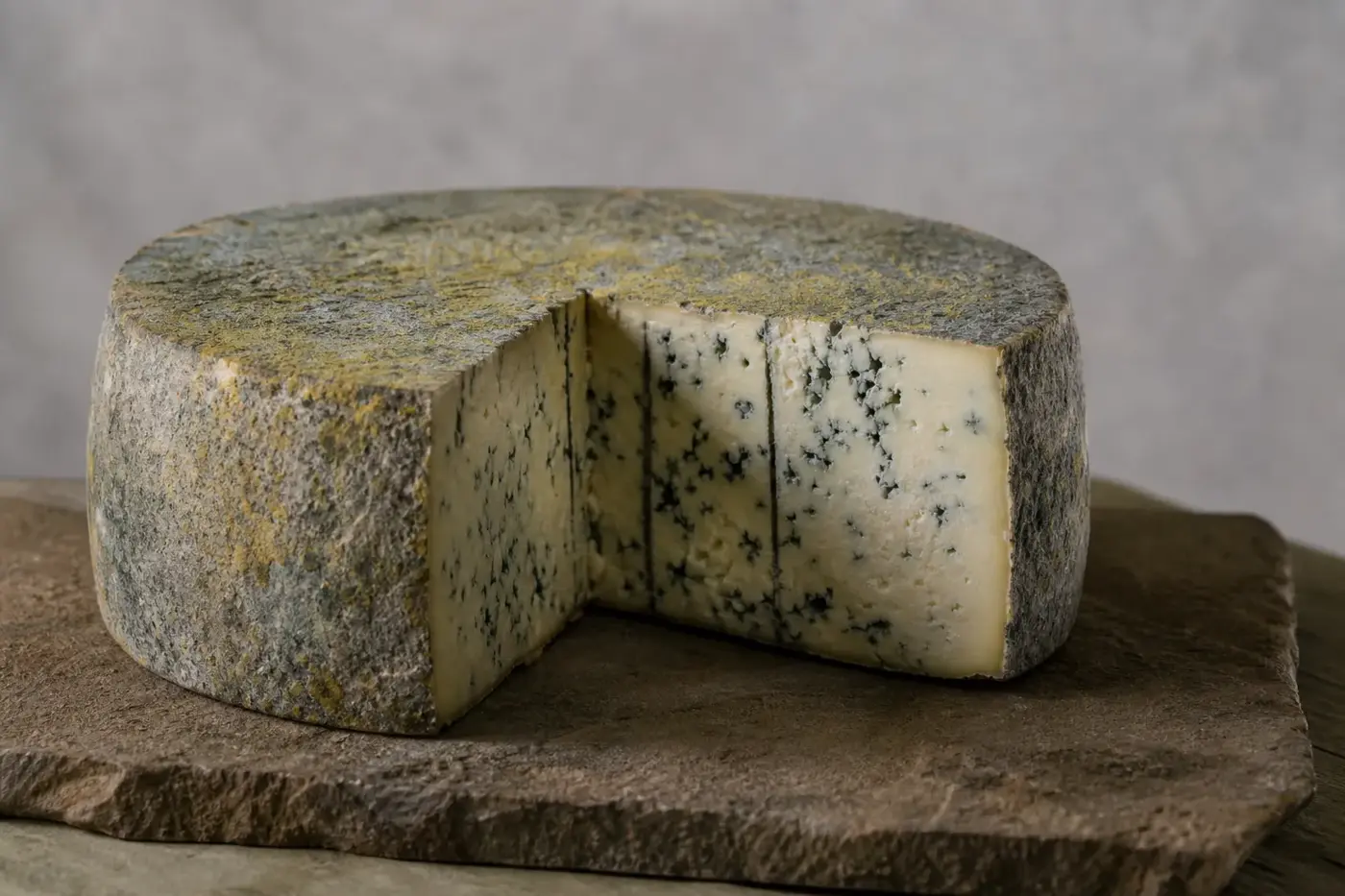
Your knife slips through a thin grey rind, yellow-green in places, into pale paste threaded with blue-green veins. Behind that slice lie the limestone caves of Liébana, in south-western Cantabria, where cool air and persistent moisture shape this mountain cheese. The blue makes an entrance, but local milk, gently handled curd and natural cave maturation deserve their share of the attention.[1][2]
| What you might want to know | The details |
|---|---|
| Name to look for | Picón Bejes-Tresviso.[2][3] |
| EU registration authority and identifier | European Commission; PDO-ES-0084, recorded by Spain’s agriculture ministry.[3] |
| Original EU registration instrument | Commission Regulation (EC) No 1107/96, published 21 June 1996; entry-into-force date unresolved.[4] |
| Great Britain status | Registered PDO; UK scheme registration dated 31 December 2020.[5] |
| Where it must be made | Eight municipalities in south-western Cantabria, listed below.[2] |
| Permitted milk | Whole cow’s, sheep’s or goat’s milk, separately or mixed; no fixed proportions stated.[2] |
| Milk treatment allowed | Unresolved. |
| Coagulant | Rennet; permitted origin unresolved.[2] |
| Minimum maturation | Unresolved, pending clarification of the specification’s maturation requirements.[2] |
| Typical maturation | Unresolved. |
| Shape and size | Cylinder, 7 to 15 cm high; variable weight and diameter.[2] |
| Composition limits | At least 45% fat in dry matter; at least 30% moisture in the whole cheese.[2] |
| Principal allergen | Milk.[2][9] |
| Pregnancy guidance | UK: NHS foods to avoid in pregnancy, November 2026.[10] |
Follow the herds towards the high pastures
Bejes and Tresviso give this cheese its name. The designation’s historical account singles them out for their particularly strong cheesemaking tradition within the wider production district of Liébana. Picture mountainous south-western Cantabria, beside the Picos de Europa.[1]
Here, the landscape supplies two essentials: milk from mountain farming and limestone caves for maturation. The specification describes an older seasonal rhythm, with herds moving to high pastures. Cheesemaking followed them, close to the summer grazing grounds.[1]
Keep that journey from pasture to dairy to cave in mind at the cheese counter. Ask about the maker’s milk and where the cheese matured. You will discover more about your wedge than you will from “Is it strong?”, the cheese lover’s favourite opening gambit.
A protected name rooted in eight places
The protected area takes in Potes, Pesaguero, Cabezón de Liébana, Camaleño, Cillorigo de Liébana, Tresviso, Vega de Liébana and Peñarrubia. Under the published specification, the whole sequence stays within these eight municipalities. Milk production, cheesemaking, maturation, portioning and packaging all belong here.[2]
Spain’s agriculture ministry lists Picón Bejes-Tresviso as an EU protected designation of origin, or PDO. Its original registration appears in Commission Regulation (EC) No 1107/96. Great Britain has a separate registered PDO entry, with November 2026 as the reference point here.[3][4][5]
When you shop, look for the full registered name rather than simply “Spanish blue cheese”. Read the producer’s details too. The specification describes a numbered label or counter-label as the final identification following its controls, so the designation and maker’s name together tell you what you are choosing.[2]
Want a clearer path through the initials? The guide to protected names explains the differences between PDO, PGI and TSG.
Get to know the milk behind your wedge
Picón Bejes-Tresviso need not be a three-milk cheese. Cow’s, sheep’s and goat’s milk are all permitted, alone or in combination. The original registration dossier expressly allows single milks and mixtures, with availability linked to the season.[1]
That dossier describes a slightly piquant flavour, more pronounced when sheep’s or goat’s milk is used. This gives you a useful first question at the counter. Find out the milk or mixture, then taste the particular cheese in front of you.[1]
Milk alone does not decide which cheese you will enjoy most. For a worthwhile comparison, choose two identified products and note the maker, milk declaration and maturity information. Describe their actual condition and flavour before reaching a verdict.
Keep those details beside your tasting note. When you return to the same producer, you will have something specific to compare. “The interesting one” is an affectionate memory, but a rather unreliable filing system.
A gentle start for the blue to come
Acid development and rennet begin the production sequence. Rennet is the enzyme preparation that helps milk set; curd is the solid portion that separates from the liquid whey. The curd is cut gently before draining, moulding and salting.[1][2]
Forget the image of a densely pressed block. Gentle handling helps explain a paste that must accommodate its later blue development. What happens to the curd prepares the cheese for its time in the cave.[1]
After salting, the cheeses spend 12 to 18 days airing in ventilated premises at 15 to 18 °C. Only then do they enter the caves.[2]
For the broader journey from milk to finished cheese, dip into how cheese is made. It takes you through setting, draining and ripening.
Step into the cool limestone caves
The caves do much more than provide a handsome setting. The specification requires natural limestone caves within the designated area, at elevations of 500 to 2,000 metres. Authorised conditions are 5 to 10 °C and 85 to 95% relative humidity, with openings that allow air to circulate.[2]
The specification connects those air currents with the arrival of Penicillium spores and the development of blue inside the cheese. People have their part to play as well. They turn and clean the cheeses while maturation continues in those naturally cool, humid surroundings.[1][2]
When you hear “cave-aged”, let it open a conversation rather than end one. Ask where maturation took place and what the seller knows about the cave. A specific answer brings the place, maker and wedge into much sharper focus.
Read the rind, then look inside
The official description calls for a cylinder with substantially flat faces. Its natural rind is thin, soft and unctuous, grey with yellow-green areas. Cut inside and you should find pale paste with openings, blue-green patches and veins.[1][2]
Wheel weight and diameter vary under the specification. Smaller and larger wheels can therefore share the designation. Size alone tells you little about whether a cheese matches its official description.[2]
At the counter, give the outside and the cut surface a little attention. Ask how this particular piece cuts, whether it holds together or spreads, and how the seller describes its current maturity. The number of blue veins is only part of what you are looking at.
Let the first taste lead to another
An unctuous paste is central to the official description, with cohesion that changes during ripening. Watch what happens on your knife: does the piece hold together, or yield readily when spread? The documented piquancy gives you another reference point, particularly when comparing different milk mixtures.[1]
Smell a small piece before you eat it. There is no need to work through an expected list of aromas. Notice instead how the impression develops in your mouth, separating the opening sensation from the finish.
“Sharp immediately” and “persistent afterwards” describe different moments in the same mouthful. A useful tasting note captures texture, balance of flavours and persistence. Keep the producer and milk information alongside those impressions.
On your second tasting, you can compare with a known cheese rather than simply seek the most forceful wedge. You are looking for what makes this particular piece distinctive. Strength is only one part of that pleasure.
Make room for Cabrales and Queso de Valdeón
Cabrales offers the closest useful production comparison. Its published PDO specification requires raw whole milk from cows, sheep or goats, separately or mixed. It also requires at least two months’ maturation from curd manufacture, most of it in caves, and its defined area is in Asturias.[6]
Those shared features help explain a family resemblance. The names, however, identify distinct cheeses and places. Choose Cabrales to explore that Asturian designation, and Picón Bejes-Tresviso for the Cantabrian cheese described here.
Queso de Valdeón comes from León. Its designation body identifies it as a protected geographical indication, or PGI, and describes an intensely flavoured cheese with a buttery texture and piquancy.[7] Those words offer a starting point, but your comparison rests on the actual portions you taste.
If you serve them together, put each cheese’s name beside it. Set aside expectations about which must be milder, saltier or better. Compare the identified pieces, then record what you find.
Bring your wedge home with its story
Ask your seller four things: who made it, which milk was used, what is known about its maturation, and how to store your portion. After opening a wrapped wedge, keep its identification and handling information. You will want those details alongside the cheese.
Food Standards Agency household guidance for England, Wales and Northern Ireland advises refrigerating dairy products, with the fridge between 0 and 5 °C. Follow the packaging’s storage instructions and dates.[8] For the wider practical choices, turn to storing cheese at home.
When serving, cut only the portion you intend to put on the table. Use a clean knife and keep the cheese separate from delicate accompaniments. Your guests can then choose the balance of each mouthful, and first-time tasters can begin with the cheese itself.
Keep the plate simple and taste as you go
Start with plain bread, then try fresh pear or apple. Taste each separately with the cheese before building a larger mouthful. You will find it easier to judge the cheese when you can distinguish what each accompaniment contributes.
Offer a little fruit preserve alongside rather than pouring it over. Water makes a straightforward alcohol-free drink. These are suggestions for your own exploration, not results from a site tasting.
In the kitchen, try crumbling a small amount over potatoes or incorporating it into a sauce. Taste before adding more cheese or salt. A simple dish you already know gives you a useful starting point.
With fewer unfamiliar ingredients competing for attention, you can judge what the cheese brings to the dish. Then decide how much you want to use. Start small and let your own taste guide the next addition.
This page summarises published guidance from the official sources it cites. It is not medical advice. Guidance differs between countries and changes over time, so check the current source for where you live, and ask your doctor, midwife, pharmacist or dietitian about your own circumstances.
Choosing safely: pregnancy and milk allergy
In the UK, the NHS says pasteurised and unpasteurised soft blue-veined cheeses must be thoroughly cooked during pregnancy. It lists cheese cooked until steaming hot among the options that can be eaten. Consult its current pregnancy food guidance, with November 2026 as the access date here, and ask your midwife about your circumstances.[10]
For milk allergy, Cambridge University Hospitals NHS Foundation Trust lists cheeses made from cow’s, sheep’s and goat’s milk among foods to avoid. Its milk allergy guidance, dated here to November 2026, also distinguishes milk-protein allergy from lactose intolerance.[9] Under that guidance, switching milk species does not give you an appropriate substitute.
These are different issues, and the distinction matters when you choose food. For the underlying explanation, read cheese allergy and lactose intolerance.
Questions people ask
Where is Picón Bejes-Tresviso made?
It is made in eight municipalities in south western Cantabria, beside the Picos de Europa. Milk production, cheesemaking, maturation, portioning and packaging must all take place within the designated area.
What milk is used to make Picón Bejes-Tresviso?
It can be made with whole cow’s, sheep’s or goat’s milk, either separately or mixed. The original registration dossier describes its flavour as slightly piquant, with the piquancy more pronounced when sheep’s or goat’s milk is used.
How long is Picón Bejes-Tresviso aged?
The page does not verify a minimum or typical maturation period. The cheese must mature in natural limestone caves within the designated area, at elevations of 500 to 2,000 metres.
How does Picón Bejes-Tresviso differ from Cabrales?
Picón Bejes-Tresviso comes from Cantabria, while Cabrales comes from Asturias. The Cabrales specification requires raw whole milk and at least two months’ maturation from curd manufacture, most of it in caves.
Can you eat Picón Bejes-Tresviso during pregnancy?
The NHS says pasteurised and unpasteurised soft blue veined cheeses must be thoroughly cooked during pregnancy, and lists cheese cooked until steaming hot among the options that can be eaten. Check the current NHS guidance at https://www.nhs.uk/pregnancy/keeping-well/foods-to-avoid/ and ask your midwife about your circumstances.
Sources
[1] Spanish Ministry of Agriculture, Fisheries and Food. Denominación de Origen Picón Bejes-Tresviso: expediente de solicitud de registro. Original registration dossier, undated, hosted by ODECA. Sections B, C, E and F. Retrieved dossier.
[2] Government of Cantabria, Alimentos de Cantabria. Pliego de condiciones de la Denominación de Origen Protegida “Picón Bejes-Tresviso”. Revision 13, undated. Published specification.
[3] Spanish Ministry of Agriculture, Fisheries and Food. Unión Europea. Official geographical-indication listing, undated retrieved version; Picón Bejes-Tresviso row. Official listing.
[4] European Commission. Commission Regulation (EC) No 1107/96 of 12 June 1996. Official Journal L 148, 21 June 1996. Official publication.
[5] Department for Environment, Food & Rural Affairs. Picón Bejes-Tresviso. UK protected food-name register entry, published 4 January 2021; current retrieved entry checked November 2026. Register entry.
[6] Principality of Asturias. Denominación de Origen Protegida “Cabrales”: expediente. Specification linked by MAPA as the 26 June 2025 version. Sections B and C. Published specification.
[7] IGP Queso de Valdeón. Queso de Valdeón. Designation body’s website, undated, checked November 2026. Designation website.
[8] Food Standards Agency. How to chill, freeze and defrost food safely. Published 18 December 2017; retrieved November 2026. Applies to England, Northern Ireland and Wales. Official guidance.
[9] Cambridge University Hospitals NHS Foundation Trust. Milk allergy. Patient information, retrieved November 2026. Official guidance.
[10] NHS. Foods to avoid in pregnancy. Current retrieved version, November 2026. Official guidance.
This desk-researched article compares official designation documents and published agency guidance; serving suggestions are editorial recommendations rather than a recorded site tasting.
Last checked: November 2026
Last checked November 2026.
The editors suggest you read next