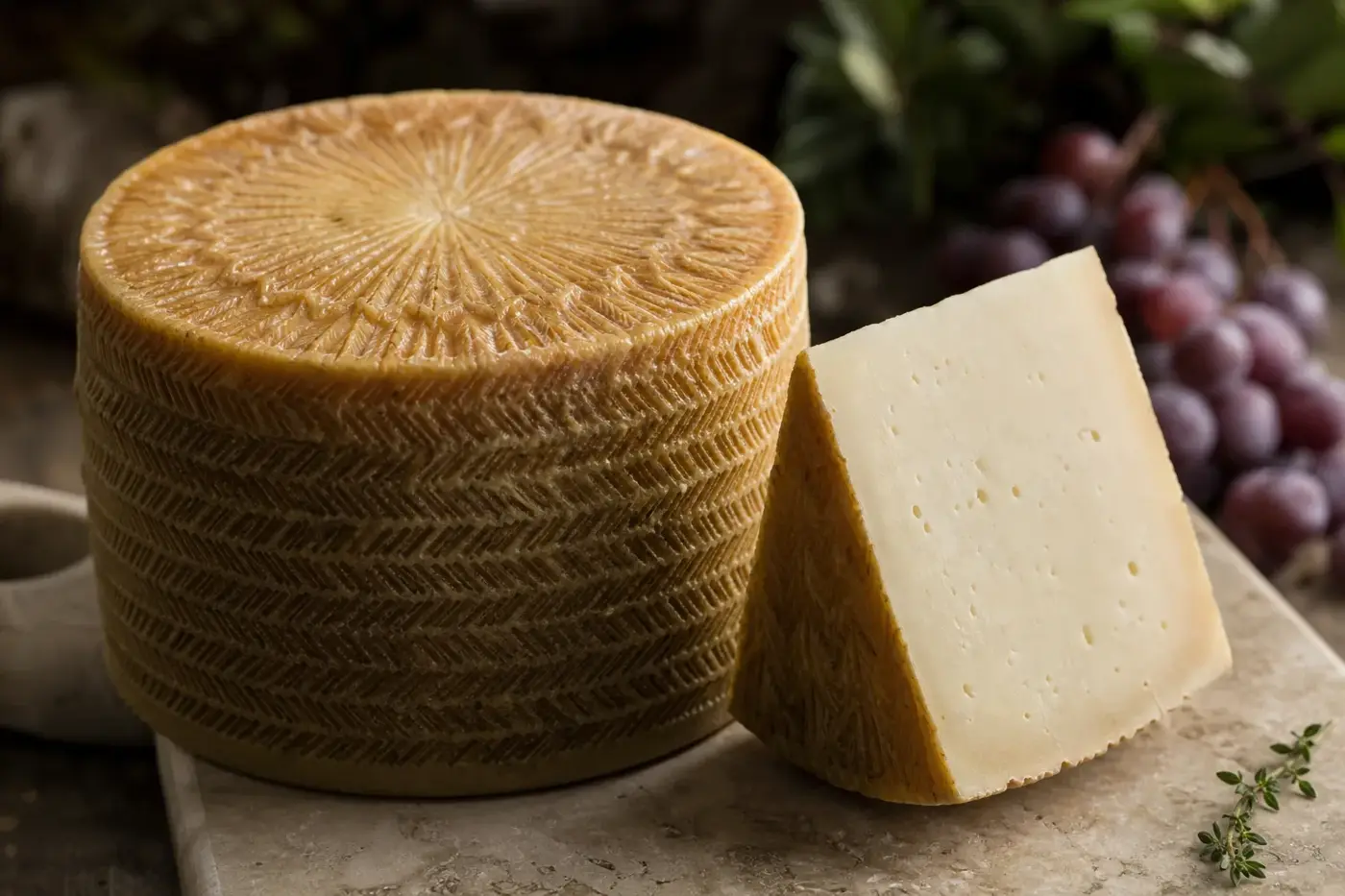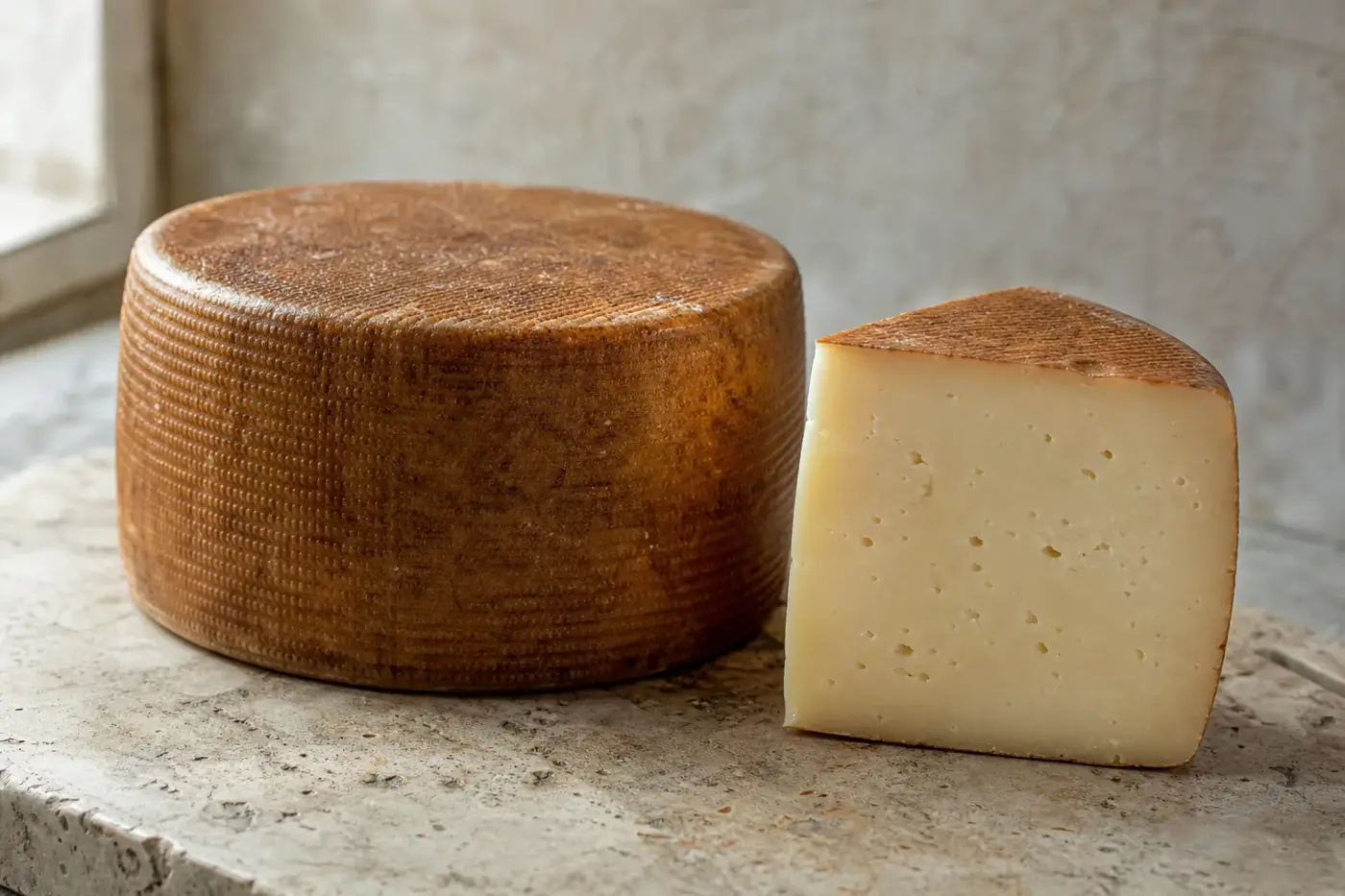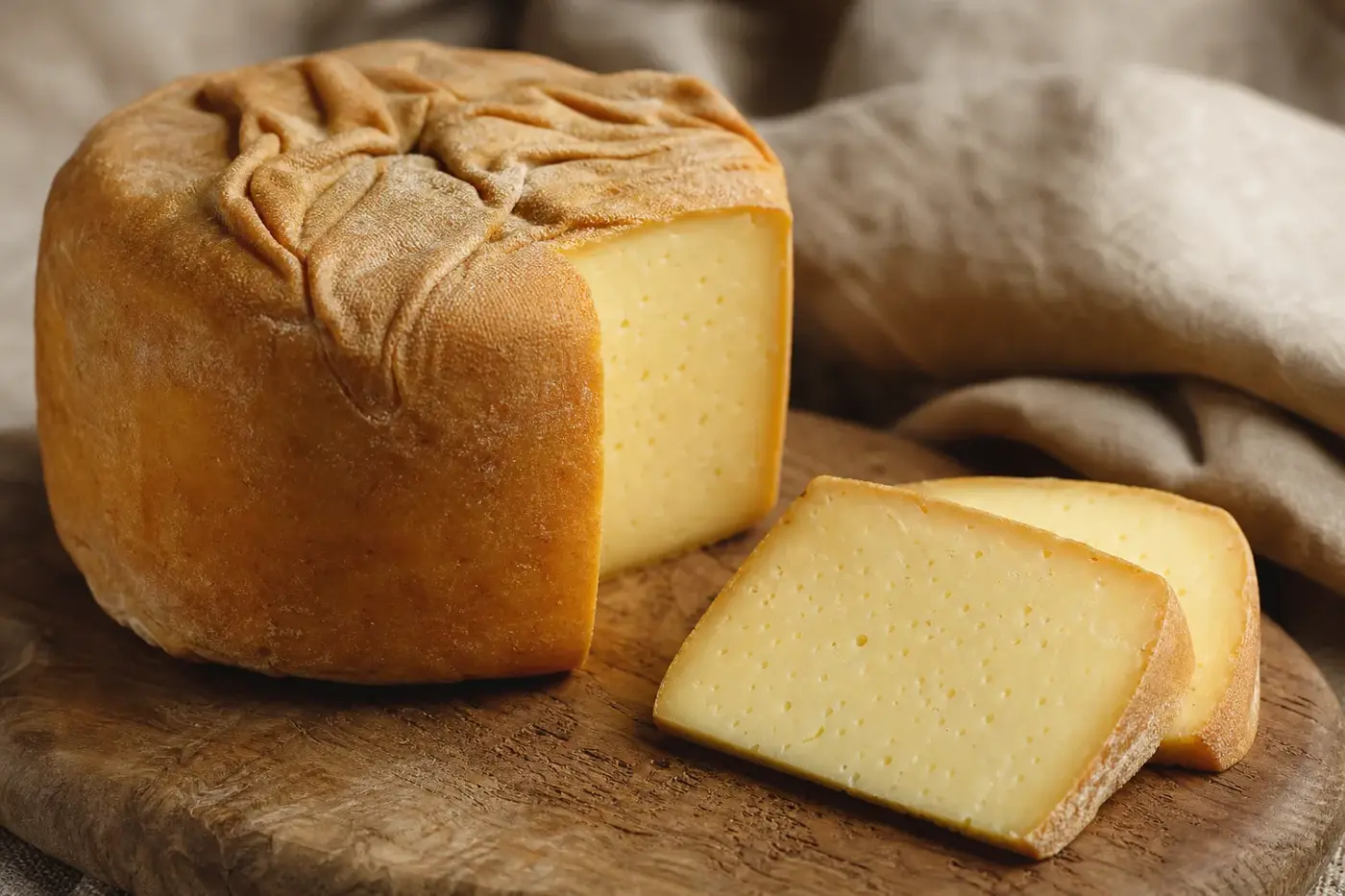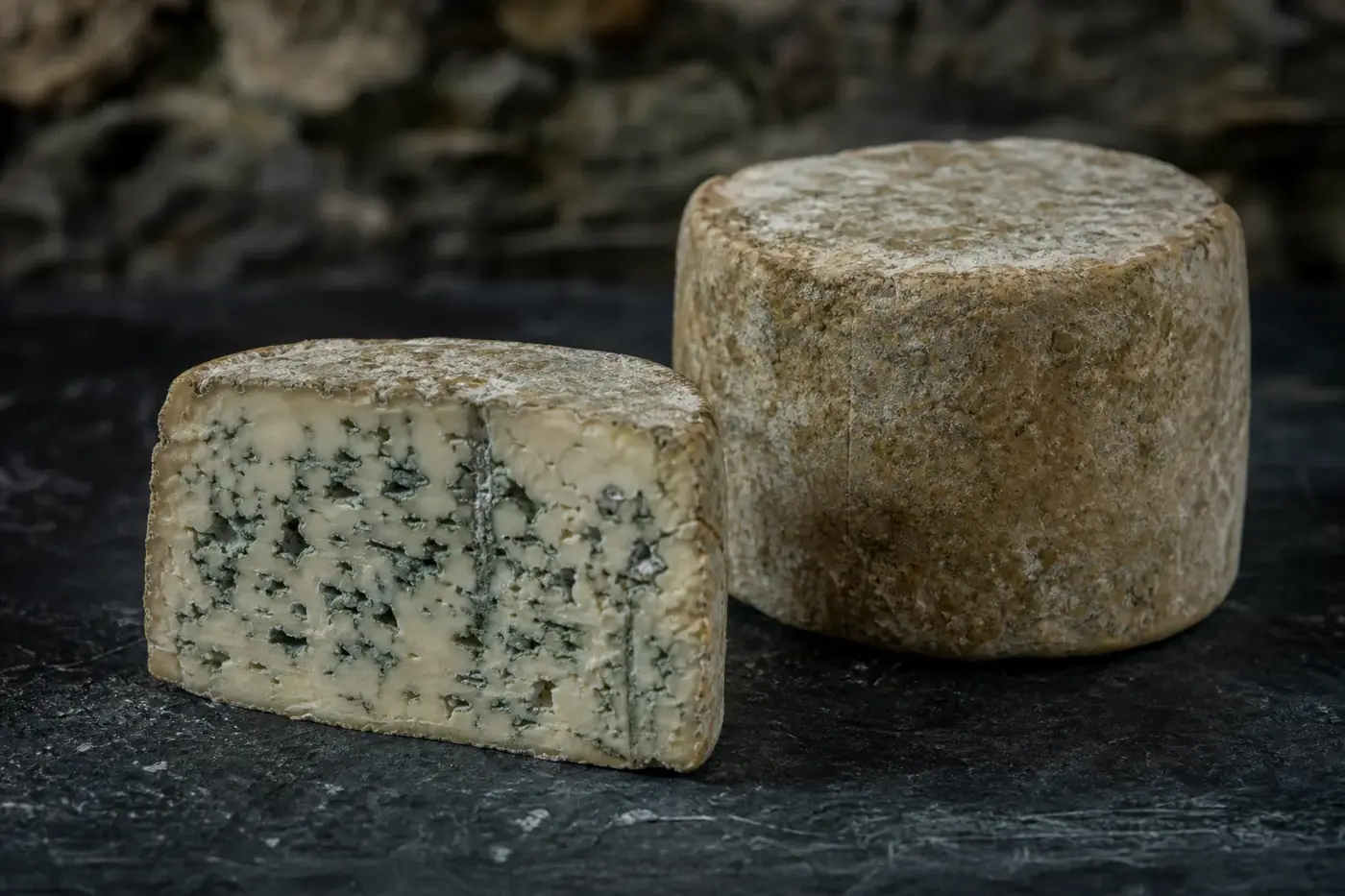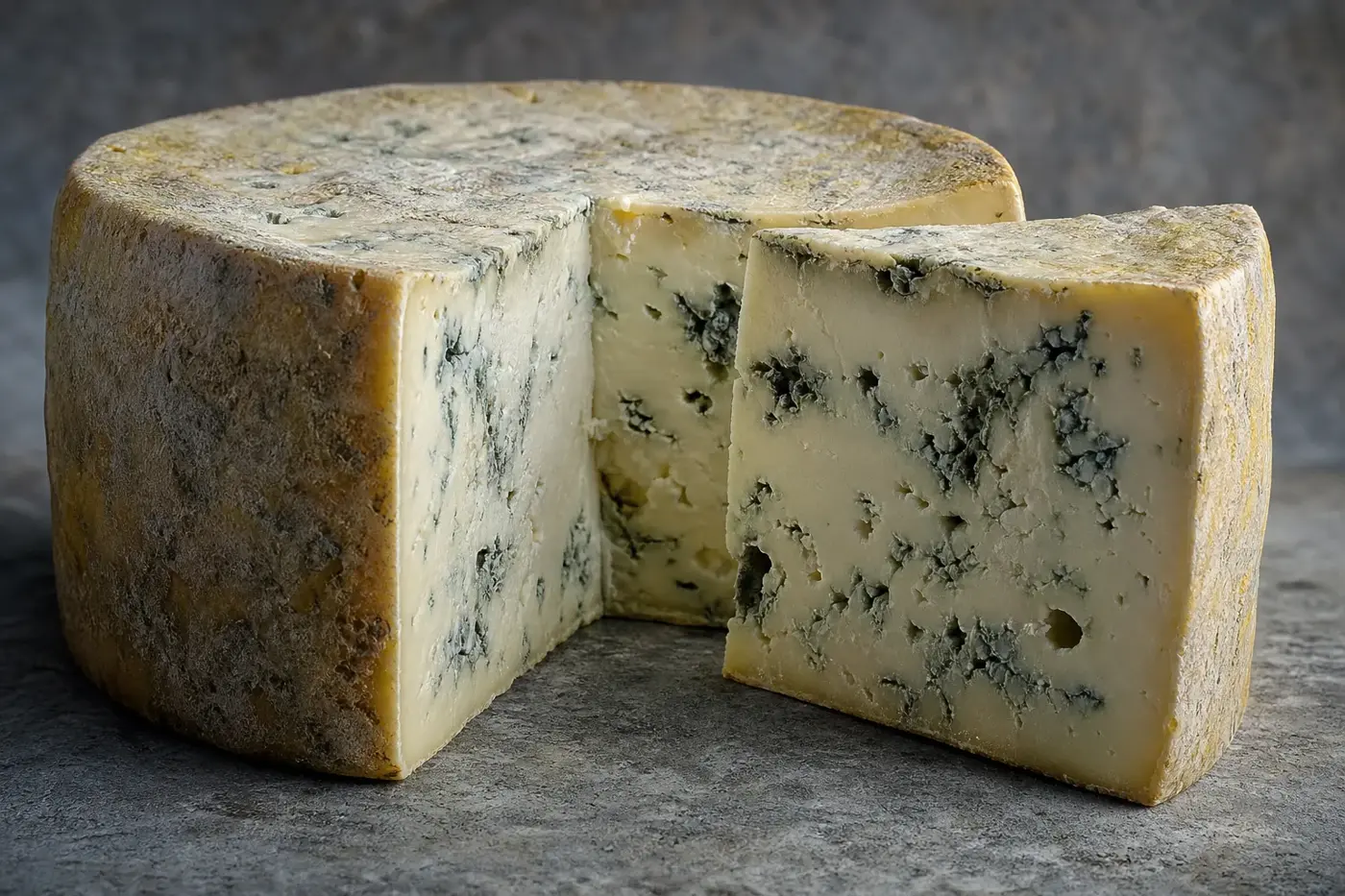
The salt arrives first. Then comes the piquant bite, which stays with you long after that pale, blue-green threaded paste has gone. Queso de Valdeón takes you to the Valdeón valley in León, among the mountains of the Picos de Europa. Its EU protected geographical indication fixes production within the municipality of Posada de Valdeón: a precise mountain address for a cheese that makes its presence felt. [3,4]
| What to look for | What you need to know |
|---|---|
| Familiar and registered name | Queso de Valdeón. [2,3] |
| EU registration reference | PGI-ES-0267, European Commission. [1,3] |
| EU protection | Registered PGI; original registration 28 January 2004. Register status: November 2026. [2,10] |
| Great Britain protection | Registered PGI from 31 December 2020. Register status: November 2026. [2] |
| Where it must be made | Municipality of Posada de Valdeón, León, Spain. [3] |
| Milk allowed | Cow’s milk, alone or mixed with sheep’s and/or goat’s milk; raw or pasteurised. [3] |
| Minimum maturation | Two months for raw-milk cheese; one month for pasteurised-milk cheese. [1] |
| Whole-cheese shape and size | Cylindrical, 0.2 to 3 kg; maximum height 15 cm and diameter 25 cm. [3] |
Follow the milk down the mountain
Picture milk becoming cheese in mountain huts, or making its way down into the valley. The specification’s historical account describes this working landscape through livestock, summer grazing and the practical need to preserve milk. You are on the mountainous northern edge of León, in Castilla y León, where nineteenth-century written references record local cheese production. [1]
Those mountains do more than provide a handsome backdrop. Grazing, milking, transport and preservation all have a part in this cheese’s story. They give you something more substantial to savour than a hazy claim of ancient origins.
Today, the valley connection has a legal boundary. In the EU and Great Britain, Queso de Valdeón identifies cheese made within the defined municipality under the applicable specification. To discover the story of your particular piece, turn to its producer and label. [2,3]
Get to know the name on the label
Look for indicación geográfica protegida, abbreviated IGP in Spanish and PGI in English. For Queso de Valdeón, the specification governs identity, production area, method, characteristics and traceability. Commercial labels must carry the protected name and logo. Whole cheeses must also have a serially numbered counter-label. [1,3]
The geography of protection deserves a moment’s attention. The name appears on the Great Britain register, while EU geographical indication schemes apply in the EU and Northern Ireland. These are separate systems, even when the registered name is identical. [2,9]
You can explore the broader distinction in protected names explained. When choosing Valdeón, start with the complete registered name, then read the producer and product information. Together, those details tell you more than the name can on its own.
One milk, two milks or three?
Cow’s milk can go solo in Valdeón. It can also mingle with sheep’s milk, goat’s milk or both, with no fixed percentage prescribed for each species. Raw and pasteurised milk are both permitted. A three-milk blend is therefore one possible recipe, not the recipe. [3,11]
Individual producers can be much more specific. Queserías Picos de Europa declares pasteurised cow’s and goat’s milk for its blue cheese, with minimum proportions of 80% cow’s milk and 10% goat’s milk. Those figures describe that producer’s product, not a requirement for every cheese carrying the PGI. [5]
Ask which milk mixture is in the piece you are buying. If the treatment terms leave you wondering, raw, thermised and pasteurised milk explains the differences.
Give the blue a little breathing room
The blue begins in the vat, where Penicillium mould enters during cheesemaking. The specification combines acid-lactic and enzymatic coagulation: acidification and rennet turn milk into curd, the solid material separated from liquid whey. This takes 60 to 120 minutes at 28 to 32 °C. [1]
Next, the curd is cut into grains of approximately one cubic centimetre, then rested, stirred and drained. Loosely filled cylindrical moulds give it shape while turning and drainage continue. Dry salt goes onto one face on the first day and the other on the second. Later, piercing lets air into the interior. [1]
You can read those decisions in your slice. The open interior, introduced mould and deliberate aeration are central to the blue growth threading through the paste. Those cavities and veins tell you about the making, as well as giving you something lovely to look at. [1,3]
A cool, humid wait in the valley
Valdeón matures in registered, controlled premises within its defined production area. The specification requires 5 to 10 °C and relative humidity above 85%. Natural conditions are maintained unless intervention is needed to achieve them. Turning and cleaning continue throughout maturation. [1,3]
The minimum periods in the table mark the earliest permitted point, not the age of every cheese you will find for sale. When two pieces catch your eye, ask how long each has matured and whether its milk was raw or pasteurised. That gives you a better comparison than choosing whichever wedge looks most senior.
Let your slice tell its story
Look for ivory-white paste becoming cream-coloured, with numerous irregular cavities filled with blue-green growth. A thin, soft natural rind surrounds it, yellowish with grey tones. The specification describes a cylindrical whole cheese with slightly concave upper and lower faces. [3]
Let your eye wander across the entire cut face. Notice the cavities, the pale paste between them and the boundary beneath the rind. One spectacularly blue patch tells you less than the structure of the whole slice.
Queserías Picos de Europa describes its own cheese as soft-textured and pale yellow, with small cavities containing white and blue-green mould. Its exterior is rough and irregular, with darker grey colouring. This gives you a closer portrait of that producer’s cheese alongside the specification’s broader picture. [5]
Beneath the leaves, a natural rind
Leaf wrapping and natural rind are two separate layers. The rind belongs to the cheese; any leaves sit around it. [3,5] The producer’s description gives you presentation options, rather than a history or purpose for the leaves.
For its large cheese, Queserías Picos de Europa lists hojas de plátano with food film, or printed aluminium. Its smaller format comes in film or aluminium without leaves. Even within one producer’s range, the wrapping changes with the format. [5]
Unwrap your cheese before portioning it. Keep the product label with what remains, so you retain its identity, batch information and storage directions. If you are buying a cut wedge, ask to see those details too.
Settle in for a lingering bite
Expect intensity, salt and piquancy, with a slightly burning sensation and a persistent finish. That is how the official regional description introduces Valdeón’s flavour. Its paste yields rather than springs, with low elasticity and little tendency to cling in your mouth. [4]
Maturation changes the aroma, too. Semi-ripened cheese smells slightly acidic or milky alongside the mould aromas. As ripening progresses, those milky notes retreat and more persistent spicy and fruity aromas emerge. The same official description links greater pungency to longer maturation and the presence of goat’s or sheep’s milk. [4]
Use these descriptions to start a conversation with your cheesemonger. Ask about the milk mixture, age and their assessment of the actual piece. Whether you favour a gentler lactic character or a more pronounced, lingering blue-cheese finish, you are giving them something useful to work with.
Meet the mountain neighbours: Cabrales and Gamonéu
Put these mountain cheeses side by side and look beyond which is strongest. It need not become a blue-cheese arm-wrestling contest. Milk treatment, smoking and maturation reveal more about their differences, with each tradition following its own specification and route to the finished cheese. [1,6,7]
| Cheese | EU protection, November 2026 | Milk treatment | What makes the difference |
|---|---|---|---|
| Queso de Valdeón | PGI, León. [2,3] | Raw or pasteurised. [3] | Pierced; minimum maturation varies with milk treatment. [1] |
| Cabrales | PDO, Asturias. [6] | Raw. [6] | At least two months’ maturation, mostly in caves. [6] |
| Gamonéu | PDO, Asturias. [7] | Raw. [7] | Smoking during maturation; blue-green growth may occur near the edges. [7] |
Cabrales permits cow’s, sheep’s or goat’s milk individually, or mixtures of them, and its specification describes blue-green veining through the paste. Gamonéu has a firm, friable paste and a characteristic smoked rind. Swap one for another and you change your dish, not just its geographical identity. [6,7]
Find the Valdeón for your plans
Begin with the registered name and traceable labelling, then get curious about the cheese itself. Queso de Valdeón can come as whole wheels, packaged portions or a whipped form. For that last version, the rind is removed from matured cheese and the paste is beaten. [3]
Planning a cheeseboard? Tell the seller how much intensity you enjoy and ask which piece fits. If you are cooking, describe the dish rather than simply requesting the strongest cheese. Your plans give the conversation a useful direction.
Read the actual product information for milk treatment, ingredients and storage instructions. How to read a cheese label helps you separate those details from branding and the address of the business selling it.
From your fridge to your plate
Follow the pack’s refrigeration and after-opening instructions. The UK Food Standards Agency’s consumer guidance for England, Wales and Northern Ireland recommends setting your fridge between 0 and 5 °C and keeping dairy products refrigerated. [8]
For current advice on refrigeration and time outside the fridge in England, Wales and Northern Ireland, consult the Food Standards Agency. Follow the product label, too. [8]
Put out a small first portion, then replenish as needed. Keep wrapping and label together so the instructions stay close to hand. You will find the broader handling routine in storing cheese at home.
Make a little room for Valdeón
Let its documented saltiness, pungency and yielding texture guide you. The combinations below are serving suggestions built around those characteristics. [4]
Begin with plain bread and a little cheese on its own. Then try fresh pear or apple, keeping the fruit separate so you can adjust each mouthful. Quince paste offers another counterpoint. Start small, letting its sweetness sit beside the cheese rather than cover it.
Walnuts and unsalted crackers take your plate in a less sweet direction. For an alcohol-free drink, begin with water, then try lightly brewed black tea or an apple drink. Let your taste for sweetness alongside salty blue cheese decide.
In the kitchen, treat Valdeón as a seasoning ingredient. Start with a modest amount over a baked potato, folded into a pasta sauce or dotted over cooked vegetables. Add it gradually and taste before deciding whether your dish needs any more salt.
For your first encounter, bread, one fruit and a small portion of cheese are plenty. That simple plate gives you room to notice the milk, mould and maturation. The elaborate pairings can wait; your cheeseboard does not need an entourage.
General information only, not medical advice: follow the official guidance where you live.
Questions people ask
Where is Queso de Valdeón made?
It is made in the Valdeón valley in León, among the mountains of the Picos de Europa. Its protected production area is the municipality of Posada de Valdeón, Spain.
What milk is used to make Queso de Valdeón?
It can be made with cow’s milk alone or blended with sheep’s milk, goat’s milk or both. The milk can be raw or pasteurised, and no fixed percentage is prescribed for each species.
How long is Queso de Valdeón matured?
Cheese made with raw milk must mature for at least two months. For cheese made with pasteurised milk, the minimum is one month.
How does Queso de Valdeón differ from Cabrales and Gamonéu?
Valdeón can be made with raw or pasteurised milk and is pierced during production. Cabrales is made with raw milk and matures mostly in caves, while Gamonéu is made with raw milk and smoked during maturation.
How should I store Queso de Valdeón?
The UK Food Standards Agency advises keeping dairy products refrigerated and setting the fridge between 0 and 5 °C. Consult the agency for current advice in England, Wales and Northern Ireland, and follow the product label’s storage instructions.
Sources
[1] Ministerio de Agricultura, Pesca y Alimentación. Pliego de condiciones de la IGP «Queso de Valdeón», revision 1, amendment effective 18 March 2020. Official specification.
[2] Department for Environment, Food & Rural Affairs. Queso de Valdeón, Great Britain protected food name register, published 2021, accessed November 2026. Register entry.
[3] Department for Environment, Food & Rural Affairs. Specification for the P.G.I. «Queso de Valdeón», revision 1, English translation of the amended specification, 2020. Published specification.
[4] Instituto Tecnológico Agrario de Castilla y León. «Queso de Valdeón» (IGP), undated institutional description, accessed November 2026. Official regional account.
[5] Queserías Picos de Europa. Nuestros quesos de Valdeón, undated product declarations, accessed November 2026. A commercial producer describing its own products. Producer’s product information.
[6] Gobierno del Principado de Asturias. Denominación de Origen Protegida “Cabrales”, specification listed as May 2025. Official specification.
[7] Gobierno del Principado de Asturias. Pliego de condiciones de la Denominación de Origen Protegida “Gamonéu”, current document supplied through the regional specification index, accessed November 2026. Official specification. (asturias.es)
[8] Food Standards Agency. How to chill, freeze and defrost food safely, published 2017, current online text accessed November 2026. Applies to England, Wales and Northern Ireland. Official consumer guidance.
[9] Department for Environment, Food & Rural Affairs. Protected geographical food and drink names: UK GI schemes, updated 8 March 2024. Official jurisdiction guidance.
[10] Instituto Tecnológico Agrario de Castilla y León. Pliegos de condiciones y documentos únicos de las DOP / IGP agroalimentarias, current institutional index, accessed November 2026. Official specification index.
[11] European Commission. Publication of an application for approval of a non-minor amendment to a product specification, Queso de Valdeón, 2019/C 375/09, 6 November 2019. Application stage evidence, read alongside the subsequently amended specification. Official Journal document.
Researched through official specifications, government records, regional institutional descriptions and attributed producer declarations; serving combinations are editorial suggestions, without a site tasting.
Last checked: November 2026
Last checked November 2026.
The editors suggest you read next