Prästost
Picture a farmer in Småland setting aside particularly good cheese for the church.
Picture a farmer in Småland setting aside particularly good cheese for the church. According to Svenska Ostklassiker, dairy farmers contributed a tenth of their production, offering cheese made from unskimmed milk, sometimes enriched with cream. You can still hear that connection in the name: präst means priest. [1][2]
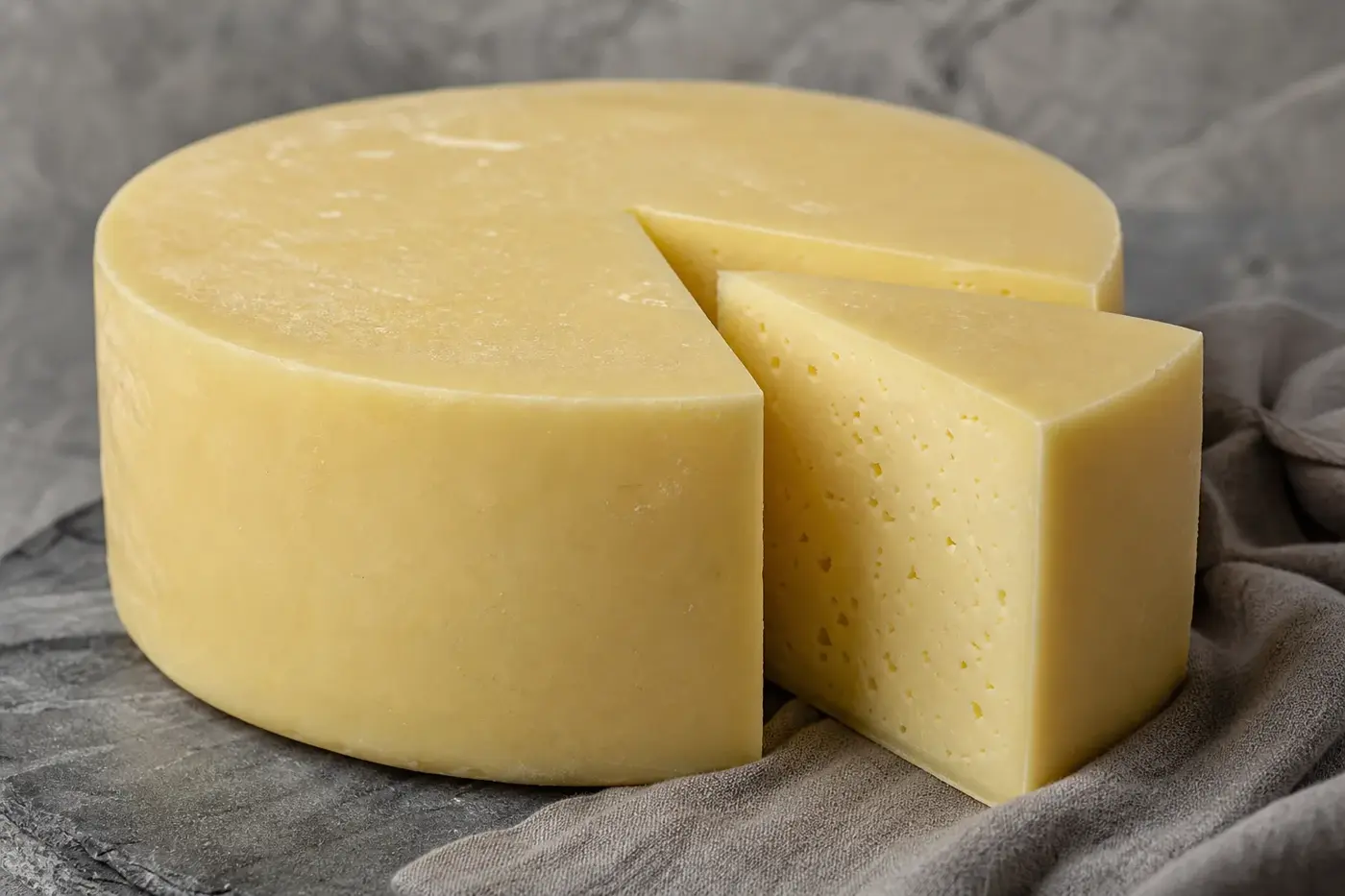
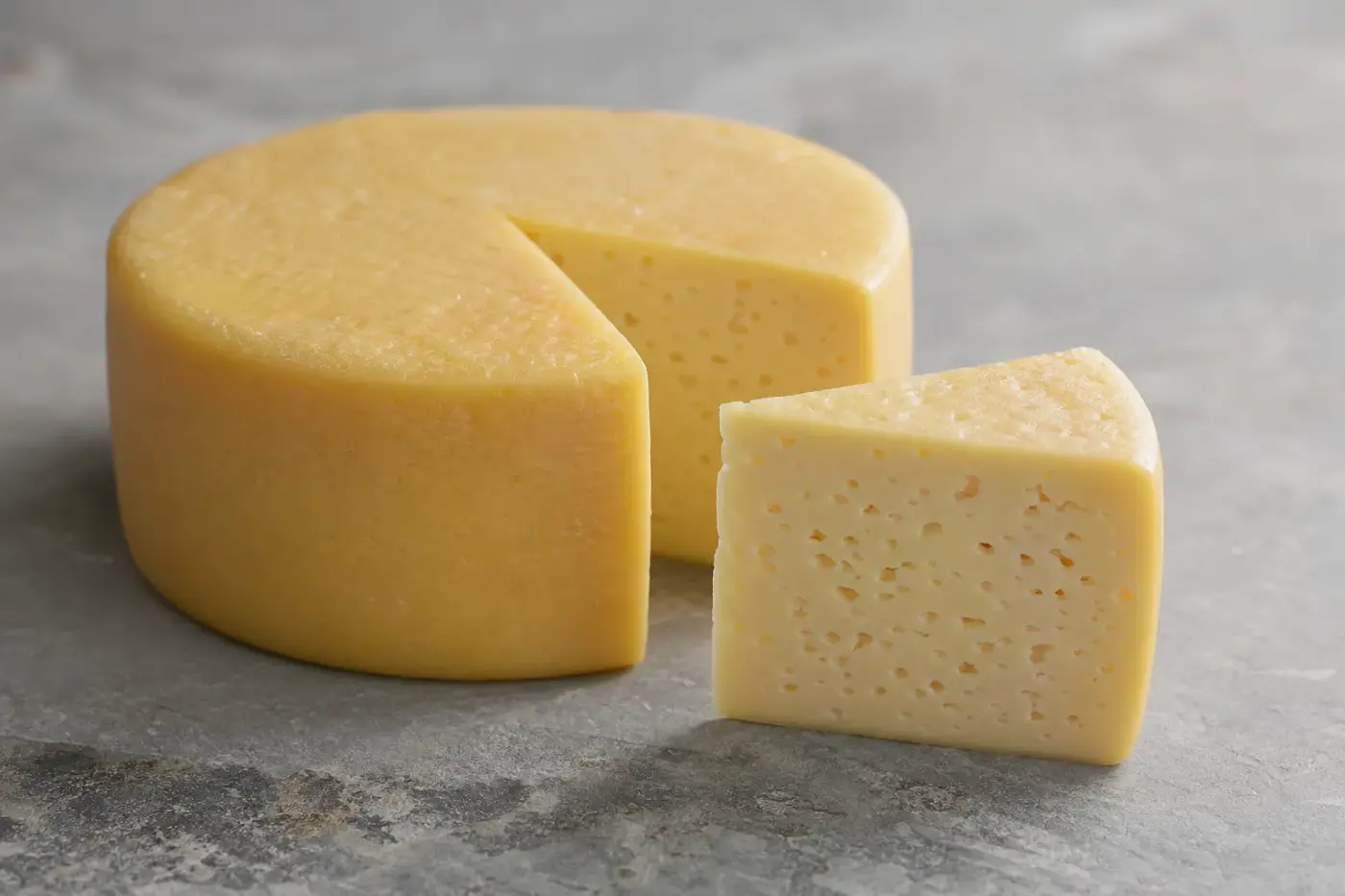
Slice into today’s Prästost and that history meets a Swedish cow’s milk hard cheese with small, irregular openings. Salt, sweetness and acidity share the mouthful, becoming more forceful with age. Its appearance is modest. Its flavour has rather less interest in keeping quiet. [1][2]
| What to look for | What you’ll find |
|---|---|
| Name to know | Prästost. [1] |
| Where it comes from | Sweden, with a history linked particularly to Småland by the licensing organisation. [1] |
| Milk in the modern examples here | Pasteurised cow’s milk. [3][4] |
| Cultures and coagulant on the label | Starter culture and cheesemaking enzyme: syrningskultur and ystenzym on Swedish labels. [3][4] |
| What it looks like | Traditionally round, with numerous small openings in the cut surface. [1] |
| A taste of the maturation range | Falbygdens 18 months; Falköpings 30 months. These are product ages. [4][5] |
| The commercial name | Svenska Ostklassiker identifies Präst® as a registered trademark used by its licensees. [2] |
Get to know the priest on the label
Prästost brings together the Swedish words for priest and cheese. On modern packaging, you will often find the shorter Präst®, one of the names Svenska Ostklassiker licenses across participating dairy businesses. A shared name does not mean an identical cheese, though. Age, ingredients and presentation vary by producer. [1][2]
When you search for it, keep the Swedish spelling, including ä. Then look for the dairy and the maturation statement. The licensed name introduces the family; the individual label tells you which member you are taking home. [2][3][4]
Follow the trail to Småland
Church dues might sound dry, but rich cheese gives the story some substance. Svenska Ostklassiker places this tradition in eighteenth-century Småland, describing farmers’ contributions as church tax. Arla also connects the cheese with payment to the priest. [1][3]
The two principal historical accounts lead you to different centuries. Falköpings Mejeri reaches back to the sixteenth century; Svenska Ostklassiker emphasises the eighteenth. Both link the name to payments to the clergy, but neither supplies a contemporary parish ledger or tithe record dating the first production of the cheese now sold as Präst. [1][5]
Think of these producer histories as a longstanding naming tradition, rather than a precisely documented recipe history. They do not trace an uninterrupted recipe from a particular parish payment to the cheese you buy today.
For a clearer commercial milestone, turn to Falköpings. It says it has made cheese under the Präst name since the 1930s. That gives you a firm point in the modern dairy story, alongside accounts of medieval or early modern origins. [6]
Cut a slice and meet its character
Look first at the openings. Prästost is grynpipig, the Swedish term for a cheese with numerous small openings rather than a few large, rounded holes. Svenska Ostklassiker describes round moulds; Falköpings describes a supple, moist cheese with an open texture. Arla’s published product imagery shows a pale yellow paste. [1][5][7]
Then turn your attention to flavour. Svenska Ostklassiker describes cream and butter, salt and sweetness, pleasant acidity and some bitterness. As the cheese matures, those flavours become more pronounced, with umami and fruity notes joining them. [1]
The individual products give you a more detailed picture. Falbygdens describes its 18-month Präst as powerful and slightly nutty, with distinct saltiness, sweet tones and crunchy crystals. Falköpings emphasises suppleness and increasing aromatic intensity in its longer-aged cheese. These tasting descriptions come from the producers and licensing organisation, rather than a fromage.co.uk tasting. [4][5]
To explore the differences, try several ages from one producer before comparing dairies. Find the intensity you enjoy first. Then look for each maker’s particular balance of flavour and texture.
Step inside the dairy
Current Arla and Falköpings ingredient declarations begin with pasteurised milk, starter culture, salt and cheesemaking enzyme. The culture develops acidity and influences ripening. The enzyme turns the milk into a gel, ready to be cut into curd: the solid material kept for cheese. Whey is the liquid released. [3][5][6]
Falköpings describes the journey through its dairy in five stages:
- Prepare the milk: the dairy pasteurises its cheesemaking milk, then cools it.
- Add culture and enzyme: starter culture goes in first, followed by cheesemaking enzyme.
- Cut and warm: the coagulated milk is cut into pieces and heated to encourage whey separation.
- Press and salt: the curd is pressed, then the cheese goes into brine.
- Give it time: the cheese moves into storage to develop its finished character. [6]
That takes you through the dairy’s process, rather than providing a method for making cheese at home. For a closer look at what each stage does, explore how cheese is made.
Give the ingredients list some attention, too. Falbygdens’ 18-month product declares calcium chloride and E202 alongside the core ingredients; Falköpings’ 30-month product lists E251, E202 and E235. Those declarations belong to the named products. Read your actual pack, because formulations differ across Prästost. [4][5]
Discover what time brings to the slice
Maturation builds both strength and complexity. Svenska Ostklassiker describes increasing saltiness and bitterness alongside umami, sweetness and fruitiness. Protein crystals can develop inside the openings, giving you a small crunch in an otherwise supple mouthful. [1]
There are several ages to explore. Arla lists Falbygdens versions at 12, 18 and 24 months; Falköpings lists versions at six, 18, 24 and 30 months. These are product ranges, not a shared maturation timetable or a legal ageing requirement. [5][6][7]
Let the occasion help you choose. A less assertive example makes an approachable sandwich cheese; a strongly matured piece deserves a taste alone before you reach for accompaniments. These are serving suggestions, with the individual cheese having the final say.
From farm obligations to dairy craft
The traditional story belongs to milk-producing farms and their obligations to the clergy. Today’s Prästost comes from dairies using pasteurisation, added cultures, controlled processing and maturation stores. Falköpings describes large cheesemaking tanks, while Arla names Kalmar dairy as the production site for its Arla Ko Präst product. [1][3][6]
The change is about organisation as much as scale. Farm output and local obligations have given way to repeatable dairy production and a choice of maturation periods. Neither the historical accounts nor the modern production descriptions establish how closely a farmhouse version would have resembled the commercial cheese you find today.
Make room for its Swedish neighbours
Set Prästost beside Svecia, Herrgårdsost and Västerbottensost and you have four distinct identities to explore. Openings, texture and maturation give you useful starting points. The named product descriptions and documents draw out the differences below.
| Cheese | What sets it apart | What you can learn about maturation |
|---|---|---|
| Prästost | Numerous small openings; round moulds in the licensing organisation’s description. [1] | Falbygdens’ example: 18 months. [4] |
| Svecia | The official application summary describes a cylindrical cheese with evenly distributed small openings and a waxed surface. [8] | The historical application summary specifies at least two months. [8] |
| Herrgårdsost | Arla describes its Herrgård example as firm, mild and sweet, with hazelnut notes. [9] | Unconfirmed for this example |
| Västerbottensost | The producer describes manufacture at Burträsk, with curd placed in round moulds. [10] | The producer states at least 14 months. [10] |
Svecia’s historical application summary offers useful detail for comparison, but read its wording separately from a current legal specification. In your kitchen, these cheeses can take a dish in different directions. Their names, recipes and flavour profiles remain distinct.
Begin with bread and follow your appetite
Bread is an excellent place to start. Arla recommends Präst for sandwiches, while Falbygdens suggests bread, crackers and the cheeseboard for its aged example. Cut a thin slice first, then adjust the thickness to suit the cheese’s intensity and texture. There is no prize for the thinnest slice. [3][4]
On a board, give mature Prästost room beside plain bread or crispbread, with apple or pear served separately. Taste the cheese before adding fruit. You will get a clearer sense of its salt, sweetness and acidity without an accompaniment taking over.
You can bring it into your cooking, too. Arla specifically recommends its product in lasagne, and Falköpings describes its long-aged version as suitable for cooking. Taste before seasoning the dish, especially with an assertive mature example. Let the cheese’s contribution guide the final seasoning. [3][5]
Choose companions that leave room for the cheese
For an alcohol-free starting point, try sparkling water, unsweetened black tea or an alcohol-free apple drink. Treat these as suggested combinations rather than tested pairings. Water leaves the cheese most exposed; tea and apple offer contrasting directions to explore.
Keep the food simple at first, too. Plain crispbread lets texture lead, while fresh apple adds a contrasting bite. Put preserves or pickles alongside rather than over the cheese. Compare each combination with an unaccompanied piece, so you can find what you enjoy without losing the Prästost itself.
Read the label, then settle it in the fridge
Three Swedish label terms will help you find your bearings. Pastöriserad mjölk means pasteurised milk, syrningskultur means starter culture, and ystenzym means cheesemaking enzyme; these appear on the Arla and Falköpings labels discussed here. If you avoid animal-derived rennet, ask the producer about the enzyme, because ystenzym alone does not identify its source. [3][5]
For more help with the small print, turn to rennet explained and how to read a cheese label. The name on the front tells you only part of the story.
Origin marking is also in an announced transition. On 4 November 2026, Arla stated that licensed Präst products would progressively receive Från Sverige marking, with completion intended by February 2027. That announcement did not make the marking a completed requirement on every pack in November 2026. [11]
At home in England, Northern Ireland and Wales, follow the Food Standards Agency’s advice: keep your fridge at 5 °C or below and follow the storage instructions on the packaging. Keep that packaging so the instructions and date stay to hand. For broader guidance, turn to how to store cheese at home. [12]
General information only, not medical advice: follow the official guidance where you live.
Questions people ask
What does Prästost taste like?
Svenska Ostklassiker describes flavours of cream and butter, salt and sweetness, with pleasant acidity and some bitterness. Longer maturation brings a more pronounced character, including umami and fruity notes.
Is Prästost made from pasteurised milk?
The verified modern Arla and Falköpings examples are made from pasteurised cow’s milk. Check the individual pack for its ingredients.
Is Prästost suitable for people who avoid animal rennet?
The Swedish label term ystenzym means cheesemaking enzyme, but it does not identify the enzyme’s source. If you avoid animal rennet, ask the producer about the enzyme.
How long is Prästost aged?
The product ranges listed on the page include Falköpings versions aged from six to 30 months and Falbygdens versions aged from 12 to 24 months. A legal minimum ageing period was not verified.
How should I store Prästost?
For storage at home in England, Northern Ireland and Wales, the Food Standards Agency advises a fridge temperature of 5 °C or below and following the storage instructions on the packaging. Check the Food Standards Agency’s guidance for details.
Sources
- Svenska Ostklassiker AB, Präst®, undated web page, retrieved November 2026. History, round format, openings, maturation and attributed sensory descriptions.
- Svenska Ostklassiker AB, corporate website, undated, retrieved November 2026. Its statement concerning ownership and licensing of the Präst®, Herrgård® and Grevé® trademarks.
- Arla, Arla Ko® Präst® ost 31% ca 720g, current product page retrieved November 2026. Ingredients, production site and serving suggestions. Commercial producer source.
- Arla, Falbygdens® Präst® lagrad 18 mån hårdost ca 530g, current product page retrieved November 2026. Age, ingredients and attributed sensory description. Commercial producer source.
- Falköpings Mejeri, Falköpings Präst® 30 mån., current product page retrieved November 2026. Ingredients, historical account and attributed texture and maturation descriptions. Commercial producer source.
- Falköpings Mejeri, Våra goda ostar, undated web page retrieved November 2026. Stated production history, cheesemaking sequence and listed maturation variants.
- Arla, Hårdost, undated product-category page retrieved November 2026. Listed Präst maturation variants and published product imagery.
- Livsmedelsverket, Svecia: application for registration under Council Regulation (EEC) No 2081/92, product-specification summary, historical application document, date not stated in the retrieved copy. Description and production sections, pages 1 and 2.
- Arla, Arla Ko® Herrgård® ost 28% ca 730g, current product page retrieved November 2026. Attributed texture and flavour description.
- Västerbottensost, Crafts, undated producer page retrieved November 2026. Production location, moulding and stated minimum maturation.
- Arla, Präst®, Herrgård® och Grevé® får gemensam Från Sverige-märkning, 4 November 2026. Announced marking transition and intended completion.
- Food Standards Agency, How to chill, freeze and defrost food safely, published 18 December 2017, current retrieved text checked November 2026. Applies to England, Northern Ireland and Wales; sections on chilling and fridge storage.
This article was researched from Swedish producer and licensing records, an official historical specification document and Food Standards Agency guidance, with commercial tasting descriptions attributed to their sources.
Last checked: November 2026
Last checked November 2026.
The editors suggest you read next
Västerbottensost
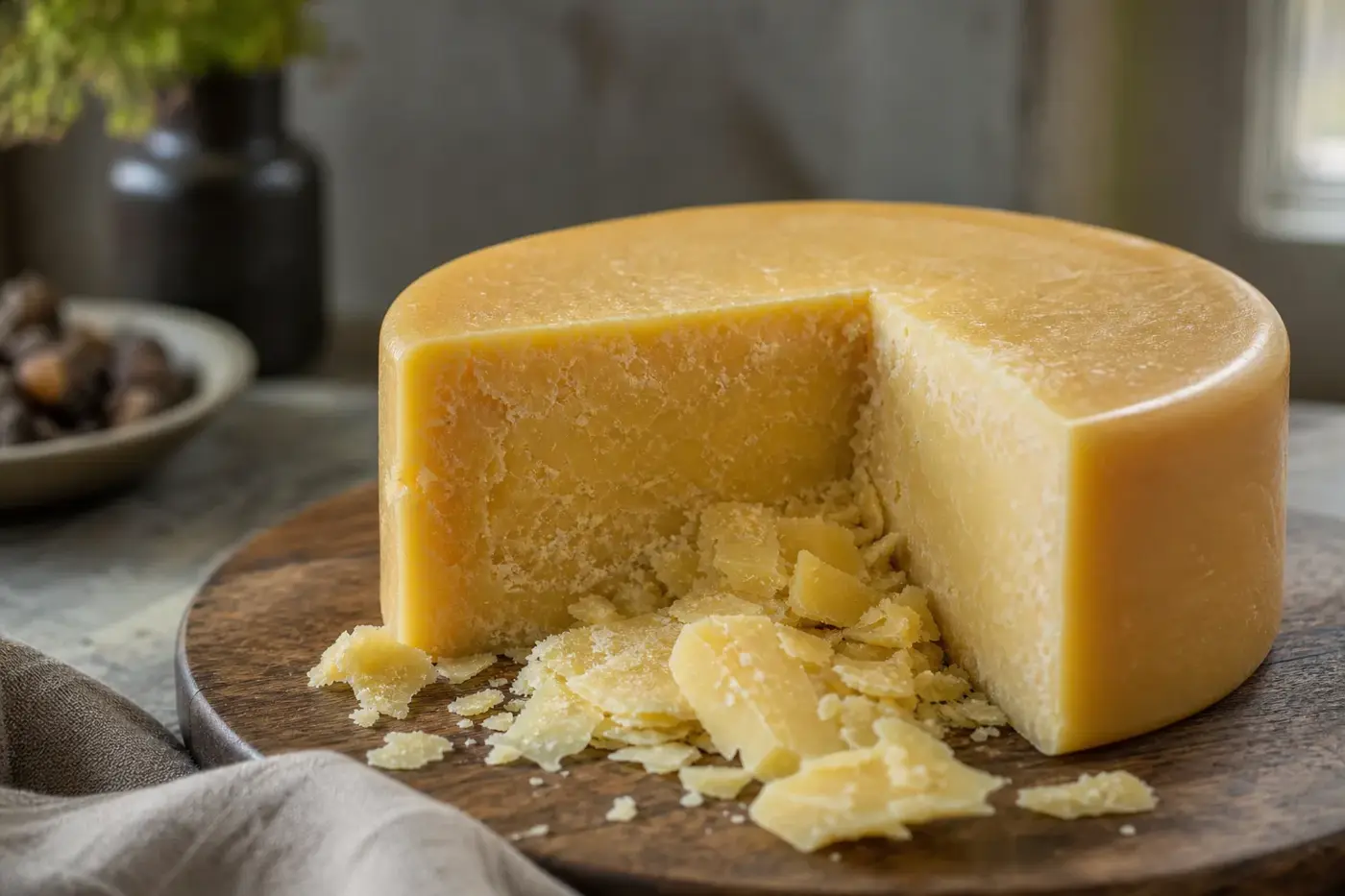
Your cheese plane meets Västerbottensost and a neat slice becomes a tumble of brittle flakes.