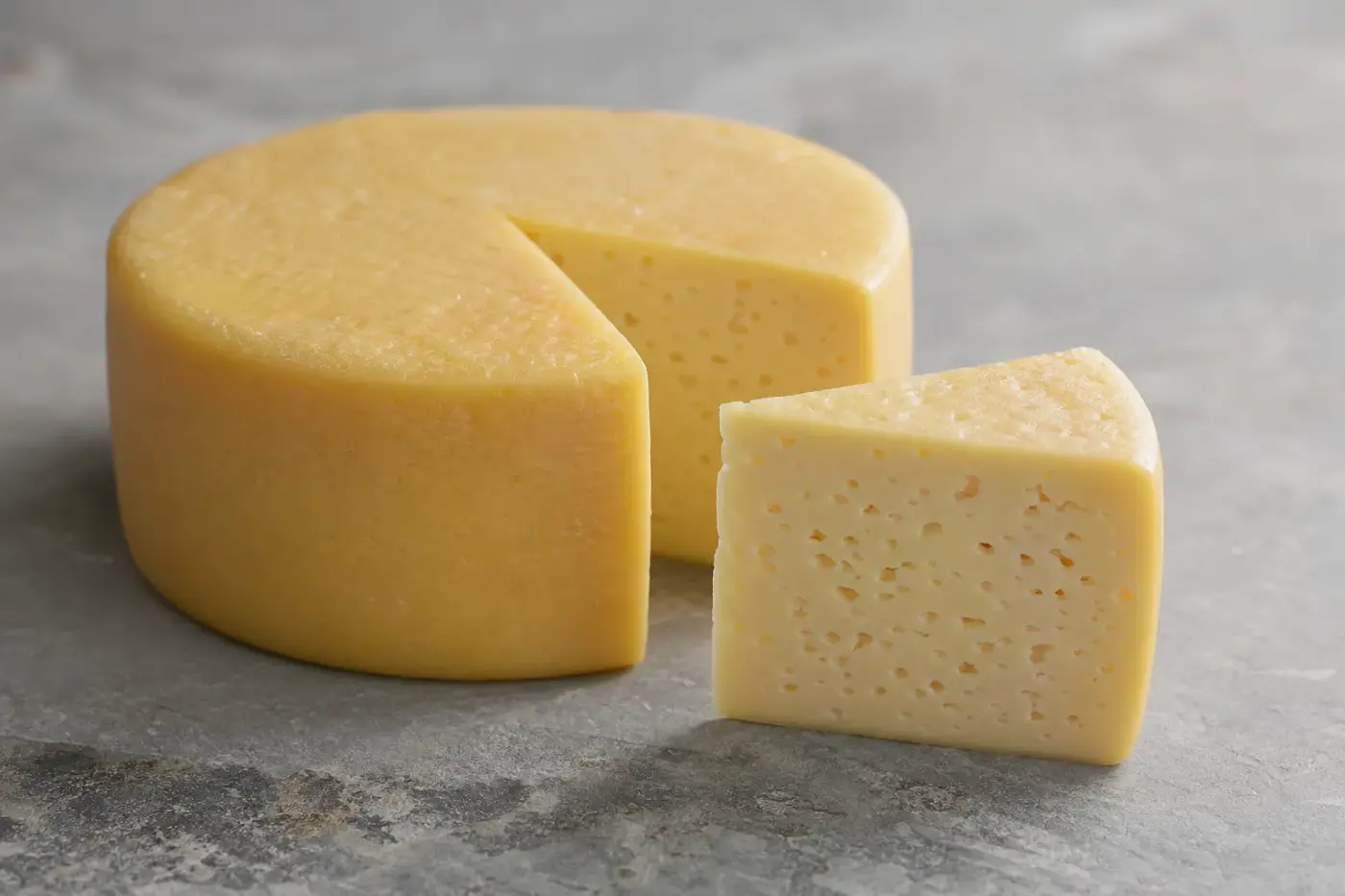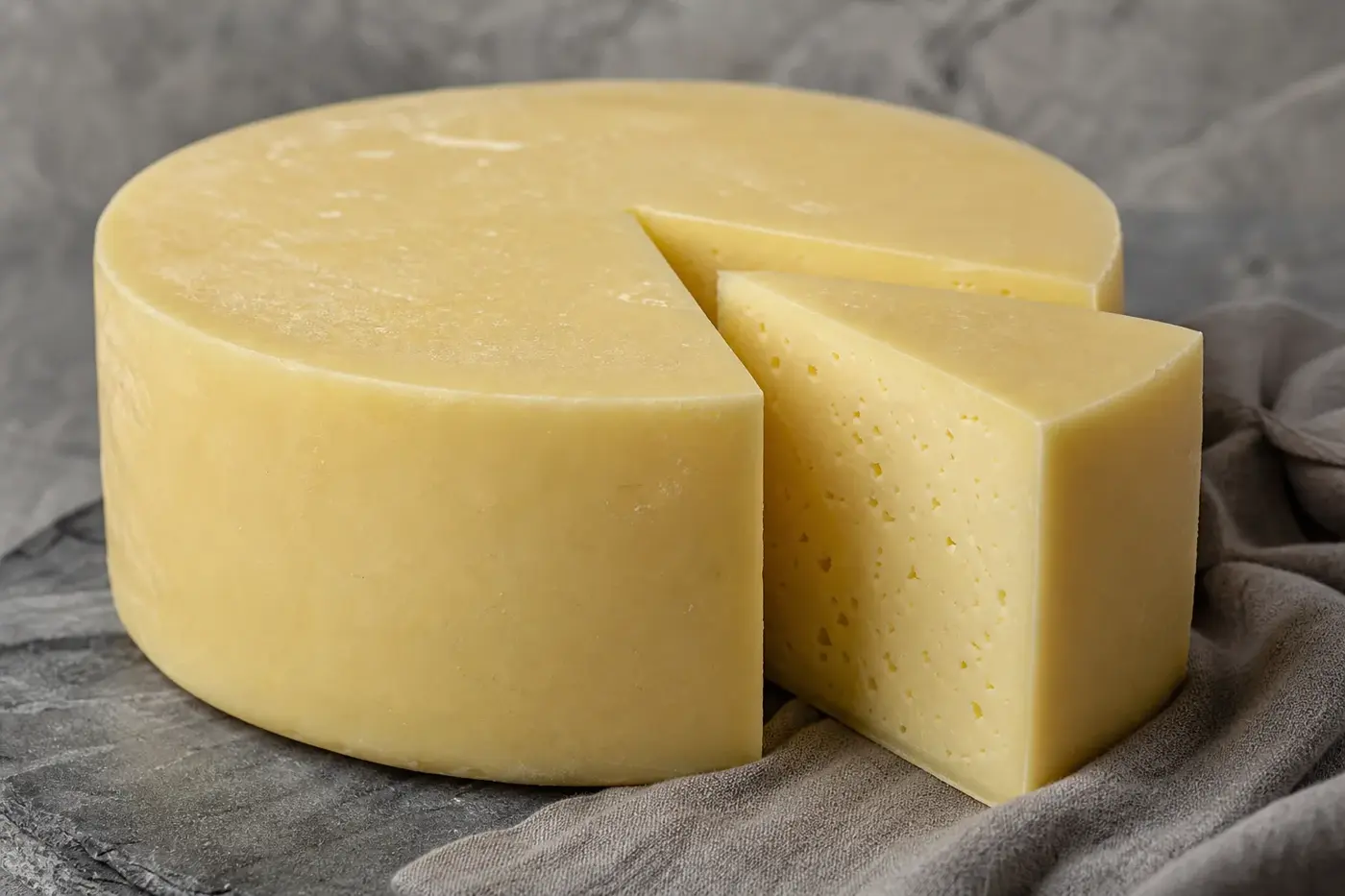
A neat slice of Svecia settles onto your breakfast bread. Nothing grand about the occasion, yet that slice began as part of a waxed cylinder weighing 12 to 15 kg.[1][5] Breakfast has modest portions; the dairy thinks bigger. Inside, the firm cow’s milk cheese is dotted with small, irregular holes.
Its tang has a distinctly Swedish reference point. Swedish sources compare it to filmjölk, Sweden’s cultured sour milk, with longer maturation making the flavour more intense. You can take Svecia straight from the breakfast table to a cheeseboard.[4][5]
| Svecia at a glance | What to know |
|---|---|
| The name to look for | Svecia.[1][3] |
| Who registers it | European Commission; current eAmbrosia identifier: unspecified in this summary. Great Britain: Defra, register entry “Svecia”.[2][3] |
| Protection, November 2026 | EU: protected geographical indication, PGI, listed by Sweden’s food authority. Great Britain: registered PGI.[2][3] |
| Its Swedish home | The low-lying parts of Sweden.[1] |
| Milk and treatment | Cow’s milk; the historical registration summary describes pasteurisation. Treatment permitted by the current specification: unspecified in this summary.[1][4] |
| What sets the milk | Rennet; its source is unspecified in the specification summary.[1] |
| Time to ripen | The historical registration summary states two months. Current legal minimum: unspecified in this summary.[1] |
| More time in the dairy | Arla lists Svecia matured for 14 and 24 months.[5] |
| The whole cheese | Cylindrical, 35 cm diameter, weighing 12 to 15 kg; waxed surface.[1] |
| What you find inside | Pale yellow to yellow, with evenly distributed small holes.[1] |
Look closer at those little holes
Take a moment with the cut face of Svecia. Rather than a few big, rounded eyes, you will see numerous little openings. Swedish cheesemakers call this grynpipig, a granular pattern of small holes.[6]
The pattern starts in the dairy, not at the cutting board. Arla explains that draining the whey before pressing leaves spaces between the curd particles. As gas develops, those spaces can expand.[6]
Firm does not necessarily mean brittle. Svecia can give you tidy sandwich slices, while a well-aged piece may break into shorter, more crumbly portions. Falbygdens describes its matured Svecia as strong and full-flavoured, with visible crystals in its granular texture.[7]
The Swedish Board of Agriculture’s Smaka Sverige account describes a cultured-milk tang alongside a cream-like flavour. Think bright acidity with a rounded dairy background, rather than simply “mild”. The same account names the cows’ breed and feed as influences on flavour.[4]
Those details give you useful questions at the counter. Is this piece supple or brittle, gently tangy or distinctly strong? Its age and the producer’s description tell you more about your prospective slice than the name alone.[4][7]
Follow the sandwich back through Swedish history
The sandwich tells you something important about Svecia’s place in Swedish cheese culture. Arla calls sliced cheese on bread its classic use, alongside cooking and the cheeseboard. Ageing adds character, but this cheese does not insist on a course to itself.[5]
The name comes from Suecia, the Latin name for Sweden. The registration summary records Svecia as a product name from the 1920s.[1] An industry booklet, Handgjord Svecia, reproduces a cross-sectional illustration labelled Svecia from the 1934 book Mejerilära. It is a tangible glimpse of the cheese’s twentieth-century identity.[8]
Behind that named cheese sits Sweden’s older tradition of pressed cheesemaking. This gives you context, rather than an exact record of Svecia’s beginnings. The documented name and surviving dairy literature offer firmer ground than a sweeping medieval origin story, though neither supplies an exact birthday.[1][8]
At home, begin with its everyday role. Try a simple slice before assembling an elaborate board. Bread lets you notice the balance of salt, acidity and aged flavour without much else competing for your attention.
Get to know the protected name
Svecia holds PGI, protected geographical indication, rather than PDO, protected designation of origin. As of November 2026, Sweden’s food authority lists it among registered PGIs. The Great Britain register separately records it as a registered PGI.[2][3]
Its home territory is broad. The Swedish specification summary names the country’s low-lying regions; Smaka Sverige explains that this covers much of Sweden, excluding specified northern and western upland areas.[1][4] The geographical link takes you to an extensive Swedish cheesemaking area, not one village or a single dairy.
Sweden’s food authority explains that PGI registration connects a product with a geographical area and specified production requirements. Under the general PGI framework, at least one relevant production stage must happen within that area.[2] You can explore the distinctions in protected names explained.
Keep two registration dates distinct. Great Britain’s register records its scheme registration at 23:00 on 31 December 2020, and gives 25 November 1997 as the original EU registration date.[3] When buying, look for the registered name and the geographical-indication information applicable to the pack.
Step into the dairy, where the spaces begin
Svecia’s little holes belong to the making, not to chance. Handling the curd creates those spaces while also building the cheese’s firmness. The specification summary describes the following stages.[1]
- Prepare the milk: pasteurise it at 72 °C, then bring it to about 30 °C.
- Add culture and rennet: bacterial culture goes in with the rennet, which coagulates the milk protein into curd.
- Cut and heat: cut and stir the curd, drain the whey, then heat the curd to 37 to 42 °C.
- Salt and press: add salt, transfer the curd to moulds and press, leaving air spaces between the grains.
- Finish and ripen: the historical registration summary describes at least two months’ maturation.[1]
Curd is the solid portion destined to become cheese. Whey is the liquid separated from it. For Svecia, draining before pressing matters particularly: those little spaces between curd particles are part of the finished structure.[6]
For the broader picture, turn to how cheese is made. These stages describe commercial production, rather than instructions for making Svecia at home.
Give it time, then taste what changes
Two months leaves plenty of possibilities ahead. Svecia can mature far beyond the two-month minimum recorded in the specification summary. Arla lists both 14-month and 24-month examples, giving you a sense of the time producers allow it to develop.[1][5]
Smaka Sverige reports that Sveriges Gårdsmejerister, an association of farm cheesemakers, recommends at least six months for flavour development. That is a recommendation about flavour, distinct from the minimum in the registration summary.[4]
With longer maturation, look for stronger flavour and a more brittle, crystalline texture. Falbygdens highlights those qualities in its matured Svecia.[7] Choose that style for small pieces on a board; for neat sandwich slices, ask for something more yielding.
For a revealing tasting, try the same producer’s cheese at two ages. Keep the accompaniments simple and smell each piece first. Then notice the acidity, how the paste breaks and the flavour that remains after swallowing.
Make this a comparison of your own, with the two pieces side by side. The pleasure lies in discovering what maturation has changed. A second piece is, on this occasion, part of the method.
Make room for Prästost and Herrgårdsost
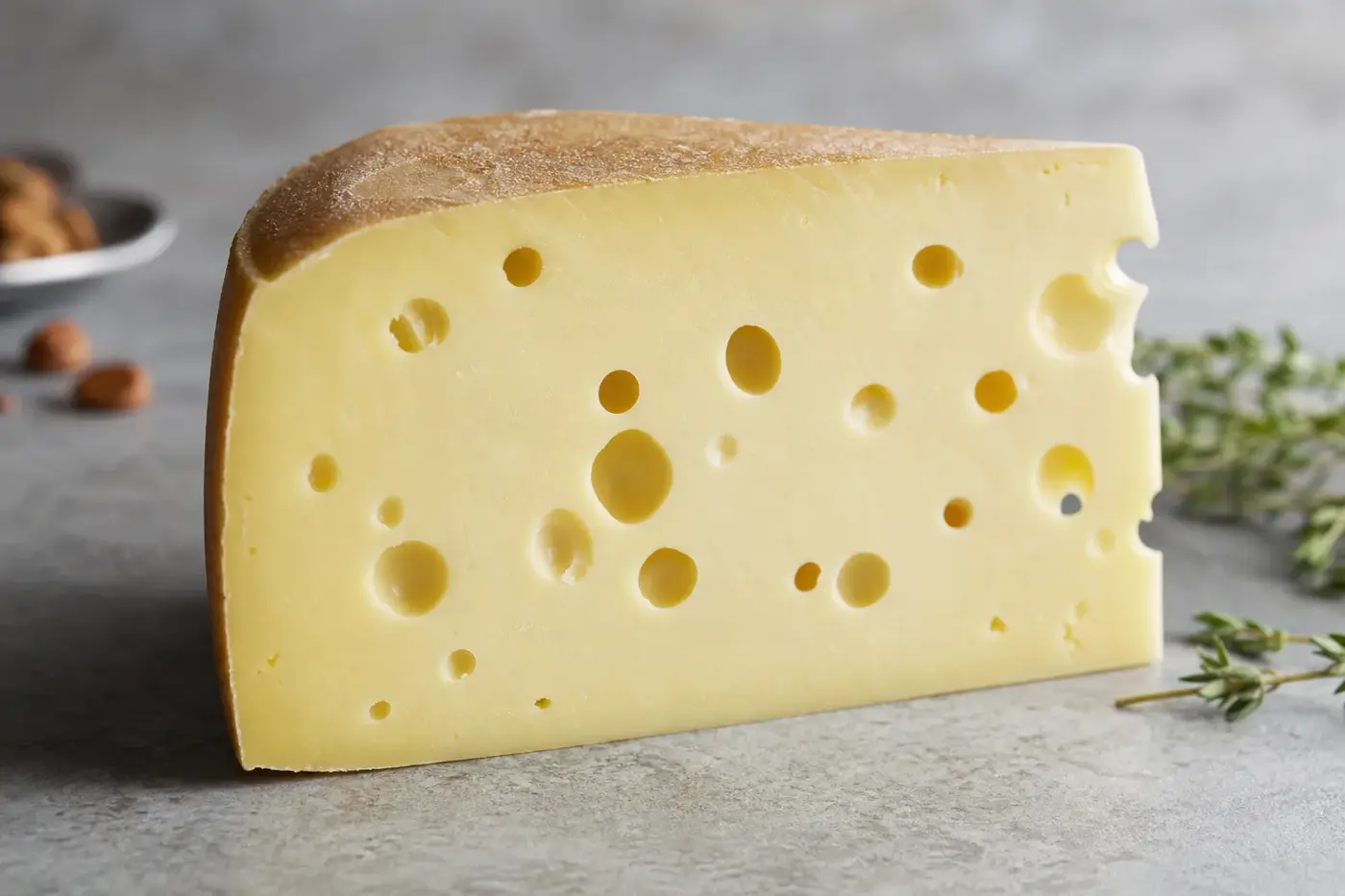
Before you taste, let the holes introduce the cheeses. Arla groups Svecia and Präst among granular-holed cheeses, while its descriptions of Herrgård emphasise larger, rounded holes.[6][7] The cut face gives you a useful first distinction.
Next, follow the flavour descriptions. Arla describes Präst as pronounced in salt and acidity, with a fuller, butter-like character. For Herrgård, it highlights hazelnut-like flavours; Falbygdens also describes sweetness and a toffee-like finish in its matured version.[6][7] Those descriptions belong to the producers’ particular cheeses.
At the counter, ask three questions: how old is this piece, how easily does it slice, and which flavours does the producer emphasise? Svecia gives you cultured-milk tang as a starting point. Präst offers a neighbouring granular texture, while Herrgård has that visibly different rounded-eye structure.[4][6][7]
Choose similarly aged pieces if you want to explore the distinctions side by side. That makes for a more useful comparison than letting age dominate everything you taste.
Start with bread and see where it takes you
Begin with thin slices on bread, Svecia’s established sandwich role. You could try crispbread, too. Taste your first bite plain, then add an accompaniment and notice what changes.[5]
Arla suggests apple and toasted walnuts with Svecia.[5] Give each a turn: apple with one bite, a little walnut with the next. For an entirely alcohol-free serving, water or unsweetened tea keeps your attention on the cheese.
There is plenty of room for Svecia in your cooking. Smaka Sverige names cheese pies, pasta sauces and cheeseboards as established uses.[4] Arla reports good melting properties and browning.[5] You can put those qualities to work simply:
- Grate it into a savoury cheese pie.
- Melt it into a pasta sauce that welcomes its tang.
- Layer slices into a toasted sandwich.
- Break an older piece into small portions beside bread.
Use these as starting points rather than full recipes. Decide whether your dish needs a gentle dairy background or a more assertive aged flavour, then choose your piece. A forceful Svecia can become the seasoning focus, so taste before reaching for more salt.
At the counter, ask about age
Look for Svecia, the producer, the ingredients and an age statement where one is provided. Swedish lagrad means matured or aged. A stated number of months gives you a more precise idea of what you are choosing than that word alone.[5]
Two more Swedish words will help you read the ingredients list. Pastöriserad mjölk means pasteurised milk, and löpe means rennet. The specification summary names rennet without identifying its source, so ask the producer directly if animal-derived rennet affects your choice.[1]
For more on those distinctions, turn to the guides to milk treatments and rennet. At a cheese counter, ask to see the product information as well as the cut face.
Buy an amount that fits your plans: breakfast slices, cheese to grate for cooking, or an older piece to taste. A clearly identified age is more useful than an unexplained strength description. Let that information guide you towards the cheese you actually want.
Keep it cool, serve what you need
For readers in England, Wales and Northern Ireland, the Food Standards Agency’s guidance as of November 2026 advises a fridge temperature of 5 °C or below. Follow the pack’s storage instructions, too.[9]
Falbygdens recommends serving its matured Svecia slightly towards room temperature.[7] Bring out only what you need. The FSA advises keeping chilled food out for the shortest possible time during preparation, with a maximum of four hours: a limit, not a warming period to aim for.[9]
Keep the rest protected in its packaging and return it promptly to the fridge. Follow the individual product’s dates and instructions, because no single storage life fits every Svecia.[9] You will find the fuller practical guide in storing cheese at home.
General information only, not medical advice: follow the official guidance where you live.
Questions people ask
What does Svecia taste like?
Svecia has a tang that Swedish sources compare to filmjölk, a cultured sour milk, alongside a cream-like flavour. Longer maturation gives the flavour greater force.
Where is Svecia made?
Its defined production area is the low-lying parts of Sweden. This covers much of the country, excluding specified northern and western upland areas.
How long is Svecia aged?
The historical registration summary states two months, but the current legal minimum has not been verified. Arla lists examples matured for 14 and 24 months.
Is Svecia suitable for vegetarians?
The retrieved specification summary names rennet but does not identify its source. If animal-derived rennet affects your choice, ask the producer directly.
How is Svecia served?
Sliced cheese on bread is its classic use, including on Swedish breakfast sandwiches. It is also used on cheeseboards and in cheese pies and pasta sauces.
Sources
- Livsmedelsverket, Rådsförordning (EEC) No 2081/92: ansökan om registrering, Svecia, undated historical registration summary, sections 5(b) to 5(h). Official specification summary.
- Livsmedelsverket, Svenska produkter som har registrerats som skyddade geografiska beteckningar (SGB), current list retrieved November 2026; and Skyddade beteckningar, current consumer explanation retrieved November 2026. Registered Swedish PGIs. Explanation of protection schemes.
- Defra, Svecia, Great Britain protected food-name register, published 4 January 2021, current entry retrieved November 2026. Register entry.
- Jordbruksverket, Smaka Sverige, Sveciaost, updated 13 March 2024. Product and cultural account.
- Arla, Svecia, undated producer account and product listing, retrieved November 2026. Commercial source for its own descriptions and serving suggestions. Svecia.
- Arla, Välj rätt hårdost, undated producer explanation, retrieved November 2026. Commercial source for its cheese descriptions and explanation of holes. Hard-cheese guide.
- Arla customer portal, Falbygdens ostklassiker, undated producer account, retrieved November 2026. Commercial source for Falbygdens tasting and serving descriptions. Falbygdens cheese descriptions.
- Sveriges Gårdsmejerister, Handgjord Svecia, June 2017, hosted by Eldrimner, particularly the reproduced 1934 illustration and tables distinguishing association requirements from PGI requirements. Booklet.
- Food Standards Agency, How to chill, freeze and defrost food safely, published 18 December 2017, current text retrieved November 2026, applicable to England, Northern Ireland and Wales. Official storage guidance.
Researched from Swedish official publications, the Great Britain register, a historical registration summary, industry documentation and attributed producer accounts.
Last checked: November 2026
Last checked November 2026.
The editors suggest you read next
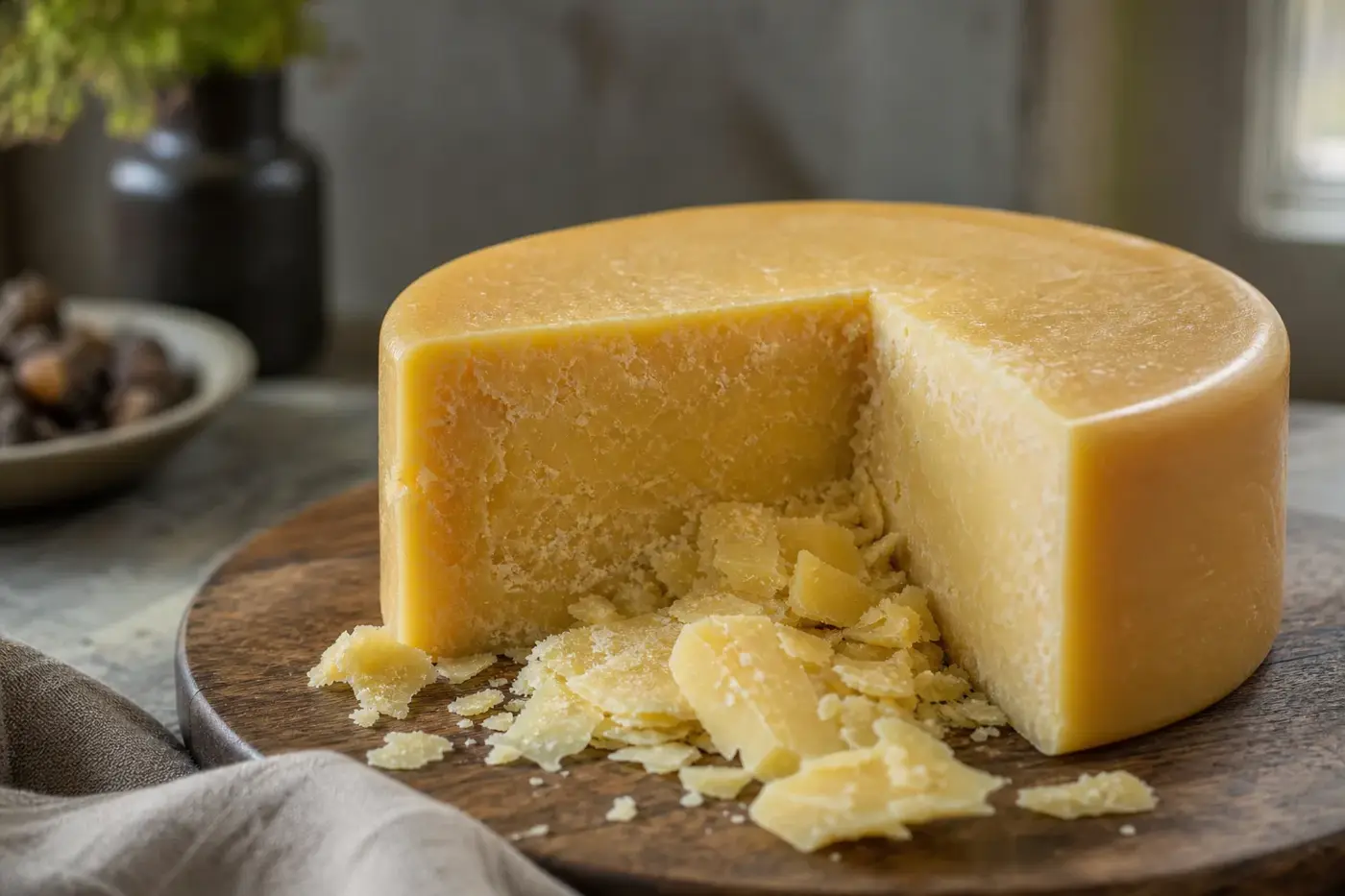
Västerbottensost
Your cheese plane meets Västerbottensost and a neat slice becomes a tumble of brittle flakes.