Queijo de Nisa
Cut into Queijo de Nisa and its intense aroma arrives before your first bite.
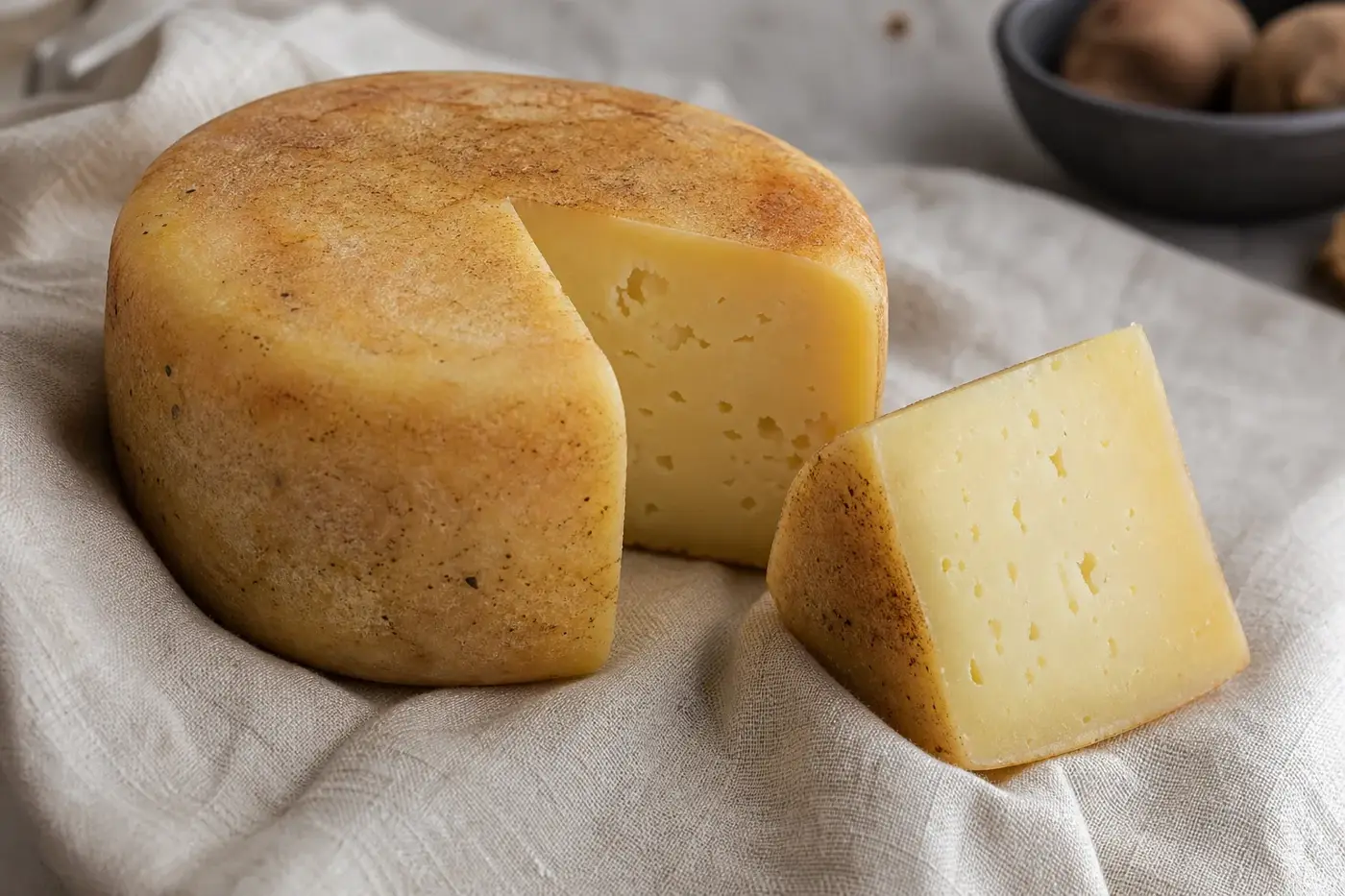
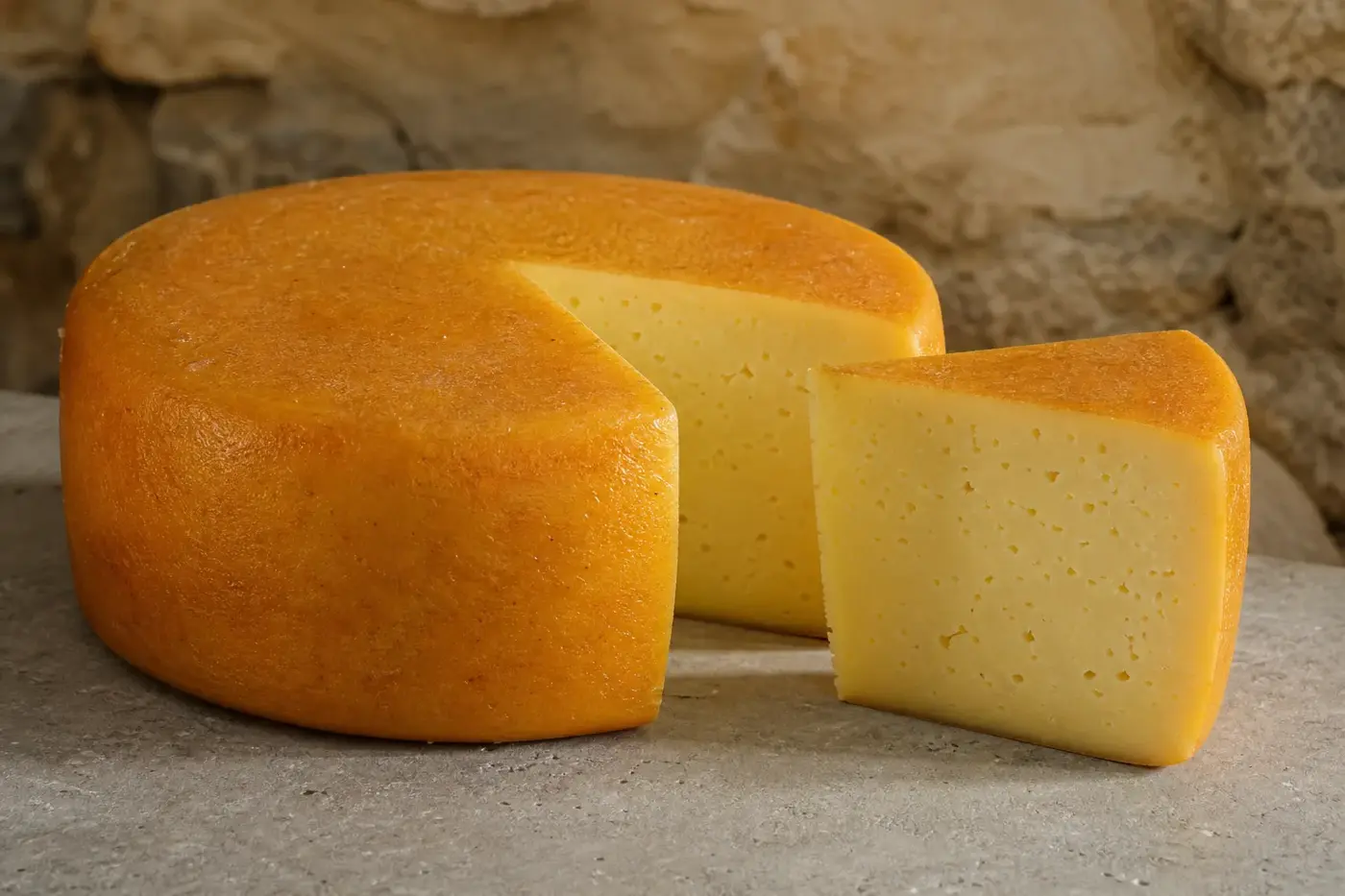
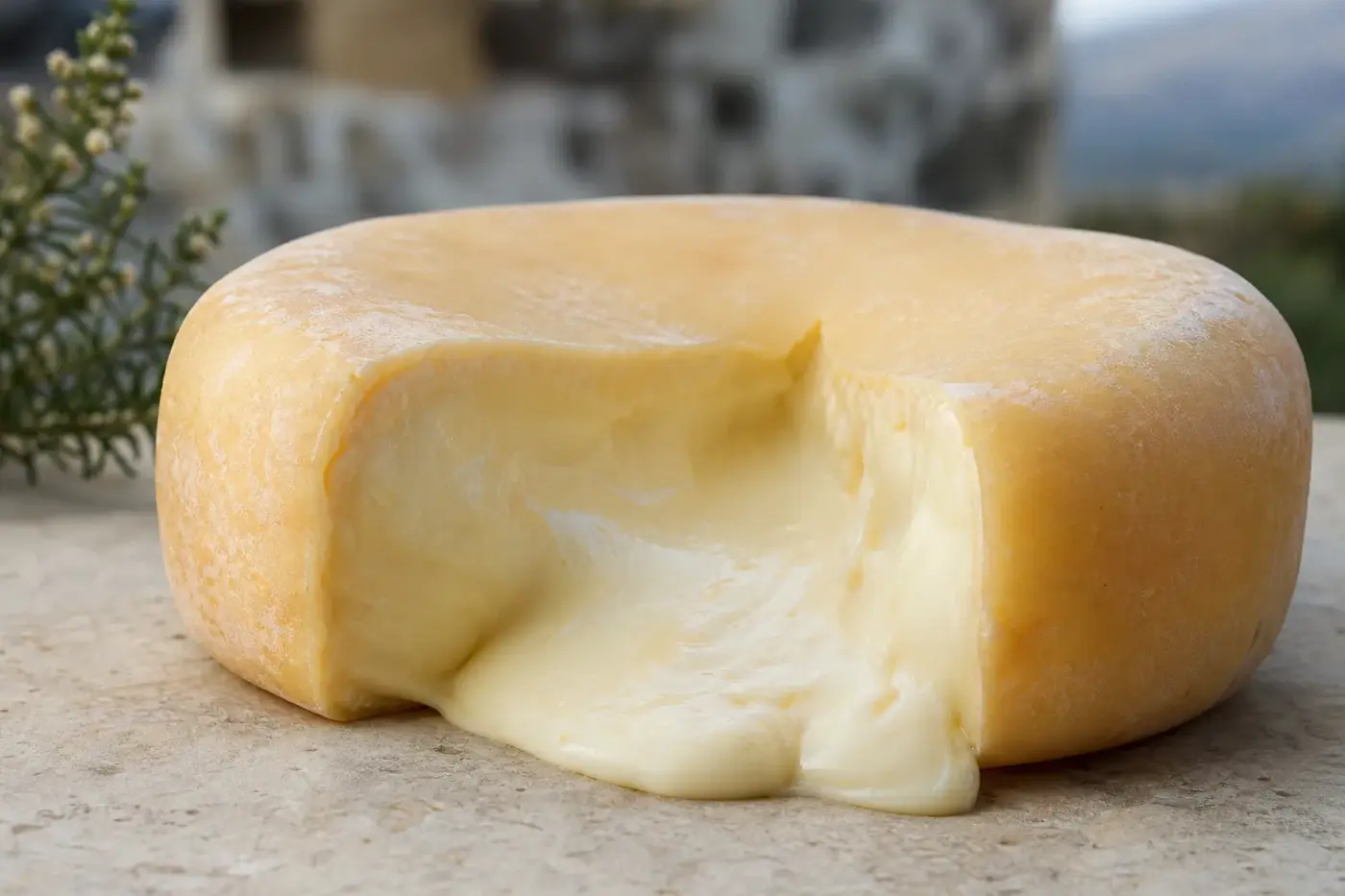
Cut into Queijo de Nisa and its intense aroma arrives before your first bite. Inside is a firm, yellowish white paste with a slightly acidic flavour. Behind it lie the natural pastures of northern Alentejo, Portugal, and a quiet surprise: cardoon, not animal rennet, sets the raw sheep’s milk.[1][7] The Great Britain register lists it as a protected designation of origin as of November 2026.[3]
| What to know | The detail |
|---|---|
| Name to look for | Queijo de Nisa.[3] |
| Where it comes from | Northern Alentejo, Portugal.[1] |
| EU register identifier | EUGI00000013220, linked by Portugal’s agriculture directorate.[1][4] |
| EU protection status | Listed as PDO by Portugal’s agriculture directorate; current Commission register status: unconfirmed.[1][4] |
| Great Britain protection | Registered PDO; UK scheme registration dated 31 December 2020 at 23:00. Register position as of November 2026.[3] |
| Milk | Raw sheep’s milk; the agriculture directorate identifies the regional Merina Branca breed.[1] |
| What sets the milk | Cardoon, Cynara cardunculus L.[1][2] |
| Texture | Semi-hard, with a yellowish-white paste.[1] |
| Published maturation method | Two stages, described below.[1] |
| Allergen | Sheep’s milk.[1] |
Follow the sheep beyond Nisa
The name takes you to Nisa, but the cheese’s farming story stretches further. A 2019 control plan lists dairy farms across fifteen municipalities. Cheesemaking premises appear in eight: Castelo de Vide, Nisa, Marvão, Crato, Alter do Chão, Arronches, Monforte and Portalegre.[2]
The farming area also includes Avis, Campo Maior, Elvas, Fronteira, Gavião, Ponte de Sor and Sousel. An origin claim does not mean every sheep grazes within Nisa municipality itself. For the legally defined boundaries and applicable production requirements, consult the current specification.[2]
Natural pasture is central to this landscape and its cheese. The 2019 control plan checks its use as the flock’s basic feed.[2] Research describes an oak-covered, Mediterranean farming environment, where sheep farming follows the seasonal availability of forage, particularly the pasture growth of spring and early summer.[5]
Look inside the wheel
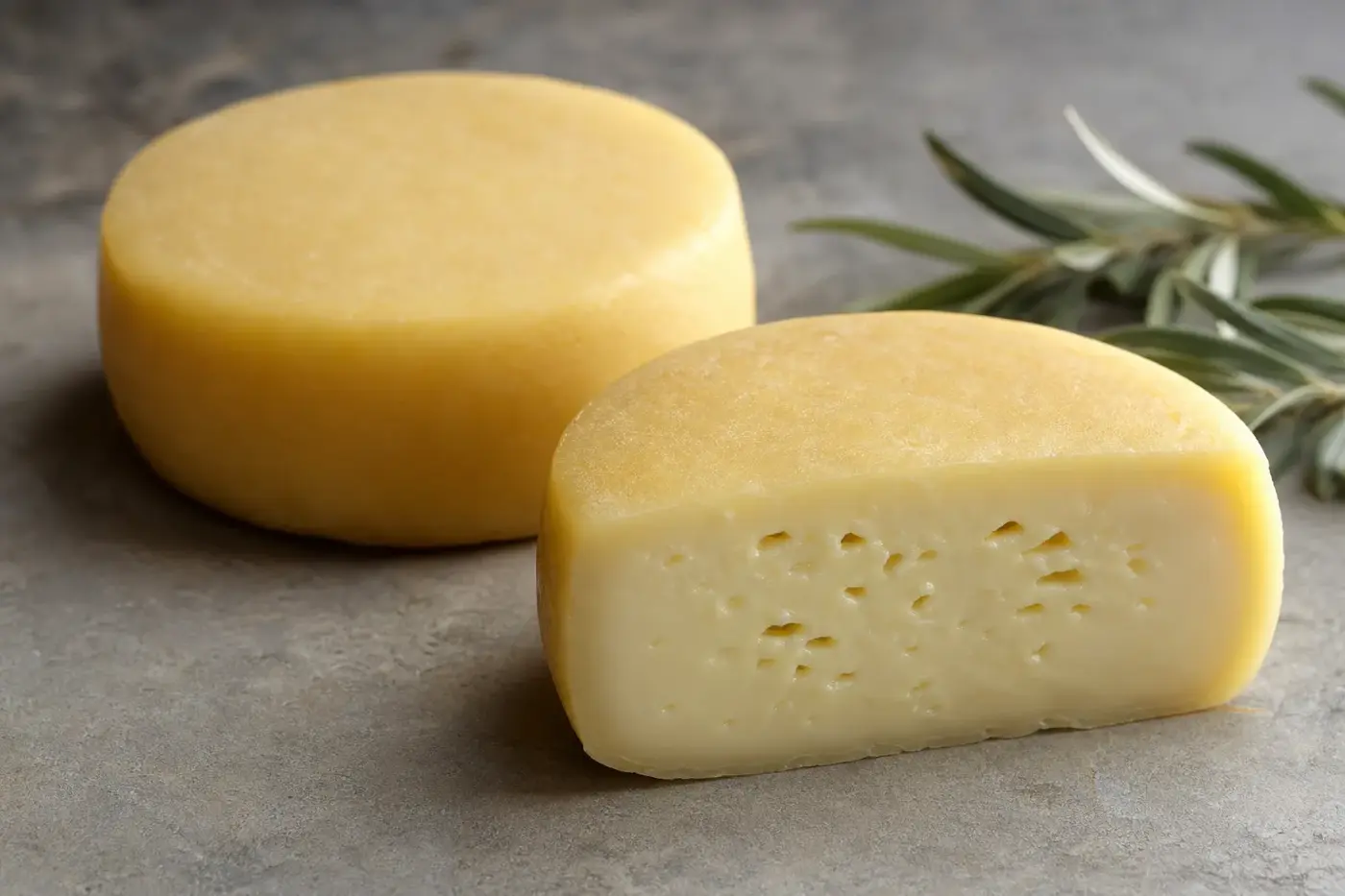
You will find two formats in the agriculture directorate’s description. The smaller merendeira measures 10 to 12 cm across and weighs 200 to 400 g. Its larger companion measures 13 to 16 cm across and weighs 800 g to 1.3 kg.[1]
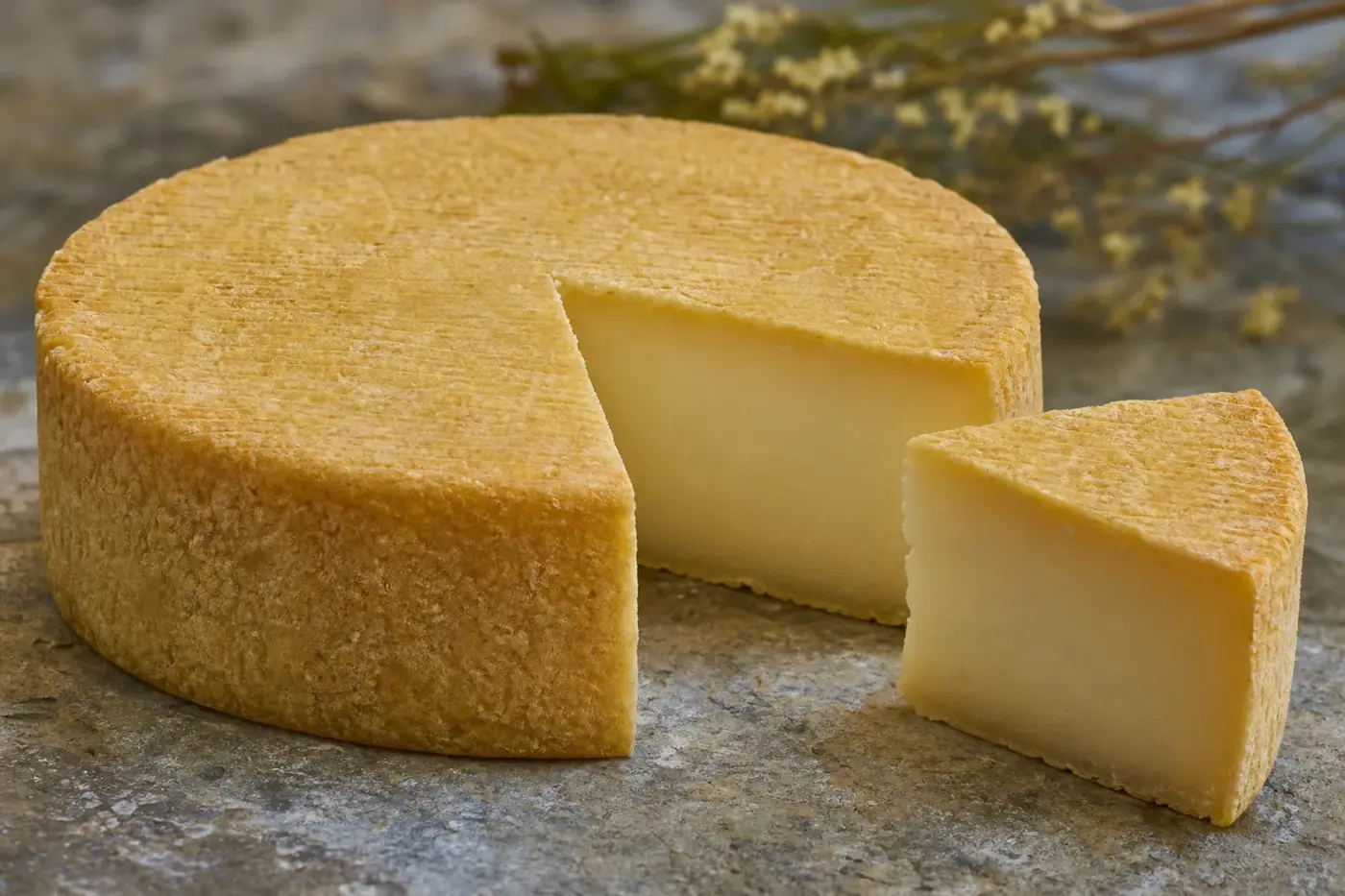
Those dimensions help you choose between a whole cheese and a cut piece. Ask to see the cut face, too: the outside can only tell you so much. The documented paste is yellowish white and semi-hard, with research also reporting small openings.[1][5]
Those little openings tell part of the maturation story. A computer-vision study found that gas-hole development happened especially during the first fifteen days. The researchers considered excessive gas formation undesirable, so a few openings are quite different from a heavily swollen cheese with an open structure.[6]
For the rind description and permitted treatments, consult the current specification. At the counter, ask how the rind has been treated and whether the maker advises you to eat or remove it.
Meet cardoon, the cheesemaker’s plant ally
An infusion of cardoon turns the milk into a gel. The agriculture directorate describes adding it at 25 to 28 °C, with coagulation taking 45 to 60 minutes.[1] That plant coagulant is one of the published method’s defining details.
Once the milk sets, the cheesemaker cuts the curd, the solid part, to release the watery whey. The curd goes into moulds, where manual handling helps it drain and take shape. Salting is part of the method too.[1][2]
The control plan checks the raw-milk requirement, the cardoon coagulant, and the coagulation time and temperature. Records from controlled farms establish where the milk comes from.[2]
“Sheep’s milk cheese” gives you only the opening line. Here, a particular milk supply, a plant coagulant, a regional farming system and a handling method come together. The guide to how cheese is made follows the broader sequence while keeping those distinctions in view.
Discover why age can bring firmness
Drying and protein breakdown pull a maturing cheese in different directions. In the computer-vision study, researchers examined 48 experimental samples at zero, fifteen and thirty-five days. By that final sampling point, the cheeses had become harder.[6]
The authors explained the tension: drying can strengthen the structure, while protein breakdown can have the opposite effect.[6] So a cheese set with cardoon need not become spoonably soft. The coagulant has a part to play, but it does not decide the whole texture.
Published production accounts describe two maturation stages, but differ on the first stage. Consult the current specification for the permitted conditions.[1][7] Those published ripening-room conditions are separate from the legal minimum ageing period, which remains unconfirmed, and are not home-storage instructions.
When you choose a wheel or wedge, ask about its age and firmness. Pick the texture you enjoy. Longer maturation is not automatically a promotion.
Give your first taste a little time
Start with the intense aroma and slightly acidic taste in the agriculture directorate’s Portuguese description.[7] Those are useful bearings for your first mouthful. You need not produce an elaborate catalogue of flavours to earn your slice.
Smell a freshly cut piece before adding bread or fruit, then taste a thin slice on its own. Notice its firmness, how readily the paste breaks down, and whether the acidity feels gentle or more pronounced. After swallowing, follow the finish: how long does the flavour stay, and which impression lasts?
Producer and batch make a difference. Research sampling eight cheeses from four producers found substantial differences in several measured characteristics, including acidity-related measurements.[5] These tasting prompts leave room for you to notice that variation, rather than expecting every cheese to taste alike.
Comparing two examples? Note the producer and any stated age. “Firmer” and “sharper” then become useful observations about particular cheeses, rather than loose rules for the whole designation.
Find the full name and the person behind it
Look for the full name Queijo de Nisa, the designation information and the producer’s identification. On a Portuguese label, DOP means Denominação de Origem Protegida. It corresponds to protected designation of origin, or PDO.[1][3]
The Great Britain register records Queijo de Nisa as a registered PDO, with 21 June 1996 as its original EU registration date.[3] Protection is specific to each jurisdiction. Read the relevant register alongside the name you see on the cheese.
Buying a wedge at a staffed counter gives you a chance to ask for the original wheel label. Look for the producer, stated maturation, milk treatment, rind treatment and storage instructions. Keep those details with your cheese, especially when you have several different cheeses wrapped separately.
Want to untangle a regional protected name from a brand? Turn to protected names explained. The guide to reading a cheese label covers the other details worth your attention.
Begin with a few thin slices
Bring out a modest cut portion rather than leaving the whole wheel on the table throughout the meal. Start with a few thin slices per person and some bread. You can offer more according to appetite and whatever else you are serving.
Aim for cool cheese without a refrigerator-cold centre. Take out only the portion you intend to serve, letting its firmness guide when you slice it. In Scotland, consult current Food Standards Scotland guidance on refrigeration and time outside the fridge before serving.[8]
Working from a whole wheel? Cut narrow wedges, then smaller slices from each wedge. Taste your first piece without accompaniments, giving yourself a clear impression of the cheese before you bring anything else into the mouthful.
Set out bread, fruit and a Portuguese glass
Plain, crusty bread makes a useful first companion. Start there before adding sweetness: a few slices of pear or apple, or a small piece of quince paste. Compare fresh fruit’s lighter contrast with the paste’s concentrated sweetness, and notice which leaves you enjoying the cheese most.
Treat these pairings as invitations to compare contrast and intensity, not a prescribed match. For Portuguese wine, try a dry Alentejo white first. If you prefer red, compare it with a restrained Alentejo red; an Alvarinho from Vinho Verde takes you in another direction.
Taste the cheese before the wine, then again afterwards. Keep the combination that leaves both enjoyable, with water or sparkling water alongside every wine option. For an alcohol-free tasting, use the same bread and fruit.
Wine suggestions are for adults of legal drinking age, in small servings. People who are pregnant, driving, taking medicines that interact with alcohol or recovering from alcohol dependence should not drink. Consult the NHS for current advice.
Taste alongside Serra da Estrela and Serpa
Shared milk and coagulant do not promise the same texture. Queijo Serra da Estrela also uses sheep’s milk and cardoon, but the agriculture directorate describes its regular form as having a semi-soft paste. That gives you a useful contrast with semi-hard Queijo de Nisa.[9]
Serra da Estrela’s longer-matured Velho form has its own description: semi-hard to extra-hard.[9] Ask which form you are tasting. The name alone cannot tell you everything about the texture.
Queijo Serpa offers another comparison within Portugal’s tradition of cardoon-set sheep’s milk cheeses. Its published EU description identifies raw ewe’s milk, cardoon flowers and a paste that deforms easily when cut and may spread.[10]
For a comparative tasting, choose by the full cheese names and ask which maturation each sample represents. Shared ingredients give you a common thread to follow. The documented texture differences help explain why these cheeses can need different handling and serving.
This page summarises published guidance from the official sources it cites. It is not medical advice. Guidance differs between countries and changes over time, so check the current source for where you live, and ask your doctor, midwife, pharmacist or dietitian about your own circumstances.
Store it carefully and understand the raw-milk advice
For home storage in Scotland, follow the pack instructions and consult current Food Standards Scotland guidance on refrigeration and opened foods.[8] For wider storage guidance, turn to how to store cheese at home.
Portugal’s agriculture directorate describes Queijo de Nisa as made from raw sheep’s milk.[1] If you need current UK pregnancy advice, consult the NHS guidance. Discuss the product details with a midwife or another healthcare professional.[11]
The NHS also identifies newborn babies, people with weakened immunity and older people as groups at greater risk of serious listeriosis.[12] If you are buying for someone in these groups, consult current official guidance and their healthcare professional. The raw milk and milk-treatment guide explains the terminology you will find on labels.
Questions people ask
What milk is Queijo de Nisa made from?
It is made from raw sheep’s milk. Portugal’s agriculture directorate identifies the regional Merina Branca breed.
How is Queijo de Nisa made?
A cardoon infusion sets the milk instead of animal rennet. The curd is then cut, put into moulds and handled by hand to help it drain and take shape.
What does Queijo de Nisa taste like?
Portugal’s agriculture directorate describes it as having an intense aroma and a slightly acidic flavour. Its paste is firm and yellowish white.
Is Queijo de Nisa a protected cheese?
It is registered as a protected designation of origin in Great Britain. The register gives its original EU registration date as 21 June 1996, although the page does not verify its current European Commission register status.
What goes well with Queijo de Nisa?
The page suggests plain crusty bread, pear, apple or quince paste. For wine, it suggests a dry Alentejo white, a restrained Alentejo red or an Alvarinho from Vinho Verde.
Sources
- Direção-Geral de Agricultura e Desenvolvimento Rural, Queijo de Nisa PDO, undated online product account, retrieved November 2026. Includes milk, production method, maturation, formats and cheesemaking area.
Read at tradicional.dgadr.gov.pt - Agricert, Plano de Controlo: Queijo de Nisa DOP, revision 11, February 2019, hosted by DGADR.
Read at tradicional.dgadr.gov.pt - Department for Environment, Food & Rural Affairs, Queijo de Nisa, register entry published 4 January 2021, retrieved November 2026.
Read at gov.uk - European Commission, eAmbrosia: EUGI00000013220, record linked from DGADR. Retrieved November 2026, but substantive record fields were not readable through the research interface.
Read at ec.europa.eu - Microbiological, morpho-textural, and volatile characterization of Portuguese Queijo de Nisa PDO cheese, Food Research International, publisher record S0963996922010699. Abstract and indexed article extracts retrieved November 2026; complete bibliographic verification pending.
Read at sciencedirect.com - Evaluation of gas holes in “Queijo de Nisa” PDO cheese using computer vision, research article, 2020, PMC7884536. Abstract, methods, results and conclusion extracts retrieved November 2026.
Read at pmc.ncbi.nlm.nih.gov - Direção-Geral de Agricultura e Desenvolvimento Rural, Queijo de Nisa DOP, undated Portuguese product account. Indexed page content retrieved November 2026; direct opening returned an access error.
Read at tradicional.dgadr.gov.pt - Food Standards Scotland, What is listeria?, current online consumer guidance, retrieved November 2026.
Read at foodstandards.gov.scot - Direção-Geral de Agricultura e Desenvolvimento Rural, Queijo Serra da Estrela PDO, undated online product account, indexed content retrieved November 2026.
Read at tradicional.dgadr.gov.pt - European Commission, Official Journal C/2025/5172, 23 September 2025, Queijo Serpa product description, section 4.2. Indexed official text retrieved November 2026.
Read at eur-lex.europa.eu - NHS, Foods to avoid in pregnancy, current online guidance, retrieved November 2026.
Read at nhs.uk - NHS, Listeriosis, reviewed 10 November 2023, current online page retrieved November 2026.
Read at nhs.uk
Researched through official Portuguese production records, the Great Britain register, published cheese research and UK public-health guidance; pairing and portion suggestions are editorial, with no site tasting undertaken.
Last checked: November 2026
Last checked November 2026.
The editors suggest you read next
Queijo Serra da Estrela
Cut into Queijo Serra da Estrela and watch its pale interior gently abandon its shape.