Queijo S. Jorge
Behind a stone wall on São Jorge, cattle graze green pasture.
Behind a stone wall on São Jorge, cattle graze green pasture. A photograph in a dairy study captures this quiet beginning: grass-fed milk on its way to becoming a firm yellow cheese, clean and piquant, with a character that grows bolder with age. [10]
You will usually meet it as Queijo São Jorge, made from raw cow’s milk on this island in Portugal’s Azores. In Great Britain, its registered name is Queijo S. Jorge, a protected designation of origin, or PDO. There is quite an island story behind those few words. [1][2][6]
| What you might want to know | Here’s the detail |
|---|---|
| Familiar name | Queijo São Jorge. [4] |
| Registered name | Queijo S. Jorge. [2] |
| Registration authority | Great Britain: Department for Environment, Food & Rural Affairs. [2] |
| Great Britain protection | Registered PDO; registration dated 31 December 2020 at 23:00. November 2026 status. [2] |
| EU registration event | Original registration dated 21 June 1996, as recorded by Defra. [2] |
| Where it is made | São Jorge island, Azores, Portugal. [1][3] |
| Milk | Whole, raw cow’s milk produced on the island. [1] |
| Coagulant in the dairy study | Animal rennet. [10] |
| Minimum maturation | Three months. [1] |
| Longer maturation examples | Seven, 12, 24 and 36 months in the regional tourism authority’s guide. [5] |
| What it looks like | Cylindrical; firm yellow paste with small, irregular openings; hard, dark yellow rind. [3] |
| Coatings | Paraffin or suitable colourless plastic coatings permitted. [1] |
| Pregnancy guidance | UK: consult the NHS guidance below. November 2026 guidance reference. [8] |
Start where the cattle graze
São Jorge is more than a handsome name on the rind. The specification requires milk produced on the island itself, putting its dairy farms at the heart of the cheese. Protected production rules guide what happens next. [1]
Portugal’s agriculture authority, DGADR, links the cheese’s distinctive character to the island’s soil and climate, the vegetation they support and the resulting milk. LactAçores, which markets São Jorge cheese, also points to climate and pasture vegetation. Raw milk carries those influences into production. [4][6]
That photograph of grazing cattle brings the connection down to earth. The dairy study describes milk from grass-fed animals, giving you a picture of pasture, milk and cheesemaking working together. Volcanic soil need not take all the credit for every mouthful. [10]
Follow the Flemish thread
Trace modern accounts of Queijo São Jorge backwards and you reach the island’s settlement in the fifteenth century. DGADR credits the Flemish community with encouraging cheesemaking, drawing on their experience of milk and dairy production. LactAçores places the beginning in the mid-fifteenth century, explicitly presenting it as a traditional origin story. [4][6]
Think of this as a story of settlement, cattle farming and cheese, rather than a contemporary record of the first cheesemaking. It supplies neither a first manufacturing date nor a named settler who invented today’s recipe. Nor does it describe a method demonstrably unchanged for five centuries. [4][6]
The formal milestones arrive much later. The producer group approved the specification in December 1993, followed by the registration dates recorded by Defra. Those mark the recognition of a defined cheese, distinct from São Jorge’s much longer cheesemaking history. [1][2]
Step inside the dairy
The work begins with whole, raw cow’s milk. Raw means unpasteurised: it tells you nothing about whether the finished cheese is young or soft. If those terms have become tangled, raw, thermised and pasteurised milk helps you separate them. [1]
DGADR describes adding whey from an earlier cheesemaking to encourage acidification, then natural rennet to coagulate the milk. Whey is the liquid separated from curd; rennet helps that curd form. For a closer look at its role, turn to rennet explained. [4]
The curd is then drained, moulded and pressed. During moulding, DGADR describes applying a casein identification label, connecting the cheese with its production information. Salting and maturation follow in the documented dairy process. This is commercial cheesemaking, not a recipe for your kitchen. [4][10]
Now comes a wait of at least three months. The specification allows natural or controlled environmental conditions, with moderate ventilation among its requirements. Time in the maturing room develops the cheese’s texture and character. [1]
Get to know that golden wheel
A whole Queijo São Jorge has presence. It usually measures 25 to 35 cm across and 10 to 15 cm high, weighing 8 to 12 kg. You are more likely to meet a wedge or smaller portion, which leaves a little more room in the fridge for everything else. [3][6]
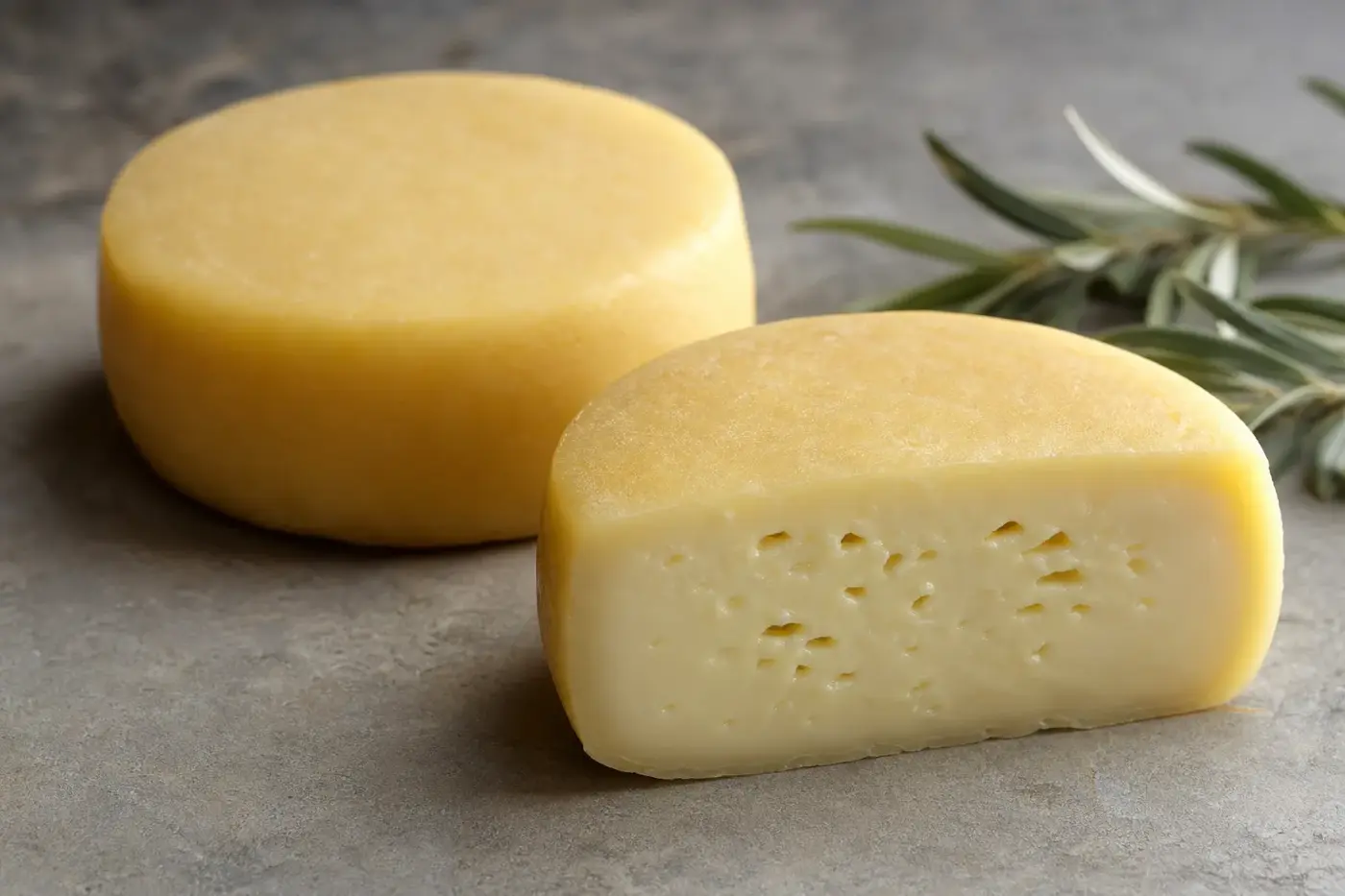
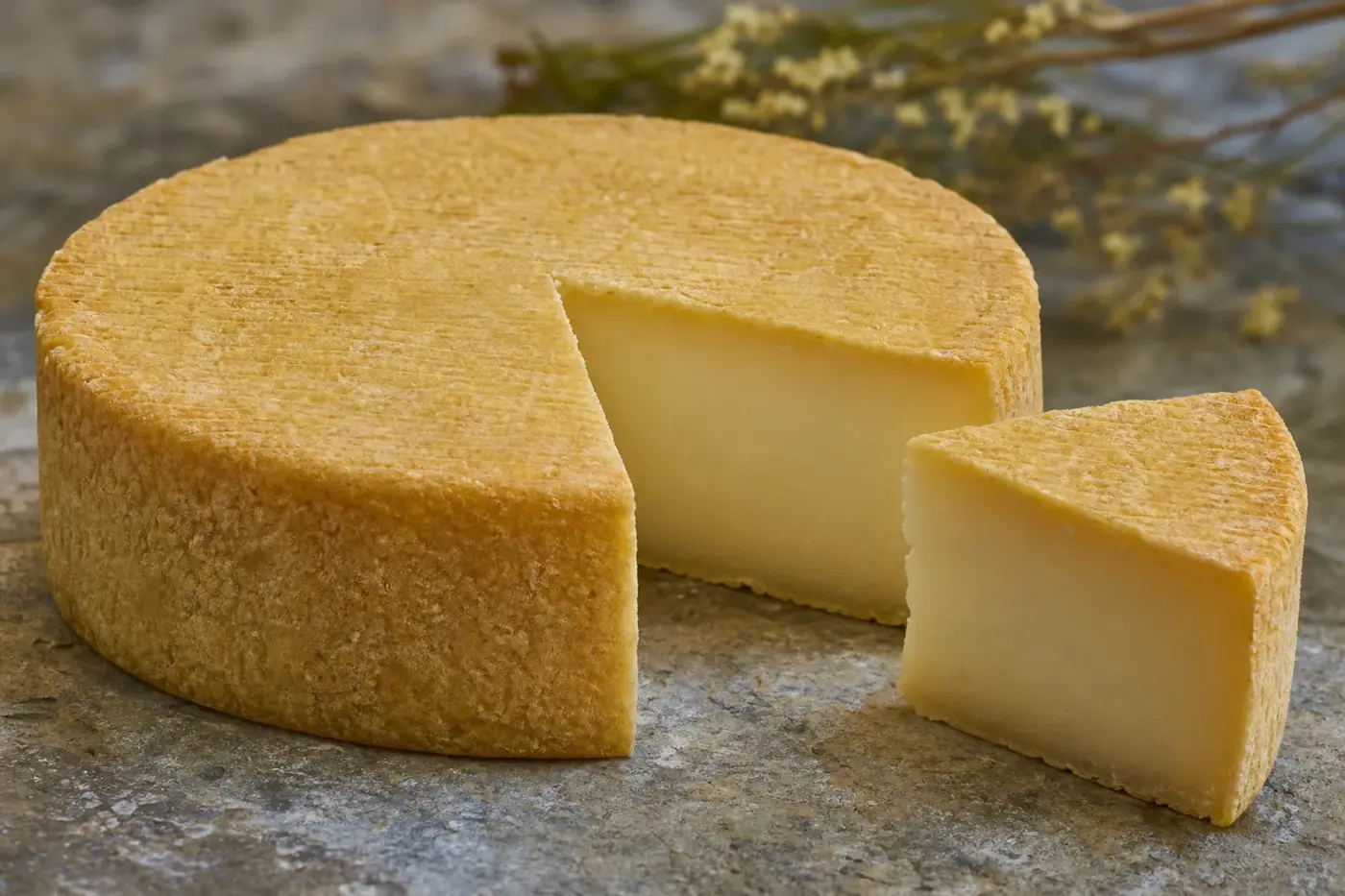
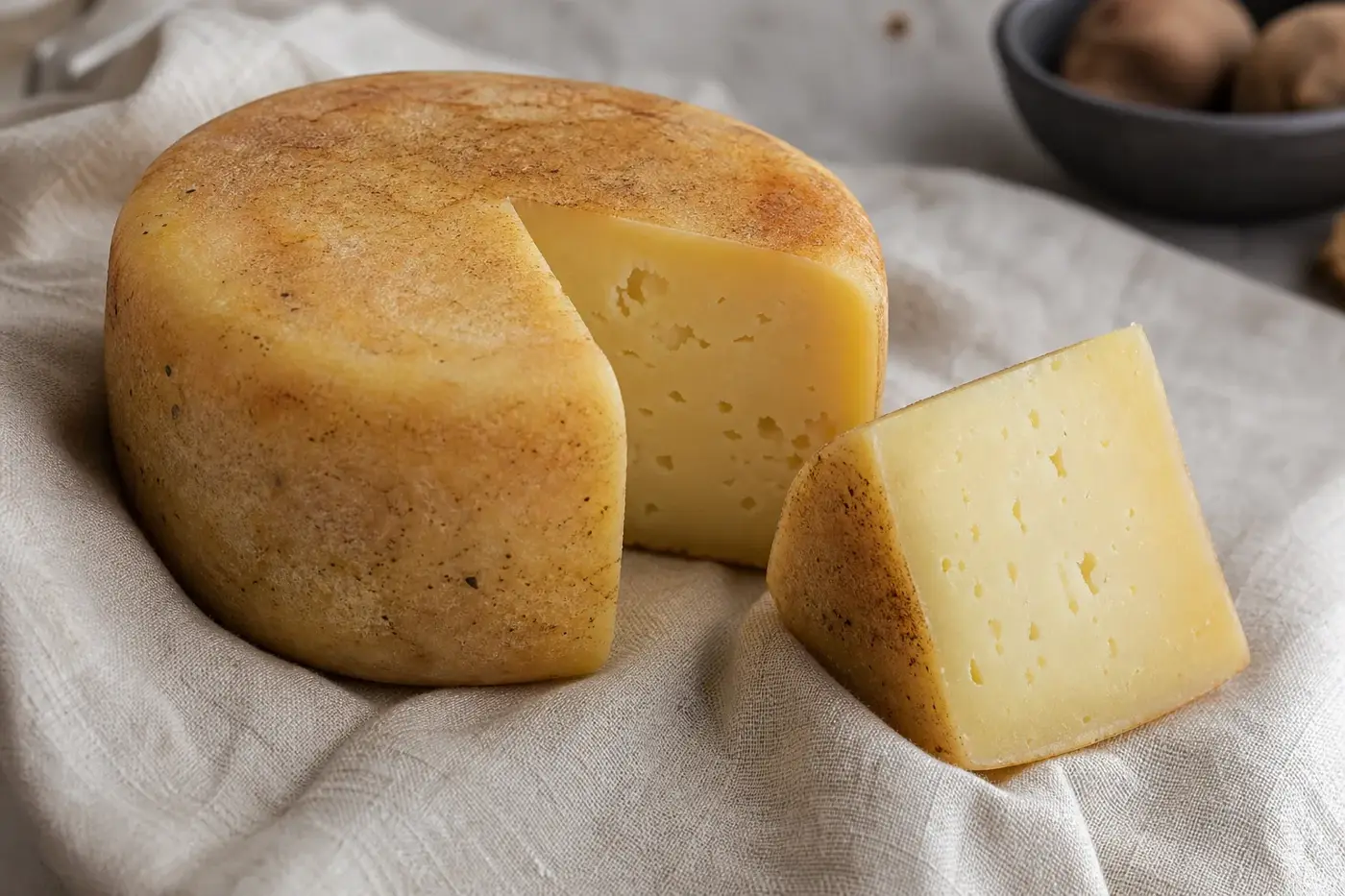
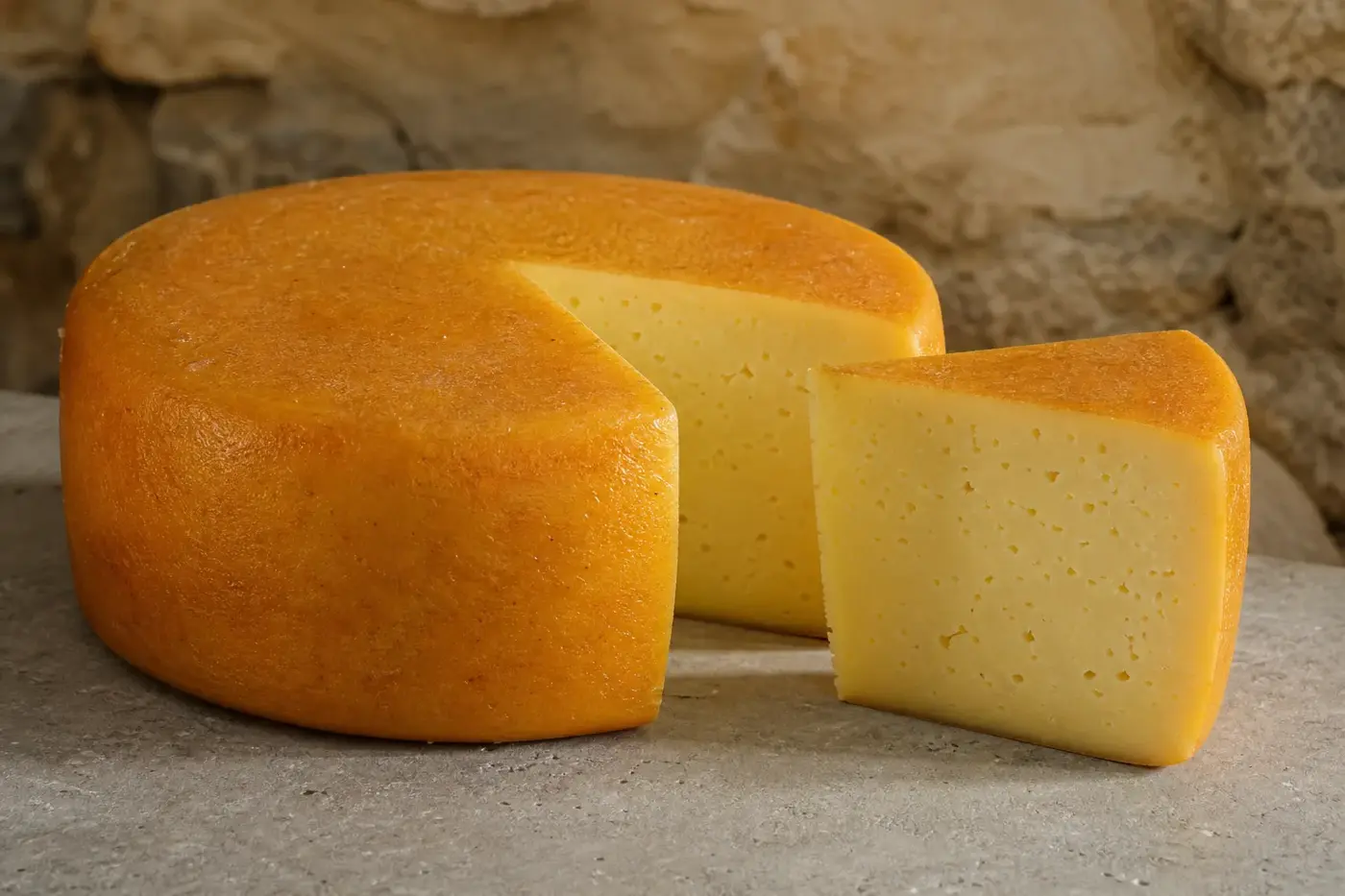
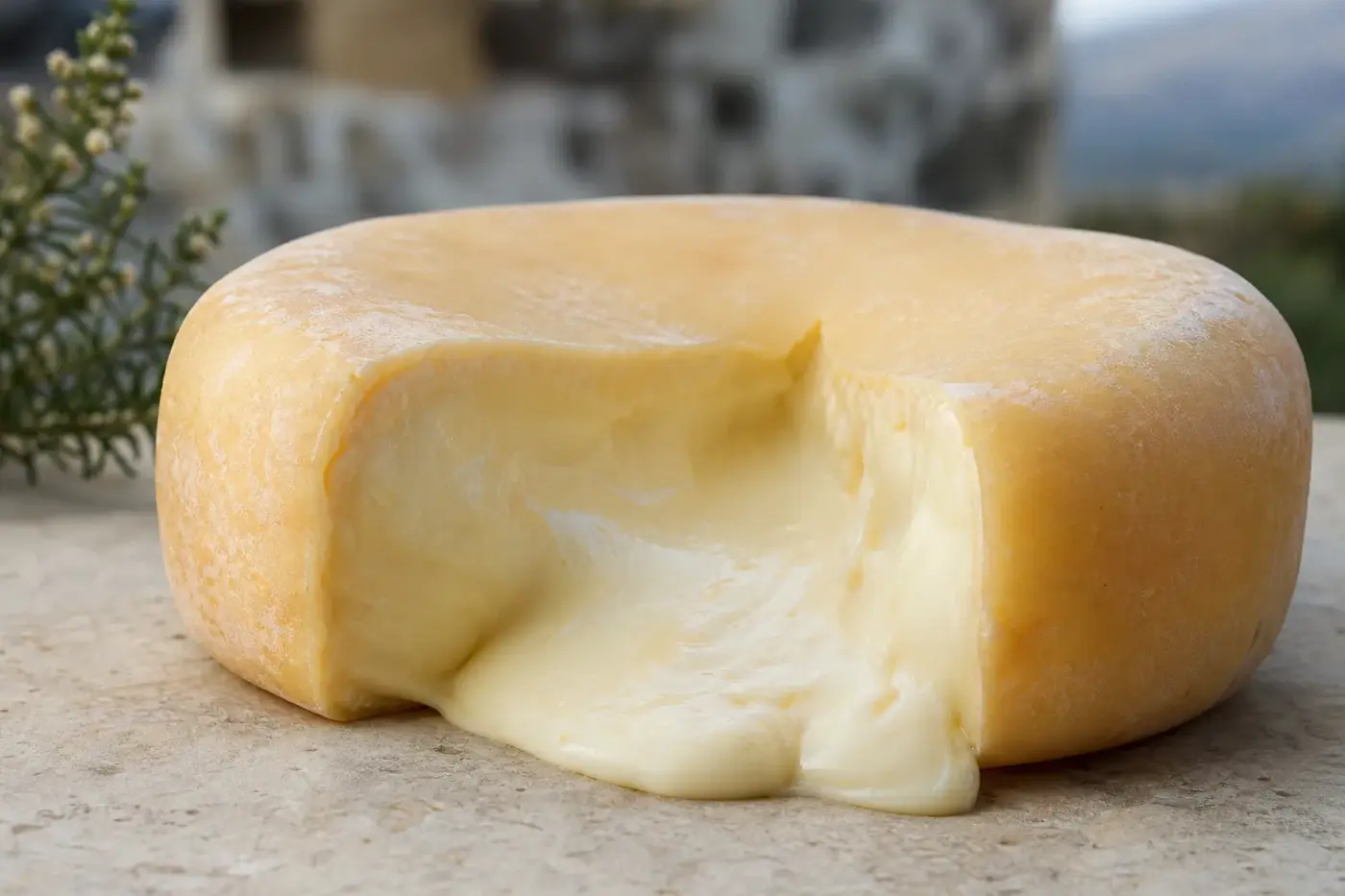
Look at the cut face and you will see numerous small, irregular openings, scattered unevenly through firm yellow paste. Sometimes the paste is crumbly. Its rind is hard, smooth and well formed, dark yellow with occasional reddish brown patches. [3]
Keep rind and coating distinct. São Jorge develops its own rind, but the specification also permits protective paraffin or suitable colourless plastic coatings. Read your particular product’s serving instructions and remove any non-food coating. [1]
Find your favourite age
Three months is the minimum, not the age of every São Jorge you will encounter. The Azores regional tourism authority describes cheeses matured for three and four months as semi-hard, strongly aromatic, clean and slightly piquant. At seven months, its description remains semi-hard, but the flavour becomes piquant. [5]
At 12 months, the guide describes harder, drier paste. Its 36-month example is firmer, drier and more intense still. Choose the texture and strength you fancy; the oldest piece does not automatically deserve a trophy. [5]
LactAçores describes its own seven-month cheese as strong-smelling, clean and piquant. Keep that description attached to that particular maturation. It is the marketer’s account of one age, not a description of them all. [6]
When you taste, give yourself three questions. Is there a buttery dairy impression, what happens in the savoury middle, and how pronounced is the piquant finish? Notes on each reveal more than simply writing “strong”. Pieces of different stated ages give you a useful comparison with the regional guide’s maturation descriptions. [5]
Choose a wedge with confidence
Start with the name and maturation. If your portion is being cut from a larger wheel, ask to see the original label. For this defined island cheese, the name, producer information and age tell you more than the broad description “Azorean cheese”. [1][2]
Look for firm yellow paste, small irregular openings and a well-formed rind, following the official description. Some crumbliness belongs in that picture, especially in a firmer piece. So do reddish brown rind markings: judge colour variation in context. [3]
For a wrapped portion, read the storage instructions and date marking before buying. If your cheese is cut to order, ask about maturation and wrapping, then choose a quantity that suits your plans. How to read a cheese label gathers the practical questions worth asking.
Bring bread and a little curiosity
Begin with a few slices or small pieces and plain bread. Taste the cheese alone before inviting stronger accompaniments onto the plate. Then try pear, apple or a small spoonful of fruit preserve alongside it.
The regional tourism authority suggests red wine with younger maturations and a more intense wine with seven-month cheese. For longer-aged examples, it suggests fortified wine or younger Port. Honey or preserves also accompany its driest, longest-aged example. [5]
For a Portuguese approach to that red-wine suggestion, you could try a Douro or Alentejo red. Treat these as editorial starting points, not promises about every bottle: neither region has one uniform flavour. Match the individual wine to the cheese’s intensity, or try a small serving of Port against a firmer, more piquant piece.
Water, unsweetened tea or an alcohol-free drink can accompany any of these suggestions. Alcohol is optional, and alcoholic pairings are for adults of legal drinking age who choose to drink. For more on intensity and contrast, see cheese and wine pairing.
Give your wedge a good home
Keep the storage instructions with the cheese, particularly if you divide a larger piece. Retain suitable original food wrapping, or ask your cheesemonger for an appropriate replacement. Protect the wrapped portion from contact with other foods.
For households in England, Northern Ireland and Wales, the Food Standards Agency advises keeping the fridge between 0 and 5 °C. Follow that household guidance. The warmer conditions deliberately used for commercial maturation are not your home storage instructions. [7]
Take out only what you intend to serve and leave the rest refrigerated. Follow the product’s instructions for serving temperature and handling after opening. How to store cheese at home explains wrapping choices and caring for a cut piece.
For UK pregnancy advice on cheese, consult the NHS guidance referenced here for November 2026. Ask your midwife about the particular product and your circumstances. [8]
Make room for Pico and Manchego
Queijo do Pico has an Azorean island tradition of its own. DGADR connects it with dairy cattle raised extensively on Pico and identifies several plants available to them. Sharing an archipelago and a cattle-farming connection does not make Pico and São Jorge interchangeable names. [9]
If you put São Jorge beside Pico, or a Spanish cheese such as Manchego, start with the actual labels. Compare milk species, milk treatment, maturation and origin. For São Jorge, your reference points are raw cow’s milk from its own island, a pressed firm paste and at least three months’ maturation. That tells you far more than a shared yellow colour. [1][3]
General information only, not medical advice: follow the official guidance where you live.
Questions people ask
Where does Queijo São Jorge come from?
It is made on São Jorge island in Portugal’s Azores, using milk produced on the island. It is registered in Great Britain as the PDO Queijo S. Jorge.
Is Queijo São Jorge made with raw milk?
Yes, it is made with whole, raw cow’s milk. Raw means the milk is unpasteurised.
How does Queijo São Jorge change as it ages?
It matures for at least three months. The Azores regional tourism authority describes the 12 month cheese as harder and drier, with its 36 month example firmer, drier and more intense still.
Is Queijo São Jorge made with animal rennet?
A production study recorded animal rennet at the dairy it examined. The coagulant permitted by the specification was not verified.
Can I eat Queijo São Jorge during pregnancy?
For UK pregnancy guidance on cheese, consult the NHS guidance. Ask your midwife about the particular product and your circumstances.
Sources
[1] UNIQUEIJO. Denominação de Origem “Queijo São Jorge”: Caderno de Especificações. Approved 10 December 1993; scanned copy currently linked by the Confraria do Queijo São Jorge, including Annex I. Retrieved specification.
[2] Department for Environment, Food & Rural Affairs. Queijo S. Jorge. Great Britain protected food and drink names register, published 4 January 2021; live entry checked November 2026. Register entry.
[3] Government of Mexico, published GI documentation. Summary Technical Specifications for Registration of Geographical Indications: Queijo S. Jorge. Undated summary identifying the Portuguese and European registration instruments. Technical summary.
[4] Direção-Geral de Agricultura e Desenvolvimento Rural. Queijo S. Jorge PDO. Undated product account, indexed text retrieved November 2026. Official product account. Direct page access returned an error during research; see evidence log.
[5] Direção Regional do Turismo dos Açores. Queijo São Jorge D.O.P. Rota do Queijo, undated maturation guide, retrieved November 2026. Maturation descriptions.
[6] LactAçores. Queijo São Jorge DOP 7 Meses. Undated product and historical account, retrieved November 2026. Commercial source, cited for its own product description and attributed account. Product account.
[7] Food Standards Agency. How to chill, freeze and defrost food safely. Published 18 December 2017; retrieved November 2026. Applies to England, Northern Ireland and Wales. Official chilling guidance.
[8] NHS. Foods to avoid in pregnancy. Live guidance retrieved November 2026. Official pregnancy guidance.
[9] Direção-Geral de Agricultura e Desenvolvimento Rural. Queijo do Pico DOP. Undated product account, indexed text retrieved November 2026. Official Pico account. Direct page access returned an error during research; see evidence log.
[10] Instituto Politécnico de Coimbra repository. Produção do Queijo São Jorge DOP. Food engineering master’s internship report, 2021 repository record; production observations concern the documented dairy and period. Retrieved report.
This article was researched from the retrieved specification, government records, official guidance, a regional maturation guide and attributed commercial and production accounts.
Last checked: November 2026
Last checked November 2026.
The editors suggest you read next
Queijo Serra da Estrela
Cut into Queijo Serra da Estrela and watch its pale interior gently abandon its shape.