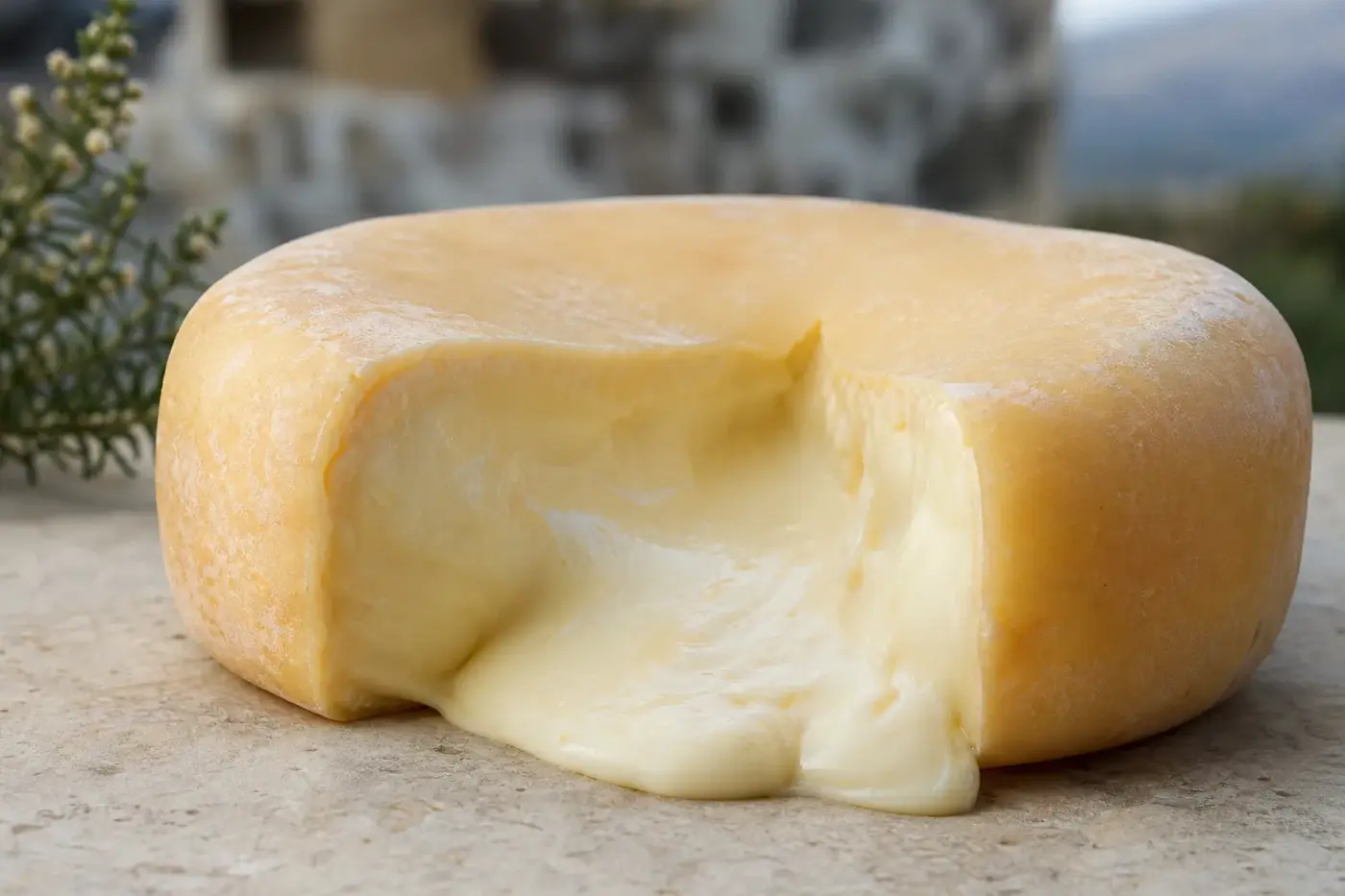
Your knife slips through a thin, straw-yellow rind. Beneath it, Queijo Serpa’s pale heart yields, sometimes enough to spread rather than slice. Behind that softness sit raw sheep’s milk, wild cardoon flowers and Portugal’s Baixo Alentejo, with a European Union protected designation of origin tying the name to a defined southern Portuguese area and a particular way of making cheese.[1]
| What you want to know | The essentials |
|---|---|
| Familiar and registered name | Queijo Serpa.[1][3] |
| Registration authority and reference | European Commission; register ID not supplied here. Published amendment reference: PDO-PT-0260-AM01.[1] |
| EU designation | PDO; amended single document published on 23 September 2025.[1] |
| Great Britain status | Registered PDO; UK scheme registration dated 31 December 2020. Status information: November 2026.[3] |
| Where it comes from | Legally delimited area in southern Portugal, within Beja and Setúbal districts.[1][2] |
| Milk and what sets it | Raw sheep’s milk; infusion of Cynara cardunculus flowers.[1] |
| Minimum maturation | 30 days; recognised Velho presentation requires more than 180 days.[1] |
| Usual age at the counter | No typical age supplied here. |
| Allergen | Contains sheep’s milk.[1] |
| UK pregnancy guidance | NHS guidance on unpasteurised dairy products and cheese, November 2026.[5][6] |
Follow Serpa into the Alentejo
Look beyond the town whose name appears on the cheese. Serpa belongs to a broad pastoral region, with a production area across Beja and Setúbal described by the Portuguese agriculture authority, DGADR. Its legal boundary includes whole municipalities and specified parishes, so an Alentejo address alone does not earn a cheese the name.[1][2]
The official account takes you across extensive plains beneath a Mediterranean climate. Rainfall arrives unevenly through the year, with a pronounced shortage in summer. It also connects Serpa to the management of milking flocks: the farming matters as much as the work inside the dairy.[1]
Take that landscape with you to the cheese counter. Who made this cheese, where did the milk come from, and when was it made? A named dairy and a knowledgeable seller give you more to work with than a grand sweep through Portuguese tradition.
Serpa belongs to Portugal’s wider sheep’s milk cheesemaking tradition, but its boundary and specification make the name precise. If place names, cheese styles and registered designations leave you wondering which is which, turn to protected names explained.
Get acquainted with that yielding heart
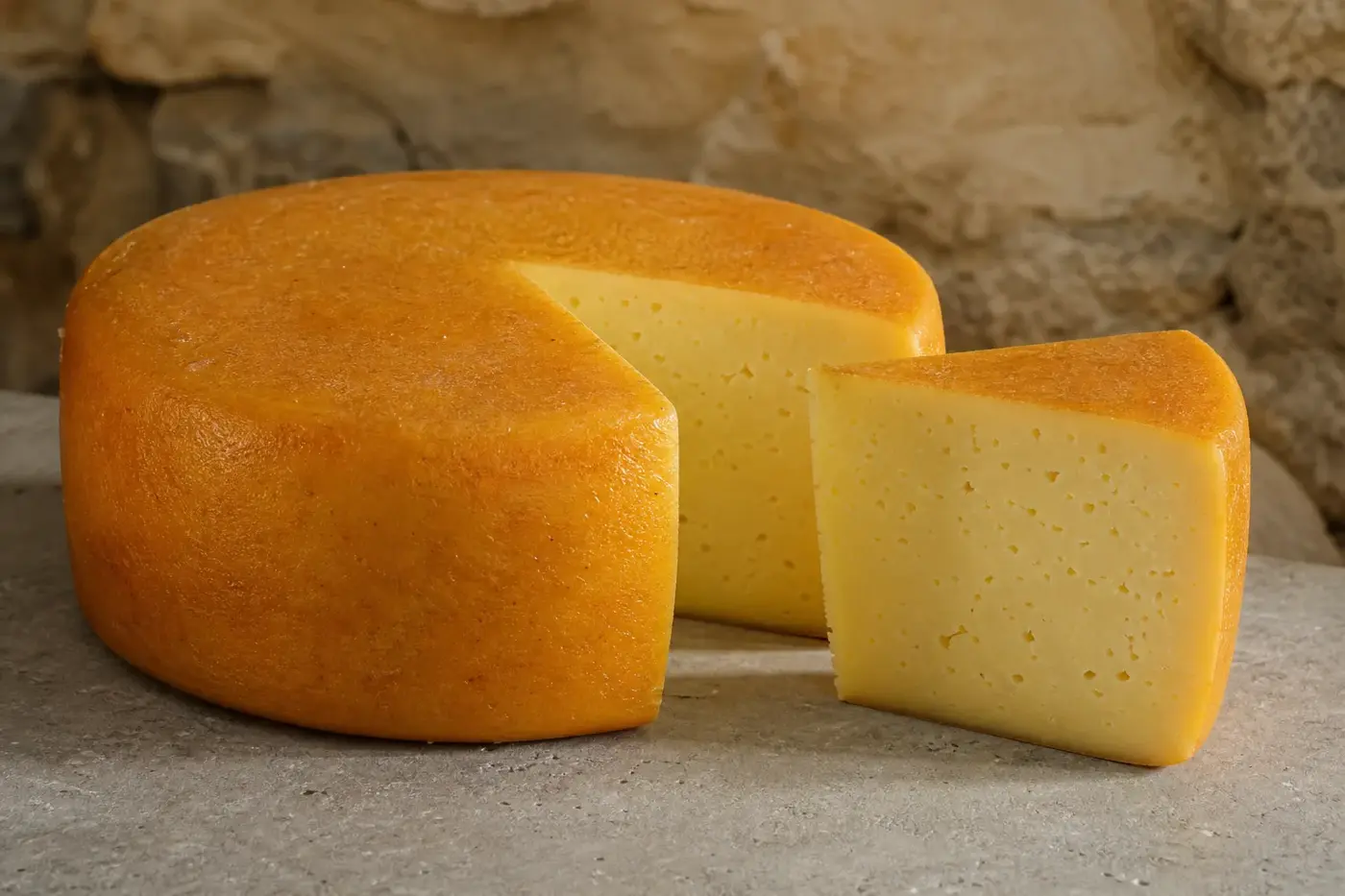
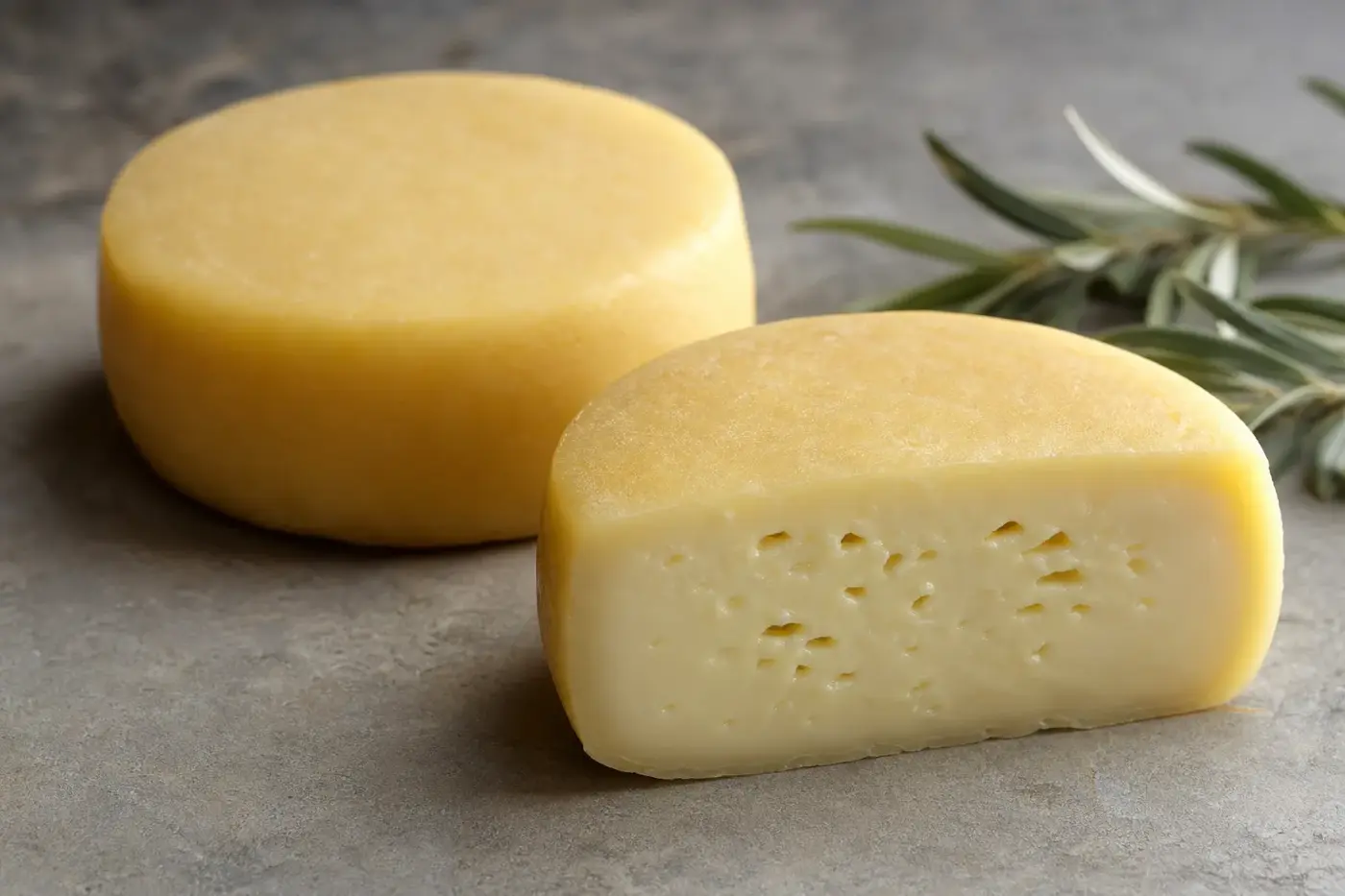
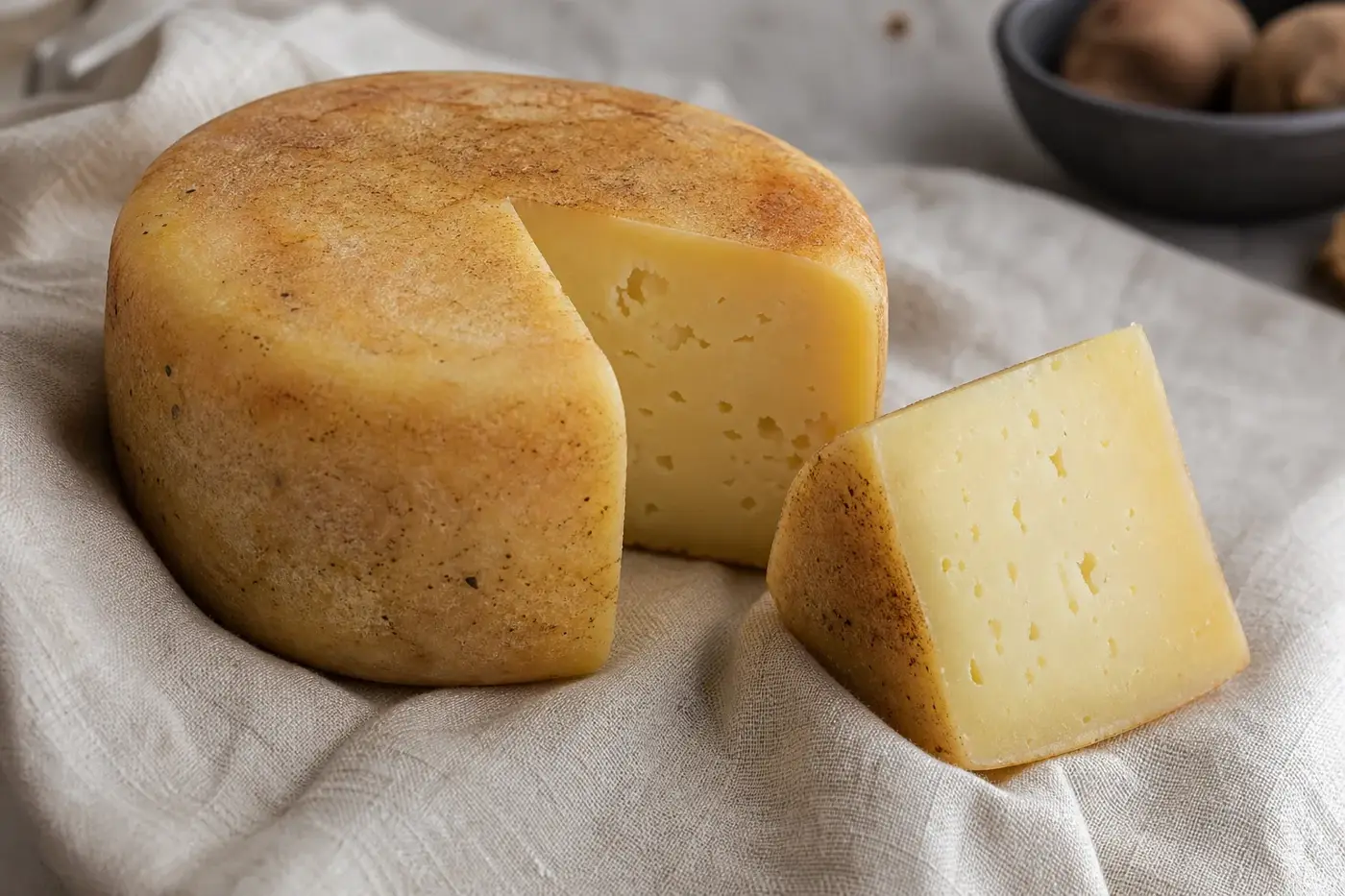
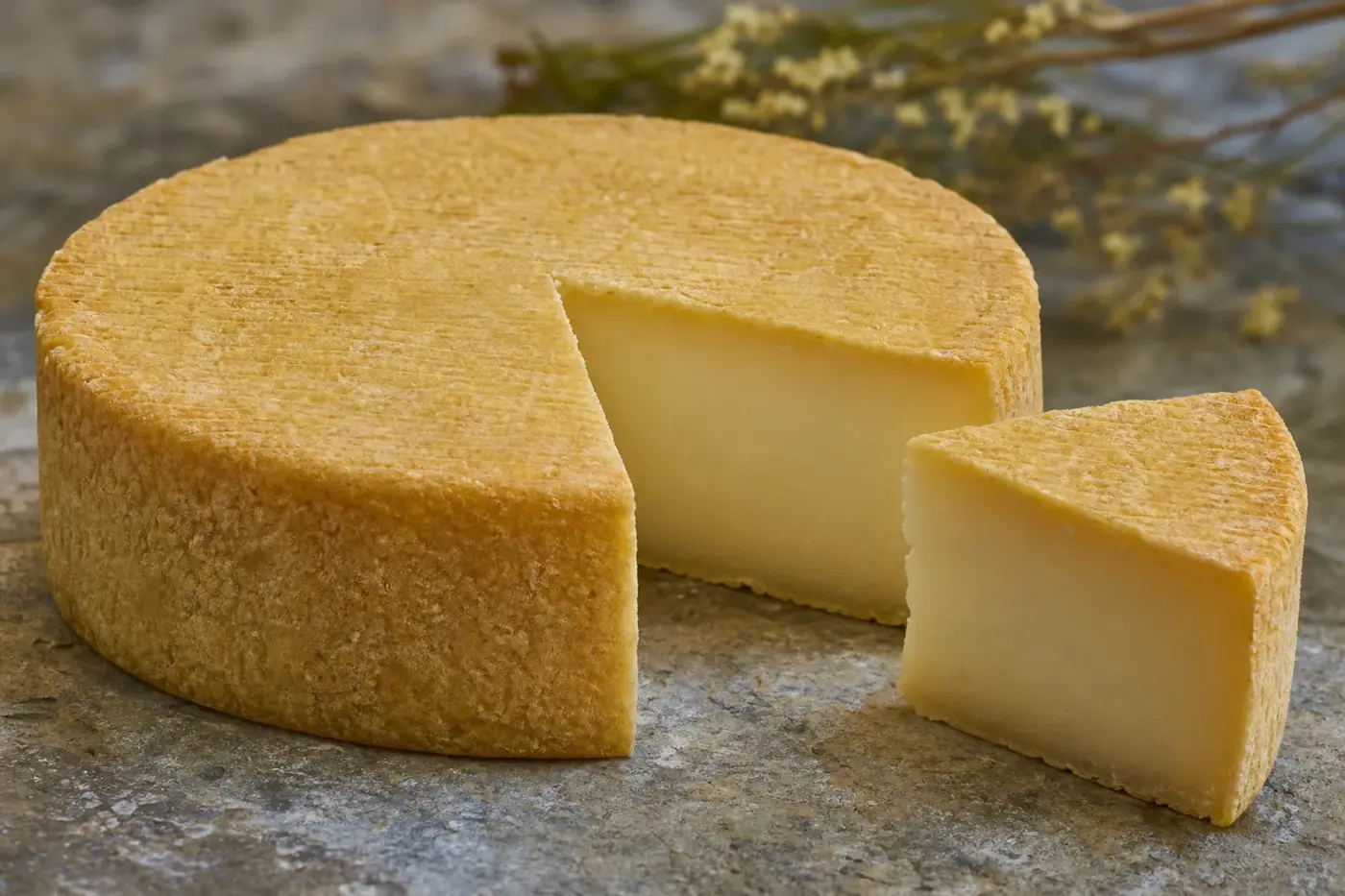
Look for a low cylinder with a thin, slightly rough, straw-yellow rind. Inside, the paste is pale, with few or no holes. The EU’s published description says it deforms readily when cut and may spread.[1]
If you can see the cut face, have a look before choosing. Then ask how that particular cheese portions. A yielding wedge and a firmer piece need different utensils, especially when everyone at supper will be helping themselves.
Tell the seller how you want to serve it, rather than simply asking for the most mature example. If several cheeses are available, compare their stated ages and presentation. Cheese shopping need not become a competition to find the oldest thing in the room.
Choose a whole cheese if it suits the occasion and the number eating. A cut portion may get you closer to the quantity you actually want. Keep the original label, or ask for the relevant storage information with your portion.
Taste the gentle side, then meet the intensity
Serpa’s official flavour description is clean and mild, sometimes slightly piquant. Velho brings a more intense, persistent flavour.[1] You have a useful first choice here: a gentler table cheese or a more assertive mature presentation.
Those cardoon flowers have a proper job. A published review of Portuguese cheese research explains that their protein-cutting enzymes help coagulate the milk and contribute to texture and flavour during ripening.[4] Coagulation is liquid milk setting into curd, the material that becomes cheese.
When you taste, resist filing everything under “strong”. Notice saltiness first, then acidity, any bitterness and, finally, how long the flavour stays after swallowing. Try a small piece alone before bringing in bread or fruit.
Those separate impressions give you something useful to ask for next time. If bitterness particularly bothers you, tell the cheesemonger and ask how they would describe this individual cheese. Try a sample where one is offered, rather than expecting every vegetable-coagulated cheese to strike the same balance.
Start your journey with the flock
Before you reach the dairy, spend a moment in the grazing country. Serpa’s official geographical account describes extended milking periods and distances between milking locations and dairies. These details of flock management help explain the cheese’s identity; they are more than a picturesque backdrop.[1]
Milk handling has its own timetable. DGADR describes production taking place twice daily to shorten the interval after milking.[2] Before anyone shapes the curd, the flock’s organisation and milk collection are already shaping the dairy’s working day.
To understand a particular cheese, ask about the flock supplying it. Does the dairy use its own milk, or buy from local farms? How does production change through the year?
Keep those answers attached to the producer you asked about. They describe that dairy’s work, not every Serpa maker’s routine. For the differences between milk treatments, see raw milk, thermised and pasteurised cheese.
Watch flowers turn milk into curd
An infusion of cardoon flowers sets Serpa’s raw sheep’s milk into curd. Slow draining follows, allowing whey, the liquid released from the curd, to escape.[1][2] The flowers begin the transformation, but there is plenty of work still to come.
DGADR records two salting stages. The first happens during milk filtration; the second comes once the curd sits in its shaping band for draining. Maturation follows in natural curing spaces or environmentally controlled facilities.[2]
Treat this as a window into professional production, not a recipe for your kitchen. Follow the milk through coagulation, draining, shaping, salting and maturation, and the finished cheese becomes easier to understand. Each stage contributes to the picture.
Cardoon is a defining ingredient, but curd handling and subsequent ripening matter too. Ask about those stages when a seller explains why two examples differ. For the wider story, read how cheese is made.
Meet Velho, Serpa’s firmer character
Queijo Serpa Velho is Serpa’s recognised mature presentation. Its published specification describes a firmer, drier, slightly brittle paste and permits a colourless paraffin coating.[1] If there is paraffin, remove it before serving.
Let your meal lead the choice. For bread and cheese, ask for a paste that spreads or cuts as you like it. If you want small individual pieces, explain that the cheese needs to hold its shape.
An age tells you more when someone describes the paste alongside it. Will this cheese slice neatly, crumble or slump on the plate? Ask directly, especially when you are buying it wrapped and cannot inspect the cut face.
“Older” is not much of a serving instruction. When you find an example you love, note the maker and the age supplied by the seller. Bring that record on your next visit: it is a better guide to a similar texture and flavour than the wrapper’s appearance alone.
Put the label to work for you
Start with the complete registered name, Queijo Serpa, and the PDO identification. On Portuguese labels, you will commonly see DOP, short for Denominação de Origem Protegida. These are useful details to recognise before you make your choice.
Read the information together. The name identifies the cheese, the maker tells you who produced it, and the date and storage instructions explain how to handle your purchase. For a cut portion, ask the seller to preserve that connection with the original label.
Make these three questions part of your cheese-counter routine:
- Who made this cheese?
- What is its stated age, and how does the paste behave?
- What storage and after-opening instructions come with this portion?
Tell the seller how much you expect to serve. Buying for one meal? Say so. Building a board? Describe the textures already on it and ask for a Serpa that brings a useful contrast.
That conversation helps you choose quantity and presentation together, rather than treating them as separate decisions. For more help with the small print, reading a cheese label explains the food’s name, origin information and handling instructions.
Keep it cool and let the paste guide serving
For England, Wales and Northern Ireland, the Food Standards Agency advises keeping a domestic fridge between 0 and 5 °C. It also advises following dairy products’ storage instructions.[7] Keep the packaging information, including anything that applies after opening.
Put a cut portion in a clean container, separate from raw foods, and follow the label’s wrapping instructions. The NHS advises using opened food within two days unless the packaging says otherwise. Eat, cook or freeze food by its use-by date.[6]
Put out only what you intend to eat. Let that portion briefly lose its sharp refrigerator chill while you prepare the bread, leaving the rest refrigerated. The NHS says chilled ready-to-eat foods should be eaten within four hours of leaving the fridge; keep that interval shorter wherever practical.[6]
Let the paste guide your serving arrangements:
- If the cheese holds its shape, use a clean knife to cut manageable wedges.
- Beside a yielding portion, put a spreading knife.
- For a particularly flowing example, offer a spoon if the seller recommends one.
- Set bread alongside, leaving guests enough room to handle the cheese without reaching across other food.
You do not need to make a soft portion behave like a neat wedge. A firm piece, a yielding one and a flowing example each call for a different arrangement. Give the cheese the utensil it needs, so your guests can serve themselves comfortably.
Bring bread, fruit and Portuguese drinks to the table
Start with the cheese alone. Then introduce one accompaniment at a time, so you can taste what each changes. These suggestions give you contrast without making Serpa compete for attention.
| Beside your Serpa | A good place to start |
|---|---|
| Plain country bread | Begin here and judge how much accompaniment each mouthful needs. |
| Fresh pear or apple | Alternate a small slice with cheese for a change of texture. |
| Fresh figs | Taste a little beside the cheese before putting them together on bread. |
| Quince paste | Start with a thin piece, then adjust to taste. |
| Portuguese white wine | Ask for a fresh, dry Alentejo example and try a small serving. |
| Portuguese red wine | Ask for a softer-textured example rather than choosing by strength. |
| Alcohol-free option | Serve sparkling water with apple or pear, keeping the drink unsweetened. |
The wine suggestions are for adults of legal drinking age. Give the alcohol-free option just as much thought. Suitable glassware and a considered place at the table belong to that drink too.
Give Azeitão and Serra da Estrela a place beside Serpa
Sheep’s milk and cardoon connect Azeitão, Serra da Estrela and Serpa. The research review describes semi-soft, yielding textures among these Portuguese cheeses, while placing them in different regions.[4] You have a shared method to explore, not three interchangeable cheeses.
If Serpa appeals to you, ask a knowledgeable seller for an Azeitão or Serra da Estrela of comparable consistency. Compare the named makers and ages. Taste each cheese alone, then return to each with the same bread.
Keep the labels beside the portions so your impressions stay with the right cheese. Note texture, salt, acidity, bitterness and finish separately. You are discovering what you enjoy, not judging a final in which only one cheese may leave with dignity.
Those notes have a life beyond the tasting. Take them back to the cheese counter and use them to describe what you would like next. A precise request gives the seller something useful to work with.
This page summarises published guidance from the official sources it cites. It is not medical advice. Guidance differs between countries and changes over time, so check the current source for where you live, and ask your doctor, midwife, pharmacist or dietitian about your own circumstances.
Buying raw milk cheese? Know the higher-risk guidance
UK guidance, November 2026: consult the NHS pregnancy guidance on cheese made from unpasteurised milk. Pay attention to its distinctions between cheese categories and its advice on cooking.[5]
The NHS identifies pregnant people, newborn babies, people with weakened immunity and older people as groups at greater risk of serious illness from listeriosis. It lists unpasteurised dairy products among foods that may carry the bacteria.[6]
Consult current official advice for your country, and discuss your circumstances with your doctor, midwife, pharmacist or dietitian. For UK guidance, follow the dated NHS sources below. For wider background, see Listeria and cheese safety.
Questions people ask
Where is Queijo Serpa made?
Queijo Serpa comes from a legally delimited area of southern Portugal, within the districts of Beja and Setúbal. An Alentejo address alone does not qualify a cheese for the protected name.
What does Queijo Serpa taste and feel like?
Its official flavour description is clean and mild, sometimes slightly piquant. The pale paste deforms readily when cut and may be soft enough to spread.
What is the difference between Queijo Serpa and Serpa Velho?
Velho is the recognised mature presentation and must mature for more than 180 days. It has a firmer, drier, slightly brittle paste and a more intense, persistent flavour.
How long is Queijo Serpa matured?
Queijo Serpa must mature for at least 30 days. The page does not verify its typical age at sale.
Can I eat Queijo Serpa during pregnancy?
Queijo Serpa is made from raw sheep’s milk. The NHS pregnancy guidance on cheese made from unpasteurised milk distinguishes between cheese categories and gives advice on cooking, so consult the current NHS guidance.
Sources
-
European Commission. Publication of the communication of an approved standard amendment to a product specification of a geographical indication, Queijo Serpa, C/2025/5172, 23 September 2025. Includes the amended single document and reference PDO-PT-0260-AM01.
Read at eur-lex.europa.eu -
Direção-Geral de Agricultura e Desenvolvimento Rural. Produtos Tradicionais Portugueses: Queijo Serpa DOP, undated online entry, indexed extract retrieved November 2026.
Read at tradicional.dgadr.gov.pt -
Department for Environment, Food & Rural Affairs. Queijo Serpa, protected food and drink names register, published 4 January 2021; checked November 2026.
Read at gov.uk -
Frontiers in Industrial Microbiology. Tradition unveiled: a comprehensive review of microbiological studies on Portuguese traditional cheeses, merging conventional and OMICs analyses, 2024. DOI: 10.3389/finmi.2024.1420042.
Read at frontiersin.org -
NHS. Foods to avoid in pregnancy, current online text retrieved November 2026.
Read at nhs.uk -
NHS. Listeriosis, reviewed 10 November 2023; current online text retrieved November 2026.
Read at nhs.uk -
Food Standards Agency. How to chill, freeze and defrost food safely, published 18 December 2017; current online text retrieved November 2026. Applies to England, Northern Ireland and Wales.
Read at gov.uk
Researched through official Portuguese and British records, the EU’s published amendment and single document, NHS and FSA guidance, and a peer-reviewed research synthesis; serving and pairing suggestions are editorial.
Last checked: November 2026
Last checked November 2026.
The editors suggest you read next
Queijo Serra da Estrela
Cut into Queijo Serra da Estrela and watch its pale interior gently abandon its shape.