Queijo de Azeitão
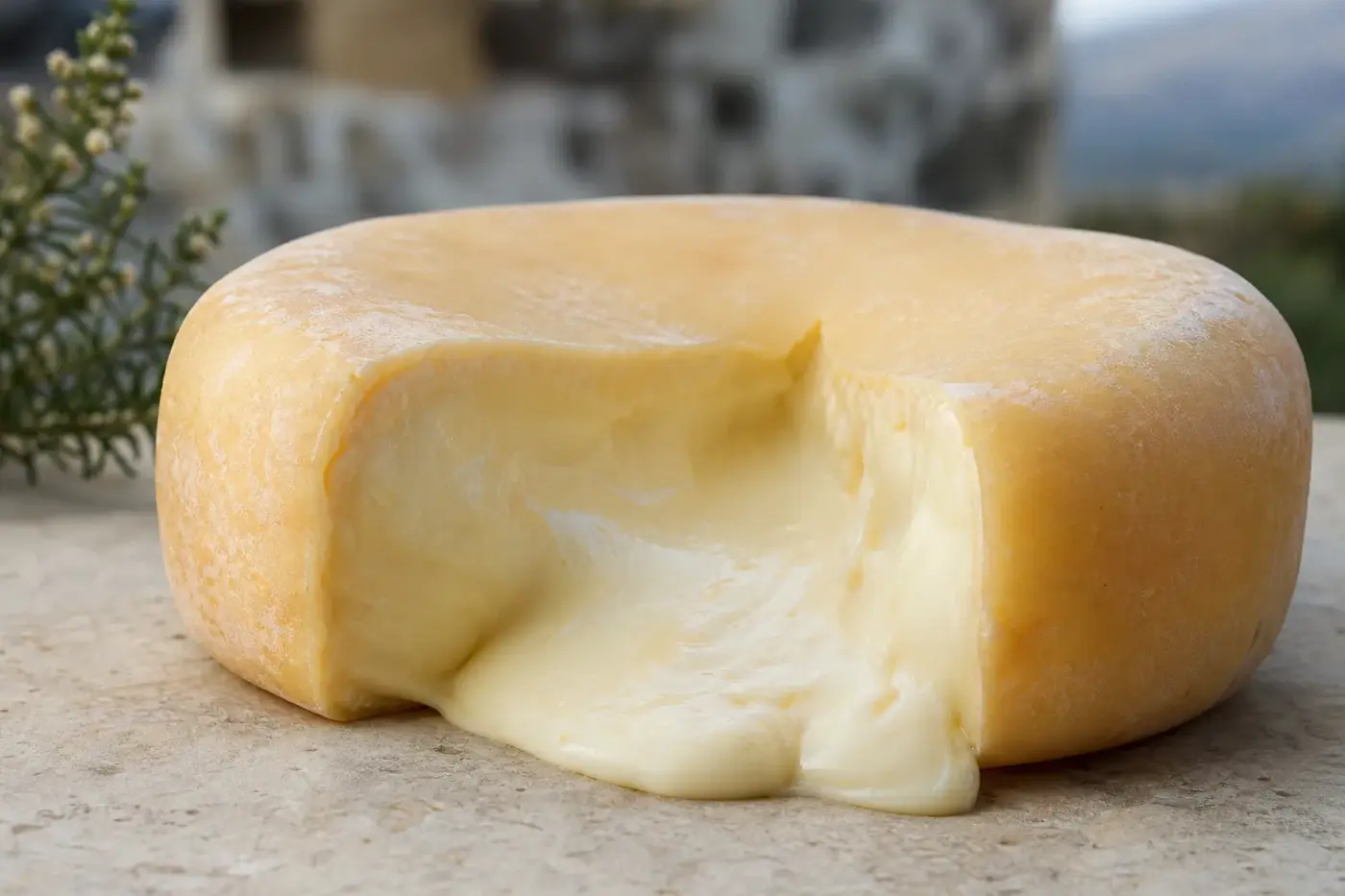
Open the thin rind and you meet a soft centre with a tang, followed by a little bitterness.
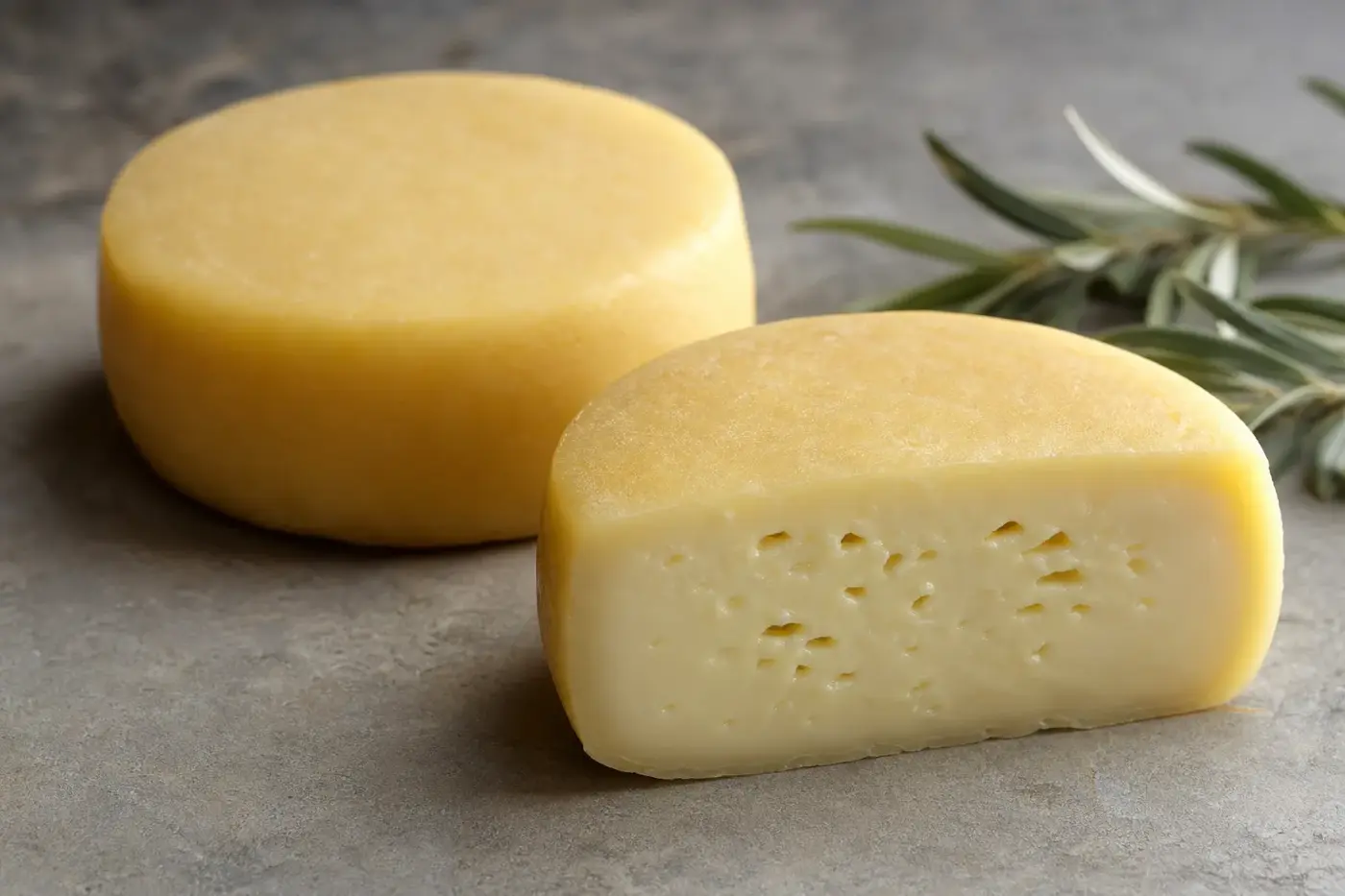
Open the thin rind and you meet a soft centre with a tang, followed by a little bitterness. This small, flat cheese knows how to hold your attention. South of Lisbon, the pastures around Azeitão supply its raw sheep’s milk, while cardoon flowers set it. Place, milk and plant coagulant shape Queijo de Azeitão’s character, right down to the flavours written into its protected designation specification. [2,10]
Get acquainted with Azeitão
| What to know | The details |
|---|---|
| Name to look for | Queijo de Azeitão, its familiar and registered name. [1,2] |
| Where it calls home | Portugal: Palmela, Sesimbra and Setúbal municipalities. [1,2] |
| Milk and coagulant | Raw sheep’s milk; cardoon preparation, Cynara cardunculus L. [1,2] |
| EU protection | PDO; current eAmbrosia register status: unconfirmed. [2,3] |
| Authority and dossier | European Commission; amendment dossier PDO-PT-0217-AM01. Individual register ID: unconfirmed. [2] |
| Great Britain protection | Registered PDO; UK registration dated 31 December 2020; November 2026 information. [4] |
| EU minimum maturation | 16 days under the amended specification approved by Regulation (EU) 2024/443. Current EU maturation requirements: confirmation outstanding. [2,3] |
| Usual size | Approximately 100 g or 250 g. [1,2] |
| Pregnancy guidance | UK: NHS Foods to avoid in pregnancy, November 2026 guidance. [5] |
Follow your cheese to the Arrábida hills
Picture Portugal’s Setúbal peninsula, around the Arrábida hills: you are in Queijo de Azeitão country. Its legal territory reaches beyond Azeitão itself into three municipalities, Palmela, Sesimbra and Setúbal. Both the milk and the cheese must be produced within that defined area. [1,10]
When you choose one, start with its origin. Look for the complete name and the Portuguese wording Denominação de Origem Protegida, or DOP, on the label. DOP corresponds to protected designation of origin, PDO, tying the name to this place and a prescribed method. [1,2]
You can explore the difference between a protected origin and a cheese style in protected names explained. Great Britain’s register separately lists Queijo de Azeitão as a registered PDO. It gives 21 June 1996 as the original EU registration date. [4]
Three ingredients, and flowers with a job to do
Raw sheep’s milk, salt and a cardoon preparation: that is the entire ingredient list. The specification excludes other additions to, or removals from, the milk. The plant coagulant comes from Cynara cardunculus L., the cardoon whose flowers set the milk. Flowers, in this dairy, are not merely decoration. [1]
Setting turns liquid milk into curd, the mass that becomes cheese. Whey is the liquid that drains away. Here, cardoon does the job animal rennet performs in many other cheeses; you can follow those stages in how cheese is made. [1]
The regional specification also connects the cheese to local grazing and climate. Follow that connection through the sheep, their food, the handling of their milk and the maturing cheese. Place is more than a name on the wrapper: it matters from pasture to dairy. [1,10]
Step inside the dairy
Gentle warming, salt and the cardoon preparation get things moving. Once the milk sets, the curd is cut to release whey, then drained and worked into moulds. That handling and drainage help create the compact, flattened cylinder you see on the counter. [1]
The amended specification approved by Regulation (EU) 2024/443 sets a minimum maturation of 16 days. That marks the earliest permitted point, not a promise that every cheese will be ready for your table then. [2,3]
The cheese at your monger’s has its own age and condition. Tell the seller when you want to eat it, and ask whether that particular cheese will be ready. A day count alone cannot tell you how dinner will taste.
Get to know the buttery centre
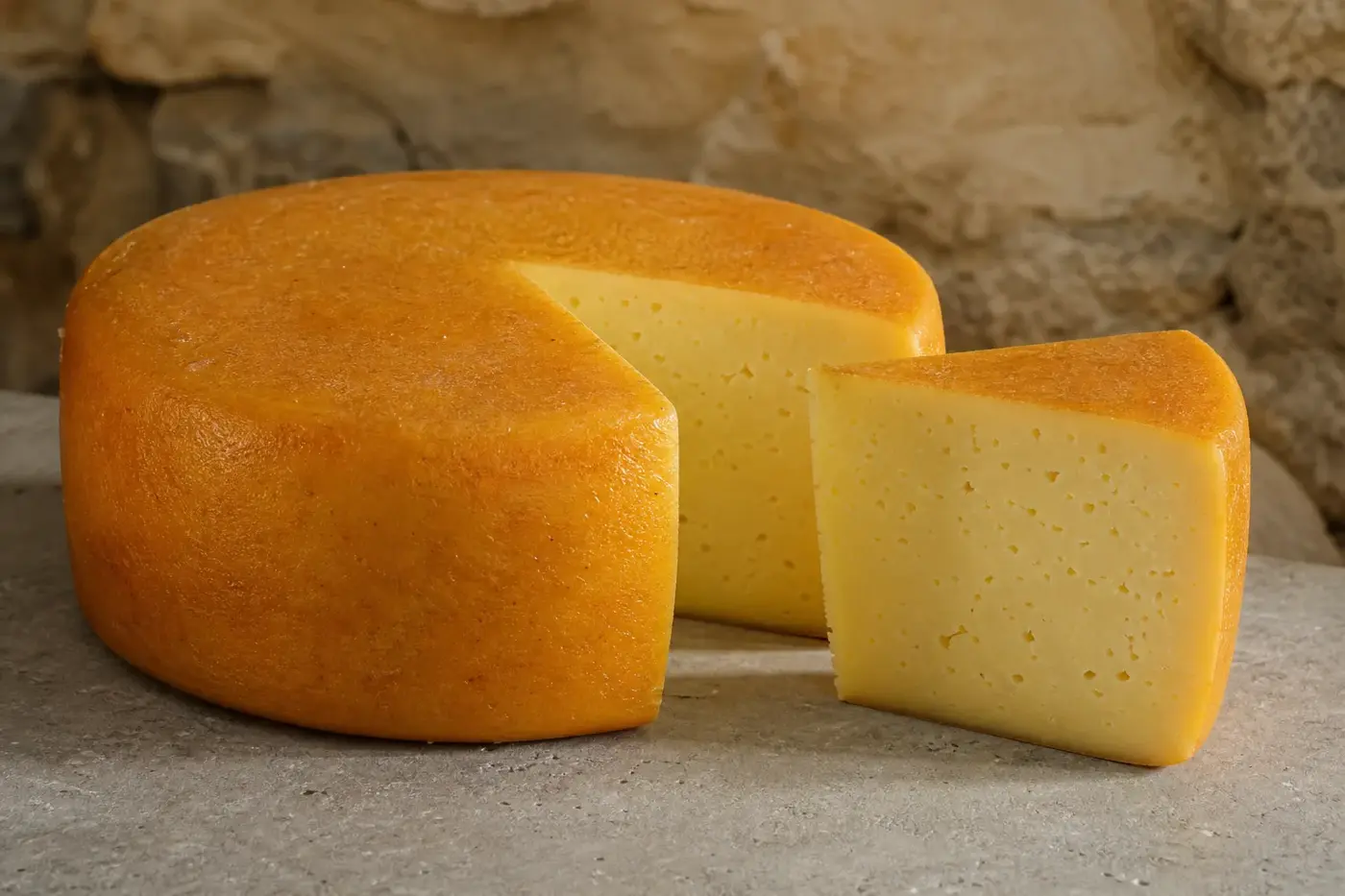
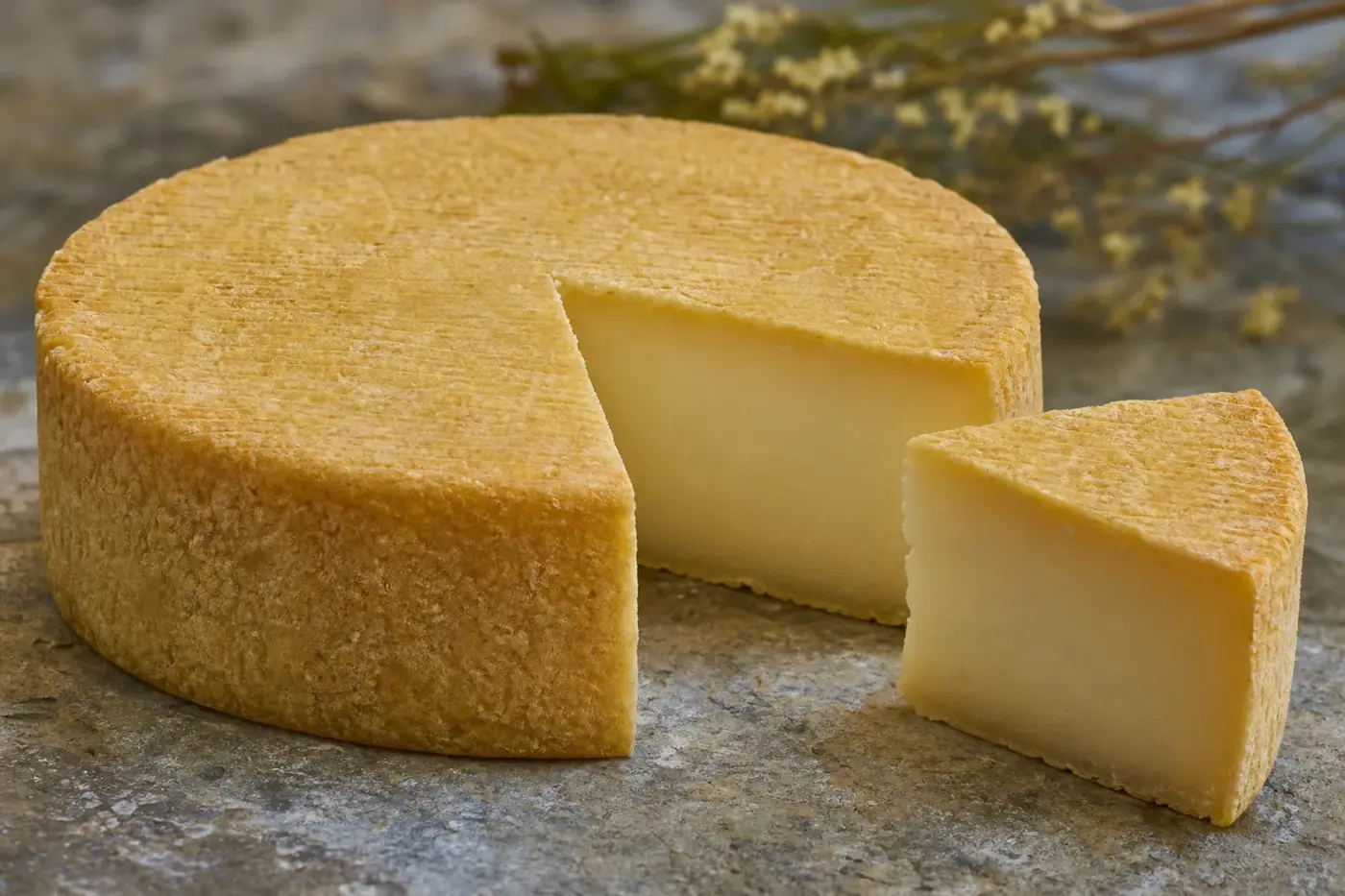
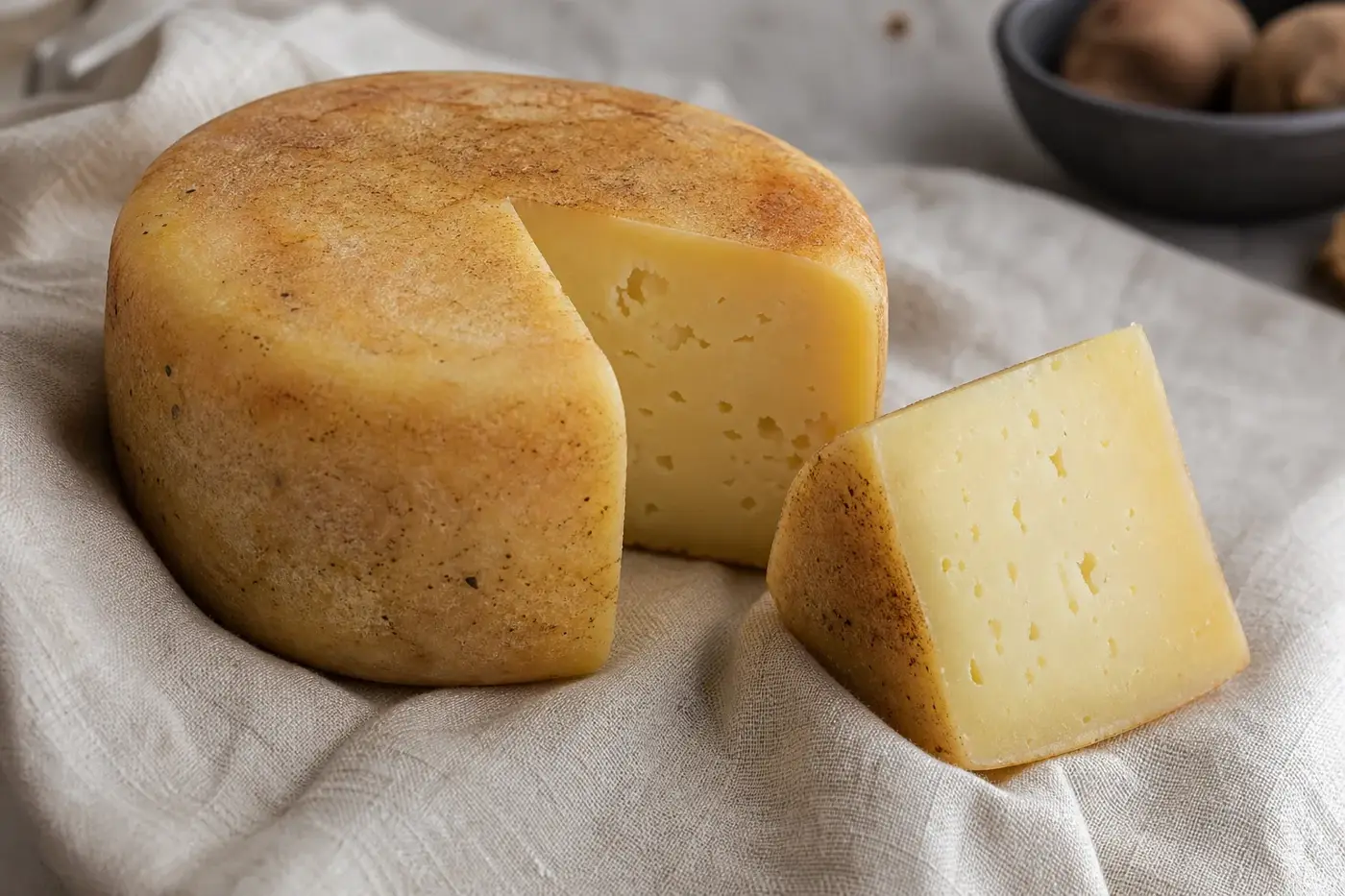
Beneath the thin, smooth, yellowish rind sits a pale paste with a buttery texture. You will find few or no small openings. The specification describes a lightly piquant aroma and flavour, with acidity, salt and a characteristic slight bitterness. [1,2]
Before you reach for bread or fruit, smell a freshly exposed piece. Then taste for the tang, salt and finish separately. Give that slight bitterness a fair hearing: it belongs to the cheese’s documented character, rather than automatically signalling a fault. [1,2]
As the cheese matures, its texture and flavour develop. Ask the seller about its balance of softness, tang and bitterness now, and choose what you want to serve. You can seek out a spoonable centre, but it is not a test every good cheese must pass. Nor is it a reason simply to buy the oldest. [1,2]
Try a small bite straight from refrigeration, then another after brief tempering. Does the paste spread more easily, and is the aroma easier to recognise? Use small portions rather than leaving the whole cheese out, and stay within the NHS serving limit below.
Bring it home and keep serving simple
Check the label and ask about the centre: spoonable now, or better for cutting? Tell the seller when you plan to serve it. For your first purchase, a clearly described condition is more useful than age alone.
At home, follow the pack’s storage instructions and use-by date. The UK NHS advises keeping chilled ready-to-eat foods at 5 °C or below, and using opened food within two days unless the packaging says otherwise. Keep your cheese covered and separate from raw foods. [6]
You need only a small plate, plain bread and a clean spoon or knife. Cut a firmer cheese into portions; for a flowing centre, carefully open the top and spoon out what you need. Keep wrappers and labels away from the food, then return the remainder promptly to refrigeration.
The NHS says to eat chilled ready-to-eat foods within four hours of taking them out of refrigeration. Apply that UK limit to your tasting comparison, or use a shorter period if the pack instructs it. Put out only what you need for the meal. [6]
When you spoon the cheese, its rind can act as a natural container. Leave it on the plate if you prefer, and check the producer’s instructions before eating the rind itself. For wrapping and looking after cut surfaces, turn to how to store cheese at home.
Let bread, fruit and Portuguese wine join in
Start with crusty, fairly plain bread, with pear or a little quince paste offered separately. Taste the cheese alone before trying one accompaniment at a time. Its acidity and bitter finish are easier to recognise without several sweet additions competing for your attention.
For Portuguese wine, you have two suggested directions: a dry white from the Setúbal peninsula, or a small serving of Moscatel de Setúbal for sweet contrast. Choose with the cheese in mind. Ask for freshness in the white, or sweetness balanced by acidity in the Moscatel.
Prefer an alcohol-free table? Try sparkling water with the fruit and bread, or an unsweetened apple drink for a fruitier contrast. Keep drinks alongside the food rather than making wine the centre of the meal. The cheese and wine pairing guide helps you build a comparison and explore these choices.
Alcoholic pairings are for adults of legal drinking age. The UK NHS advises avoiding alcohol during pregnancy, so choose an alcohol-free accompaniment in that circumstance. [5]
Raw milk: choose with your table in mind
Raw milk is part of Queijo de Azeitão’s specification. If you are pregnant in the UK, NHS guidance is to avoid soft cheese made with unpasteurised milk unless it is cooked until steaming hot. Consult the current NHS guidance for the full advice. [5]
The NHS identifies pregnant people, newborn babies, people with weakened immune systems and older people as being at higher risk of serious illness from listeriosis. Its dairy guidance also addresses infants and young children. If you belong to these groups, or are buying for someone who does, consult those UK sources and your own clinician. [6,7]
Outside the UK, follow your national food safety agency’s current advice. The raw milk, thermised and pasteurised cheese guide explains milk treatments, while listeria and cheese safety covers the wider safety context. Ask the seller for the original label so you can read the instructions for your particular cheese.
Leave a little room for Portugal’s other protected cheeses
Curious to taste further? Queijo Serra da Estrela and Queijo Serpa are distinct Portuguese names, each recorded as a registered PDO in Great Britain’s register. Queijo de Azeitão has its own defined area, small format and production specification. Explore them together, keeping each name and place clearly in view. [1,4,8,9]
For a side-by-side tasting, use the same plain bread and compare cheeses at the ages your seller recommends. Notice how readily each paste spreads, how quickly its tang appears and how long any bitterness lasts. Those details tell you more about your preferences than appearance alone. Similar-looking cheeses need not give you the same experience, which is a perfectly respectable excuse to keep tasting.
General information only, not medical advice: follow the official guidance where you live.
Questions people ask
What is Queijo de Azeitão made from?
It contains just raw sheep’s milk, salt and a cardoon preparation. The specification excludes other additions to, or removals from, the milk.
What does Queijo de Azeitão taste like?
It has a lightly piquant aroma and flavour, with acidity, salt and a characteristic slight bitterness. Its pale centre has a buttery texture and few or no small openings.
How long is Queijo de Azeitão matured?
The amended specification approved by Regulation (EU) 2024/443 sets a minimum of 16 days. Verification of the current EU maturation requirements remains outstanding.
How do you serve Queijo de Azeitão?
A firmer cheese can be cut into portions, while a flowing centre can be spooned out after carefully opening the top. Plain bread, pear or a little quince paste are suggested accompaniments.
Can you eat Queijo de Azeitão during pregnancy?
The UK NHS advises avoiding soft cheese made with unpasteurised milk during pregnancy unless it is cooked until steaming hot. Consult the current NHS guidance for the full advice.
Sources
- ARCOLSA, Caderno de especificações do Queijo de Azeitão, specification copy hosted by Qualifica Portugal in 2024; document revision date not displayed in the extracted text. Retrieved specification.
- European Commission, Publication of an application for approval of an amendment, which is not minor, to a product specification, C/2023/380, 18 October 2023, including the amendment comparison and single document for Queijo de Azeitão. Official publication.
- European Commission, Commission Implementing Regulation (EU) 2024/443, 2024, approving the specification amendment for Queijo de Azeitão. Official legal record.
- Department for Environment, Food & Rural Affairs, Queijo de Azeitão, protected food and drink names register, published 2021, current entry retrieved November 2026. Register entry.
- NHS, Foods to avoid in pregnancy, current online edition retrieved November 2026. Official pregnancy guidance.
- NHS, Listeriosis, current online edition retrieved November 2026. Official guidance.
- NHS, Dairy and alternatives in your diet, current online edition retrieved November 2026. Official dairy guidance.
- Department for Environment, Food & Rural Affairs, Queijo Serra da Estrela, protected food and drink names register, published 2021, current entry retrieved November 2026. Register entry.
- Department for Environment, Food & Rural Affairs, Queijo Serpa, protected food and drink names register, published 2021, current entry retrieved November 2026. Register entry.
- Direção-Geral de Agricultura e Desenvolvimento Rural, Produtos Tradicionais Portugueses: Queijo de Azeitão DOP, undated online product record, retrieved in search results November 2026. Official product record.
Researched from specification documents, official legal and register records, and current NHS guidance; serving and pairing preferences are editorial suggestions.
Last checked: November 2026
Last checked November 2026.
The editors suggest you read next
Queijo Serra da Estrela
Cut into Queijo Serra da Estrela and watch its pale interior gently abandon its shape.