Queso de La Serena
Lift the lid of a spoonable Queso de La Serena and watch the paste yield beneath your spoon.
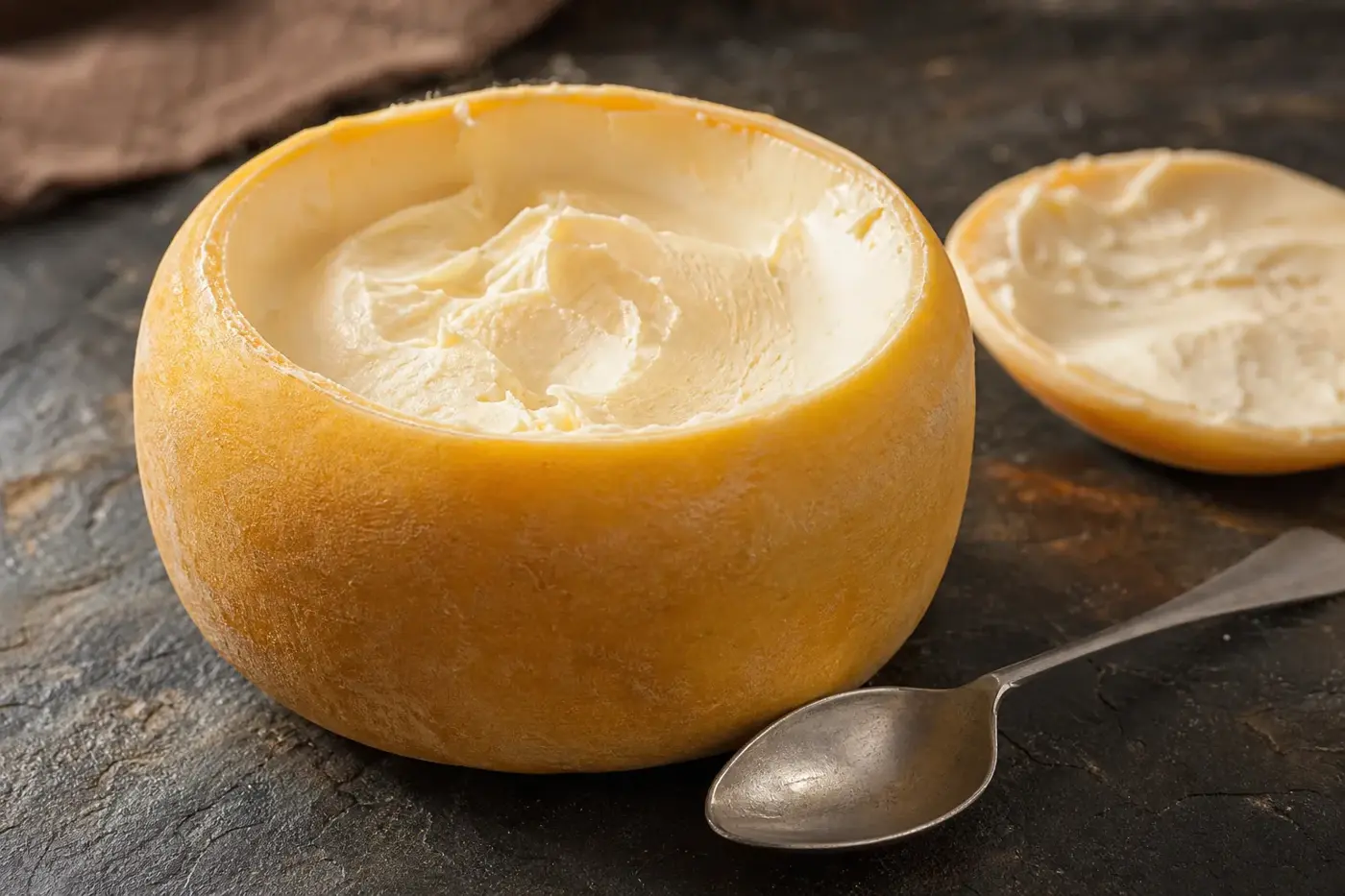
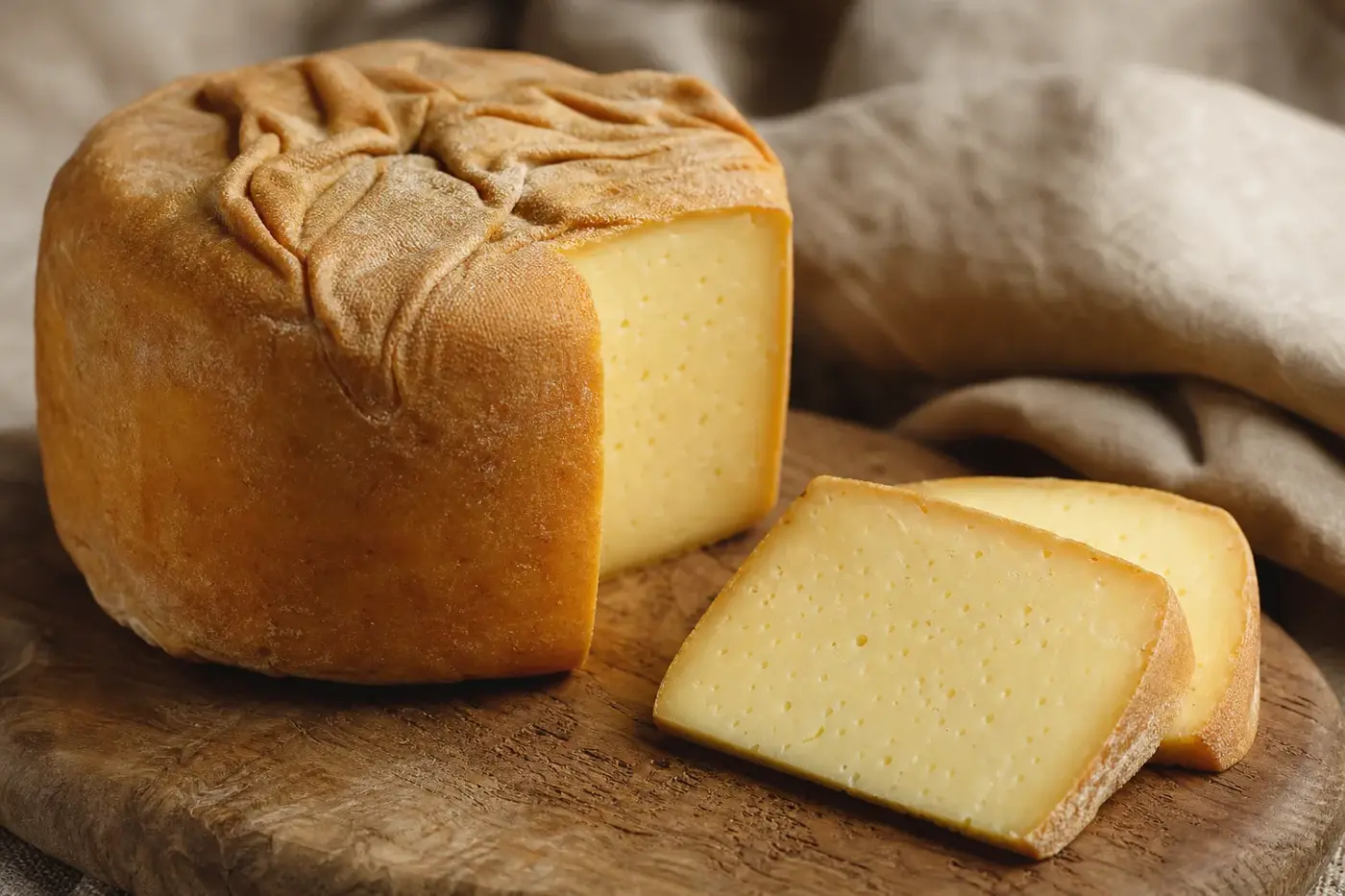
Lift the lid of a spoonable Queso de La Serena and watch the paste yield beneath your spoon. A waxy yellow to ochre rind holds this torta form together, its centre softened by protein breakdown during ripening. Follow it back to Badajoz’s sheep pastures and you find Merino traditions and a coagulant made from cardoon flowers. Keep a knife nearby, though: firmer cheeses belong to this protected designation too, so the spoon does not always get the job. [1][4]
| Your quick introduction | What to know |
|---|---|
| Familiar name | Queso de La Serena. [3] |
| Registered name | Queso de La Serena on the Great Britain register. [3] |
| Registration authority and ID | Great Britain: Department for Environment, Food & Rural Affairs; numerical register ID: Not verified. [3] |
| Protection | Great Britain: registered PDO, registration dated 31 December 2020; status entry: November 2026. [3] |
| EU status | Not verified against the EU register. |
| Where it comes from | 21 municipalities in Badajoz, Extremadura, Spain. [1] |
| Permitted sheep breeds | Merino, Lacaune and their crosses. [1] |
| Milk treatment | The designation’s organisation describes production using raw sheep’s milk. [4] |
| What sets the milk | Dried flowers of Cynara cardunculus. [1] |
| Minimum maturation | 20 days under the consolidated 2025 specification. [1] |
Step into La Serena’s sheep country
Picture shallow soils, exposed rock and a hot, dry summer. La Serena’s gently undulating pastures sit over slate and granite, with few trees or none at all. These are not lush, enclosed dairy fields: sheep adapted to demanding conditions have an important place here. [1]
You are in Extremadura, in south-western Spain. The cheese territory lies in south-eastern Badajoz province, around Castuera, Cabeza del Buey and Campanario. Its legally defined area also includes smaller municipalities, among them Magacela, Risco and Capilla. [1][5]
The flocks’ menu moves with the seasons. Alongside pasture, the production account includes cereal stubbles and crop residues, rather than an unchanging year-round grazing diet. To understand the cheese’s connection to this place, look at the whole farming system, not just the plants in a field. [1]
Find the name, then look for its numbered label
PDO means protected designation of origin, or DOP in Spanish. For Queso de La Serena, the specification ties the milk supply, cheesemaking and maturation to the defined territory. Registered holdings and premises help control that origin. [5]
The older official specification follows the cheese all the way from milk to label. Milk comes from registered local flocks, while cheesemaking and maturation happen in registered premises. Qualifying cheeses receive a numbered certification back label: look for it on a whole cheese’s packaging, or ask your cheesemonger when buying a cut portion. [5]
Great Britain’s register lists Queso de La Serena as a registered PDO. It records 21 June 1996 as the original EU registration date. [3]
If geographical names and cheese styles leave you wondering which is which, start with protected names explained.
Meet the Merinos, and their fellow flock members
Merino sheep sit at the heart of this cheese’s story. The designation’s organisation describes them as the local breed, notably adapted to the natural environment. It also links the cheese to their raw milk. [4]
Today’s rules allow more breeds than some older descriptions suggest. The consolidated 2025 specification permits Lacaune sheep and Merino-Lacaune crosses alongside Merino. For the breed story behind the cheese in your basket, check its label or ask the maker. [1]
Raw milk is used without pasteurisation. Alongside the coagulant, acidification and ripening, it helps shape the finished cheese. Experimental work on cardoon-coagulated cheeses shows that changing the culture can alter acidity, protein breakdown and hardness, even when the vegetable coagulant stays the same. [6]
If you would like to untangle the treatments, turn to raw milk, thermised and pasteurised cheese.
How a cardoon flower helps soften the centre
The process begins with dried cardoon flowers. The rules name Cynara cardunculus specifically, not simply any plant called a thistle. The coagulant’s first task is to turn liquid milk into curd, a gel ready for cutting and shaping into cheese. [1]
Then ripening takes over. Proteolysis, the breakdown of milk proteins, changes the supporting structure and can soften the cheese. The La Serena specification explicitly connects its relatively soft curd and proteolytic activity with a less consistent, potentially flowing paste. [1]
Salt influences the result too. Researchers studying cardoon-coagulated cheeses compared four brine concentrations, measuring texture and protein breakdown during refrigerated storage. The strongest brine produced harder cheeses and reduced proteolysis, a reminder that cardoon does not do all the work alone. [7]
This page summarises published guidance from the official sources it cites. It is not medical advice. Guidance differs between countries and changes over time, so check the current source for where you live, and ask your doctor, midwife, pharmacist or dietitian about your own circumstances.
Follow the curd from mould to maturing room
The official production sequence starts with controlled coagulation, then successive cuts through the curd. The older specification describes pieces measuring 10 to 20 millimetres. These go into esparto-grass bands or suitable moulds, which give the cheese its shape. [5]
Next comes salting, either dry or wet. For brining, the specification limits both strength and duration. This is a controlled stage of production before maturation in registered premises, rather than a finishing sprinkle. [5]
The consolidated specification requires at least 20 days’ maturation. That is the minimum, not necessarily the age at which a maker releases a cheese. Ask the producer how old your particular wheel is. [1]
These stages build a shaped exterior around a paste that keeps developing inside. To follow curd formation, drainage and ripening more closely, visit how cheese is made.
Take a good look before your first taste
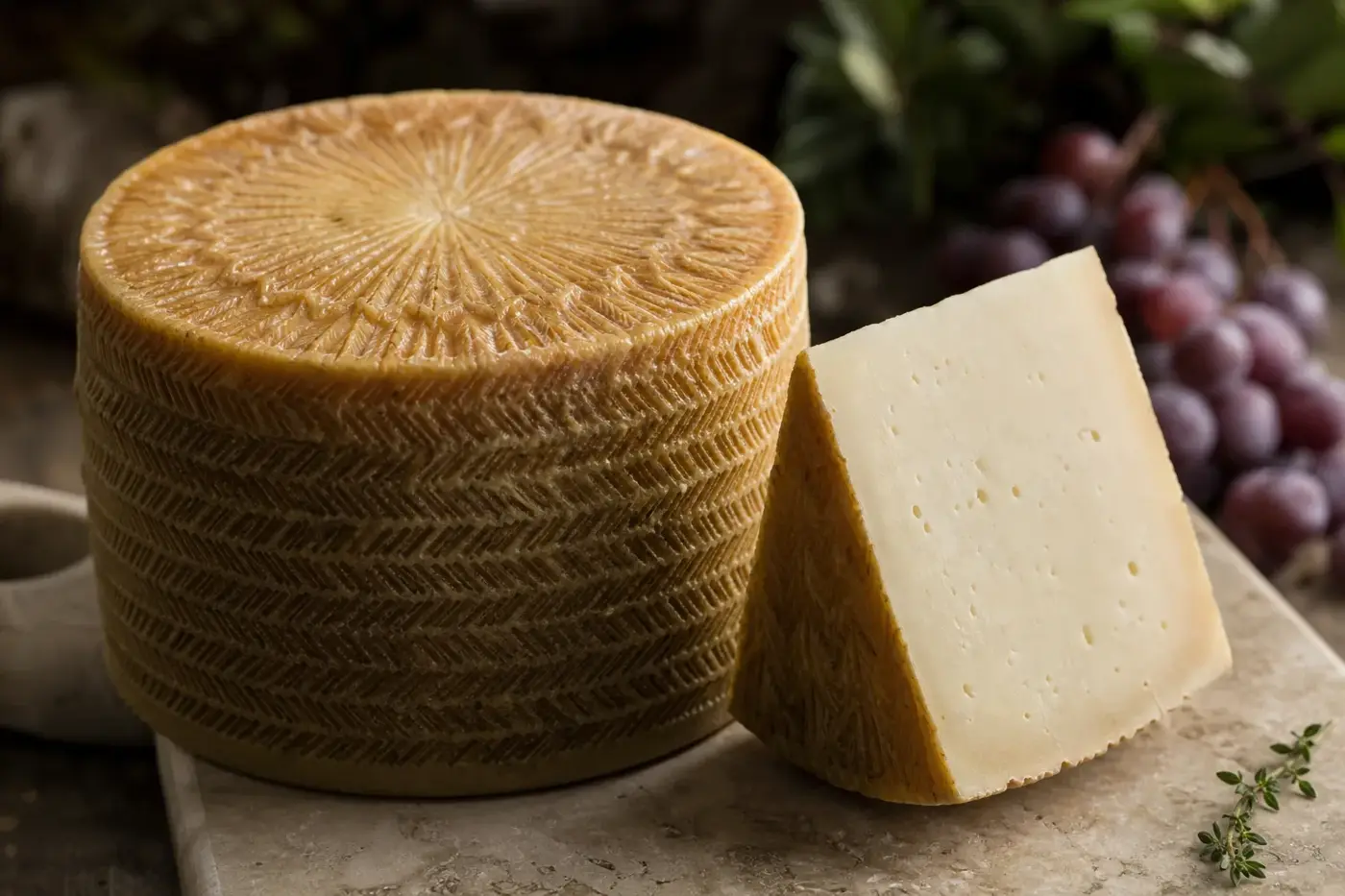
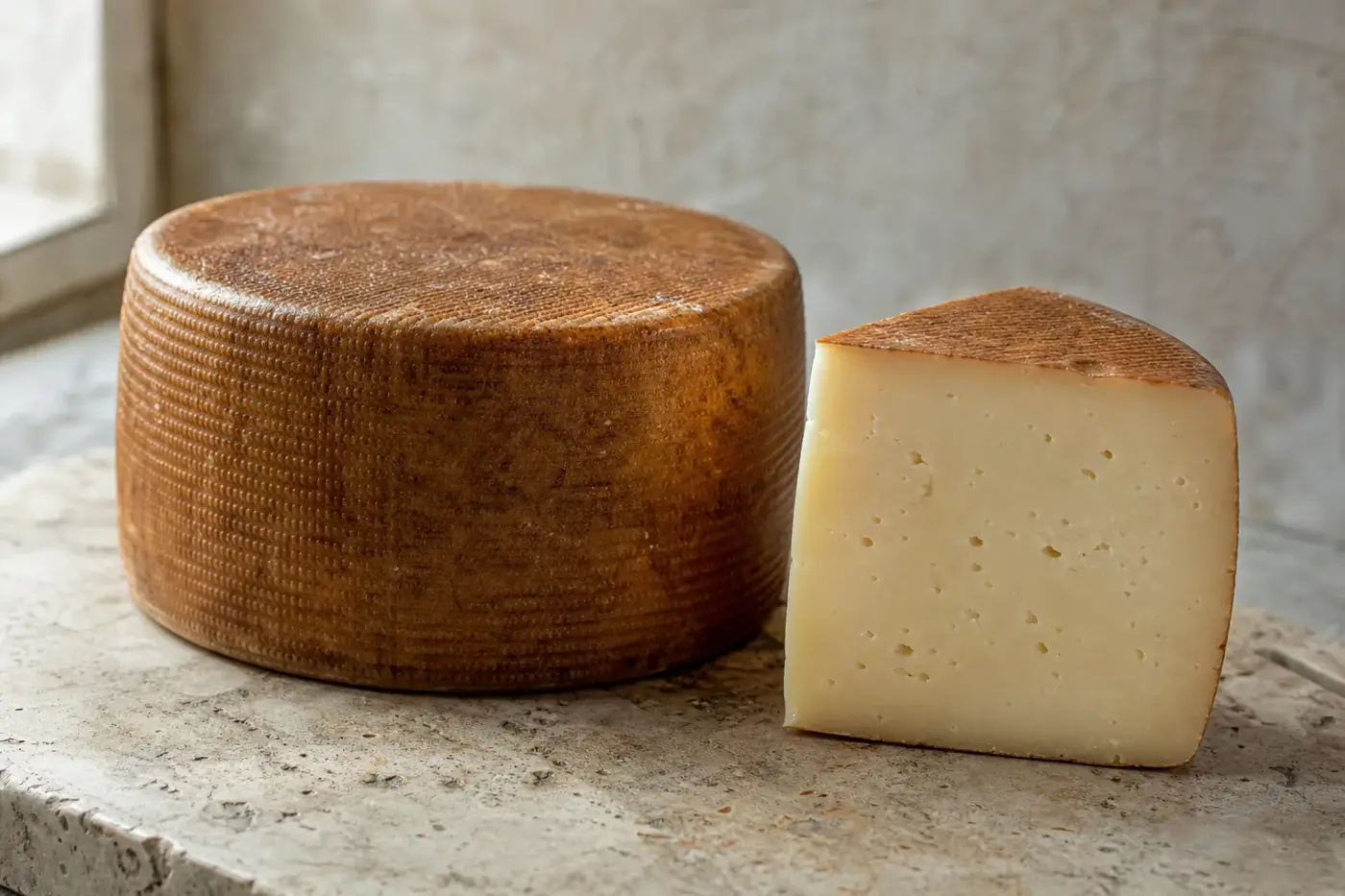
A whole Queso de La Serena is a flattened disc, with substantially flat faces and a convex side. Its semi-hard rind ranges from waxy yellow to ochre. Around the side, you may see a smooth surface or the impression left by its band or mould. [1]
Inside, the colour runs from ivory white to waxy yellow. Small openings sometimes appear, scattered unevenly through the paste. Permitted textures range from soft to semi-hard, so look at rind and centre together rather than letting the word “soft” make your decision. [1]
Before your first mouthful, smell the cheese. Then notice its acidity, salt, any bitterness and how readily the paste spreads. That gives you a useful description when comparing makers or ages, rather than simply reporting that you became rather attached to the spoon.
When it is time to reach for a spoon
Torta is the yielding form, with an interior fluid enough to scoop. The specification calls this development atortado. It commonly appears about 20 days after moulding, when the rind needs careful handling. [1]
Not every Queso de La Serena becomes spoonable. The designation allows paste up to semi-hard, with coagulation, acidification, salting and ripening all contributing to the result. Experimental research on cardoon cheeses also shows that changes in cultures or brining can alter firmness. [1][6][7]
For a whole, spoonable cheese, stand it upright on a plate. Cut a shallow circle around the top face and lift it away like a lid. Leave the side wall intact, then scoop the paste with a clean spoon.
The rind provides the support, so do not try to lift or spread the whole wheel. Ask your cheesemonger whether your particular cheese is ready for this treatment. A firmer example is better served in wedges.
La Serena and Torta del Casar: two cheeses worth knowing
Queso de La Serena and Torta del Casar share Extremadura’s tradition of sheep’s milk cheeses coagulated with cardoon. They remain distinct products, with separate specifications and territories. Torta del Casar comes from designated municipalities in Cáceres province, including the areas of Los Llanos de Cáceres, Sierra de Fuentes and Montánchez. [1][9]
Torta del Casar requires raw milk from sheep of the Merino and Entrefino breed groups. Its minimum maturation is 60 days. The specification describes soft to very soft paste, with moderate to high creaminess as a defining characteristic. [9]
Its official sensory description is specific too. It gives lactic or vegetal smells of low to medium intensity, low saltiness and acidity, and low to medium bitterness. Those descriptors belong to Torta del Casar, not to a tasting profile for La Serena. [9]
When choosing between them, begin with production area, breed rules, maturation and expected consistency. Then look at the condition of the individual cheese. That, after all, is the one you will be eating.
Bring out the bread and let the cheese lead
Start with plain bread, whose crust gives you contrast without obscuring the cheese’s character. Toast works too: add a little paste rather than covering every surface. Taste the cheese on its own before you reach for stronger accompaniments.
For a drink, try still water or lightly brewed unsweetened tea. Keep things simple so your attention stays on the cheese.
Serve it cool, following any serving temperature the maker specifies. Do not warm it beside a cooker or radiator. Food Standards Agency guidance for England, Wales and Northern Ireland says chilled food should spend the shortest possible time outside refrigeration, with a maximum of four hours during preparation. Count preparation and serving time together towards that limit. [10]
Store it carefully and follow the raw milk guidance
Refrigerate your cheese and follow its label, including instructions for after opening. The Food Standards Agency advises a domestic fridge temperature of 0 to 5 °C in England, Wales and Northern Ireland. Keep raw foods separate from this ready-to-eat cheese. [10]
Once you open a torta, keep it upright in a suitable covered container and use clean utensils. Save the packaging so you have the producer’s storage instructions, date and batch details to hand. For help with wrapping and fridge organisation, see how to store cheese at home.
In the UK, consult the NHS guidance on cheese and other dairy foods during pregnancy before choosing or serving this cheese. Make that part of your decision, rather than an afterthought. [11]
The NHS also identifies older people and people with weakened immunity as being at greater risk of serious listeriosis. If you belong to either group, consult the official guidance and your healthcare professional about your own circumstances. [12]
Questions people ask
Where is Queso de La Serena made?
Its production area covers 21 municipalities in Badajoz, Extremadura, Spain. The territory includes areas around Castuera, Cabeza del Buey and Campanario.
What milk and coagulant are used to make Queso de La Serena?
The designation’s organisation describes production using raw sheep’s milk. The permitted coagulant comes from dried flowers of Cynara cardunculus, a cardoon.
How do you serve a spoonable Queso de La Serena?
Stand the whole cheese upright on a plate, cut a shallow circle around the top and lift it off as a lid. Leave the side wall intact and scoop out the paste with a clean spoon.
How does Queso de La Serena differ from Torta del Casar?
Both are sheep’s milk cheeses from Extremadura made with cardoon, but they come from different territories and have different specifications. La Serena requires at least 20 days of maturation, while Torta del Casar requires at least 60 days and has moderate to high creaminess as a defining characteristic.
Can I eat Queso de La Serena during pregnancy?
The page directs readers in the UK to consult NHS guidance on cheese and other dairy foods during pregnancy. Check the current NHS guidance and ask your doctor or midwife about your own circumstances.
Sources
- Junta de Extremadura, Pliego de condiciones de la DOP “Queso de la Serena”, consolidated 2025 edition. Sections B to F cover breeds, dimensions, composition, territory, coagulant and atortado. Official specification.
- Junta de Extremadura, DOP Queso de la Serena, updated 2 February 2026. Official designation page.
- Department for Environment, Food & Rural Affairs, Queso de La Serena, Great Britain protected food names register, published 4 January 2021, current entry accessed November 2026. Register entry.
- Consejo Regulador DOP Queso de la Serena, La Tierra, undated industry-body account. Used for its description of the local Merino tradition and raw milk, not its superseded claim of exclusive Merino use. Published account.
- Ministerio de Agricultura, Pesca y Alimentación, Pliego de condiciones de la DOP “Queso de la Serena”, file dated 7 November 2023. Used only for production and traceability provisions consistent with the consolidated 2025 text. Earlier official specification.
- Journal of the Science of Food and Agriculture, “Effect of starters and ripening time on the physicochemical, nitrogen fraction and texture profile of goat’s cheese coagulated with a vegetable coagulant (Cynara cardunculus)”, volume 94, 2014, pages 552 to 559. Experimental comparison of three commercial starter cultures. Research abstract.
- Journal of Food Science and Technology, “Effect of brine concentration on physico-chemical characteristics, texture, rheological properties and proteolysis level of cheeses produced by an optimized wild cardoon rennet”, volume 58, 2021, pages 1331 to 1340. Research abstract.
- Journal of Food Science and Technology, “Technological characterization and sensory evaluation of a traditional Algerian fresh cheese clotted with Cynara cardunculus L. flowers and lactic acid bacteria”, 2019. Only the retrieved passage connecting extract concentration, proteolysis and bitterness was used. Published paper.
- Ministerio de Agricultura, Pesca y Alimentación, Pliego de condiciones de la D.O.P. “Torta del Casar”, file dated 19 January 2023, sections B, C and E. Official specification.
- Food Standards Agency, How to chill, freeze and defrost food safely, published 18 December 2017, current text accessed November 2026. Applies to England, Northern Ireland and Wales. Official guidance.
- NHS, Foods to avoid in pregnancy, current text accessed November 2026. Official pregnancy guidance.
- NHS, Listeriosis, reviewed 10 November 2023, current text accessed November 2026. Official guidance.
This piece was researched from official specifications, designation records, published experimental research and UK food safety guidance, without a site tasting.
Last checked: November 2026
Last checked November 2026.
The editors suggest you read next