Torta del Casar
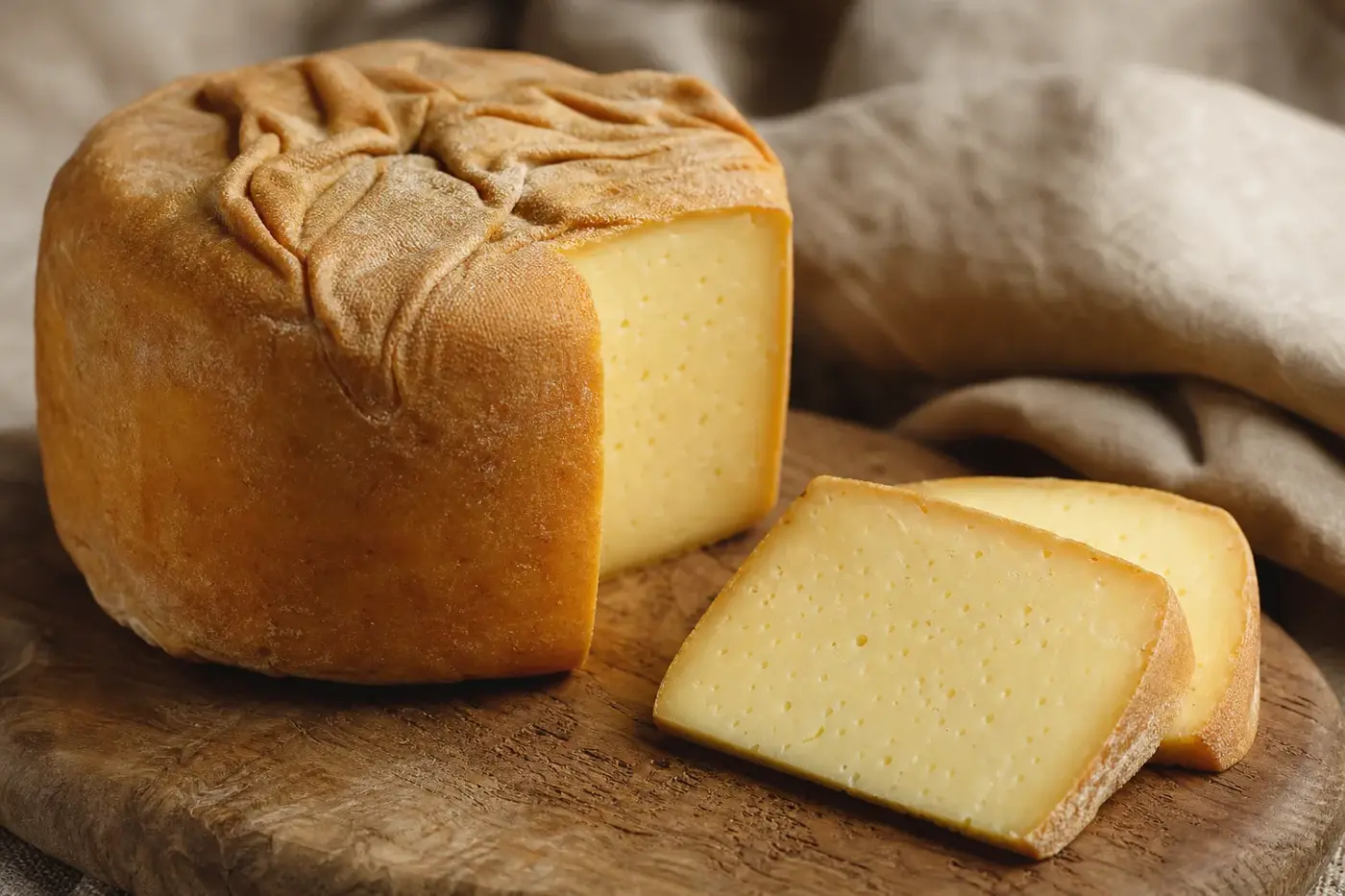
Lift the thin rind and there it is: a pale centre soft enough to spoon onto bread.
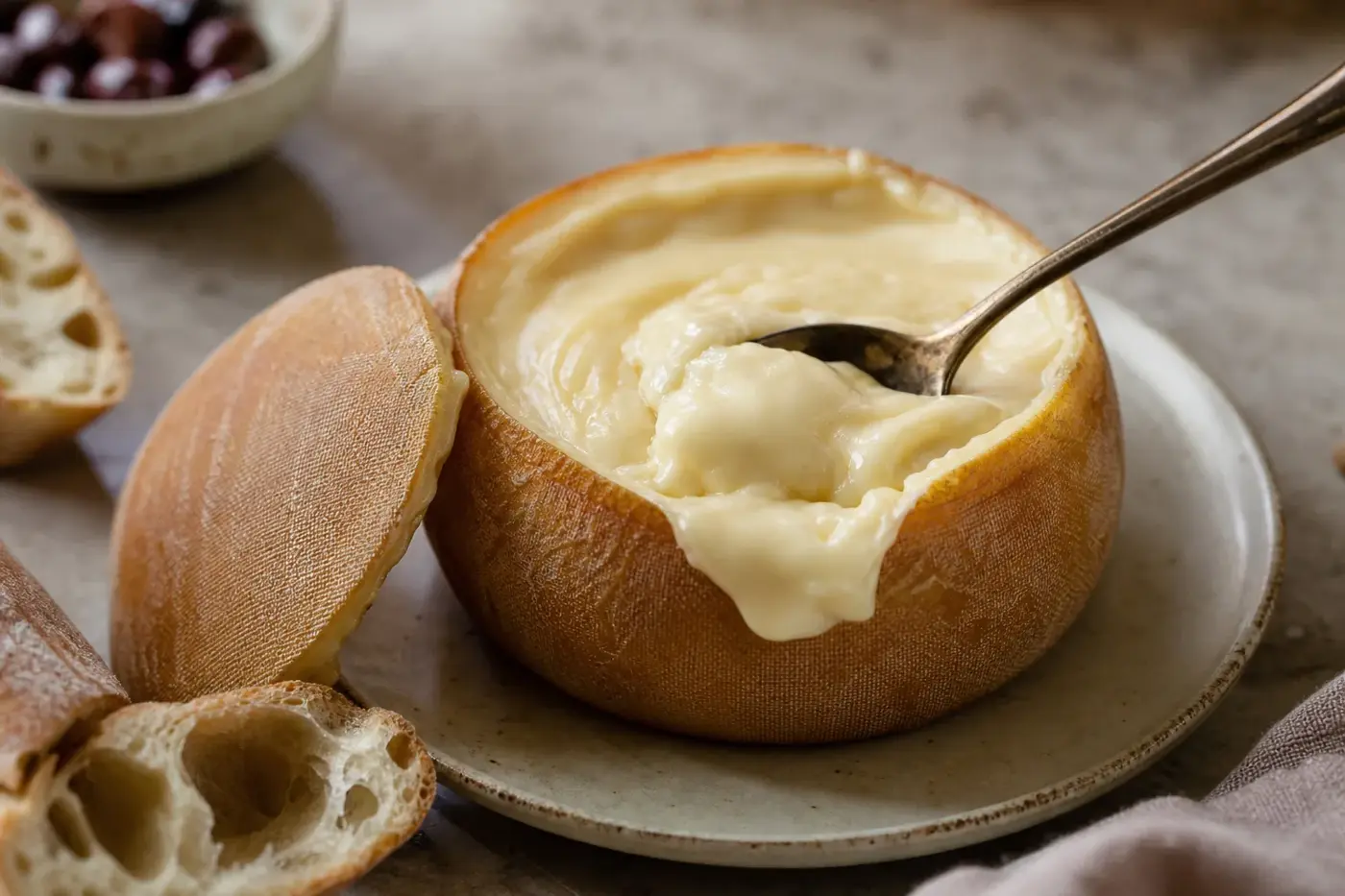
Lift the thin rind and there it is: a pale centre soft enough to spoon onto bread. Before this became Torta del Casar's calling card, shepherds called cheeses that slumped before their rinds had formed atortaos, likening them to flour cakes, according to its regulatory council. Raw sheep's milk and wild thistle flowers give you that yielding paste, with a gentle bitterness. A cheese that refuses to stand up straight can still make quite an entrance. [1]
| At a glance | What to know |
|---|---|
| Name | Torta del Casar. [2] |
| Kind | Spanish sheep's milk cheese. [1] |
| Registered name and authority | Torta del Casar, European Commission, eAmbrosia record EUGI00000013522. [3] |
| EU status | Registered PDO; November 2026 status. [3] |
| Great Britain status | PDO, registered on 31 December 2020; November 2026 status. [4] |
| Home territory | Los Llanos de Cáceres, Sierra de Fuentes and Montánchez, Extremadura, Spain. [2] |
| Milk and coagulant | Raw sheep's milk from merino and entrefino stock; Cynara cardunculus thistle coagulant. [8] |
| Minimum maturation | 60 days under the Spanish and EU specification. [8] |
| Sizes | Small, 200 to 500 g; medium, 501 to 800 g; large, 801 to 1,100 g, with a 5% tolerance. [8] |
| Rind | Thin, semi-hard, ochre to golden; surface treatments permitted. [1,2] |
| Pregnancy guidance | UK NHS guidance, November 2026; see the safety section. [5] |
Come out into the grazing country
Casar de Cáceres, just north of the city of Cáceres, lends this cheese its name. Its protected territory stretches beyond the town, across Los Llanos de Cáceres, Sierra de Fuentes and Montánchez in central and southern Cáceres province, Extremadura. Both the milk and the cheese must come from this defined area. [2,6]
Picture the landscape described by the council: thin soils, granite outcrops and open grazing. Here, sheep make use of land with limited potential for crops. The council traces the cheese through pastoralism and transhumance, the seasonal movement of flocks between grazing grounds, and cites a 1791 regional survey recording cheese production and sheep kept chiefly for wool. [6,7]
Those pastoral roots still shape the cheese you take home. Flocks must be managed extensively or semi-extensively, using local natural resources, although supplementary feed is allowed. The sheep must come from merino and entrefino stock, so their part in the story is written into the specification. [8]
Meet the thistle behind the softness
The flowers of Cynara cardunculus do the setting here. This cardoon or thistle is known locally as hierba cuajo. The council describes soaking the flowers in water, then adding that liquid to the milk to form a gel, or curd, from which liquid whey can drain. [9]
The thistle leaves its mark on more than the making. The council credits it with the slight bitterness and links this vegetable coagulant to the extraordinary softness behind atortaos. You taste its contribution and feel it in the same mouthful. [1]
If that has you wondering what sets a cheese, rennet explained takes you through the distinction between vegetable and other coagulants.
This page summarises published guidance from the official sources it cites. It is not medical advice. Guidance differs between countries and changes over time, so check the current source for where you live, and ask your doctor, midwife, pharmacist or dietitian about your own circumstances.
Follow the milk into the mould
The milk stays raw throughout cheesemaking. Under the Spanish and EU specification, coagulation takes 50 to 90 minutes at 26 to 32 °C, before the curd is cut into grains about the size of rice. The council describes these grains being moved into moulds by hand, then pressed and salted directly or in brine. [2,8,9]
Next comes at least 60 days of maturation, at 4 to 12 °C and 75 to 95% relative humidity. These are cheesemaking conditions, not instructions for your opened cheese at home. Colourless antifungal surface treatments are permitted, so read the label or ask your cheesemonger which rind treatments have been used. [2]
Discover what the golden rind holds
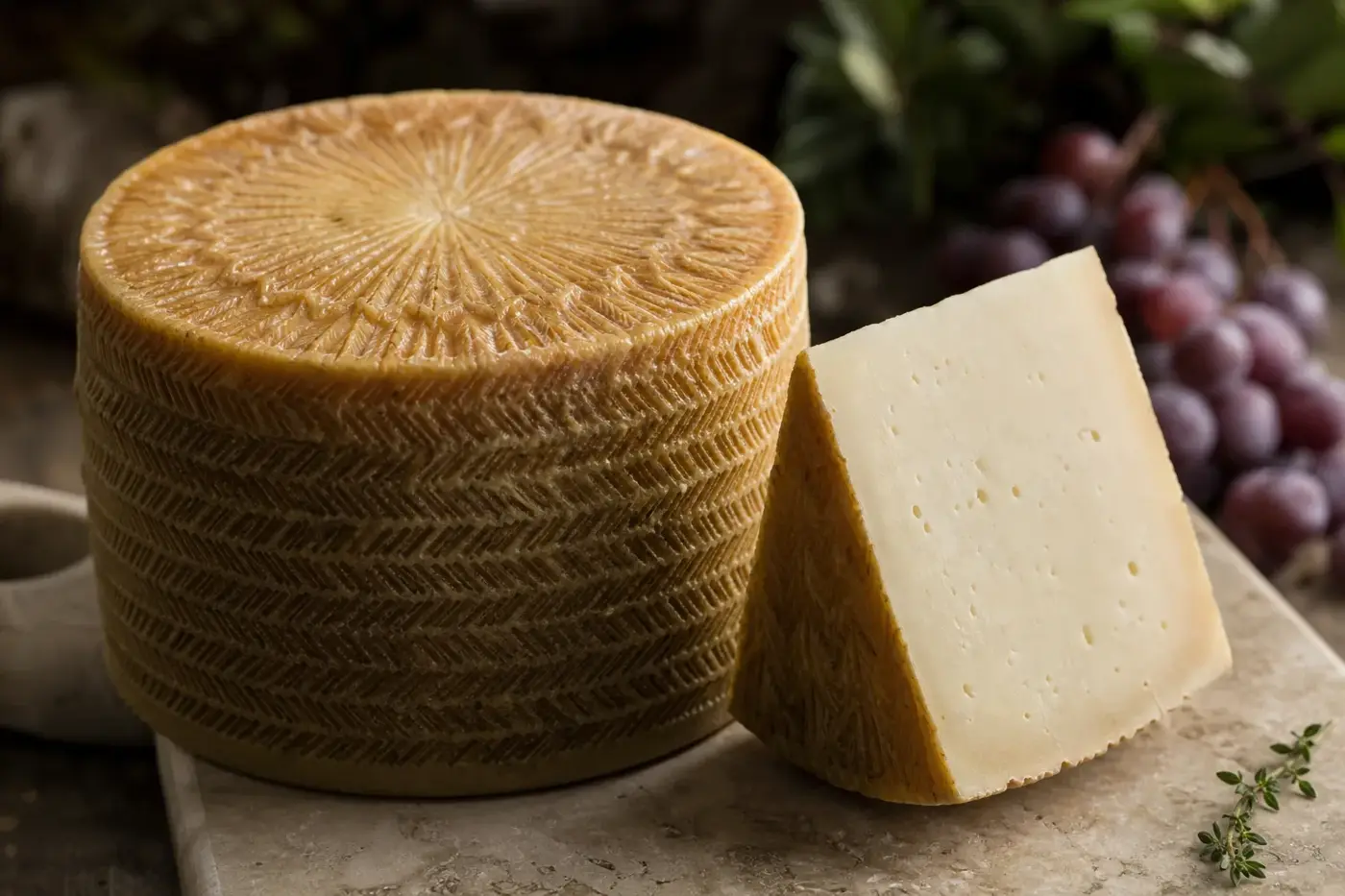
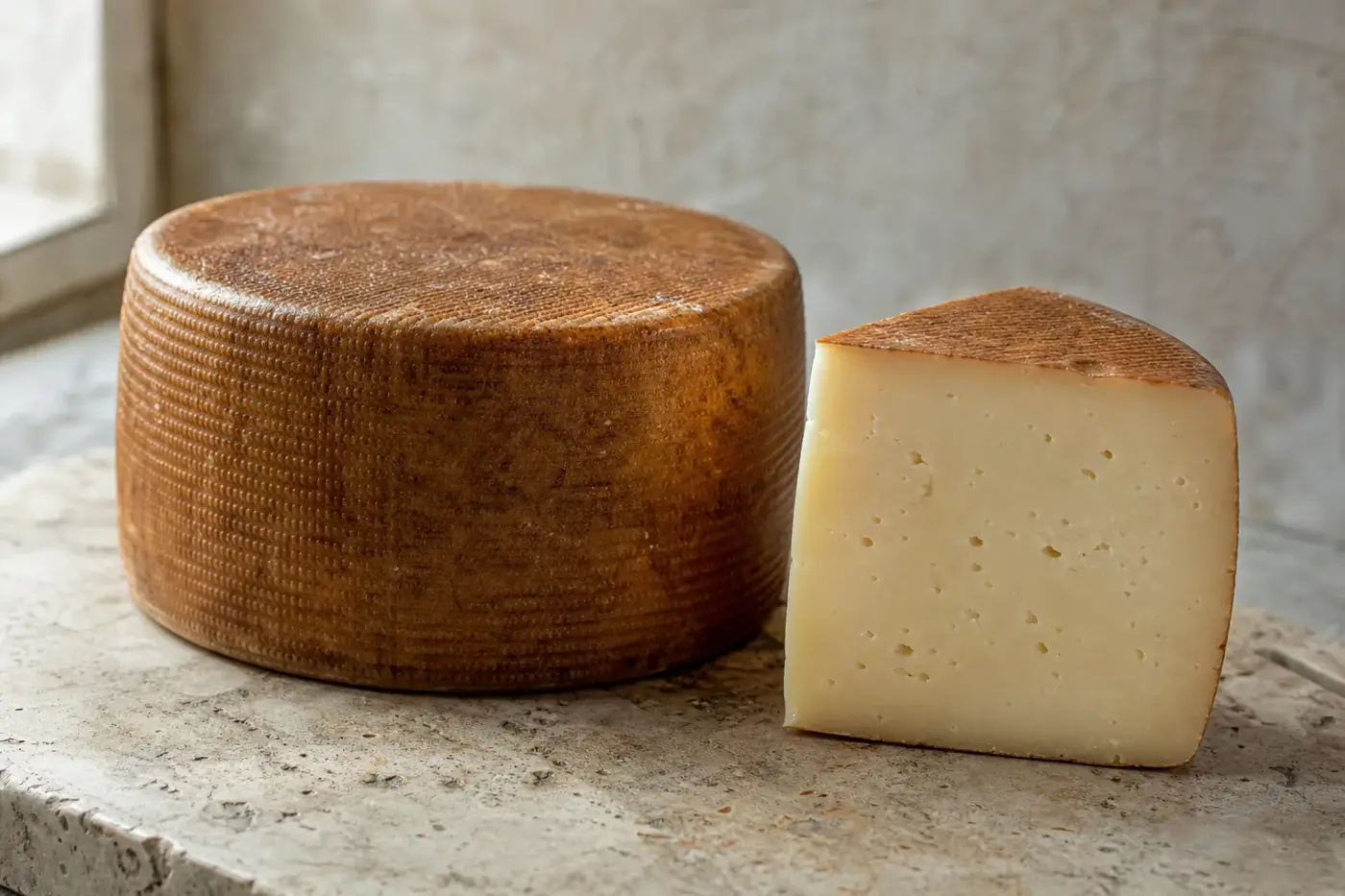
A whole Torta del Casar sits low and round, a cylinder with softly rounded shoulders. Its diameter must be at least 7 cm, with a height no greater than half its diameter. The semi-hard, ochre rind sits distinctly apart from the paste; the council describes it as light and thin. [1,8]
Inside, the specification allows a white to yellowish paste, soft to very soft. Creaminess runs from moderate to high, with little or no graininess. You can expect a lactic or vegetal aroma at low to medium intensity, low saltiness, slight or absent acidity, and low to medium bitterness. [2]
The council's tasting description brings that picture into fuller focus: an intense, developed flavour, with milky and plant-like aromas. Think savouriness and a bitter edge, rather than sharp acidity. Ripeness changes the balance, too: the council notes that the paste can darken and lose some softness as the cheese develops. [1,10]
Lift the lid and have your bread ready
The council suggests serving Torta del Casar at about 21 °C (70 °F), allowing at least half an hour out of refrigeration, depending on portion size and room temperature. Keep safety in mind: UK Food Standards Agency guidance for England, Wales and Northern Ireland says chilled food should be out for the shortest possible time. Four hours is the maximum during preparation. [10,11]
- Set the cold cheese on a plate, keeping any supporting band in place.
- For the traditional presentation, cut around the top with a small knife and lift the rind off like a lid.
- Let the paste soften. Transfer it onto bread or individual plates with a clean spoon or blunt knife.
- Replace the lid and promptly refrigerate what remains. Count warming and table time together within the four-hour limit. [10,11,12]
If you are feeding fewer people, follow the council's suggestion: cut portions while the cheese is cold, then warm only what you intend to eat. You still get spreadable paste without repeatedly moving the whole wheel between fridge and table. [10]
Give your spoonful some good company
Start with plain, crusty bread, sturdy enough to carry the paste. Try an unadorned mouthful first. That soft texture and thistle bitterness deserve a moment of your attention before anything sweet or strongly flavoured joins them.
For wine, a dry white from Extremadura is a suggested starting point, or a lightly oaked red if you prefer. Ask for an Extremaduran wine with freshness rather than heavy tannin. You want a contrasting sip beside the rich paste, leaving its bitterness clear.
For an alcohol-free glass, choose sparkling water, or mild unsweetened tea if you fancy another flavour. Alcoholic pairings are for adults of legal drinking age, in small servings. People who are pregnant, driving, taking medicines that interact with alcohol or recovering from alcohol dependence should not drink; see the NHS pregnancy guidance. [5]
If you would like more ideas for your glass, turn to cheese and wine pairing.
Ask a little more at the cheese counter
Look for the full name, Torta del Casar, and the numbered certification label, which the council describes as red and gold. Ask who made it, when it was packed and whether it is ready for spooning. Behind that certification sit checks on farms, milk collection centres and dairies, including laboratory sampling. [1,13]
Choose a size you can comfortably use, or ask for a properly packaged portion. Read the storage instructions and date marking before buying. The Spanish specification requires certification labels to carry a number, batch identification and best-before date, helping identify your particular cheese; how to read a cheese label explains the wider vocabulary. [2]
Look after the next spoonful
Follow the label and keep your cheese refrigerated. For homes in England, Wales and Northern Ireland, the FSA recommends a fridge temperature of 0 to 5 °C. Cover the cut surface, use clean utensils and return the cheese to the fridge promptly after serving. [10,11]
The NHS advises using ready to eat food within two days of opening unless the packaging says otherwise. Follow the pack's storage and use instructions. Plan portions around meals you will eat within that period, rather than keeping an opened wheel to mature further. [12]
Check the maker's rind instructions, including any treatment declared on the label. Remove wrapping and supporting material before eating. For broader advice, see how to store cheese at home. [11]
Raw milk: find the guidance for you
Torta del Casar must be made with raw milk. [8] If you are pregnant, consult current UK NHS guidance on cheese and unpasteurised milk. Ask your midwife about your own circumstances. [5]
The NHS identifies pregnant people, newborn babies and people with weakened immunity as groups at higher risk of serious illness from listeriosis. Risk also increases with age among older people. Its advice includes keeping chilled foods cold and following storage dates and instructions; outside the UK, consult your own national agency's guidance. [12]
Get to know its Iberian relatives
Queso de La Serena and Queijo Serra da Estrela offer two rewarding comparisons. Each has its own place, sheep and production traditions. The soft sheep's milk cheese basket is getting rather crowded, so start with the breed requirements: they give you a clearer sense of what distinguishes the three. [8,14,15]
| Cheese | What its specification tells you |
|---|---|
| Torta del Casar | Merino and entrefino stock; minimum maturation 60 days. [8] |
| Queso de La Serena | The regional authority's 2025 consolidated specification lists Merina, Lacaune and their crosses; minimum maturation 20 days. [14] |
| Queijo Serra da Estrela | Portugal's published specification describes raw milk from Bordaleira Serra da Estrela or Churra Mondegueira sheep, coagulated with Cynara cardunculus. [15] |
Read Queso de La Serena and Queijo Serra da Estrela next to explore their individual traditions. If milk treatment has caught your interest, raw milk, thermised and pasteurised cheese takes you through the terms.
Questions people ask
How is Torta del Casar made?
It is made with raw sheep's milk from merino and entrefino stock. Flowers of the Cynara cardunculus thistle are soaked in water, and the resulting liquid is added to set the milk.
What does Torta del Casar taste like?
It has a soft, creamy paste with milky and plant like aromas. The thistle gives it a bitter edge, while acidity is slight or absent.
How do you serve Torta del Casar?
For the traditional presentation, cut around the top and lift off the rind as a lid, then spoon the softened paste onto bread or plates. The council recommends serving it at about 21 °C, while the UK Food Standards Agency says chilled food should be out for the shortest possible time, with four hours the maximum during preparation.
How should Torta del Casar be stored after opening?
The UK Food Standards Agency recommends keeping home fridges at 0 to 5 °C in England, Wales and Northern Ireland. The NHS advises using ready to eat food within two days of opening unless the packaging says otherwise.
Can you eat Torta del Casar during pregnancy?
Torta del Casar must be made with raw milk. The NHS advises consulting its current guidance on cheese and unpasteurised milk during pregnancy and asking your midwife about your circumstances.
Sources
- Consejo Regulador de la DOP Torta del Casar, Qué es Torta del Casar, undated explanatory page, accessed November 2026. Council account of the cheese's character, name, traditional origin story and certification label.
- Ministerio de Agricultura, Pesca y Alimentación, Pliego de Condiciones de la D.O.P. “Torta del Casar”, version listed as in force from 19 January 2023. Sections B, C and E.
- Ministerio de Agricultura, Pesca y Alimentación, DOP/IGP: Torta del Casar, current listing accessed November 2026; linked European Commission eAmbrosia record EUGI00000013522. The register endpoint opened but its dynamic record text was not returned.
- Department for Environment, Food & Rural Affairs, [Torta del Casar](../torta-del-casar/), published 4 January 2021, register entry accessed November 2026. Records registered PDO status and UK scheme registration on 31 December 2020.
- NHS, Foods to avoid in pregnancy, current online guidance accessed November 2026. Section “Cheese, milk and other dairy”.
- Consejo Regulador de la DOP Torta del Casar, Geografía, page dated February 2026. Sections on territory, landform and soils.
- Consejo Regulador de la DOP Torta del Casar, Historia, page dated February 2026. Council account of pastoralism, transhumance and the 1791 regional survey.
- European Commission, Publication of an approved standard amendment to the product specification: “Torta del Casar”, 2023/C 18/09, Official Journal C 18, 19 January 2023. Single document, sections 3.2 and 3.3. )
- Consejo Regulador de la DOP Torta del Casar, Elaboración, page dated July 2026. Sections on milk, coagulation, vegetable coagulant, cutting, moulding, pressing and salting.
- Consejo Regulador de la DOP Torta del Casar, Disfrútala en su punto, page dated July 2026. Serving temperature, opening the top and portioning while cold.
- Food Standards Agency, How to chill, freeze and defrost food safely, published 18 December 2017, current online text accessed November 2026. Applies to England, Wales and Northern Ireland.
- NHS, Listeriosis, reviewed 10 November 2023, accessed November 2026. Sections “Risks of listeriosis” and “How to avoid listeriosis”.
- Consejo Regulador de la DOP Torta del Casar, La Calidad, current online account accessed November 2026. Inspection, sampling and certification arrangements.
- Junta de Extremadura, Pliego de condiciones de la DOP “Queso de la Serena”, consolidated text, 2025. Section B, linked as the specification from the authority's designation page.
- Direção-Geral de Agricultura e Desenvolvimento Rural, Queijo Serra da Estrela: Caderno de Especificações, document marked amended in 2001, accessed November 2026. Section B and production sections.
This piece was researched from official specifications, government designation records, attributed regulatory council material and UK public health guidance, with editorial serving suggestions identified as such.
Last checked: November 2026
Last checked November 2026.
The editors suggest you read next