Queso de Murcia
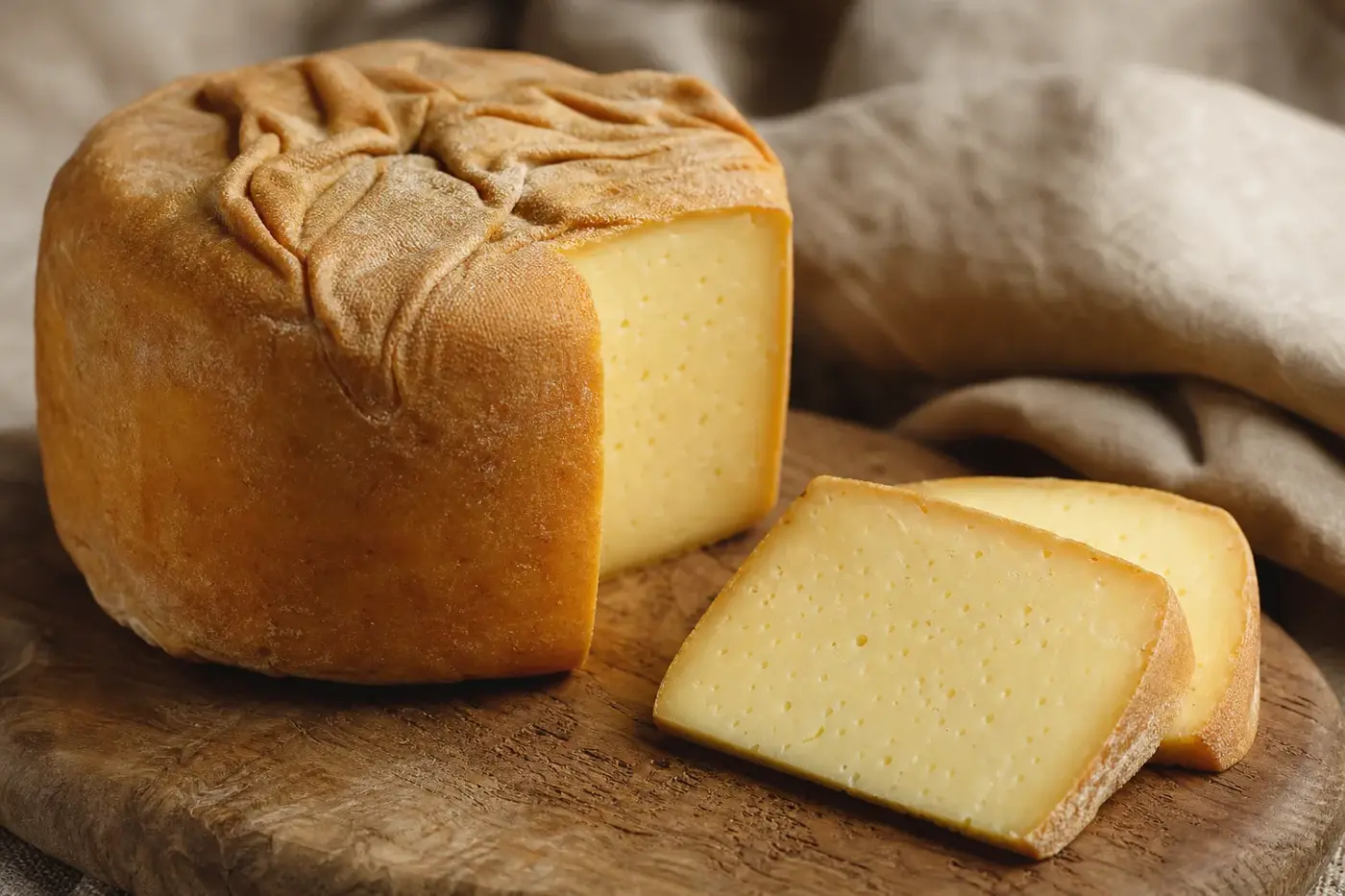
Your knife slips into fresco to reveal brilliant white cheese, tender and moist.
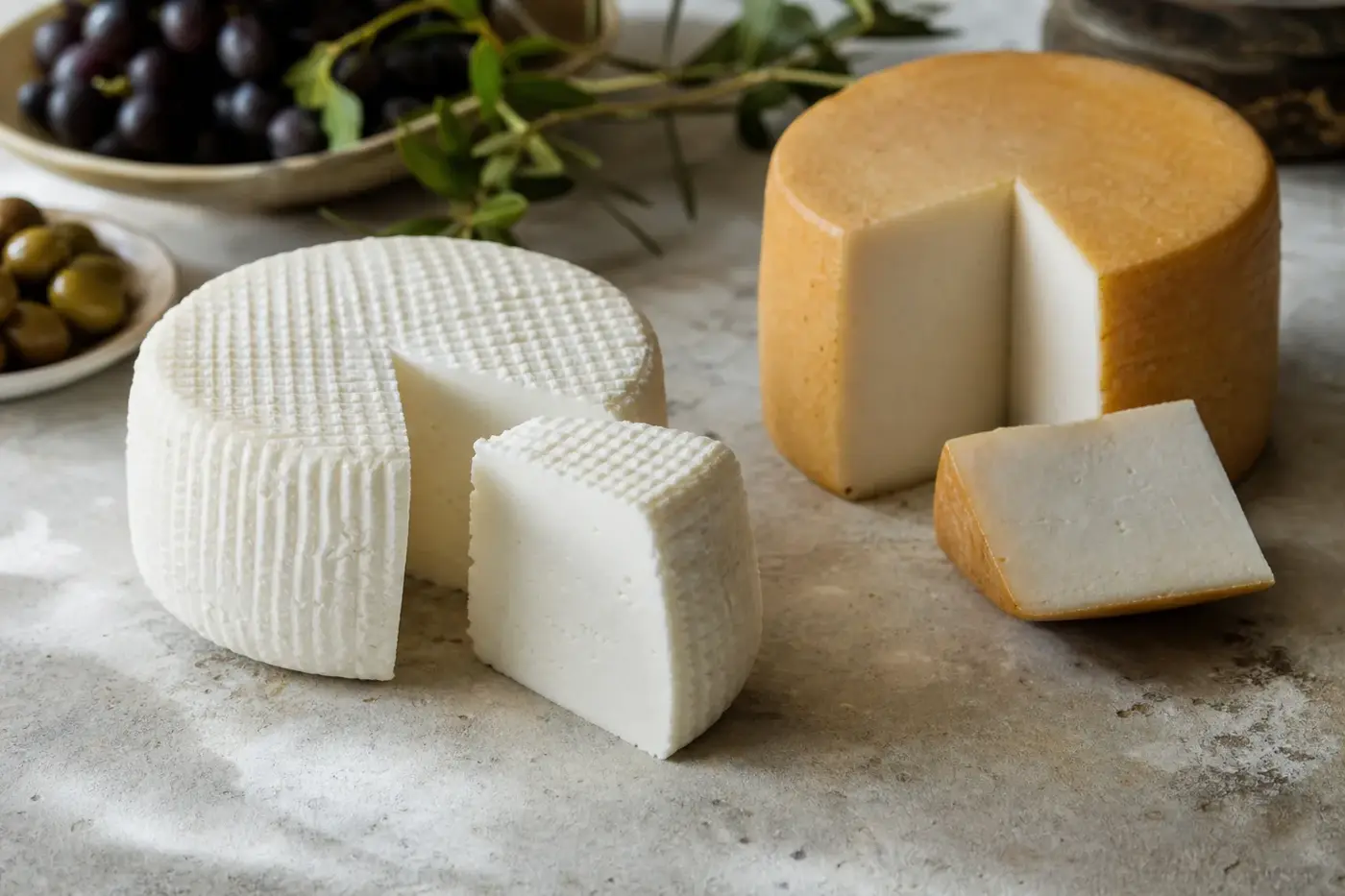
Your knife slips into fresco to reveal brilliant white cheese, tender and moist. Beside it, mature curado offers a yellowish rind and a firm interior: quite a different proposition for the same cheese board. Both begin with milk from the Murciano Granadina goat, and both belong to Queso de Murcia, a Spanish protected designation of origin, or PDO. Its rules give each a distinct place at your table. [1,2]
Start with Murcia’s goats
Not every goat in Murcia supplies milk for this cheese. The rules specify Murcian goats within the Murciano Granadina breed, kept in registered local herds in the Region of Murcia, in south-eastern Spain. Their husbandry draws on local pasture and agricultural by-products. Behind your slice is a region where livestock farming and cultivated land have long supported one another. [1]
The cheesemaking takes place in registered dairies within the defined area. Curado can exceptionally mature elsewhere, but only with temporary authorisation from the control body. That body must also approve the premises and traceability arrangements. [1]
Fresco has a place in local history as well as on your plate. The regional application dossier records a tradition of eating fresh goat’s cheese locally, including fried cheese with tomato. There is good reason not to let the mature cheese take all the attention; our guide to protected cheese names explains how PDO connects the name to its defined origin and production rules. [1,4]
In the dairy, the paths divide
The difference between tender fresco and firm curado begins in the cheesemaker’s hands. Animal rennet or another coagulating enzyme sets the milk into curd, the gel that becomes cheese, and whey, the liquid drained away. The cheesemaker cuts the curd, gently reheats it and works it before filling cylindrical moulds. [1]
For fresco, a lighter touch makes the difference. Less working of the curd, with little or no pressing, keeps it tender. Curado receives more intensive working and longer pressing, and both cheeses then take a dip in brine, a solution of salt in water. [1]
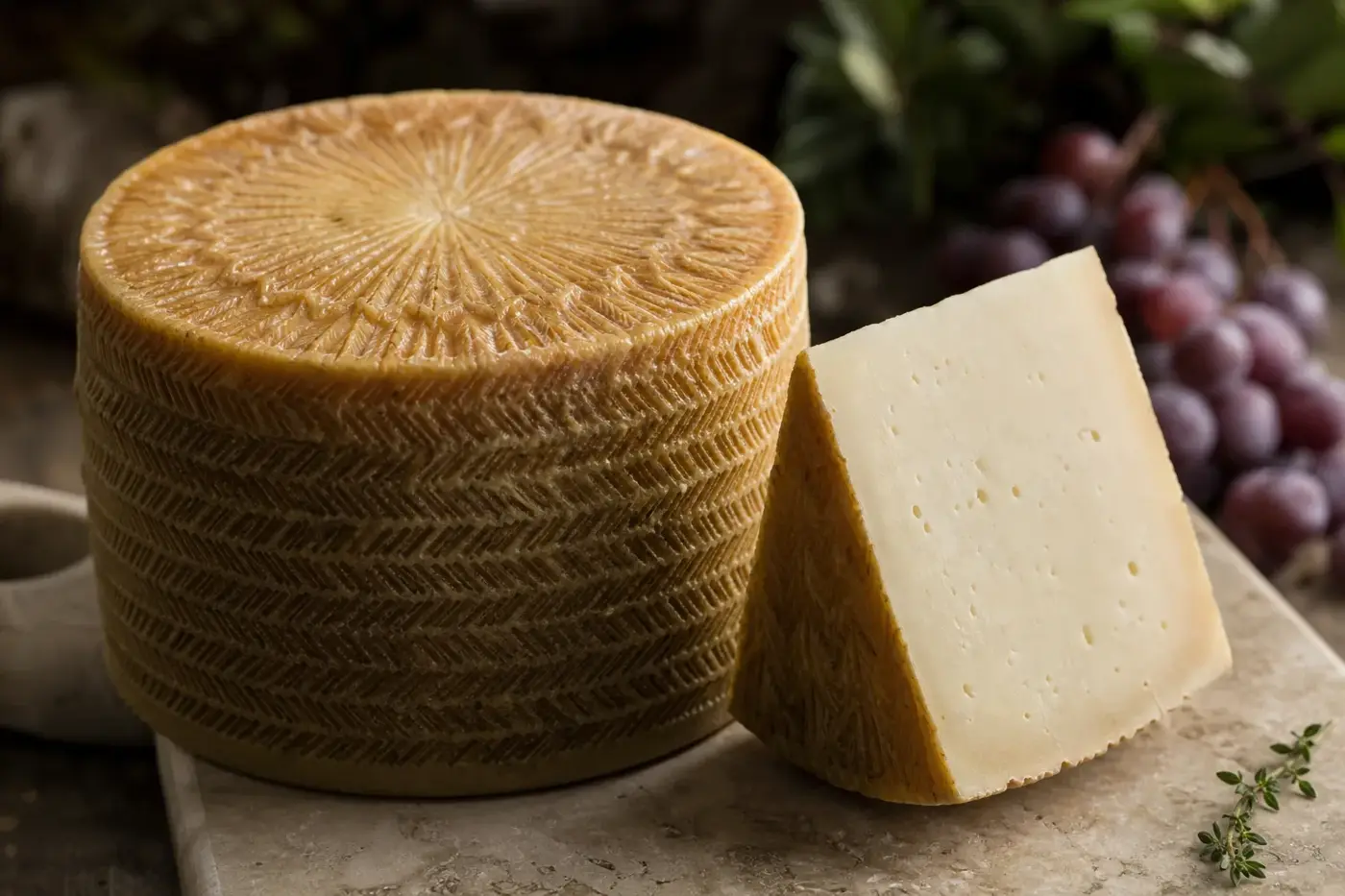
You can spot another difference along the sides. Fresco carries a pleita pattern, the familiar woven impression, while curado comes from smooth moulds. For a closer look at the journey from setting milk to shaping cheese, explore how cheese is made. [1]
Find your favourite: fresco or curado
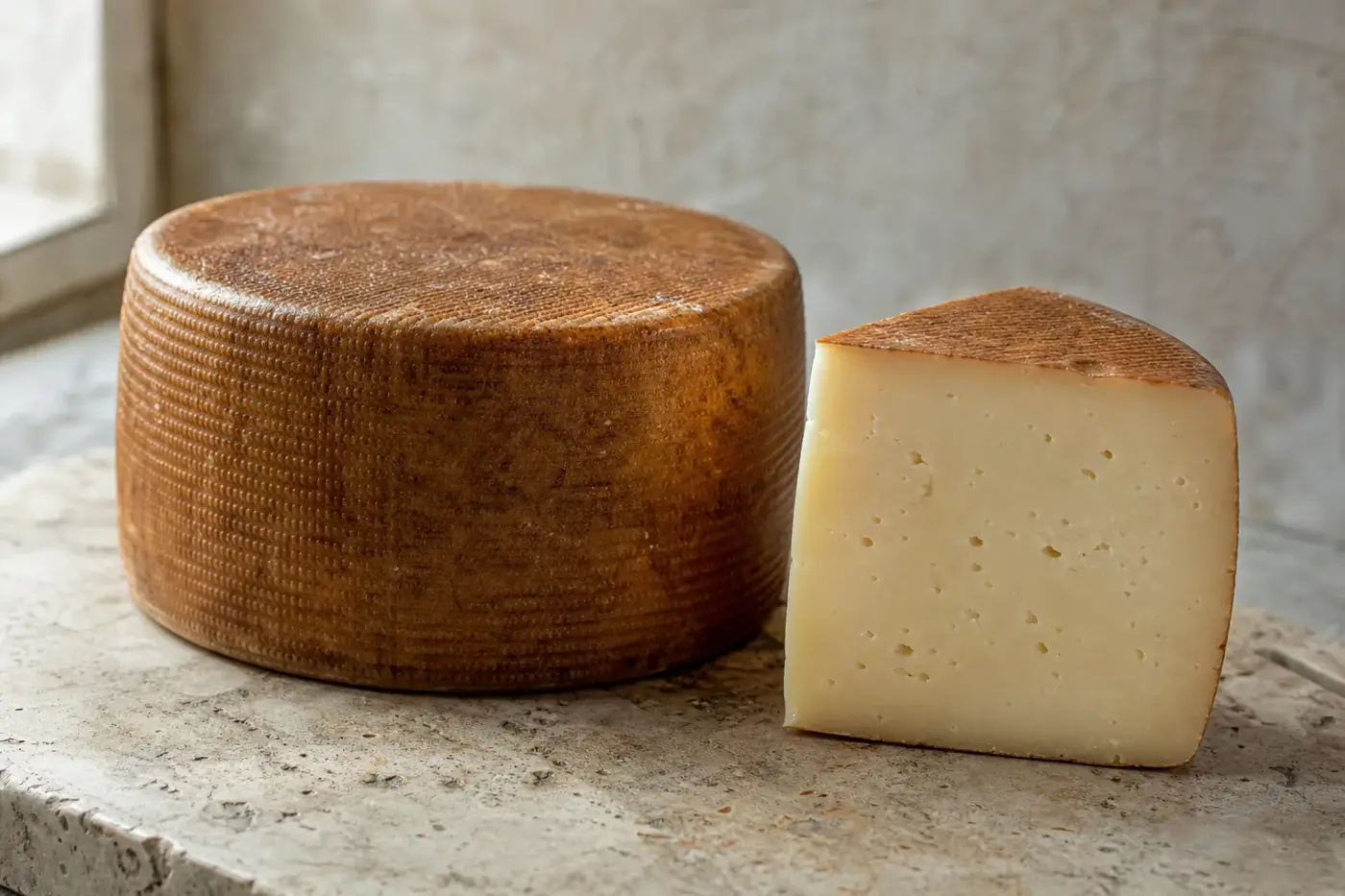
Fresco offers a bright, moist surface and the gentle aroma of fresh milk. Curado brings a dry rind, a firmer interior and flavour that stays with you. These are more than tasting impressions: the designation’s published sensory requirements describe two distinct eating experiences. Choosing both is, of course, a perfectly respectable way to postpone choosing. [1]
| What you will notice | Fresco | Curado |
|---|---|---|
| Shape | Cylindrical, with woven impressions around the sides | Cylindrical, with smooth sides |
| Rind | None developed | Hard and dry; wax-yellow to ochre |
| Colour inside | Brilliant white | Matt white, becoming yellower with age |
| Texture | Tender, moist and elastic | Firm and compact, with little elasticity |
| Flavour | Mild fresh dairy; low salt and sweetness | Persistent; low acidity, moderate salt |
| Ageing described in the specification | Unmatured | 120 days, or 60 days for cheeses weighing 500 g or less; legal effect and treatment of cut portions require confirmation |
Source: Queso de Murcia product specification, sections B and E; November 2026. [1]
Look at the cut face and you will find more clues. Fresco is almost without eyes, those small openings inside cheese, while curado can have eyes scattered irregularly through it. The older regional dossier also highlights the fresh cheese’s intense whiteness and the mature cheese’s compact interior, which becomes progressively yellower. [1,4]
What time brings to curado
Fresco skips ripening altogether. Once salted and drained, it goes into chilled storage, while curado moves to controlled rooms for maturing, turning and cleaning. The specification gives a shorter minimum for cheeses weighing 500 g or less, although its application to portions cut from larger cheeses remains unresolved. [1]
With more time, curado’s texture can become increasingly fragile and sandy. The specification describes aromas moving towards hay and dried nuts, with toasted or caramel notes and a slight pungency in the most mature examples. If those flavours appeal to you, ask the cheesemonger about maturity. They belong to curado’s documented range, rather than every piece you will encounter. [1]
Spotted a wine-coloured rind? Read on
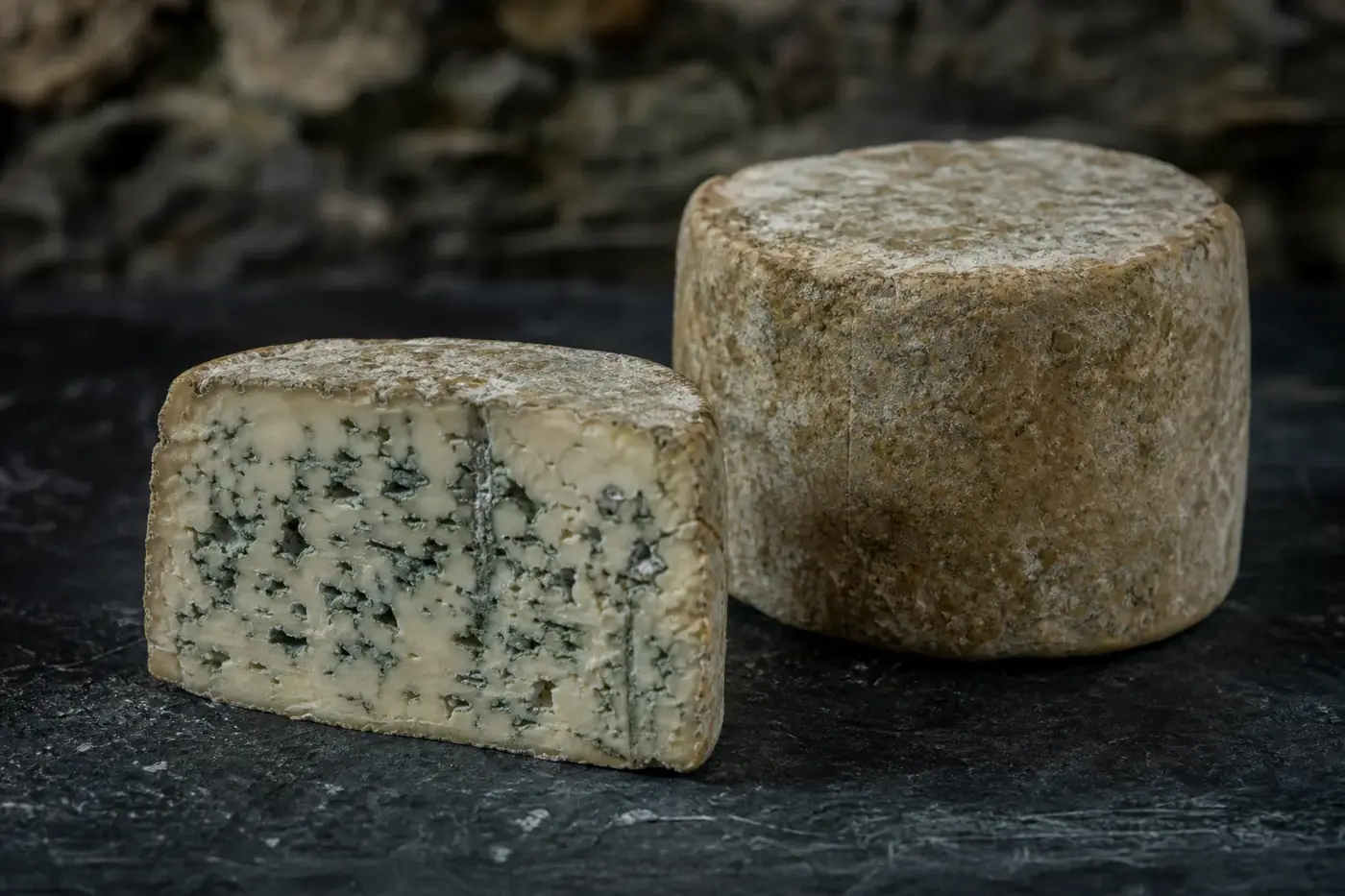
A burgundy-violet rind points you towards a different cheese. Queso de Murcia al vino is a separate EU PDO, with its own specification and file number, PDO-ES-0204. Its defining red wine bath colours the rind, and its method also includes washing the curd. Inside, it is firm but elastic, unlike curado with its little elasticity. [4,5,9]
The wine-bathed cheese matures for at least 45 days when it weighs over 500 g, or 30 days when it weighs 500 g or less. Give the full name a moment of your attention at the counter. Fresco and curado belong to Queso de Murcia; the cheese bathed in wine belongs to Queso de Murcia al vino. [2,5]
A little know-how for the cheese counter
Start with the full designation on the label, then choose between fresco and curado. The specification requires the protected name and a numbered certification counter-label; mature cheese may also carry an identifying casein plate. Portions can be packed outside Murcia under traceability arrangements. The packing address alone therefore tells you little about where the cheese was made. [1]
Four questions will serve you well: which form is it, how mature is it, what milk treatment does the label declare, and how should you store it? If you buy a cut piece, keep the original product details. Our guide to reading a cheese label helps you distinguish information about the food from information identifying the business handling it.
To explore the difference, buy a small portion of each and give them the same accompaniments. Tomato with one and a strongly flavoured preserve with the other makes comparison harder. A matching plate gives you a clearer taste of each cheese, rather than a competition between the condiments.
Keep things simple at the table
For US households, serve fresco chilled at 4 °C (40 °F) or below, taking out only what you intend to eat. Serve curado chilled too, or briefly temper only that portion while you prepare the table. FoodSafety.gov advises refrigerating perishable food within two hours, or within one hour when exposed to temperatures above 32 °C (90 °F). [7]
With fresco, begin with bread, ripe tomato and a little olive oil. The tomato echoes the regional dossier’s account of fresh cheese served fried with tomato, while an uncooked plate keeps preparation straightforward. These pairing suggestions draw on the documented sensory profiles. [1,4]
For curado, start with plain bread, then try a piece of pear or a few unsalted almonds. Taste each accompaniment separately, rather than covering the cheese in chutney. If you are trying both forms, begin with fresco and finish with the mature cheese’s more persistent flavour.
Adults of legal drinking age who choose alcohol might try a small serving of dry white wine with fresco and a lighter red with curado. These are starting points, not fixed regional pairings; for alcohol free choices, try sparkling water with either cheese or lightly brewed tea with curado. People who are pregnant, driving, taking medicines that interact with alcohol or recovering from alcohol dependence should not drink. Consult current NHS or equivalent national advice.
Make room in the fridge
Refrigerate fresco and curado, following each label’s temperature and opening instructions. In England, Wales and Northern Ireland, the Food Standards Agency recommends a fridge between 0 and 5 °C; for US households, FoodSafety.gov recommends 4 °C (40 °F) or below. A setting of 4 °C or below also meets the specification’s chilled-storage ceiling for fresco. [1,6,7]
Keep the fresh cheese’s packaging instructions and use-by date, including any shorter limit after opening. With a wedge of mature cheese, keep the seller’s label alongside the remaining piece. Before you sit down to eat, return the unserved cheese to the fridge and leave only your eating portion on the plate. [6,7]
Outdoors, pay particular attention to time. The FSA advises keeping chilled food out for the shortest possible time, and its hot-weather guidance says to discard perishables left unrefrigerated for more than two hours in hotter than usual conditions. The US limit falls to one hour above 32 °C (90 °F). [6,7,8]
Leftover cheese and a leftover cooked dish need different decisions. For cheese, follow the label and account for its time outside refrigeration. For England, Wales and Northern Ireland, the FSA advises cooling and refrigerating cooked leftovers within two hours, then eating them within 48 hours or freezing them. Divide a large cooked quantity into smaller portions to help it cool. [6]
If a date or handling instructions are missing, ask the retailer for advice. Keep the cheese’s name, opening date and producer’s instructions with it. This is especially useful when you have several similar-looking portions in the fridge.
A little more cheese reading
- How to Store Cheese at Home: practical help with wrapping and refrigeration.
- Raw Milk, Thermised and Pasteurised Cheese: get to know the milk-treatment wording on your label.
General information only, not medical advice: follow the official guidance where you live.
Questions people ask
What milk is used to make Queso de Murcia?
It is made from whole milk from Murcian goats of the Murciano Granadina breed, kept in registered local herds. The specification does not state how the milk is treated.
What is the difference between fresco and curado?
Fresco is unmatured, tender and brilliant white, with a mild fresh dairy flavour. Curado is firm, with a dry yellowish rind and a more persistent flavour.
How long is Queso de Murcia aged?
Fresco has no ripening stage. The specification describes 120 days for curado, or 60 days for cheeses weighing 500 g or less, but the legal effect of these periods remains to be confirmed.
Is Queso de Murcia al vino the same cheese?
Queso de Murcia al vino is a separate EU protected designation of origin. It is bathed in red wine, which gives it a burgundy violet rind.
How should Queso de Murcia be stored?
For England, Wales and Northern Ireland, the Food Standards Agency recommends a fridge temperature between 0 and 5 °C. Follow the cheese label’s instructions and consult current Food Standards Agency guidance.
Sources
-
Consejo Regulador de las Denominaciones de Origen Protegidas Queso de Murcia y Queso de Murcia al vino. Pliego de condiciones: Queso de Murcia, current publicly linked specification, document undated. Sections A to E and H cover identity, characteristics, geographical area, production, certification and labelling. Specification PDF.
-
Consejo Regulador. Consejo regulador, undated current webpage, including summaries of the three cheese forms and links to their specifications. The council is the designation’s certification and promotional body. Council information.
-
Ministerio de Agricultura, Pesca y Alimentación, Spain. Listado de denominaciones de origen protegidas e indicaciones geográficas protegidas, regional inventory, 2025 edition. Murcia table records the two separate names, their EU file numbers and registration dates. Official inventory PDF.
-
Región de Murcia. Denominaciones de origen “Queso de Murcia” y “Queso de Murcia al vino”: expediente de solicitud de registro, historical application dossier, undated. Used for its account of regional food traditions and characteristics consistent with the current specification, not superseded production limits. Regional dossier PDF.
-
Consejo Regulador. Pliego de condiciones: Queso de Murcia al vino, current publicly linked specification, document undated. Separate product description and production requirements. Specification PDF.
-
Food Standards Agency. How to chill, freeze and defrost food safely, published 2017, current retrieved version. Applies to England, Northern Ireland and Wales. Official storage guidance.
-
FoodSafety.gov, United States. 4 Steps to Food Safety, reviewed 18 September 2023, current retrieved version. Refrigeration temperatures and limits outside refrigeration. Official US guidance.
-
Food Standards Agency. Food safety in a heatwave: advice for consumers, current retrieved version. Advice on perishables during hotter than usual weather. Official hot-weather guidance.
-
European Union Intellectual Property Office, GIview. Queso de Murcia al vino, record EUGI00000013513, current retrieved register summary. Records PDO-ES-0204 as registered on the basis of the EU register. GIview record.
Researched through the designation’s published specifications, Spanish official records, regional documentary material and attributed national food-storage guidance.
Last checked: November 2026
Last checked November 2026.
The editors suggest you read next