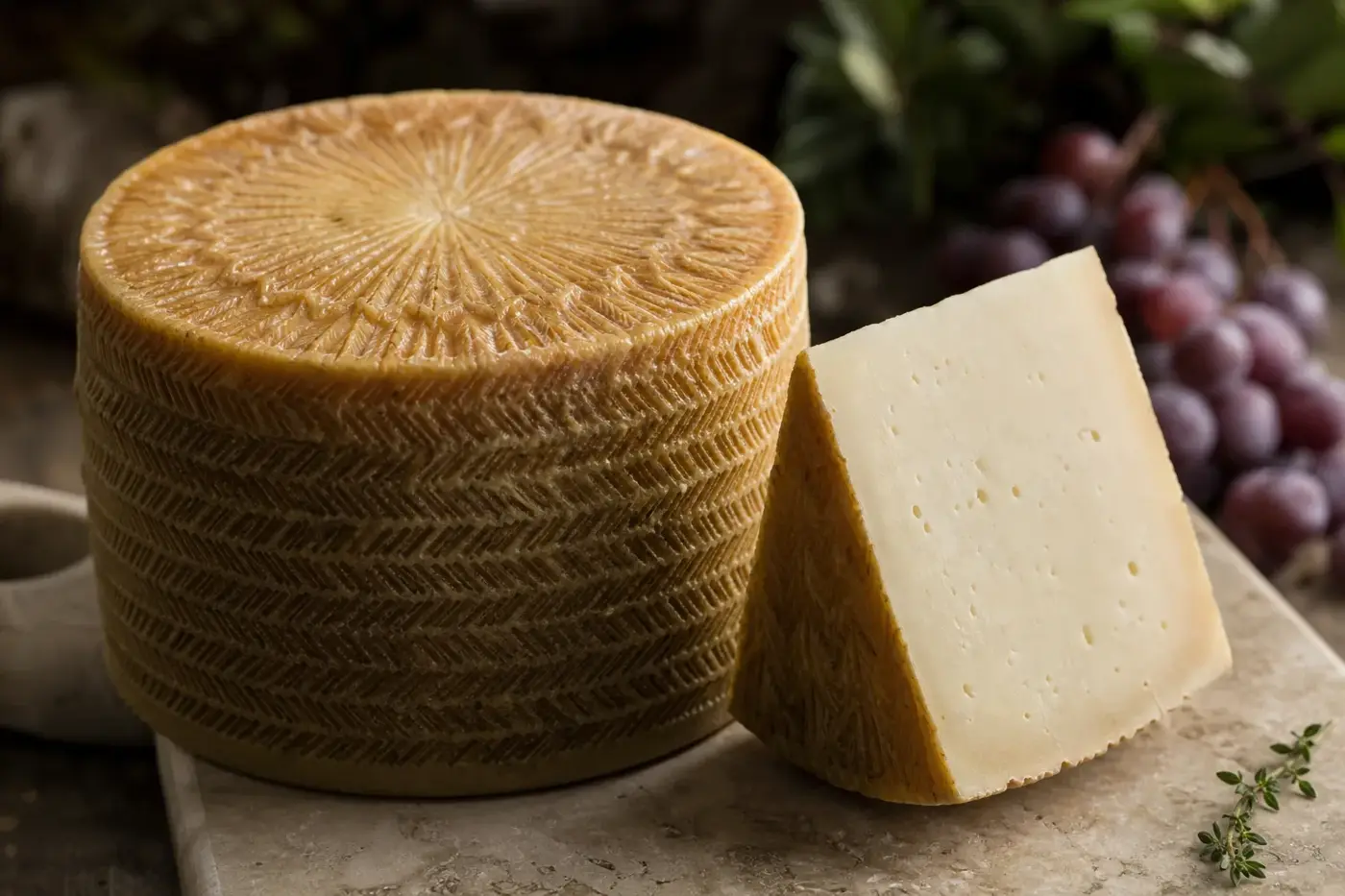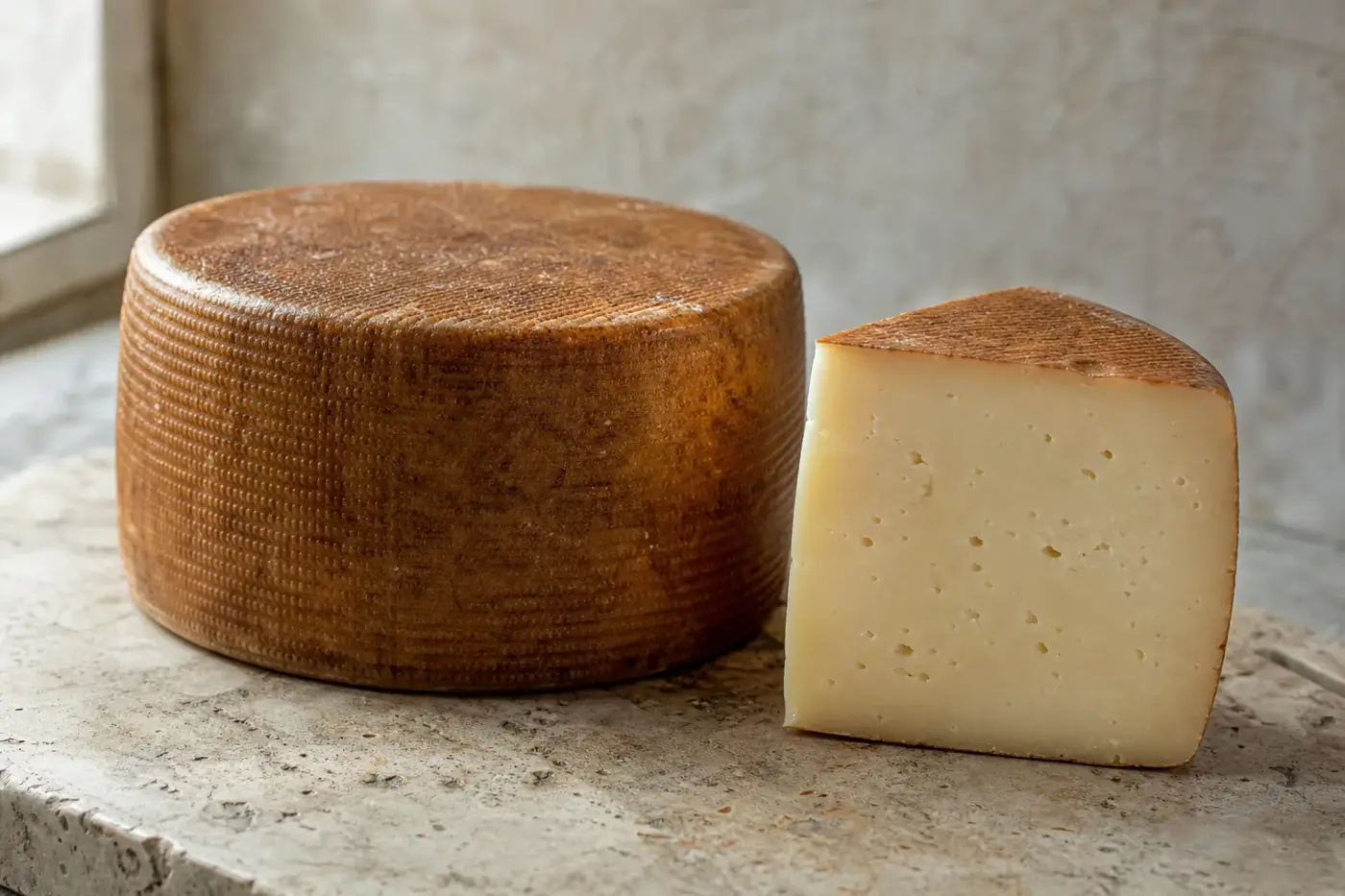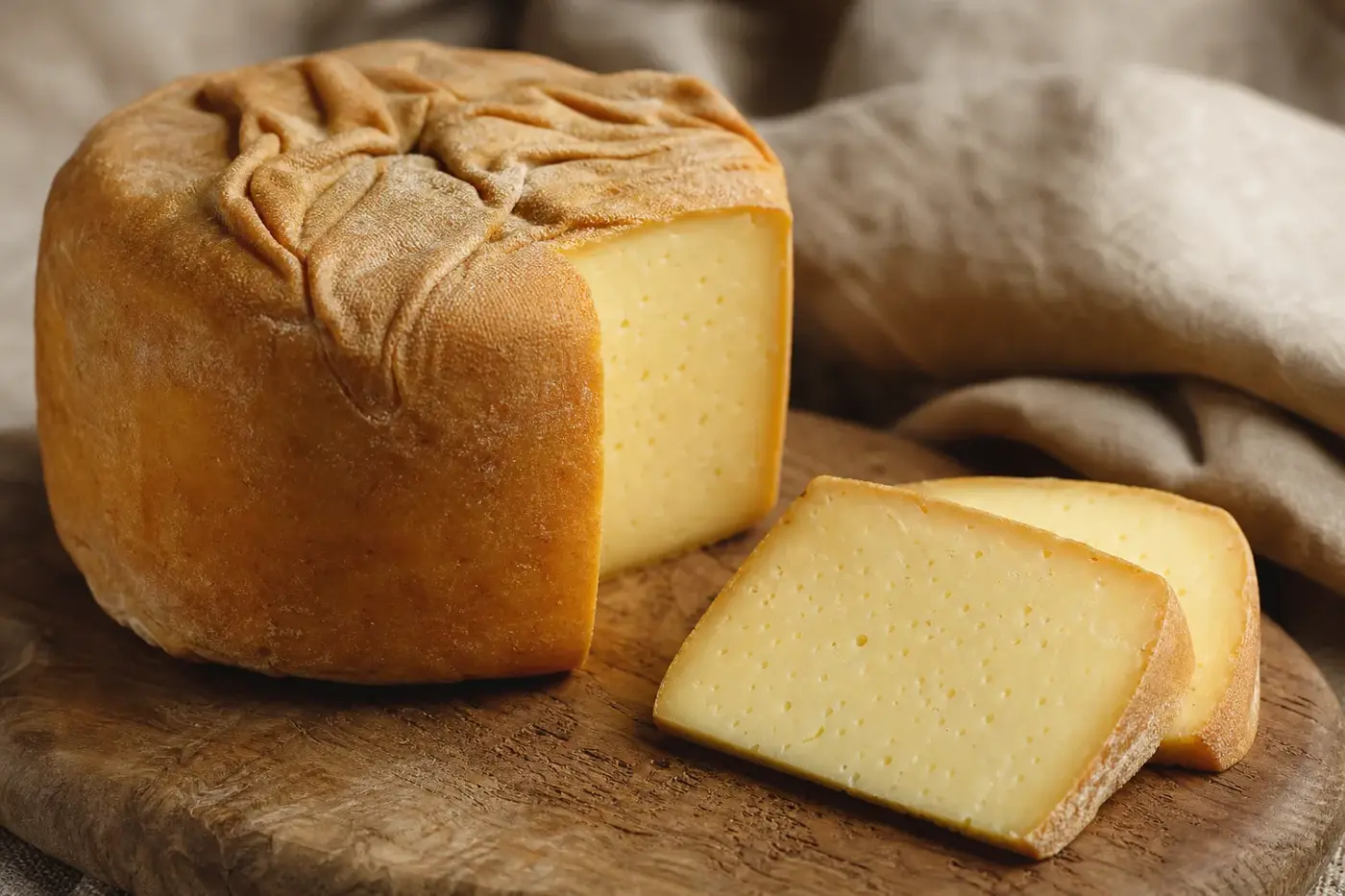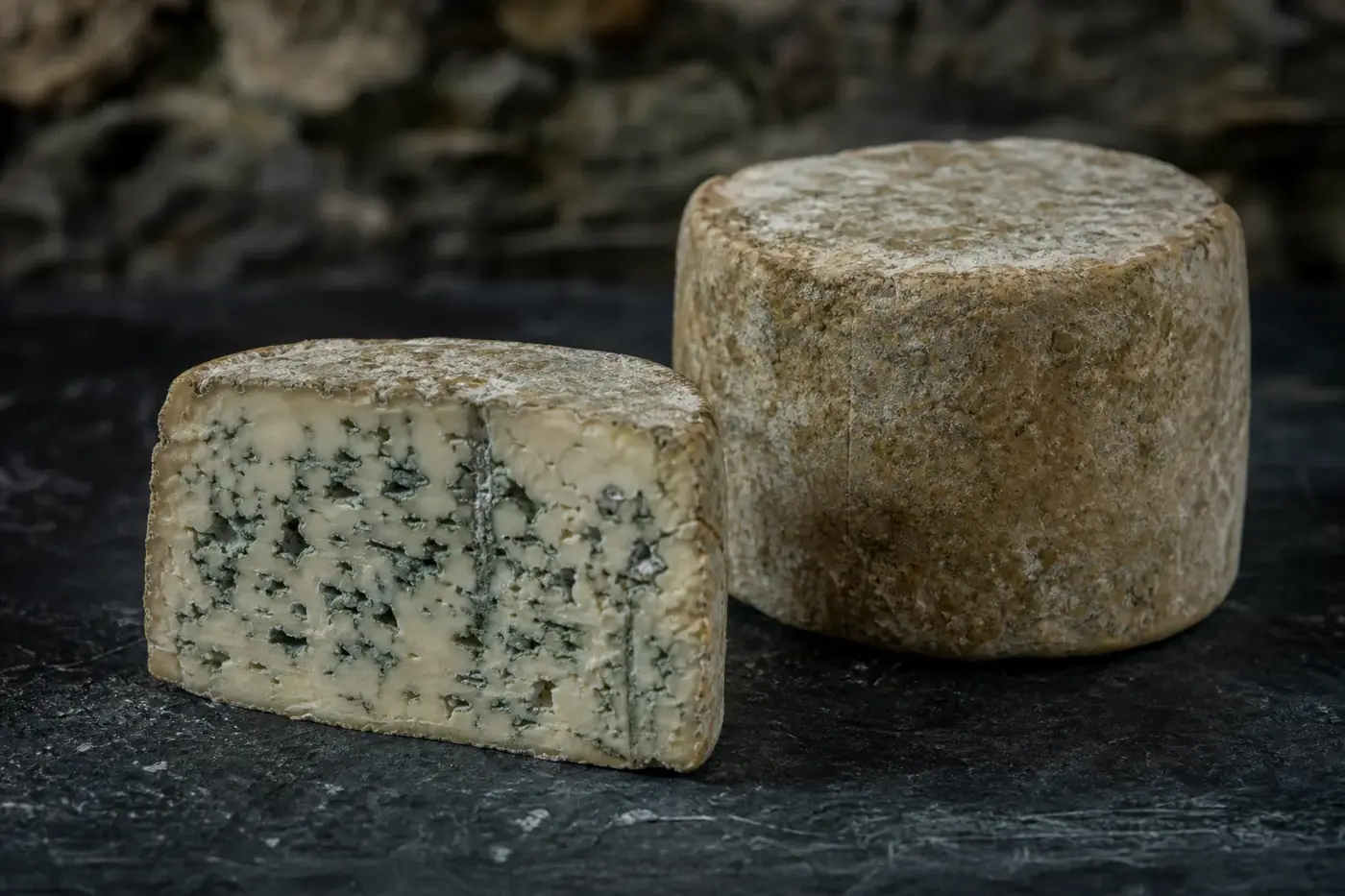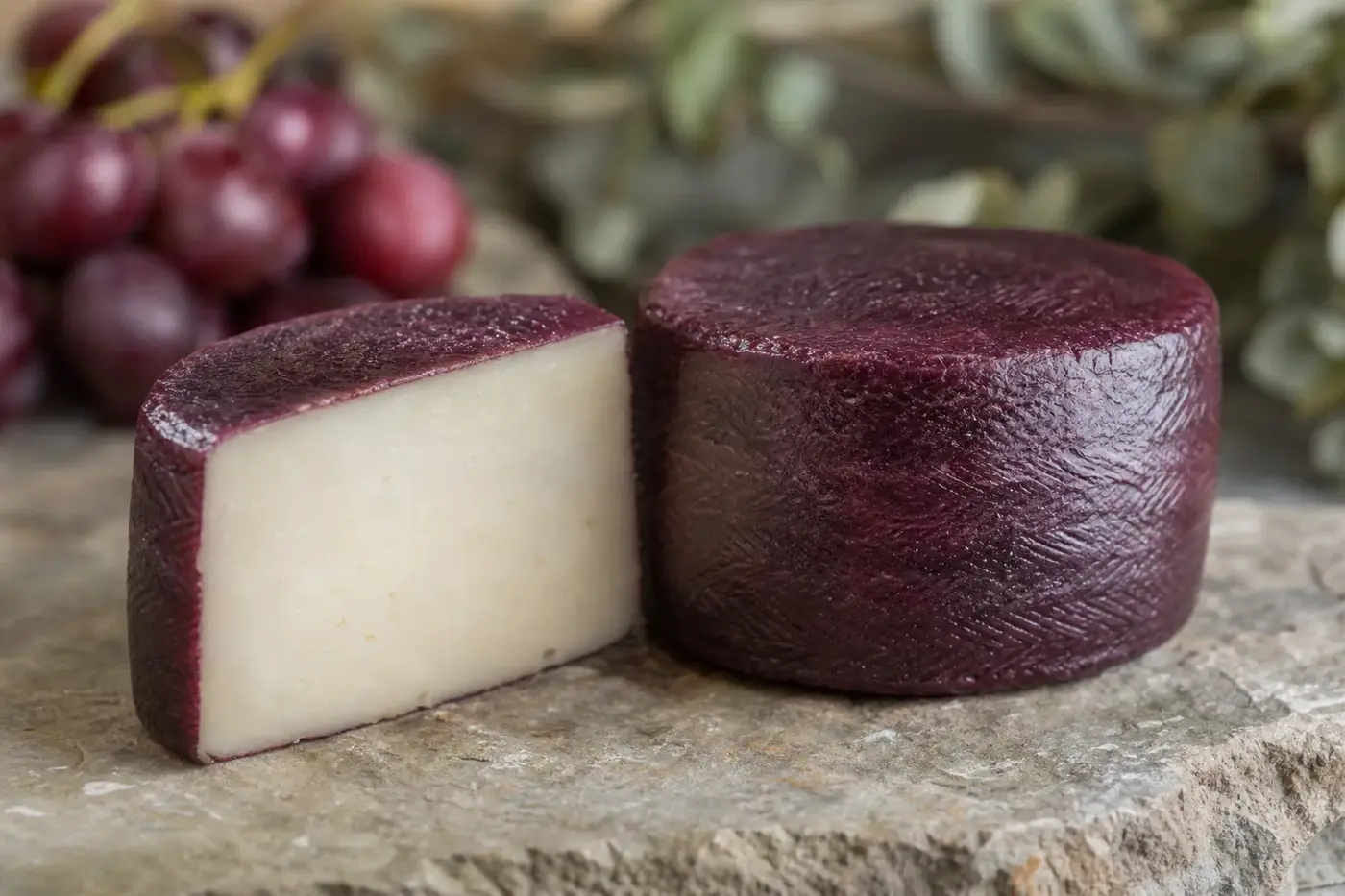
Bring the maroon-purple rind towards your nose. First come red wine and cellar aromas; move towards the pale centre and lactic, goat’s milk notes take over. From Murcia in south-eastern Spain, this firm yet elastic cheese gives you two distinct parts of the same wedge to explore. The rind makes an entrance, but it is not the whole performance.[1][2]
| What you might want to know | The detail |
|---|---|
| Familiar name | Queso de Murcia al Vino.[4] |
| Exact registered name | Queso de Murcia al vino.[4] |
| EU registration authority and identifier | European Commission; current eAmbrosia register ID: not specified here.[3] |
| Current EU and Northern Ireland status | Not specified here |
| EU registration legislation | Commission Regulation (EC) No 1097/2002; specification amendment approved by Commission Implementing Regulation (EU) No 351/2014.[3] |
| Great Britain status | Registered PDO, November 2026; GB scheme registration dated 31 December 2020.[4] |
| Where it is made | All municipalities of Murcia province: milk production, cheesemaking and maturation.[1] |
| Milk | Whole milk from Murcian goats in registered herds.[1] |
| Milk treatment of a particular cheese | Not specified here |
| Permitted coagulant | Animal rennet or other coagulating enzymes.[1] |
| Minimum maturation | 30 days for cheeses weighing 500 g or less; 45 days above 500 g.[6] |
| Typical maturation beyond the minimum | Not specified here |
| Shape and size | Cylindrical; 300 g to 2.6 kg.[2] |
Follow the goats into wine country
Before that purple rind comes a story of goat husbandry and winemaking. The Consejo Regulador, the designation’s certification and promotional body, traces it through esparto-grass bands and presses used to shape cheeses. Some cheeses were eaten immediately. Others went into cool caves and cellars to mature.[5]
Its account credits Murcian shepherds with bringing their cheeses and local red wine together in a wine bath.[5] That meeting still sits at the heart of the cheese. The wine treatment is a practical part of maturation, tied to the agriculture around it.
Think beyond the city when you spot Murcia on the label. Here it means the Region of Murcia: the specification places milk production, cheesemaking and maturation throughout the province.[1] Your wedge belongs to a whole region, not just one town or dairy.
Meet the goats behind your wedge
The milk must come from Murcian goats in registered herds. More precisely, the specification discusses the Murcian variety within the Murciano-Granadina breed.[1] The cheese’s local identity begins here, well before its first encounter with wine.
The Consejo Regulador describes goats adapted to arid conditions and valued for their milk. Their feeding is based on regional pasture, forage and cereals.[5]
At the counter, keep two questions separate: which animal and breed supplied the milk, and how was that milk treated? The answers tell you different things about your cheese. You can explore that distinction in raw, thermised and pasteurised cheese.
Look beyond the purple rind
A purple rind catches your eye, but it cannot identify this protected cheese on its own. Look for the complete name and designation identification. The Consejo Regulador’s principal functions include certification and production control, alongside promotion.[6]
PDO means protected designation of origin, or denominación de origen protegida in Spanish. For Queso de Murcia al Vino, the specification ties the geographical area to the milk, production method and finished cheese, wine treatment included.[1] To separate a geographical designation from a cheese style or brand, see protected names.
The dates need a little room of their own. The EU approved a substantial specification amendment through Regulation 351/2014, adopted on 3 April 2014 and published on 8 April. It approved the amendment published in November 2013, with entry into force on the twentieth day following publication.[3]
Adoption, publication and entry into force are distinct legal events, not interchangeable registration dates. The British register separately records Queso de Murcia al vino as a registered PDO in Great Britain. Registration under the GB scheme took effect on 31 December 2020 at 23:00.[4]
Before the wine, get to know the curd
The cheese has a wash before it has a wine bath. First the curd is washed; later, during maturation, the cheese meets the wine. These are separate operations, each with its own place in the prescribed method.[1]
It begins with coagulation, when liquid milk becomes a gel that can be cut into curds. Those curds are the solid material that forms the cheese. Whey is the liquid released as they are cut and worked, while rennet supplies coagulating enzymes.
| Step along the way | What happens |
|---|---|
| Setting the milk | Animal rennet or other coagulating enzymes; 30 to 34 °C for 30 to 60 minutes.[1] |
| Cutting and washing | Successive cuts release whey; some whey is removed and water added.[1] |
| Working the curd | Gentle reheating, stirring, resting and draining before moulding.[1] |
| Shaping and pressing | Plain cylindrical moulds; progressive pressing for 1 to 4 hours.[1] |
| Salting and maturing | Brining, then maturation with turning, cleaning and wine bathing.[1] |
The specification calls the paste pressed, washed and uncooked.[2] “Uncooked” is a cheesemaking classification, not a claim that the temperature never rises. The gentle reheating stage still warms the curd.
Keep those terms separate when you compare cheeses or talk to your cheesemonger. Pressing describes one part of the method, curd washing another, and rind treatment another again. Once you untangle them, the production description becomes much easier to follow.
Time for the red wine bath
During maturation, the cheese is immersed in red wine from the Region of Murcia. Not just any red wine: the specification requires wine covered by one of the region’s recognised geographical wine mentions that includes the Monastrell variety.[1]
The producer decides the bathing schedule. The specification sets no single immersion duration or fixed number of baths. If you want those details, ask the particular maker.[1]
The wine leaves its sensory signature chiefly on the outside. The approved description identifies a maroon-violet rind, with wine or cellar aromas in the outer zone.[2] Start there: look at the surface, smell it, then move towards the cut face and centre.
Notice how the aromas change along the way. You may recognise the rind first, but give the goat’s milk paste equal attention. The whole wedge need not smell equally of wine.
Look closely, then take a bite
Before you taste, take in the shape. The cheese is cylindrical, with softened edges and slightly rounded sides, beneath a fine, smooth rind without imprinted patterns.[2] Inside, the approved specification describes a firm, elastic, uniform paste with no graininess.
The interior is matt white, moving towards ivory or yellowish tones as maturation progresses. It may be closed, meaning without holes, or have occasional openings of mechanical origin.[2] Look at the cut face and see which details you can pick out.
Now take a small piece from the centre. Notice how it yields under pressure, then follow the aroma and finish. The specification puts lactic and animal aromas, specifically goat, alongside the wine-associated rind.[2]
Its flavour is described as persistent, changing with age: acidity decreases, while saltiness and aroma grow stronger.[2] Let that guide your attention, not dictate your verdict. Your tasting note need not sit an exam: it should capture the wedge in front of you, rather than recite approved words.
Meet its neighbour, Queso de Murcia
Queso de Murcia is a separate designation, with fresh and matured forms. The fresh cheese is unripened, with a moist, tender paste and characteristic moulded markings. The matured version has a dry rind that moves from waxy yellow towards ochre.[7]
Put them alongside your wine-bathed cheese and the differences become easier to follow. The fresh cheese offers another texture and stage of development. The matured version lets you compare a pressed goat’s milk cheese without that defining wine-coloured exterior.[7]
Age changes Queso de Murcia’s texture, too. Its specification describes low elasticity, with the paste becoming more fragile and sandy after extensive maturation.[7] That description belongs to this separate cheese, so do not automatically expect an older Queso de Murcia al Vino to behave the same way.
When you choose the wine-bathed cheese, ask how long it has actually matured. The legal minimum tells you when it can enter the market. The producer’s maturation period tells you more about the particular cheese you are buying.[6]
Bring it home and keep it well
Ask your cheesemonger to show you the label. Find out who made the cheese, how long it has matured and how its milk was treated. Those questions reveal more than “Is it strong?”
If you buy a cut portion, keep its identification and storage information. At home in England, Wales and Northern Ireland, the Food Standards Agency advises a fridge temperature between 0 and 5 °C, alongside following the packaging’s storage and date instructions.[8]
Keep those instructions with the cheese, especially if you transfer it to another container. You will find broader handling advice in storing cheese at home.
When it is time to serve, put out the portion you intend to eat. Leave the rest refrigerated.
Before you eat the rind, follow the maker’s directions on consumption and any surface treatment. If the directions are missing, ask the maker or cheesemonger.
Make room for bread and fruit
Begin simply: cheese, bread and water. Then add one accompaniment at a time, keeping each comparison clear. You can explore contrasts in texture and flavour without losing track of what you enjoy.
- Plain country bread: give your first taste a simple starting point.
- Thin crispbread: reach for it when you want a sharper textural contrast.
- Fresh pear or apple: serve separate slices and alternate fruit with cheese.
- Fresh figs or grapes: explore a softer, sweeter accompaniment, leaving the cheese free of dressing.
- Quince paste: start with a small amount and adjust to taste.
For an alcohol free drink, try still or sparkling water. Lightly brewed unsweetened tea or red grape juice are other options.
Repeat the same bite with bread alone, then with fruit, then with your chosen drink. Keep the accompaniments separate so you can discover which combination you prefer. To take your comparisons further, turn to the cheese and wine pairing guide.
Follow your curiosity to the next wedge
- How to Read a Cheese Label: find the details that belong to the particular cheese you are buying.
- How to Tell Cheese Styles Apart: Milk, Rind, Texture and Method: see how rind treatment fits alongside the other features that define a cheese.
General information only, not medical advice: follow the official guidance where you live.
Questions people ask
Where is Queso de Murcia al Vino made?
It is made throughout Murcia province in Spain. The milk production, cheesemaking and maturation all take place there.
Is Queso de Murcia al Vino made from pasteurised milk?
The page does not verify the milk treatment of a particular cheese. It is made from whole milk from Murcian goats in registered herds, so ask the cheesemonger about the milk treatment.
Why is the rind purple?
During maturation, the cheese is immersed in red wine from the Region of Murcia. The specification does not set a fixed number of baths or a single immersion time.
Can you eat the rind?
Follow the maker’s directions on eating the rind and any surface treatment. If those directions are missing, ask the maker or cheesemonger.
What is the difference between Queso de Murcia and Queso de Murcia al Vino?
Queso de Murcia is a separate designation made in fresh and matured forms. Unlike Queso de Murcia al Vino, it does not have the defining wine coloured exterior.
Sources
- Consejo Regulador de las DDOOPP Queso de Murcia y Queso de Murcia al Vino, Pliego de condiciones: Queso de Murcia al vino, undated version currently linked by the designation body, sections B to E. Product specification.
- European Commission, Publication of an amendment application pursuant to Article 50(2)(a) of Regulation (EU) No 1151/2012, 2013/C 326/09, 12 November 2013, subsequently approved by source 3. Published amendment and single document. )
- European Commission, Commission Implementing Regulation (EU) No 351/2014, adopted 3 April 2014, published 8 April 2014. Official regulation.
- Department for Environment, Food & Rural Affairs, Queso de Murcia al vino, GB protected food names register, published 4 January 2021, live entry checked November 2026. Register entry.
- Consejo Regulador, Conoce los Quesos de Murcia, undated, sections on history and the Murcian goat. The body represents and promotes the designations. Historical and farming account.
- Consejo Regulador, Consejo regulador, undated, functions, public documents and product summaries. Designation body.
- Consejo Regulador, Pliego de condiciones: Queso de Murcia, undated version currently linked by the designation body, section B. Separate product specification.
- Food Standards Agency, How to chill, freeze and defrost food safely, published 18 December 2017, live guidance checked November 2026. Applies to England, Northern Ireland and Wales. Chilling guidance.
- Consejo Regulador, Disfruta los Quesos de Murcia, undated, “La cata perfecta”. Sensory assessment account.
- Food Standards Agency, Food safety in a heatwave: advice for consumers, live guidance checked November 2026. Hot-weather guidance.
- Food Standards Agency, Alerts, live notices reviewed November 2026 for editorial recall screening. Official alerts.
- Agencia Española de Seguridad Alimentaria y Nutrición, Alertas alimentarias, live notices reviewed November 2026 for editorial recall screening. Official alerts.
This desk-researched article brings together the designation’s production documents, published sensory description, official British register entry and attributed consumer guidance.
Last checked: November 2026
Last checked November 2026.
The editors suggest you read next