Quesucos de Liébana
Juniper smoke greets you first, if you have picked a smoked one.
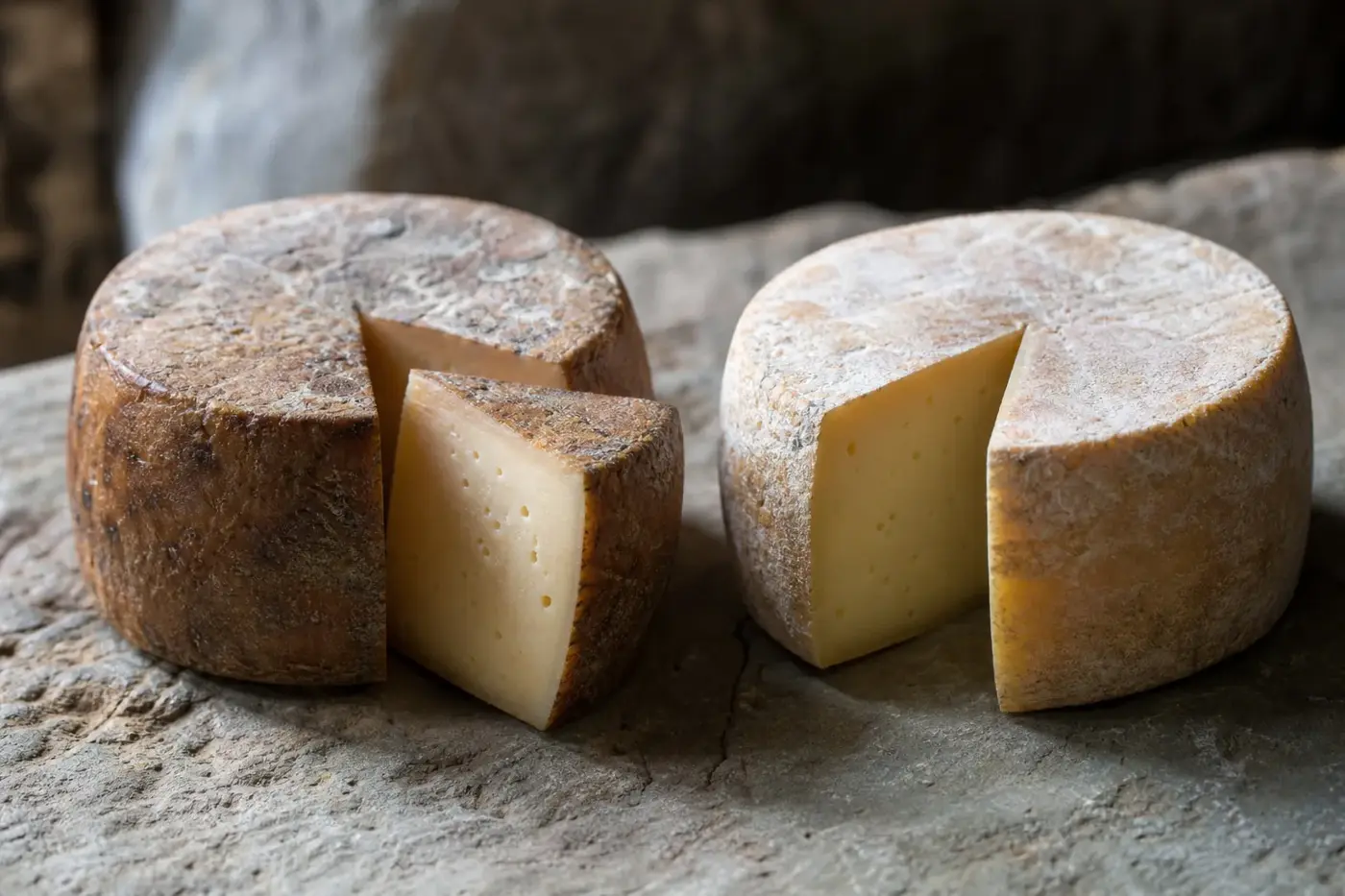
Juniper smoke greets you first, if you have picked a smoked one. Beneath the rind sits a pale, compact paste. A small Quesucos de Liébana can bring that extra aroma and colour, or leave smoke out of the conversation altogether.[1,2]
Either way, you are tasting the mountain valleys of south-western Cantabria. Cow’s, sheep’s and goat’s milk, used alone or mixed, give this regional name several distinct expressions. The name gets you to the right place; the milk and smoke make the introductions.[1,2]
Your first look at Quesucos de Liébana
| What to look for | The details |
|---|---|
| Registered name | Quesucos de Liébana.[3] |
| EU register | European Commission, eAmbrosia; PDO-ES-0090; record EUGI00000012966.[3] |
| EU status | Registered PDO in GIview; confirmation against eAmbrosia outstanding.[3] |
| Great Britain | Registered PDO; UK scheme registration 31 December 2020; status as at November 2026.[4] |
| Where it comes from | Eight municipalities in Cantabria, Spain.[2] |
| Milk | Cow, sheep or goat, alone or mixed.[2] |
| Milk treatment | Pasteurisation required for maturation under 60 days.[1] |
| What sets the curd | Animal rennet.[1] |
| Shape and size | Cylindrical or disc-shaped; 8 to 12 cm across, 3 to 10 cm high; variable weight.[2] |
| Legal minimum maturation | No universal minimum stated in the specification.[1] |
| Usual maturation | One to two months, according to regional guidance.[2] |
| Rind | Hard, slightly mouldy; smoked or unsmoked.[2] |
| Allergen | Milk.[1,2] |
| Registration instrument | EU: Commission Regulation (EC) No 1107/96, Annex, Spain, cheeses.[5] |
Head into the valleys beside the Picos de Europa
In Liébana, cheese began with a practical purpose: keeping milk for longer. This inland area beside the Picos de Europa was historically difficult to reach. The specification connects that need with mountain pastures, mixed herds and the rhythms of seasonal dairying.[1]
The protected area takes you through Potes, Pesaguero, Cabezón de Liébana, Camaleño, Cillorigo de Liébana, Tresviso, Vega de Liébana and Peñarrubia. Cantabria’s food quality office, ODECA, names these eight municipalities as the area for production, cheesemaking and maturation.[2]
Those boundaries give you a starting point, rather than the whole story. Ask about the dairy and its milk blend when you buy. The designation puts your cheese within a defined local system; blend, age and smoking introduce the particular cheese in your hand.
Get to know the name on the label
Quesucos de Liébana appears as a registered protected designation of origin, or PDO, in the EU’s GIview record. Great Britain also lists it as registered under its own scheme.[3,4] A PDO links a named food to a defined area and production rules. After that, the maker and the individual cheese deserve your attention.
Look for the full name and the numbered counter-label issued by the Consejo Regulador, the designation’s sector body. The specification requires that label to be attached so it cannot be reused.[1] If you are buying a cut portion, ask to see the original cheese’s label and keep the dairy’s name with your purchase.
If designation language leaves you lingering at the counter, the guide to protected names can help. It explains the wider vocabulary and the distinctions behind those names, leaving you free to concentrate on choosing your cheese.
Follow the milk, whether one, two or three
The milk blend is one of the label’s most useful clues. ODECA’s description allows whole cow’s, sheep’s or goat’s milk, alone or in combinations of two or three.[2] Two cheeses carrying the same protected name can therefore begin with different ingredients.
The specification links those changing mixtures to seasonal milk availability.[1] When several versions catch your eye, ask which blend each uses. Start with an unsmoked cheese to explore the milk, then save smoke for a separate comparison. Your taste buds need not chair the entire meeting at once.
For your first purchase, note three things: milk species, whether the milk was pasteurised, and age. Those answers give your next choice a useful starting point. Keep species and treatment separate in your notes: one tells you the ingredient, the other how it was handled.
Cut into its compact heart
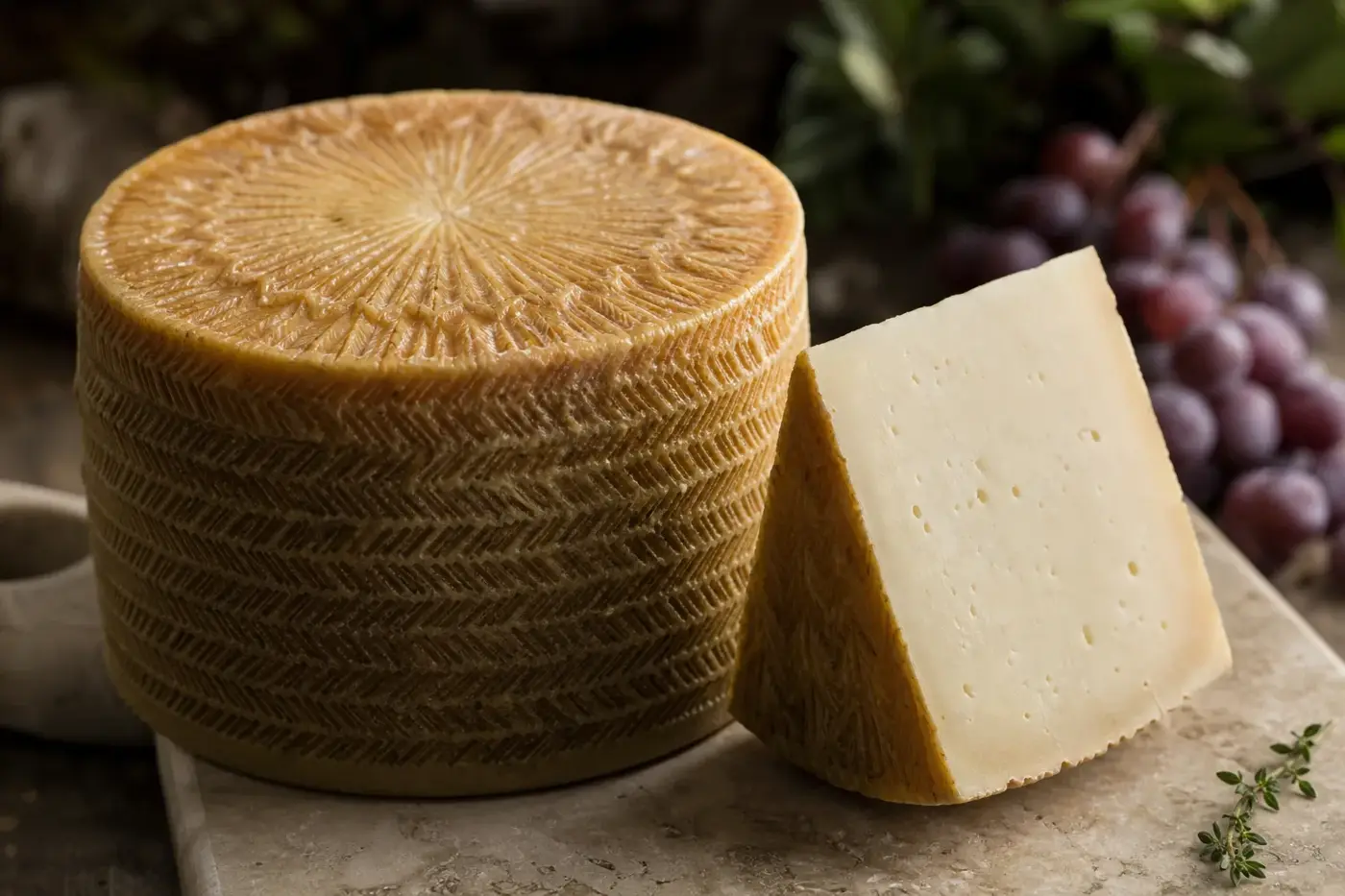
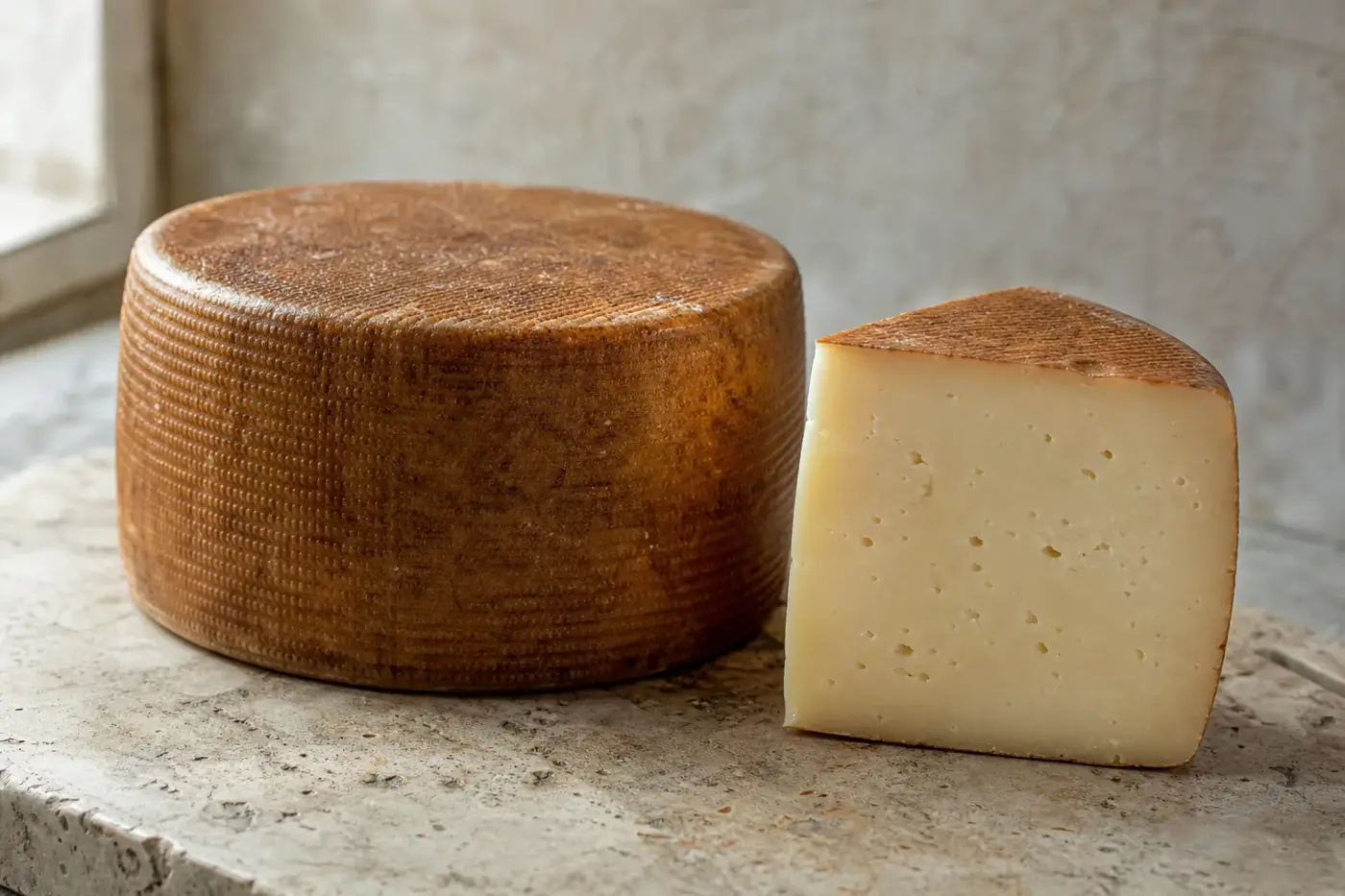
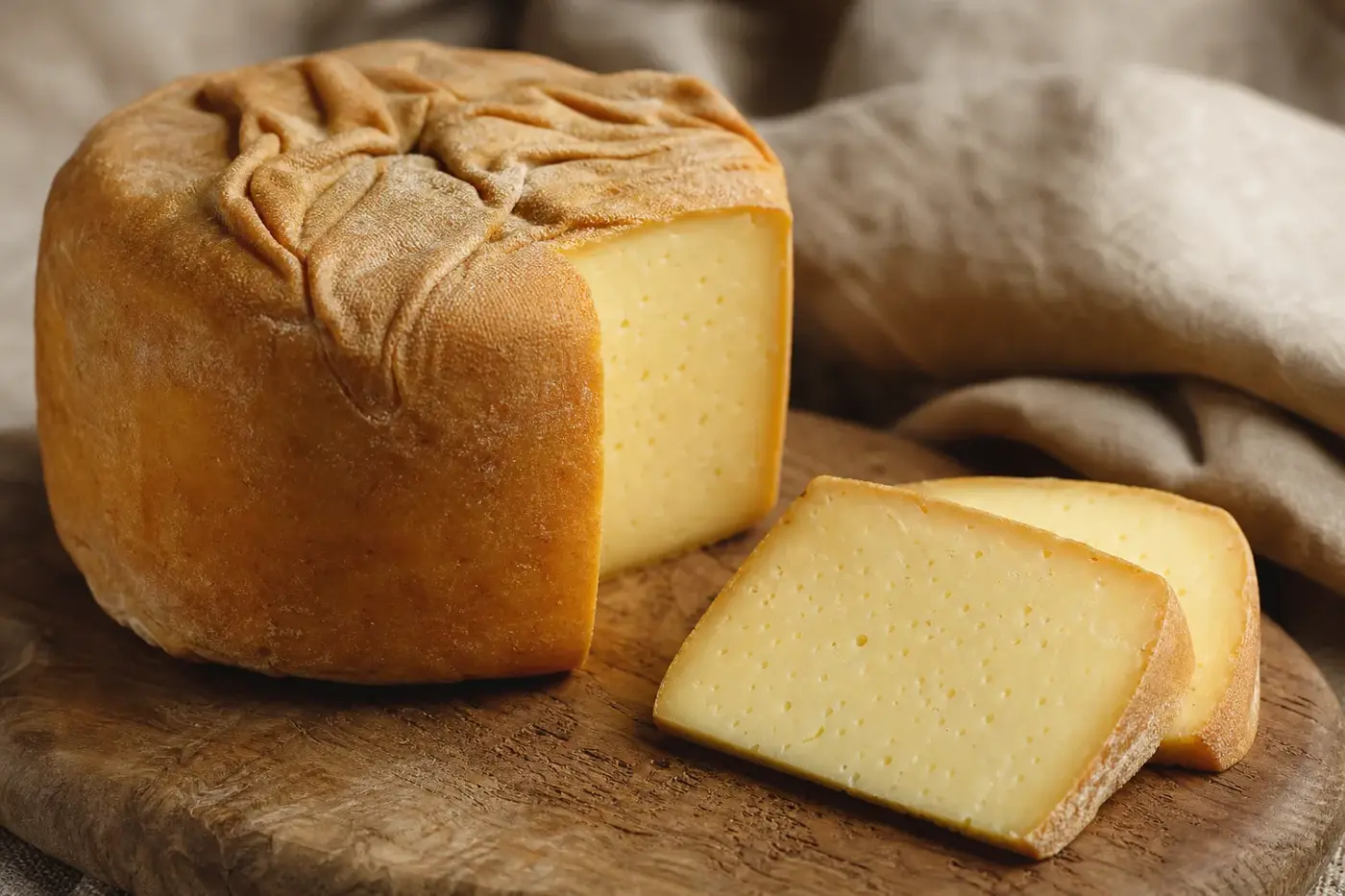
Beneath the hard, slightly mouldy rind, look for a firm, compact, lightly yellow paste with small, irregularly distributed holes. That is the regional description. It covers both cylinders and flatter discs, with variable weight.[2]
Cut a small cheese into wedges through its centre, giving each piece some paste and outer edge. For a flatter disc, choose narrower wedges rather than large slices. With a smoked cheese, this brings the interior and smoked exterior together in each serving, so you can explore both.
Follow the curd from pea-sized grains to cheese
Pea-sized grains of curd mark an important moment in the making. The specification describes animal rennet coagulating the milk, separating solid curd from liquid whey. The curd is then cut, put into draining moulds, salted and matured, with turning and cleaning along the way.[1]
You can follow the wider sequence in how cheese is made. Back at the counter, bring two details together on your buying checklist: milk treatment and age.
The specification requires pasteurisation for cheeses matured for less than 60 days. It also recommends maturation of around two months, but that recommendation is not a universal minimum.[1] Ask for your cheese’s actual age and milk treatment rather than assuming every version keeps to the same timetable.
Let the juniper smoke have its say
Smoking is optional, not a feature of every Quesucos de Liébana.[2] The specification associates it with Áliva, Brez and Lomeña. It names juniper as the traditional wood and describes smoking as a source of additional aroma.[1]
Ask how the cheese in front of you was smoked. For the clearest comparison, choose an unsmoked and a smoked cheese from the same dairy. Match their milks and ages where possible, giving the smoke itself your attention.
Taste the unsmoked one first, then move to the smoked version. Keeping the other details alike helps you notice what smoking has added. Otherwise, one mouthful has several questions to answer, and only so much time before the next.
Give texture the first moment
Firm texture, aroma and a distinct smoked option are your starting points in the official descriptions.[1,2] At the table, notice texture before deciding on flavour. Does the paste slice cleanly or break, and how readily does it yield as you chew?
Then turn your attention to the smoke, if there is any. Is it the first thing you notice, or does it arrive later? These questions help you build a tasting note in your own words, with details you can recognise again.
When you find a cheese you like, record its maker, blend, age and smoking before discarding the wrapper. Those details offer a much better route back to a similar experience than asking for something simply stronger or milder. Your next visit to the counter will be easier for it.
Ask about the milk before you choose
Read the milk declaration and establish pasteurisation before choosing. Colour, firmness and smoking cannot tell you how the milk was treated, so ask for the original product information. Reading a cheese label helps you keep the maker’s details, dates and handling instructions together.
The UK NHS guidance for November 2026 includes pasteurised semi hard cheeses among those pregnant people can eat. It gives separate advice for other cheeses, including cooking some soft cheeses until steaming hot all the way through.[6] Consult its guidance for the particular cheese you are considering.
The Food Standards Agency identifies older people and people with weakened immunity as groups at increased risk from listeriosis.[7] Consult its guidance for the foods concerned. Here, the milk details matter more than the cheese’s appearance.
Bring it home cool, with its label
Follow your cheese’s own storage and opening instructions. UK consumer guidance recommends a fridge at 5 °C or below, and the FSA says to respect use-by dates even when food still looks and smells acceptable.[7,8] Keep the label with a cut portion so those instructions stay with the cheese.
If you have a longer shopping trip ahead, plan for the journey home. The UK’s hot-weather advice recommends choosing chilled foods last and using a cool bag with ice or frozen gel packs.[8] The guide to storing cheese at home covers everyday organisation once you arrive.
If the label has no opening instructions, the FSA’s general advice is to use opened foods within two days.[7] For a cut piece, ask the cheesemonger to write down the relevant storage information before you leave. That keeps the practical details close to hand.
Give the cheese a simple setting
Put out only what you intend to eat, and leave the rest refrigerated. Before serving, consult the Food Standards Agency’s current advice on food kept out of the fridge in England, Wales and Northern Ireland.[7]
Start with plain bread, a few slices of pear or apple, and still water. Taste the cheese alone before adding anything sweet or sharp. When you move to a smoked version, keep the same bread and fruit rather than introducing another smoked ingredient. Give the cheese room to hold your attention.
For an alcohol-free pairing, try a lightly chilled apple drink or a mild tea without strong flavourings. Begin with a small glass or cup, and compare a bite with water too. These simple suggestions let you explore the cheese’s character without competing flavours crowding in.
Take your cheese board to northern Spain
Spain’s official cheese map places Quesucos de Liébana in a cluster of northern designations that includes Cabrales and Gamonéu, shown there as Queso Gamonedo.[9] That proximity invites a regional comparison at your table. Each name, though, identifies its own cheese.
Begin with unsmoked Quesucos de Liébana, follow with a smoked version, then introduce a neighbouring cheese as a separate comparison. Keep the labels beside your notes. Compare milk, treatment, maturation and rind first: together, they give you far more to enjoy and discuss than a single word such as strength.
General information only, not medical advice: follow the official guidance where you live.
Questions people ask
Where is Quesucos de Liébana made?
It comes from eight municipalities in Cantabria, Spain. The protected area covers production, cheesemaking and maturation.
What milk is used in Quesucos de Liébana?
It can be made from whole cow’s, sheep’s or goat’s milk, used alone or in combinations of two or three. The specification relates changing mixtures to seasonal milk availability.
Is Quesucos de Liébana always smoked?
No, smoking is optional. Juniper smoke gives some cheeses extra aroma and colour, while others remain unsmoked.
Is Quesucos de Liébana vegetarian?
The specification calls for animal rennet to coagulate the milk. This separates the solid curd from the liquid whey.
Can you eat Quesucos de Liébana during pregnancy?
The UK NHS includes pasteurised semi hard cheeses among those pregnant people can eat, but gives separate advice for other cheeses. Check the NHS guidance for the particular cheese and ask about its milk treatment and age.
Sources
- Ministerio de Agricultura, Pesca y Alimentación, Denominación de Origen “Quesucos de Liébana”: expediente de solicitud de registro, specification identified by the ministry as in force from 21 June 1996, sections B to F and H. Official specification.
- Gobierno de Cantabria, Oficina de Calidad Alimentaria, DOP Quesucos de Liébana, undated current information page, consulted November 2026. Official regional description and specification links.
- European Union Intellectual Property Office, GIview, Quesucos de Liébana, EU register record EUGI00000012966, file PDO-ES-0090, consulted November 2026. GIview record. European Commission eAmbrosia entry. The retrievable GIview record supplies the status and identifiers used here.
- Department for Environment, Food & Rural Affairs, Quesucos de Liébana, published 4 January 2021, current register entry consulted November 2026. Great Britain register entry.
- European Commission, Commission Regulation (EC) No 1107/96 of 12 June 1996, Official Journal L 148, 21 June 1996, Annex. Registration instrument.
- NHS, Foods to avoid in pregnancy, current online guidance consulted November 2026, “Cheese, milk and other dairy”. Official pregnancy guidance.
- Food Standards Agency, Listeria, published 8 January 2018, current online text consulted November 2026, sections 3 to 5; applies to England, Northern Ireland and Wales. Official listeria guidance.
- UK Health Security Agency, Food safety in a heatwave: advice for consumers, current online guidance consulted November 2026, refrigeration and shopping sections. Official hot-weather food guidance.
- ICEX España Exportación e Inversiones, Cheeses: cheeses with protected designation of origin (PDO) and protected geographical indication (PGI), undated brochure, consulted November 2026, numbered cheese map. Official cheese brochure.
This desk-researched article brings together the official specification, Cantabria’s product description, registration records and UK consumer guidance; serving and pairing suggestions are identified as editorial preferences.
Last checked: November 2026
Last checked November 2026.
The editors suggest you read next