Renegade Monk
Open the maple box and the aroma arrives before your knife does.
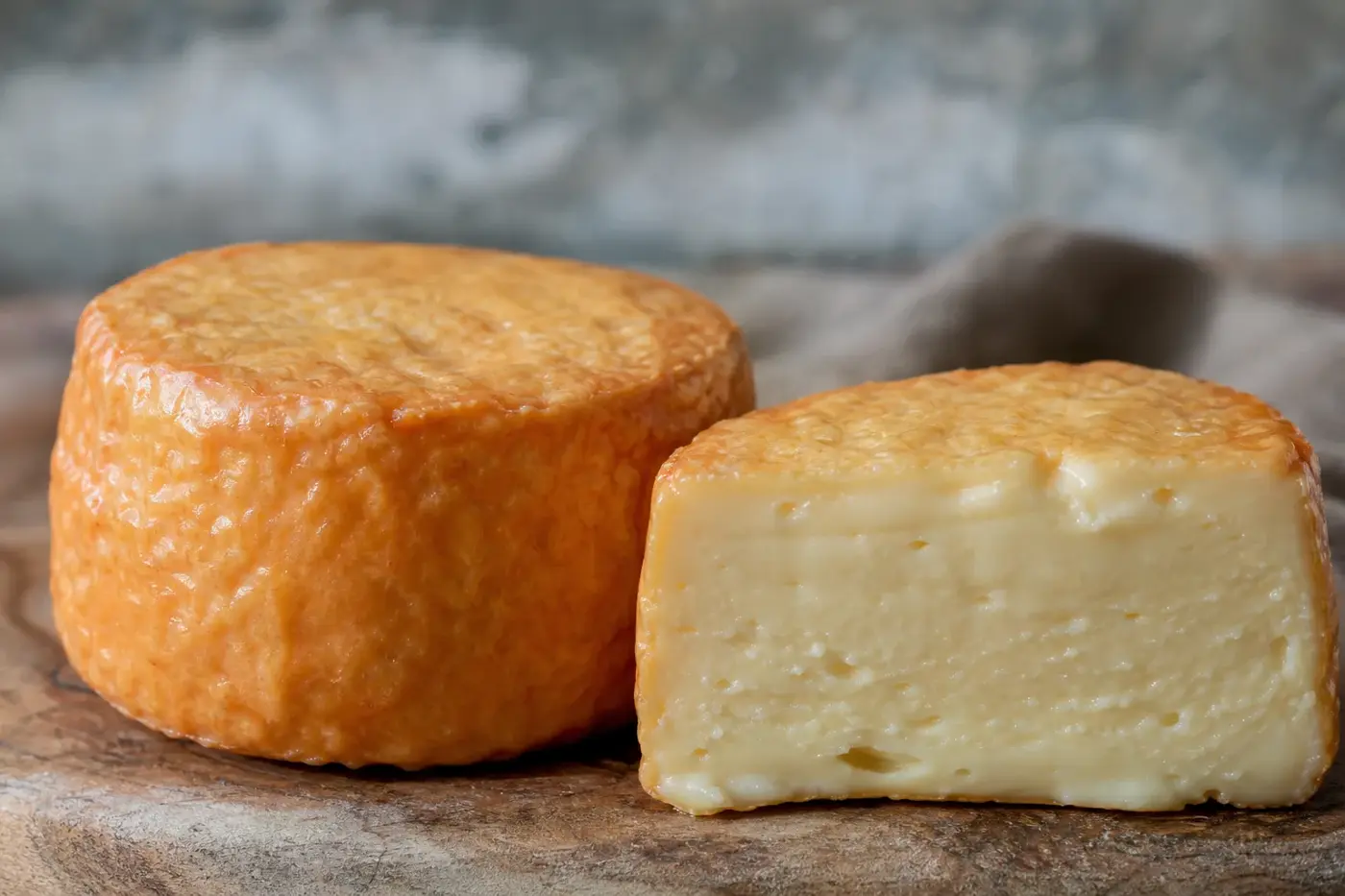
Open the maple box and the aroma arrives before your knife does. Inside is a soft Somerset cheese with a hint of blue and an ale-washed rind. At Feltham's Farm, organic, pasteurised cow's milk becomes Renegade Monk, washed repeatedly by hand as it matures.[1]
Your first look at Renegade Monk
| What you might want to know | The detail |
|---|---|
| Name | Renegade Monk.[1] |
| Maker | Feltham's Farm.[1] |
| Home | Horsington Marsh, Templecombe, Somerset, England.[2] |
| Milk | Cow's milk, organic and pasteurised.[12] |
| Style | Soft blue with an ale-washed rind.[1] |
| The wash | Organic ale; the farm names Stroud Brewery as its supplier.[5] |
| In the box | 220 g in a maple box.[1] |
| Usual maturation | Up to four weeks.[12] |
A little blue, a lot to discover
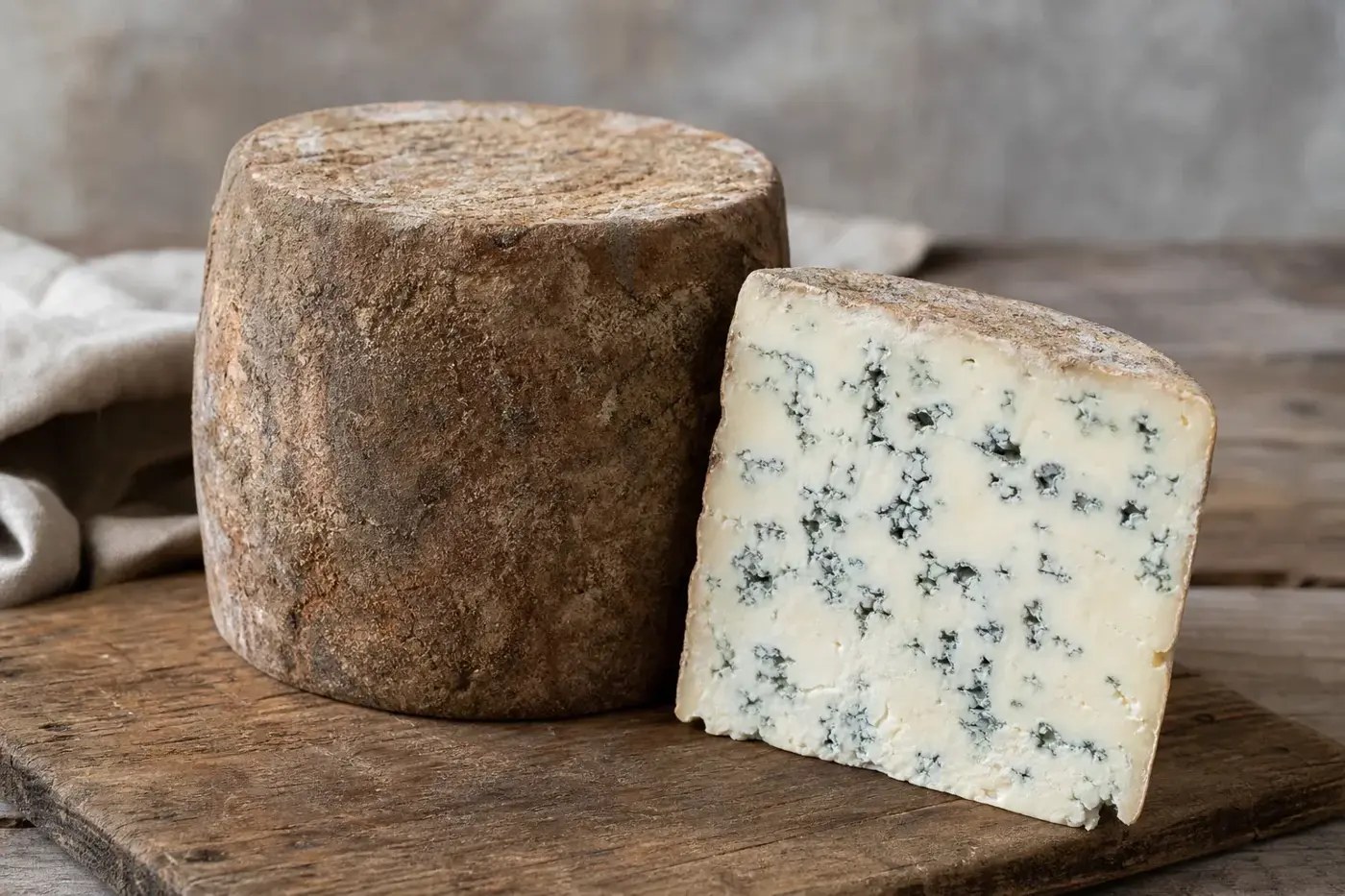
Cut into Renegade Monk and you might see very little blue. That is part of its character: the maker says the blue appears only occasionally. You have a cheese ripening in two ways, from its washed exterior and through the blue culture inside.[1]
Think about softness, blue character and rind treatment separately. You need not make it choose a single identity for the cheeseboard. For a wider view, how to tell cheese styles apart separates milk, texture and method rather than squeezing every cheese into a single box.
Feltham's Farm describes Renegade Monk as a newly developed recipe inspired by Continental cheeses. Yet this is a particular Somerset make, not simply an imitation. The ale wash and restrained blue element give you something with a character of its own.[12]
The Somerset kitchen where it began
Feltham's Farm sits at Horsington Marsh, near Templecombe, in Somerset, England. The farm's account places the smallholding in the Blackmore Vale and records a move there in 2014. Alongside the cheesemaking, the setting includes pigs, sheep and poultry.[2]
The change began with leaving corporate working life and taking a short cheesemaking course at River Cottage. From there, cheese became the business plan. A college profile published in October 2020 records that production began in the farmhouse kitchen about three years earlier.[2,3]
The name takes you into the neighbourhood, too. Feltham's Farm says Renegade Monk nods towards nearby Templecombe and its association with the Knights Templar, alongside monastic cheesemaking and brewing. That is the maker's story behind this modern cheese's name, something to remember when you spot it on a counter card.[4]
Local milk, with a story behind it
The product page identifies organic, pasteurised cow's milk. Feltham's Farm also describes the milk as local and says the farm is certified organic with the Soil Association. These are the maker's published statements for this November 2026 account.[2,5,12]
You might wonder how that works on a smallholding without its own milking herd. In a recorded July 2020 discussion hosted by the Academy of Cheese, the farm explained that it bought milk from local organic farms. That account shows a smallholding concentrating on cheesemaking, with surrounding dairy farms supplying the milk.[6]
When you shop, treat milk treatment, organic status and vegetarian suitability as separate questions. Read the current pack and ask the maker about requirements that matter to you. For the background, turn to raw, thermised and pasteurised cheese and rennet explained.
An ale wash and daily attention
Once milk becomes curd, the set part that forms the cheese, there is still plenty of work for the cheesemaker's hands. Feltham's Farm describes washing the cheeses with organic ale every few days. Its wider website names Stroud Brewery as the supplier and describes maturity at four weeks.[5]
The maker's 2020 broadcast brings you closer to that routine. It described piercing the cheeses after roughly three or four days in the maturing fridge, letting air in for blue development. Washing began several days later, with intervals of about three days and three or four washes altogether.[6]
Each cheese received attention every day. That meant turning it, assessing its development and deciding when it was ready to wrap. Even cheeses from the same batch could be ready on different days, and the maker linked faster development to warmer summer conditions.[6]
Maturation, then, asks for more than patience and a calendar. Forming, piercing, washing and selecting all help shape what reaches your plate. For the stages before ripening, explore how cheese is made.
Lift the lid and follow your senses
The maple box gives you a practical way to present this small, soft cheese. The maker's sales listing describes Renegade Monk as pungent, with a soft, creamy texture and a hint of blue. Here, creamy describes what you eat, not a separate cream ingredient.[1,7]
Before tasting, look at the cut surface and give the aroma a moment of its own. Try a small piece of the interior first. See whether the subtle blue note catches your attention, or whether sweetness and the overall pungency leave the stronger impression.
Find your favourite degree of softness
Seasonal milk, humidity, temperature and hand handling all help explain differences between batches, according to the maker's account in the college's 2020 profile. The cheesemaker's task is to respond to those changes while aiming for consistency. There is plenty of judgement behind that small box.[3]
The 2020 tasting broadcast showed contrasting textures even among cheeses from one batch. One became more yielding after standing out. Separately, the maker described flavour growing stronger with further development, so age matters without telling you the whole story.[6]
When you buy, describe the texture you would enjoy. Perhaps you want a cheese that holds a small slice, or something softer to spread. That gives the seller more to work with than asking which is oldest, and helps you match the cheese to your occasion and preferred intensity.
A silver medal, and the story of its class
The British Cheese Awards' official 2024 results list Renegade Monk with a silver medal in class BCA104. That class is for British-made cheese in branded packaging. Keep the category beside the medal and you have a clear picture of what the result records.[10]
Give this cheese a little elbow room
My serving suggestion is simple: make Renegade Monk the focus of a small plate. Offer plain bread or an unsweetened cracker, one fresh accompaniment and room to spread the paste. Begin without chutney, then add a little if you fancy sweetness, so your first taste belongs to the cheese.
Divide a 220 g cheese four ways and you have 55 g each. That is a practical sharing arrangement, not a dietary recommendation. Give each person a small plate and a spreading knife; a very soft cheese has nothing to prove by standing up as a wedge.
For an alcohol-free pairing, my suggestions are fresh apple, pear or a small glass of sparkling apple juice. Try a little alongside the cheese and decide whether the fruit complements its sweetness. Keep water for between tastes, and choose plain bread when you want to concentrate on the changing flavour.
For your first tasting, I would serve Renegade Monk alone before introducing another cheese. Put bread and fruit on separate dishes, leaving you free to try combinations without committing the whole plate. Notice the texture, aroma and sweetness, then how long the blue finish stays with you.
Before you set out the cheeseboard
Keep the original label with your cheese, especially if you transfer it to another container. Before planning your cheeseboard, read the storage directions and date on the actual pack. For broader handling questions, visit how to store cheese at home, then follow the current instructions supplied with your cheese.
For official UK advice on chilling food, turn to the Food Standards Agency's published guidance.[11] The maker-specific handling details below are for November 2026.
Your handling questions for the maker, November 2026
| What you need to know | Maker's instruction |
|---|---|
Two useful questions before you choose
The ale-washed surface is central to Renegade Monk's identity. When asking about the rind, make your question specific to the cheese in front of you, including any wrapping that needs removing. If vegetarian suitability matters to you, request confirmation for the current product from Feltham's Farm before choosing it.
Let your cheese curiosity lead you on
- How to Tell Cheese Styles Apart: Milk, Rind, Texture and Method: get to know this combination of rind and interior.
- How Cheese Is Made: From Milk to Cheese: follow the earlier stages that turn milk into curd before ripening begins.
General information only, not medical advice: follow the official guidance where you live.
Questions people ask
What kind of cheese is Renegade Monk?
It is a soft blue cheese with an ale washed rind. The blue is only occasionally visible, so a cheese with little obvious veining can still be in the intended style.
What milk is Renegade Monk made from?
It is made from organic, pasteurised cow’s milk. Feltham’s Farm says the milk is local.
How is Renegade Monk washed and matured?
Feltham’s Farm hand washes it with organic ale every few days and names Stroud Brewery as the ale supplier. The maker describes maturity at four weeks.
Is Renegade Monk vegetarian, and can you eat the rind?
Neither vegetarian suitability nor rind edibility was verified on the page. Ask Feltham’s Farm about the current product and the rind on the cheese in front of you.
How should I store Renegade Monk?
Check the storage directions and date on the pack, and keep the original label with the cheese. For official UK advice on chilling food, consult the Food Standards Agency’s published guidance.
Sources
- Feltham's Farm, Renegade Monk Cheese, undated product page, accessed November 2026: Read at felthamsfarm.com Product identity, milk treatment, washing, maturation, blue development and boxed weight.
- Feltham's Farm, About Us, undated, accessed November 2026. Farm location, move in 2014, beginnings of the business and the maker's organic certification statement.
- Gonville & Caius College, Say Cheese, 7 October 2020. Published account containing the maker's explanation of early production, batch variation and the cheese's name.
- Feltham's Farm, Our Cheese, undated, accessed November 2026. The maker's explanation of the name Renegade Monk.
- Feltham's Farm, homepage, accessed November 2026. Local milk statement, organic certification statement, Stroud Brewery ale, repeated washing and four-week maturation.
- Academy of Cheese, Highlights of the UK's first Virtual Cheese Awards, broadcast and published transcript, 21 July 2020. Maker's account of milk sourcing, piercing, washing, individual assessment and maturation.
- Feltham's Farm supplier listing on Todelli, Renegade Monk Cow Milk Cheese, undated, accessed November 2026. Commercial product description of texture, pungency and blue character.
- The Fine Cheese Co., A Maverick and a Renegade, undated page, accessed November 2026. The seller's published sensory description; its commercial interest is identified in the text.
- Feltham's Farm, Awards, undated, accessed November 2026. Maker's record of the 2020 Best British Cheese result.
- British Cheese Awards, British Cheese Awards 2024: Medal Winners by Class, 2024. Class BCA104, entry 490, Renegade Monk, silver, Felthams Farm Ltd.
- Food Standards Agency, How to chill, freeze and defrost food safely, current GOV.UK destination retrieved November 2026. Official UK handling resource.
- Feltham's Farm, The Big Five, undated product page, accessed November 2026. Renegade Monk's milk, recipe, washing and maturation description.
Researched through the maker's published accounts, a recorded maker discussion, attributed seller tasting notes and competition records, without a site tasting or visit.
Last checked: November 2026
Last checked November 2026.
The editors suggest you read next
West Country Farmhouse Cheddar Cheese
Large pieces of curd turn and stack under the cheesemaker’s hands.