Sinodun Hill / Bryn Sinodun
At the cheese counter, a little pyramid catches your eye.
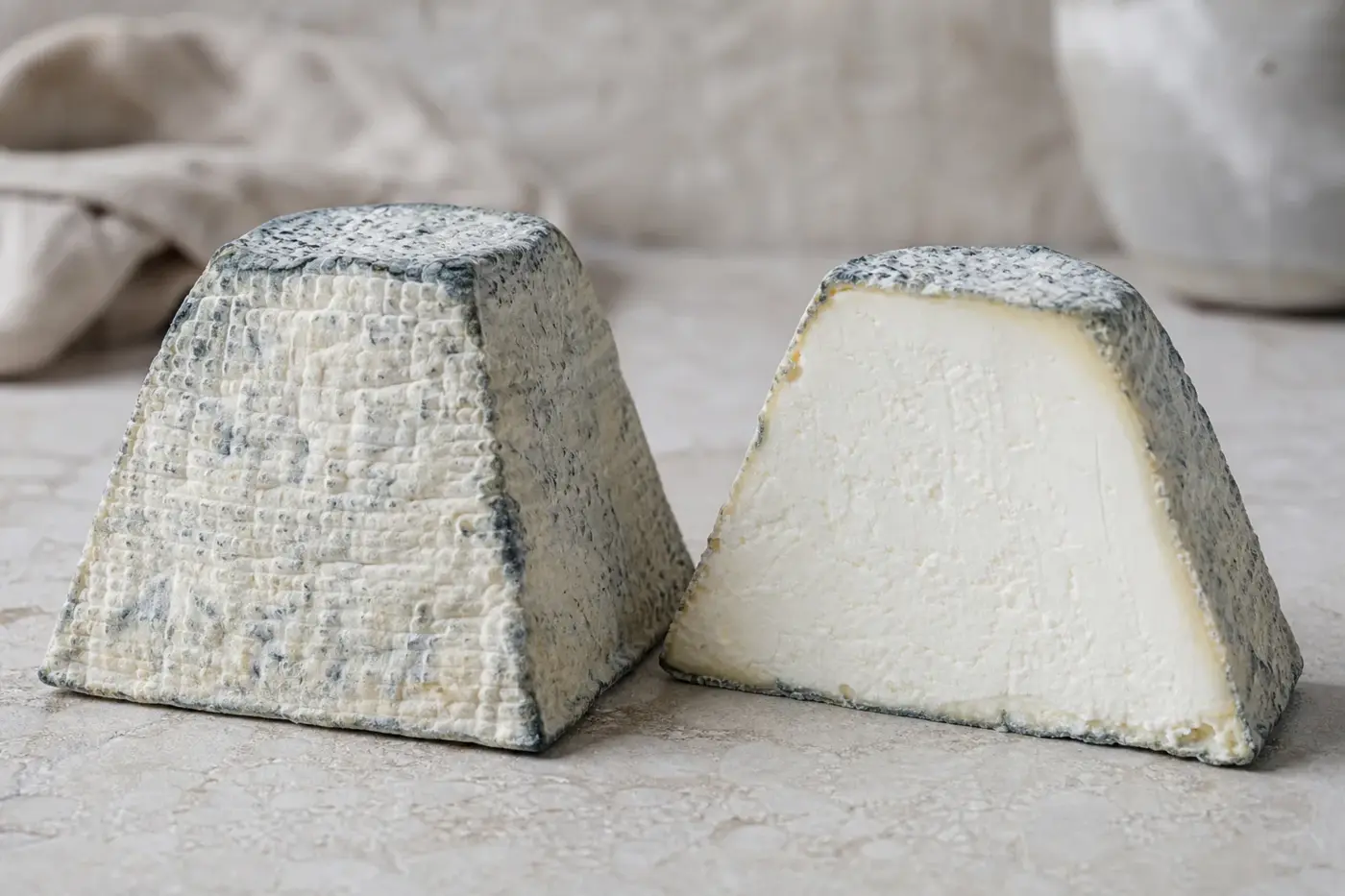
At the cheese counter, a little pyramid catches your eye. Its ivory rind, sometimes dusted blue and grey, wraps the light paste of Norton & Yarrow’s goat’s cheese. Created in Oxfordshire, Sinodun Hill moved with its maker to Carmarthenshire in January 2025. Now made near Llangadog, it answers to both Sinodun Hill and Bryn Sinodun. [1, 2]
| Your quick guide | What to know |
|---|---|
| Names to look for | Sinodun Hill; Bryn Sinodun [1] |
| Maker and home today | Norton & Yarrow Cheese, Pencrug, near Llangadog, Carmarthenshire, Wales [1, 2] |
| Where the milk comes from | The maker’s own goats, according to its current account [1] |
| Milk treatment | Ask the maker for current details |
| What sets the milk | Cardoon thistle rennet, described by the maker as vegetarian [1] |
| Style and shape | Soft, lactic, naturally ripened pyramid [1, 5] |
| Time in the dairy | Four days for the initial make, then ripening for up to 21 days, according to the maker [1] |
| Registered name and register ID | Details unavailable here |
Meet the pyramid with two names
If you spot Bryn Sinodun at the counter, you have found Norton & Yarrow’s Welsh name for Sinodun Hill. Both appear on its current cheese page. You need not make room in your cheese notebook for a separate entry. [1]
Its character begins with a slow set. This is a lactic cheese: gradual acid development does the work, rather than a quick, firm set alone. The pyramid takes shape later, when drained curd goes into moulds. For help separating method, texture and rind, explore how to tell cheese styles apart. [5]
Delicate curd needs gentle hands. Norton & Yarrow’s production accounts describe careful handling, followed by conditions that encourage surface growth. The rind develops and changes while the interior stays white. [4, 5]
From Oxfordshire to a Welsh family home
Norton & Yarrow dates its decision to become cheesemakers to August 2014. In 2015, the business became a tenant at Earth Trust Farm in Oxfordshire through the Farm Step programme. For new farming businesses, that programme opened the door to land and farm buildings. [2]
Nearly ten years later, in January 2025, the maker moved to Pencrug. Its current cheese page places production on its own farm near Llangadog, Carmarthenshire. Those accounts let you follow the cheese from its Oxfordshire beginnings to its Welsh home. [1, 2]
For the family, Pencrug was familiar ground. According to the maker, a founder’s parents lived and worked on the farm during the 1970s. Cheesemaking was arriving somewhere that already had a place in the family story. [2]
A September 2026 farm update gives you a glimpse of daily life there. It describes continuing dairy work and the start of another cheese room. Outside, a dry summer and returning autumn rain were shaping the grazing and winter forage. [9]
The Oxfordshire hill that came along
Sinodun Hill takes its name from an ancient hill fort near the Oxfordshire farm where the cheese was created, according to Norton & Yarrow. The name carries that beginning with it. Bryn Sinodun acknowledges its Welsh setting. [1]
Each place contributes something different to the story. Oxfordshire explains the name and origin; Carmarthenshire is the present production home. When you read an older description, keep the maker and production details alongside the name.
Having both names helps you follow the move without losing your bearings. Perhaps you remember Sinodun Hill from Oxfordshire, or have met Bryn Sinodun through a Welsh cheesemonger. Norton & Yarrow keeps both connections in view. [1, 2]
Get acquainted with the goats
The maker’s current account says its cheeses use milk from its own goats. The herd began with purebred Anglo-Nubians. Today, the breeding programme also includes British Toggenburg, French Alpine and British Saanen ancestry, in several combinations. [1, 3]
Norton & Yarrow wants goats suited to outdoor grazing and to producing milk for cheese. It reports a usual grazing season of approximately March to October. Breeding and the everyday management of the herd are closely connected. [3]
The milk story has changed over time. A February 2023 dairy diary records winter milk from the Oxfordshire herd being supplemented by another local goat farm, while many of its own animals were dried off before kidding. Keep that Oxfordshire account separate from today’s description of milk from the Pencrug herd. [6]
For current milk treatment details, ask the maker directly. You can explore the differences in raw, thermised and pasteurised cheese.
Good pyramids take their time
An overnight set begins the process described by Norton & Yarrow’s cheesemaking team in February 2021. Starter cultures, yeasts and rennet go into the milk. Then the team waits as lactic acid develops from milk sugar and a soft set forms. [5]
The curd, the milk solids held in that set, needs careful handling. The team describes ladling it into draining bags and leaving it for another night. Once it reaches a consistency like cream cheese, it is salted and put into moulds. Careful filling gives each pyramid its corners and edges. [5]
After unmoulding, the cheeses enter the dairy’s warmer “hastening” room, where surface flora are encouraged to develop. A cooler maturing room follows. The current cheese description allows four days for the initial make, followed by ripening for up to 21 days. [1, 5]
Patience runs through that 2021 account: slow setting, unhurried draining, gentle shaping and surface ripening. The maker emphasised minimising curd breakage, supported by measurement and observation. [5] Read this as a historical production account, rather than a description of current Pencrug practice; for the broader picture, explore how cheese is made.
Take a closer look at those wrinkles
A wrinkled, yeast-led surface is the aim in Norton & Yarrow’s June 2016 rind account. A deliberately thick, fluffy white coat is not. Its photographs show a plain white exterior becoming a more textured, cream-coloured rind. [4]
That small surface has plenty going on. Milk composition, season, humidity, temperature, draining, drying and time all influence its development, according to the same account. You are looking at the result of several conditions, not a fixed appearance that every pyramid must share. [4]
The maker’s current description also notes seasonal blue and grey dusting on the ivory rind. [1] Ask your cheesemonger what surface and maturity to expect from the cheese in front of you. If something changes unexpectedly at home, follow the label instructions and officially grounded mould guidance, rather than colour alone.
Taste your way from citrus to almond
Fresh citrus develops into almond and red-fruit notes as the cheese ages, according to Norton & Yarrow. The maker describes a characteristic mousse-like texture. Keep those details in mind if you compare a younger pyramid with a more developed one. [1]
The Fine Cheese Co, which sells the cheese, also describes a light paste, with sweetness and complexity. Its account of a thin, wrinkled coat echoes the surface development in the maker’s photographs. Before you take a bite, you already have a few clues to follow. [7]
Smell the rind and freshly cut paste separately. Taste a little from the centre, then try paste and rind together. Notice texture first, followed by acidity, sweetness and the finish. Only then compare your impressions with the maker’s or retailer’s descriptions.
If citrus draws you in, ask for a fresher example. If almond and fruit sound more tempting, discuss a more developed cheese with your cheesemonger. The oldest pyramid on the counter does not automatically win; this is cheese, not a seniority contest. Choose the stage you enjoy. [1]
A Goat class gold for the record
The Artisan Cheese Awards’ published 2026 results name Sinodun Hill, made by Norton & Yarrow Cheese Ltd, as the winner of class 8, Goat. They also record a gold in that class. It is a specific achievement, with a year and category attached. [8]
At the counter, bring your attention back to the individual cheese. Its maturity and condition are your more immediate guides to choosing something you will enjoy. The award belongs in the story, but your taste has a say too.
Let the first bite speak for itself
Start with plain bread or an unsalted cracker, then try a little fresh pear or apple. Taste the cheese alone first. You will have more room to notice its acidity and texture before an accompaniment joins in.
For an alcohol-free drink, begin with still water. A restrained apple drink is another option if you fancy a fruit pairing. These suggestions draw on the published citrus, almond and fruit descriptors, rather than a recorded site tasting. [1, 7]
For UK advice on chilling food at home and serving it, consult the current Food Standards Agency guidance. [10] You can find the wider routine in how to store cheese at home.
General information only, not medical advice: follow the official guidance where you live.
Questions people ask
Are Sinodun Hill and Bryn Sinodun the same cheese?
Yes. Bryn Sinodun is Norton & Yarrow’s Welsh name for Sinodun Hill.
Where is Sinodun Hill made?
It was created in Oxfordshire and is now made on Norton & Yarrow’s farm near Llangadog in Carmarthenshire. The maker moved to Pencrug in January 2025.
Is Sinodun Hill made with pasteurised milk?
The page says the current milk treatment has not been verified with the maker. Norton & Yarrow’s current account says its cheeses use milk from its own goats.
Is Sinodun Hill suitable for vegetarians?
Norton & Yarrow describes its cardoon thistle rennet as vegetarian. The cheese is made with goat’s milk.
What does Sinodun Hill taste like?
Norton & Yarrow describes fresh citrus flavours that develop into almond and red fruit notes as the cheese ages. The maker describes its texture as mousse like.
Sources
- Norton & Yarrow Cheese, Our Cheese, undated current maker page, retrieved November 2026. Names, production location, milk source, cardoon rennet, making period, maturation and attributed sensory description. Source.
- Norton & Yarrow Cheese, Our Story, undated current maker history, retrieved November 2026. Business beginnings, Earth Trust tenancy, January 2025 move and family connection to Pencrug. Source.
- Norton & Yarrow Cheese, Our Goats, undated current husbandry account, retrieved November 2026. Breeding programme and usual grazing season. Source.
- Norton & Yarrow Cheese, Rind and about, displayed publication date 13 June 2016. Historical maker account and photographic sequence of rind development. Source.
- Norton & Yarrow Cheese, Is cheese making a science or an art? The ‘secrets’ of handcrafting artisan goat’s cheese, 1 February 2021. Cheesemaking team’s production account. Source.
- Norton & Yarrow Cheese, A Day in the Life..., 3 February 2023. Dated dairy diary, including supplementary winter milk sourcing. Source.
- The Fine Cheese Co, Sinodun Hill, undated current product listing, retrieved November 2026. Retailer-declared pasteurisation and attributed product description. The organisation sells the cheese. Source.
- Artisan Cheese Awards, 2026 Artisan Cheese Awards, 2026 results. Class winners table, class 8, and individual award results. Source.
- Norton & Yarrow Cheese, September at Pencrug: rain, new beginnings and a new cheese, 14 September 2026, year established by the site’s archive. Farm and dairy update. Source.
- Food Standards Agency, Storing chilled foods at incorrect temperatures, 2023 research publication, retrieved November 2026. Published account of household chilling guidance and business serving and display guidance. Source.
Researched from the maker’s current pages and dated production accounts, the competition organiser’s results, a declared retailer source and published FSA guidance.
Last checked: November 2026
Last checked November 2026.
The editors suggest you read next
Caerphilly
Your knife meets a rind-ripened Caerphilly, and one wedge offers two pleasures: a fresh, crumbly centre and a softer, creamy layer just beneath the rind.