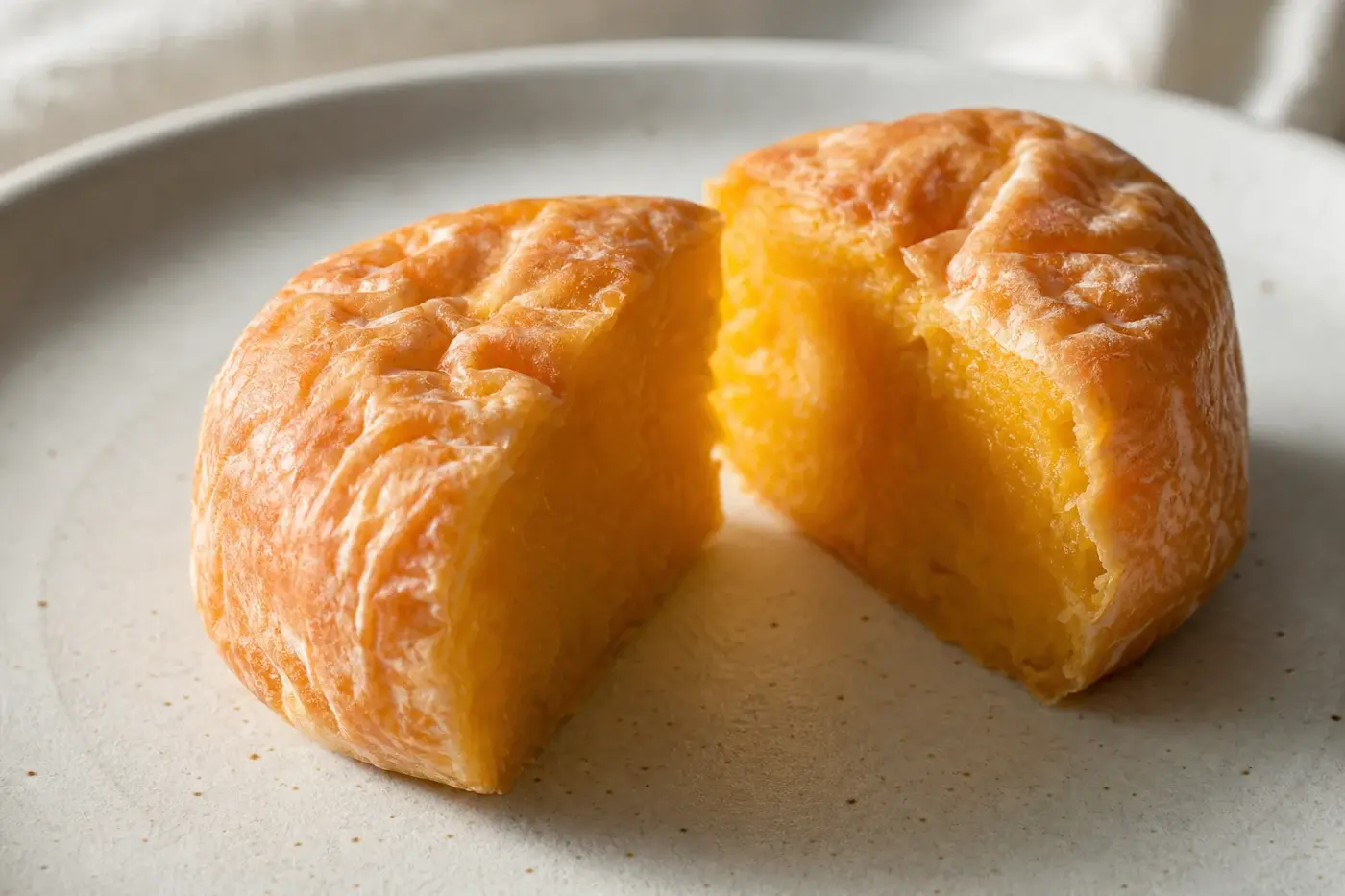
First, those delicate wrinkles and that peachy orange rind. Cut beneath them and you meet a golden interior: White Lake Cheese’s Solstice, a soft, pasteurised Jersey cow’s milk cheese washed in local Somerset Cider Brandy. The maker describes gentle sweetness and acidity, with savoury character from the wash. Somerset has brought something rather good to the table. [1]
| Your first look | What to know |
|---|---|
| Name | Solstice. [1] |
| Maker and home | White Lake Cheese, Bagborough Farm, Pylle, Somerset, England. [2] |
| Milk and treatment | Jersey cow’s milk, pasteurised. [1] |
| Style and rennet | Soft, washed rind; vegetarian rennet, as declared by the maker. [1] |
| Listed weight | 180 g. [1] |
| Rind treatment | Local Somerset Cider Brandy. [1] |
Come to Somerset, where Solstice begins
Start at Bagborough Farm in Pylle, near Glastonbury. White Lake began in 2004 on a family farm whose cheesemaking roots reach back to the 1930s, according to the dairy’s account. For Solstice, that Somerset connection reaches from the dairy’s home right through to the local drink used to wash its rind. [1,2]
There is room for curiosity here. White Lake describes a facility designed for small-batch production, using goat’s, sheep’s and cow’s milk, including milk from its own goat herd. Solstice comes from that varied setting, rather than a dairy devoted to making just one cheese. [2]
The Cider Brandy wash gives you a tangible taste of that experimental spirit. A local drink becomes part of tending the cheese’s surface as it matures. It also gives Solstice a distinguishing feature within White Lake’s wider range: a little Somerset character, applied to the rind. [1,2]
If you are exploring British cheese, keep those two clues together. Somerset tells you where the maker works; “washed rind” tells you something about how the cheese develops. Place and method share the story, but each answers a different question.
Meet the milk, not just the dairy
For Solstice, White Lake declares pasteurised Jersey cow’s milk and vegetarian rennet. In a dairy working with several animal milks, those particulars matter. Start with this cheese’s own details, rather than taking your cue from the rest of the range. [1,2]
It helps to separate four questions: species, breed, treatment and supplier. “Cow’s milk” names the animal, “Jersey” the breed and “pasteurised” a treatment. The farm address tells you where the cheese is made; a supplier statement tells you where its milk began.
White Lake’s own goat herd supplies goat’s milk and belongs firmly in the dairy’s story. It does not explain where Solstice’s cow’s milk comes from. The supplier of its Jersey cow’s milk is not established here. [2]
For the broader differences between treatments, explore raw, thermised and pasteurised milk. When you choose an individual cheese, read its current product information alongside the packaging. Even cheeses sharing a dairy can have different milks and recipes, so give each one its own introduction.
Give that wrinkled rind a proper look
Before you take a bite, spend a moment with the rind. White Lake’s terminology guide describes washed-rind cheeses as receiving a surface wash, usually brine or alcohol. It connects that treatment with distinctive rind colour and deeper flavour. [3]
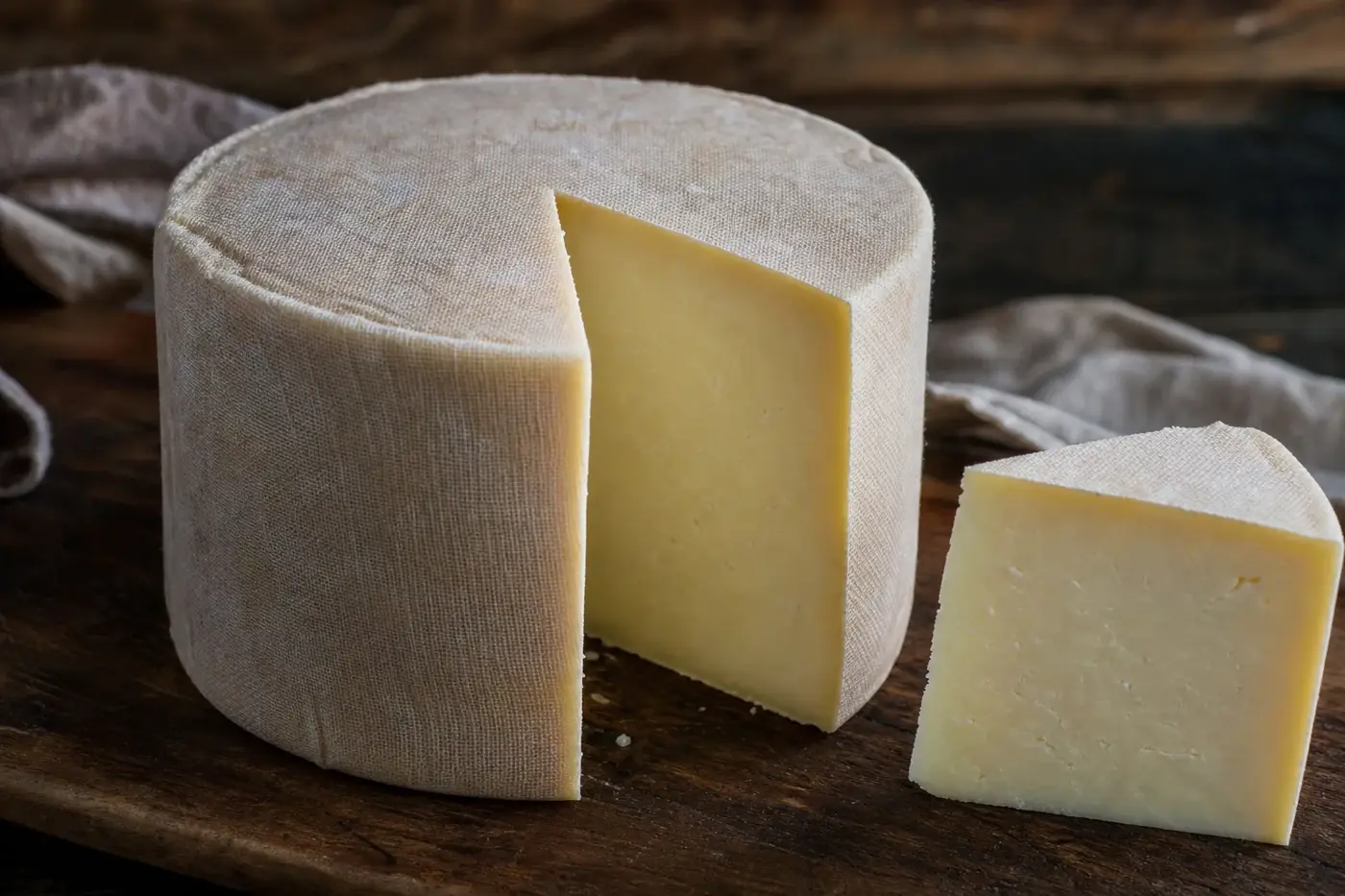
For Solstice, the maker describes delicate rind wrinkles and a bright golden paste. [1] “Paste” is simply the cheesemaking word for the interior, not a suggestion for your next sandwich. When you cut the cheese, notice the surface and its condition, then the consistency underneath.
You can learn more from looking closely than from reaching straight for “creamy”. Is the rind smooth or folded, dry or moist? Does the interior hold a clean cut, or yield beneath the knife? The contrast between outside and inside gives you more to work with than one broad texture word.
For a useful framework, turn to cheese styles. It brings milk, rind, texture and method together. You can use those clues to put the cheese on your plate into context.
Follow the wash into the maturing room
The Somerset Cider Brandy wash is the defining published detail of Solstice’s maturation. White Lake also identifies its milk treatment and rennet. [1] The table below puts those details into the making sequence, alongside the settings that would need a technical account from the maker.
| Stage in the making | What it tells you about Solstice |
|---|---|
| Preparing the milk | Pasteurised Jersey cow’s milk. [1] |
| Forming the curd | Curd is the solid part formed when milk coagulates. Vegetarian rennet declared; cultures, quantities and setting conditions: not established. [1] |
| Moulding and draining | Equipment, handling and timings: not established. |
| Tending the surface | Somerset Cider Brandy wash; dilution and frequency: not established. [1] |
| Maturing the cheese | Duration, temperature and humidity: not established. |
Picture two kinds of work: making the cheese’s body, then tending it. Milk treatment and rennet belong to the first part; washing manages the surface afterwards. For the general sequence, follow how cheese is made.
White Lake’s glossary offers another helpful distinction. “Lactic” describes a refreshing sour flavour reminiscent of yoghurt, while “washed rind” describes a surface treatment. One is a sensation, the other a method, so both can describe the same cheese without meaning the same thing. [3]
Then comes the question for your next meal: how ripe would you like it? White Lake’s FAQ says it aims to dispatch cheeses ready to eat, although some arrive younger. Its October 2026 cheeseboard guidance recommends asking a cheesemonger to help you choose your desired ripeness, then following storage advice and use-by dates. [4,9]
Give the seller a practical starting point: “I want to serve this on Saturday; which cheese is ready for that?” A serving date makes your request specific. Asking for the oldest cheese is not quite the same thing, however tempting it is to equate age with wisdom.
Find the sweetness, then the savoury side
White Lake describes Solstice as mildly sweet, with gentle lactic acidity and savoury aromas and flavours from the wash. Further ageing, it says, brings more pronounced flavour and a softer texture. Use those descriptions as a starting point when you taste the cheese at different stages of ripeness. [1]
Begin with a small piece of paste, without bread or accompaniments. Notice how sweetness and acidity sit together; you need not name every sensation at once. If the supplier confirms that the rind is intended to be eaten, try a second bite with a little rind and compare.
Give aroma, texture and flavour a turn each. Smell before tasting, notice the texture as you eat, then consider the flavour that remains afterwards. Your notes might record what arrives first, whether the acidity feels refreshing and what changes when you add an accompaniment.
Keep those observations clear enough to compare later. You are finding useful words for what is in front of you, not delivering a grand verdict. There is no need to make your lunch sound like an awards ceremony.
A gold medal with a Somerset name attached
Solstice won gold in class 17, “Wash Rind”, in the Artisan Cheese Awards’ published 2024 results. The entry names White Lake Cheese Ltd as the maker. That gives you the cheese, its category and its result together. [5]
Keep the category with the medal: it places Solstice among the competition’s washed-rind entries. The competition and year matter, too. Together, they mark a precise moment in its history, rather than describing every example sold afterwards.
When you choose the cheese to take home, look at its condition and consider your serving date. The award gives you historical context. Ripeness and handling help you choose the particular cheese that will arrive at your table.
Keep Solstice cool and serving simple
White Lake recommends refrigerating soft cheeses and keeping their original packaging. For an opened cheese, it suggests foil as an alternative. [6] If you move Solstice into another container, keep its storage instructions with it so that the handling advice stays close at hand.
For households in England, Wales and Northern Ireland, the Food Standards Agency recommends a fridge temperature between 0 and 5 °C (32 to 41 °F). Follow the packaging instructions and keep chilled food outside refrigeration for the shortest possible time during preparation, with a maximum of four hours. This guidance is presented here for November 2026. [7]
Keep your serving routine straightforward. Start with the cheese’s own instructions, and keep them with it:
- Read the pack first. Check the date and storage instructions before planning your meal.
- Prepare everything else. Keep the cheese chilled while you set out plates, bread and a clean knife.
- Bring out what you expect to serve. Allow brief tempering as you finish setting the table, within the FSA limit above. Do not leave the cheese on display throughout the day. [7]
- Taste before adding accompaniments. Start with the paste, then follow the supplier’s advice for that batch about eating the rind.
- Rewrap and refrigerate promptly. Keep the original label, including its date and handling instructions. [6,7]
Ask the seller directly whether Solstice’s rind is intended to be eaten. Follow the instructions supplied with your cheese. Advice for the cheese you have is more useful than a blanket rule for every washed-rind product.
If you are sharing a board, put strongly flavoured accompaniments in separate dishes. Everyone can then taste the cheese alone before adding something alongside. It also leaves the cut face clear, so you can see the paste as you serve.
For more practical help, visit storing cheese at home. Use that wider guide alongside the instructions for your own cheese, keeping those instructions close by.
Make a little room for Solstice on your plate
Start simply: plain bread or an unseasoned cracker, followed by one contrasting accompaniment. This suggested approach keeps your first serving focused on Solstice. Give yourself time to notice the cheese before bringing several other flavours to the plate.
White Lake’s pairing guide recommends dried apricots and dates with cow’s milk cheeses, or cornichons and pickled onions for contrast. These suggestions apply to the milk category, not Solstice alone. [8] Try a little alongside, then compare a bite with the accompaniment against one without.
For your glass, suggested options are water, cider without alcohol, or apple juice diluted with sparkling water. These are serving ideas rather than recorded tasting results. Pick one and notice how it sits alongside your cheese.
One bread, one accompaniment and one drink offer enough variation for a thoughtful first serving. If comparing combinations is part of your pleasure, change just one element at a time. You will find it easier to notice what each addition brings, with Solstice still at the centre of the plate.
General information only, not medical advice: follow the official guidance where you live.
Questions people ask
What milk is Solstice made from, and is it vegetarian?
Solstice is made from pasteurised Jersey cow’s milk. White Lake declares that it uses vegetarian rennet.
What does Solstice taste like?
White Lake describes it as mildly sweet, with gentle lactic acidity and savoury aromas and flavours from the wash. The maker says further ageing brings a more pronounced flavour and softer texture.
Can you eat the rind of Solstice?
The page says to ask the seller whether the rind is intended to be eaten. Follow the instructions supplied with your cheese.
How should Solstice be stored?
White Lake recommends refrigerating soft cheeses in their original packaging, or using foil as an alternative once opened. For England, Wales and Northern Ireland, the Food Standards Agency advises a fridge temperature of 0 to 5 °C and keeping chilled food outside refrigeration for the shortest possible time, up to four hours; consult its current guidance.
What goes well with Solstice?
The page suggests starting with plain bread or an unseasoned cracker. White Lake recommends dried apricots and dates with cow’s milk cheeses, or cornichons and pickled onions for contrast.
Sources
[1] White Lake Cheese, Solstice, undated product description and product information, retrieved November 2026.
Read at whitelake.co.uk
[2] White Lake Cheese, Introduction to Your Cheese, “Our story”, undated, retrieved November 2026.
Read at whitelake.co.uk
[3] White Lake Cheese, Cheese Terminology Explained!, undated, retrieved November 2026.
Read at whitelake.co.uk
[4] White Lake Cheese, FAQ, “Will my cheese arrive ripe and ready?”, undated, retrieved November 2026.
Read at whitelake.co.uk
[5] Artisan Cheese Awards, Award Winners 2024 Artisan Cheese Awards, 2024, results table, White Lake Cheese Ltd rows.
Read at artisancheeseawards.com
[6] White Lake Cheese, Caring for Your Cheese, undated, retrieved November 2026.
Read at whitelake.co.uk
[7] Food Standards Agency, How to chill, freeze and defrost food safely, GOV.UK publication dated 18 December 2017, retrieved November 2026. Applies to England, Northern Ireland and Wales.
Read at gov.uk
[8] White Lake Cheese, Perfect Pairings, undated, retrieved November 2026.
Read at whitelake.co.uk
[9] White Lake Cheese, My top tips for the perfect Christmas Cheeseboard, 29 October 2026.
Read at whitelake.co.uk
Researched through the maker’s published information, the awarding organisation’s results and official household chilling guidance; serving and drink suggestions are identified as editorial recommendations.
Last checked: November 2026
Last checked November 2026.
The editors suggest you read next
West Country Farmhouse Cheddar Cheese
Large pieces of curd turn and stack under the cheesemaker’s hands.