Spressa delle Giudicarie
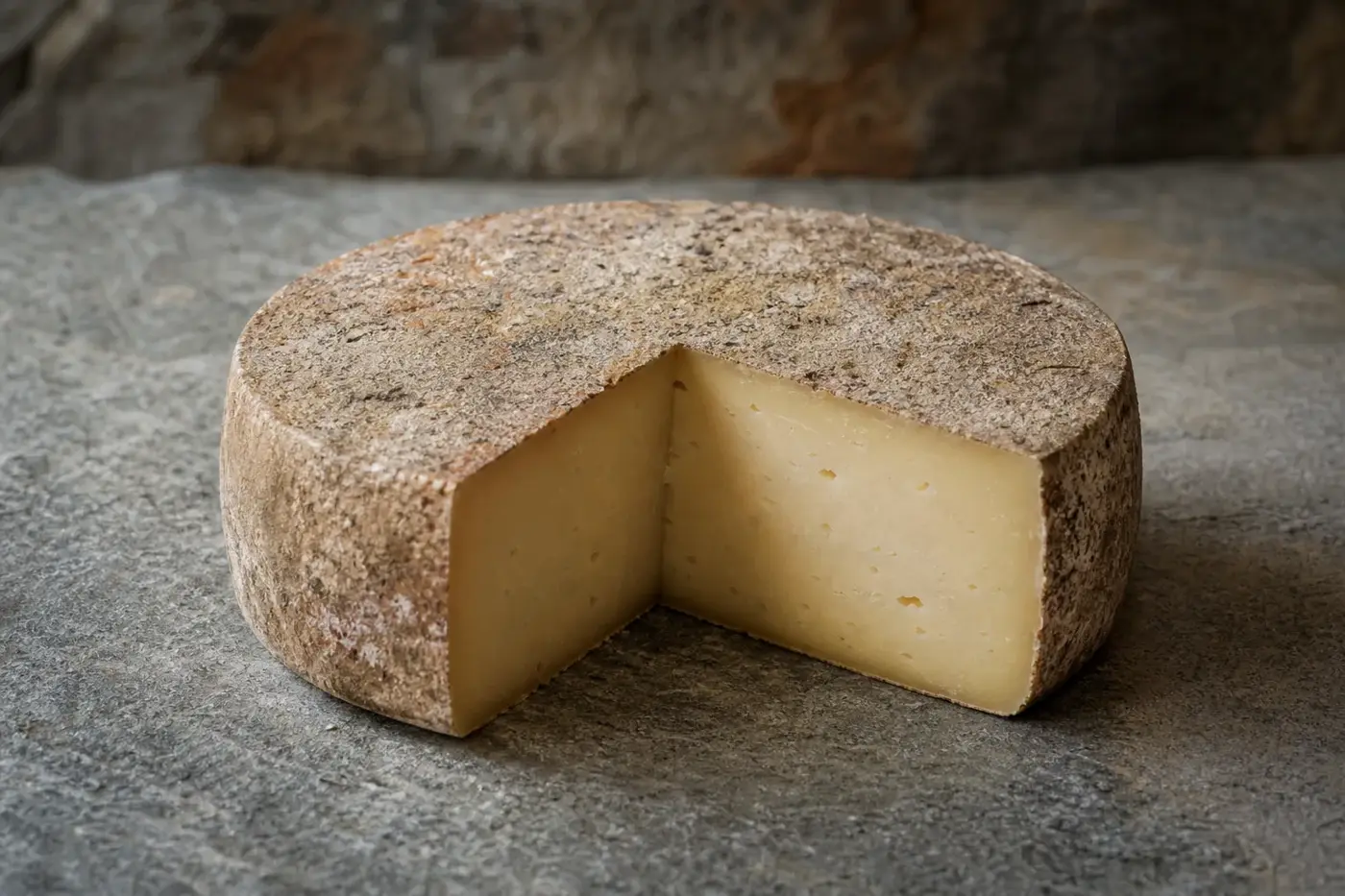
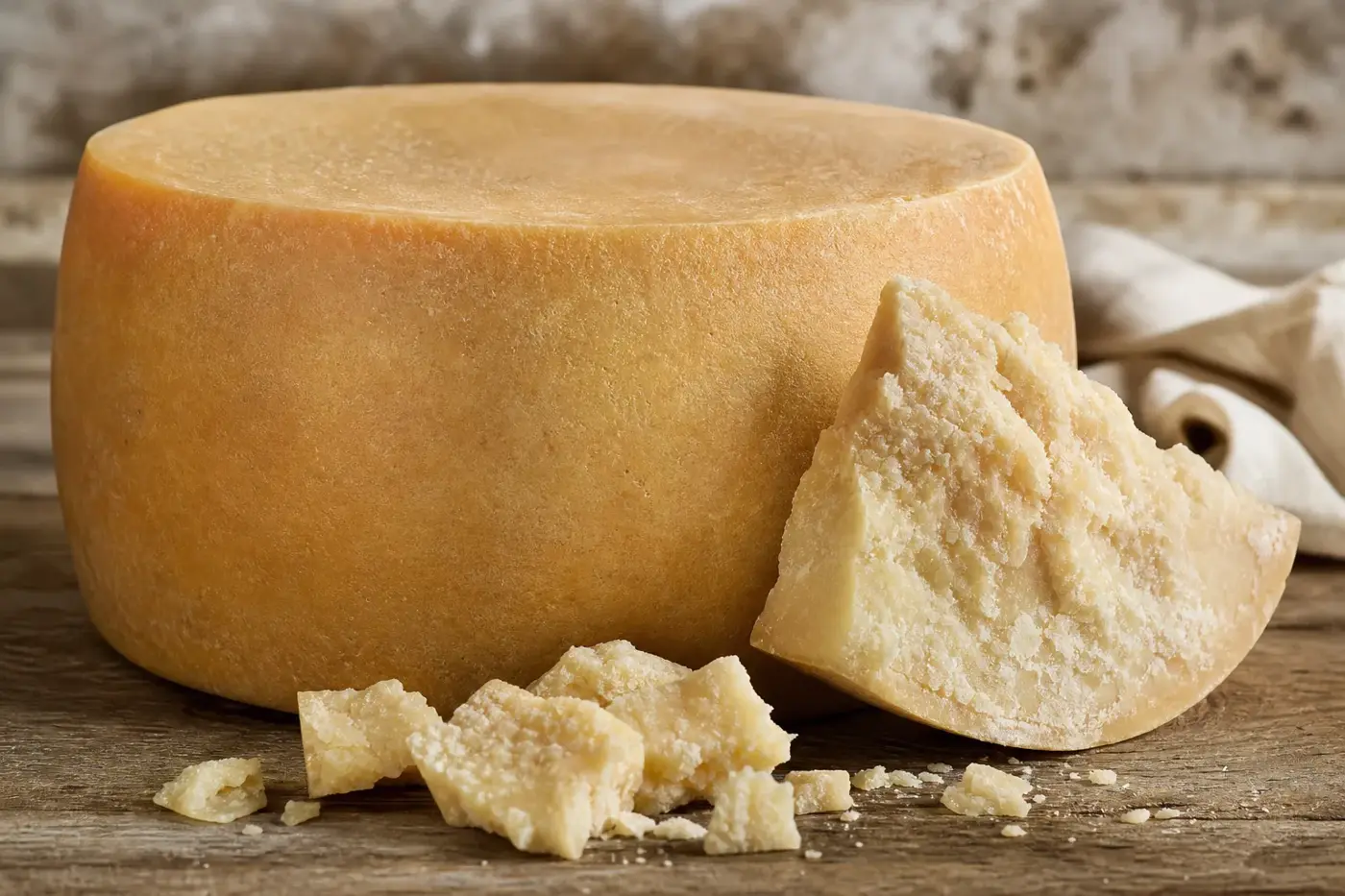
Cut into young Spressa delle Giudicarie and you find a supple paste beneath its ochre rind.
Cut into young Spressa delle Giudicarie and you find a supple paste beneath its ochre rind. Its story begins with a practical bargain: butter went to market, while cheese stayed home to feed the farming household. Made in Trentino from raw cow’s milk after the cream had been skimmed away, it grows more assertive with age. Today, its name is registered as a protected designation of origin in Great Britain.[1][2][5]
A first taste before you choose * Milk from five cattle breeds is permitted.[1] * Look for sweet giovane or more savoury stagionato.[1] * The wheel’s marking identifies the designation, dairy and production lot.[1]
Registered name: Spressa delle Giudicarie.[1][5]
Registration authority: European Commission, EU; Defra, Great Britain.[4][5]
EU register ID: Unconfirmed.
EU designation: PDO registered under Regulation (EC) No 2275/2003; current register status: unconfirmed.[4]
Great Britain: Registered PDO, 31 December 2020; status as at November 2026.[5]
Origin: Giudicarie, Chiese, Rendena and Ledro valleys, Trentino, Italy.[1]
Milk: Raw cow’s milk, partially skimmed by natural cream separation.[1]
Coagulant: Bovine rennet.[1]
Minimum maturation: Giovane, three months; stagionato, six months.[1]
Production season: 10 September to 30 June.[1]
Typical ageing: Unconfirmed.
Fat in dry matter: 33 to 43%.[1]
Moisture in the whole cheese: 32 to 40% for giovane; 28 to 38% for stagionato.[1]
Rind: Natural, irregular and elastic.[1]
Additives: Not permitted by the specification.[1]
Butter for market, cheese for the household
Even the name carries a little of that farming history. The producers’ consortium traces Spressa to spress, meaning “pressed” or “squeezed”, a reference to milk with its cream removed. Butter was sold; the cheese made afterwards fed farming households. Skimming belonged at the heart of the local dairy economy, rather than being a modern adjustment to the recipe.[2]
The consortium describes repeated skimming in the past. Today, cream still separates naturally, but the finished cheese must contain 33 to 43% fat in dry matter. If you are puzzling over that phrase, it means fat as a share of the solids left after excluding water, not grams of fat in a 100 g portion.[1][2]
Follow your wedge through four valleys
Spressa belongs to the Giudicarie, Chiese, Rendena and Ledro valleys in Trentino. Its legally defined production area covers where the milk originates, where the cheese is made and where it is treated until maturation is complete. You can follow its connection to these valleys from cattle to ripening room.[1]
Article 3 of the specification sets out the boundary through named municipal territories, including Pinzolo, Giustino, Storo, Fiavé, Stenico and Tione. The list also includes Bleggio Inferiore, Lomaso and Molina di Ledro. For the precise boundary, consult that official list: “made in Trentino” alone does not qualify a cheese for the name.[1][3]
Meet the five breeds behind the milk
Rendena has company here. It is one of five permitted cattle breeds, alongside Bruna, Grigio Alpina, Frisona and Pezzata rossa. The milk comes from two or three successive milkings of cows kept within the production area. A dairy may use one breed or several, so you should not assume that Spressa comes exclusively from local Rendena cattle.[1]
Hay from permanent meadows forms part of the prescribed feeding system. Milk from high summer pastures, or malghe, is excluded, as is milk from cows fed exclusively on grass or on silage. Cows may graze valley meadows and intermediate mountain holdings before or after summer pasturing, provided they also receive hay.[1]
Here is the unexpected detail: this mountain cheese specifically excludes summer alpine dairy milk. Production runs from 10 September to 30 June. Those dates tell you when the cheese can be made, not when you can eat it. Every wheel still needs its prescribed maturation.[1]
From rising cream to the ripening room
First, cream rises naturally in stainless steel containers and is skimmed away. The milk used for cheesemaking stays raw. Thermisation, a heat treatment distinct from pasteurisation, is permitted only for the portion used to prepare the natural milk starter. Selected starter cultures of local lactic acid bacteria may also be added.[1]
Bovine rennet sets the milk into a gel at 33 to 37 °C, taking 20 to 50 minutes. The curd, the solid part that will become cheese, is cut into grains the size of rice. Those grains are stirred and heated to 40 to 44 °C. The specification prohibits additives.[1]
The curd then rests beneath the whey, the liquid separated from it, before being lifted into shaping moulds. The specification describes moulding but gives no separate pressing pressure or duration; whether and how pressing happens remains unclear. The wheels wait at least 24 hours before salting, then receive either eight to twelve days of dry salting or four to six days in brine.[1]
Next comes the ripening room, held at 10 to 20 °C and 80 to 90% relative humidity. These are dairy production conditions, not instructions for your fridge. If you would like to follow the broader journey from curd formation to whey removal, explore how cheese is made.[1]
Take a look beneath the ochre rind
Picture a low cylinder weighing 7 to 10 kg, measuring 30 to 35 cm across and 8 to 11 cm high. Its sides are straight or slightly convex, and its faces flat or gently uneven. The natural rind is irregular and elastic, with colours running from greyish brown to dark ochre.[1]
Cut inside and you find a compact, semi-hard paste, white to pale straw, scattered with small or medium eyes. Those openings are part of the cheese’s recognised appearance. Young Spressa is particularly elastic: the cut face holds together like a table cheese. You do not get the brittle, granular texture associated with some long-aged grating cheeses.[1]
Giovane or stagionato: find your favourite
For the younger expression, choose giovane, matured for at least three months. For stagionato, the minimum is six months. Ask the actual age when comparing wedges, because these are starting points, not fixed birthdays. Older means a different Spressa, not automatically a better one.[1]
The specification describes giovane as sweet and stagionato as more savoury, with a barely perceptible bitter note. Mature cheese also has stronger, more marked aromas. Moisture ranges differ too: 32 to 40% for giovane and 28 to 38% for stagionato, measured in the whole cheese.[1]
Let the wheel’s markings tell their story
DOP is Italian shorthand for protected designation of origin, or PDO in English. The EU regulation registering Spressa delle Giudicarie as a PDO was adopted on 22 December 2003 and published on 23 December 2003. For its current EU register status and controlling specification, consult the official register. Great Britain’s separate official register records PDO registration from 31 December 2020.[4][5]
Look for the full name, Spressa delle Giudicarie DOP. Marking moulds impress the designation into the wheel’s side, together with the dairy’s identity and production lot. Packaged portions must carry the designation, dairy reference and lot too. Your wedge may keep only a fragment of that rind inscription, so its accompanying label deserves a look.[1]
If you are curious about the difference between a protected name and a general cheese style, try protected names explained. For the piece in front of you, turn to how to read a cheese label.
Start with bread, then head for the kitchen
Begin with a plain slice and bread. A firm country loaf or rye bread lets you taste the cheese without sweet glazes or strong condiments getting in the way. If you have both ages, try giovane first, then the mature cheese. Notice the more pronounced aroma and the increasingly savoury finish.[1]
For cooking, the consortium’s recipes bring you back to the cheese’s home region. There are canederli, bread dumplings made with Spressa and fresh sausage; asparagus gratinated with Spressa and speck; and small courgette frittatas. A cheeseboard need not be its only social engagement. Choose the age to suit your other ingredients, rather than treating giovane and stagionato as interchangeable.[6]
Pour still or sparkling water alongside either age. It keeps things simple and lets you taste the contrast between the two clearly.
Choose your wedge and bring it home
At the counter, ask three things: is it giovane or stagionato, how long has it matured, and when was it cut? The more elastic young cheese offers you a gentler introduction. Choose the mature version for a more emphatic flavour, and take home both the storage instructions and the label.[1]
At home, the UK Food Standards Agency’s guidance for England, Wales and Northern Ireland recommends refrigeration at 0 to 5 °C (32 to 41 °F). Refrigerate dairy products, follow packaging instructions and observe date labels. Use a fridge thermometer rather than relying on the dial alone. Follow any product-specific instruction about how soon to eat an opened portion.[7]
Cut only what you plan to serve and return the rest to refrigeration. Let your serving portion lose its refrigerator chill shortly before eating. The same FSA guidance says to keep chilled food out for the shortest possible time, with a maximum of four hours during preparation. That is a limit, not a target: keep the total time out brief.[7]
For help with wrapping, organising your fridge and handling a cut piece, continue to how to store cheese at home.
General information only, not medical advice: follow the official guidance where you live.
Questions people ask
What milk is Spressa delle Giudicarie made from?
It is made from raw cow’s milk, partially skimmed by natural cream separation. The specification permits milk from Rendena, Bruna, Grigio Alpina, Frisona and Pezzata rossa cattle.
What is the difference between giovane and stagionato?
Giovane matures for at least three months and is described as sweet. Stagionato matures for at least six months and is more savoury, with stronger aromas and a barely perceptible bitter note.
Where is Spressa delle Giudicarie made?
It comes from the Giudicarie, Chiese, Rendena and Ledro valleys in Trentino, Italy. The defined area governs the milk’s origin, its transformation into cheese and its treatment until maturation is complete.
How can I recognise Spressa delle Giudicarie DOP?
Look for the full name, Spressa delle Giudicarie DOP. Packaged portions must also carry the dairy reference and production lot, and the wheel has these details impressed into its side.
How do you eat or cook with Spressa delle Giudicarie?
Try it with a firm country loaf or rye bread, tasting giovane before stagionato. The consortium’s recipes include canederli with Spressa and fresh sausage, asparagus gratinated with Spressa and speck, and small courgette frittatas.
Sources
- Ministero dell’agricoltura, della sovranità alimentare e delle foreste, Disciplinare di Produzione della Denominazione di Origine Protetta “Spressa delle Giudicarie”, undated ministry-hosted edition, Articles 1 to 8. Official specification.
- Consorzio volontario per la tutela del formaggio DOP Spressa delle Giudicarie, Storia, undated account on the consortium’s official website. History.
- Consorzio volontario per la tutela del formaggio DOP Spressa delle Giudicarie, Dove si fa, undated geographical account. Production area.
- European Commission, Commission Regulation (EC) No 2275/2003 of 22 December 2003, Official Journal L 336, 23 December 2003, pages 44 to 45, Articles 1 and 2 and Annex. Registration regulation.
- Department for Environment, Food & Rural Affairs, Spressa delle Giudicarie, UK protected food names register, published 4 January 2021, live entry retrieved November 2026. Great Britain register entry.
- Consorzio volontario per la tutela del formaggio DOP Spressa delle Giudicarie, Ricette, undated recipe and pairing suggestions. These are the cheese’s promotional consortium’s own recommendations. Dishes and wine pairings.
- Food Standards Agency, How to chill, freeze and defrost food safely, published 18 December 2017, live guidance retrieved November 2026, sections “Chilling food” and “How to stock your fridge”; applies to England, Northern Ireland and Wales. Official storage guidance, checked November 2026.
- Food Standards Agency, Alerts, live official recall and allergy alert portal, accessed November 2026. Official alerts.
This desk-researched article brings together the ministry-hosted specification, registration legislation, Great Britain’s register, attributed consortium accounts and official household storage guidance.
Last checked: November 2026
Last checked November 2026.
The editors suggest you read next
Parmigiano Reggiano
Break into a wheel of Parmigiano Reggiano and flakes fall away, revealing a finely granular cheese, pale straw to straw in colour.