Stichelton
On the Welbeck Estate in Nottinghamshire, the morning’s raw cows’ milk has a full day ahead of it.
On the Welbeck Estate in Nottinghamshire, the morning’s raw cows’ milk has a full day ahead of it. Its roughly 24-hour journey into Stichelton includes curds ladled and milled by hand.[1,2] Behind this English blue are cheesemaker Joe Schneider and cheese retailer Randolph Hodgson. They built their project around unpasteurised milk, the very ingredient that sets it apart from Great Britain’s pasteurised-milk requirement for Stilton.[1,2,6]
Three things to take to the cheese counter
- The Great Britain Stilton specification permits animal or non animal rennet.[6]
- Neal’s Yard Dairy suggests harvest ale, aged tawny port or dessert wine with Stichelton.[2]
- The NHS advises eating chilled ready to eat foods within four hours of taking them out of the fridge.[9]
| What you might want to know | Stichelton |
|---|---|
| Name to ask for | Stichelton.[1] |
| Where it’s made | Welbeck Estate, Nottinghamshire, England.[1,2] |
| Milk in the vat | Raw cows’ milk from the farm alongside the dairy.[1,2,3] |
| Rennet declared | Animal rennet.[1,2] |
| Cultures declared | Cheese cultures and Penicillium roqueforti.[1,2] |
| Allergen declared | Milk.[2] |
| Time to mature | Average 4 to 7 months, according to Neal’s Yard Dairy’s 2026 crib sheet.[2] |
| Registered name and register ID | Not specified here. |
| Legal minimum ageing | Not specified here. |
| Pregnancy guidance | UK NHS guidance on dairy foods and blue cheeses, November 2026.[8] |
There’s more here than “strong blue”
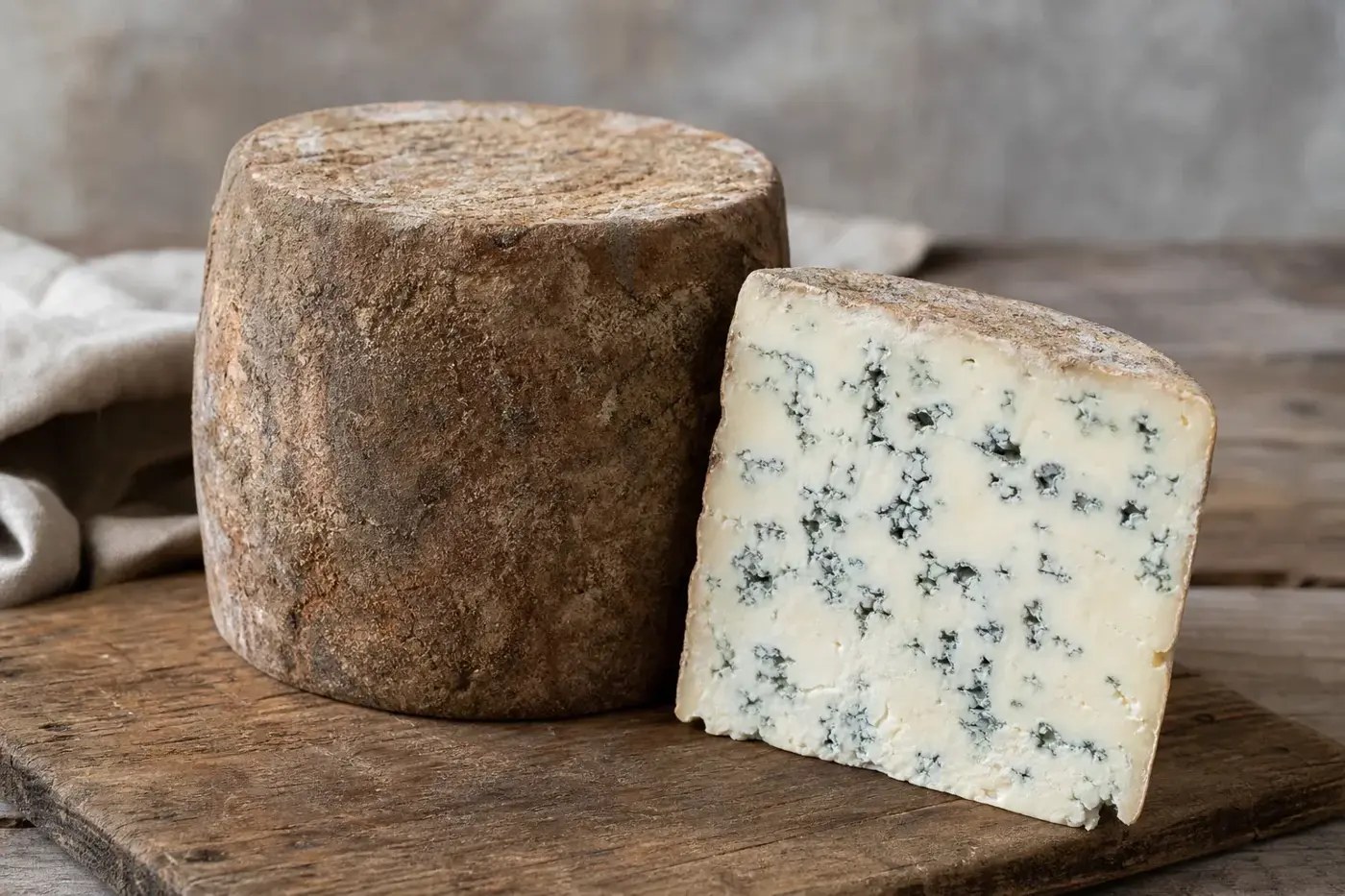
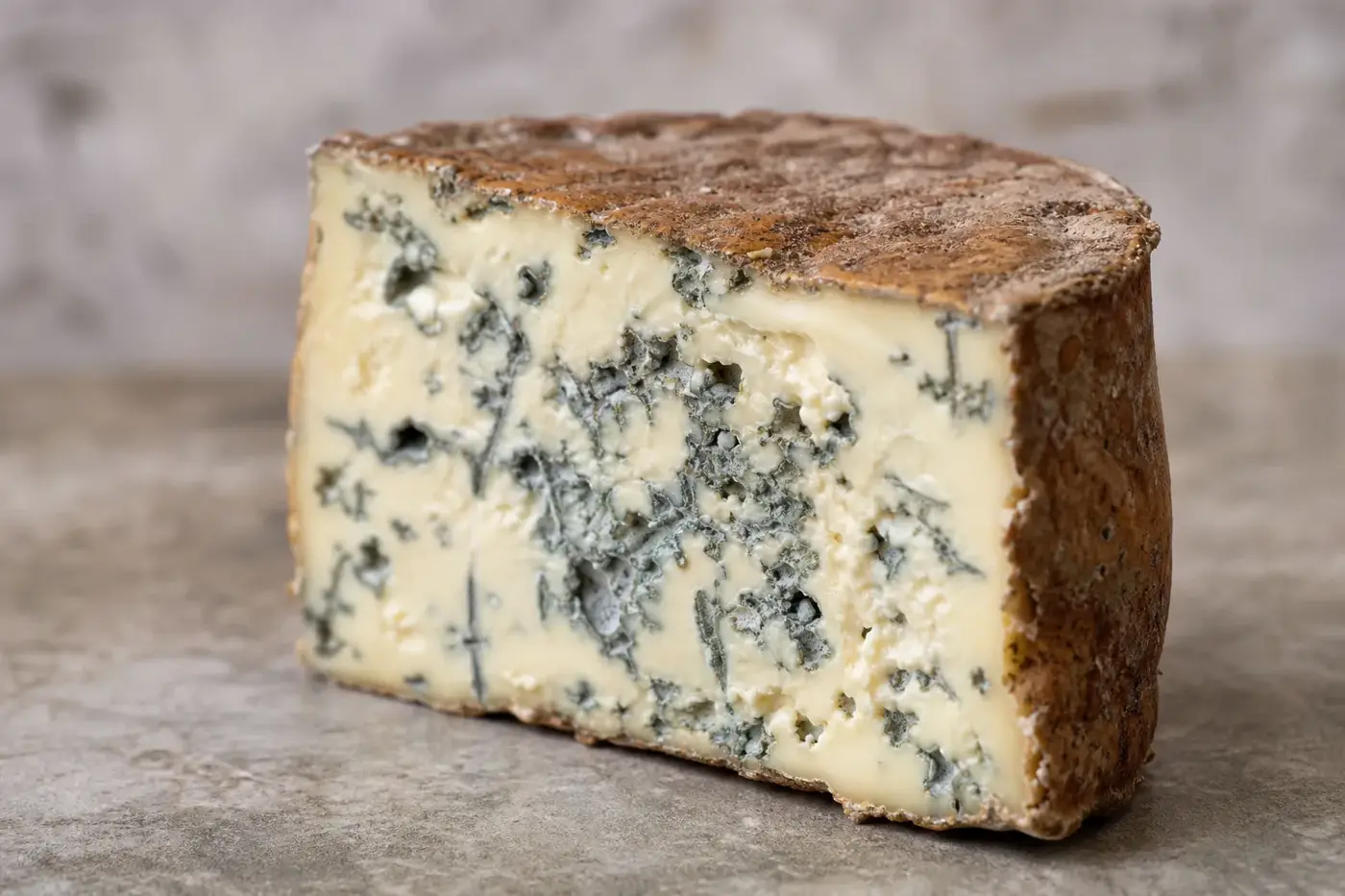
Green apple. Toasted biscuit. Savoury broth. Those notes give you rather more to look forward to than “strong blue”, alongside the pronounced acidity described by Neal’s Yard Dairy. Its 2026 account adds a reddish-brown rind and deeper, umami-rich flavours as the cheese matures.[1,2]
Try a small piece on its own, then another with plain bread. What arrives first: acidity, blue flavour or savouriness? Notice what lingers after you swallow, too. You are giving the tasting a little structure, not setting the cheese an exam.
Give texture its moment as well. Neal’s Yard Dairy describes delicate curds and a soft, creamy paste in its product account.[1] Ask your cheesemonger about the whole shape, paste colour, veining and texture range. Then return to the piece in front of you: how does this batch feel as well as taste?
Meet the pair behind the Welbeck blue
In 2006, Joe Schneider and Neal’s Yard Dairy founder Randolph Hodgson set out to make a traditional English blue from unpasteurised milk. Neal’s Yard Dairy records their search leading to a farm on the Welbeck Estate, near Sherwood Forest. Finding the place was followed by an extended period of refinement.[1,2]
Making and selecting became a continuing conversation. The dairy worked on the cheese; the cheesemonger fed back on maturation and taste. Neal’s Yard Dairy records that collaboration continuing, with maturation at both Stichelton Dairy and its Bermondsey arches.[1,2]
Does Stichelton’s name make you wonder about the historic name of the village of Stilton? Take that curiosity to the counter, rather than treating the resemblance as an answer. The cheese itself gives you plenty more to ask about.
Who matured your piece? When was it cut, and what distinguishes this batch? Those questions take you beyond the name on the label. They help you picture the particular cheese you are taking home.
Follow the morning’s milk into the dairy
Stichelton starts close to home, with milk from the farm alongside the dairy. Welbeck identifies its estate dairy as the supplier. Neal’s Yard Dairy also records the neighbouring farm and says the cheese uses the morning’s milk.[1,2,3]
Starter cultures are bacteria that develop acidity during cheesemaking. If you want Stichelton’s precise starter practice, ask the maker for a complete account. The detail belongs to this particular cheese, rather than to a general account of cheesemaking.
Rennet has a different task: it helps milk form a gel. Stichelton’s declared ingredients are raw cows’ milk, salt, animal rennet, cheese cultures and Penicillium roqueforti.[1,2,6] For a closer look at that ingredient and its alternatives, turn to rennet explained.
The make takes roughly 24 hours, according to Neal’s Yard Dairy, including ladling and milling the curds by hand.[1,2] Curd is the solid portion formed during coagulation; whey is the liquid released from it. Keep those two in mind as you follow the wider story in how cheese is made.
A little air, then months of attention
Blue mould needs air to develop inside a cheese. The Stilton specification describes needles admitting air into the curd, allowing the Penicillium roqueforti already there to form its veining.[6] That helps explain why piercing matters. For Stichelton’s precise piercing method and salting sequence, ask the maker.
Both salt and Penicillium roqueforti appear in Stichelton’s ingredient declaration. Neal’s Yard Dairy also names piercing and “rubbing up” among its traditional making techniques.[1,2] Rubbing up means working the outside of the newly formed cheese to close its surface. Keep Stilton’s production timetable separate from Stichelton’s.
Next comes judgement, not simply a long wait. Neal’s Yard Dairy assesses Stichelton by sight, smell, flavour and feel before dispatch. Its 2026 crib sheet gives an average age of 4 to 7 months.[2]
Use that range to begin a conversation, not an oldest-cheese contest. Ask what the cheese tastes like now and how its texture has developed. An extra month is not an automatic improvement. The flavour and feel of the piece you are offered matter more.
Stichelton and Stilton: the milk makes the distinction
Stichelton uses raw milk. The Stilton specification linked from the Great Britain register requires pasteurised cows’ milk for its white, blue and mature or vintage blue varieties.[1,6] That is the decisive distinction, even though Stichelton is made within Stilton’s permitted area.
In November 2026, the Great Britain register lists Stilton Blue Cheese as a registered protected designation of origin, or PDO. Its UK scheme registration dates from 31 December 2020. The register separately records original EU registration on 21 June 1996.[5]
Here is how Stichelton’s declared production sits alongside the specification linked from the Great Britain register. As you compare them, keep milk treatment and rennet as separate questions.
| What you’re comparing | Stichelton | Stilton specification in Great Britain |
|---|---|---|
| Milk treatment | Raw cows’ milk.[1,2] | Pasteurised cows’ milk required.[6] |
| Where it’s made | Welbeck, Nottinghamshire.[1,2] | Leicestershire, Derbyshire or Nottinghamshire.[6] |
| Rennet | Animal rennet declared.[1,2] | Animal or non-animal rennet permitted.[6] |
| Blue culture | Penicillium roqueforti declared.[1,2] | Penicillium roqueforti specified for blue varieties.[6] |
| Time to mature | Average 4 to 7 months in the cheesemonger’s 2026 account.[2] | Typical age bands vary by blue variety; classification also considers flavour and texture.[6] |
Nottinghamshire is one of the three Stilton counties. Geography alone, though, does not bring Stichelton’s raw milk within the protected specification.[1,6] Nor should you assume Stilton is vegetarian. The specification permits both animal and non-animal rennet, so ask about the individual cheese.[6]
Fancy tasting them side by side? Choose named examples and note their makers and ages. Milk treatment is only one of several differences between finished cheeses, so one comparison cannot isolate its contribution. You can explore the legal naming framework in protected names explained.
Find the right piece for your table
Tell the seller when you will serve the cheese and how many people will eat it. Would you like a firmer or softer piece? Those details give your cheesemonger something useful to work with. Ask about texture and flavour, rather than a simple strength score.
Look at the label before the cheese is cut, particularly if you are buying for guests. Stichelton’s published ingredients include milk and animal rennet.[1,2] Explain any dietary requirements, then keep the label and storage instructions with your cheese.
The UK Food Standards Agency advises refrigerating dairy products and following their packaging instructions. Its guidance for England, Northern Ireland and Wales recommends a fridge temperature between 0 and 5 °C. Use a fridge thermometer to check it.[7]
Keep the seller’s wrapping and instructions together so you can identify the piece. If it was cut to order, note the purchase date and ask how soon to use it after opening. For general UK food handling, the NHS advises using opened food within two days unless the packaging says otherwise.[9]
Buy with your serving moment in mind, rather than counting on a long stay in the fridge. A piece matched to your plans is easier to serve in the condition you chose. For fuller advice on wrapping and refrigeration, turn to how to store cheese at home.
Give your portion a moment before serving
Take out the portion you intend to serve and leave the rest refrigerated. As a practical starting point, let a small piece lose its refrigerator chill while you prepare the bread and plates. Pay attention to its texture rather than aiming for a fixed warming time.
Food safety sets a separate limit on the clock. The UK NHS advises eating chilled, ready-to-eat foods within four hours of taking them out of the fridge. The FSA likewise advises keeping chilled food outside refrigeration for the shortest possible time, with a maximum of four hours during preparation.[7,9]
Use a clean plate and knife, and keep the cheese away from raw foods. That follows NHS advice to separate raw and ready-to-eat food.[9] At a shared table, put out modest portions and replenish them as needed. Leave the rest refrigerated until you need it.
Make room for bread, fruit and a glass
Start with plain bread or an unsweetened cracker, then try slices of pear or apple. Taste the cheese first so you can decide how you enjoy fruit alongside its reported acidity and savoury character.[1,2] That simple first mouthful gives you something to compare with the next.
For an alcohol-free tasting, begin with still water. Then try a small glass of apple juice or a cup of black tea. These are tasting suggestions, not documented Stichelton pairings. Choose one, taste the cheese again and see whether you enjoy the combination.
Neal’s Yard Dairy recommends rich harvest ale, aged tawny port or honeyed dessert wine to counter Stichelton’s acidity and savoury flavours.[2] Alcoholic pairings are optional and intended for adults of legal drinking age. A small serving is enough for the tasting.
People who are pregnant, driving, taking medicines that interact with alcohol or recovering from alcohol dependence should not drink. Bread, fruit and an alcohol-free drink offer an alternative.
This page summarises published guidance from the official sources it cites. It is not medical advice. Guidance differs between countries and changes over time, so check the current source for where you live, and ask your doctor, midwife, pharmacist or dietitian about your own circumstances.
Put food safety first with raw milk
The UK NHS identifies unpasteurised dairy products and blue-veined cheeses among foods that can carry Listeria. Pregnancy, older age and weakened immunity increase the risk of serious illness. Newborn babies are also particularly vulnerable.[9]
For pregnancy advice, go directly to the NHS’s current published wording.[8] If you are pregnant, have weakened immunity or are choosing food for another vulnerable person, consult current official guidance and your healthcare professional.
November 2026 is the reference point for these UK sources. If you live elsewhere, follow your own country’s official advice, particularly where it distinguishes milk treatment, cheese texture and cooking. For the broader differences between treatments, see raw milk, thermised and pasteurised cheese.
Questions people ask
What is the difference between Stichelton and Stilton?
Stichelton is made with raw cows’ milk, while the Great Britain Stilton specification requires pasteurised cows’ milk. Stichelton is made in Nottinghamshire, one of the three counties permitted by the Stilton specification.
What does Stichelton taste like?
Neal’s Yard Dairy describes pronounced acidity and flavours of green apple, toasted biscuit and savoury broth. It also describes deeper, savoury flavours developing as the cheese matures.
Is Stichelton vegetarian?
Stichelton’s declared ingredients include animal rennet. The Great Britain Stilton specification permits either animal or non animal rennet, so the individual cheese should be checked.
How long is Stichelton aged?
Neal’s Yard Dairy’s 2026 crib sheet gives an average maturation of 4 to 7 months. The dairy assesses the cheese by sight, smell, flavour and feel before dispatch.
Can I eat Stichelton during pregnancy?
The NHS identifies unpasteurised dairy products and blue cheeses among foods that can carry Listeria, and says pregnancy increases the risk of serious illness. Consult current NHS pregnancy guidance and your healthcare professional for advice about your circumstances.
Sources
- Neal’s Yard Dairy, Stichelton, current product and background page, undated, retrieved November 2026. Commercial cheesemonger and collaborator in the cheese’s development.
- Neal’s Yard Dairy, Stichelton crib sheet, 2026 edition. Commercial partner’s production summary, ingredient declaration, tasting notes and pairing suggestions.
- Welbeck Estate, Welbeck Dairy, undated, retrieved November 2026. Estate account used for the milk-supply relationship only.
- Stichelton Dairy, Starter Culture, undated. Search-retrieved passage from the maker’s account; full-page retrieval was unsuccessful.
- Department for Environment, Food & Rural Affairs, Stilton Blue Cheese, Great Britain protected food name register, published 2021, current entry retrieved November 2026.
- Department for Environment, Food & Rural Affairs, Product specification: Stilton Cheese, undated document currently linked from the Great Britain register, sections 4.2 to 4.5.
- Food Standards Agency, How to chill, freeze and defrost food safely, published 2017, current text retrieved November 2026. Applies to England, Northern Ireland and Wales.
- NHS, Foods to avoid in pregnancy, current text retrieved November 2026. Official URL not verified.
- NHS, Listeriosis, reviewed 10 November 2023, current text retrieved November 2026.
- Food Standards Agency, Alerts, current official alert index, inspected November 2026 for the editorial recall check.
This desk-researched draft brings together the cheesemonger’s production records, Welbeck’s milk-supply account, the Great Britain Stilton register and specification, and UK official food safety guidance.
Last checked: November 2026
Last checked November 2026.
The editors suggest you read next
West Country Farmhouse Cheddar Cheese
Large pieces of curd turn and stack under the cheesemaker’s hands.