Stracchino and Crescenza
A little bread, a soft white spread, and milk is the first flavour you meet.
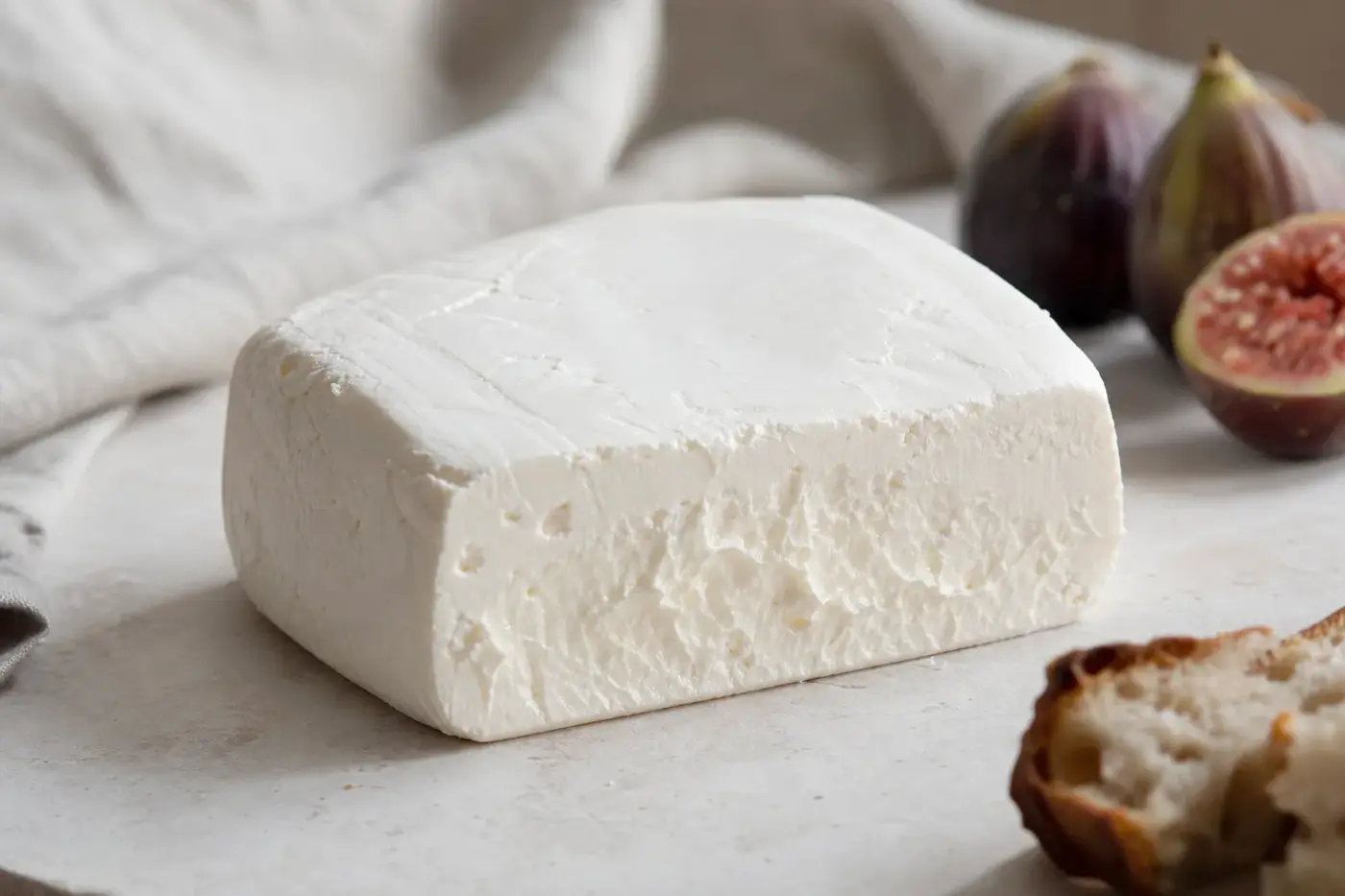
A little bread, a soft white spread, and milk is the first flavour you meet. Then comes a gentle acidic edge. This low, rindless square is crescenza, from Lombardy’s fresh cheesemaking tradition, often sold as stracchino and ready to eat young.[1][2][3]
You will frequently find those two names describing the same fresh cow’s milk cheese. But the label has a longer story to tell. Crescenza also belongs to the broader stracchino family, whose regional members can be considerably different. Cheese families, like other families, do not all take after one another.[1][2][3]
| What you want to know | The essentials |
|---|---|
| Names you will find here | Crescenza and the fresh cheese commonly sold as stracchino.[1][3] |
| What to expect | Soft, fresh or briefly matured cheese, usually made from cow’s milk, without a developed rind.[1][4] |
| Traditional home | Lombardy and northern Italy, particularly the Po plain around Lodi and Pavia for crescenza.[2][4] |
| Milk treatment described | Pasteurised in Lombardy’s crescenza description and the producer example featured here.[1][3] |
| Shape and size | Low square or rectangular blocks; documented dimensions vary.[1][3] |
| Time to mature | Days for the fresh style; accounts differ.[4][5] |
| UK pregnancy guidance | NHS foods to avoid in pregnancy, November 2026.[9] |
Two names on the counter: stracchino and crescenza
Sometimes, you are looking at the same cheese under two names, particularly when it is fresh and spreadable. Caseificio Spinelli offers a neat example. Its product page says “Stracchino”, while the accompanying technical description gives the commercial name as “Crescenza”. One producer, one product, both names.[3]
Crescenza also has a place in a larger family. Lombardy’s regional account puts it among the stracchini. The region’s traditional-food list separately records Stracchino bronzone, Stracchino della Valsassina, Stracchino orobico and Stracchino tipico.[1][2]
Those extra words matter when you choose. A regional stracchino may have a different maturation and surface character from the fresh block beside it. Stracchino della Valsassina, for instance, has a chalkier centre and a more mature flavour in the regional atlas’s description.[6]
For bread, focaccia or a soft filling, fresh stracchino and crescenza may do much the same job. If you want a particular regional cheese, read its complete name and the producer’s description. The method tells you more than either word alone.[1][3][6]
Follow crescenza into the Po plain
Begin in the lowlands around Lodi and Pavia. Regione Lombardia identifies the Po plain, particularly those two areas, as crescenza’s traditional territory. You are in a northern Italian dairy tradition that takes in both lowland fresh cheeses and cheeses associated with mountain valleys.[2]
Lombardy’s regional list leaves room for those local identities. Crescenza appears alongside several separately named stracchini, each with its own associations. Think of related cheeses shaped by different places and methods, rather than one uniform cheese belonging to a single town.[2]
The business describing Spinelli’s example has a contact address in the province of Verona. That address alone does not establish where the cheese was manufactured. Dairy culture supplier Alce places crescenza within the stracchino family typical of northern Italy.[3][4]
When you choose, keep style and origin separate. “Crescenza” helps you picture the kind of cheese; the maker’s details tell you where that particular product was made. Regional tradition sets the scene, while the label speaks for the cheese in your hand.
The tired cows behind stracchino’s name
Picture cows returning from Alpine pastures to the plain in autumn, tired from the journey. Lombardy’s regional account records this tradition behind stracchino’s name. The cheeses were made when those cattle returned, and stracco means tired.[1]
Treccani, the authoritative Italian dictionary, also traces the word to stracco. Its explanation connects the tiredness with cows used for work. The entry describes a soft, uncooked-curd cow’s milk cheese made principally in Lombardy, with a longer maturation than the very fresh crescenza you meet here.[7]
Both accounts put tired cattle at the heart of the name. They differ over what tired them. The return from mountain pastures is a recorded explanation within Lombard cheese culture, rather than the documented story of one identifiable invention.[1][7]
That broader history helps you make sense of the difference between a dictionary entry and a modern packet. The familiar fresh, rindless stracchino you find today occupies only part of the name’s historical reach. There is more to the word than the soft cheese on your bread.[3][7]
A soft white block, with milk at its heart
Look for a low block of white cheese, not a wheel with an established rind. Spinelli describes its cheese as white, soft and spreadable, with no rind. Its documented formats include both squares and rectangles.[3]
Rindless does not mean you will find exactly the same texture throughout. Lombardy’s account describes a surface that can be drier than the interior, alongside a homogeneous paste. It also records seasonal versions: a softer winter type and a firmer summer type.[1]
Milk leads the published flavour descriptions. Spinelli gives a tendency towards sweetness with a slight acidic note. The regional description of crescenza adds a lightly acidic, faintly bitter edge to that milky character.[3][6]
Let those producer and regional descriptions guide your expectations. You can look for milk first, then a modest tang, with a texture soft enough to spread or fold into other ingredients. Your particular cheese may be firmer or softer.[1][3]
This page summarises published guidance from the official sources it cites. It is not medical advice. Guidance differs between countries and changes over time, so check the current source for where you live, and ask your doctor, midwife, pharmacist or dietitian about your own circumstances.
From milk to mould: a cheesemaker’s few busy days
Lombardy’s production account begins with pasteurised cow’s milk and a natural milk starter. That starter is milk containing the bacteria that begin fermentation. Rennet comes next: it is the coagulant that helps the milk set.[6]
Once the milk forms a gel, the cheesemaker breaks the coagulum into curd, the solids that become cheese, and transfers it into moulds. A warm holding stage follows, then turning, brining and packaging. That quiet little white block has had quite a busy start.[6]
The Ticino park’s product record brings draining into focus. Curd goes into rectangular moulds and is held to encourage whey, the liquid released from the curd, to escape. In that example, the cheese reaches sale after four days.[5]
Alce describes a different timetable: a brief refrigerated maturation of five to ten days for crescenza. Both accounts give you a young cheese. Their different schedules explain why no single maturation figure fits the whole fresh style.[4][5]
You may also encounter the regional description pasta cruda, meaning uncooked-curd cheese. This describes the curd, not the milk treatment: the same account expressly specifies pasteurised milk. For that distinction, see raw, thermised and pasteurised milk.[6]
For the texture you want, look beyond age
Age tells only part of the story. The Ticino park’s example of four days and Alce’s account of five to ten days describe different production schedules within the fresh style. These are cheesemaking timescales, not instructions for how long you should keep cheese at home.[4][5]
Draining helps shape the finished texture, too. The park account explicitly connects its warm holding stage with the release of whey. How the curd is handled, and how much moisture remains, matter alongside age.[5]
For milk treatment, look at the particular product. Both the regional crescenza account and Spinelli specify pasteurisation. But stracchino’s historical reach is too broad for the name alone to tell you the milk treatment of every cheese bearing it.[3][6][7]
Starter choice brings another difference. Alce lists several culture options for making stracchino and crescenza, while the regional account describes a natural milk starter. Related names can therefore cover different flavours and degrees of firmness.[4][6]
Ask for the texture you need. Perhaps you want a cheese that holds a soft slice, or one that spreads readily across bread. That gets you further than treating either name as a promise of greater firmness, sweetness or acidity.
Choose your portion, then mind the fridge
Start with the product description, then check milk treatment, ingredients, storage instructions and date. If you are buying a cut portion, ask your cheesemonger for the relevant information from the original packaging. With regional stracchini differing so much, the fuller description deserves your attention.[2][3]
Choose an amount that suits your plans and the pack’s instructions. Production maturation and the manufacturer’s shelf life measure different things. Neither gives you a universal keeping time once the cheese is open.
The Food Standards Agency’s consumer guidance for England, Northern Ireland and Wales recommends a fridge temperature between 0 and 5 °C. Refrigerate dairy products and follow their packaging instructions. Use a fridge thermometer rather than trusting the control dial alone.[8]
In the UK, GOV.UK distinguishes use by dates, which concern safety, from best before dates, which concern quality. Follow any shorter instruction for an opened pack, and do not eat cheese after its use by date. Incorrect storage can make food unsafe before that date, too.[10]
Your eyes and nose cannot replace those checks. Investigate unexpected changes, but remember that cheese can look normal after its use by date. Keep the packaging until you have finished the cheese, so its instructions and batch details stay close at hand.[10]
For more practical guidance, including keeping track of opened packs, see storing cheese at home.
Set the table with bread, focaccia and vegetables
Fresh bread and a spoonful or soft slice of stracchino make an inviting start. Nonno Nanni’s published serving suggestions include fresh bread and raw or cooked vegetables. You get simple combinations that leave the cheese as the main flavour.[11]
Lombardy’s regional account brings focaccia and savoury tarts to the table, too. Its vegetable suggestions include carrots, boiled potatoes and peas. You can build a meal around that softness without committing yourself to a complicated sauce.[1]
Try plain focaccia, mild vegetables and restrained seasoning. Keep assertive ingredients separate at first, then taste the balance before mixing everything together. Plain water makes an uncomplicated alcohol-free accompaniment.
Put out a portion, rather than your whole supply. Follow the pack’s storage instructions and return the remaining cheese to the fridge.
Choosing between crescenza, Taleggio and mozzarella
Taleggio has a developed rind; fresh crescenza does not. Both are soft cheeses, but the crescenza described here is rindless and intended for eating young. That gives you a useful first distinction at the cheese counter.
Mozzarella takes a different route in the dairy. Nonno Nanni groups it among paste filate, the stretched-curd cheeses. Crescenza’s production account instead describes setting, breaking, moulding and draining the curd. That tells you more than their shared white colour and mild character.[6][11]
For bread, let the texture you enjoy guide you. For a dish built around mozzarella, follow the recipe’s requirements rather than expecting crescenza to behave identically. The mozzarella guide explains that cheese’s separate identity and uses.
Pregnancy and higher risk: the product details matter
If you are in the UK, compare the product’s milk treatment and cheese type with the current NHS pregnancy guidance. Stracchino or crescenza on the label is not enough to make that assessment. You need the details of the particular cheese.[9]
The NHS identifies pregnancy, older age and weakened immunity among circumstances associated with greater risk from listeriosis. Its advice includes keeping chilled ready-to-eat food cold, observing use by dates and following instructions after opening. Consult the official source and your healthcare professional about your own circumstances.[12]
Questions people ask
Are stracchino and crescenza the same cheese?
The names often describe the same fresh, spreadable cow’s milk cheese. Crescenza also belongs to a broader stracchino family whose regional members can differ considerably.
How long is crescenza matured?
Accounts differ. A Ticino park record describes cheese reaching sale after four days, while Alce gives a refrigerated maturation of five to ten days.
Is crescenza made with pasteurised milk?
Lombardy’s crescenza account and the Spinelli product both specify pasteurised milk. The name stracchino alone cannot establish the milk treatment of every cheese bearing it.
Can I eat stracchino or crescenza during pregnancy?
The page advises checking the product’s milk treatment and cheese type against the current NHS pregnancy guidance, as the name alone is not enough to make that assessment. See the NHS guidance on foods to avoid in pregnancy and consult your healthcare professional about your circumstances.
How should I store crescenza?
The Food Standards Agency recommends a fridge temperature between 0 and 5 °C and advises following the packaging instructions. GOV.UK distinguishes use by dates, which concern safety, from best before dates, which concern quality. Follow any shorter instruction for an opened pack and do not eat cheese after its use by date.
Sources
[1] Regione Lombardia, Schede prodotti agroalimentari tradizionali: Crescenza, annex to DDUO No. 3392, 7 April 2008, copy hosted by ONAF. Sections “Caratteristiche”, “Curiosità” and “In cucina”. Regional product sheet.
[2] Regione Lombardia, Prodotti agroalimentari tradizionali, Regione Lombardia, undated retrieved edition, cheese entries. Regional traditional-food list.
[3] Caseificio Spinelli, Stracchino (500gr), undated product specification, retrieved November 2026. A producer source describing its own product. Product description.
[4] Alce, Crescenza, undated technical application page, retrieved November 2026. A commercial dairy-culture supplier’s account. Technical description.
[5] Parks.it, Ticino lombardo product record, Crescenza, undated, retrieved November 2026. Park product record.
[6] Regione Lombardia, Atlante dei prodotti della Lombardia: Formaggi, 2017 file edition, entries “Crescenza” and “Stracchino della Valsassina”. Regional cheese atlas.
[7] Istituto della Enciclopedia Italiana, Treccani, Vocabolario on line: Stracchino, undated current entry. Dictionary entry.
[8] Food Standards Agency, How to chill, freeze and defrost food safely, published 18 December 2017, current retrieved text. Applies to England, Northern Ireland and Wales. Chilling guidance.
[9] NHS, Foods to avoid in pregnancy, current retrieved edition, November 2026, section “Cheese, milk and other dairy”. Pregnancy guidance.
[10] GOV.UK, Understanding food labelling: Best before and use-by dates, current retrieved edition, November 2026. Date-marking guidance.
[11] Nonno Nanni, Formaggi italiani freschi e morbidi, current website text, retrieved November 2026. Producer descriptions and serving suggestions, with a commercial interest in its products. Producer’s descriptions.
[12] NHS, Listeriosis, reviewed 10 November 2023, current retrieved text, November 2026. Listeriosis guidance.
This desk-researched article compares regional records, documented producer descriptions, a dictionary account and official UK consumer guidance.
Last checked: November 2026
Last checked November 2026.
The editors suggest you read next
Parmigiano Reggiano
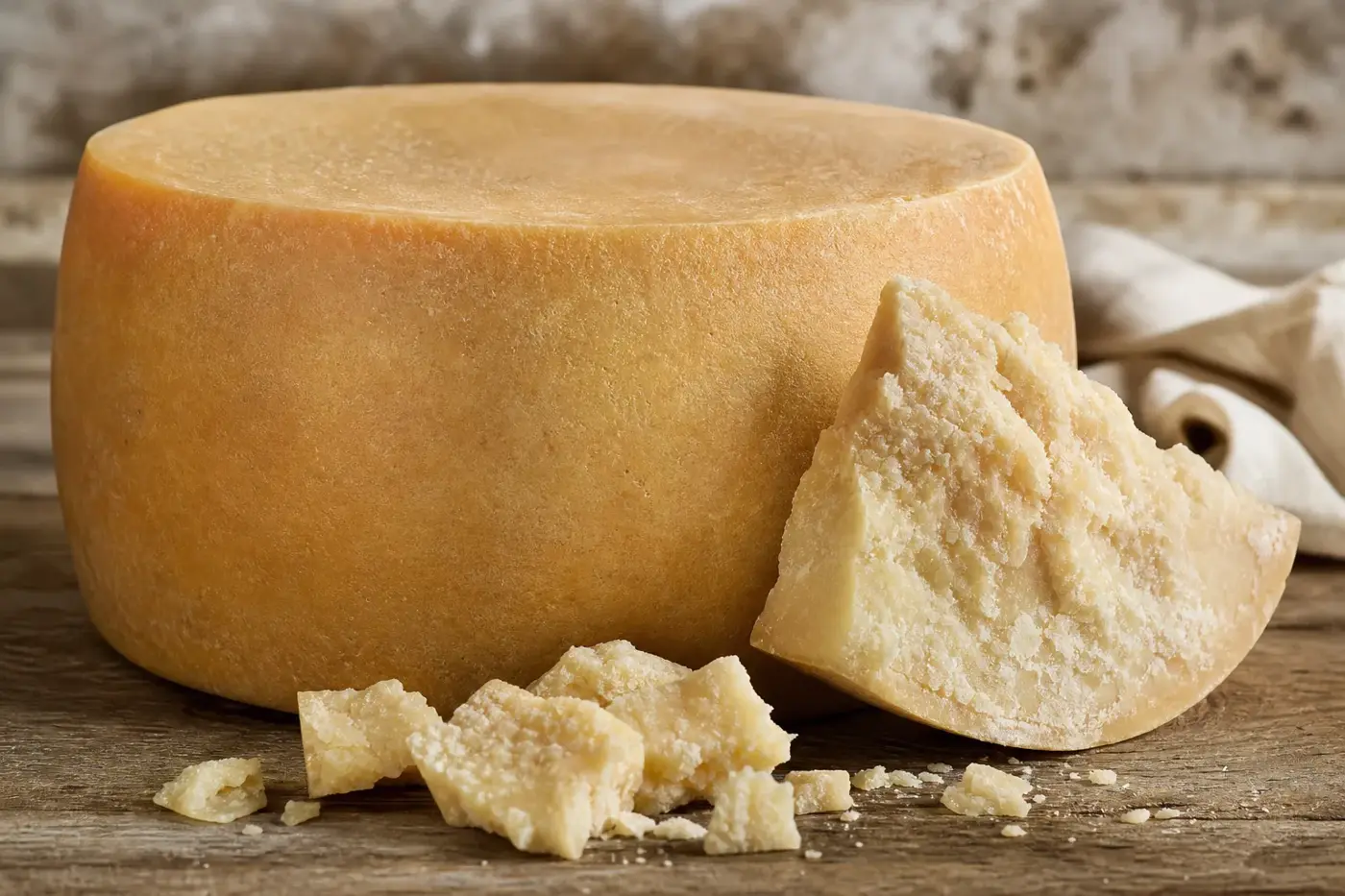
Break into a wheel of Parmigiano Reggiano and flakes fall away, revealing a finely granular cheese, pale straw to straw in colour.