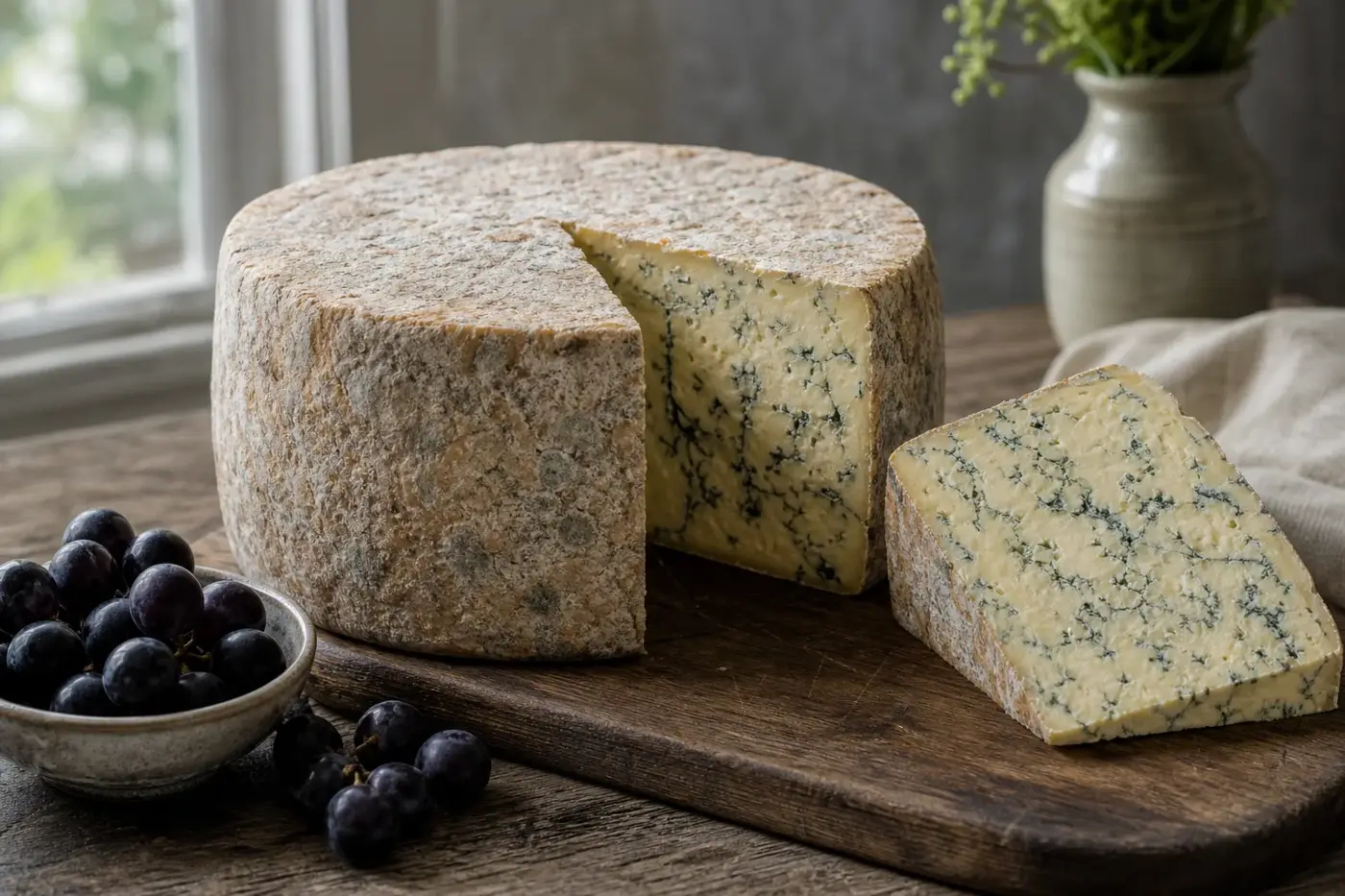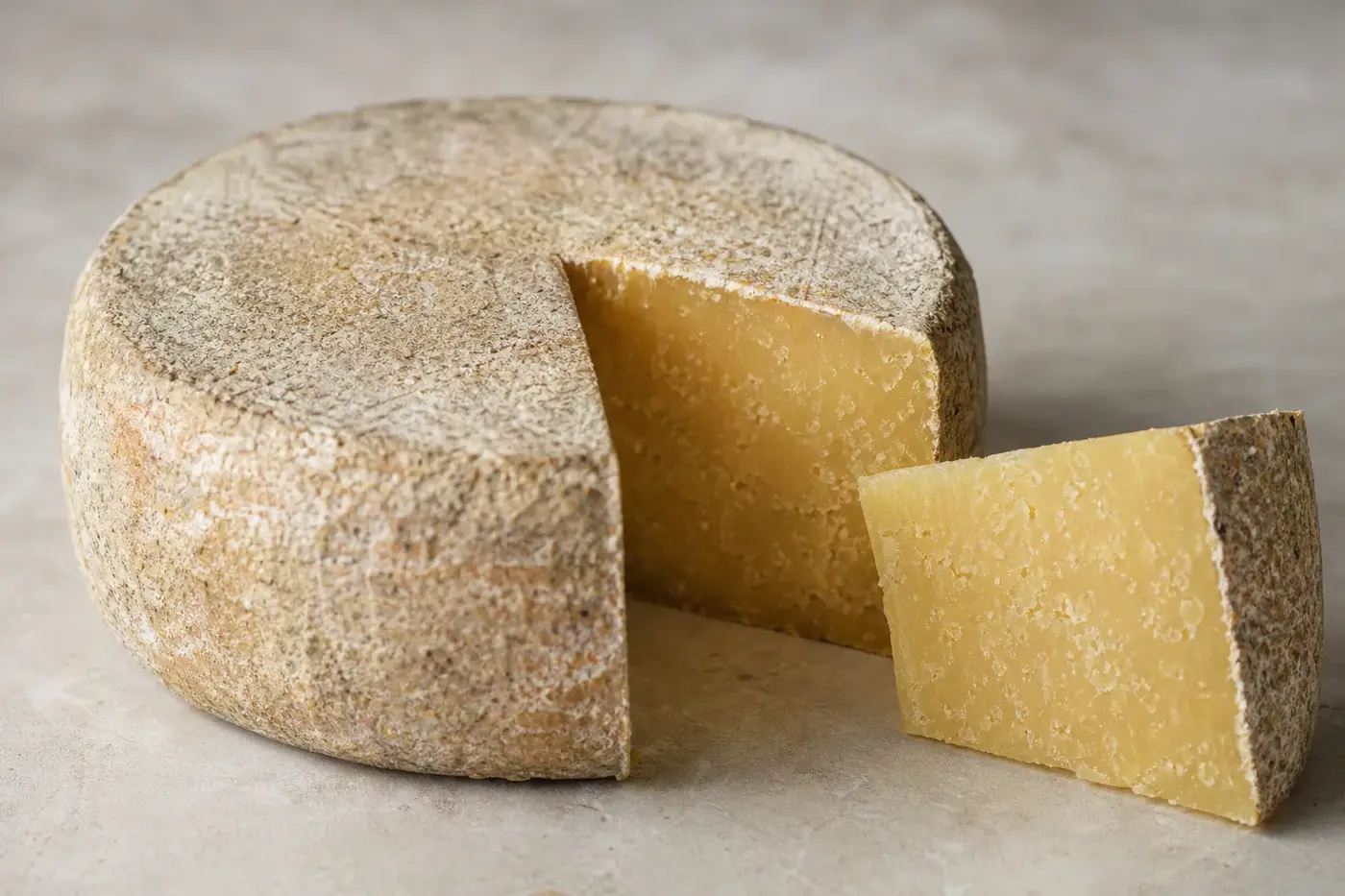
First comes a little crunch. Then honey and butterscotch, with something deeply savoury underneath. After more than two years of ageing, Heritage Teifi has tyrosine crystals to catch your attention: a small interruption worth welcoming. Caws Teifi Cheese at Glynhynod Farm in Ceredigion, Wales, describes those flavours in the oldest member of its cow’s milk cheese family. [1,2,4,5]
Behind your mouthful sits a Dutch Gouda-style recipe with a Welsh home. Local milk, the dairy and time take the range from mellow Natural to deeply aged Heritage. The oldest isn’t automatically your favourite, though cheese lovers do sometimes treat maturity like a competitive sport. [1,2,4,5]
Get to know Teifi at a glance
| What you’d like to know | The details |
|---|---|
| Maker and home | Caws Teifi Cheese, Glynhynod Farm, near Llandysul, Ceredigion, Wales. [1,3] |
| Cheese family | Gouda-style, semi-hard to hard, depending on maturity. [2,4,5] |
| Milk | Cow’s milk; raw for Mature, Heritage and the four flavoured varieties below. [4-9] |
| What sets the milk | Animal rennet, according to the maker; unsuitable for vegetarians. [3] |
| Declared ageing | Mature: 6 to 12 months; Heritage: more than two years. [4,5] |
From the Netherlands to a farm in Ceredigion
The founders arrived from the Netherlands in 1981 with more than cheese in mind. They wanted a place to develop organic farming, self-sufficiency and education. According to the maker’s history, cheesemaking at Glynhynod began in 1982. One founder brought Dutch cheesemaking training and began making raw milk cheese after the move. [1]
That Dutch connection reaches much further back. Caws Teifi describes its recipe as descending from a five-hundred-year-old Gouda recipe. The name, though, belongs to the Welsh landscape: a tributary of the nearby river Teifi crosses the farm. [1]
Think of Gouda as your stylistic starting point, with Ceredigion giving Teifi its home. The dairy also makes Caerphilly and washed-rind cheeses, but this is its Gouda-style family. To explore the wider tradition behind it, follow the story of gouda. [1,2,13]
Follow the milk through west Wales
The milk’s journey starts beyond Glynhynod’s farm gate. Caws Teifi’s milk-sourcing page identifies an organic farm in Llanboidy supplying milk from Jersey and New Zealand Friesian cows. Its current FAQ describes working with local suppliers. [3,10]
You’ll find raw cow’s milk specified in the listings for Mature, Heritage, Cumin, Seaweed, Nettle and Onion and Garlic Teifi. For Natural Teifi, the milk treatment remains unspecified here. Those same listings name animal rennet, the preparation that sets milk into curd, separating that solid mass from liquid whey. [4-9,11]
Curious about what does the setting? The rennet guide explains its different sources. It’s a small ingredient with a substantial job. [11]
Give milk, craft and time their turn
Time carries Teifi from smooth and mellow towards firmer textures and more concentrated flavours. It belongs to the Gouda-style pressed-cheese tradition. The process here gives you that family’s technical framework; Caws Teifi’s own descriptions supply its cheeses’ ingredients and maturities. [4-9,11]
In Gouda manufacture, starter bacteria acidify the milk and rennet sets it. The curd is cut into grains, releasing whey, then washed to remove some lactose, the milk sugar. That washing helps control acid development and the eventual smooth texture. [11]
Next come moulding, pressing and salting, commonly in brine. During ripening, enzymes act on proteins and other cheese components, changing flavour and texture. You can trace the results through the maker’s descriptions: mellow Natural, firmer Mature, then Heritage with its pronounced flavours and crystals. [2,4,5,11]
Maker-declared Teifi maturities, November 2026
| Your cheese | Declared age | What Caws Teifi says you can expect |
|---|---|---|
| Mature Teifi | 6 to 12 months | Firmer, with more developed flavour. [4] |
| Heritage Teifi | More than two years | Strong and savoury, with honey and butterscotch notes. [5] |
Choose for the occasion rather than age alone. The maker suggests Natural for gentle flavour and stringy melting, Mature for greater intensity, and Heritage as a concentrated cheeseboard centrepiece. Each gives you a different expression of the same family. [2,4,5]
Taste your way from mellow to a little crunch
Start with Natural if you’d like to get your bearings. Caws Teifi describes a dense yet smooth cheese, mellow and a little sweet. Its even texture and restrained intensity give you a useful first taste before moving to the older cheeses. [2]
Mature becomes firmer, more nut-like and deeper in flavour, according to the maker. Heritage takes you further into savoury intensity, honey and butterscotch, with an aroma combining sweetness and sharper notes. The maker identifies tyrosine crystals as the source of that older cheese’s crunch. [4,5]
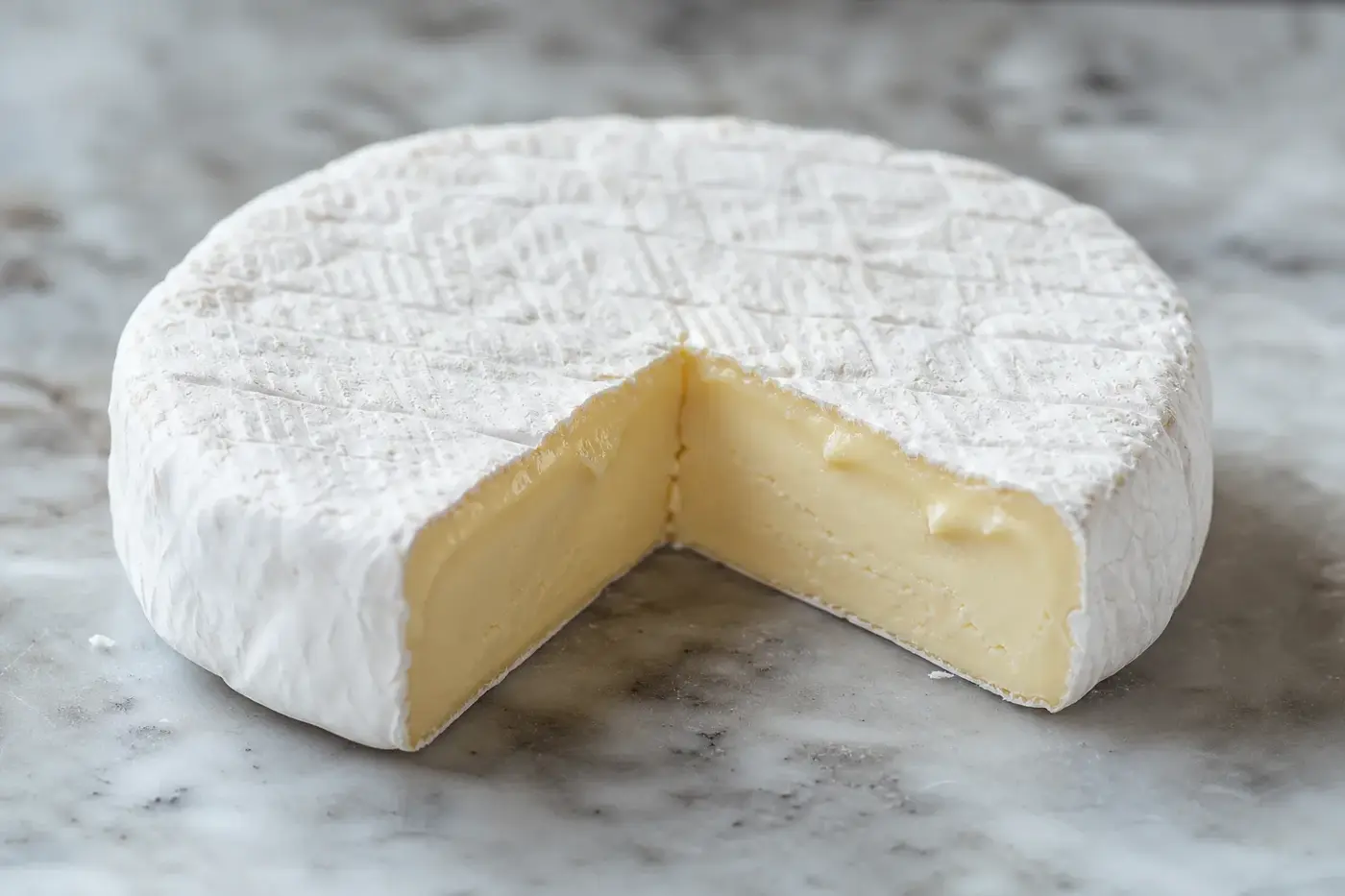
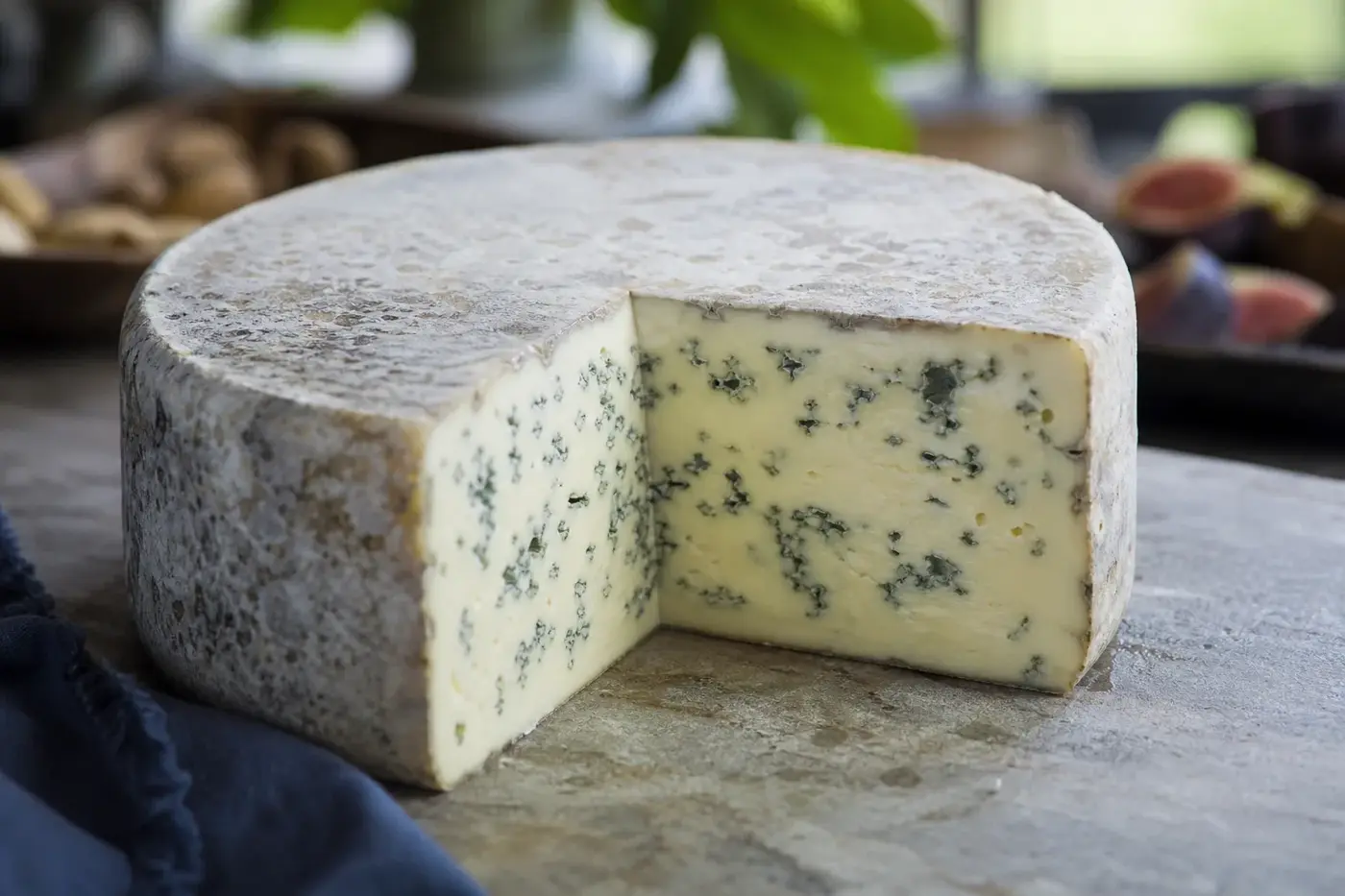
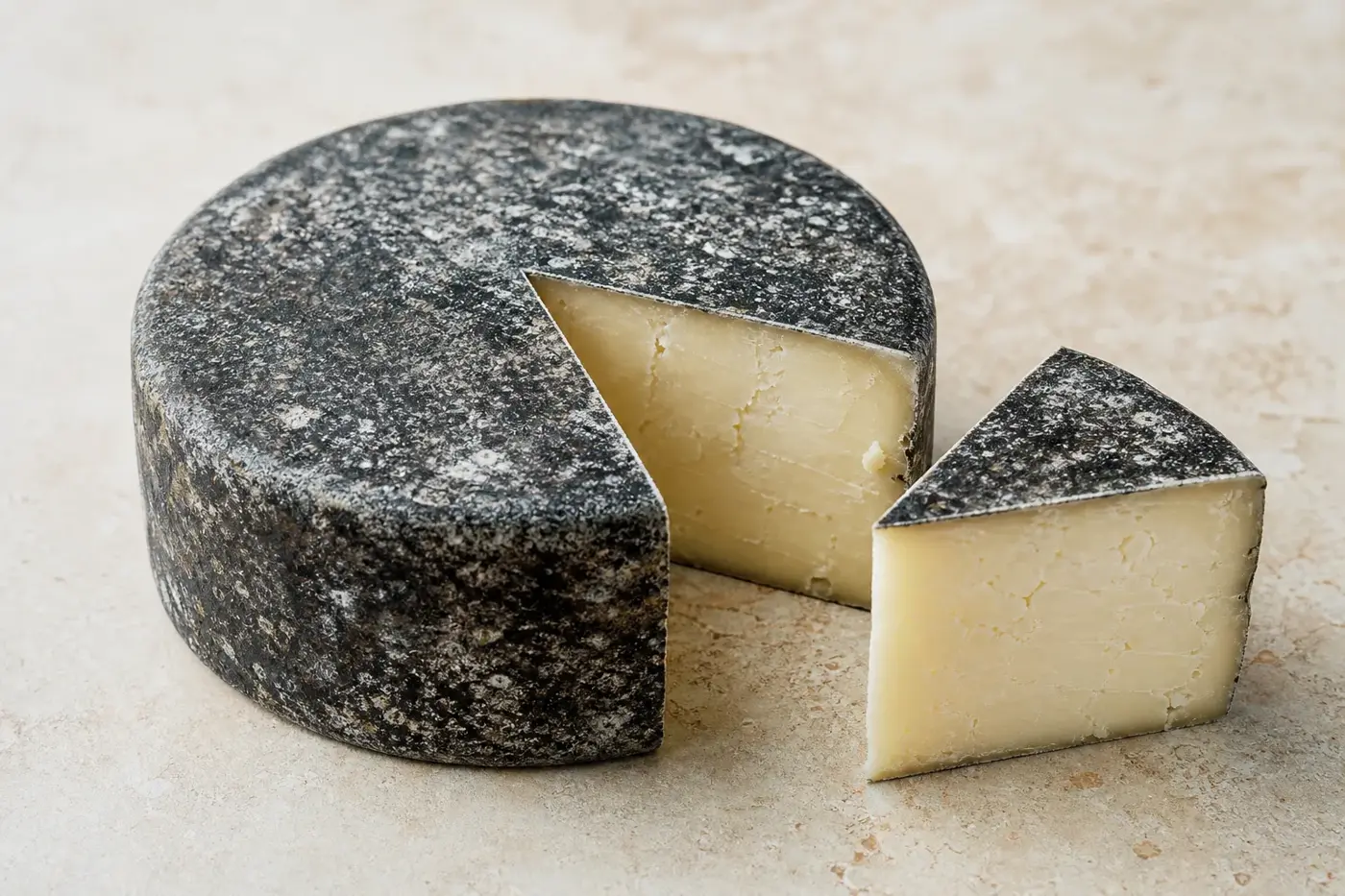
Plain Teifi comes as wheels and cut wedges. Put Natural beside Heritage and look at their cut surfaces before you taste. Notice the resistance to your knife, how readily a small piece breaks and whether you can see crystals. Note those differences alongside flavour: texture deserves your attention too. [2,5]
Meet the cumin, laver and herbal company
Cumin, laver, nettle, onion and garlic take Teifi in different aromatic and savoury directions. Each shifts the emphasis without pushing the cheese out of the picture. Give yourself time to taste them as individual varieties, rather than expecting the same cheese with different flecks. [6] [7] [8] [9]
Cumin Teifi makes the Dutch connection especially clear. Caws Teifi calls the seeds a traditional Dutch combination, with cumin becoming more noticeable towards the finish. Try a small piece plain to separate sweetness from spice. Then consider the maker’s suggestions: crackers and chutney, a toastie or cheese alongside curry. [6]
Seaweed Teifi contains locally harvested laver, described by the maker as gently salty. You might put it on a cheeseboard, in a toastie or in a Welsh breakfast sandwich. Its current declaration says it contains milk and may contain crustaceans and molluscs, so keep that information with the cheese when serving several varieties. [7]
Nettle Teifi brings a herbal character, according to Caws Teifi. [8] The maker suggests savoury bakes and toasties, including toast with paprika and soy sauce. Onion and Garlic Teifi brings its two named aromatics, with pasta and mashed potato among its suggested destinations. Choose the additions that belong in your dish. [8,9]
Make room on the board, not a crowd
You don’t need the whole range on one board, however persuasive the cheese counter becomes. Choose Natural with Heritage to explore ageing, or plain Mature with Seaweed to compare plain cheese and added flavour. Either gives you a clear tasting sequence without several seasonings competing for attention.
Caws Teifi recommends chutney and crackers with Mature, and dried fruit or chutney with Heritage. Keep the accompaniments separate so you can taste the cheese alone first. Try a plain cracker, then add a little chutney to the same cheese and notice what changes. [4,5]
For an alcohol free accompaniment, try apple juice diluted with sparkling water. Serve them separately so you can adjust the sweetness to your taste.
In the kitchen, let your finished dish guide the choice. The maker suggests Natural for pizza or grilled toast, Onion and Garlic for pasta or mashed potato, and Nettle for savoury baking. Try Onion and Garlic in simple potato mash before adding other seasonings. It brings more to the dish than plain Teifi would. [2,8,9]
Give your Teifi a good home in the fridge
Start with the individual pack’s storage instructions, as Caws Teifi advises. For home handling in England, Wales and Northern Ireland, the Food Standards Agency recommends keeping your fridge between 0 and 5 °C (32 to 41 °F). It also recommends refrigerating dairy products and following the packaging’s storage and date instructions. [3,12]
For current advice on serving chilled food in England, Wales and Northern Ireland, consult the Food Standards Agency’s published guidance. Keep that guidance alongside the instructions for your particular cheese. [12]
Take out what you need and leave the rest refrigerated, rather than warming the whole piece for repeated servings. Keep the wrapper or label with the cheese so its instructions stay close. The home cheese storage guide offers more on packaging and fridge organisation. [3,12]
Find the Teifi that fits your next meal
Browse the maker’s current cheese listings, then open the individual pages for milk treatment, rennet, maturation and ingredient declarations. In November 2026, the catalogue listed Natural, Mature, Heritage, Cumin, Seaweed, Nettle and Onion and Garlic Teifi. That gives you several quite different directions to explore. [13]
Give your cheesemonger the full variety name when asking for a recommendation. “Teifi” alone could mean mellow plain cheese, a long-matured wedge or one flavoured with herbs, seeds or laver. Ask which age and flavour suits your board or dish, then turn to the current pack for the final product details. [2-9,13]
Follow your curiosity into the cheesemaking
- Raw Milk, Thermised and Pasteurised Cheese: get comfortable with the milk-treatment terms you’ll meet on cheese listings.
- How Cheese Is Made: From Milk to Cheese: follow the journey from milk setting to ripening.
General information only, not medical advice: follow the official guidance where you live.
Questions people ask
Is Teifi made with raw milk?
The maker’s listings specify raw cow’s milk for Mature, Heritage, Cumin, Seaweed, Nettle and Onion and Garlic Teifi. Natural Teifi’s milk treatment has not been verified.
Is Teifi suitable for vegetarians?
Caws Teifi says it uses animal rennet. Teifi is therefore unsuitable for vegetarians.
What is the difference between Natural, Mature and Heritage Teifi?
Natural is mellow, slightly sweet and smooth, while Mature is firmer and aged for six to 12 months. Heritage is aged for more than two years and has a strong, savoury flavour and crunchy crystals.
What flavoured varieties of Teifi are available?
The catalogue listed Cumin, Seaweed, Nettle and Onion and Garlic Teifi in November 2026. Seaweed Teifi contains locally harvested laver, while the maker describes cumin as a traditional Dutch combination.
How should Teifi be stored?
Caws Teifi advises following the storage instructions on the individual pack. For England, Wales and Northern Ireland, the Food Standards Agency recommends refrigerating dairy products at 0 to 5 °C and following packaging instructions; consult its published guidance for current advice.
Sources
- Caws Teifi Cheese. History + Farm. Undated current web edition, retrieved November 2026. Maker’s account of its origins, Dutch training, recipe and river connection.
- Caws Teifi Cheese. Natural Teifi Cheese. Undated current product page, retrieved November 2026. Product description, formats and cooking suggestions.
- Caws Teifi Cheese. Frequently Asked Questions. Undated current web edition, retrieved November 2026. Sections on milk, certification, vegetarian suitability, location and storage.
- Caws Teifi Cheese. Mature Teifi Cheese. Undated current product page, retrieved November 2026. Milk, rennet, maturation, sensory description and serving suggestions.
- Caws Teifi Cheese. Heritage Teifi. Undated current product page, retrieved November 2026. Milk, rennet, maturation, aroma, flavour, crystals and accompaniments.
- Caws Teifi Cheese. Cumin Teifi Cheese. Undated current product page, retrieved November 2026. Added cumin, milk treatment, rennet and maker’s tasting and serving notes.
- Caws Teifi Cheese. Seaweed Teifi Cheese. Undated current product page, retrieved November 2026. Laver addition, milk treatment, rennet and allergen declaration.
- Caws Teifi Cheese. Nettle Teifi Cheese. Undated current product page, retrieved November 2026. Nettle addition, milk treatment, rennet and cooking suggestions.
- Caws Teifi Cheese. Onion and Garlic Teifi Cheese. Undated current product page, retrieved November 2026. Added ingredients, milk treatment, rennet and cooking suggestions.
- Caws Teifi Cheese. Why Raw? Undated current web edition, retrieved November 2026. Used solely for the maker’s account of milk sourcing and cattle breeds.
- Tetra Pak. Dairy Processing Handbook, chapter “Cheese”. Current online edition, retrieved November 2026. Sections on cultures, rennet, curd washing, drainage, pressing, salting and ripening. This equipment manufacturer’s technical reference supplies the general Gouda framework.
- Food Standards Agency, GOV.UK. How to chill, freeze and defrost food safely. Published 18 December 2017, current retrieved edition November 2026; expressly applicable to England, Northern Ireland and Wales.
- Caws Teifi Cheese. Buy Welsh Cheese Online. Current catalogue, retrieved November 2026. Used to establish which Teifi varieties were listed.
- Food Standards Agency. Alerts. Current official alert index, consulted November 2026 for the editorial recall check.
Researched through the maker’s published history, product descriptions and FAQs, with a technical reference for the Gouda-style process and official household guidance for storage.
Last checked: November 2026
Last checked November 2026.
The editors suggest you read next
Caerphilly
Your knife meets a rind-ripened Caerphilly, and one wedge offers two pleasures: a fresh, crumbly centre and a softer, creamy layer just beneath the rind.