Teleme
Your knife meets a floury surface, then a centre beginning to surrender.
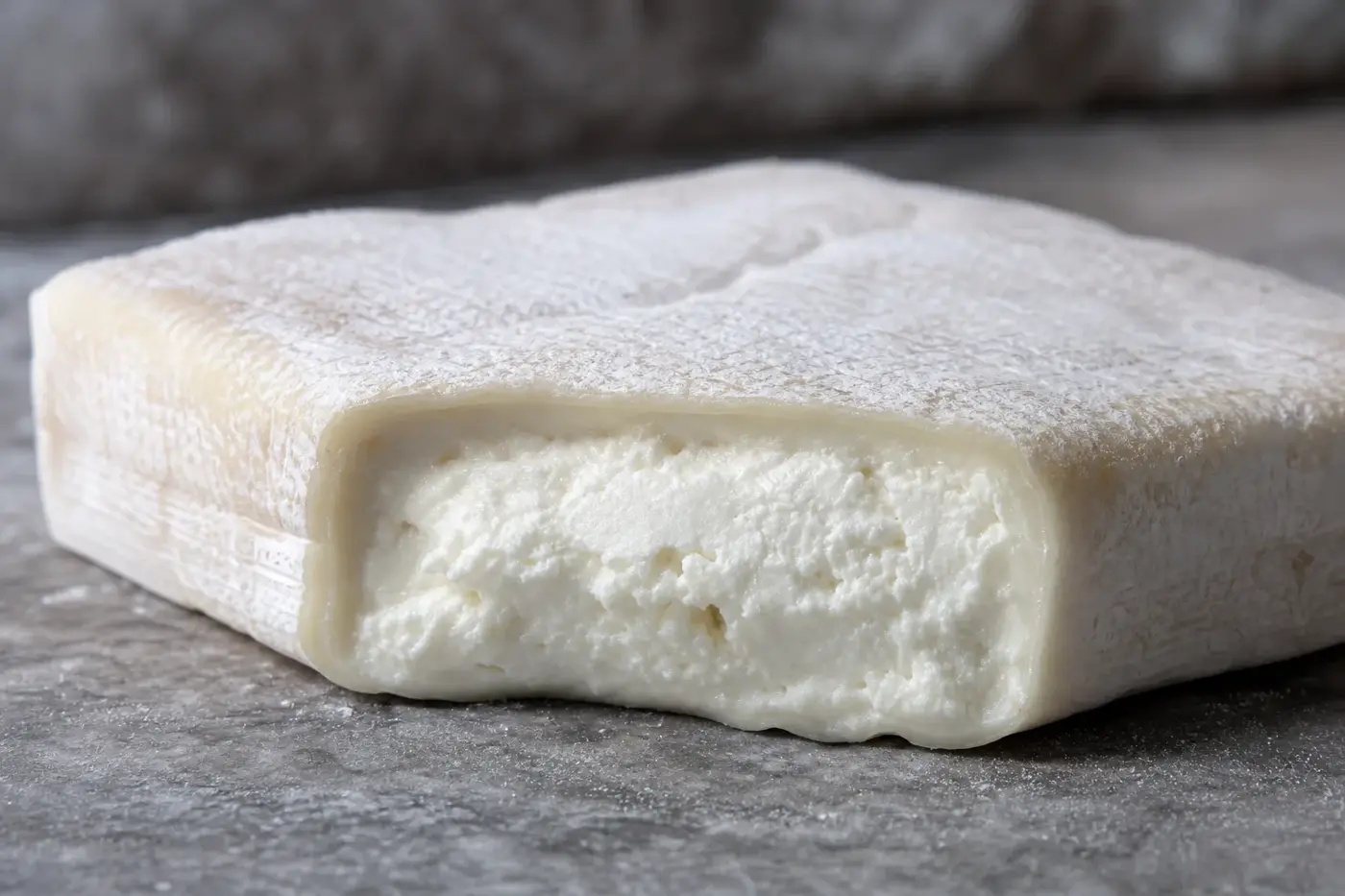
Your knife meets a floury surface, then a centre beginning to surrender. Californian Teleme grows softer as it ripens, with a delicate exterior that makes the yielding middle all the more inviting. Behind this cow’s milk cheese is a Californian story connecting Mediterranean immigrant cheesemakers with the Italian delicatessens of the Bay Area.[1][3]
Your quick introduction to Teleme
- Name: Teleme, Californian style.[1]
- Customary home: California, United States.[3]
- Milk: Cow’s milk for Franklin’s; ask the maker about current milk treatment.[4]
- Surface: A dusting of rice flour over a delicate dried exterior.[1][5]
- Format: Franklin’s describes soft squares of approximately 2.7 kg (6 lb).[1]
- Current production status, November 2026: Ask the maker.
Pull up at the North Beach deli counter
In San Francisco’s North Beach Italian delicatessens, the Peluso family’s rice flour Teleme found an appreciative audience. Its resemblance to soft Italian stracchino gave customers something familiar, both at the counter and on bread. The family’s published account follows three generations handing on the craft.[2][4]
To find the wider story, you need to go back to the 1920s. California’s dairy industry body describes Greek immigrants near San Francisco adapting a cheese familiar from Greece and neighbouring countries to fresh cow’s milk. The producer’s origin story places an early Greek cheesemaker more precisely in Pleasanton, although the earliest Californian production remains uncertain.[2][3]
Another local name belongs in the picture. Cheese Trail records “Tomales Bay Cheese”, associated with production in Tomales in western Marin County.[2][4]
One name, two very different cheeses
Open a 1953 US Department of Agriculture handbook and you encounter quite another Teleme. White and brined, it is made from goat’s or ewe’s milk in Romania, Bulgaria, Greece and Turkey. Pressed, cut into pieces and cured with salt or brine, it belongs to the Mediterranean and Balkan use of the name, rather than California’s flour dusted square.[6]
At the counter, let milk, surface treatment and presentation guide you. A white cheese resting in brine promises a different experience from the soft Californian version its producer describes. If the label says only “Teleme”, ask where it was made and who made it before choosing a recipe or accompaniments.[1][6]
Keep the maker in the picture
Cow’s milk is the foundation of the Californian style in the California dairy industry’s account. Cheese Trail also lists Franklin’s Teleme as a cow’s milk cheese. For current milk treatment and ingredients, ask the maker.[4]
Keep that maker’s name attached to your purchase. Handling, moisture and maturity can vary within a style, so the producer’s description is your best guide to neat slices or a softer, spreading texture.[7] The guide to reading a cheese label helps you pick out the details that matter.
From milk to square, with plenty of handwork
Franklin’s Teleme takes shape through hands on work. Published accounts describe milk being inoculated and set into curd: the milk’s solid gel, with whey as the liquid released from it. The family’s description then takes you to the squeezing and pressing of curds and whey by hand, working towards the intended moisture and texture.[1][5]
A direct interview published in 2023 describes Franklin’s as lightly cooked, gently pressed and made using a washed curd method. Formed into squares, the cheese receives its flour at about four days, before going into heavy paper and refrigeration. It is released at about two weeks and softens further over the next three to four weeks in an uncut square; these timings describe that production.[7]
There is plenty happening between milk and maturity. You can follow the wider sequence of curd formation, draining and ripening in how cheese is made.
The floury coat earns its place
That rice flour is more than a finishing touch. In a 2019 production interview, the cheesemaker explained that it dries the edges without making them hard or gummy. The producer describes the same progression: the surface dries as the centre softens, creating a delicate exterior around yielding paste, rather than a substantial rind you need to carve away.[2][5]
Remember that treatment when you inspect a cut piece. A light flour coating belongs to the documented style, but compare the surface with the maker’s description. Ask the seller about anything unfamiliar, rather than assuming every white patch is flour.[1]
A slice, a spoonful, or somewhere between?
“Sliceable or spoonable?” is a useful opening question at the counter. The producer describes young Teleme as firm enough to slice, while an older cheese develops a more fluid centre. White, slightly tangy, sometimes lemony and notably inclined to run, it makes “a ripe piece” a rather imprecise request.[1][2]
The tasting published alongside the 2023 interview adds milky and yeasty aromas, buttery flavour and a gentle crème fraîche tang. Those are that writer’s observations of Franklin’s Teleme. Read alongside the producer’s description, they suggest a cheese whose pleasures lie in lactic freshness and yielding texture, rather than a forceful rind.[7]
Give it bread, fruit and a little breathing room
Sourdough bread, toasted baguette, apples and pears are the producer’s suggested companions; its account also records peaches and honey. Start with bread and one fruit so you have room to taste the cheese itself. Lay a sliceable piece on the bread, or spread or spoon a softer one onto it.[2]
To explore the texture on its own, put the bread alongside rather than underneath. It can wait its turn.
Keep drinks simple: water, lightly brewed black tea or a small glass of apple juice diluted with sparkling water. Water leaves the cheese unobscured, tea offers a less sweet option, and apple echoes the producer’s fruit pairing. Let your meal and your preference decide; there is no compulsory match, and no pairing exam afterwards.
For cooking, the 2023 account mentions polenta and toasted sandwiches. Decide whether you want the cheese to melt into the dish or remain visible as a soft topping. Then ask for a maturity that suits the job.[7]
Choose with care, then keep it chilled
Start at a refrigerated counter and ask to see the cut face and label. Look for the producer’s pale paste and delicate floury exterior, remembering that a more mature piece should be softer. Keep the maker’s storage instructions, especially if your cheese has been cut and rewrapped.[1][2]
Food Standards Agency guidance for England, Wales and Northern Ireland, dated here to November 2026, advises keeping your fridge between 0 and 5 °C (32 to 41 °F) and following the packaging’s storage instructions.[8] Keep the cheese covered and separate from raw foods. During preparation, leave chilled food outside refrigeration for the shortest possible time, as the agency advises.[8]
Serve only what you need, using a clean knife or spoon, and leave the rest chilled. Follow any shorter instruction on the label. UK government guidance says food must not be eaten after its use by date, even if it looks and smells normal.[8][9]
For more practical help, turn to storing cheese at home. The guide to mould on cheese is there for questions about mould.
Find your Teleme, or a substitute that suits supper
Cheese Trail’s Franklin’s listing gives you a starting point for finding stockists. Before making a special journey, ask a cheesemonger to confirm the maker, current delivery and maturity. Texture matters: ask whether the cheese is cut to order and whether your piece will suit the day you intend to serve it.[4]
If Teleme is unavailable, let its intended job guide your substitute. For bread, soft stracchino is a sensible starting point, since the Californian producer makes that stylistic comparison. Ask for a gentle tang and your preferred spreading texture; for a hot dish, explain whether melting, moisture or a distinct piece on top matters most.[2]
Be equally specific when ordering a cut portion of Teleme. Tell the seller whether you want it for a sandwich, a spoonful beside fruit or folding into a hot dish. If the wrapper lacks the producer’s name or storage directions, ask for them in writing: the cheese’s identity and handling advice should travel with it to your fridge.[8]
General information only, not medical advice: follow the official guidance where you live.
Questions people ask
Where did Californian Teleme come from?
California’s dairy industry body traces its wider story to Greek immigrants near San Francisco in the 1920s, adapting a familiar cheese to fresh cow’s milk. The producer’s origin story places an early Greek cheesemaker in Pleasanton, although the earliest Californian production remains unverified.
Why is Teleme dusted with rice flour?
A cheesemaker explained in a 2019 interview that the flour dries the edges without making them hard or gummy. The producer describes the surface drying while the centre softens.
What does Teleme taste and feel like?
The producer describes its cheese as white and slightly tangy, sometimes lemony, with a centre that becomes more fluid as it ages. A tasting of Franklin’s Teleme also noted milky and yeasty aromas, a buttery flavour and a gentle crème fraîche tang.
How is Californian Teleme different from brined Teleme?
Californian Teleme is a soft, flour dusted cheese made with cow’s milk. The Teleme described in the 1953 handbook was made from goat’s or ewe’s milk, pressed, cut into pieces and cured with salt or brine.
What can I serve with Teleme?
The producer suggests sourdough bread, toasted baguette, apples and pears, and also records a serving with peaches and honey. A 2023 account mentions using Teleme in polenta and toasted sandwiches.
Sources
[1] Mid Coast Cheese Company, Franklin’s Teleme Cheese, producer website, 13 September 2013. Product description, format, packaging and hand pressing. Producer account.
[2] Franklin’s Teleme Cheese, Our Cheese, producer-hosted account, undated web edition. Family history, Italian delicatessens, surface development, maturity and serving suggestions. Producer archive.
[3] California Milk Advisory Board, Milestones in CA Cheese History, undated web edition. Industry account of Californian Teleme’s development during the 1920s. Industry chronology.
[4] Cheese Trail, Franklin’s Teleme, undated directory entry, retrieved November 2026. Milk, treatment, historical locality and stockist directory. Cheese Trail entry.
[5] Culture, Teleme: Franklin’s Edition, 2019. Original production visit and interview, particularly the passages on setting milk, forming squares and applying rice flour. Production interview.
[6] US Department of Agriculture, Cheese Varieties and Descriptions, 1953 edition, “Teleme”, printed page 127. Historical description of brined Teleme. Digitised handbook.
[7] Planet Cheese, “Welcome Back, Teleme!”, 29 August 2023. Original maker interview and attributed tasting observations. Interview and tasting account.
[8] Food Standards Agency, How to chill, freeze and defrost food safely, published 18 December 2017, current retrieved web edition. Advice applying to England, Northern Ireland and Wales. Official chilling guidance.
[9] UK Government, Understanding food labelling: Best before and use-by dates, current retrieved web edition, undated. Official date-marking guidance.
[10] Food Standards Agency, cheese recovery guidance, current retrieved PDF edition, undated, “Guidance” section and recovery flowchart. Business guidance explaining unwanted mould penetration in soft cheese. Official cheese recovery guidance.
[11] Food Standards Agency, Alerts, live listing retrieved November 2026. Used for the preliminary recall check recorded below. Official alerts.
[12] US Food and Drug Administration, Recalls, Market Withdrawals, & Safety Alerts, live listing retrieved November 2026. Used for the preliminary recall check recorded below. Official recalls listing.
This desk-researched article combines producer archives, original published interviews, an industry chronology, a historical government handbook and official food handling guidance.
Last checked: November 2026
Last checked November 2026.
The editors suggest you read next
American Cheese: The Processed Slice Explained
Watch a slice of American cheese soften over your burger.