United States Cheese: The Complete Guide
Peel back the grape leaves around an Oregon blue, then picture a Vermont cellar where clothbound cheddar takes its time.
Peel back the grape leaves around an Oregon blue, then picture a Vermont cellar where clothbound cheddar takes its time. You have barely started your journey through United States cheese. Wisconsin Colby and California Monterey Jack belong on the itinerary too, in a country where vast dairy manufacture sits alongside regional cheesemaking shaped by immigrant skills, farming choices and inventive ripening. Your cheese board may need a little more room. [1, 4, 5, 7, 11, 13]
Your first stops in United States cheese
| What you want to know | Where to start |
|---|---|
| Federal cheese standards | Named cheeses and related products have separate standards in 21 CFR Part 133. [6, 8, 16, 17, 18] |
| Regions worth exploring | Wisconsin, California, Vermont and the Pacific Northwest. [4, 7, 11, 13, 14] |
| Milks you will meet | Cow, goat and sheep. [9, 10, 11] |
| National production reference | USDA, Dairy Products 2025 Summary, published 24 April 2026. [1] |
| Name protection and registered-name count | No established entry here. |
Head west with the cheesemakers
English cheddar-making traditions took root in New England before cheesemaking spread westwards. European settlers brought dairy cattle and cheesemaking knowledge to North America, while later immigrants carried further traditions into growing dairy regions. Research published in Gastronomica traces that movement and its European influences. In Wisconsin, you can follow those threads through Swiss immigrant cheesemaking and the tastes of German immigrant communities. [2, 5]
There was more to this than bringing familiar flavours to a new home. Farms supplied milk, while specialist dairies gathered equipment, labour and knowledge under one roof. A Wisconsin dairy research account records open-vat cheesemaking, hand-filled moulds and brick pressing continuing inside an established cheese factory. Skilled hands and factory production could share the same address. [5]
The modern artisan movement brought new businesses, fresh interest in goat's and sheep's milk, and closer attention to individual cheeses. The American Cheese Society's 2003 conference record dates its first conference to 1983. Through education, it gave small producers a shared professional forum alongside the country's much larger manufacturing industry. [2, 3]
Look past the “factory” and “artisan” labels
Those two words can tell you less than you might hope. Consistent milk handling, curd-making and packaging matter to a large operation. A small-batch maker may concentrate on seasonal milk, a particular rind or a narrowly defined maturation programme. To understand the difference, look at the documented method.
Cabot Clothbound makes that relationship easy to picture: an established dairy organisation makes the cheese, then specialist cellars mature it. Wisconsin's brick tradition offers another example, with hand work continuing inside a long-established factory. Scale alone tells you little about what will reach your plate. Ask about the milk, the making and the ripening instead. [5, 11]
Wisconsin: make room for Colby and brick
Put Colby beside brick and you have a revealing introduction to Wisconsin. One relies on washing the curd; the other on surface ripening. Together, they show a dairy culture embracing adapted European traditions and locally developed styles. Curd, if you are wondering, is the solid portion separated from liquid whey during cheesemaking. [4, 5, 6]
The City of Colby's historical account dates Colby cheese to 1885. It describes draining the whey, washing and cooling the curd with water, then salting and pressing it. Expect a cheese characterised as mild, soft and moist. Compare that with cheddaring, where slabs of curd are stacked and turned. [4]
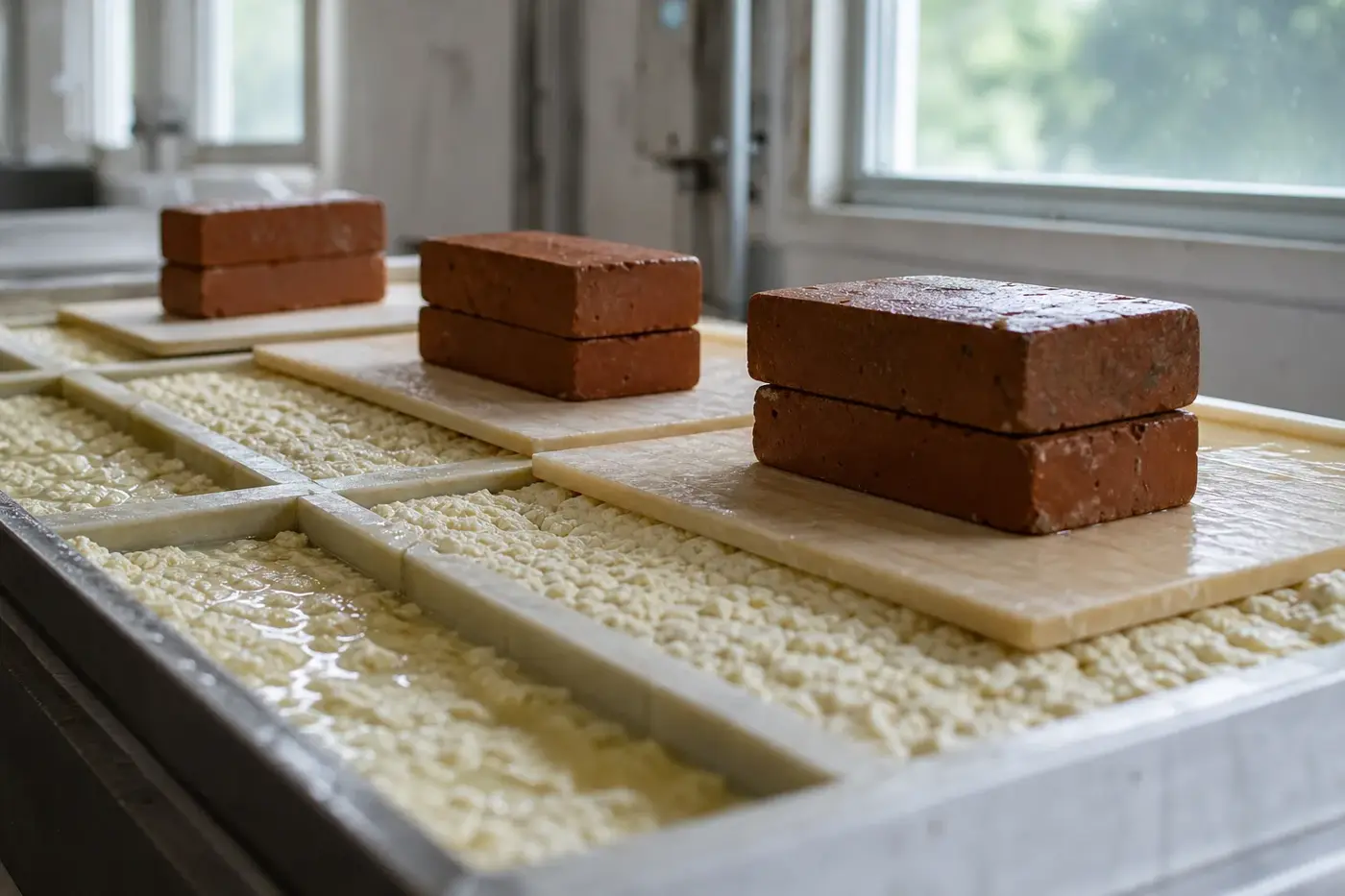
Brick's name is refreshingly literal: actual bricks were used to press the cheese. The University of Wisconsin's Center for Dairy Research dates it to 1877 and describes traditional brick as washed-rind. Its surface is tended to encourage the characteristic ripening community. You get a more assertive introduction than mild Colby offers. [5]
Try Colby and a traditionally ripened brick from documented makers, then bring in an aged cheddar. Those three methods will tell you more than a hunt for one supposed Wisconsin flavour. The wider cheddar guide takes you through that family's production and variation.
California: meet Jack, then try another milk
Monterey Jack takes you into a California story where industry meets legend. The California Milk Advisory Board recounts a mission-era precursor called queso del país, explicitly identifying that early story as legend. It places Monterey Jack's commercial development in the nineteenth century. That supplies the background; the federal standard supplies the legal identity. [7, 8]
Under the US federal standard, Monterey Jack uses pasteurised dairy ingredients. The whole cheese has a maximum moisture content of 44%, while its dry matter must contain at least 50% milkfat. Those limits define its composition. They do not make every maker's cheese taste the same. [8]
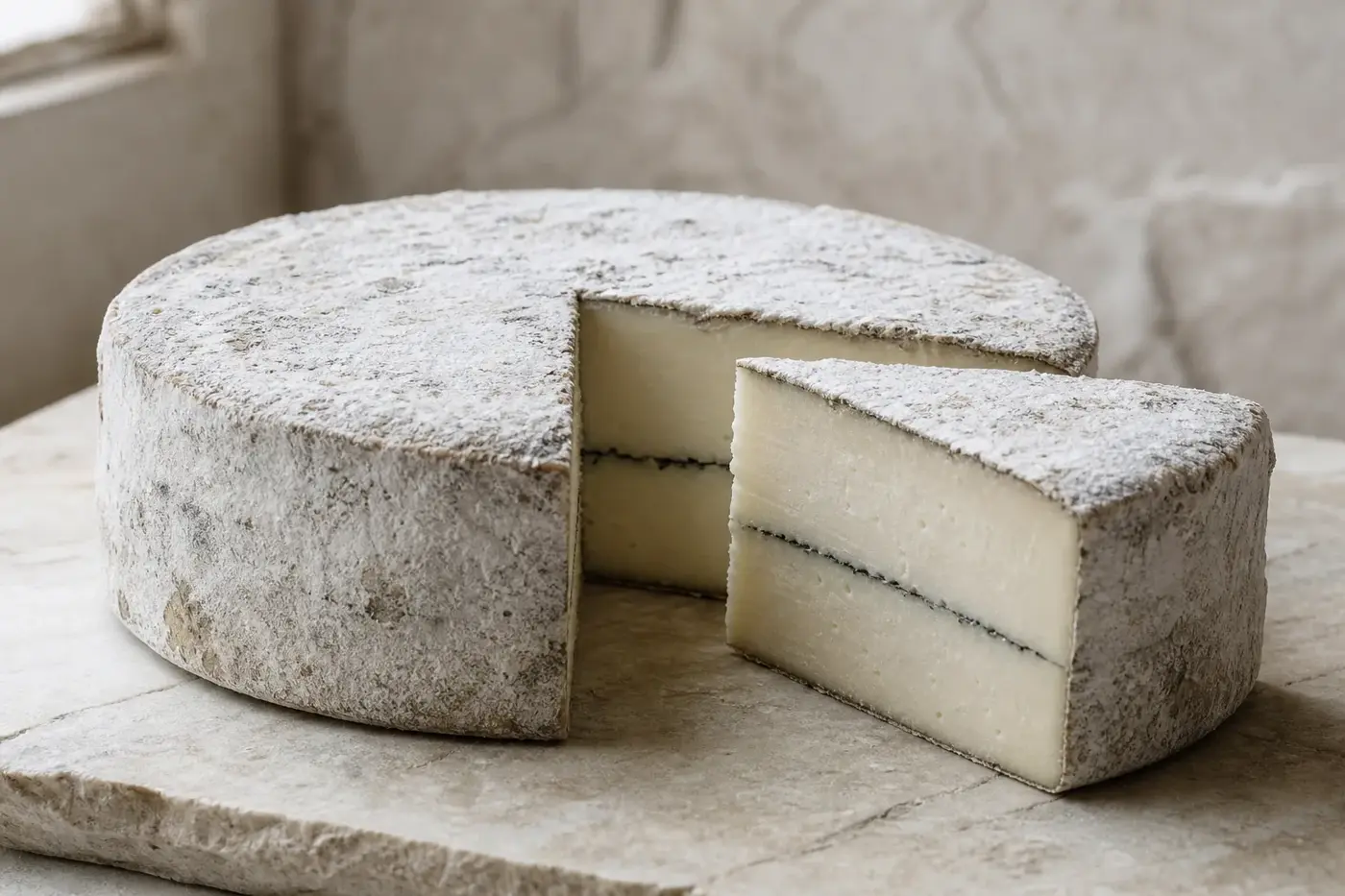
Change the milk and you find another side of California. Cypress Grove describes Humboldt Fog, from Humboldt County, as a soft-ripened, pasteurised goat's milk cheese with a ribbon of vegetable ash. Its tasting notes suggest buttermilk, herbs and a citrus finish. As the cheese matures, the maker describes increasing softness beneath the rind. [9]
Bellwether Farms brings cow's and sheep's milk into your exploration. Its basket ricotta uses whole Jersey cow's milk, while its product list also includes Sheep Cheese Original. Look at both species and method as you browse a dairy's range. The same producer can offer two very different experiences. [10]
Vermont and the Northeast: listen to the cheddar
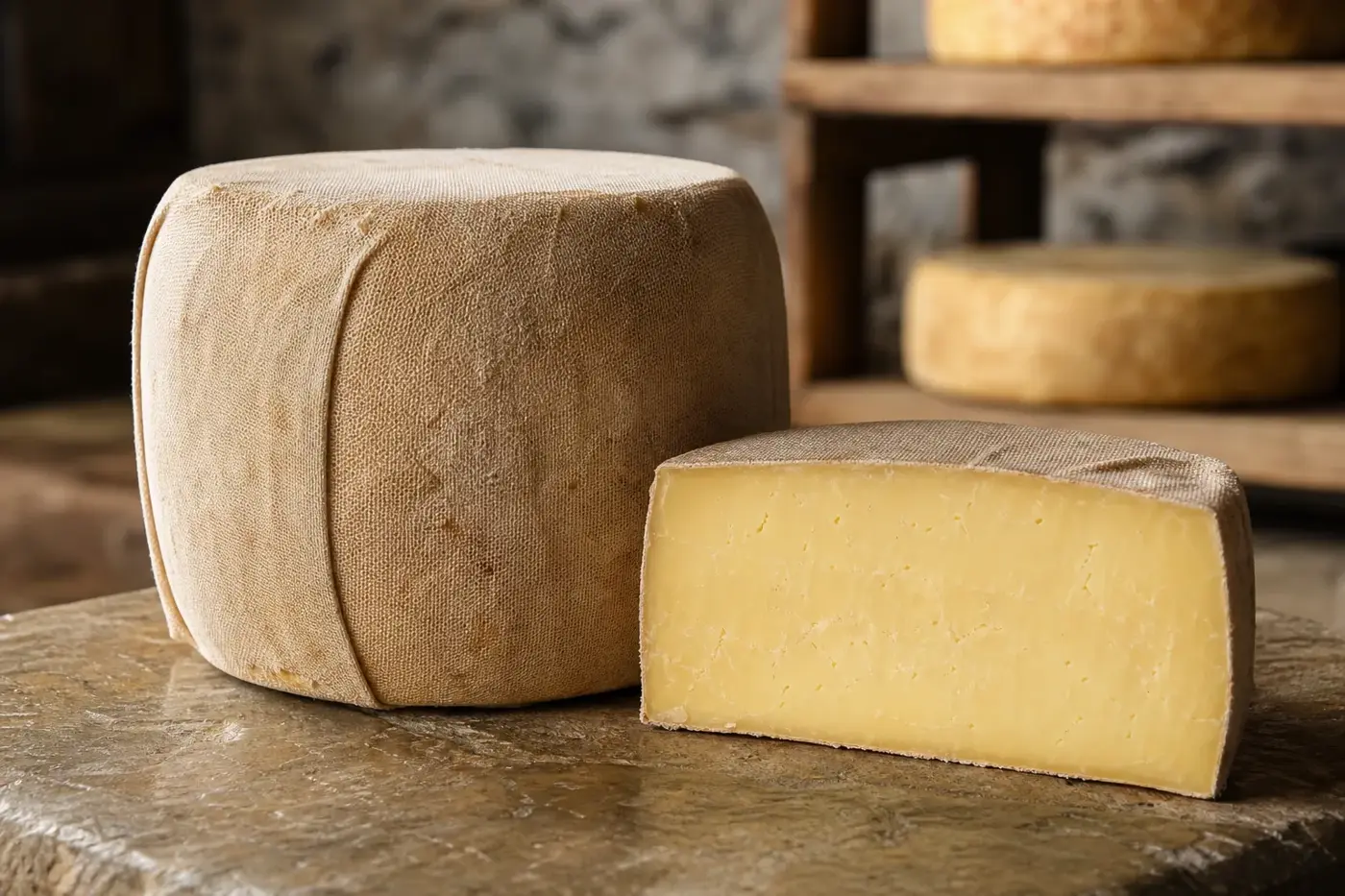
Crumbly texture, caramel sweetness, chicken broth and toasted nuts. Jasper Hill's description of Cabot Clothbound gives you rather more to anticipate than “sharp”. It also introduces the partnership between cheesemaker and affineur, the specialist responsible for maturation. Jasper Hill lists pasteurised cow's milk and nine to fourteen months of affinage, or controlled maturation. [11]
At the Cellars, the young cheese receives lard and another layer of cloth. Then comes the patient work of brushing, turning and monitoring throughout ripening. The maker's savoury-sweet flavour description connects those cellar practices with what you might taste. Age need not do all the explaining. [11]
There is plenty beyond cheddar here, too. Jasper Hill's Harbison is a pasteurised cow's milk cheese with a spruce-bark binding and a bloomy rind, the soft surface growth associated with this ripening style. The maker describes a paste that becomes spoonable during maturation. Look for its woodsy, lemon and mustard notes. [12]
Education adds another thread to the wider Northeast's cheese culture. The American Cheese Society held its first conference at Cornell University in New York. Follow farming, dairy science and specialist maturation together. You will find a richer regional story than cheddar's texture alone can tell. [3]
Find autumn blue in Oregon and a working dairy in Seattle
Autumn rain arrives, cooler weather follows, and Rogue Valley pastures renew, according to Rogue Creamery. That is when it makes Rogue River Blue. You have a cheese connecting a particular season with a distinctive finish. Its current ingredient declaration specifies pasteurised cow's milk. [13]
Cave-aged and wrapped in grape leaves soaked in pear spirits, Rogue River Blue gives you plenty to consider before the first taste. The creamery describes a fudgy texture, pronounced blue character and flavours including pear brandy, toffee and fig. Those leaves and spirits are deliberate parts of the making. This is wrapping with more to do than look handsome. [13]
Seattle offers a different setting. Beecher's documents cheesemaking at its Pike Place Market premises, bringing a working urban dairy counter into the Pacific Northwest picture. Explore the production settings as well as the styles. A city creamery and a specialist maturation programme give you different routes into the region's cheeses. [14]
Taste your way through the styles
Begin with fresh basket ricotta, then move to a soft-ripened goat's milk cheese. Follow with a spruce-bound bloomy rind, traditional brick, blue cheese and clothbound cheddar. You are following changes in milk, rind and maturation, not climbing a ladder of quality. The contrasts help you taste how different methods shape the cheeses. [4, 5, 9, 10, 11, 12, 13]
Keep the guide to cheese styles beside you as you look. Is the paste evenly firm, or does it soften beneath the rind? Is the surface wrapped, washed or mould-ripened? A few simple observations make unfamiliar American cheeses easier to understand and compare.
Look for a stated age, too. It is another useful detail to set alongside what you can see.
Follow the flavour from pasture to cellar
At Uplands Cheese in southwestern Wisconsin, place and cheese have a direct connection. There is one farm, one herd, and cheesemaking and cave ageing on the farm. The producer describes making Pleasant Ridge Reserve and Rush Creek Reserve seasonally, in time with its pastures. Here, you can trace regional character straight to farming practice. [15]
Rogue Creamery's account of autumn pasture growth offers another connection between season and milk. Jasper Hill's descriptions of cloth, brushing and controlled cellar conditions take you further along the journey. Climate and feeding help explain the milk a maker chooses; rind treatment and maturation help explain its development into cheese. Follow that sequence and regional character becomes something more precise than a place on a map. [11, 13, 15]
Milk species gives you a useful first clue, especially alongside method. Cow's milk appears in both fresh ricotta and aged clothbound cheddar, while goat's milk becomes a soft-ripened wheel layered with ash. A state name tells you where the cheese comes from. The maker's account tells you more precisely how it takes shape. [9, 10, 11]
Process cheese: get to know the legal name
For pasteurised process cheese, cheese is the starting material, not the end of the making. Under US federal law, it is ground and mixed with heat and a permitted emulsifying agent to form a uniform mass. That second manufacturing stage distinguishes it from the cheeses above. Their identities come from curd-making and, where applicable, ripening. [16]
Read the legal name rather than judging by the shape of the pack. Pasteurised process cheese, pasteurised process cheese food and pasteurised process cheese spread have separate US federal standards: respectively 21 CFR 133.169, 133.173 and 133.179. Cheese food and spread can contain additional dairy ingredients, and the standards set different composition requirements. Compare both the legal food names and the ingredient lists. [16, 17, 18]
Think about the job you want your cheese to do. Are you after a particular ripened flavour, something to spread or slice, or an ingredient for a cooked dish? Then check the legal name and ingredients. The cheese label guide helps you separate those details from the larger marketing language on the product.
Raw milk cheese: find the rules that apply
With raw milk cheese, the federal requirement depends on the cheese's standard of identity. Colby made from unpasteurised milk must, under 21 CFR 133.118, be cured for at least 60 days at a temperature no lower than about 1.7 °C (35 °F). That temperature is a curing minimum. Monterey Jack's standard, by contrast, specifies pasteurised dairy ingredients. [6, 8]
Ageing does not settle the question of microbiological safety. FDA surveillance of raw milk cheeses aged for at least 60 days found contaminated samples, including cheeses containing Listeria monocytogenes. You can explore the underlying distinctions in the guide to raw milk, thermised and pasteurised cheese. [20]
For state-level requirements, contact the dairy regulator where the cheese will be made or sold. Give them the cheese type, milk treatment and proposed route of sale, and ask what applies in addition to federal standards. If you are outside the United States, consult your own country's rules before ordering across borders.
Bring home a thoughtful selection and care for it
Choose deliberate contrasts rather than several wedges that tell you much the same thing. Ask who made each cheese, which milk it uses, whether that milk was pasteurised, and what the maker says about maturity and rind treatment. If your cheese is cut to order, ask to see the original label.
For storage in the United States, the FDA advises a refrigerator temperature of 4 °C (40 °F) or below. Refrigerate perishables promptly and follow the label's storage directions. Use an appliance thermometer to check the actual temperature rather than trusting the refrigerator setting. The home storage guide covers wrapping and handling in more detail. [19]
Serve small portions and replenish them from the refrigerator. FDA guidance limits foods requiring refrigeration to two hours at room temperature, or one hour when the air is above about 32 °C (90 °F). Include preparation and display in that time, and follow any stricter instructions on the product. [19]
Taste each cheese plain before reaching for accompaniments. For Harbison with a loosened paste, Jasper Hill recommends leaving the bark intact and spooning portions from the top. The bark supports the cheese; the paste is what you serve. Give each cheese its own utensil to keep your comparison clear. [12]
Give good cheese a little company
Start with the cheese alone, then add one accompaniment and taste again. The alcohol-free suggestions below draw on makers' published accompaniments or flavour descriptions, with editorial combinations identified. Do you prefer the contrast, or the similarity? Keep the plate simple enough for the cheese to get a word in.
| Cheese style | Try it with | What to notice |
|---|---|---|
| Clothbound cheddar | Apple jelly and plain bread | Jasper Hill suggests apple jelly with its savoury-sweet cheddar. [11] |
| Spruce-bound soft cheese | Crusty bread and sparkling water | Jasper Hill recommends bread for Harbison; water keeps things simple. [12] |
| Leaf-wrapped blue | Fruit compote and still water | Rogue Creamery suggests fruit compote; try a little beside the cheese first. [13] |
| Soft-ripened goat's milk cheese | Plain bread, then a little pear | An editorial suggestion drawing on Cypress Grove's citrus and herb notes for Humboldt Fog. [9] |
Keep a short tasting note: maker, milk, stated age, texture, aroma and finish. Give the maker's description and your own impressions separate entries. Once you have compared different styles, return to the same cheese at another stated age. See what has changed, and what you notice this time.
Pick your next cheese adventure
- Cheddar: get closer to the method behind a major American cheese family.
- How to Tell Cheese Styles Apart: Milk, Rind, Texture and Method: find the words to compare unfamiliar cheeses.
- Cheese Food Safety: The Complete Guide: follow official guidance for storage, handling and individual circumstances.
General information only, not medical advice: follow the official guidance where you live.
Questions people ask
What is the difference between Colby and cheddar?
Colby is made by draining the whey, then washing and cooling the curd with water before salting and pressing it. In cheddaring, slabs of curd are stacked and turned.
What milk is used to make Monterey Jack?
The US federal standard specifies pasteurised dairy ingredients. It also sets a maximum moisture content of 44% and a minimum milkfat content of 50% in the dry matter.
Does American raw milk cheese have to be aged for 60 days?
The federal requirement depends on the cheese's standard of identity. Colby made from unpasteurised milk must be cured for at least 60 days at no lower than about 1.7 °C, while Monterey Jack's standard specifies pasteurised dairy ingredients.
What is American pasteurised process cheese?
It starts with cheese that is ground and mixed with heat and a permitted emulsifying agent to form a uniform mass. Pasteurised process cheese, cheese food and cheese spread have separate federal standards.
How should American cheese be stored and served?
In the United States, the FDA advises keeping the refrigerator at 4 °C or below and following the label's storage directions. Its guidance limits foods requiring refrigeration to two hours at room temperature, or one hour when the air is above about 32 °C. See the FDA's food storage guidance for details.
Sources
-
United States Department of Agriculture, National Agricultural Statistics Service. Dairy Products 2025 Summary, 24 April 2026. Annual report. Used as the national manufacturing reference, without reproducing production figures or state rankings.
-
Gastronomica, University of California Press. Cheese Cultures: Transforming American Tastes and Traditions, Fall 2010, available through the Massachusetts Institute of Technology repository. Research article. Original ethnographic research and historical synthesis, used within its historical scope.
-
American Cheese Society. 2003 Judging Results, 2003. Contemporary society record. Used for the first conference's date and location, and the society's educational purpose, not competition results.
-
City of Colby, Wisconsin. Our History, undated, retrieved November 2026. Municipal historical account.
-
University of Wisconsin-Madison, Center for Dairy Research. Dairy Pipeline, volume 34, number 3, Fall 2022, article on Widmer's centenary. Technical publication.
-
US Food and Drug Administration, electronic Code of Federal Regulations. 21 CFR 133.118, Colby cheese, codified text retrieved November 2026. Federal standard.
-
California Milk Advisory Board, Real California Milk. Cheese History, undated, retrieved November 2026. Industry historical account. Mission-era material is identified in the article as the board's recorded legend.
-
US Food and Drug Administration, electronic Code of Federal Regulations. 21 CFR 133.153, Monterey cheese and monterey jack cheese, codified text retrieved November 2026. Federal standard.
-
Cypress Grove. Humboldt Fog, current product page, retrieved November 2026. Maker's product description and ingredients. Sensory descriptions are the maker's.
-
Bellwether Farms. Products and Whole Milk Basket Ricotta, current product pages, retrieved November 2026. Product range and ricotta description.
-
Jasper Hill Farm. Cabot Clothbound, current product page, retrieved November 2026. Milk, maturation, sensory profile and pairings. Sensory descriptions are Jasper Hill's.
-
Jasper Hill Farm. Harbison, current product page, retrieved November 2026. Milk, rind, maturation and service. Sensory descriptions are the maker's.
-
Rogue Creamery. Rogue River Blue, current product page, retrieved November 2026. Ingredients, seasonal production, maturation and pairings. Sensory descriptions and pasture assessments are the maker's.
-
Beecher's Handmade Cheese. Pike Place Market, current premises page, retrieved November 2026. Seattle cheesemaking location.
-
Uplands Cheese. Farmstead Cheese from Wisconsin's Driftless, current website, retrieved November 2026. Farm, herd and seasonal production account.
-
US Food and Drug Administration, electronic Code of Federal Regulations. 21 CFR 133.169, Pasteurized process cheese, codified text retrieved November 2026. Federal standard.
-
US Food and Drug Administration, electronic Code of Federal Regulations. 21 CFR 133.173, Pasteurized process cheese food, codified text retrieved November 2026. Federal standard.
-
US Food and Drug Administration, electronic Code of Federal Regulations. 21 CFR 133.179, Pasteurized process cheese spread, codified text retrieved November 2026. Federal standard.
-
US Food and Drug Administration. Are You Storing Food Safely?, current consumer guidance, retrieved November 2026. Refrigeration and room-temperature limits.
-
US Food and Drug Administration. Microbiological Surveillance Sampling: FY14-16 Raw Milk Cheese Aged 60 Days, surveillance summary covering fiscal years 2014 to 2016, retrieved November 2026. Sampling findings.
-
US Food and Drug Administration. Recalls, Market Withdrawals, & Safety Alerts, live index, retrieved November 2026. Recall index. Editorial monitoring source.
-
US Food and Drug Administration. Investigations of Foodborne Illness Outbreaks, live index, retrieved November 2026. Outbreak investigations. Editorial monitoring source.
This desk-researched guide brings together federal standards, official consumer guidance, contemporary industry records, ethnographic research and attributed makers' accounts.
Last checked: November 2026
Last checked November 2026.
The cheeses of United States
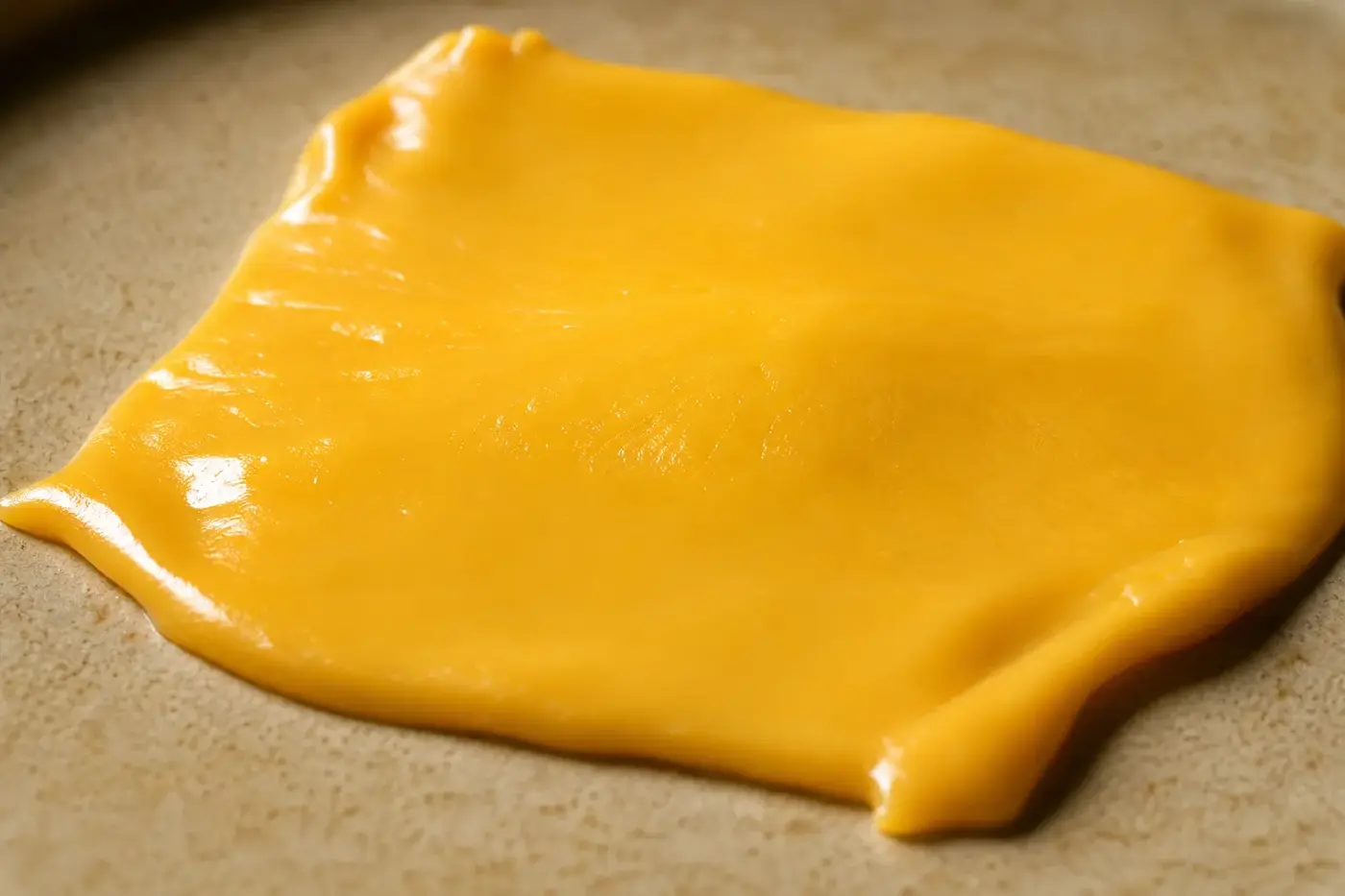
American Cheese: The Processed Slice Explained
Watch a slice of American cheese soften over your burger.
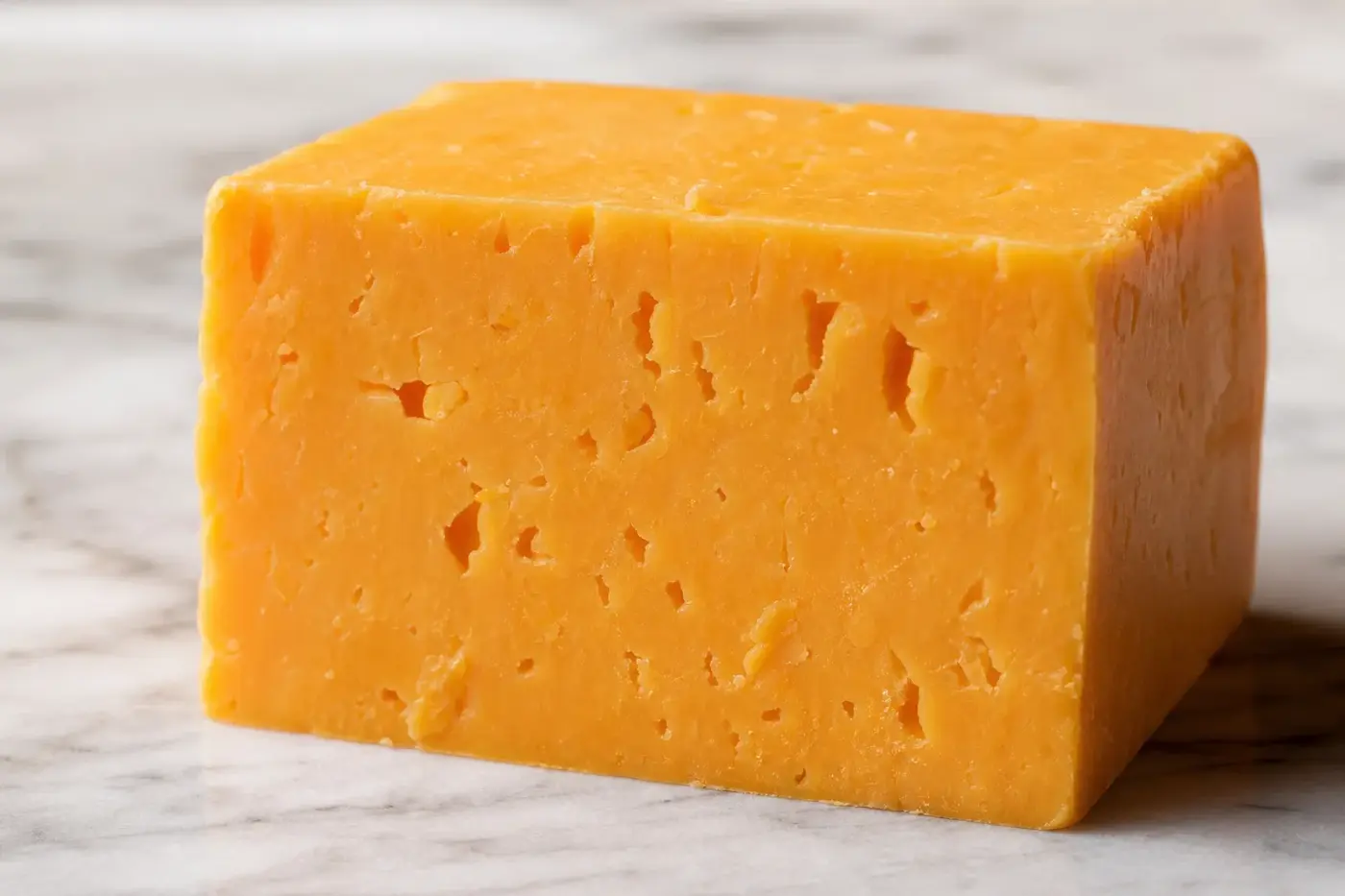
Colby
Slide a knife through Colby and notice how readily it yields.
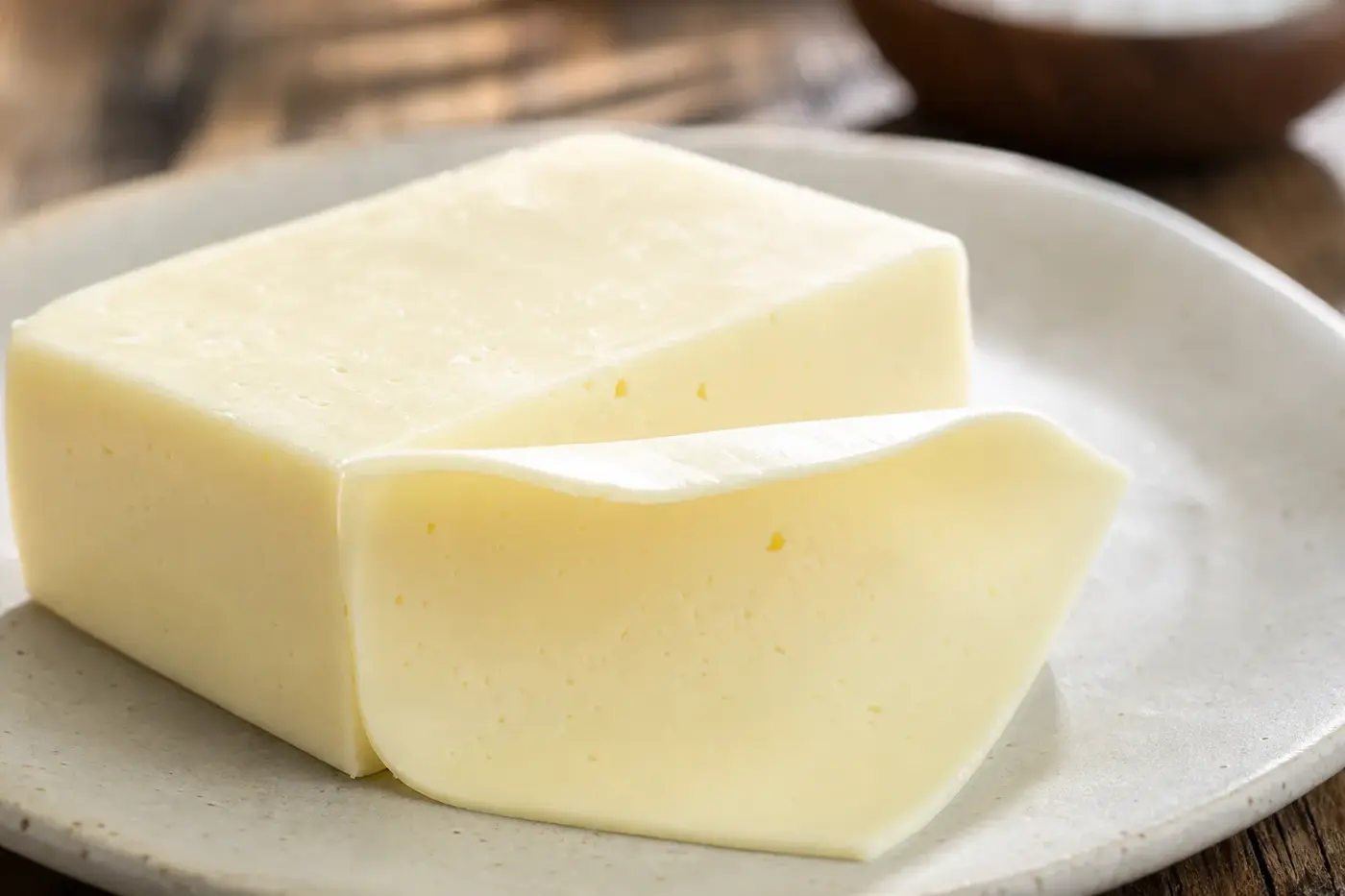
Monterey Jack
Your knife slips through young Monterey Jack with barely a complaint.
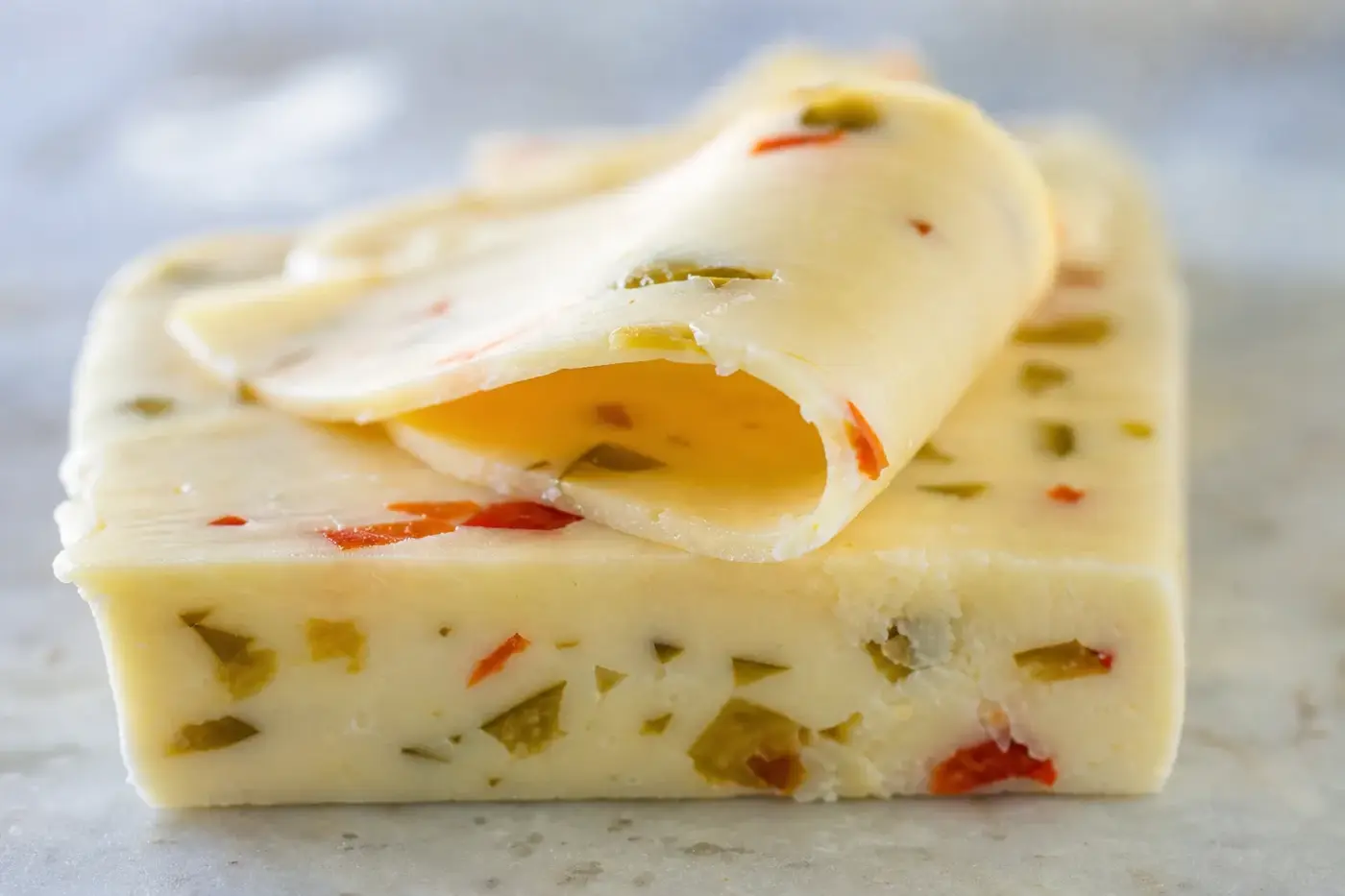
Pepper Jack
Bend a pale ivory slice and watch the pepper pieces catch your eye.
Brick Cheese
Real bricks press the curds at Widmer’s Cheese Cellars in Wisconsin.
Teleme
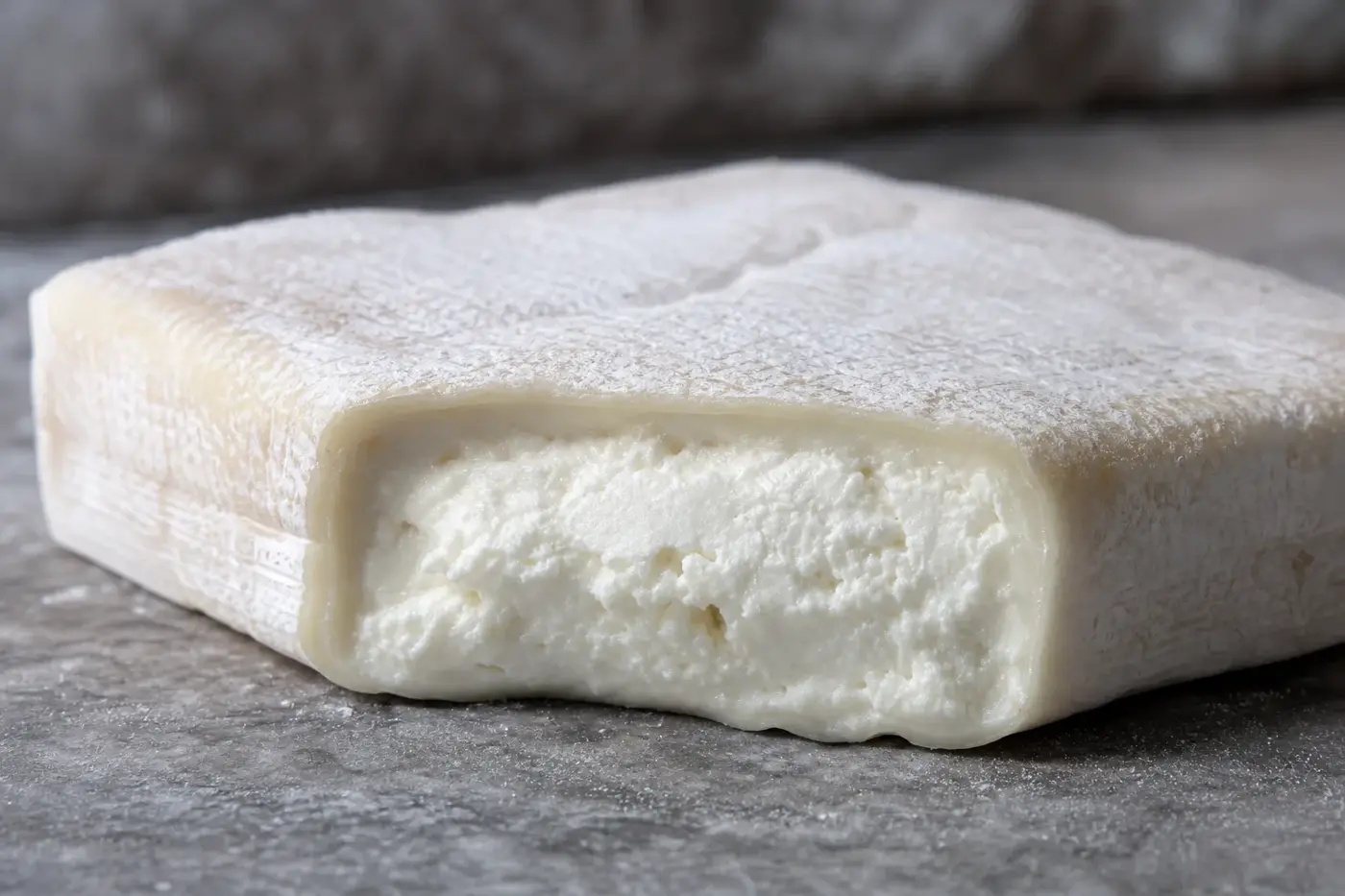
Your knife meets a floury surface, then a centre beginning to surrender.
Muenster (American Style)
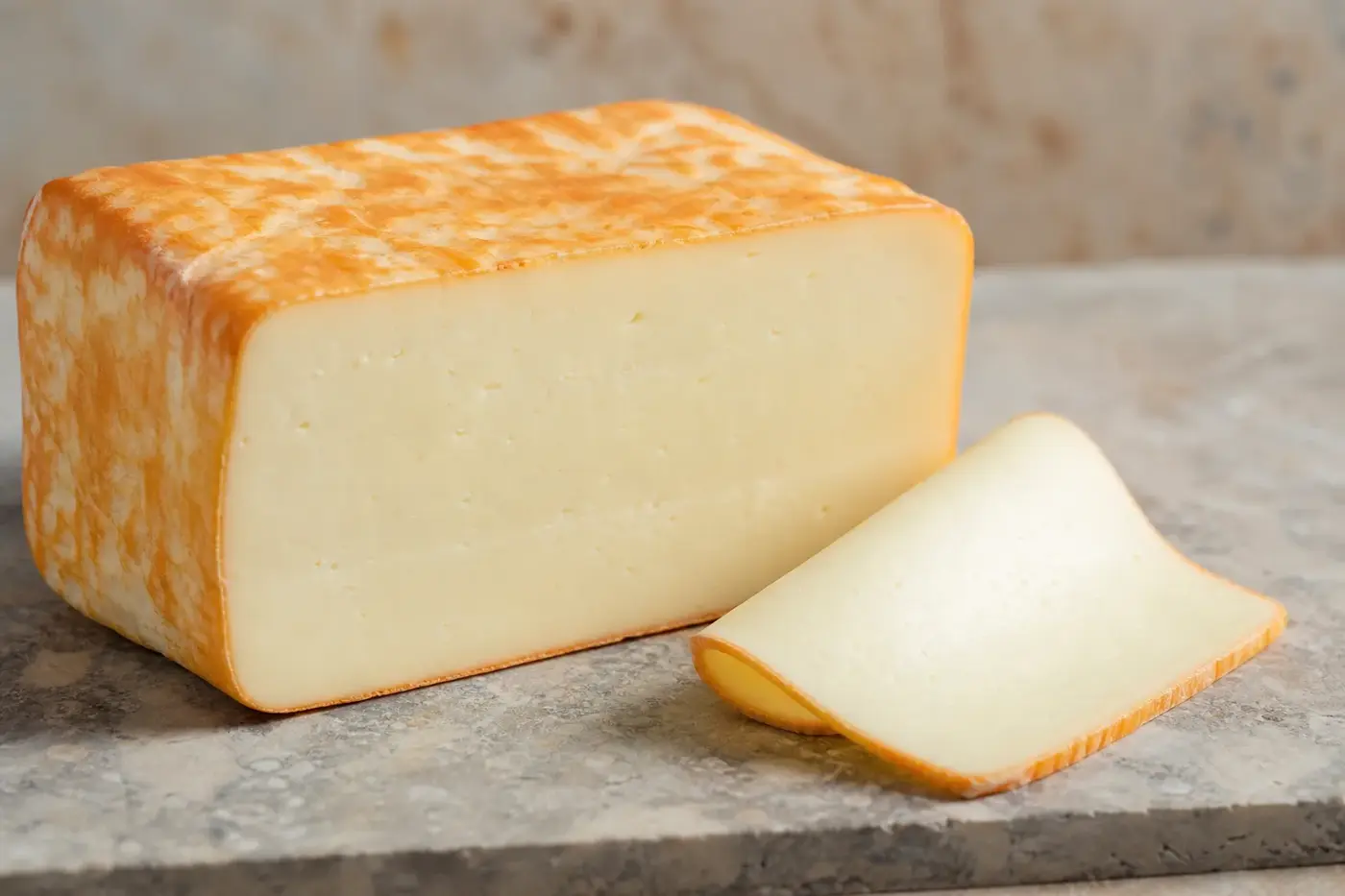
An orange border, a pale centre, a slice bending into your sandwich.
Dry Jack
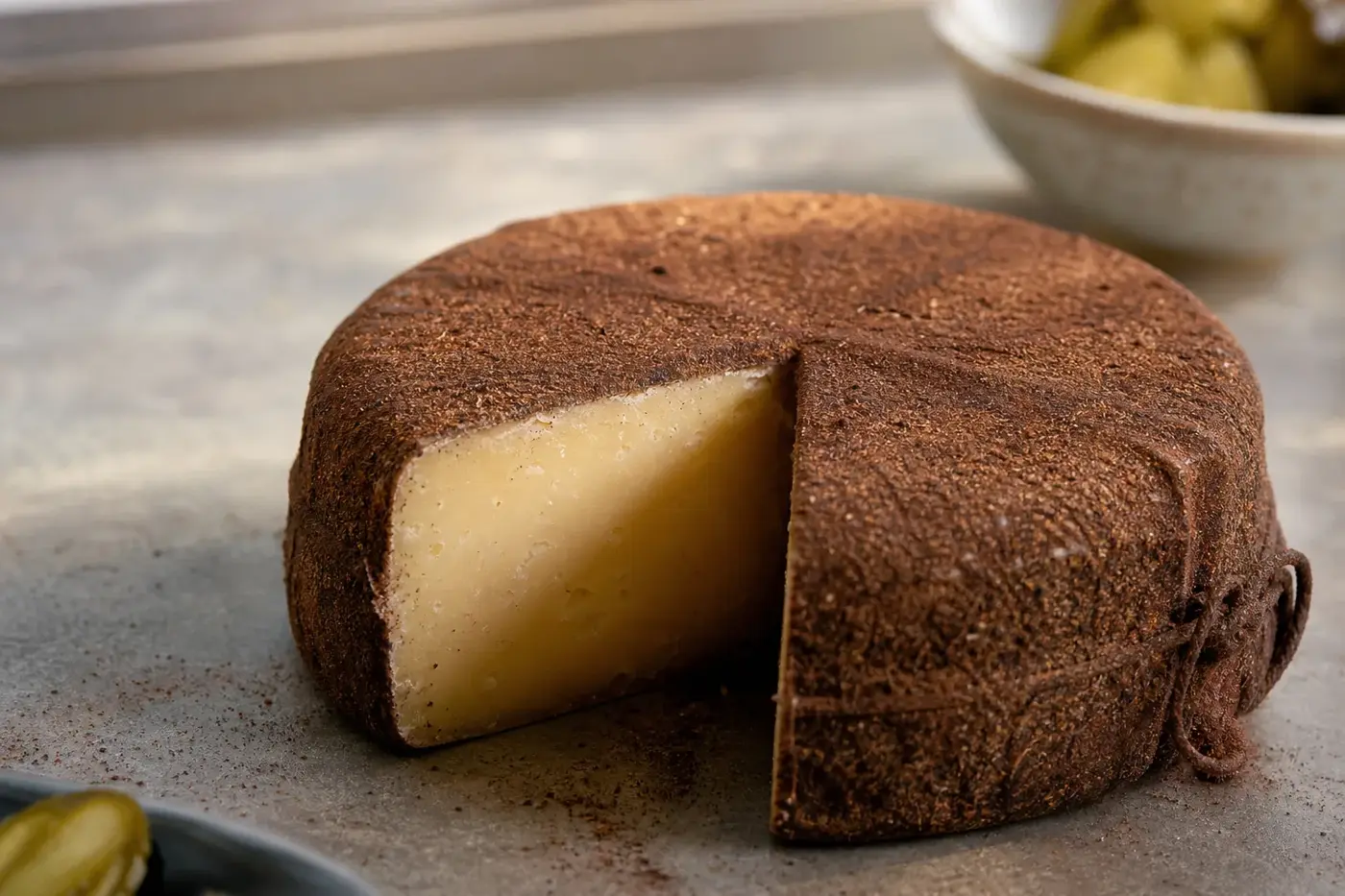
Picture Monterey Jack waiting in storage in San Francisco in 1915.
Humboldt Fog
Cut into Humboldt Fog and a dark ribbon of edible vegetable ash appears across the pale centre.
The editors suggest you read next
French Cheese: The Complete Guide
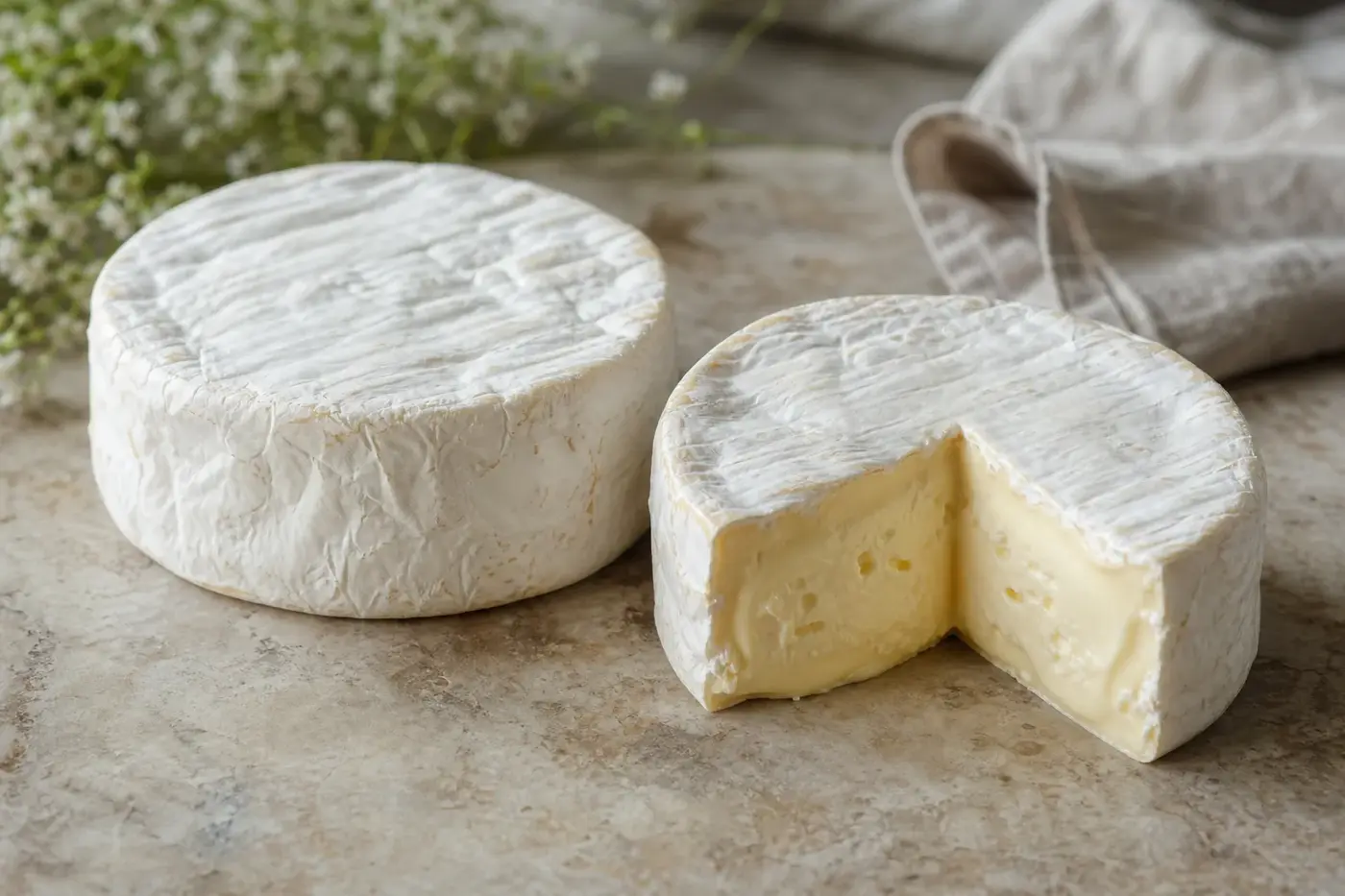
Picture Normandy’s pastures, then follow the milk towards the Loire’s goat dairies, the Jura’s shared cheesemaking traditions and the sheep country of the Pyrenees.