The World Championship Cheese Contest
A sniff.
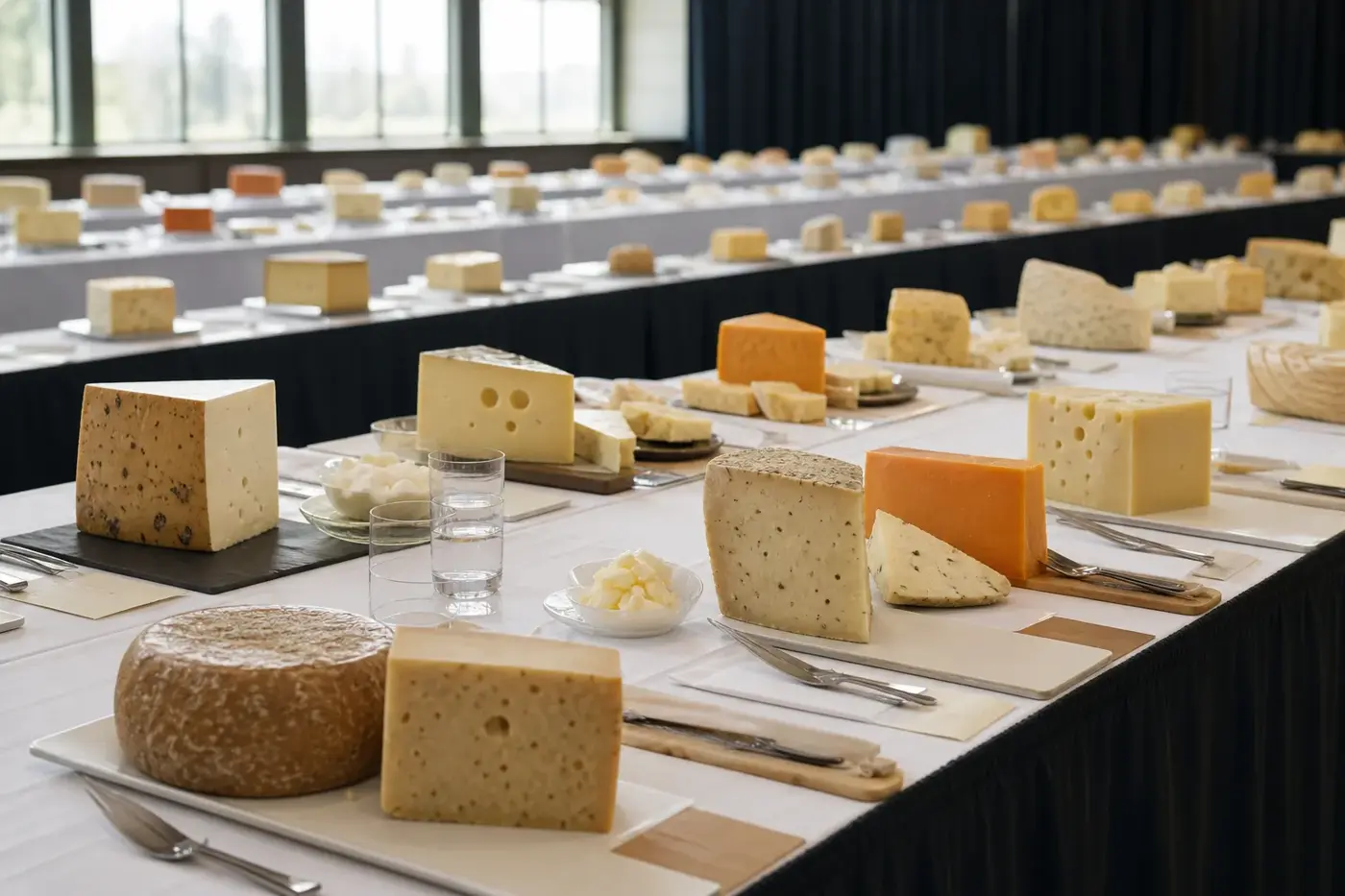
A sniff. A taste. Somewhere on the judging floor in Wisconsin, a point disappears. Every cheese starts with a possible 100, and judges deduct for faults in flavour, texture, salt, colour and finish. Organised by the Wisconsin Cheese Makers Association, the World Championship Cheese Contest turns that close attention into class medals and, after further judging, an overall World Champion Cheese. [1][2]
Come onto Wisconsin’s international judging floor
In Madison, Wisconsin, the 2026 contest gathered dairy products from around the world onto one judging floor. Each faced a deceptively simple question: how well did it deliver the characteristics expected of its kind? A fondness for cheese gets you interested. Answering that question takes rather more. [1][2]
Read the class description, judges’ observations and score together, and you get something richer than a medal alone. You can see exactly what the judges assessed and how the entry performed. The small print is where the cheese starts talking. [1][2]
The Wisconsin Cheese Makers Association, usually shortened to WCMA, is the industry association behind the contest. Its official history dates the competition to 1957 and describes it as biennial, meaning every two years. The most recent completed competition, its 36th edition, ran from 3 to 5 March 2026. [1][3]
A dairy story unfolding since 1957
Look beyond the winning cheeses and you find an archive of how the dairy industry assesses its work. The contest has accumulated records of successive competitions since 1957. Those records identify 2024 as the 35th edition and 2026 as the 36th, tracing its present rhythm of a competition every two years. [3][4]
The scale comes into focus in the organisers’ report on the completed event: 3,375 entries from 25 countries across 148 classes in 2026. Different manufacturing traditions met under one roof. Separate classes kept the distinctions between their products intact. [4]
Keep that year attached to those figures. Countries represented, entries received and classes contested change with each edition. When you explore the contest’s international reach, the date belongs beside the numbers.
What comes to the judging table?
Cheese does not have the floor to itself. Butter, cultured dairy products and dried dairy ingredients also enter the contest, whose 2026 rules welcome manufacturers of all these products worldwide. Each product enters one class. [2]
The entries name the people or teams involved in manufacture, giving you a connection to the makers behind each product. Certain second-party businesses may also enter products made specifically for them. They need the manufacturer’s approval to do so. [2]
That familiar contest name tells only part of the story. The organisers explicitly invite butter, cultured dairy products and dry dairy ingredients alongside cheese. Follow those classes and you get a broader picture of dairy manufacture, with distinct products brought together for detailed assessment. [3]
The medals travel widely, too. The final 2026 report records gold medals for manufacturers from countries including Australia, Austria, Canada, Croatia, Denmark, France, Greece, Italy, Japan, the Netherlands, Spain, Sweden, Switzerland and the United States. [4]
If unfamiliar names leave you wondering where to begin, start with milk, rind, texture and method. Those distinctions give you a useful way into the results. Products that initially seem worlds apart become easier to understand through the characteristics and methods they share.
Why every Gouda needs its own company
A young Gouda and a mature Gouda arrive with different expectations. Under the 2026 rules, young Gouda is 1 to 90 days old; mature Gouda is 91 to 300 days. Aged, extra-aged, flavoured and smoked Gouda have separate classes, too. [2]
That care over distinctions runs through the competition. Classes account for milk species, cheese style, maturity, rind, moisture and added flavour. Before comparing two scores, find out what sort of cheese each entry was expected to be. [2]
The 2026 finalists show you how this works. They emerged from classes for natural-rinded Cheddar, rinded Swiss-style cheese, Brie, young Gouda and mature Gouda. Each began among products entered in its own class, rather than in one undifferentiated tasting, and followed its own route towards the championship. [5]
Read the class title before the score. “Young” and “mature” tell you where an entry belonged and what the judges expected of it. For a closer look at this particularly broad cheese family, explore Gouda.
Follow the judges’ eyes, noses and palates
Judges begin with a possible 100 points and deduct for defects. The organisers describe assessment under flavour, body and texture, salt, colour, finish, packaging and other appropriate attributes. Appearance matters, but so does what happens when a sample is smelled, handled and tasted. [1]
“Body and texture” asks more than whether a cheese feels pleasant. Alongside flavour and finish, it helps judges assess technical performance. Each observation has a place within that structured assessment. [1]
The revealing questions are what the judges noticed and where points disappeared. A system based on deductions makes those observations more instructive than a simple declaration of liking. You can fall for a cheese without preparing a written defence; the judges have to explain its performance. [1]
For producers, those written observations give the result a life beyond the ceremony. Entrants can access product scores and judges’ scoresheets through the contest’s MyEntries system. That means feedback to return to, not just a placing to remember. [3]
As a visitor, you can follow the connection between observation and score. Watch the judges move between looking, smelling and tasting, then listen during a demonstration for the reason behind a deduction. What quality prompted it, and how did it shape the assessment?
The route from class medal to world title
Gold, silver and bronze go to the three highest-scoring entries in each class. Gold is also described as Best of Class. Each medal recognises a precise achievement: a position within a defined class. [1][2]
Qualifying gold-medal cheeses undergo further examination, with 20 finalists advancing. The full judging panel scores those finalists; the highest average wins, followed by first and second runners-up. Championship eligibility covers the cow’s, goat’s, sheep’s, and mixed or other milk cheese categories. [2]
To follow a cheese through the contest, start with its class award. Then look for whether it reached the final and where it finished. Class judging and the championship are separate stages, recognising different achievements. [2]
Keep the published 2026 finalist list beside the champion announcement as you read. It preserves the whole final field, so you can see every cheese that reached that last round. The winning name matters, but so does the company it kept. [5]
Meet Beemster Royaal Grand Cru, the 2026 champion
Beemster Royaal Grand Cru, made by CONO Kaasmakers in Westbeemster, the Netherlands, won the 2026 World Champion Cheese title. Its championship score was 98.68 out of 100. WCMA announced the result on 5 March 2026. [4]
Its nearest competitors were close behind. Appenzeller Purple Label scored 98.45, while Alter Fritz scored 98.41. Put those three published scores together and you get a clearer picture of the final than the winning name gives you alone. [4]
There is plenty to explore beyond that leading trio. The 2026 finalist list includes cheeses made in Seattle, France, Denmark, Switzerland and the Netherlands, among other locations. Follow their classes and makers for a reading list of international cheesemaking, with the champion as your starting point rather than your stopping point. [5]
Get to know the people behind the points
WCMA announced 56 judges for 2026, drawn from 22 countries, 12 US states and Puerto Rico. The association describes a group including cheese graders, buyers, dairy science professors and researchers. Their working lives bring several different perspectives to the same judging floor. [6]
Open their published biographies and those job titles gain texture. You find experience in cheese technology, product development, grading, maturation, sensory science, manufacturing and quality control. Each discipline contributes its own practical knowledge to the table. [7]
Some judges troubleshoot production. Others teach cheesemaking, evaluate cheese for procurement or work on maturation. That combination of practical and scientific experience suits a contest designed to produce detailed feedback as well as winners. [7]
It also helps you understand the emphasis on technical assessment and the record of how each score was reached. University researchers, manufacturers and specialist cheese businesses all appear on the panel’s roster. Their everyday work leads them towards cheese from different directions. [6][7]
Three contests, three different approaches to cheese
Similar names can send you towards quite different judging systems. The World Cheese Awards belongs to the Guild of Fine Food, while the American Cheese Society runs its own Judging & Competition. Each has its own eligibility and assessment rules. [8][9][10]
| Competition | Organiser | How the judging differs |
|---|---|---|
| World Championship Cheese Contest | Wisconsin Cheese Makers Association | Starts at 100 and deducts points; three medal positions in each class. [1] |
| World Cheese Awards | Guild of Fine Food | Annual international competition hosted by different nations; awards include Super Gold. [8][9] |
| ACS Judging & Competition | American Cheese Society | Technical and aesthetic judges each provide half the assessment. [10] |
At the World Cheese Awards, flavour, rind, body, texture and appearance are assessed blind. Its rules say cheeses are judged on their own merit, rather than compared with others in the same category; categories serve operational purposes. Eligible products are dairy-based cheeses, excluding yoghurt, cream and dairy alternatives. [9]
ACS brings two perspectives together. A technical judge deducts from 50 for defects, while an aesthetic judge awards up to 50 for outstanding qualities. Its eligibility rules require organisational membership and milk sourced from North, Central or South America. [10][11]
Keep those differences beside you when reading results. A medal from one competition does not represent the same assessment as a medal from another. The contest’s name tells you something important, not just the colour of the award. [10][11]
Watch a score take shape
At the completed 2026 contest, visitors could watch the first two days of preliminary judging at Monona Terrace. The dedicated attendance page advertised demonstrations explaining evaluation and scoring, alongside some samples. The championship round was closed to the public, with the announcement streamed online. [6][12]
The draw is the chance to see how cheese is evaluated. Watching professionals work, then hearing a demonstration explain their decisions, offers something different from a tasting festival. Build your visit around observation and learning, with sampling as an extra attraction.
Your most useful moment may not involve a mouthful at all. It might be hearing the explanation that connects something a judge noticed with the score that followed. Suddenly, the process becomes easier to follow.
For the next edition, consult the official attendance page. Look for which rounds admit visitors, whether demonstrations require booking and how to watch the final announcement. Keep the public judging programme separate from any awards function or associated industry event, so your arrangements fit the experience you want.
Plan your Madison visit around the judging
Confirm the visitor dates before arranging the wider trip. By November 2026, the next announced setting was Monona Terrace in Madison in February 2028. Destination Madison’s planning resources bring together accommodation, transport, accessibility information and itinerary ideas. [1][13]
Before you commit, work through the practical details below. Start with the programme and let the rest of your visit take shape around it.
- Choose your edition: make sure the page covers the year you intend to attend.
- Confirm public access: look for open sessions and registration conditions.
- Ask about accessibility: cover entrances, seating, viewing positions and demonstration arrangements.
- Plan your transport: consider the journey between your accommodation and the confirmed venue.
- Arrange other activities separately: confirm museum visits, tours and meals independently of the contest programme.
- Know the rules for bringing cheese home: consult current official import rules for your origin, destination and any transit country, including whether your journey is personal or commercial.
Choose accommodation once you have the public programme in hand. The contest may not fill every day of your stay, so let the sessions that interest you shape your itinerary. If judging is your main interest, prioritise a demonstration.
If travel is not practical, consult the organiser’s viewing arrangements before deciding whether to follow remotely. You can then plan around what will actually be available to watch. A clear programme is just as useful from home.
Let the medal lead you to the maker
An award records an entered product’s performance under a particular competition’s rules in a particular year. Here, leading a class, reaching the final and earning the highest final average are distinct achievements. Keep those stages clear and you learn more than you would by treating the results as a definitive ranking of all cheeses. [1][2]
Use an award as an invitation to investigate. Look for the exact cheese, maker, year and class, then consider what draws you to its style. On packaging, read a medal alongside the cheese label: both offer useful information, and neither does the other’s job.
The pleasure lies in moving between tiny details and the bigger picture. One judging decision offers precision; the field around it reveals the breadth of cheeses represented. A champion supplies the headline, but the classes, finalists and scoresheets give you many more makers and cheeses to discover.
Questions people ask
Who won the World Championship Cheese Contest in 2026?
Beemster Royaal Grand Cru won with a championship score of 98.68 out of 100. It was made by CONO Kaasmakers in Westbeemster, the Netherlands.
How is cheese scored in the contest?
Each entry starts with a possible 100 points, and judges deduct points for defects. They assess attributes including flavour, body and texture, salt, colour, finish and packaging.
Can products other than cheese enter the contest?
Yes. The 2026 rules also admitted butter, cultured dairy products and dried dairy ingredients from manufacturers worldwide.
How does a cheese become World Champion?
Qualifying gold medal cheeses are examined again, and 20 finalists advance. The full judging panel scores those finalists, and the highest average wins.
Can the public watch the judging?
At the 2026 contest, visitors could watch the first two days of preliminary judging at Monona Terrace, but the championship round was closed to the public. As checked in November 2026, the next announced setting was Monona Terrace in Madison in February 2028, and visitors should consult the official attendance page for arrangements.
Sources
[1] Wisconsin Cheese Makers Association, About, undated current webpage, checked November 2026. Contest history, frequency, technical scoring and next announced setting.
Read at worldchampioncheese.org
[2] Wisconsin Cheese Makers Association, 2026 World Championship Cheese Contest Entry Kit, 2025. Contest overview, rules and classes.
Read at worldchampioncheese.org
[3] Wisconsin Cheese Makers Association, 2026 World Championship Cheese Contest, 2026 webpage. Edition number, product scope, dates and scoresheet access.
Read at worldchampioncheese.org
[4] Wisconsin Cheese Makers Association, Netherlands Wins World Champion Title with Beemster Royaal Grand Cru, 5 March 2026. Champion, scores and completed-event participation figures.
Read at worldchampioncheese.org
[5] Wisconsin Cheese Makers Association, 2026 WCCC Top 20 Finalists, 2026. Finalists, classes, makers and locations.
Read at worldchampioncheese.org
[6] Wisconsin Cheese Makers Association, Elite Global Judging Team to Evaluate 3,375 Entries at the 2026 World Championship Cheese Contest, 5 February 2026. Panel composition and public access.
Read at worldchampioncheese.org
[7] Wisconsin Cheese Makers Association, 2026 Expert Judges, 2026. Published professional biographies.
Read at worldchampioncheese.org
[8] Guild of Fine Food, World Cheese Awards, 2026 webpage. Organiser, annual frequency and changing host nations.
Read at gff.co.uk
[9] Guild of Fine Food, Terms & Conditions, 2026 competition rules. Clauses 2.10, 2.22, 2.27 and 6.1.
Read at gff.co.uk
[10] American Cheese Society, Judging Process, undated webpage. Technical and aesthetic assessment, as retrieved in the official search extract.
Read at cheesesociety.org
[11] American Cheese Society, Judging & Competition Eligibility Requirements, undated current webpage. Membership and milk-origin requirements.
Read at cheesesociety.org
[12] Wisconsin Cheese Makers Association, Attend, 2026 visitor programme. Preliminary judging, demonstrations and streamed announcement.
Read at worldchampioncheese.org
[13] Destination Madison, Planning Tools, undated current webpage. City visitor-planning resources.
Read at visitmadison.com
Researched through the organisers’ rules, announcements, judging biographies and visitor information, with comparisons drawn from the other competitions’ own published materials.
Last checked: November 2026
Last checked November 2026.
The editors suggest you read next
Cheese Festivals Around the World
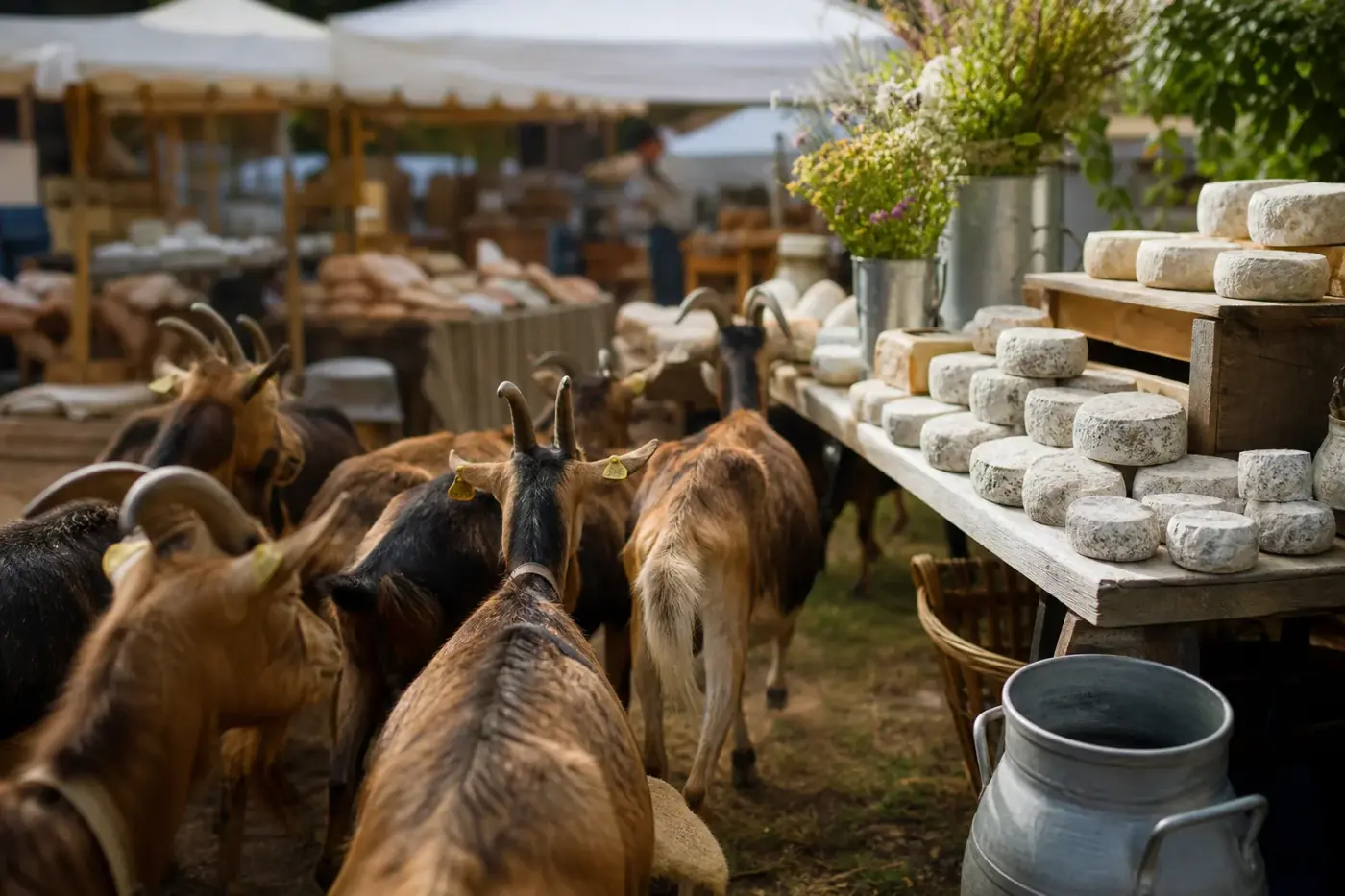
A herd of goats arrives at Rocamadour's cheese festival.