Tirkeeran
Take a bite, then pause before reaching for the next slice.
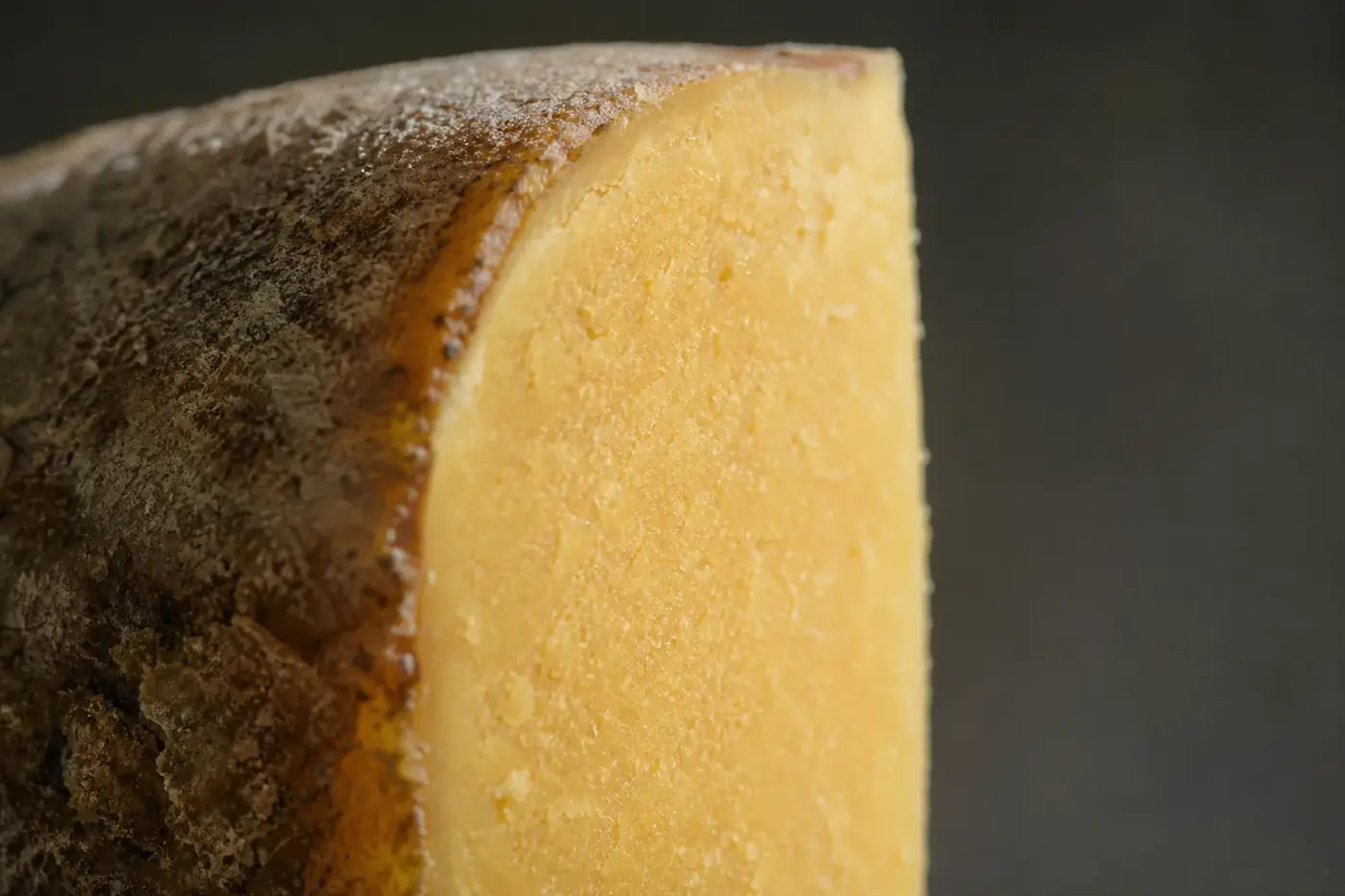
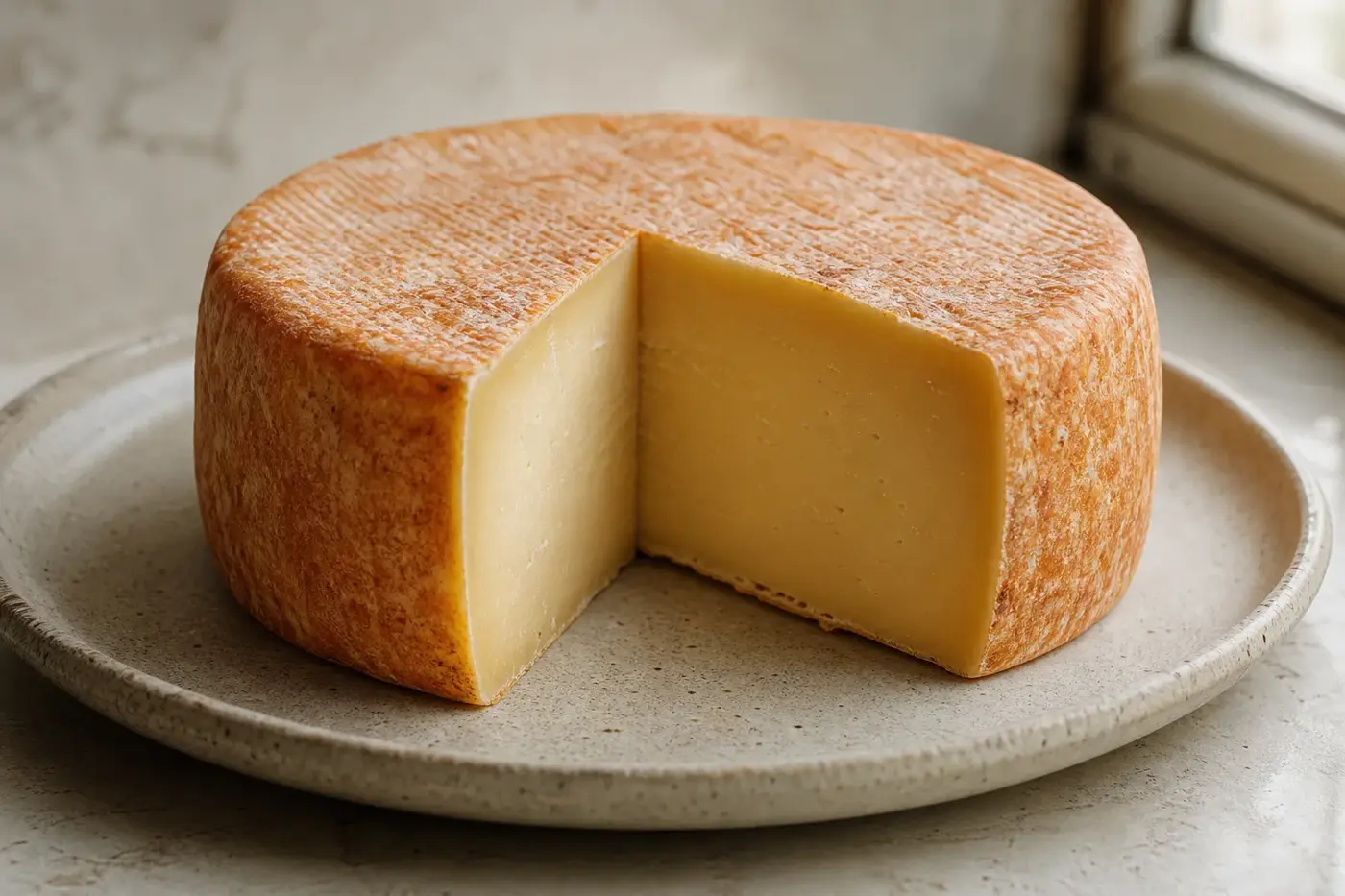
Take a bite, then pause before reaching for the next slice. Tirkeeran’s maker promises savouriness, sharpness and a finish that stays with you. Behind that mouthful lie at least seven months of ageing in the Sperrin Mountains of County Londonderry, Northern Ireland, where Dart Mountain Cheese makes this hard cow’s milk cheese with a natural rind.[1][2]
| Get to know it | Tirkeeran |
|---|---|
| Made by | Dart Mountain Cheese[1] |
| At home in | Park, County Londonderry, Northern Ireland[2] |
| Milk | Cow’s milk, pasteurised[1] |
| Rennet | Vegetarian rennet, according to the producer[4] |
| Style | Hard, natural rind[1] |
| Time spent ageing | At least seven months[1] |
Follow Tirkeeran home to the Sperrins
Head towards Park, below the mountain that gives Dart Mountain Cheese its name, and you reach the small dairy behind Tirkeeran. Its address is on Tamnagh Road, in the Sperrins of north-west Ireland. Here, you have a particular maker and a particular home, rather than an anonymous regional style.[2]
The dairy began as a disused agricultural barn. The company’s history records its conversion in 2009, followed by time spent developing cheesemaking and ageing skills. Today, the family-run business makes and matures a range of cheeses, with Tirkeeran taking its place among them.[2]
The cheese’s name carries you beyond the dairy door. The maker identifies Tirkeeran as its home barony, a district stretching from the Sperrins towards the north Derry coast.[1]
Meet the milk behind the mouthful
Tirkeeran’s product page specifies pasteurised cow’s milk. Dart Mountain’s wider cheese-range page also says its cheeses are pasteurised and made with vegetarian rennet. These are useful details to bring to the board before you pick up a knife.[1][4]
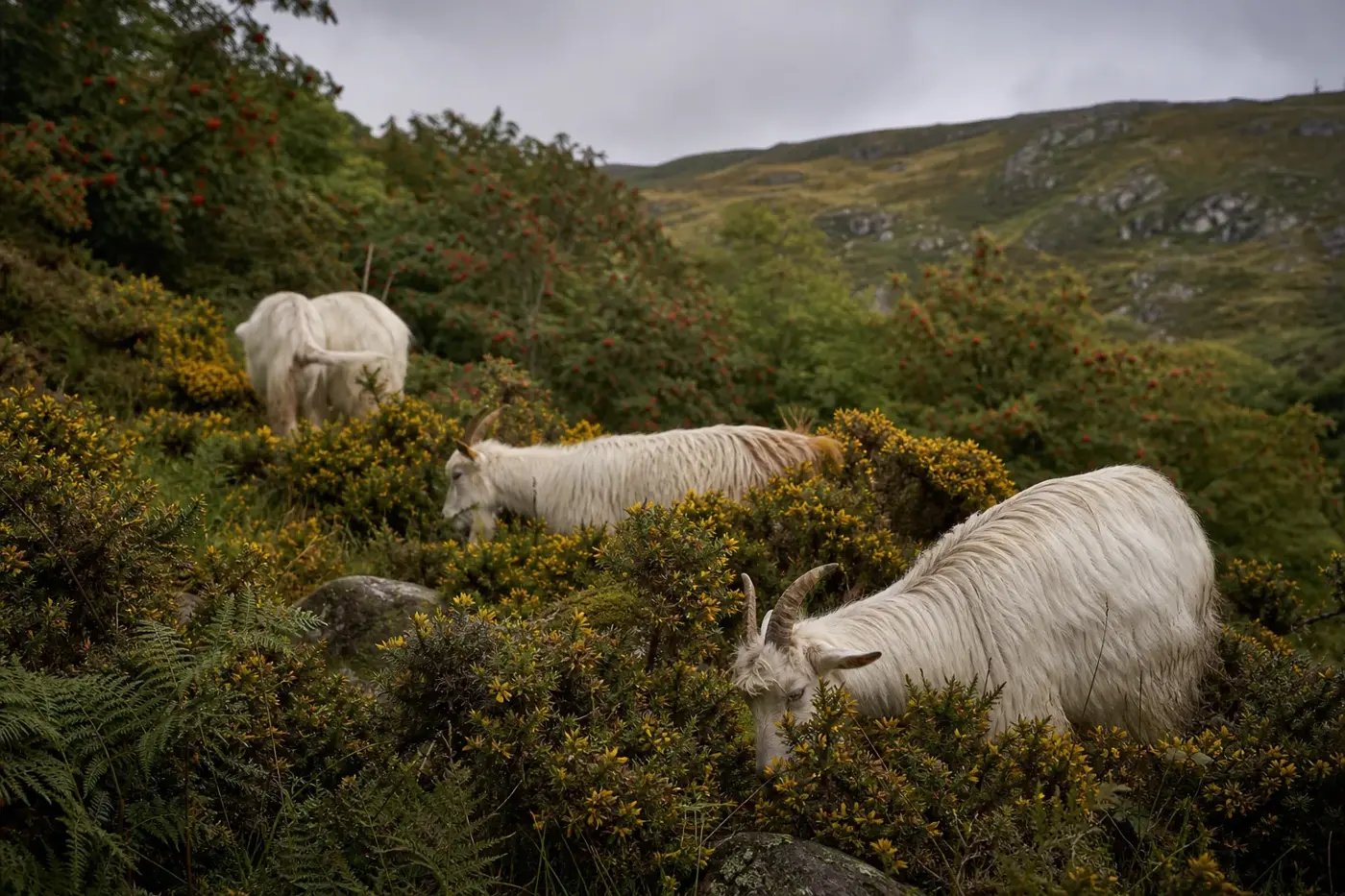
The producer says its milk comes from local, family owned dairy farms in the Sperrin Mountains. That describes its sourcing generally, rather than identifying a milk supply specifically for Tirkeeran.[3]
“Pasteurised” and “natural rind” describe different parts of the story. One tells you about the milk treatment; the other tells you about the cheese’s exterior. Neither the interior’s appearance nor the rind can replace the producer’s milk declaration, as raw, thermised and pasteurised cheese explains.
Give it seven months and a rind of its own
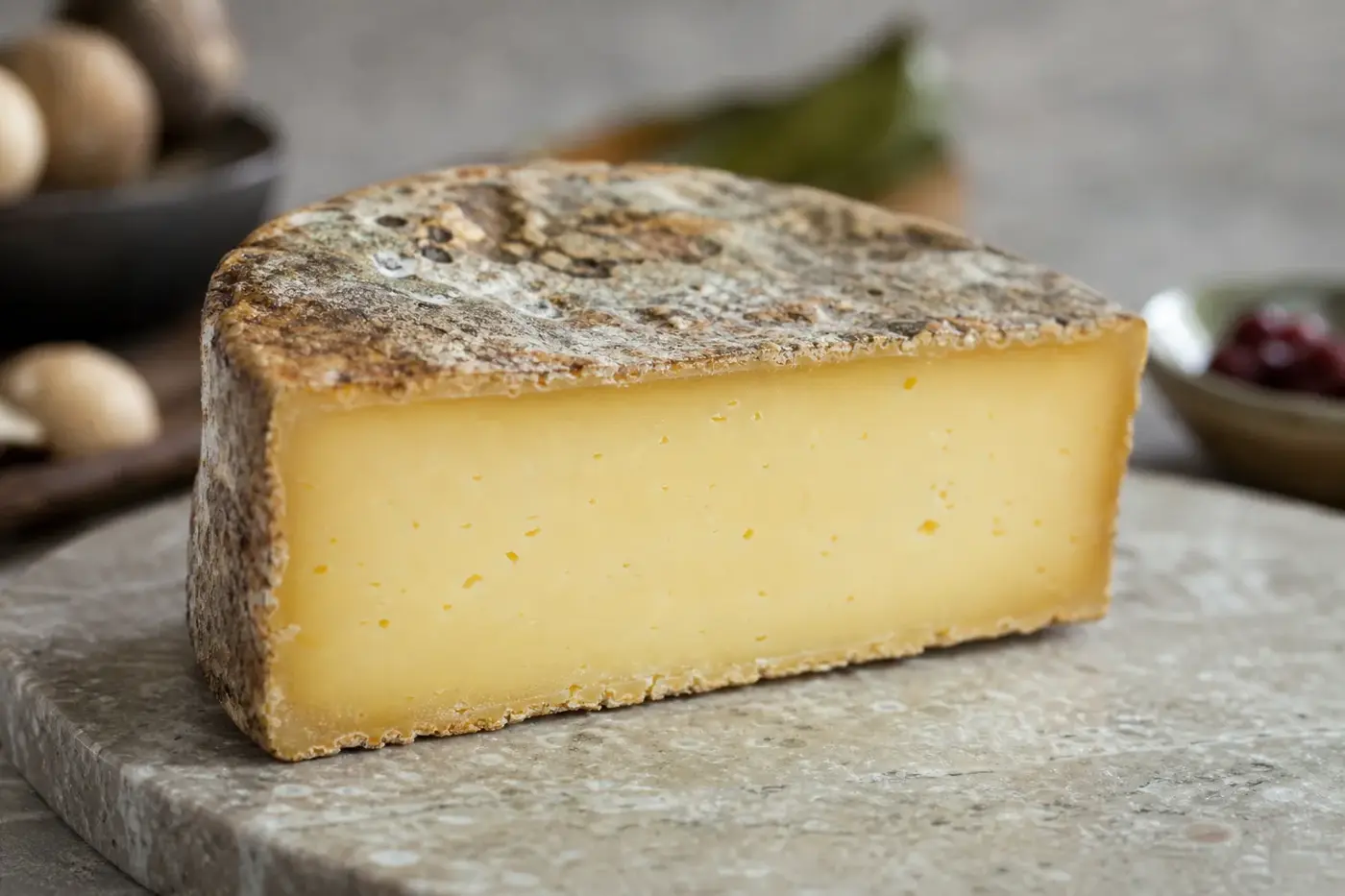
Dart Mountain puts natural ageing at the heart of its cheesemaking account. Its cheeses, the producer says, develop their own protective rind and taste. The surface plays its part in maturation, just as the interior does.[4]
Alongside pasteurised milk, another clear production detail is vegetarian rennet. Rennet sets milk into curd, the solid material from which cheese is formed. The producer identifies its rennet as vegetarian; rennet explained takes you through the different types.[4]
| Inside the making room | Details available here |
|---|---|
Seven months is Tirkeeran’s published minimum maturation, not necessarily the age of the piece on your board. When comparing batches, ask its age, keep the maker and cheese constant, and note the answer. Then trust your tasting: age is not a competition, however seriously your cheeseboard takes itself.[1]
When you handle a portion, notice its established rind beside the freshly exposed cut face. They belong to the same cheese, but they are different surfaces. It is worth treating them that way.[4]
Taste the sharpness, stay for the finish
Begin with what you can see and feel: a natural exterior and a hard interior. Dart Mountain offers three flavour prompts: savouriness, sharpness and persistence. Follow each from that first mouthful through chewing to the finish after swallowing.[1]
A Slow Food Ireland tasting report published in October 2020 offers another route into the cheese. It describes Tirkeeran as sharp but creamy, with a slight nutty flavour, and places it in an Alpine-style context. It also records enthusiasm for using it in fondue, which may settle the question of dinner.[5]
Take those descriptions as invitations, not instructions. Does savouriness arrive before sharpness, and does the texture stay firm as you chew? How long does the finish last after a sip of water? Write down your impressions before returning to anyone else’s notes.
For aroma, you have no published description here to steer you. Smell a newly cut piece before bringing in bread, fruit or a drink, then compare the rind with the interior. Keep the wrapper beside your notes, particularly when several cheeses share the board, so each observation belongs to the right piece.
Let the first slice introduce itself
Start with a small portion and leave the rest safely refrigerated. Serve it cool rather than fridge-cold, without heating it or displaying the whole supply. Taste the cheese first and bring in accompaniments afterwards, giving that first mouthful your full attention.
For England, Wales and Northern Ireland, the Food Standards Agency advises keeping chilled food out of the fridge for the shortest possible time during preparation, with a maximum of four hours. Count both the short tempering period and the meal within that limit. Follow the storage instructions supplied with your cheese, too.[6]
- Put your portion on a clean board. Keep its wrapping or label nearby, with the storage information to hand.
- Cut a wedge into small slices across the piece, giving guests a manageable mouthful. Follow the portion’s shape rather than insisting on uniform cubes.
- Offer the interior first. Before serving the rind, ask the maker or cheesemonger whether it is intended to be eaten.
- Taste one piece alone, then another with a plain accompaniment. Compare a thin shaving with a slice and choose whichever presentation you enjoy most.
Make room for oatcakes, pasta and chunky chips
Plain oatcakes or bread make a useful starting point. Serve apple or pear slices separately, and keep strongly flavoured chutney in its own dish until you have tasted the cheese alone. You can make clearer comparisons without signing up to a prescribed regional pairing.
Pour water or an alcohol free pale ale alongside. Begin with the cheese itself, then discover what you enjoy with each accompaniment. Your preference is the point, not matching somebody else’s ideal mouthful.
In the kitchen, Dart Mountain recommends grating or shaving Tirkeeran over pasta, risotto or chunky chips. Try it as a finishing ingredient first, so you can judge the amount before mixing it through a whole dish. Save a little plain cheese to taste beside the cooked food and compare the two presentations.[1]
Keep it cool and learn its rind
Refrigerate Tirkeeran and keep its storage instructions close. For homes in England, Wales and Northern Ireland, the FSA advises refrigerating dairy products and keeping the fridge between 0 and 5 °C (32 to 41 °F). Use a fridge thermometer, and follow the cheese’s packaging instructions and date marking.[6]
Moving your cheese into another container? Keep the label with it. If you buy a cut piece, ask the seller how to wrap it and what to do after opening.
Record the cheese’s identity, its purchase or opening date, and the seller’s storage advice. Those details remain useful once the original wrapping has gone. Keeping them together means you do not have to rely on memory.
Ask the maker what the rind’s normal surface should look like, how it is treated and whether you can eat it. If its appearance changes during storage, seek advice rather than treating the original rind and later growth as interchangeable. For broader practical guidance, turn to storing cheese at home.
Find Tirkeeran a companion on the board
Put Tirkeeran beside Cheddar for an introduction to comparing British and Irish hard cheeses. Choose a Cheddar with its maker and maturity identified, then set out a slice of each. Compare firmness, sharpness and finish, noting what you find rather than expecting the pair to behave alike.
For an Irish comparison, ask your cheesemonger for another hard cow’s milk cheese with a documented maker, milk treatment and age. That gives you more to explore than a label saying only “mature”. Keep one feature constant, such as milk species, and there is still plenty of room for differences in the finished cheeses.
Then carry the comparison into your kitchen and the dish you actually want to make. Start with the maker’s suggested shaving or grating uses for Tirkeeran, and consider whether another cheese gives you the result you want. Sharing a job in a recipe makes a useful connection without blurring either cheese’s name or identity.[1]
General information only, not medical advice: follow the official guidance where you live.
Questions people ask
Where is Tirkeeran made?
Tirkeeran is made by Dart Mountain Cheese near Park, County Londonderry, Northern Ireland. The small dairy sits below the mountain that gives the business its name.
How long is Tirkeeran aged and what does it taste like?
Tirkeeran is aged for at least seven months. Its maker describes it as savoury and sharp, with a lingering finish.
Is Tirkeeran made with pasteurised milk and vegetarian rennet?
Tirkeeran is made with pasteurised cow’s milk. Dart Mountain says its cheeses are made with vegetarian rennet.
Can you eat Tirkeeran’s rind?
Tirkeeran develops a natural rind during ageing. The page advises asking the maker or cheesemonger whether the rind is intended to be eaten.
How should Tirkeeran be stored?
The Food Standards Agency advises homes in England, Wales and Northern Ireland to refrigerate dairy products and keep the fridge between 0 and 5 °C. Check the agency’s current guidance and follow the cheese’s packaging instructions and date marking.
Sources
- Dart Mountain Cheese. Tirkeeran Cheese. Undated product page, retrieved November 2026. Producer declaration covering milk, treatment, rennet, rind, maturation, flavour and suggested uses.
- Dart Mountain Cheese. [About us](../about-us/). Undated company account, retrieved November 2026. Producer’s history, family-run description, location and address.
- Dart Mountain Cheese. Our sustainability mission. Undated company statement, retrieved November 2026. Relied on only for its stated sourcing of milk from local, family-owned Sperrin farms.
- Dart Mountain Cheese. Our Cheese Range. Undated range declaration, retrieved through the search index in November 2026. States that the range uses pasteurised milk and vegetarian rennet, with natural ageing and rind development.
- Slow Food Ireland. Tasting of Northern Irish Cheeses. Published 10 October 2020. First-hand event report providing attributed tasting observations and culinary discussion.
- Food Standards Agency. How to chill, freeze and defrost food safely. Published 18 December 2017, retrieved November 2026. Applies to England, Northern Ireland and Wales; sections “Chilling food” and the opening recommendations.
- Food Standards Agency. Alerts. Live official alert directory, accessed November 2026 for the editorial recall check described below.
Researched through the producer’s published records, an attributed tasting report and official food-handling guidance, with original editorial suggestions for comparing and serving the cheese.
Last checked: November 2026
Last checked November 2026.
The editors suggest you read next