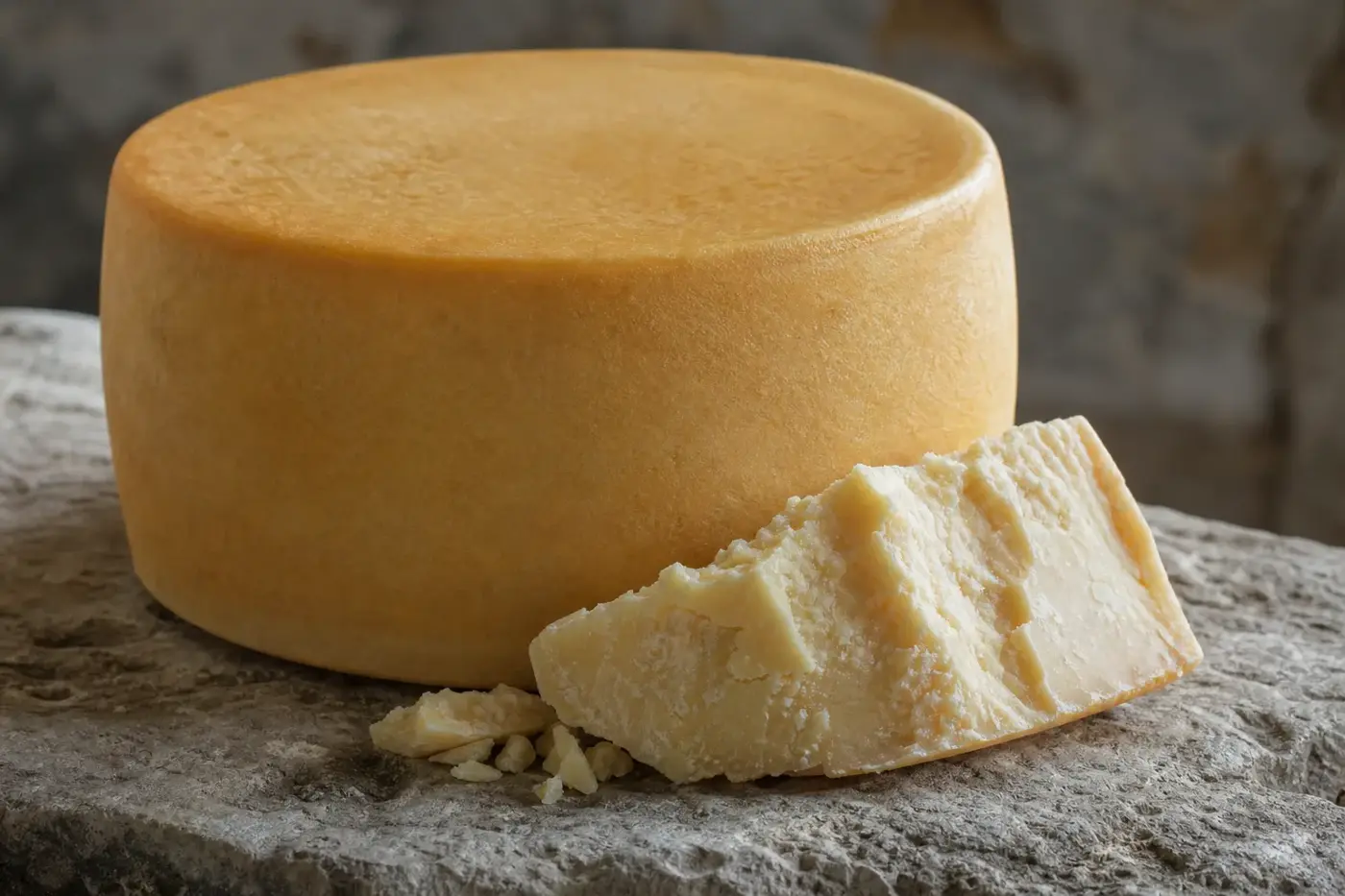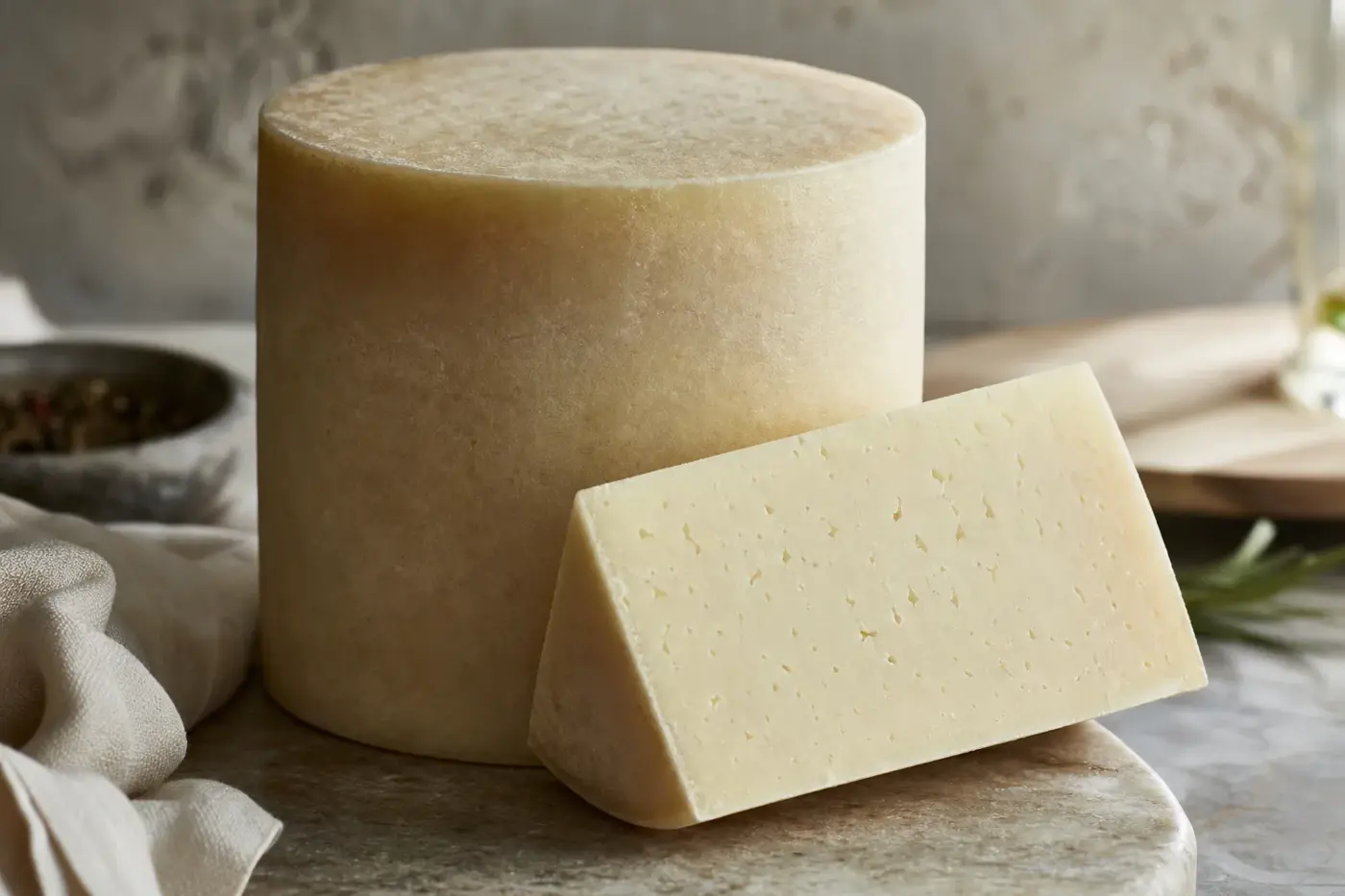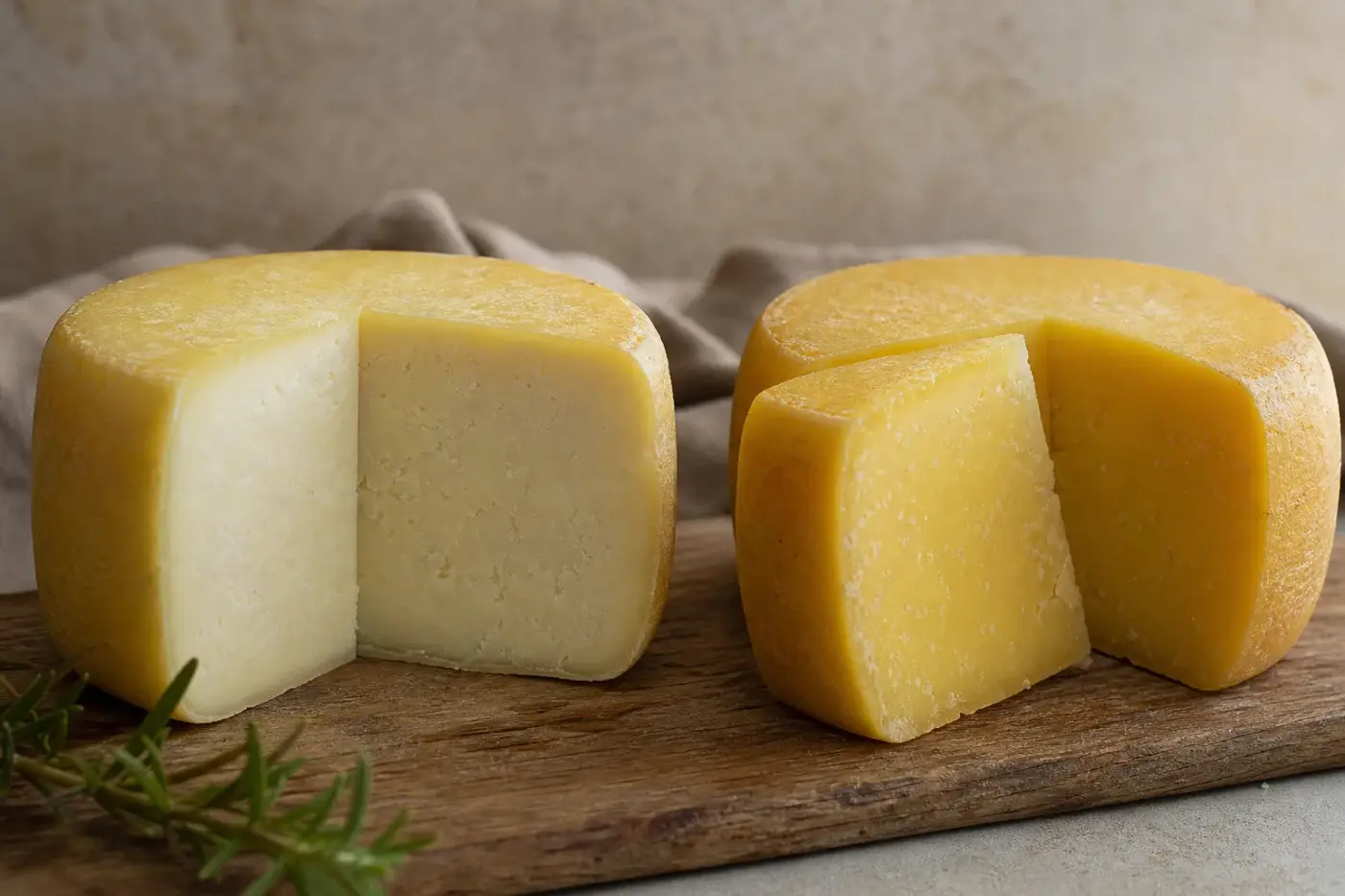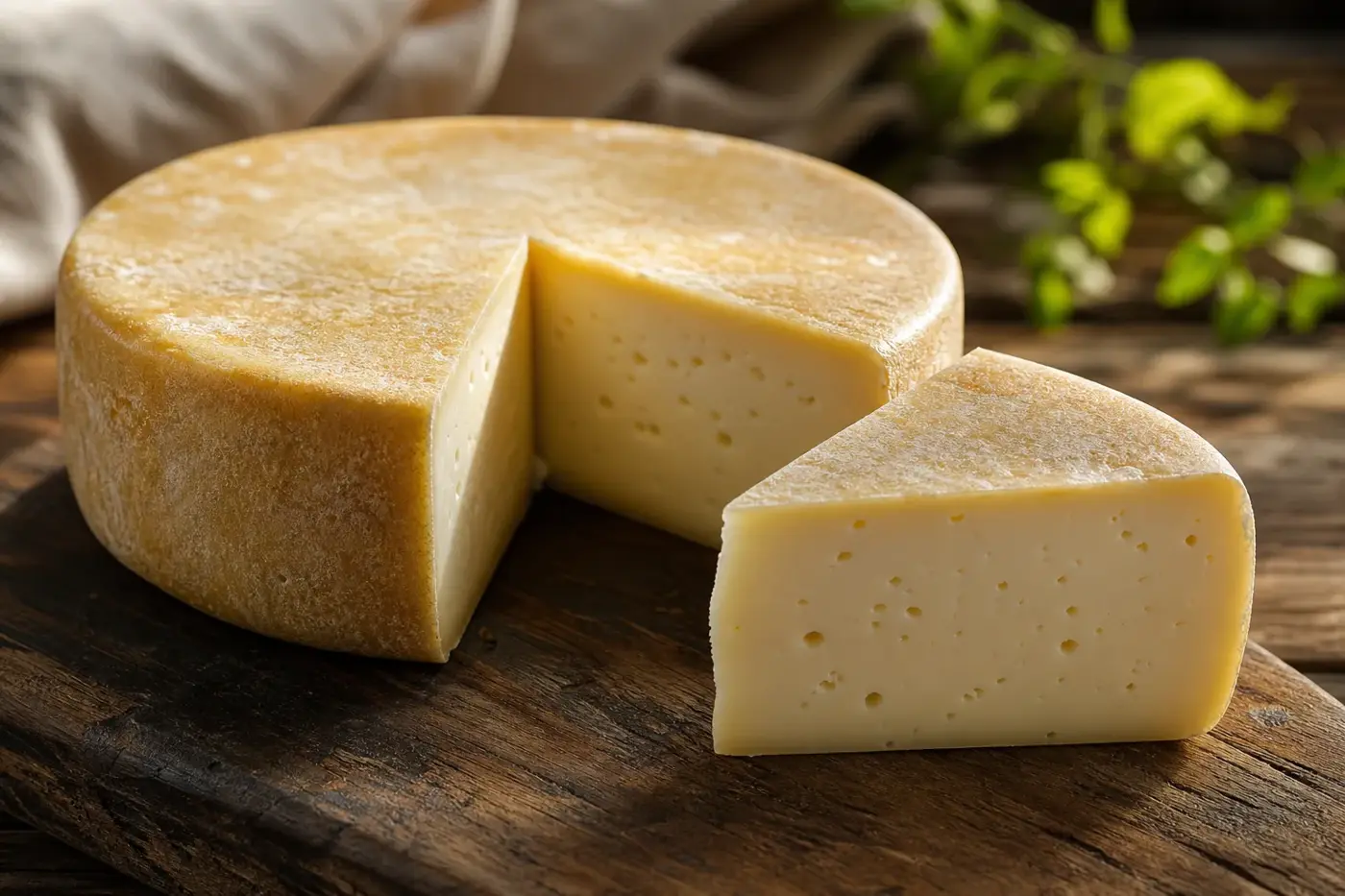
First, the cream rises. In the hands of Piedmont’s margari, cattle herders and cheesemakers, it went towards butter, while the partially skimmed milk became Semigrasso. That practical economy, recorded in the older official specification, gave Toma Piemontese one of its two distinct expressions.[4]
Today, you can follow this Italian cow’s milk PDO from mountain pastures to lowland dairies, all within the same protected Piedmontese territory. On your plate, you have a choice: soft, delicately aromatic whole milk cheese or Semigrasso, firmer and more assertive with age. They share a name, but not quite a temperament.[1,2,5]
| What you might want to know | The detail |
|---|---|
| Name to look for | Toma Piemontese.[1,2] |
| EU identification | European Commission; dossier PDO-IT-0026, amendment reference PDO-IT-0026-AM01.[2] |
| EU protection | PDO, documented in the official amendment publication of 28 October 2025; status as at November 2026.[2] |
| Great Britain protection | Registered PDO; UK scheme registration dated 31 December 2020, at 23:00. Status as at November 2026.[3] |
| Production rulebook | Italian decree of 9 April 2025, consolidated specification, Articles 1 to 8.[1,9] |
| Milk in the vat | Cow’s milk, whole or partially skimmed; optional milk hygienisation and starter cultures.[1] |
| What sets the milk | Calf rennet or a non-animal coagulant.[1,2] |
| Minimum fat in dry matter | Whole milk: 40%; Semigrasso: 20%.[1,2] |
| When it is made | Throughout the year; additional conditions govern d’Alpeggio production.[1] |
| Minimum maturation under the Italian specification | 60 days above 5.2 kg; 15 days below 5.2 kg. For exactly 5.2 kg, ask for clarification of the applicable requirement.[1,2] |
| How long it usually matures | Product specific; no single period should be taken as typical of the whole PDO.[1,7] |
Meet the wheel, then look inside
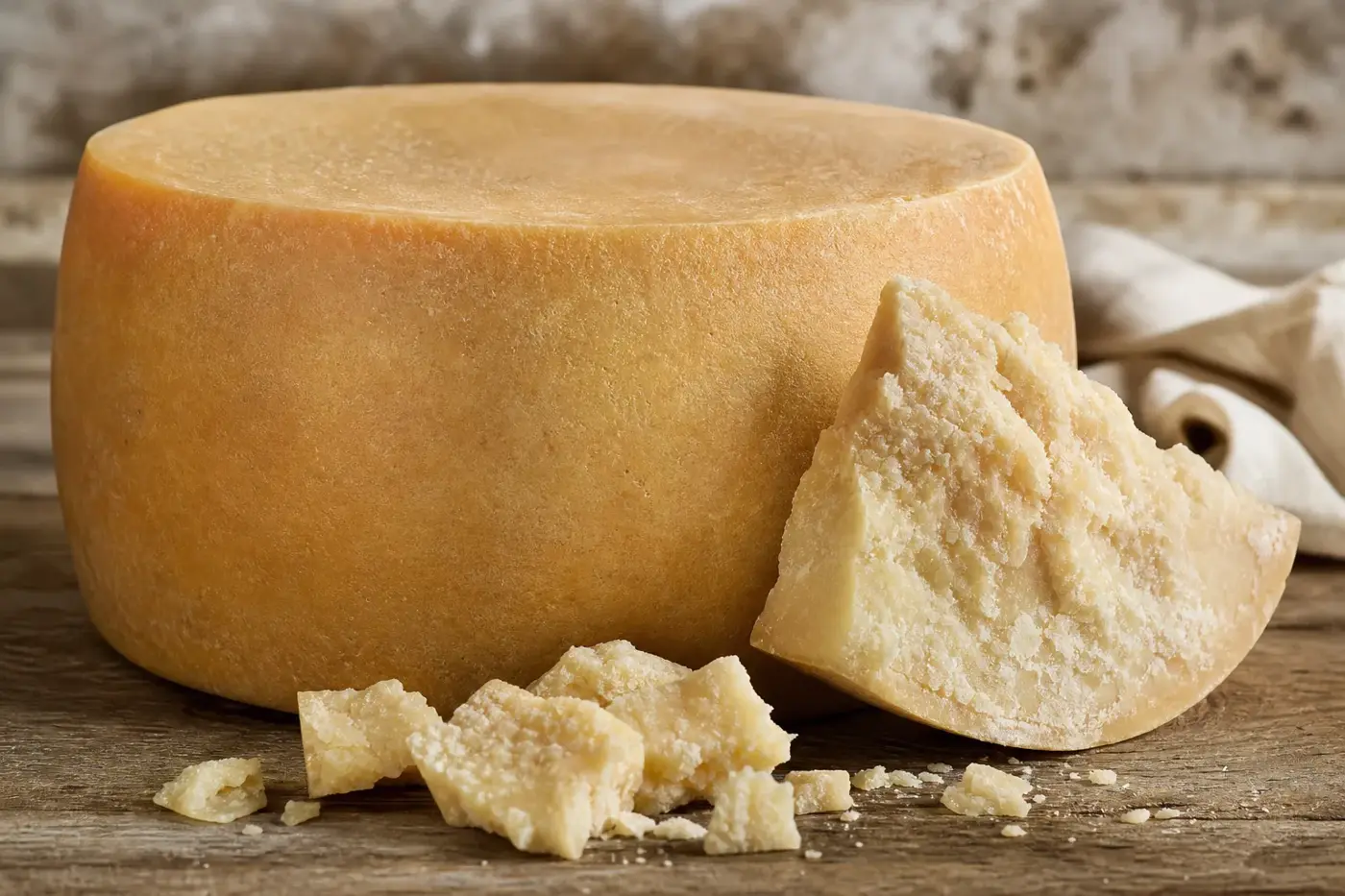
Cut into a wheel and you find pale paste, white to straw-coloured, scattered with characteristic small eyes. Whole milk Toma Piemontese has a smooth, elastic rind. Semigrasso’s is less elastic and more rustic, its colour moving from straw towards reddish brown as it matures.[1,5]
The standard table cheese is cylindrical, with flat or almost flat faces and a side that may bulge slightly. At minimum maturation, wheels measure 15 to 35 cm across, stand 6 to 12 cm high and weigh 1.8 to 9 kg. A specific exception allows other shapes for cheese intended exclusively for cubing, grating or further processing.[1,2]
Those details help you recognise a wheel. At the counter, though, a simple question brings you closer to its flavour: whole milk or Semigrasso?
Make room for both varieties
The difference begins before the milk sets. Whole milk keeps its cream; Semigrasso starts with partially skimmed milk, achieved either by letting the cream rise or by mechanical separation. Both belong under the same protected name.[1,2]
| What you notice | Whole milk | Semigrasso |
|---|---|---|
| Paste | Soft, with small eyes throughout | Elastic, becoming semi-hard with age; small eyes |
| Rind | Smooth and elastic | Less elastic, with a rustic appearance |
| Flavour in the specification | Sweet, with a delicate aroma | Intense and harmonious; aroma becomes more characteristic with maturation |
Descriptions summarised from the product specification and Piedmont’s regional product account.[1,5]
“Sweet” here is a tasting description, not a promise of pudding. Think delicacy alongside a more pronounced mature character. Give Semigrasso a taste on its own terms, rather than filing it away as merely the reduced-fat option.
That partial skimming has a working history. The older official specification describes the margari recovering some cream for butter and keeping the remaining milk for cheesemaking. Semigrasso was part of a practical arrangement, not an afterthought.[4]
For your first comparison, ask for pieces of both varieties at a similar age. Taste them before bringing in bread or accompaniments. As a suggested tasting exercise, notice the resistance of the paste, the strength of the aroma and how long the flavour stays.
Follow the herds from mountain to plain
Toma Piemontese’s territory covers the entire administrative areas of Novara, Vercelli, Biella, Torino, Cuneo and Verbano-Cusio-Ossola. In Asti province, it also includes Monastero Bormida, Roccaverano, Mombaldone, Olmo Gentile and Serole. In Alessandria province, it takes in Acqui Terme, Terzo, Bistagno, Ponti and Denice; milk production, cheesemaking and maturation must all happen within this legal area.[1,2]
Mountain and plain are connected by work, not simply by boundaries on a map. Piedmont’s regional account describes herders taking cattle up to mountain grazing in summer, then returning towards valleys or plains in winter. Follow that seasonal rhythm and the breadth of the cheese’s territory begins to make sense.[5]
Within the EU, d’Alpeggio has a precise meaning in the Italian specification. It covers milk from animals grazing during the mountain grazing period, from 1 June to 15 October, with supplementary feed limited to 10% of daily dry matter intake. Cheesemaking takes place at the mountain pasture.[1,2]
For permanent mountain holdings, qualifying grazing must be above 900 metres, with processing in the mountain area. Both whole milk and Semigrasso can qualify. If you want cheese from that seasonal setting, ask specifically for d’Alpeggio.[1,2]
Find the butter in the backstory
Seasonal movement carried this tradition from mountain districts into adjoining plains. The historical account in the 2013 official specification places it in medieval Piedmont and refers to evidence from the fifteenth century. It describes the cheese’s spread through transhumance: the seasonal movement of livestock, with cheesemaking travelling alongside it.[4]
The thread running through this history is practical work. Cattle grazed, milk became cheese and, for Semigrasso, some cream became butter. Those connected jobs explain the two varieties better than a picture of every wheel emerging from an isolated mountain farm. The plain belongs in the story too.
The modern legal history has precise dates to go with it. Defra’s register records the original EU registration as 2 July 1996. Italy approved a revised specification in April 2025, followed by publication of the approved amendment communication in the EU Official Journal on 28 October 2025.[2,3,9]
Watch the cheesemaker’s cut
Before there is a finished wheel, there is curd to cut. In explaining the geographical link, the specification particularly emphasises the cheesemaker’s control of that cut and the balance between curd and retained whey. It sounds like a small detail, but it has a central role in the cheese.[1]
Follow the main stages and you can see milk choice and handling shaping the texture. Each stage below comes from the specification.[1]
- Choose and prepare the milk. Whole milk starts one variety; partially skimmed milk starts Semigrasso. Lactic cultures or natural starters may be added.
- Set the milk. Rennet, the enzyme preparation that turns milk into a gel, or an allowed non-animal coagulant forms the curd. The specified coagulation temperature is 32 to 38 °C.
- Cut the curd. After an initial coarse break, further cutting produces grains approximately the size of maize kernels for whole milk cheese and rice grains for Semigrasso. Additional heating may reach a maximum of 48 °C.
- Mould and drain. The curd goes into moulds; cloth is permitted and pressing is optional. Turning accompanies the drainage of whey, the liquid released from the curd.
- Salt and mature. Dry salt or brine salts the cheese, which is then matured and repeatedly turned. Some wheels are washed with water and salt.
Curious about the rest of the journey from milk to finished wheel? Follow how cheese is made.
Ask its age, not just its variety
Age makes a particularly clear difference to Semigrasso. Its paste moves from elastic towards semi-hard, while its aroma becomes more characteristic. Whole milk cheese is defined by a softer paste and a more delicate aromatic profile.[1,5]
Under the Italian specification, minimum maturation is 60 days for wheels above 5.2 kg and 15 days for wheels below 5.2 kg. For a wheel weighing exactly 5.2 kg, ask for clarification of the applicable requirement. When you compare cheeses, especially pieces from different sized wheels, ask for the actual age as well as the variety.[1,2]
A legal minimum is a starting point, not the whole of a producer’s maturation programme. Gourm.it’s September 2021 product sheet, for instance, describes a pasteurised whole milk cheese matured for 45 to 120 days in underground cellars. Those details belong to that particular documented product, not to every Toma Piemontese.[7]
Whole milk and partially skimmed describe fat removal, not heat treatment. The specification permits optional hygienisation, and individual products may declare pasteurisation. Look at the label or producer information, and turn to raw, thermised and pasteurised milk for the distinctions.
Get to know the marks on your cheese
PDO means protected designation of origin, rendered DOP in Italian. For Toma Piemontese, that protection connects the name to a defined production area, permitted materials, making methods, finished characteristics and traceability controls. Geography matters, but it is only part of what the name promises.[1,2]
INOQ publishes the cheese’s certification and control documentation. It is the certification body, separate from the producers’ protection consortium.[8]
At the counter, these are the details to look for:
- The full name: Toma Piemontese DOP.
- Your variety: Semigrasso must be identified on its label.
- The cow on the paper label: this is the denomination’s stylised product logo.
- The mark on the wheel: whole wheels carry an impressed origin mark; Semigrasso has an additional S.
- The logo on your portion: the denomination’s logo must appear on portioned product too.[1,2]
Portioning and prepacking can happen outside the production area. A packing address therefore tells you where packing took place, not necessarily where the cheese was made. For the wider framework, read protected names explained.[1,2]
Bring home a piece that suits you
Start with how you want to eat it. For a gentler table serving, try whole milk cheese; for a firmer piece with more pronounced character, ask for an older Semigrasso. Have the cheesemonger identify both variety and age, rather than asking rind colour to tell you everything.
If vegetarian suitability matters to you, ask which coagulant that particular product uses. The 2025 amendment permits non-animal coagulants alongside calf rennet, so the protected name cannot settle the question. The separate guide to rennet explains the terminology.[2]
At home, follow the pack’s storage instructions and keep its identifying information. FSA guidance for England, Wales and Northern Ireland recommends a fridge between 0 and 5 °C and following storage instructions, including date labels.[6]
Before bringing the cheese to serving temperature, consult the current Food Standards Agency guidance for England, Wales and Northern Ireland. You can find the fuller method in storing cheese at home.[6]
Give it room on your plate
Let delicate whole milk cheese and more pronounced mature Semigrasso lead you towards different accompaniments.[1,5] The combinations here are editorial suggestions, not documented traditional pairings. The cooking ideas are serving suggestions rather than tested recipes.
With whole milk cheese, start with plain bread and sliced pear. Try a little honey separately, so you can decide whether its sweetness complements the cheese or gets in the way. With Semigrasso, explore walnuts, toasted hazelnuts or a less sweet accompaniment.
Piedmontese hazelnuts give you another accompaniment to explore. For something to drink with either variety, consider water or unsweetened black tea. Keep your first taste plain, then bring in whichever combinations appeal.
In the kitchen, consider Toma Piemontese over polenta, folded into a potato gratin or added to risotto. There is a documented culinary connection: the older official specification describes Semigrasso as readily melting and suitable for enriching first courses and other dishes. The current specification explicitly includes culinary use.[2,4]
Taste before you add more salt. Start with a modest amount of cheese, then add more if the dish needs it. A little thought about variety and maturity will serve you better than expecting every wedge to arrive at the same volume.
General information only, not medical advice: follow the official guidance where you live.
Questions people ask
What is the difference between whole milk Toma Piemontese and Semigrasso?
Whole milk Toma Piemontese is soft, with a sweet flavour and delicate aroma. Semigrasso is made from partially skimmed milk and becomes firmer and more aromatic with age.
Where is Toma Piemontese made?
Its defined territory includes the entire administrative areas of Novara, Vercelli, Biella, Torino, Cuneo and Verbano-Cusio-Ossola, as well as specified places in Asti and Alessandria provinces. Milk production, cheesemaking and maturation all take place within this area.
How long is Toma Piemontese matured?
The Italian specification requires at least 60 days for wheels above 5.2 kg and 15 days for wheels below 5.2 kg. The requirement for a wheel weighing exactly 5.2 kg is not verified.
Is Toma Piemontese suitable for vegetarians?
The specification permits calf rennet or a coagulant that is not of animal origin. Ask which coagulant the particular product uses.
Is Toma Piemontese made with pasteurised milk?
The specification permits optional milk hygienisation, and individual products may declare pasteurisation. Check the cheese’s label or producer information for the particular product.
Sources
- MASAF, Decreto 9 aprile 2025: Disciplinare di produzione della denominazione di origine protetta “Toma Piemontese”, consolidated specification, Annex 1, Articles 1 to 8, 2025.
- European Commission, Pubblicazione della comunicazione di una modifica ordinaria approvata del disciplinare di produzione di un’indicazione geografica, Toma Piemontese, C/2025/5773, 28 October 2025; dossier PDO-IT-0026-AM01.
- Department for Environment, Food & Rural Affairs, Toma Piemontese, protected food names register entry, published 4 January 2021, retrieved November 2026.
- Italian agriculture ministry, Disciplinare di produzione della denominazione di origine protetta “Toma Piemontese”, version dated 2 January 2013, particularly Article 6. Used for attributed historical and culinary descriptions, not superseded production requirements.
- Regione Piemonte, Piemonte Agri Qualità, Toma Piemontese, undated regional product account, retrieved November 2026. Used for regional herding context and characteristic sensory descriptions.
- Food Standards Agency, How to chill, freeze and defrost food safely, published on GOV.UK, 18 December 2017, retrieved November 2026. Applies to England, Wales and Northern Ireland.
- Consorzio Gourm.it, Scheda prodotto: Formaggio Toma Piemontese D.O.P, article 0251008, revision 00, 2 September 2021. Commercial supplier’s own product description.
- INOQ, Toma Piemontese DOP, certification information and control-plan listing, undated, retrieved November 2026.
- Gazzetta Ufficiale della Repubblica Italiana, Decreto 9 aprile 2025: Modifiche ordinarie al disciplinare di produzione della denominazione di origine protetta «Toma Piemontese», GU Serie Generale No. 91, 18 April 2025.
Researched through official specifications, the published EU amendment, the Great Britain register, regional documentation, agency storage guidance and one explicitly attributed supplier record.
Last checked: November 2026
Last checked November 2026.
The editors suggest you read next
Parmigiano Reggiano
Break into a wheel of Parmigiano Reggiano and flakes fall away, revealing a finely granular cheese, pale straw to straw in colour.