Washed Rind Microbes: Bacteria, Yeasts and Aroma
You notice the smell first.
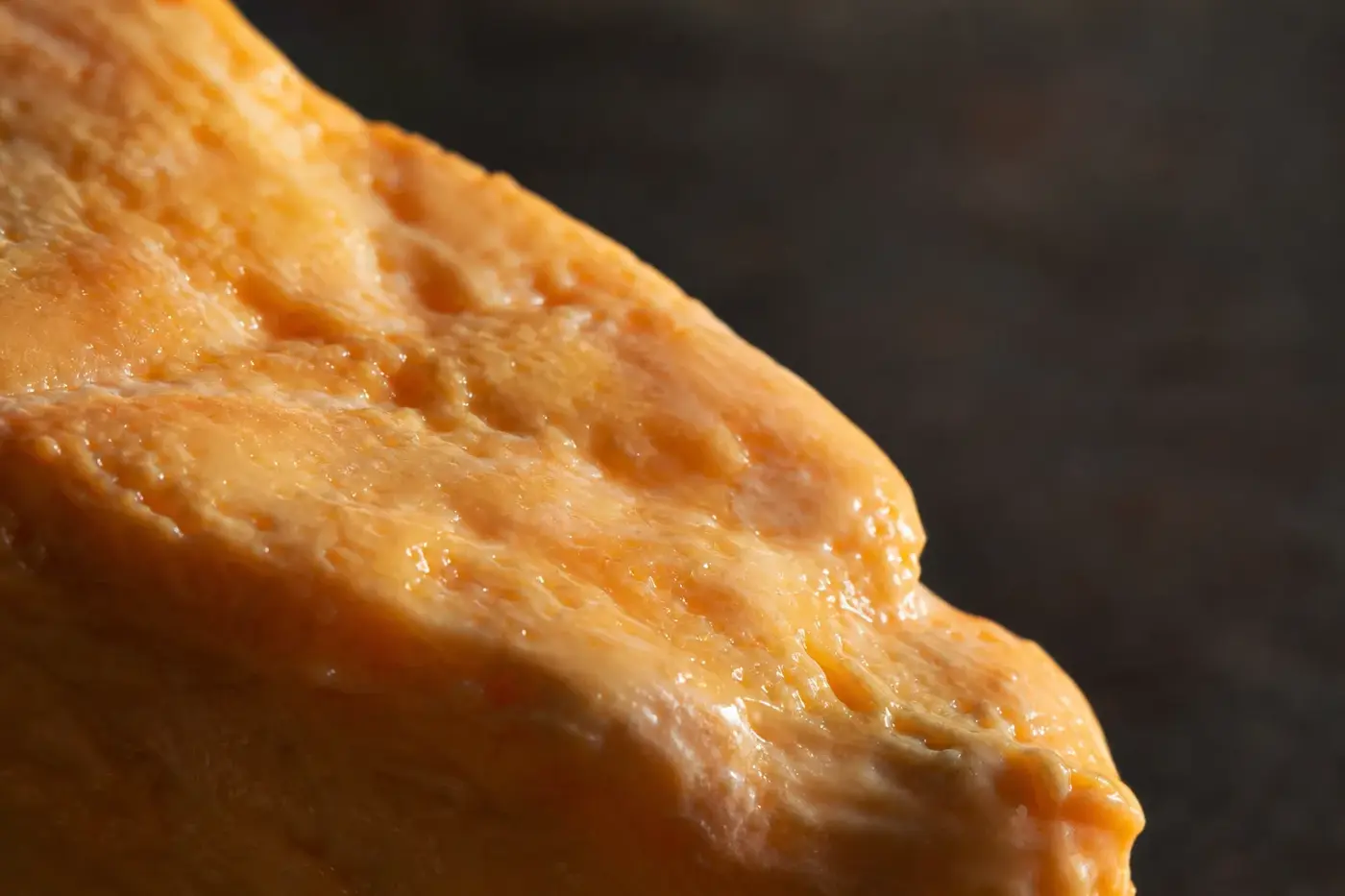
You notice the smell first. But behind a washed rind's unmistakable presence, the maturation room has been quietly shaping the cheese. At two artisan dairies, organisms from the dairy environment dominated cheese surfaces even after ripening cultures were added. The room, it seems, had its own ideas.[2]
Follow that transformation and you begin with an acidic young cheese. As yeasts and bacteria settle in, acidity, colour and aroma change together. Microbes break proteins and fats into smaller molecules, including some responsible for that gloriously penetrating smell.[1,3,4]
What the cheesemaker's wash sets in motion
During maturation, the cheesemaker repeatedly wets and rubs the surface, commonly with a salt solution. Smearing spreads the developing growth across the rind. These actions cultivate a managed microbial community, often called a smear. Natural rinds harbour complex communities too; the difference is how the cheesemaker manages their growth.[1]
Every wash redistributes organisms, changes surface moisture and salt, and disturbs existing growth. Some inhabitants benefit more than others. Research comparing rind communities found that different surface conditions could produce different communities from the same starting collection of microbes. The wash helps decide who thrives.[1]
Salt, moisture and the character of the room
You might expect geography to explain much of a rind's microbial character. Yet in the large comparative rind study, moisture made more difference than geographical distance. Salt selects for organisms that tolerate it, while moisture governs how readily they grow and use nutrients. These forces work together: even a wet rind can impose considerable salt stress.[1]
Temperature affects growth rates and enzyme activity. Oxygen helps distinguish the exposed rind from the cheese interior, while washing frequency determines how often the surface gets rewetted and disturbed. There is no washing schedule that suits all washed rinds. Each belongs to a particular cheesemaking process and its room conditions.[1,2]
These controls work together, not separately. In experiments with reconstructed rind communities, washing and drying sent initially similar communities in different directions. To understand an orange rind, you need to ask how the conditions interact, rather than hunt for one magic setting. Washing selects a community as well as physically handling it.[1]
Meet the microbes already at home in the dairy
A cheesemaker can deliberately introduce ripening cultures, but those cultures are only part of the story. Other organisms arrive from the milk or maturation environment. Equipment and processing surfaces offer further opportunities for transfer. The resulting community reflects both the chosen cultures and organisms already established around the maturing cheese.[1,2]
The sequencing study of two artisan cheesemaking plants found distinct communities on different processing surfaces, too. Environmental organisms dominated the washed-rind cheese surfaces. That gives you a tangible picture of a dairy's resident microbiota: the organisms living in its production environment.[2]
It also helps explain why the same ripening culture can yield different rinds in two dairies. Arriving is only the first hurdle. An organism needs suitable conditions and must live alongside the competitors and partners already there. The maturation room and the cheesemaker's handling help determine which arrivals establish themselves.[1,2]
How yeasts make room for bacteria
On the young cheese, certain rind yeasts feed on lactate derived from the lactic acid produced during fermentation. Removing this acid helps raise the surface pH, the measure of acidity. Other metabolic processes, including ammonia production, can help move it in the same direction.[1,3]
That less acidic surface gives bacteria that struggle in more acidic conditions a chance to grow. In cheese-curd experiments, fungi deacidified the medium, and several bacterial isolates grew better when its pH rose. One organism had changed the surroundings to another's advantage.[1]
This shifting pattern of growth over time has a name: succession. Yeasts can prepare the surface for later bacterial development, although experiments also reveal inhibition between particular partners. The mature rind you encounter therefore comes from competition as well as cooperation. Which organisms are involved determines the balance.[1]
The many talents of Geotrichum candidum
If you have encountered different descriptions of Geotrichum candidum, there is a reason. It is a fungus, not a bacterium, and grows in both yeastlike and filamentous forms. Its contribution goes beyond appearances: strains can supply enzymes and aroma compounds as the rind develops. Cheese-associated populations of this species contain substantial diversity.[3]
A study analysing genomes from 98 strains distinguished cheese-associated populations and compared their growth, protein breakdown and volatile production. The populations differed in every one of those traits. For cheesemaking, the strain matters: the name G. candidum alone cannot tell you how it will behave. Its surroundings help shape its contribution too.[3]
Give Brevibacterium linens' neighbours some credit
Brevibacterium linens is a familiar name in smear ripening, associated with colour and sulphur metabolism. But it does not deserve all the applause. Research has identified organisms from genera including Corynebacterium, Arthrobacter, Brevibacterium and Staphylococcus, in different combinations and abundances across rinds.[1,2]
These groups perform different ripening functions, and even strains within a species can differ in enzyme activity and aroma production. To understand the community, look at what its members do together. Which nutrients do they use, which compounds do they release, and how do they alter one another's growth? A washed rind is a community's work, not a coating of one universal species.[1,3,5]
What that orange rind can tell you
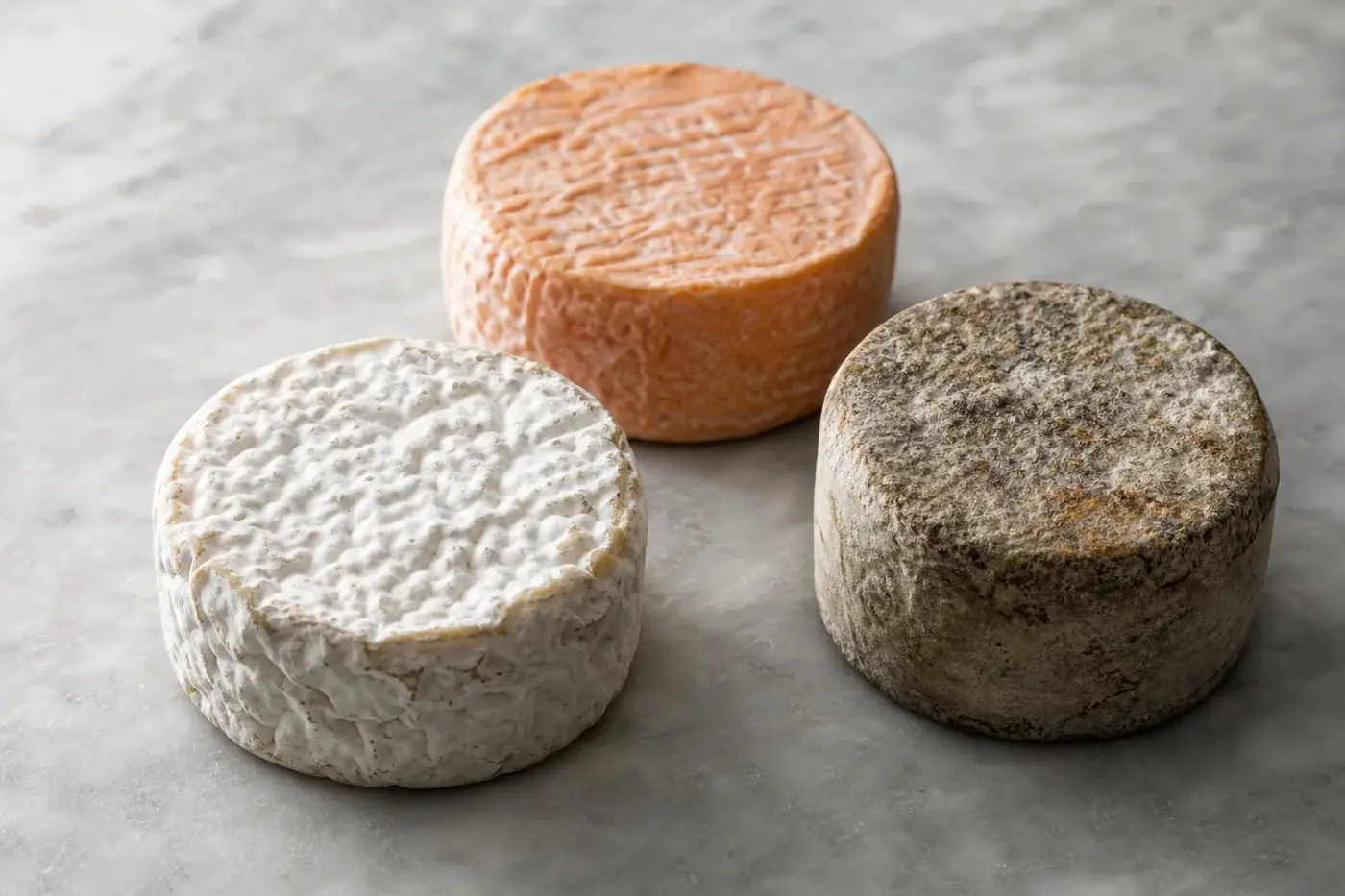
Look across washed rinds and you will find pale cream, orange and reddish brown. Pigment-producing organisms contribute those colours, while their growth and the surface conditions shape the final appearance. Orange offers clues about maturation. It does not reliably identify the species living there.[1]
Sometimes the colour depends on the company an organism keeps. In one cheese-curd experiment, an Arthrobacter isolate produced a reddish-pink pigment alongside filamentous fungi, but not alongside yeasts. Its companions changed the outcome. That laboratory result shows why assigning one shade to one bacterium misses the interactions happening on a rind.[1]
The enzymes quietly changing your cheese
Protein breakdown changes both the structure of cheese and its developing flavour. Called proteolysis, it begins with proteases cutting caseins, the main cheese proteins, into smaller fragments. Peptidases can release still smaller peptides and amino acids. These reactions reshape the protein network and supply material for further microbial metabolism.[4]
Researchers explored this contribution in Camembert-type cheeses made with and without G. candidum. They measured casein degradation and the release of peptides and amino acids. Where the fungus was present, they found extensive proteolytic activity at the surface. The experiment showed its role in ripening, beyond its association with a particular rind appearance.[4]
Fat breakdown follows another route, called lipolysis. Lipases release fatty acids from milk fat, which can contribute flavour directly or become starting materials for other compounds. Studies of cheese isolates measure proteolytic and lipolytic activities separately. A strong performance in one does not establish strength in the other.[5]
Take the research on 41 G. candidum strains isolated from a traditional Spanish goats' milk cheese. Researchers screened their proteolytic, lipolytic and aminopeptidase activities, revealing more than a species name alone could offer. Enzyme activity is something researchers test, rather than assume. Those individual tests help establish what a particular strain can contribute.[5]
Methanethiol and the smell you cannot miss
That penetrating aroma has some powerful molecules behind it. Rind microbes turn amino acids released from proteins into aroma compounds, including methanethiol. This volatile sulphur compound is connected with the metabolism of the amino acid methionine. Genetic analysis of washed-rind communities found enrichment of pathways associated with sulphur compounds and other flavour-producing reactions.[1]
Sulphur is only part of what reaches your nose. Fungal experiments have also detected alcohols, ketones and aldehydes alongside sulphur-containing volatiles. Their relative proportions matter as well as their quantities. What you smell is their combined result, not a direct measure of how much of one microbe is present.[3]
A bold rind does not tell the whole cheese story
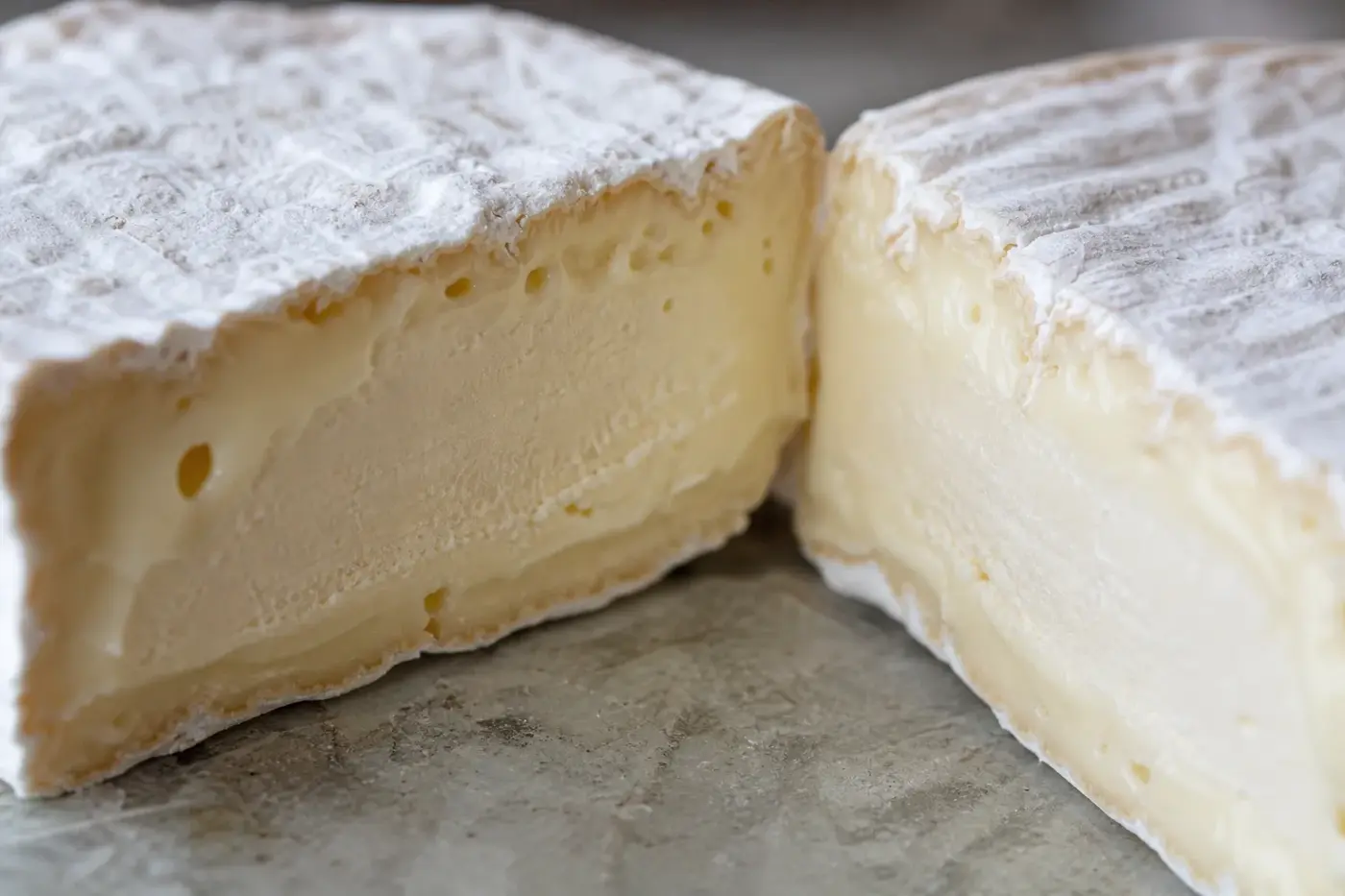
The rind is the exposed microbial habitat, so its aromatic intensity can differ from your experience of eating the paste, the cheese interior. Your nose has not necessarily read the whole menu. Nor does washing belong to just one style of cheese. The comparative rind study included soft cheeses such as Époisses and Taleggio alongside firmer Gruyère.[1]
Surface treatment is one part of the whole cheesemaking process. A washed rind does not promise you a single interior texture or strength of flavour. Explore the firmer end of that spectrum with Le Gruyère. For the wider production sequence, start with how cheese is made.
Eating the rind: the practical guidance
Washed rinds intended as edible surfaces are commonly eaten with the paste. Check your particular product's instructions for its rind and any coatings. If you are at higher risk of foodborne illness, the relevant guidance concerns the cheese and its handling, not simply whether you remove the outer layer.[6,7]
UK guidance, November 2026: the NHS publishes advice on cheese during pregnancy, including the cheeses it advises against and its cooking guidance. Consult the current guidance for the specific cheese.[6]
The NHS also identifies older people, newborns and people with weakened immunity as being at higher risk of serious listeriosis. The Food Standards Agency likewise identifies vulnerable groups in its cheese risk assessment. Follow the current UK sources for your personal circumstances, and use the cheese food safety guide for further context.[7,8]
General information only, not medical advice: follow the official guidance where you live.
Questions people ask
What does washing do to a cheese rind?
Washing repeatedly wets and rubs the surface during maturation, commonly with a salt solution. It redistributes organisms and changes the surface moisture and salt, helping to determine which microbes thrive.
Why do washed rind cheeses smell so strong?
Rind microbes turn amino acids from proteins into aroma molecules, including the sulphur compound methanethiol. The smell also reflects other compounds, including alcohols, ketones and aldehydes.
What do yeasts do on a washed rind?
Certain yeasts feed on lactate derived from lactic acid, helping to make the young cheese surface less acidic. This can create opportunities for bacteria that struggle under more acidic conditions.
Does an orange rind mean a particular bacterium is present?
No. Pigment producing organisms contribute colour, but their growth and the condition of the surface also shape its appearance. An orange rind is not a reliable identification of the species living there.
Can you eat a washed rind during pregnancy?
Washed rinds intended as edible surfaces are commonly eaten with the cheese, but check the particular product's instructions. The NHS advises against some cheeses during pregnancy and provides cooking guidance. Consult the current NHS guidance for the specific cheese.
Sources
- Cell Press, Cheese rind communities provide tractable systems for in situ and in vitro studies of microbial diversity, Cell, volume 158, issue 2, 2014, pages 422 to 433. Original community survey, metagenomics and laboratory reconstruction experiments. Full text.
- American Society for Microbiology, Facility-Specific “House” Microbiome Drives Microbial Landscapes of Artisan Cheesemaking Plants, Applied and Environmental Microbiology, volume 79, issue 17, 2013, pages 5214 to 5223. Publisher's abstract and publication record. Publisher record.
- Peer Community Journal, Domestication of different varieties in the cheese-making fungus Geotrichum candidum, volume 3, article e45, published 16 May 2023. Original genomic and phenotypic study. Full paper.
- Elsevier, Contribution of Geotrichum candidum to the proteolysis of soft cheese, International Dairy Journal, volume 16, issue 7, July 2006, pages 775 to 783. Original experimental study; indexed abstract retrieved. Publisher record.
- US National Library of Medicine, Technological characterization of Geotrichum candidum strains isolated from a traditional Spanish goats' milk cheese, 2012, PMID 22265310. Original isolate-screening study; indexed abstract excerpt retrieved. PubMed record.
- NHS, Foods to avoid in pregnancy, current online guidance retrieved November 2026, section “Cheese, milk and other dairy”. Official guidance.
- NHS, Listeriosis, page reviewed 10 November 2023, current online text retrieved November 2026. Sections “Risks of listeriosis” and “How to avoid listeriosis”. Official guidance.
- Food Standards Agency, Risk assessment for vulnerable consumers from Listeria monocytogenes in blue cheese, online research summary retrieved November 2026. Used only for its identification of vulnerable groups. Official assessment summary.
This desk-researched article brings together original rind-community experiments, fungal studies and current UK official food safety guidance.
Last checked: November 2026
Last checked November 2026.
The editors suggest you read next