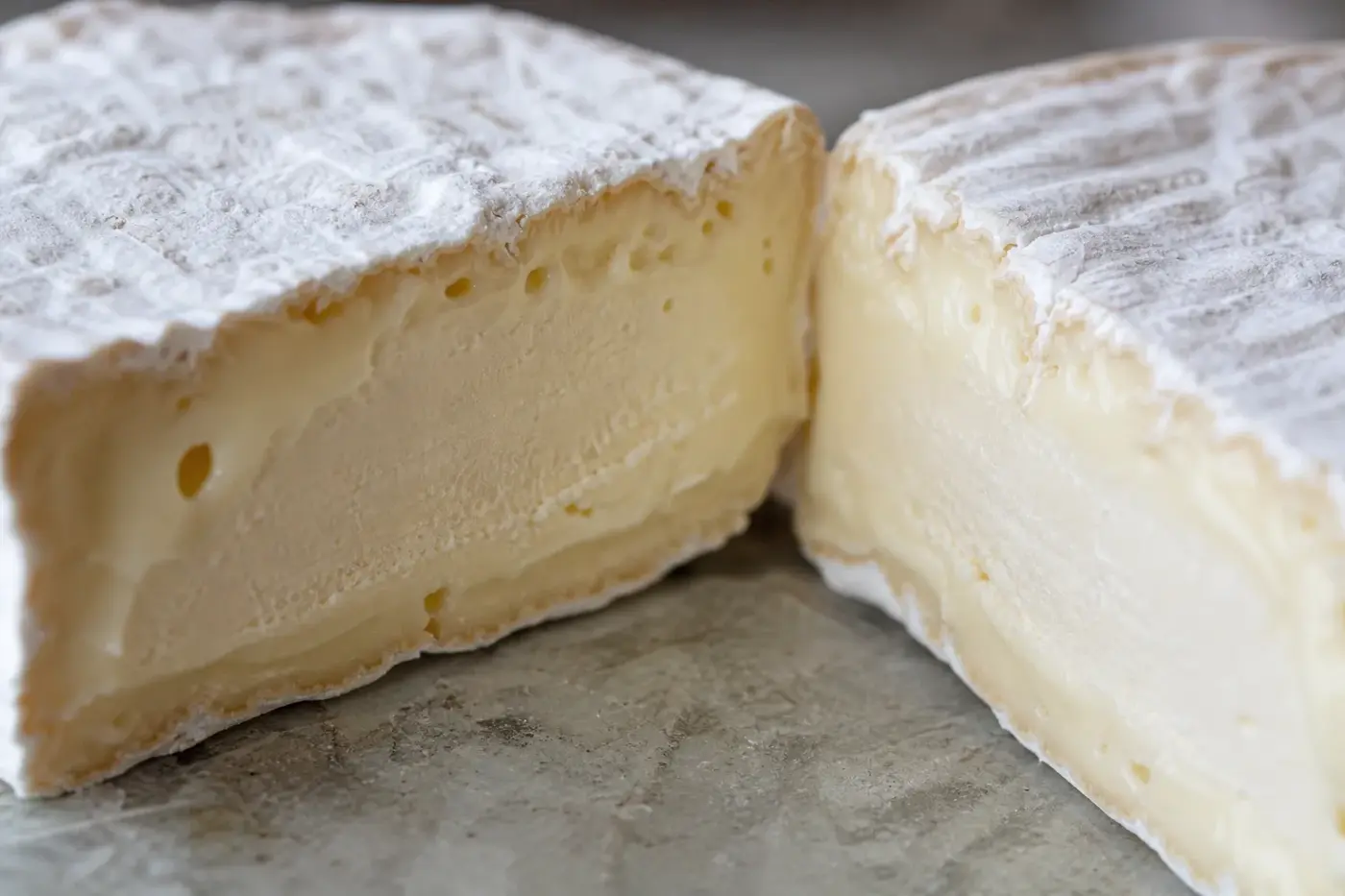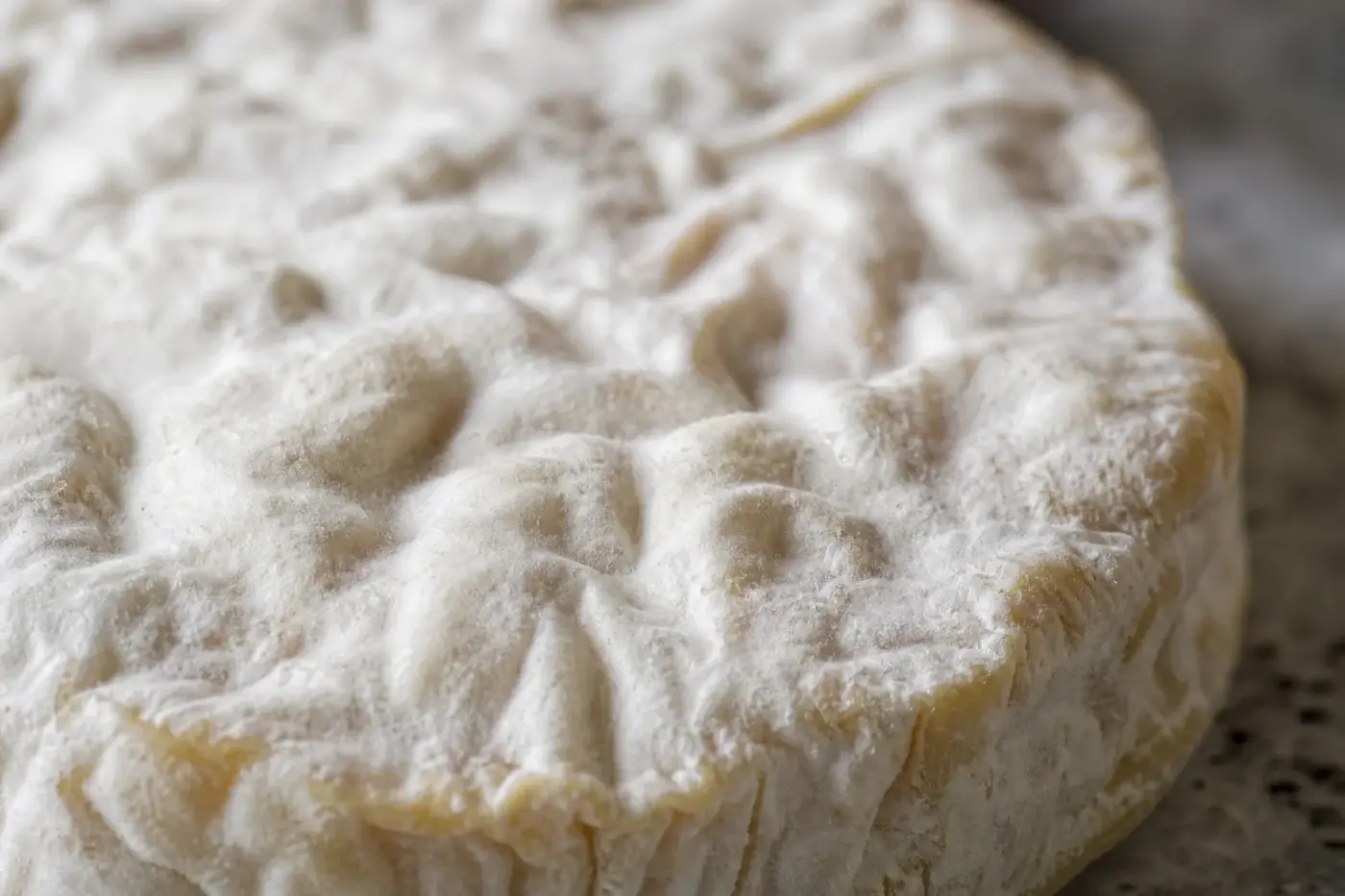
Look closely at Tunworth. Its surface is thin, wrinkled and snowy, as Neal's Yard Dairy describes it, a distinctive coat that forms as the cheese ripens.[7] Before you reach the centre, the rind has already begun telling its story.
This is where cheese meets the world outside. Here it dries, receives salt and, on many ripened cheeses, hosts a living community of microbes that helps shape what lies beneath. Whether you should eat it depends on the rind, its covering, the cheese's condition and the food safety advice relevant to you.[1][2][4]
A rind takes shape
A rind begins as moisture leaves the cheese. Drying forms the outer layer, while the cheesemaker guides its development through humidity and temperature. Too little drying can encourage excessive mould and faster breakdown than intended, according to cheesemonger and affineur Neal's Yard Dairy.[2][3]
This controlled maturing, including care of the surface, is called affinage.[2][3] Think of a rind as something tended, not simply left to happen.
Moisture has a powerful say in what grows there. A DNA sequencing study of 137 cheese types from ten countries found that surface moisture predicted rind community composition better than salinity.[1]
Washing and drying experiments also changed which microbes dominated. Cheesemakers control salt, acidity and moisture, but each community responds differently.[1]
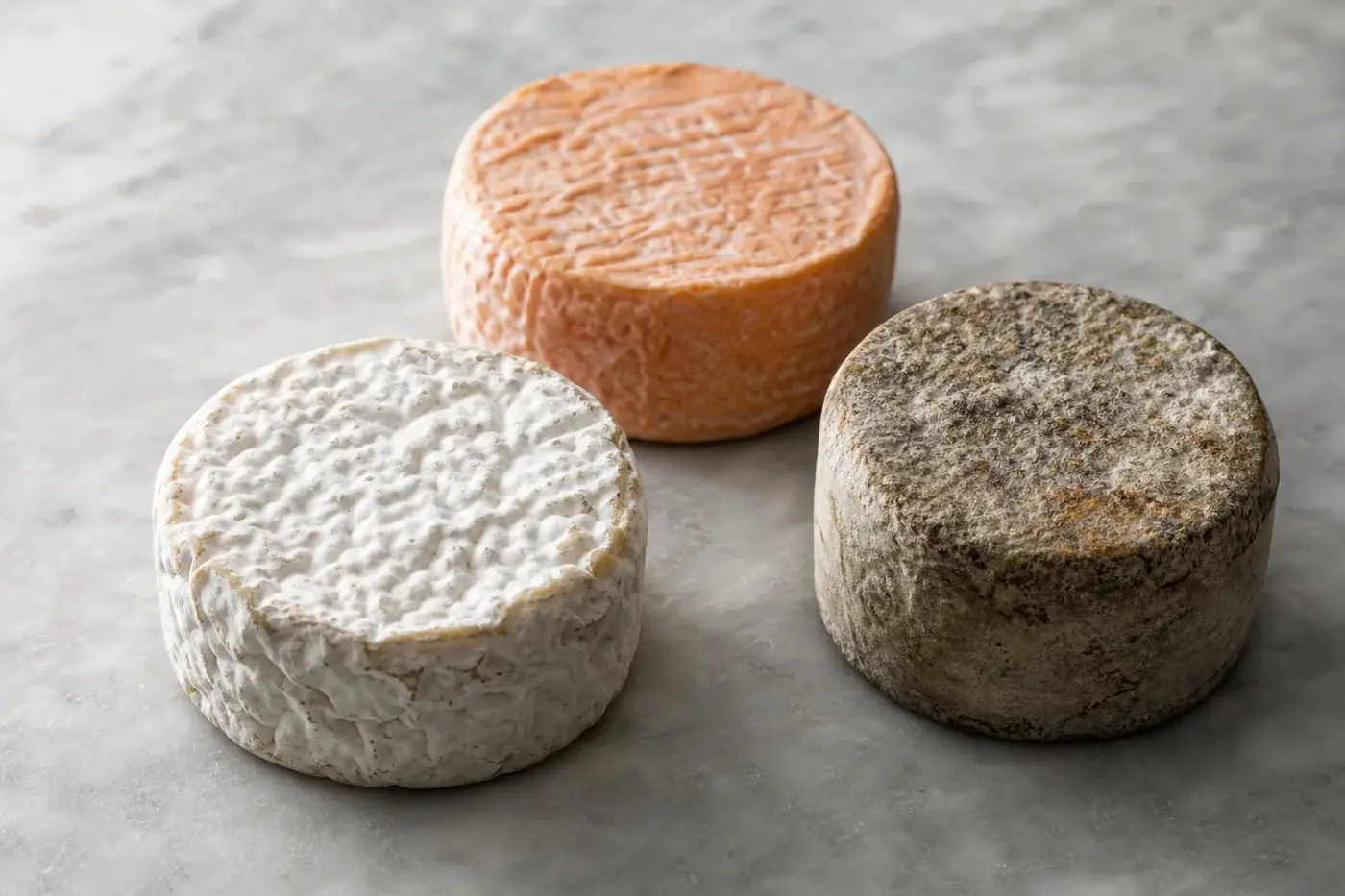
Get acquainted with the different rinds
Natural rinds: the marks of ageing
Natural rinds develop through drying and microbial growth during ageing, rather than beneath an applied plastic or wax shell. The research classification includes clothbound Cheddar in this group.[1][2]
Natural does not mean neglected. These surfaces receive careful handling, and cloth can influence the rind growing beneath it.[1][2]
Bloomy rinds: beneath the white coat
Look at the familiar white covering on Brie and Camembert. That is a cultivated fungal coat, part of the ripening process rather than packaging.[2][3]
Bloomy rinds are usually white, but their structure varies. Tunworth's thin, wrinkled, snowy surface, described by Neal's Yard Dairy, gives you one example.[2][3][7]
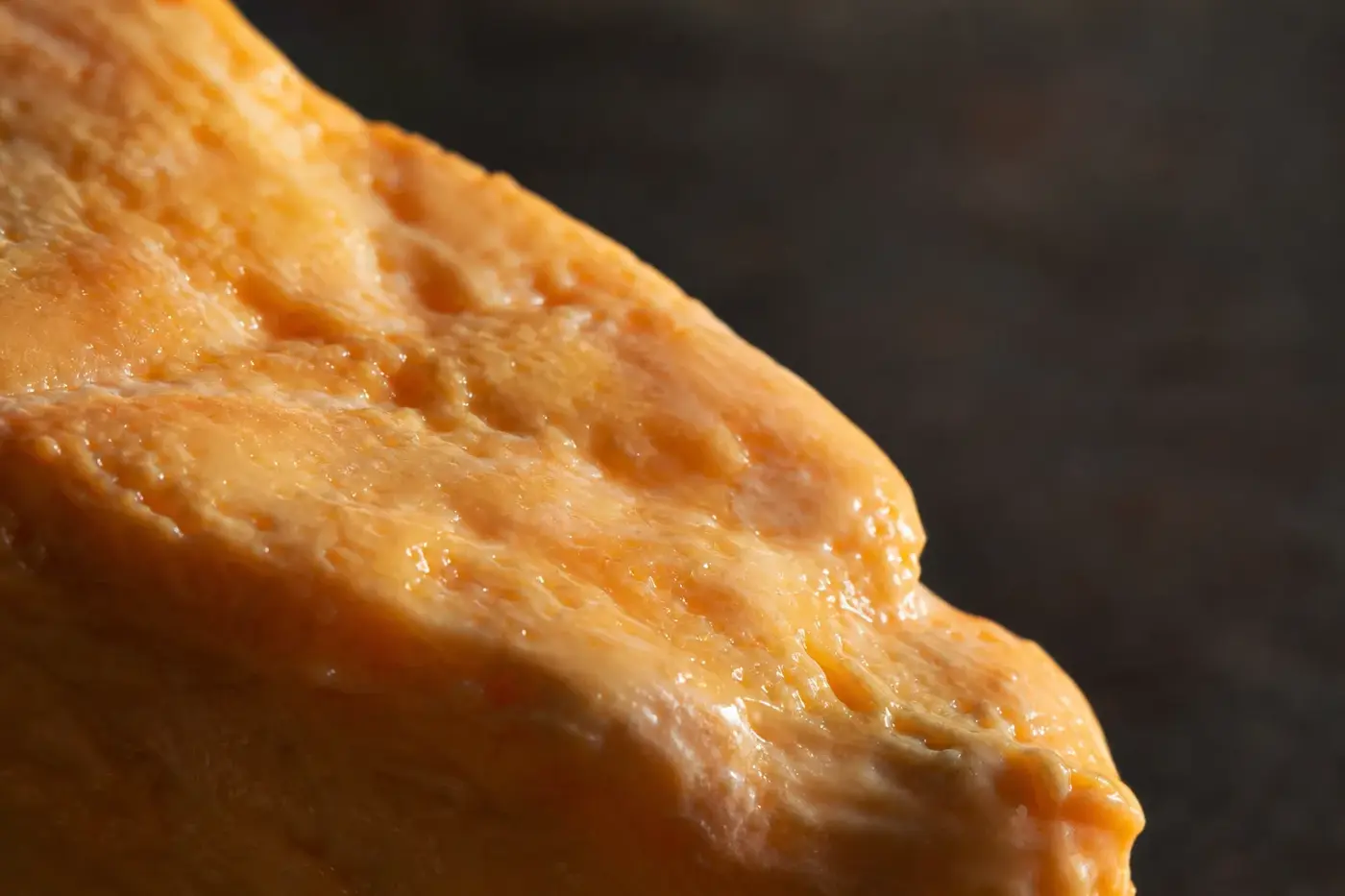
Washed rinds: colour, aroma and careful attention
Washing a cheese does rather more than clean it. Repeated washing during maturation changes the rind's microbial community, commonly using brine, a salt solution.[2][3]
The result can be a peachy or orange rind with a strong aroma. Neal's Yard Dairy describes this development in its own maturing rooms.[2][3]
Blue mould: outside patches and inside veins
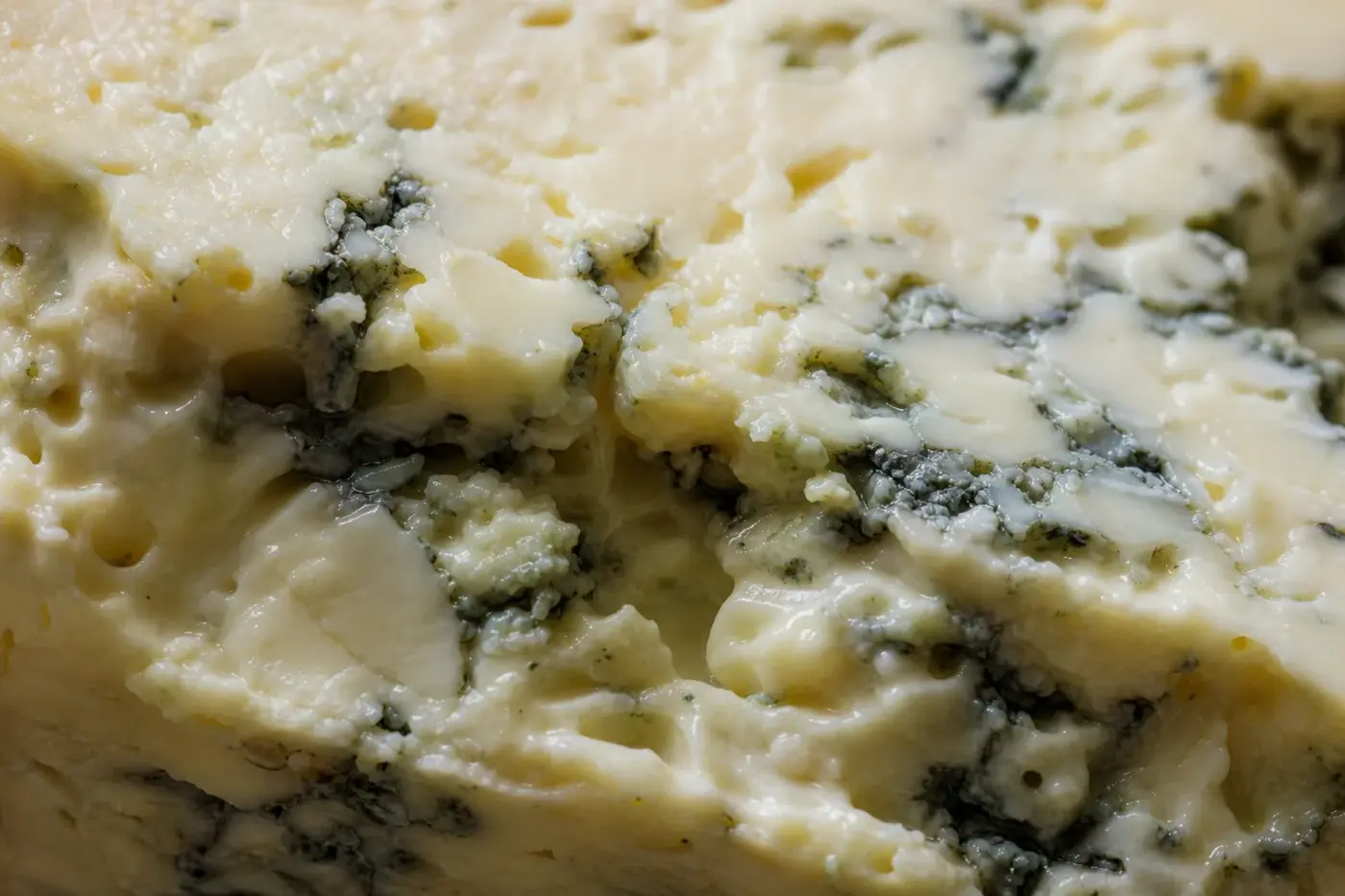
Blue patches on a surface and blue veins inside a cheese grow in different places. Some mixed surface rinds develop blue patches; veins appear within the cheese.[3][4][6]
Colour alone cannot tell you whether growth is wanted or spoilage. Ask the maker or seller what the cheese is supposed to look like.[3][4][6]
Meet the community living on the rind
A rind is a community, not a solo act. The sequencing study found bacteria and fungi living together, including organisms not deliberately added as starter cultures. In laboratory work, fungi could encourage or inhibit bacterial growth: much depends on the neighbours.[1]
Those fungi include moulds and yeasts. Yeasts can reduce surface acidity, creating conditions where some bacteria grow.[1] An affineur may encourage Geotrichum, associated with wrinkled surfaces, or Penicillium moulds.[3]
Bacteria have a particularly important role on the washed surfaces described by Neal's Yard Dairy.[3] The balance shifts from rind to rind. You cannot expect every surface to behave alike.
The quiet work of washing, brushing and turning
Even an irregular rind can owe its appearance to meticulous care. Throughout maturation, the affineur washes, brushes or turns the cheese as needed. Washing gives repeated treatment; brushing can remove excess surface material, including cheese mites.[3][4]
Turning lets the affineur inspect and care for the wheel's different faces.[3][4] Ageing conditions are chosen for the cheese, while its surface community keeps developing.[2] Neal's Yard Dairy describes that surface activity breaking down the paste and developing flavour compounds.[3]
When you choose a piece, ask about the care behind it. What should the rind look like at its present age? How firm should the centre be, and does any coating need removing?
Taste from the centre to the edge
The rind's influence reaches beyond the outside. As Neal's Yard Dairy describes, surface activity breaks down the paste and develops flavour compounds.[3] Compare the centre, the layer just beneath the rind and the outer coat.
Give firmness, aroma and aftertaste separate attention. Each can tell you a different part of the cheese's story.
Neal's Yard Dairy's glossary uses earthy for flavours often associated with the rind, and woody for flavours imparted by a wooden binding.[2] Treat those words as prompts, not instructions: record what you actually notice.
Keep smell and flavour separate, too. A dramatic aroma and an appealing mouthful are distinct observations.
Should the rind make it onto your fork?
If a rind is edible and you enjoy it, eat it. Neal's Yard Dairy advises choosing according to taste and removing inedible cloth coverings.[4] An edible rind is an invitation, not a loyalty test.
Leathery, gritty or disproportionately intense? Leave it on the plate. You can appreciate a cheese without eating every edge.
Remove wax, plastic films and plastic cheese coatings, along with cloth and labels. These are coverings, not edible rinds. Neal's Yard Dairy identifies plastic coatings as inedible, and Babybel's manufacturer explicitly advises against eating its protective wax.[2][11]
Ask the maker or seller about an unfamiliar surface treatment before you eat it. The guide to how to read a cheese label helps you separate a cheese's description from its handling instructions. A removable covering and an edible microbial coat can sit over the same piece, so look at both layers.[2][4]
Set up a little rind tasting
Choose a bloomy Brie or Camembert, a clothbound Cheddar with its cloth removed, and a washed-rind cheese identified by its seller. You are exploring contrasting surfaces, not awarding medals for quality.[2][4][7] Follow the same sequence for each:
- Read the label and check advice relevant to you before tasting. Remove every non-food covering.
- Taste a small piece from the centre. Note firmness, acidity, saltiness and any lingering flavour.
- If the rind is intended to be eaten, try a little cheese with a small amount of rind. Notice what changes.
- Find your preferred proportion. Keep the rind, trim some away or leave it behind. Record your own observation rather than borrowing the maker's tasting vocabulary.
A plain note such as firmer at the edge is useful. You do not need grand language to pay close attention. Explore the production behind those differences in how cheese is made.
This page summarises published guidance from the official sources it cites. It is not medical advice. Guidance differs between countries and changes over time, so check the current source for where you live, and ask your doctor, midwife, pharmacist or dietitian about your own circumstances.
Unexpected mould? Pause before tasting
Expected ripening growth belongs to a cheese's documented character. New growth on a cut face, an unfamiliar colour or an unexpected texture change needs checking against the product description.[5][6] A sticky washed surface and new slime on a normally dry cheese call for different interpretations.
The FSA's household guidance for England, Wales and Northern Ireland says not to eat food that is obviously rotten or contains mould. It also warns that trimming cannot guarantee removal of unseen toxins. For unwanted mould, the practical course here is to discard the affected cheese rather than attempt home salvage.[6]
Do not taste questionable cheese to investigate. The FSA says a sniff test cannot establish the safety of food with a use by date, and you should not eat food after that date.[6] Follow recall instructions for any affected product.[12]
For the fuller distinction between intentional growth and accidental mould, turn to the guide to mould on cheese.
Pregnancy and greater risk: advice to know
UK NHS pregnancy guidance as of November 2026 says mould-ripened soft cheeses with a white coating, including Brie and Camembert, and soft blue-veined cheeses must be thoroughly cooked. That applies to both pasteurised and unpasteurised cheeses. The cooking criterion is steaming hot.[7]
Hard cheeses, including those made from unpasteurised milk, are among its permitted choices.[7] The distinction concerns the cheese itself, not simply what you can see on the outside.
The NHS's dairy guidance also advises babies and young children, people over 65, and people with a long-term medical condition or weakened immunity to avoid mould-ripened soft cheeses, ripened goats' cheese and soft blue-veined cheese. It describes cooking these cheeses in a recipe as a safer option.[8]
Read the linked NHS sources for the full UK advice. Ask your clinical team about your circumstances, especially if you follow a medically supervised diet. Trimming off a white rind does not replace the cooking step specified by the NHS.[7][8]
Outside the UK, follow your national agency's guidance. Listeria and cheese safety explains the organism behind these precautions.
A little care for the rind at home
Protect your cheese from drying, and give its wrapping some attention. After opening, the American Cheese Society recommends fresh waxed, parchment or specialist cheese paper with an outer wrap. It also recommends keeping strong cheeses separately to limit aroma transfer.[5][9]
Follow the product's storage instructions first. Wrapping helps preserve quality; it does not extend storage life.[5][9]
Replace tired wrapping rather than leaving the rind against the same damp paper indefinitely. Protect the cut face and inspect the rind as you rewrap.[5] For UK home storage, FSA guidance covering England, Wales and Northern Ireland recommends a fridge between 0 and 5 °C.[9]
Bring out only the portion you plan to eat. If you let it lose its fridge chill, keep it wrapped to prevent drying.[4] The UK NHS says chilled ready-to-eat foods should be eaten within four hours of removal from the fridge; the FSA says to keep chilled food out for the shortest possible time.[9][10]
Keep the rest refrigerated and follow the label's instructions after opening.[9][10] Find fuller handling guidance in how to store cheese at home. Then use how to tell cheese styles apart to consider the rind alongside the cheese's milk, texture and method.
Questions people ask
Can you eat cheese rinds?
Neal's Yard Dairy advises choosing an edible rind according to taste. Remove wax, plastic, cloth and labels, and ask the maker or seller about unfamiliar surface treatments.
Why are some cheese rinds orange and smelly?
Repeated washing during maturation changes the rind's microbial community. The treatment commonly uses brine and can produce a peachy or orange rind with a strong aroma.
Can I cut unwanted mould off cheese and eat the rest?
The Food Standards Agency says food that is obviously rotten or contains mould should not be eaten, and warns that trimming cannot guarantee removal of unseen toxins. The page recommends discarding cheese with unwanted mould rather than trying to salvage it.
Can I eat Brie or Camembert during pregnancy if I remove the rind?
The NHS says mould ripened soft cheeses with a white coating, including Brie and Camembert, must be thoroughly cooked until steaming hot during pregnancy, whether made from pasteurised or unpasteurised milk. Removing the rind does not replace cooking; consult the NHS pregnancy guidance for the full advice.
How should I wrap and store cheese after opening?
The American Cheese Society recommends fresh waxed, parchment or specialist cheese paper with an outer wrap, and storing strong cheeses separately to limit aroma transfer. Follow the product's storage instructions first; the Food Standards Agency recommends a fridge between 0 and 5 °C.
Sources
[1] Cell, Elsevier. Cheese rind communities provide tractable systems for in situ and in vitro studies of microbial diversity. Volume 158, issue 2, 2014. Original sequencing survey and laboratory community experiments.
[2] Neal's Yard Dairy. Cheese Glossary. Undated web edition, checked November 2026. Entries on drying, maturing, rind, earthy and woody. Commercial affineur's account of its terminology and practice.
[3] Neal's Yard Dairy. Rinds: a window into the interaction between the cheese and its environment. Web edition checked November 2026. Commercial affineur's account of its own maturation work.
[4] Neal's Yard Dairy. FAQs. Undated web edition, checked November 2026. Sections on serving, rind edibility, blue growth and cheese mites. Used for handling and maturation practice, not medical advice.
[5] American Cheese Society. Tips for Cheese Lovers. Undated web edition, checked November 2026. Selecting and storing cheese sections, used for quality and wrapping guidance.
[6] Food Standards Agency. Home food fact checker. Updated 21 August 2026. Household guidance applying to England, Wales and Northern Ireland, particularly the sections on mould removal and the sniff test.
[7] NHS. Foods to avoid in pregnancy. Current web guidance checked November 2026. Cheese, milk and other dairy section.
[8] NHS. Dairy and alternatives in your diet. Current web guidance checked November 2026. Cheese and higher-risk groups sections.
[9] Food Standards Agency. How to chill, freeze and defrost food safely. Published 18 December 2017, current web edition checked November 2026. Applies to England, Wales and Northern Ireland.
[10] NHS. Listeriosis. Current web guidance checked November 2026. Prevention, refrigeration, serving and storage instructions.
[11] Babybel, Bel Brands USA. Frequently Asked Questions. Undated US web edition, checked November 2026. Manufacturer's instructions on removing and not eating the wax.
[12] Food Standards Agency. Alerts. Live official recall and allergy alert index, accessed November 2026.
Researched through original rind-community research, primary affineur accounts, manufacturer instructions and current official UK food safety guidance.
Last checked: November 2026
Last checked November 2026.
The editors suggest you read next
Penicillium roqueforti: How Blue Cheese Gets Its Veins
Your knife reveals branching veins, flecks and pockets of blue-green against pale cheese.